Tyrol, Austria’s western province, is remarkably varied: green mountain pastures, ice-glittering glaciers, turquoise lakes and picturesque little villages follow one another.
It lies in the heart of the Alps, embraced on three sides by high mountain ranges – the Karwendel, the Wilder Kaiser, and the Stubai and Ötztal Alps. It is bordered by Vorarlberg to the west, Germany to the north, Salzburg and Carinthia to the east, and Italy – specifically South Tyrol – to the south.
The region attracts visitors all year round: in summer, hikers and lovers of lakeside shores; in winter, skiers and those craving mountain panoramas all find what they’re looking for here.
Table of Contents
Best places in Tyrol
Innsbruck
The heart of the Tyrolean capital is its old town, crisscrossed with narrow cobblestone streets and ringed on every side by mountain peaks – it’s rare for a big city’s downtown to give way to high mountains within just a few minutes.
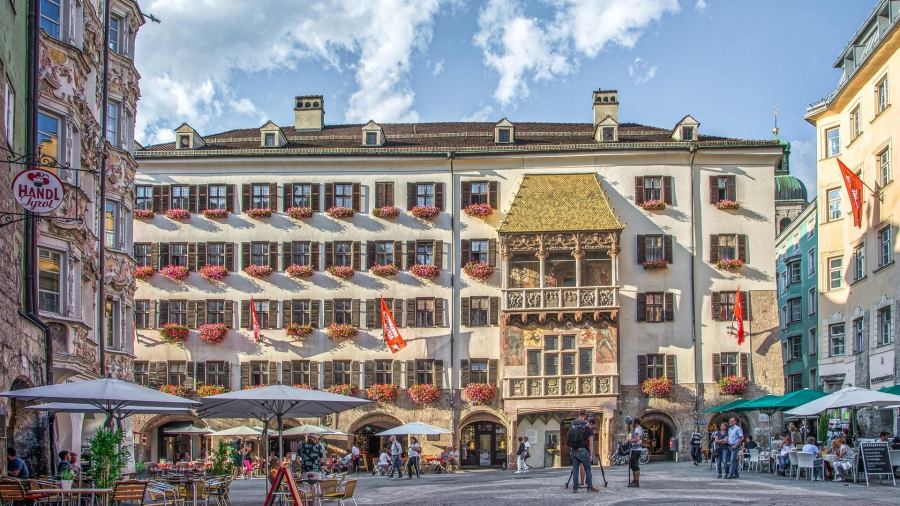
The old town’s best-known building is the Golden Roof, Emperor Maximilian’s balconied residence built around 1500, its roof covered with 2,657 gilded copper shingles, from where the emperor once watched festivities taking place on the square below. Gothic and Baroque townhouses line the surrounding alleys, and thanks to their colorful facades and ornate shutters, the old town is one of the most photographed spots in Tyrol.
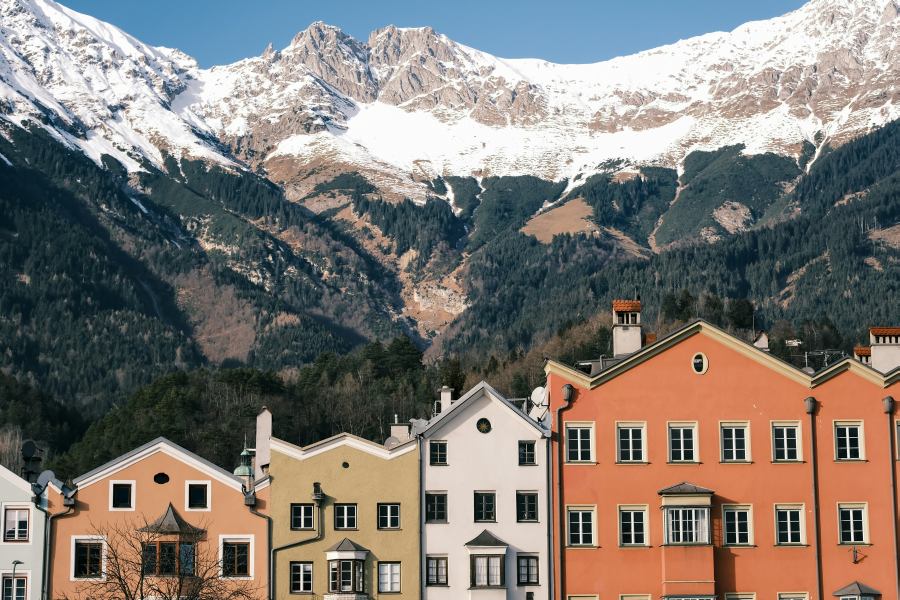
Maria-Theresien-Strasse is a popular destination for afternoon strolls, ending at St. Anne’s Column with the Nordkette mountain range rising in the background. Cafés, craft shops and weekly markets add further color to the old town’s atmosphere.
It’s also worth stopping by the Hofburg next to the cathedral, another piece of Habsburg-era heritage, offering castle-tour enthusiasts an additional experience after a walk through the old town.
Innsbruck attractions, museums, weather
Nordkette
The rock face towering above Innsbruck is one of Europe’s most striking examples of city life meeting high mountains: from the edge of downtown, you can rise above 2,000 meters in just a few minutes.
The Hungerburgbahn funicular, also designed by Zaha Hadid, is a sight in itself with its futuristic station buildings, and leads into the mountain zone, from where you can connect to the Nordkettenbahn cable car. At the summit, on the 2,334-meter Hafelekar peak, the panorama opens up over the entire Inn Valley and the Stubai Alps to the south.
In summer the mountainside is the starting point for numerous hiking trails and via ferratas, while in winter it’s one of the most popular spots for skiing close to the city, with slopes starting directly from the lift stations.
Thanks to the alpine zoo and viewing terrace at the intermediate stations, the Nordkette is also easy to explore with family, even for those not up for a serious mountain hike.
Bergisel Ski Jump
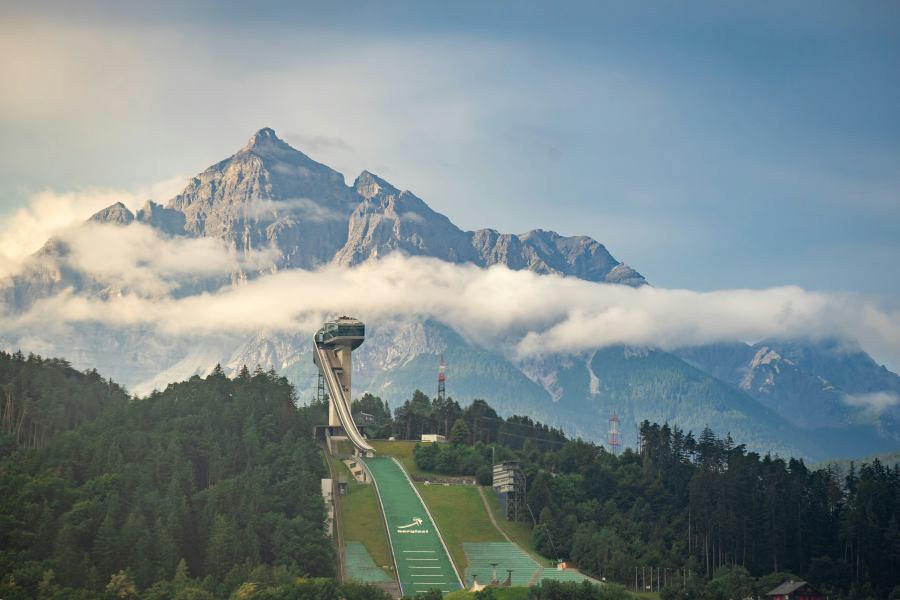
The hill rising on Innsbruck’s southern edge has been one of the city’s symbols for centuries; once a battlefield of the Tyrolean war of independence, it is today crowned by an iconic work of modern sports architecture.
The current ski jump was designed by Zaha Hadid and opened in 2002, on the site of an earlier jump that had stood there since 1927. The slender concrete tower is 50 meters tall; the viewing terrace can be reached by elevator or by climbing 455 steps, and from there a stunning view opens up not only over the jump itself but over the whole city and the Karwendel mountains.
The hill is also home to the Tirol Panorama museum, centered on a circular painting more than a thousand square meters in size, created in 1896, depicting the Battle of Bergisel of 1809.
The ski jump is still an active competition venue today; every January it hosts one leg of the Four Hills Tournament, and in summer visitors can often watch athletes training.
Ambras Castle
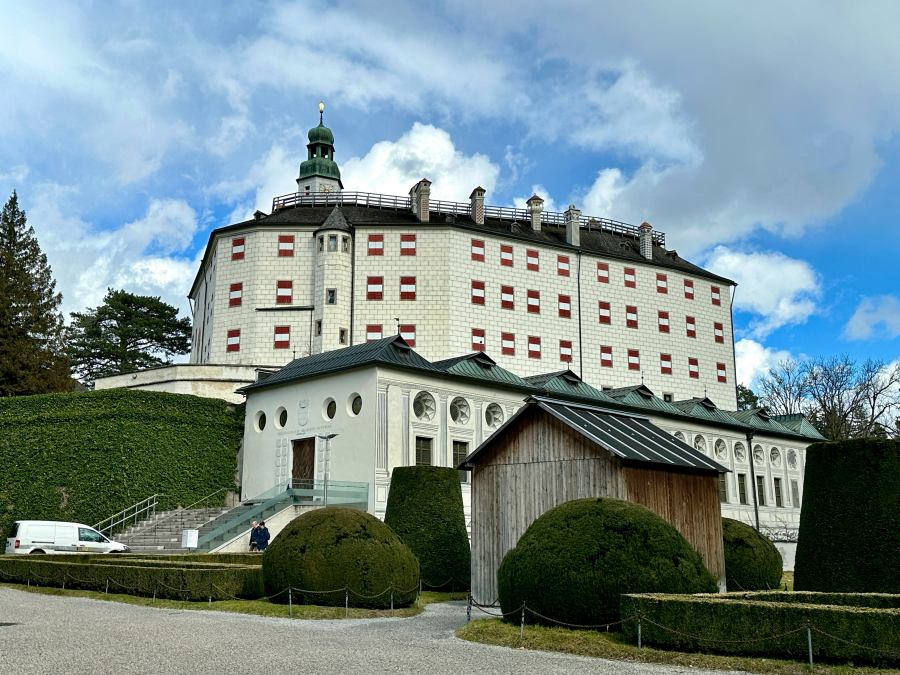
The Renaissance castle standing on a hill above Innsbruck is a unique meeting of medieval castle architecture and late-Renaissance collecting passion, and is by far one of the most important museum buildings in Tyrol.
Archduke Ferdinand II had the castle converted from an earlier medieval fortress starting in 1563, to give his secret wife, Philippine Welser, a residence and, at the same time, a fitting home for his own collection. The Chamber of Art and Curiosities set up in the lower castle counts as one of the earliest museums in the world, lined with suits of armor, scientific instruments and unusual curiosities.
The upper castle houses the Habsburg portrait gallery, where paintings by Titian, Velázquez and van Dyck are on display, while the Spanish Hall, serving as the castle’s ceremonial hall, is at 43 meters long one of the most beautiful Renaissance halls anywhere.
Swarovski Kristallwelten
In the town of Wattens, barely twenty kilometers from Innsbruck, a unique world of experiences awaits visitors, turning crystal into artistic installations that tell the story of imagination meeting craftsmanship.
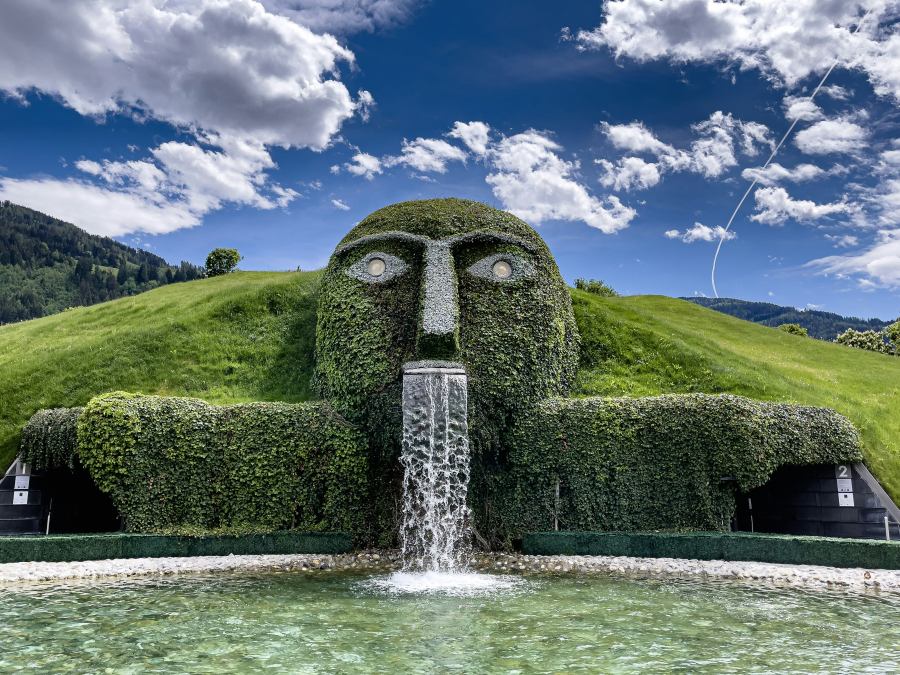
The attraction was dreamed up by multimedia artist André Heller in 1995, for the hundredth anniversary of the Swarovski company. The grass-covered giant’s head guarding the entrance has since become the symbol of the site, and inside it hides around seventeen so-called Chambers of Wonder, each designed in a distinctive style by international artists.
The crystal cloud in the garden, made up of more than eight hundred thousand hand-set crystals, along with André Heller’s hand-shaped labyrinth, are among the most popular photo spots. The site is also home to one of the largest Swarovski stores in the world.
Hall in Tirol
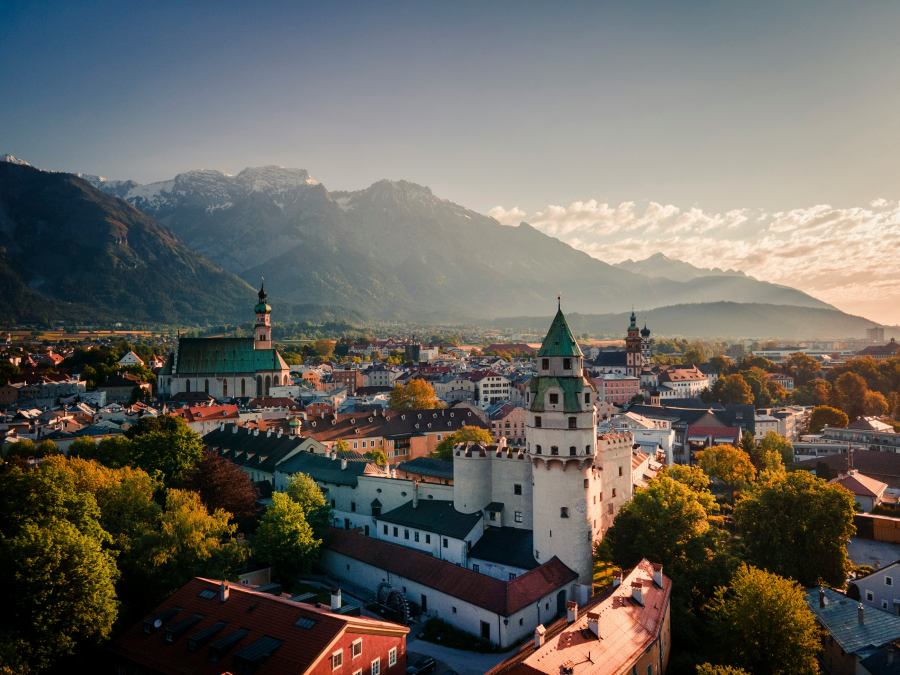
The old town of this small town, a few kilometers east of Innsbruck, gets undeservedly little attention in the shadow of its larger neighbor, even though its medieval streetscape is one of the best preserved in the province.
In the Middle Ages the town grew rich from nearby salt mines, and in the 15th-16th centuries one of the Habsburg Empire’s most important mints operated here, its building now open to visitors as a museum. The Gothic town hall on the main square and the townhouses with their colorful facades bear witness to the town’s former prosperity.
The imposing tower of St. Nicholas parish church is clearly visible from afar, and inside, Gothic and Baroque elements mingle. Craft shops and cozy cafés line the narrow streets, at a much more relaxed pace than in the province’s tourist-packed capital.
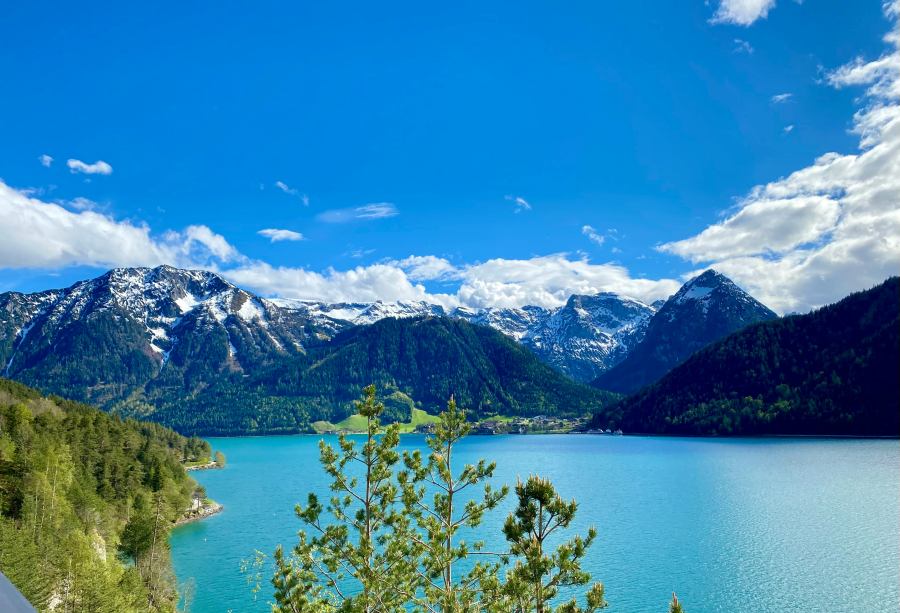
Achensee
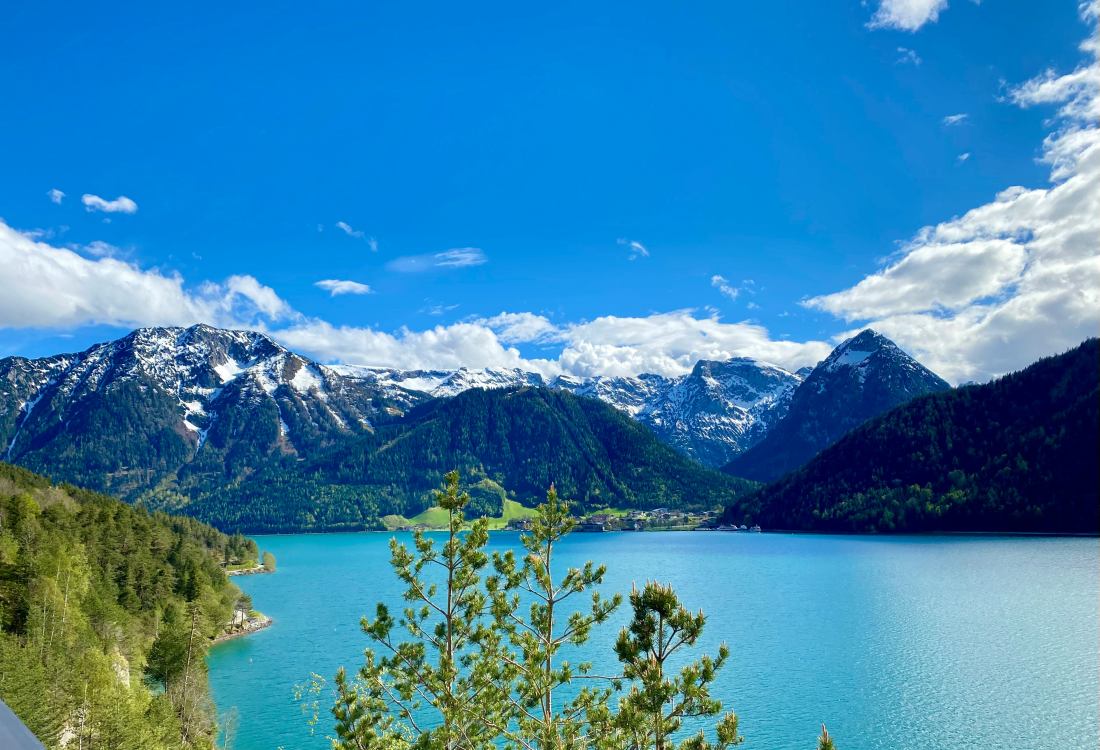
Enclosed between the Karwendel and Rofan mountain ranges, this turquoise stretch of water is Tyrol’s largest lake and one of the region’s most popular summer excursion spots, often simply called the Sea of Tyrol.
The lake, about 9 kilometers long and 133 meters deep, has exceptionally clear water, in places almost of drinking-water quality, which is why divers and lovers of underwater scenery like to visit. The villages of Pertisau, Maurach and Achenkirch on its shores are popular summer meeting points for sailors, windsurfers and swimmers.
The lake has been served since 1889 by the historic steam-powered Achenseebahn cog railway from Jenbach, which is a nostalgic experience in itself, while regular boat services on the lake help visitors explore further.
The surrounding area offers hundreds of kilometers of marked hiking trails, while in winter the frozen lakeshore also opens up opportunities for cross-country skiing and ice skating.
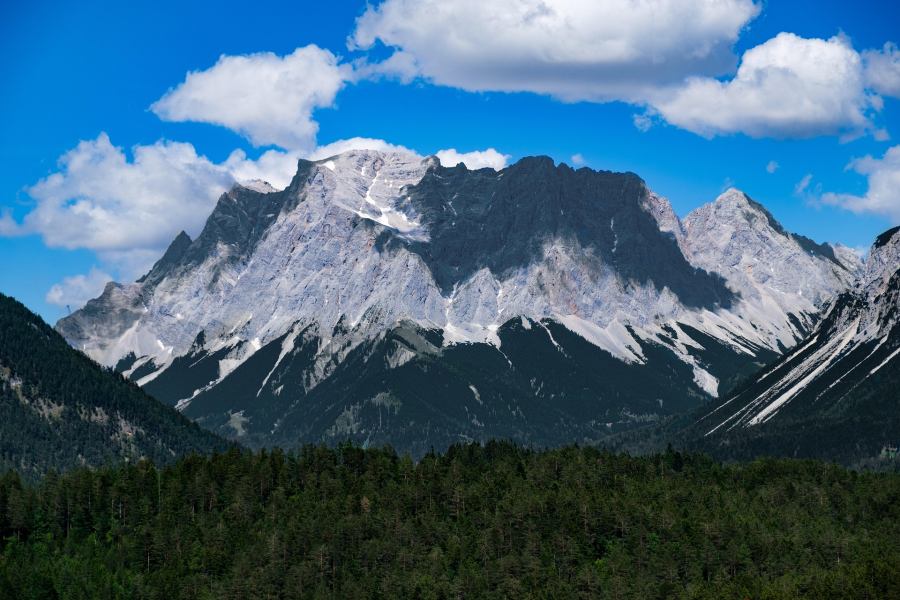
Zugspitze
Germany’s highest peak rises in the Wetterstein mountains along the border between Tyrol and Bavaria, and can be reached from the Tyrolean side by one of Europe’s most modern cable cars.
The Tiroler Zugspitzbahn, starting from the valley station in Ehrwald, carries visitors up to the 2,962-meter summit in just ten minutes, bridging a difference in elevation of nearly 1,700 meters. The first cable car on the mountain opened in 1926, and it has operated in its current, modern form since 1991.
On a clear day, the panoramic terrace at the summit offers views of as many as 400 alpine peaks, while the Faszination Zugspitze experience museum presents the history of climbing the mountain. In winter, the Zugspitzplatt glacier is one of Germany’s highest-lying and snowiest ski areas.
The summit can also be reached on foot by experienced climbers via the Stopselzieher via ferrata, though most visitors choose the comfortable, barrier-free cable car instead.
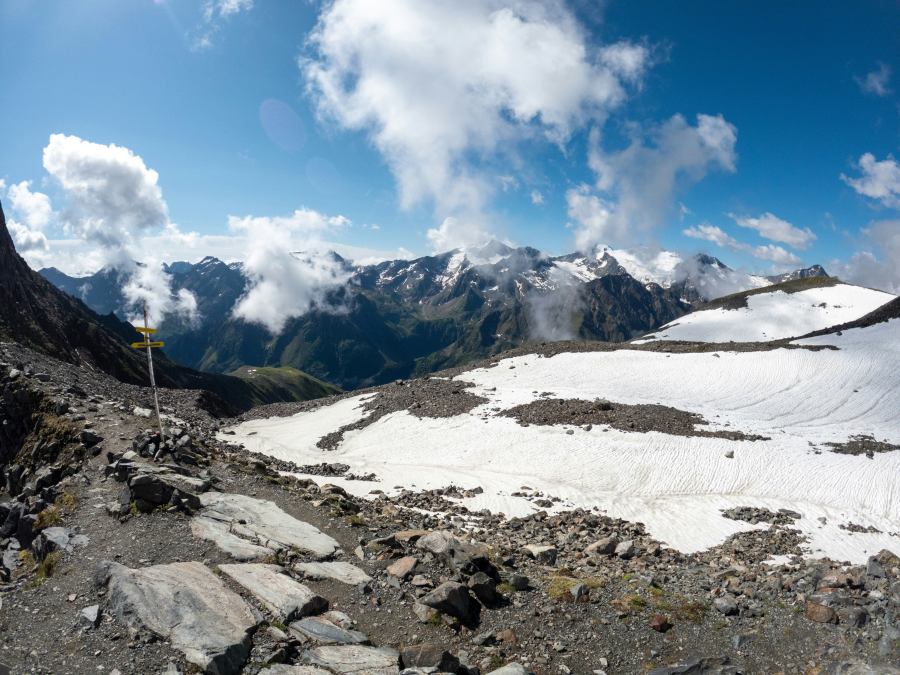
Stubai Glacier
The Stubai Valley, opening south of Innsbruck, closes off in the province’s largest glacier ski area, which offers the experience of snow-covered slopes all year round, even in summer.
In the lower part of the valley, the Ruetz stream forms a number of smaller and larger waterfalls, the most spectacular of which is the Grawa Waterfall, easily reached by a walking trail. In the upper part of the valley, at around 3,200 meters, lies the glacier itself, where both cross-country and downhill skiers find terrain suited to them.
The Top of Tyrol viewing platform, rising above the glacier, is one of the most panoramic spots in the Alps, offering views as far as the Dolomites on a clear day. In summer, alongside glacier hikes and high-mountain chamois-watching, mountain biking is also popular in the valley.
The mouth of the Stubai Valley effectively begins right at Innsbruck’s edge, so the glacier can easily be visited in a single day, even fitted in alongside city sightseeing.
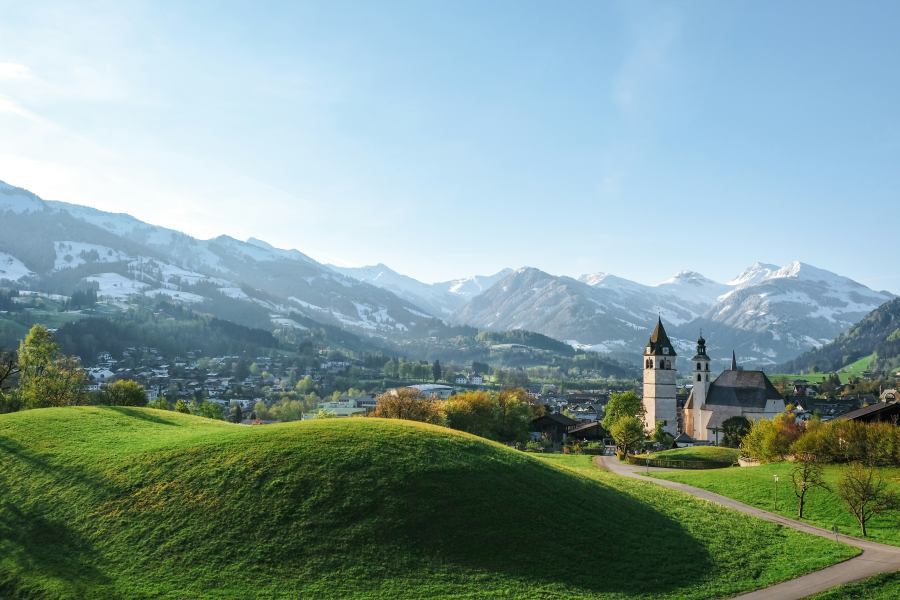
Kitzbühel
The name of this small town in the eastern Tyrolean Alps is inseparably linked with one of the world’s most famous downhill ski runs, yet its medieval old town is well worth visiting in its own right.
The Streif downhill run hosts the Hahnenkamm race every January, considered by many to be the world’s toughest and most spectacular ski race, largely because of the steep Mausefalle section. In summer, the run can also be walked on foot, letting ski enthusiasts get a close-up look at the challenges of the slope.
The old town’s colorfully fronted houses of Gothic origin and St. Catherine’s church preserve the traditions of a medieval mining town, since Kitzbühel once lived off copper and silver mining before becoming a stronghold of winter tourism in the early 20th century.
In summer, the surrounding mountain lakes, such as the Schwarzsee, and the extensive network of hiking trails make Kitzbühel an attractive destination all year round, not just during ski season.
Wilder Kaiser
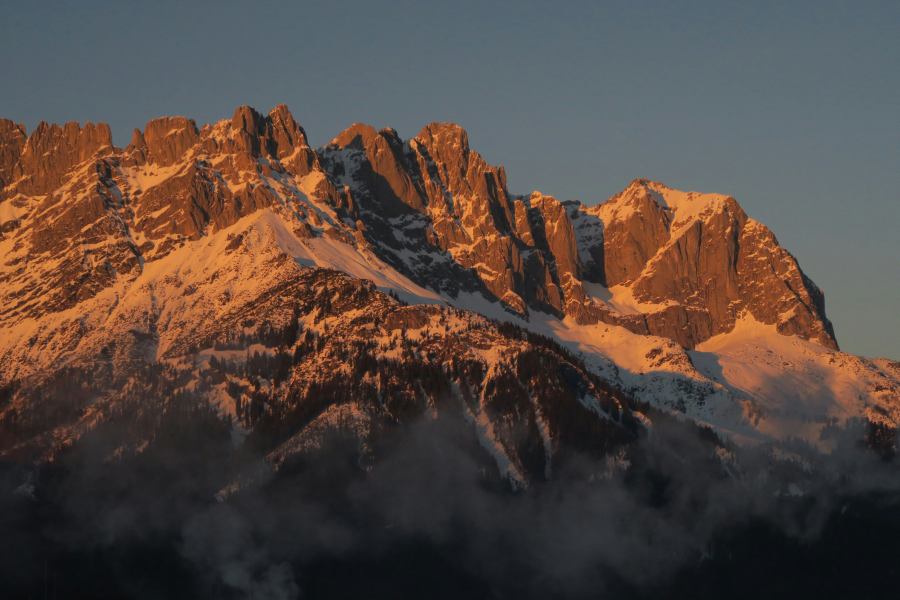
This mountain range of steep limestone peaks, rising in eastern Tyrol near Kitzbühel, draws one of the Alps’ most fearsome and beautiful silhouettes against the sky, and has long been a favorite destination for climbers.
The range’s highest point, the Ellmauer Halt, stands 2,344 meters tall; its vertical rock faces and sharp ridges offer technical terrain for experienced climbers, while the alpine meadows and villages at its foot, such as Going and Ellmau, also provide opportunities for easy walks.
The range has been part of a protected nature park since 1963, home to chamois and golden eagles as well as rare alpine plant species. Its network of via ferratas, or secured mountain trails, forms one of the densest such systems in Austria.
Seefeld
This resort town, located on a high plateau northwest of Innsbruck, is one of Tyrol’s most prestigious centers for cross-country skiing and winter sports, and has twice been chosen as a venue for Olympic competitions.
Seefeld lies at an elevation of 1,200 meters, which gives it especially reliable snow and sunshine, and the plateau around the town has more than 250 kilometers of marked cross-country ski trails. The place hosted Olympic cross-country skiing and ski jumping events in both 1964 and 1976, and the Nordic Ski World Championships were held here in 2019.
The Baroque St. Oswald’s Church and traditional Tyrolean wooden houses preserve a village atmosphere alongside modern hotels and wellness centers, while the pedestrian zone on the main street offers a pleasant evening outing.
In summer, Seefeld is a favorite destination for hikers and golf enthusiasts, and thanks to the plateau’s gentler routes, it’s also easy to explore with family.
Karwendel Nature Park
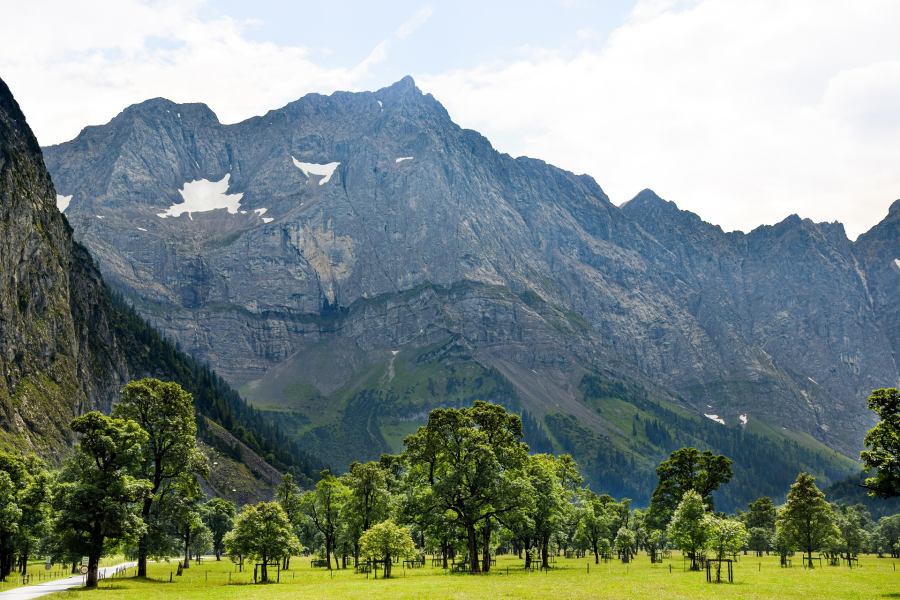
This almost untouched mountain region is one of Austria’s largest protected nature areas, where steep limestone peaks and deep valleys create a wild, romantic landscape.
The park has been protected since 1928, today covering more than 700 square kilometers, and is home to chamois, deer, and rare bird species, including the golden eagle. The range’s highest point, the Birkkarspitze, is 2,749 meters tall, but most visitors head for the more easily accessible valleys, such as the Karwendeltal or the Hinterautal.
A dense network of hiking trails and mountain huts crossing the area also allows for multi-day treks, while the small mountain lake known as the Red Lake is one of the most photographed spots.
A special feature of the park is that motorized traffic is almost entirely banned within it, so the experience of silence and untouched landscape is especially powerful for those who explore it on foot or by bicycle.
Stift Stams
The Baroque monastery complex in the village of Stams, at the entrance to the Ötztal, was once the burial place of the Tyrolean dukes and is one of the province’s most significant religious monuments, its two slender towers visible from afar.
The Cistercian abbey was founded in 1273 by Count Meinhard II of Gorizia and his wife, Elizabeth of Bavaria, as a burial monument for the Tyrolean branch of the House of Habsburg. The church’s interior was remodeled in Baroque style in the 17th century, with a series of gilded altars and ornate stuccowork reflecting the monastery’s rich history.
The abbey can be visited on guided tours, which also offer a look inside the cloister and the treasury, giving insight into the everyday life of a Tyrolean monastery alongside its religious heritage.
Ischgl
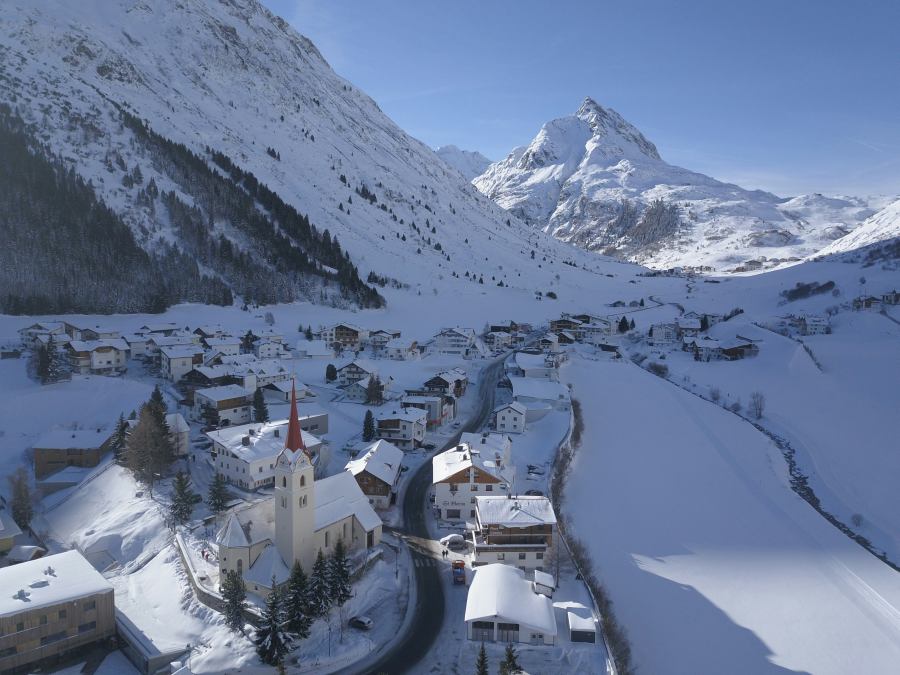
One of Tyrol’s most exclusive mountain resorts, lying in the picturesque Paznaun Valley. It’s one of the best-known destinations for winter sports enthusiasts, where the network of ski slopes crosses the national border to connect Austria and Switzerland.
Ischgl lies at the foot of the Silvretta mountains, and the Silvretta Arena ski area, with more than 230 kilometers of slopes, is one of the largest contiguous skiable areas in the region.
The town is often called the “Ibiza of the Alps” because of its vibrant nightlife and its world-famous, high-quality après-ski parties. International superstars regularly perform at the season-opening and season-closing “Top of the Mountain” concerts, held among snow-covered peaks.
Paznaun Valley
It’s quieter in summer, when high-mountain hikes and mountain biking take center stage, and the alpine pastures and clear streams along the valley’s slopes offer a pleasant atmosphere for relaxation.
In the upper part of the valley, the Silvretta glacier and high-mountain lakes such as the Vermuntsee offer further excursion destinations for those seeking the quiet of the Tyrolean mountains away from the crowds.
Kufstein
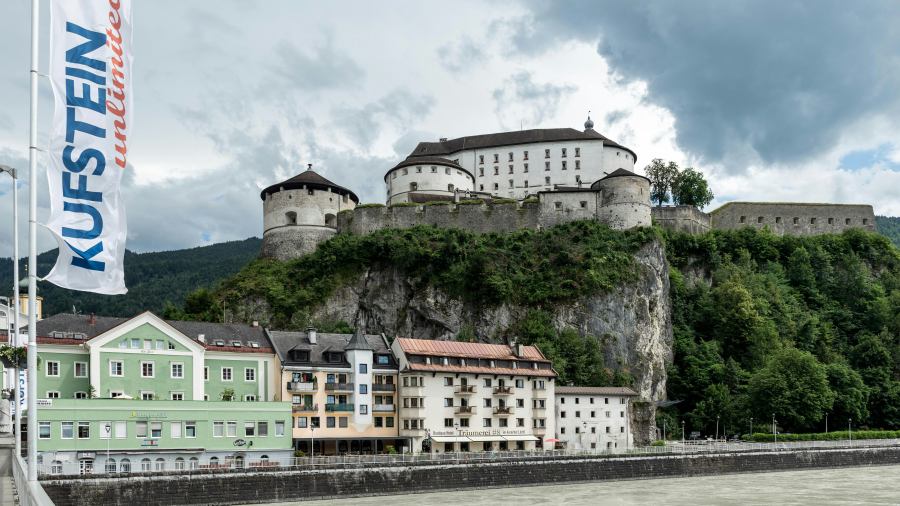
Often called the “jewel of Tyrol,” it lies near the Austrian-German border, on the picturesque banks of the Inn River.
The city’s foremost tourist landmark is the imposing Kufstein Fortress, towering over the town on a steep rock. Here stands the world’s largest open-air organ, the Heroes’ Organ, whose dignified sound can be heard for miles. The old town’s narrow cobblestone streets, especially the world-famous Römerhofgasse, exude a true medieval atmosphere with their ornate facades and cozy little inns.
For lovers of culture and design, the Riedel glassworks visitor center also holds exciting sights. Beyond that, it’s a paradise for nature lovers: lying at the foot of the Kaiser mountains, it offers countless hiking trails, cycling routes, and crystal-clear alpine lakes such as the popular Hechtsee.