
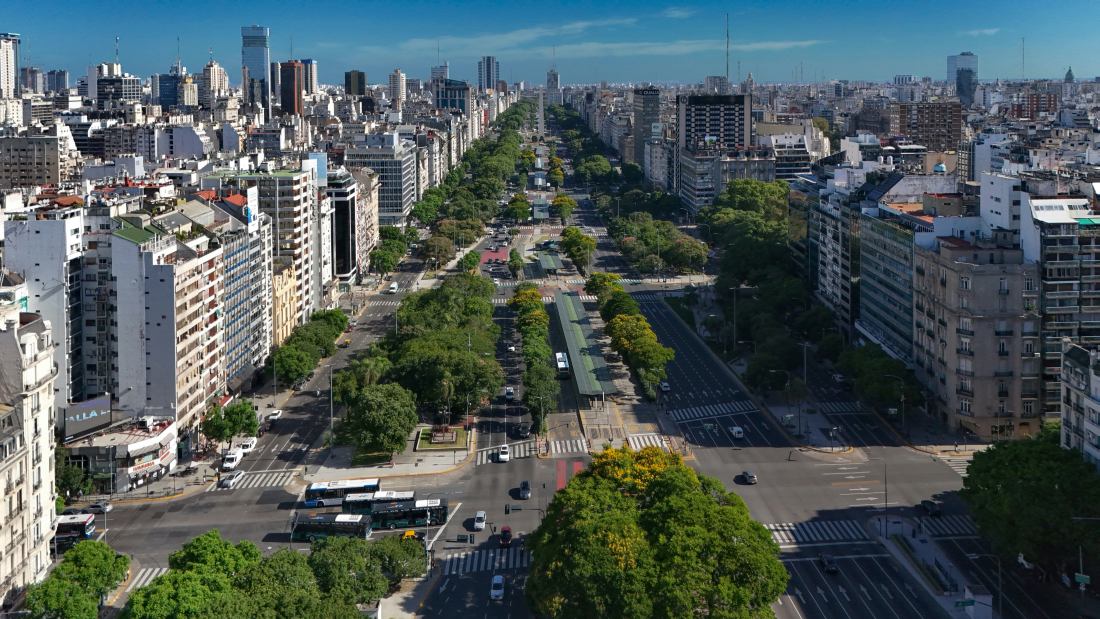
Buenos Aires is one of South America’s most exciting capitals, enchanting visitors with its European atmosphere, vibrant cultural life, and the famous tango. The following questions and answers will help you navigate the most important information, whether it concerns safety, transportation, or the best time to visit.
Table of Contents
Basic information
What time zone is Buenos Aires in?
Buenos Aires is located in the Argentine time zone (ART, UTC–3). Argentina does not observe daylight saving time.
When is the best time to visit Buenos Aires?
The best time to visit Buenos Aires is generally during the autumn and spring months of March–May and September–November. During these periods, temperatures are pleasant, rainfall is minimal, and conditions are ideal for exploring the city.
The spring period (September–November) is one of the most popular times to visit. Temperatures range around 15–25 °C, parks and squares bloom, cultural events are abundant, and city life is at its peak.
The Argentine summer (December–February) can be hot and humid, with temperatures sometimes exceeding 35 °C. This is less ideal for long sightseeing tours, although the city certainly doesn’t come to a standstill.
One of the city’s most unique periods is February–March, when the famous Buenos Aires carnival and tango festivals are held. Colorful parades, musical and dance performances fill the streets, making the days spent in the city truly special.
How many days should I spend in Buenos Aires?
To explore Buenos Aires, it is generally recommended to stay at least 4–5 days. The city is vast, with many neighborhoods, museums, restaurants, and cultural programs, so it’s easy to spend a full week there.
In 4 days, you can generally cover the most important neighborhoods and attractions: Plaza de Mayo and the historic city center (Microcentro), the colorful La Boca neighborhood, the Recoleta Cemetery, and the San Telmo market.
With a 5–7 day stay, you can explore the city at a more leisurely pace, including the trendy Palermo and Puerto Madero neighborhoods, tango shows, local markets, gourmet restaurants, and even a day trip to the delta region of Tigre.
What is the official currency in Buenos Aires?
The official currency is the Argentine peso (ARS), used throughout the country. The Argentine economy and exchange rate are extremely volatile, so it is worth researching the current situation before traveling.
Pesos are needed for everyday purchases in Buenos Aires. It is important to note that Argentina has traditionally had an informal exchange rate that differed from the official bank rate – this situation has changed significantly over the years, so it is worth consulting fresh sources before traveling.
Credit cards are generally accepted at larger hotels, restaurants, and shopping centers, but smaller shops, markets, and street vendors require cash.
Here is a currency converter calculator where you can check the current exchange rate!
Is English spoken in Buenos Aires?
In the tourist and business areas of Buenos Aires, many people speak English, especially in hotels, restaurants, and museums. However, the locals’ native language is Spanish, so in everyday situations it is not always possible to get by in English.
In the Palermo, Recoleta, and Puerto Madero neighborhoods, where many tourists and foreigners live, English communication is generally smooth. In smaller restaurants, markets, or outer districts, however, staff may only understand Spanish.
It can be useful for tourists to learn a few basic Spanish phrases, for example: hola – hello; gracias – thank you; por favor – please; cuánto cuesta – how much does it cost?; dónde está – where is?
What type of electrical socket is used in Buenos Aires?
In Buenos Aires and throughout Argentina, the type I socket (three flat pins in a Y shape) is primarily used, which is not compatible with most European devices.
The mains voltage in Argentina is 220 Volts at 50 Hz – this matches the European standard, so devices are compatible in terms of voltage; only the socket shape differs. Most modern electronic devices (mobile phone chargers, laptops) will work fine with an adapter. Hair dryers and other high-power devices should be checked in advance.
How does internet and SIM card usage work in Buenos Aires?
Internet connectivity is generally good in Buenos Aires, with free Wi-Fi available in most hotels, cafés, and restaurants. If you need constant mobile internet, it is worth purchasing a local SIM card or eSIM.
The major mobile operators in the city (Claro, Movistar, Personal) offer tourist SIM cards, which can be purchased at the airport or in stores. eSIMs are becoming increasingly widespread and offer a convenient solution as they can be activated before starting your trip.
Hotels and restaurants and cafés in tourist areas generally provide reliable Wi-Fi, so basic communication and navigation can rely on these as well.
Is tipping customary in Buenos Aires?
Yes, tipping is generally customary in Buenos Aires, especially in restaurants and various services. In restaurants, it is customary to tip around 10–15% of the bill, if the service charge is not already included in the price.
In Argentina, the tip (propina) is important for those working in the hospitality industry. The expected amount in restaurants is generally 10–15% of the bill. Some places may already include a service charge on the bill („cubierto” or „servicio”), so it is worth checking the details before paying.
It is also customary to leave a small tip for taxi drivers, hairdressers, and hotel staff if you were satisfied with the service.
Travel and transportation
How do I get from the airport to the center of Buenos Aires?
Buenos Aires has two airports: Ezeiza (EZE), which handles international flights and is approximately 35 kilometers from the city center, and the domestic Aeroparque Jorge Newbery (AEP), which is close to the city center. The city center is accessible from both by bus, taxi, and ride-sharing.
From Ezeiza airport, the Manuel Tienda León bus service is the most popular and reliable mode of transportation to the city center, with a travel time of approximately 40–60 minutes. Local buses accessible with a transport card (SUBE) offer a cheaper option but may take longer. Taxis and Uber are also available from the airport but are more expensive.
From Aeroparque airport, it is easy to reach the city center by metro and bus, but taxis and Cabify/Uber are also readily available.
What is the most convenient mode of transportation in Buenos Aires?
In Buenos Aires, the most popular transportation options for tourists are generally the metro (subte), bus, taxi, and ride-sharing services (Uber, Cabify). The city’s transportation system is extensive, though traffic can sometimes be heavy.
The metro (subte) consists of six lines connecting important points in the city center. It is fast, cheap, and stops are located near many tourist attractions. Tickets can be purchased or paid for with a SUBE card.
Buses (colectivos) cover the entire city with a dense network and offer an extremely affordable mode of transportation. Payment is made with the SUBE card, which is worth obtaining at the beginning of the trip – it is available at the airport, kiosks, and metro stations.
Uber and Cabify also operate in the city and offer a convenient solution if you prefer not to use public transport. Taxis can easily be hailed on the street, but ride-sharing is often more convenient and provides transparent pricing.
Accommodation and safety
Is Buenos Aires a safe city?
The assessment of Buenos Aires’ safety depends largely on which neighborhood you are staying in and how careful you are. Most neighborhoods frequented by tourists are generally safe, especially during the day, but it is advisable to be cautious and watch your belongings.
Which districts are considered safe?
The most commonly chosen areas by tourists include: Recoleta, Palermo, San Telmo, Puerto Madero.
How safe is it at night?
Buenos Aires is famous for its nightlife, with very lively street activity late into the night. In the tourist neighborhoods, many restaurants and bars are open in the evening. Nevertheless, it is advisable to stay on well-lit streets, keep your valuables secure, and if you need to travel further, use Uber or a taxi.
Which neighborhood should I stay in in Buenos Aires?
The most popular accommodation neighborhoods for tourists in Buenos Aires are Recoleta, Palermo, San Telmo, Microcentro, and Puerto Madero. These districts are well located, offer many attractions, restaurants, and cafés, and are generally safe for visitors.
Recoleta is one of Buenos Aires’ most elegant neighborhoods, home to its world-famous cemetery, museums, luxury restaurants, and shopping streets. It is especially recommended for those seeking comfortable, safe accommodation.
Palermo is the trendiest and most dynamic district with fashionable restaurants, bars, boutique shops, and large green spaces. It is particularly popular among younger travelers and digital nomads.
San Telmo is the historic, bohemian neighborhood where tango has its roots. Antique shops, street artists, weekend markets, and atmospheric cobblestoned streets make it special. It is an ideal choice for tourists and lovers of cultural experiences.
Puerto Madero is the city’s modern, revitalized port district with elegant restaurants and luxury hotels. It is close to the city center and one of the safest areas, though prices may be higher.
Health information
Are any vaccinations required to travel to Buenos Aires?
For travel to Buenos Aires, no vaccinations are generally required for Hungarian travelers. However, if you are also traveling to inland areas or tropical regions of Argentina, certain vaccinations may be recommended.
Argentina is a large, diverse country, and while staying in the capital generally does not require special vaccinations, a yellow fever vaccination may be recommended for certain areas of the country (e.g., near Iguazú Falls). It is advisable to consult a doctor or travel health specialist before traveling.
Is tap water safe to drink in Buenos Aires?
In Buenos Aires, tap water is officially safe to drink and treated. Most locals also drink tap water, although many prefer bottled water for taste reasons.
Water services in Buenos Aires are reliable, and the water is chlorine-treated. If you have a sensitive stomach or simply want to play it safe, bottled water is easily available on every corner. Tap water is generally fine for brushing teeth.
Experiences
What are the must-see attractions in Buenos Aires?
Buenos Aires’ most famous attractions include Plaza de Mayo and Casa Rosada, the La Boca neighborhood and Caminito promenade, Recoleta Cemetery, the MALBA modern art museum, the San Telmo market, and tango performances. These places beautifully showcase the city’s rich history, culture, and passionate spirit.
Plaza de Mayo is the heart of Buenos Aires, where Casa Rosada (the government palace), the cathedral, and several important public buildings stand. This square is the most important location in Argentine history.
The La Boca neighborhood and Caminito is one of the city’s most iconic sights: colorful painted buildings, tango dancers on the street, and the home of local football culture. It is best visited during the day.
Recoleta Cemetery is one of Latin America’s most famous and beautiful cemeteries, lined with elaborate mausoleums – including the grave of Eva Perón (Evita), visited by masses.
The San Telmo market and its surroundings are a true paradise for lovers of antiques, local crafts, and authentic Argentine cuisine. It is especially atmospheric on weekends, when vendors, musicians, and tango dancers fill the streets.
Attending a real tango show is an almost obligatory experience in Buenos Aires. The city offers numerous milongas (tango dance halls) and tango theater performances for an authentic experience – the San Telmo and Palermo neighborhoods offer the most options.
What are the most popular foods and drinks in Buenos Aires?
Buenos Aires is considered one of the world’s best gastronomic cities, especially known for its grilled meats (asado) and Italian-influenced cuisine. The most popular dishes include asado, empanadas, and medialunas, while among drinks, mate, Malbec red wine, and local beer are indispensable.
Asado is the heart of Argentine grill culture. Tasting the beef, offal, and sausages prepared on the parrilla (grill) is an almost obligatory experience. Numerous parrilla restaurants in the city offer the authentic asado experience.
An empanada is a stuffed dough pocket filled with meat, cheese, or vegetables and baked or boiled. Cheap, tasty, and available everywhere – an ideal quick bite while sightseeing.
Mate is Argentina’s national drink, a strong, bitter herbal tea drunk from a special vessel (calabaza) through a metal straw (bombilla). Being offered a cup of mate by Argentines is a great honor.
Malbec is Argentina’s most famous red wine, which is highly recommended to try – excellent quality Malbecs can be found at affordable prices in Buenos Aires restaurants and wine bars. Dulce de leche (caramel cream) is also omnipresent in the city – in ice cream, pastries, and breakfast croissants (medialunas) alike.
What are the important holidays and festivals in Buenos Aires?
Numerous important holidays and festivals are held in Buenos Aires throughout the year. The most well-known include the Buenos Aires Tango Festival, Argentine Independence Day, carnival, and various international cultural and gastronomic festivals.
The Buenos Aires Tango Festival is held every year in August and attracts the world’s best tango dancers to the city. At this time, a multitude of free and paid performances await enthusiasts in the streets, parks, and theaters.
Argentine Independence Day is on July 9th. Celebrations, military parades, and fireworks are organized in the city, and the whole country celebrates with national pride.
Carnival enlivens the entire city in February and March: murga (Argentine carnival dance and music) parades, costumes, and street festivities color the life of the capital. It is less boisterous than the Brazilian carnival, but provides all the more authentic and intimate experience.