
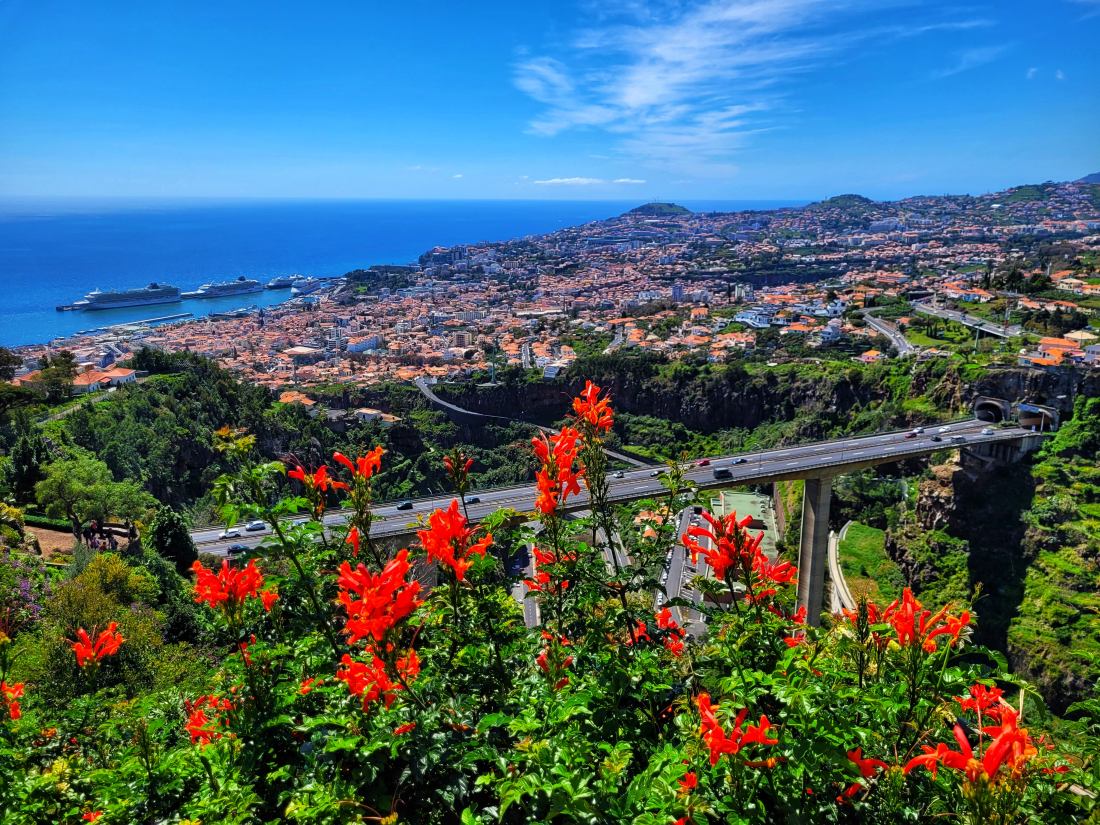
Funchal, as the centre of Madeira, is the most popular destination on the island. A magnificent setting, countless attractions and a wonderful atmosphere await tourists.
Funchal is situated on the southern coast of the island in a natural bay, and with approximately 110,000 inhabitants, it is home to half of Madeira’s population. The city – whose name derives from the Portuguese word funcho, meaning “fennel” – was founded by Portuguese explorers in the 15th century and quickly became an important trading port. Today it attracts visitors with its remarkable sights, flower-filled parks, the architecture of the Portuguese colonial era, and a climate that is unique in a European context.
Table of Contents
Funchal attractions
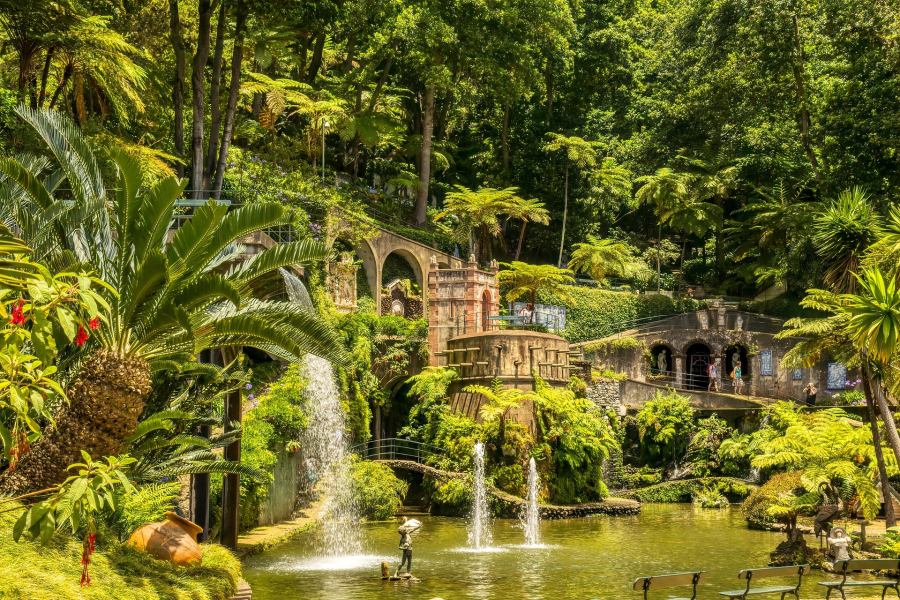
Monte Palace Tropical Garden
It situated on Monte Hill above Funchal, is one of the most visited natural attractions on the entire island of Madeira.
The garden’s history dates back to the 18th century, when British consul Charles Murray purchased the estate and created a grand park on it. In the 19th century, the palace-like residence of Monte Palace – which for a time operated as a hotel – opened to the public as a tropical garden from the 1980s onwards.
The multi-level, terraced garden conceals a wealth of exotic plants, laurel trees, ferns, water lilies, as well as picturesque waterfalls and ponds. A particularly striking sight is the large panels made from azulejo (Portuguese glazed tiles), several metres high, depicting the island’s history and legends. The garden also houses a privately owned mineral collection, regarded as one of the largest of its kind in the world.
Jardim Botânico
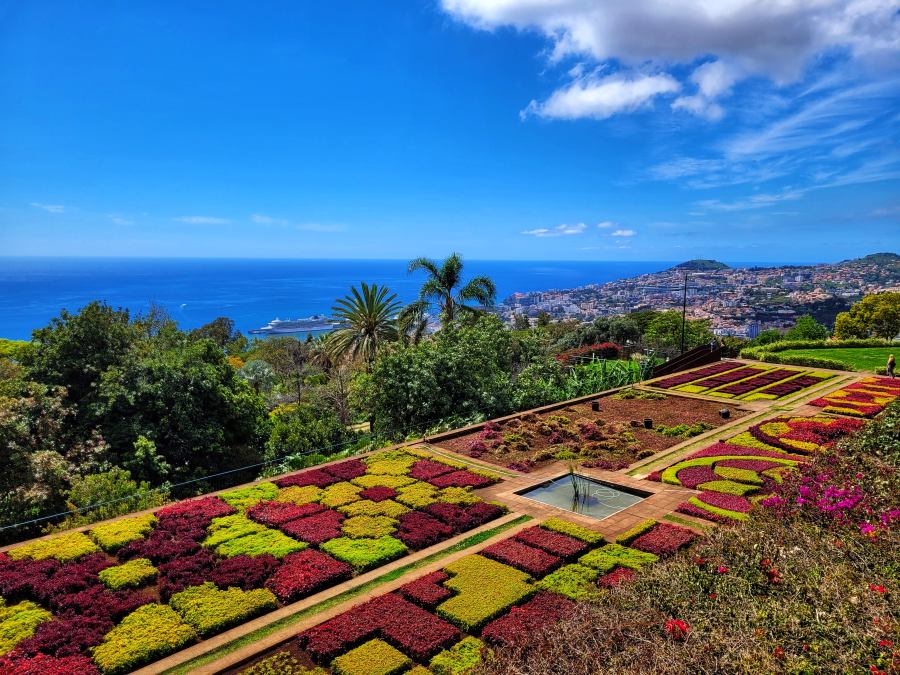
One of Madeira’s most beautiful attractions, offering breathtaking views of the Atlantic Ocean and the city of Funchal.
The gardens on the slopes of the Quinta do Bom Sucesso estate cover more than 80,000 square meters and, thanks to their rich collection of plants, showcase exotic species from many parts of the world.
The carefully designed terraces and colorful flower beds create a wonderful setting. The park also features a small natural history museum and a bird sanctuary where visitors can observe rare species up close.
Teleferico da Madeira
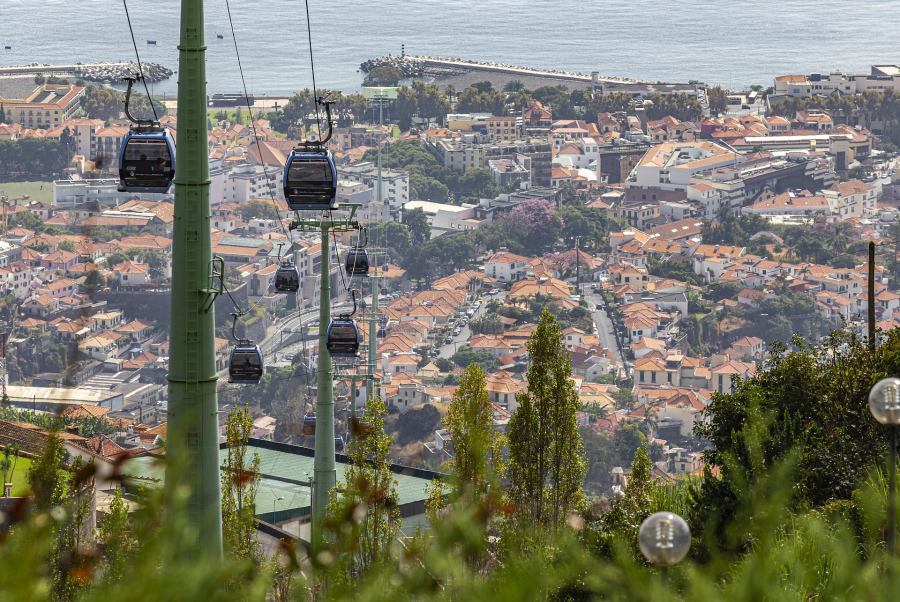
The gondola lift departing near the old town is one of Funchal’s most popular activities, which almost every visitor makes a point of experiencing. The 3,200-metre cable car rises to an altitude of 560 metres above sea level, reaching Monte Hill in just 15 minutes. The specially designed gondolas offer a 360-degree panorama of the city, the Atlantic Ocean, and the volcanic highlands.
The cable car has two lines in Funchal: one departs from the seafront promenade and goes to the Monte Palace gardens, while the other continues from there to the Botanical Garden. The views are particularly stunning in the morning and late afternoon.
The cable car ride is a tourist experience in itself, but those visiting Monte Hill should also stop at the Nossa Senhora do Monte church – the resting place of Charles IV, the last King of Hungary, who was beatified by Pope John Paul II.
Nossa Senhora do Monte Church
The Our Lady of Monte Basilica (Nossa Senhora do Monte), rising on Monte Hill, is one of the most important pilgrimage sites on Madeira. The white, twin-towered baroque-style church was consecrated in 1818 on the site of an earlier 15th-century chapel, of which legend has it that one of the first discoverers of Madeira first caught sight of a child living on the island.
The church holds a particularly deep Hungarian connection: here lies Charles IV, the last ruler of the Austro-Hungarian Monarchy, who lived in exile on Madeira after his abdication and died in Funchal in 1922. Pope John Paul II beatified him in 2004, and his statue and image appear on numerous Madeiran devotional objects. The steps leading to the church offer a splendid view of the city and the bay.
Also on Monte Hill, near the basilica is the Quinta do Monte villa, which was once the home of Charles IV and today operates as an elegant hotel. The pilgrimage site and its Hungarian connections make this a particularly special visit, best reached by the Teleferico cable car.
Mercado dos Lavradores
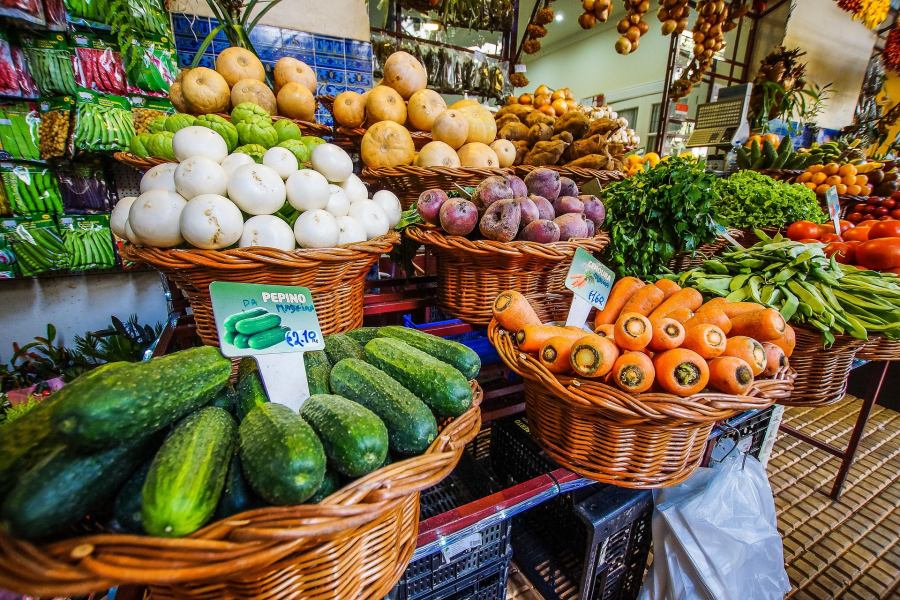
Built in 1940, the farmers’ market is one of Funchal’s most iconic gathering places. The art déco-style building’s facade is adorned with traditional azulejo tiles, while inside, a market that engages all the senses awaits visitors, showcasing Madeiran flavours, aromas, and colours.
The market offers a wide variety of the island’s exotic fruits – papaya, passion fruit, banana, pineapple – as well as local vegetables. On the lower level, one of Madeira’s largest fish markets operates, where the espada (black scabbardfish) takes centre stage; this deep-sea fish species is one of the island’s gastronomic specialities.
It is worth arriving early, as fresh produce sells out by noon and the market quiets down significantly.
Zona Velha
Funchal’s old town, the Zona Velha, was once a simple fishing quarter, but has since become one of the city’s most atmospheric and most frequently visited districts.
One of the quarter’s distinctive features is the Arte de Portas Abertas project: the doors of several hundred residential buildings in the district are decorated with works by local and international artists. This initiative, which can also be considered an open-air gallery, began in the early 2010s and has since become a postcard-worthy decoration of the Zona Velha.
At the eastern end of the district stands the São Tiago Fortress (Forte de São Tiago), built in 1614 to protect the harbour. With its yellow facade and ocean-facing bastions, it remains a defining element of the skyline today, and its walls host temporary exhibitions. The seafront promenade leads from here to the more modern part of the city, offering fine views of the harbour and anchored ships along the way.
Sé Cathedral
The Sé Cathedral, located in the heart of Funchal on an elegant pedestrian street, is the island’s most significant Late Gothic building, whose construction began in 1493 and was completed in 1508.
Behind the plain, whitewashed exterior lies a monumental interior: the ceiling presents rows of coffered panels carved from local cedar and ivory, reflecting the Iberian Moorish (Mudéjar) influence.
The cathedral’s 55-metre tower is clad in Sevillian azulejo tiles – a motif that is virtually unique in Portugal. In front of the building stands a statue of Pope John Paul II, erected to commemorate his 1991 visit to Madeira. The interior’s high altar is framed by a 16th-century polyptych in the Portuguese-Flemish Late Gothic style – an outstanding work of religious art.
Palácio de São Lourenço
The São Lourenço Palace, situated on Funchal’s seafront promenade, is the island’s first fortress, constructed between 1529 and 1540, shortly after the Portuguese colonisation of the island. The building served not only as a military stronghold but also as the seat of Portuguese colonial administration; today it houses the representation of the Autonomous Region of Madeira and a military museum.
The palace’s collection of decorative arts is outstanding: the former state rooms display 16th–20th century furniture, Flemish tapestries, portraits of European nobility, and relics of the Portuguese Crown. The inner courtyard, the red-brick facade, and the bastions overlooking the Atlantic Ocean together create a remarkable image.
A visit is recommended for all those interested in Portuguese and Madeiran history, or in Iberian Baroque and Renaissance courtly culture. With its viewing terrace overlooking Funchal Bay and its carefully restored rooms, it is one of the capital’s most impressive heritage sites.
Colégio Church
The church in the city centre (Igreja do Colégio) was built by the Jesuits in the early 17th century, as part of a college and boarding school established by the religious order.
Until the 19th century, it was the largest building in Funchal, and with its facade on the cusp of Mannerist and Baroque styles, and its richly decorated interior, it is considered one of the best-preserved churches of its era and style.
The exterior facade, adorned with white-and-black basalt carvings, creates a distinctive contrast. Inside, the gilded wood carvings (talha dourada), painted tile surfaces, and inlaid flooring all evoke the pinnacle achievements of 17th–18th century Iberian Baroque. In 2008, the church also received a magnificent organ, inaugurated by Dutch organist Tom Koopman.
Santa Catarina Park
Funchal’s largest and best-maintained public park, Parque de Santa Catarina, is located near the seafront promenade and the western part of the city. The 36,000-square-metre green space offers flower beds, fountains, a small lake, and pleasant walking paths for relaxation; from the park’s hilly terrain, there is a fine view of Funchal Bay.
A particularly notable feature of the park for Hungarian visitors is the statue of Queen Elizabeth (Sissi) standing beside the Quinta Vigia villa. Empress Elizabeth of Austria and Queen of Hungary visited Madeira twice – in 1860 and in 1894–1895 – spending several months on the island in total. During her first visit, she stayed at the Quinta Vigia villa itself; her memorial statue has been placed on the nearby park promenade.
Between March and September it is open until the evening, and is a regular venue for festivals, cultural events, and open-air concerts. The Quinta Vigia villa today serves as the residence of the President of the Autonomous Region of Madeira.
Best museums in Funchal
CR7 Museum
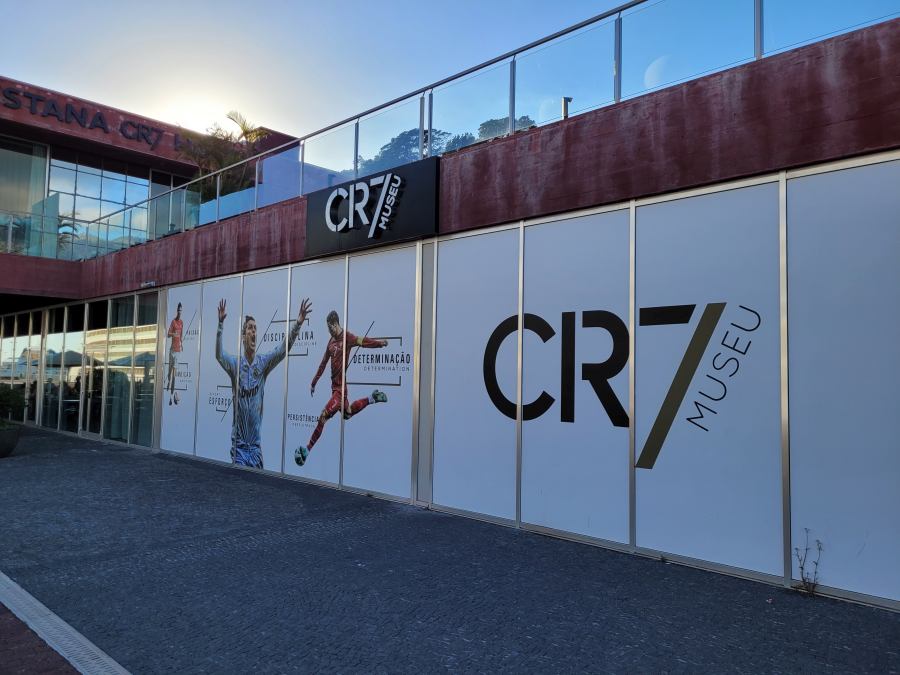
The museum, opened near the harbour on Avenida Sá Carneiro, was inaugurated on 15 December 2013, close to the birthplace of Madeiran football star Cristiano Ronaldo.
The museum was created at Ronaldo’s own initiative, so that Funchal would host the venue where the highlights of his career, his trophies, and personal memorabilia are on display.
The 400-square-metre exhibition space features more than 150 individual and team trophies: among them the five Ballon d’Or awards (2008, 2013, 2014, 2016, 2017), four Golden Boots, and medals from league and cup victories with the national team and club teams. Interactive displays, photographs, videos, and a wax figure complete the exhibition. In front of the museum stands a bronze statue depicting the player, created by Madeiran sculptor Ricardo Velosa.
All information can be found here!
Blandy’s Wine Lodge
The museum on Avenida Arriaga is the most representative venue for the history of Madeiran wine.
The wine cellars, converted from the São Francisco convent, have been in operation since the 17th century, and the Madeiran wines stored here are among the world’s most renowned. The Blandy family, a British wine-trading dynasty, has managed the winery since the 19th century, and it remains one of the region’s defining economic and cultural institutions.
The vast cellars filled with oak barrels offer a walkable exhibition: visitors can learn about Madeira wine’s unique canteiro ageing process, in which the barrels spend their years not in a cellar but in warm attic spaces, undergoing slow oxidative maturation. The collection includes vintages of over a hundred years – a rarity on the world wine market.
All information can be found here!
Madeira Story Centre
Opened in 2005 with the aim of presenting Madeira’s history from the island’s 15-million-year geological past right up to contemporary cultural life. The museum is housed in a renovated 17th-century merchant’s house, which is itself a valuable piece of architectural heritage.
The exhibition takes visitors chronologically and thematically through the island’s volcanic origins, the era of Portuguese colonisation, the rise of the sugar cane and wine industries, the emergence of 19th-century British and aristocratic tourism, and on to the identity of modern Madeira.
Particularly recommended for those wishing to understand the roots of Madeiran culture, local gastronomy, and the island’s unique folk traditions.
All information can be found here!
Funchal weather: when is the best time to visit?
The climate of Funchal – and of Madeira more broadly – is classified as a Mediterranean oceanic climate, shaped by the balancing influence of the Gulf Stream. The island is not without reason called the “Island of Eternal Spring”: there are no extreme heatwaves and no harsh winters, the annual average temperature ranges between 18–22°C, and only two distinct seasons can be distinguished – a warmer, drier summer half-year and a rainier, cooler winter period.
Winter (December–February):
Temperature: 14–19°C. More rainfall, with January being the rainiest month. Fewer tourists, lower prices. Christmas and New Year have a special atmosphere, with fireworks.
Spring (March–May):
Temperature: 17–22°C. Gradually less rain, lush green landscape, abundant flowers. April–May: the time of the Funchal Flower Festival, the ideal period for most tourists.
Summer (June–September):
Temperature: 23–27°C. Almost no rain, especially in the south. The sea is also at its warmest: 21–23°C. Peak season, higher prices and more visitors.
Autumn (October–November):
Temperature: 20–25°C. October is the time of the harvest wine festival. Rain returns towards the end of October, but temperatures remain pleasant. Less crowded than summer.
Best time to visit to Funchal:
The generally best time to visit Funchal is April–May and September–October. In spring, the island is at its most beautiful amid a burst of flowers: the Funchal Flower Festival (two weeks after Easter) decorates almost the entire city; daytime temperatures reach 20–22°C, rain is rare, and tourist crowds have not yet reached their summer peak. In autumn, especially in September, the ocean water is at its warmest (up to 23°C), sunshine is reliable, and the atmosphere of the harvest festivals adds to the experience.
For those seeking seaside relaxation, July–September is the best time, especially for visiting the natural lava pools near Funchal (e.g. Doca do Cavacas) – sandy beaches are rare on Madeira, but the volcanic rock shores and purpose-built seaside bathing areas offer a worthwhile experience. Winter is also worth considering for those who wish to explore the city with low prices and few tourists: temperatures are still around 15–19°C, with only rainy days to expect.