
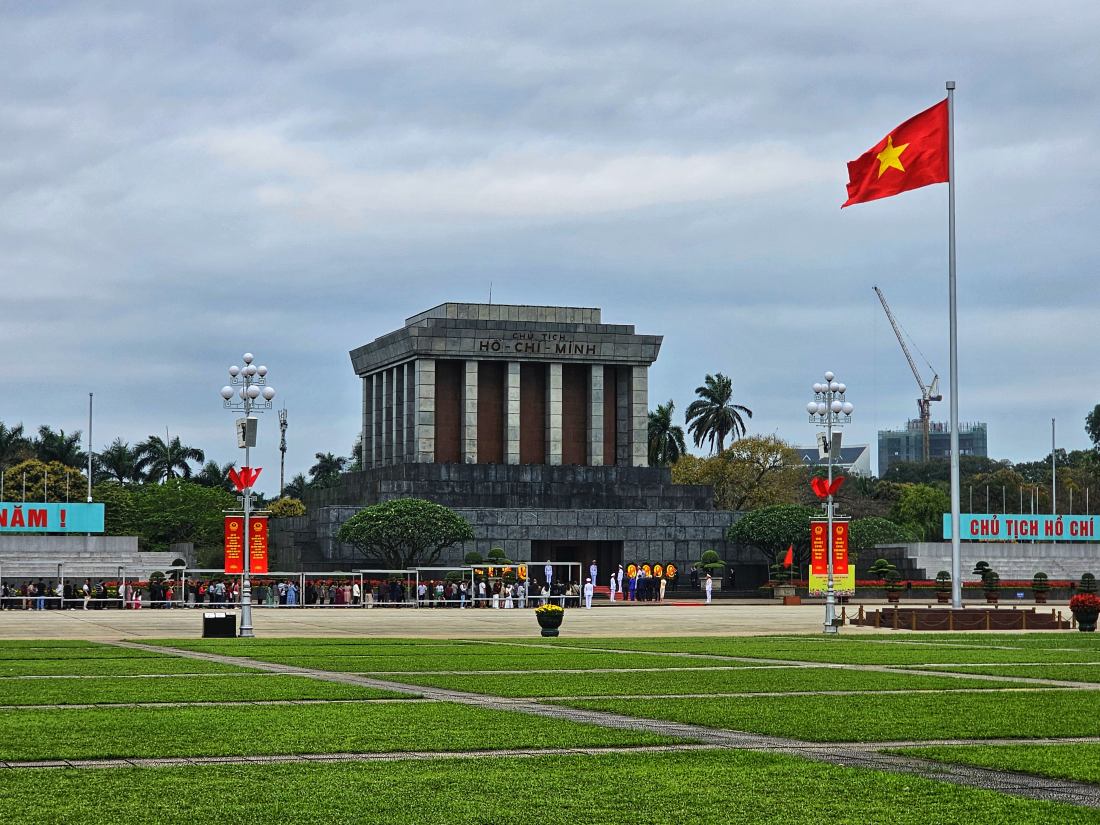
Hanoi is the captivating capital of Vietnam, where ancient temples and French colonial architecture meet the bustle of open-kitchen narrow streets. The following questions and answers will help you navigate the most important information, whether about safety, transportation, or the best time to visit.
Table of Contents
Basic information
What time zone is Hanoi in?
Hanoi is located in the Indochina Time zone (ICT, UTC+7). Vietnam does not observe daylight saving time.
When is the best time to visit Hanoi?
For visiting Hanoi, from October to late April cool, dry season is generally considered the best time to visit. The weather is pleasant, rainfall is low, and conditions are ideal for exploring the city.
The cool season (November–April) is Hanoi’s most pleasant period. Temperatures generally range between 15–25 °C, humidity is relatively low, making it ideal for sightseeing, walks and day trips in the surrounding area.
The hot summer (May–September) brings very hot and humid weather to Hanoi. Temperatures can exceed 35 °C, and heavy tropical downpours are common, mainly in the afternoon and evening. This period is less recommended, though lower prices and fewer tourists may compensate.
One of the most special times in the city is Tet holiday, the Vietnamese Lunar New Year (generally January or February). At this time, Hanoi’s streets are decorated with festive lights and floral ornaments; however, many shops are closed and the city is crowded – it is worth taking this into account when planning your trip.
How many days should you spend in Hanoi?
To explore Hanoi, at least 3–4 days are recommended. The dense streets, numerous historic districts and nearby excursion spots all justify spending this much time.
In 3 days you can generally fit in the most important sights. It is worth strolling around Hoan Kiem Lake, exploring the narrow streets of the Old Quarter, visiting the Ho Chi Minh Mausoleum, and stopping by the Nội Bà Đống Temple.
The 4–5 day stay allows you to explore the city at a more relaxed pace. There is time for a visit to the Vietnam Museum of Ethnology, the Hoa Lo Prison, as well as a day trip to the surroundings, for example to the Ninh Binh region or Ha Long Bay.
What is the official currency in Hanoi?
The official currency of Hanoi is the Vietnamese dong (VND), which is used throughout the country.
Payment in Hanoi is mostly made in cash, especially at markets, street food stalls and smaller shops. ATMs are widely available throughout the city and generally offer the best exchange rates. Credit cards are accepted at larger restaurants, hotels and shopping centres, but should not be relied upon everywhere.
Here is a currency converter calculator where you can check the daily exchange rate!
Do people speak English in Hanoi?
In the tourist areas of Hanoi, especially in the Old Quarter, hotels and popular restaurants, English is generally spoken, but this is not always the case in everyday situations. Learning a few basic Vietnamese phrases can be very helpful.
Most of the younger generation and those working in the tourism sector understand and respond in English. However, at smaller markets, street food stalls or in residential city districts, English proficiency may be limited. In such cases, a translation app can be very useful for written communication.
What type of electrical outlets are used in Hanoi?
Vietnam primarily uses Type A, C and F electrical outlets. Type F matches the European standard, so most European devices can be connected without an adapter; however, modern hotels may also have Type A (flat-pin) sockets, which require an adapter.
The mains voltage in Vietnam is 220 Volts, 50 Hz, which is the same as in Europe so a voltage converter is generally not needed.
How does internet and SIM card usage work in Hanoi?
Internet connectivity in Hanoi is excellent, and free Wi-Fi is available in most hotels, cafés and restaurants. If you need continuous mobile internet, it is worth buying a local SIM card, which is extremely cheap and easy to obtain.
Local SIM cards (e.g., Viettel, Mobifone, Vinaphone) are available at the airport and can be obtained for a few euros with a 30-day unlimited data package. The eSIM option is also becoming increasingly widespread, which can be ordered and activated before leaving home. This is particularly convenient if you want to use mobile internet immediately on the plane or right after landing.
Is tipping customary in Hanoi?
Tipping is not as deeply rooted a tradition in Vietnam as it is in, say, Mexico, but in tourist areas and higher-end restaurants it is increasingly expected and gratefully received.
In restaurants, a tip of 5–10% of the bill is appropriate if you were satisfied with the service. For excursions, tipping is expected.
Travel and transportation
How do I get from the airport to the centre of Hanoi?
Hanoi’s main airport is Noi Bai International Airport (HAN), located approximately 35–45 kilometres from the downtown Old Quarter. Travel time can be 40–75 minutes depending on traffic, so it is worth planning your journey in advance.
Several bus routes operate from the airport to various parts of the city. Very cheap, but you should allow at least one hour of travel time. Tickets can be purchased on the bus from the conductor.
The Grab (Southeast Asia’s leading ride-hailing app) is one of the best options: the price is transparent, no haggling required, and it is safe. A Grab ride from the airport to the city centre costs around 250,000–300,000 dong.
What is the most convenient way to get around Hanoi?
Hanoi’s traffic may seem chaotic at first glance due to the enormous number of motorbikes and the unique traffic rules, but with a little experience travellers can navigate it with ease. For tourists, the ideal combination is Grab, a rented motorbike and walking.
The Grab app is one of the safest and most convenient options: you can order a car or motorbike, the price is shown upfront, and no haggling is required. In the Old Quarter, walking is often the best choice, as in the dense, narrow streets it is frequently faster than travelling by car.
For those who want to explore the city more adventurously, a rented motorbike is an excellent option: it offers flexible travel and the experience itself is a significant part of the adventure. However, it is important to be a confident rider and to follow the traffic rules.
Accommodation and safety
Is Hanoi a safe city?
Hanoi is generally a safe destination for tourists, particularly regarding violent crime. The biggest risks are pickpocketing and bag snatching from motorbikes, but with a little caution these can be easily avoided.
What should you watch out for?
Do not wear expensive jewellery or carry bags visibly on the street. Do not hold your phone openly in your hand on busy streets. Walking alone in unfamiliar districts at night requires caution.
Which neighbourhood is best to stay in Hanoi?
Among the best accommodation neighbourhoods in Hanoi are the Old Quarter, the area around Hoan Kiem Lake, and the Ba Dinh district. These are well located, have numerous attractions, restaurants and cafés, and are safer for tourists.
The Old Quarter is Hanoi’s most bustling and vibrant area: its narrow streets still contain lanes specialised in guild wares, and plenty of hostels, small hotels, restaurants and street food stalls await travellers. Those who truly want to experience the pulse of Hanoi’s daily life should stay here.
The area around Hoan Kiem Lake offers a pleasant middle ground between the bustle of the Old Quarter and the quieter parts of the city. It is close to the most important historical sights, while the lakeside promenade also provides a pleasant place to relax.
The Ba Dinh district is a quieter neighbourhood, home to premium hotels and close to embassies. It is ideal for those seeking a more comfortable, peaceful environment, while the Ho Chi Minh Complex is nearby.
Health information
Are mandatory vaccinations required to travel to Hanoi?
For travel to Hanoi, there is generally no mandatory vaccination required for Hungarian travellers; however, several vaccinations are strongly recommended, especially if you plan to make trips to rural areas.
The recommended vaccinations include hepatitis A and B, typhoid, and a tetanus booster.
Is tap water safe to drink in Hanoi?
Drinking tap water in Hanoi is not recommended. Most locals also use bottled or filtered water for drinking, and travellers are advised to do the same.
The maintenance of tap water and the age of the pipe network vary, which means contaminants may enter the water, potentially causing stomach and digestive complaints. Bottled water should be purchased from a reliable shop – it is also available in most hotels. Most tourists use tap water for brushing their teeth, but bottled water is recommended for this too if you have a sensitive stomach.
Experiences
What are the must-see attractions in Hanoi?
Among Hanoi’s most famous attractions are Hoan Kiem Lake and the Ngoc Son Temple, the street network of the Old Quarter, the Ho Chi Minh Mausoleum, the One Pillar Pagoda, the Vietnam Museum of Ethnology and Hoa Lo Prison. These places provide an excellent introduction to Hanoi’s rich history, culture and spirit.
The Hoan Kiem Lake is the soul of Hanoi: at the centre of the legendary lake stands the Ngoc Son Island Temple, connected to the shore by a red bridge. The promenade around the lake is packed with locals and tourists day and night – it is an excellent place to soak up the vibrant everyday life of Hanoi.
The Ho Chi Minh Mausoleum and the surrounding complex (including the former presidential residence, the beautiful park and the One Pillar Pagoda) are a must-visit. To view Ho Chi Minh’s embalmed body in the mausoleum, appropriate dress is required (covered shoulders and knees).
The Hoa Lo Prison, sarcastically nicknamed the “Hanoi Hilton” by Americans during the Vietnam War, now operates as a museum. It is a moving and informative place to visit.
The Vietnam Museum of Ethnology displays the lives of the country’s 54 ethnic groups in stunning detail, with traditional buildings. It is especially recommended for those who want to learn more about Vietnamese culture.
What are the most popular foods and drinks in Hanoi?
Hanoi’s cuisine holds a distinguished place worldwide. The best-known dishes are pho soup, bún chả and bánh mì, while among the most popular drinks you will find bia hơi (beer) and cà phê trứng (egg coffee).
The pho is Vietnam’s national dish: a fragrant rice noodle soup made from beef bone broth, with fresh ginger, herbs and thin slices of beef or chicken. In Hanoi, pho has a slightly different taste from the southern version – it is lighter and contains fewer spices, but is still exceptionally flavourful.
The bánh mì is a delicious Vietnamese sandwich, typically made from a crispy baguette, various meats (such as pork or chicken), fresh vegetables and spicy sauces.
The bún chả is truly Hanoi’s local speciality: grilled pork meatballs and slices served with rice noodles in a tangy dipping sauce, salad and fresh herbs.
The cà phê trứng, the classic Hanoi coffee made with egg yolk cream and sugar. It is well worth trying at the original location, Giang Café!
What are the important holidays and festivals in Hanoi?
Hanoi hosts numerous important holidays and festivals throughout the year. Among the most well-known are the Tet holiday (Vietnamese Lunar New Year), Vietnamese National Day and various Buddhist festivals, which come alive around the pagodas and temples.
The Tet holiday is the Vietnamese lunar New Year, celebrated in early January or February. At this time, the streets are decorated with cherry and peach blossom trees, fireworks fill the air, and the whole city dresses up in a festive mood. However, many shops, restaurants and attractions are closed during Tet week – it is important to keep this in mind when planning.
The Vietnamese National Day (2 September) is Vietnam’s Independence Day, proclaimed by Ho Chi Minh in 1945. Ceremonies are held at Ba Dinh Square, and fireworks go off at various points around the city.
The Trung Thu Moon Festival (in autumn, at the time of the full moon) is primarily aimed at children, but the whole city celebrates: lantern processions, mooncake markets and colourful lanterns fill the streets of the Old Quarter with festive atmosphere.