Bali is Indonesia’s most famous destination and one of the world’s most popular holiday islands, offering a unique blend of culture, relaxation, and nature. Here’s a guide to some of Bali’s best attractions, showcasing why it’s worth planning a trip to this diverse island.
Bali can be divided into two parts. The southern part is primarily about beaches and bustling activities, while the northern part reveals the true nature and Indonesian culture. To get a complete experience, explore both sides!
Table of Contents
Beaches in Bali
If you’re looking for dazzling white sandy beaches, Bali might not be the place. Many beaches here have black volcanic sand. However, neighboring islands like the Gili Islands offer more picturesque beaches, accessible by a short boat ride.
Tidal changes are significant in Bali, affecting the beach’s appearance.
Kuta
It is the most famous beach area, known more for its nightlife and restaurants than the beach itself. It’s also a surfer’s paradise due to large waves.
Legian Beach
North of Kuta, it is similar but slightly quieter.
Seminyak Beach
Further north, Seminyak is well-developed with a wide, shallow shoreline and the quietest among Kuta’s beaches.

Sanur
On the opposite side of Kuta, Sanur offers calmer waters, shallower beaches, and a 5 km bike path.
Nusa Dua
In the south, it is known for its golden sand and upscale resorts but lacks authentic Balinese ambiance.

Pantai Samuh
Near Nusa Dua, it is also well-developed with restaurants, water sports, and bars.
Jimbaran Beach
South of the airport, it is popular for its long, wide, and beautiful shoreline lined with hotels and restaurants.

Suluban Beach
Near Uluwatu Temple, it offers stunning views from atop a cliff, accessed via a long staircase, making it less crowded.
Lovina Beach
On the northern coast, it stands out for dolphin-watching tours.
Remember, Bali’s climate makes its beaches unique, with black sand and varying tidal conditions, offering a different beach experience than typical white-sand beaches.
Rice terraces
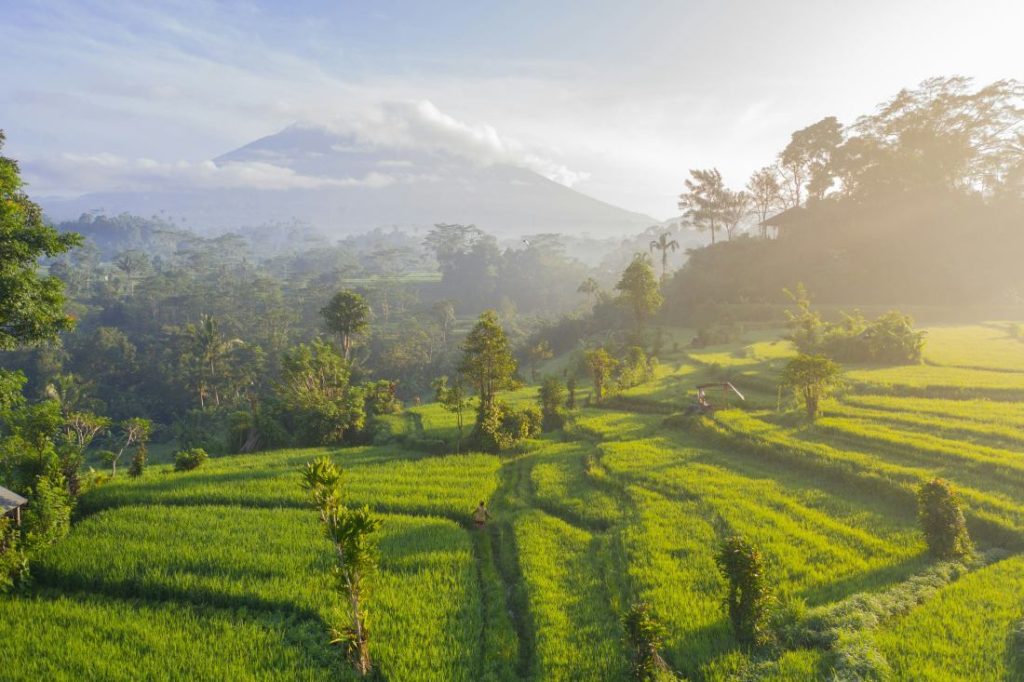
You might have seen pictures of massive, step-like rice fields. In Bali, you can see these in real life, as many locals live off rice farming.
Jatiluwih
The largest and most picturesque rice terrace, a World Heritage site. Especially if you go after the rain, when the water stays on the steps of the „terrace”, offering a spectacular view.

Tegallalang
Another famous rice terrace is Tegallalang, where you can walk among the terraces and watch the rice farmers at work, enhanced by the beauty of palm trees.

Temples
Bali is home to thousands of temples.
Tanah Lot
This rock temple is one of the most famous, revered as one of the holiest by Balinese people.
Situated on a small rock, it’s only accessible during low tide, surrounded by water during high tide. Built in the 17th century, it’s dedicated to Baruna, the sea god.

Uluwatu
Another significant rock temple, located on the southern part of the island atop a high cliff.
Those not practicing the local religion are not permitted inside, but it’s still worth visiting, especially for its breathtaking sunset views.

Taman Ayun
The Royal Family Temple is renowned for its unique location on a small island-like area surrounded by a moat.
It consists of three courtyards, a rarity in the world. The architecture is a fascinating mix of Balinese and Chinese styles.
Ulun Danu
Located in the north on the shores of Lake Beratan, this temple is dedicated to the water goddess, Danu.
It’s also a pilgrimage site for Indonesian couples seeking fertility blessings. During high tide, it becomes inaccessible, surrounded by the lake’s water, making boat rides around the temple popular.

Besakih Temple
In the northeastern part, at the foot of Mount Agung, lies Bali’s largest temple complex, the Besakih Temple. It comprises three main and 19 secondary temples, accessible via winding paths.

Pura Lempuyang Temple
One of Bali’s most iconic, requiring a climb of nearly 1700 steps to the top of Seraya Mountain.
The complex includes seven temples, offering stunning views of Mount Agung. Its famous gateway is often referred to as the „gateway to heaven”.

Goa Gajah
Known as the Elephant Cave Temple, it’s unique for its carved elephant head above the entrance.
The cave is man-made, and legends say if you listen closely, you might hear the voice of the goddess Shiva. Worth trying, but don’t keep high hopes.

Waterfalls
The „jungle” environment of Bali is home to numerous waterfalls, making it hard to choose the most beautiful.
Tegenungan
One of the most touristy waterfalls, located near the southern part of Bali, making it very popular. At the top of the waterfall, sitting on the rocks, you can dangle your feet for a fantastic view.

Kroya
At Kroya waterfall, you can actually slide down! The waterfall isn’t big, but the water cascades down a slide-like section, allowing for a fun descent.
Gitgit
Located in the north, near the Ulun Danu temple, a short walk is required to see this waterfall curtain.
Sekumpul
A name familiar to many, Sekumpul is close to Gitgit, and within a few hundred meters, you can find many smaller waterfalls.
It’s worth taking a stroll to see a few of them! Nearby is the Fiji rice terrace, a must-see for many visitors.

Banyumula
Located north of Lake Buyan, easily accessible by car, followed by about a 10-minute walk to reach this beautiful waterfall. You can swim in its crystal-clear waters.

Kanto Lampo
Close to the south, near Ubud, Kanto Lampo is a great option for those not visiting the northern part of Bali. You can stand in the middle of the waterfall and enjoy the cascading water.
Cepung Waterfall
Located between Ubud and Lake Batur, best visited in the morning when sunlight breaking into the cave creates a magnificent sight.

Ubud and its surroundings
Ubud
Next to Denpasar, Ubud is the second most important town.
Located in the heart of Bali, surrounded by jungle-covered hills, it’s the island’s most atmospheric place, a cultural and artistic hub, and a center for traditional crafts. The local market is a must-visit.
Gedong Arca Purbakala
For those interested in museums and archeology, this museum is filled with stone and bronze age jewelry and artifacts.
Its most interesting items are over 50 various-sized sarcophagi, estimated to be about 1200 years old.
Monkey Forest
Near Ubud, home to numerous macaques. The monkeys are accustomed to humans, so don’t be surprised if they snatch food from your hand.
Other attractions in Bali
Tirta Gangga
The royal water palace is fed by sacred water (tirta) from surrounding hills.
Not only the pools and fountains but also the experience of walking on water (via stepping stones) is unique.

Penglipuran
An ancient village preserving centuries-old architectural traditions. Most buildings are made of bamboo, showcasing its diverse use.
Visitors can glimpse into the daily life of locals, and are often invited to eat at their homes!
Batur Volcano
For hiking enthusiasts, Batur offers an exciting trek. The highest point of the crater is 1,717 meters, offering fantastic views.
On clear days, you can even see Mount Rinjani on neighboring Lombok Island.

Handara Gate
Located between Lake Bratan and Lake Buyan, this gateway of a golf club is one of the most photographed sites on the island. It’s a must-visit on a northern tour, especially if self-organized.

Diving and snorkeling
US Liberty Wreck Ship
In the northeast, near Tulamben, this WWII shipwreck is a prime diving site. Damaged in the war, it was pushed into the sea by the 1963 eruption of Mount Agung. The unique marine life here is due to the grey volcanic sand. Estimates suggest 1,400 species live in this small bay.
Japanese Shipwreck
Located in Banyuning village, this wreck is accessible for snorkelers due to its shallow location. The beauty lies not in the wreck itself but in the stunning corals that have grown over it.
Padang Bai
A well-known diving spot on the eastern coast, also a departure point for boats to Lombok.
Nusa Lembongan
East of Denpasar, this island is accessible by daily boats from Sanur in just half an hour. You can quickly tour the island by scooter or motorbike.

Lembongan Beach
The central part of the island, featuring a developed white sandy beach. Great for diving and snorkeling.
Dream Beach
Located in the south, it offers unbeatable views and is an ideal spot to watch the sunset.
Mangrove Bay
A quiet beach bordered by a mangrove forest. Nearby stalls offer refreshing coconut water.
Local specialty: Kopi Luwak
One of the world’s most expensive coffees. Kopi Luwak is strong, but its production makes it unique.
A civet cat living in trees loves coffee cherries and eats only the finest. The cherries pass through its digestive system, undergoing chemical processes. These are then collected from the feces, cleaned, and processed like regular coffee.
Reportedly, those who drink a cup of luwak coffee will feel energized for hours. Worth a try!
Weather in Bali
Bali has a monsoon climate with two seasons: the dry season from June to November and the rainy season from December to May.
During the dry season, expect little rainfall, warm, dry, sunny weather, and pleasant breezes, although winds may strengthen in July and August.
The rainy season brings more precipitation, particularly in the highlands. However, even during the rainy season, the southern part of the island – where most hotels are located – receives less rainfall.