
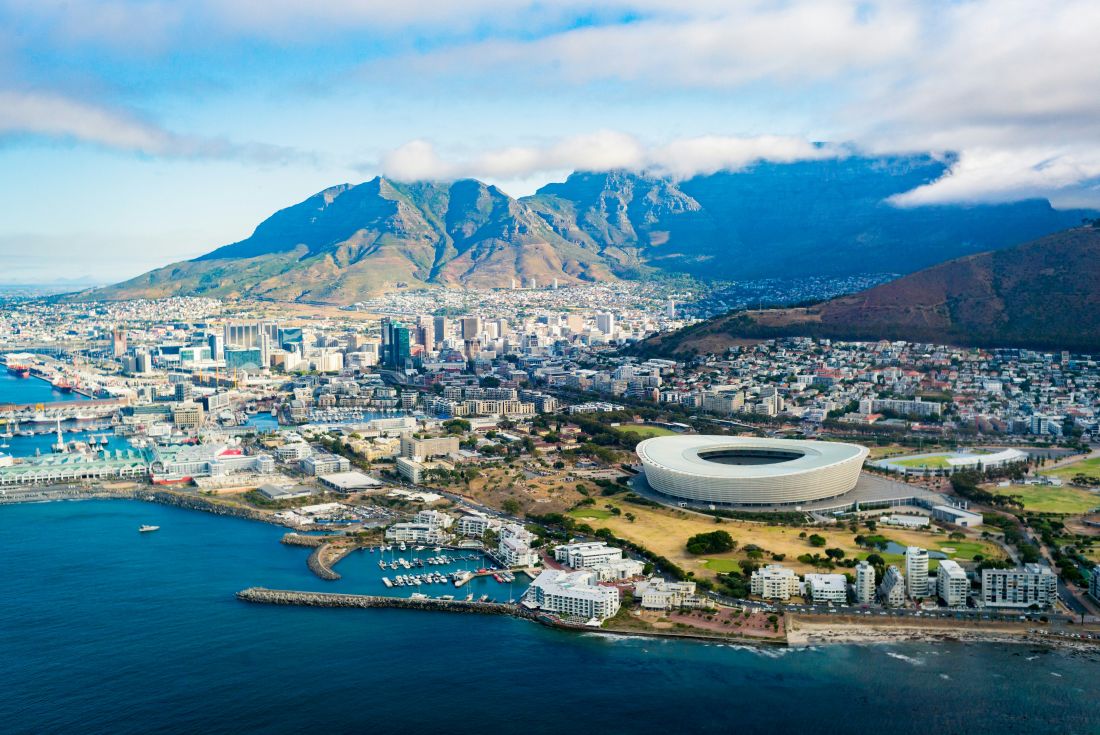
Cape Town is South Africa’s most spectacular city, made unforgettable by some of the world’s most beautiful natural surroundings. The questions and answers below will help you navigate the most important things to know, whether it’s about safety, transportation, or the best time to travel.
Table of Contents
Basic information
Why is it worth traveling to Cape Town?
Cape Town is one of the most beautiful and diverse cities in the world, where breathtaking natural scenery, rich history, and vibrant cultural life come together. The striking silhouette of Table Mountain, the ancient rock formations of the Cape, and the endless waters of the Atlantic Ocean give the city a truly unique backdrop.
World-class restaurants, wine regions, beaches, penguin colonies, and African wilderness await visitors in the city. The Winelands, the penguins of Boulders Beach, and the Cape Point nature reserve are all reachable on a day trip.
What time zone is Cape Town located?
Cape Town is located in the South African time zone (SAST, UTC+2), which is the same as Central European Summer Time (CEST). South Africa does not observe daylight saving time.
When is the best time to travel to Cape Town?
Generally, the summer period between November and April is considered the best time to visit. The weather is sunny, warm, and dry, ideal for the beach and outdoor exploration.
South African summer (December–February) is the warmest period, with daytime temperatures around 25–30°C. This is peak season, when the city’s atmosphere is at its liveliest. March and April are also pleasant and less crowded.
The winter months (June–August) are rainier and cooler, but in return cheaper and less crowded. This is an excellent time for whale watching near Hermanus. The weather can be variable, but most attractions are open year-round.
How many days should you spend in Cape Town?
To explore Cape Town properly, at least 4–5 days is recommended. The city and its immediate surroundings offer countless attractions, and given the traffic and distances, it’s worth allowing enough time for travel.
In 4 days the most important sights fit in: Table Mountain, the V&A Waterfront, the Bo-Kaap neighborhood, the Boulders Beach penguin colony, and Cape Point. It’s a tight but doable schedule.
A 6–7 day stay leaves time to also visit the Winelands (Stellenbosch, Franschhoek), as well as explore local beaches, markets, and restaurants at a more relaxed pace.
What is the official currency in Cape Town?
Cape Town’s – and all of South Africa’s – official currency is the South African rand (ZAR), which is used for everyday purchases, restaurant bills, and transportation alike.
Larger hotels, shopping centers, and restaurants generally accept credit cards as well. In smaller shops, markets, and street stalls, it’s advisable to carry cash. ATMs can be found at the airport and in the city center.
You can check the current exchange rate here!
Is English spoken in Cape Town?
Yes, English is widely spoken in Cape Town. English is one of the official languages of South Africa, and you can communicate in English almost everywhere in tourism, hotels, restaurants, museums, and shops.
Afrikaans and Xhosa are also common among the local population, but this doesn’t cause any issues in tourist areas. Given Cape Town’s cosmopolitan character, English is the generally accepted language of communication.
What type of power outlet is used in Cape Town?
In South Africa, the Type D/M outlet (with a round, triangular pin arrangement) is primarily used, which differs from the European standard. It’s worth bringing a universal travel adapter.
The mains voltage is 220–230 volts, 50 Hz, matching the European standard, so most devices (chargers, laptops) work without a voltage converter – you’ll only need a plug adapter.
How does internet and SIM card use work in Cape Town?
Internet connectivity is generally good in Cape Town: free Wi-Fi is available in most hotels, cafés, and shopping centers. Mobile networks in the city and tourist areas are reliable.
Local SIM cards can be purchased at the airport or at phone shops around the city. The best-known providers are Vodacom, MTN, and Telkom – all three offer good data packages for tourists. eSIM options are also increasingly popular and can be purchased and activated online before your trip.
Is it customary to tip in Cape Town?
Yes, tipping is common practice in Cape Town – and throughout South Africa – especially in restaurants, hotels, and with taxi drivers.
In restaurants, 10–15% of the bill is the expected tip. It’s also customary to tip drivers, tour guides, and hotel staff. Note that in most places cash is the most suitable way to tip, since it can’t always be added when paying by card.
Travel and transportation
How do I get from the airport to central Cape Town?
Cape Town International Airport (CPT) is located about 20 km from the city center. There are several ways to reach downtown, the most convenient being taxi and transfer services.
Available through their apps, Uber and Bolt are reliable and affordable options. Traditional taxis are also available at the airport, but it’s worth agreeing on the fare in advance. The MyCiTi bus service (route T01) also connects the airport to the city center, offering a cheaper but slower option.
How can you get around in Cape Town?
The most convenient way to get around Cape Town is by renting a car or using Uber/Bolt. Public transport (MyCiTi bus, metro) is also available, but the network doesn’t cover all tourist locations.
Renting a car is recommended if you want to reach the Winelands, Cape Point, or the Boulders Beach penguin colony. The country drives on the left, which can take some getting used to at first. The City Sightseeing buses run hop-on hop-off between the main attractions, offering a practical way to see the city.
Accommodation
Where is it best to stay in Cape Town?
Cape Town’s various neighborhoods offer different atmospheres. The best-located accommodation options can be found in City Bowl, the V&A Waterfront and Camps Bay neighborhoods. These areas are safe and close to attractions and restaurants.
City Bowl is the heart of the city center, ideal for those who want to explore downtown on foot. The V&A Waterfront is near the sea, with luxury and mid-range hotels. Camps Bay is ideal for beach lovers, though somewhat pricier. Airbnbs and guesthouses are also popular and offer good value for money.
Is Cape Town safe for tourists?
Cape Town is a beautiful and welcoming city, but – as in many big cities – it’s worth being cautious. Tourist areas (V&A Waterfront, City Bowl, Camps Bay) are generally safe during the day, but it’s advisable to avoid walking alone at night.
Avoid displaying valuables openly. Don’t leave valuables in your car. Suburbs – especially at night – are best visited only as part of an organized tour.
Health questions
Do you need vaccinations to travel to Cape Town?
Vaccinations are generally not required to travel to Cape Town, though some are recommended. A medical consultation before your trip is always advisable.
Recommended vaccinations: hepatitis A, typhoid, diphtheria-tetanus-polio (DTP). If your trip also includes malaria-risk areas (e.g., Kruger National Park), malaria prophylaxis may be necessary, though Cape Town itself is in a malaria-free area. A yellow fever vaccination is not required upon entering South Africa, but if you’ve previously visited a malaria-risk African country, proof may be requested.
What healthcare services are available in Cape Town?
Both private and public healthcare are available in Cape Town. Private hospitals (e.g., Groote Schuur, Netcare) provide European-standard care, but at a cost. Public hospitals are free, but expect longer waiting times.
Travel insurance is strongly recommended, as it covers medical expenses. Medications and basic pharmaceutical products are readily available at local pharmacies (e.g., Clicks, Dis-Chem).
Experiences
What are the most important attractions in Cape Town?
Cape Town and its surrounding area are full of world-famous attractions. The most visited places are:
- Table Mountain – the symbol of the city, offering an unparalleled view;
- Cape Point – the southwestern tip of the African continent, with stunning cliffs;
- Boulders Beach – where African penguins live freely;
- V&A Waterfront – the iconic harbor district with shops, restaurants, and museums;
- Bo-Kaap – the photogenic Cape Malay neighborhood known for its colorful houses;
- Robben Island – the site of Nelson Mandela’s imprisonment, a UNESCO World Heritage Site.
What excursions are worth taking from Cape Town?
Cape Town offers many day-trip opportunities to nearby natural and cultural attractions.
- The Winelands (Stellenbosch, Franschhoek, Paarl) are just 45–60 minutes away by car – world-famous wines and beautiful scenery await visitors.
- The Garden Route, starting east of the city, is also suitable for a multi-day trip.
- Hermanus (about 1.5 hours by car) is one of the best spots for whale watching from June to November.
What foods are typical of Cape Town?
Cape Town’s gastronomy is incredibly diverse: from fresh seafood, through local braai (barbecue) traditions and Cape Malay cuisine, to fine dining restaurants, there’s something to suit every taste.
- The Cape Malay cuisine is one of the city’s most distinctive traditions: curries, samoosas, and spiced meat dishes are characteristic.
- Fresh lobster, hake, and oysters are specialties of local seafood restaurants.
- The braai (South African barbecue) is a must-try culinary experience, as are the local wines from the Winelands region.
Where can you eat cheaply in Cape Town?
You don’t need to spend much for good food in Cape Town. The best places for cheap eats are the local markets and street food vendors.
The Old Biscuit Mill market offers the best and most varied selection on Saturdays. The V&A Food Market in the harbor district is also an affordable, quality option. In the Bo-Kaap neighborhood, small Cape Malay restaurants serve authentic, inexpensive food.