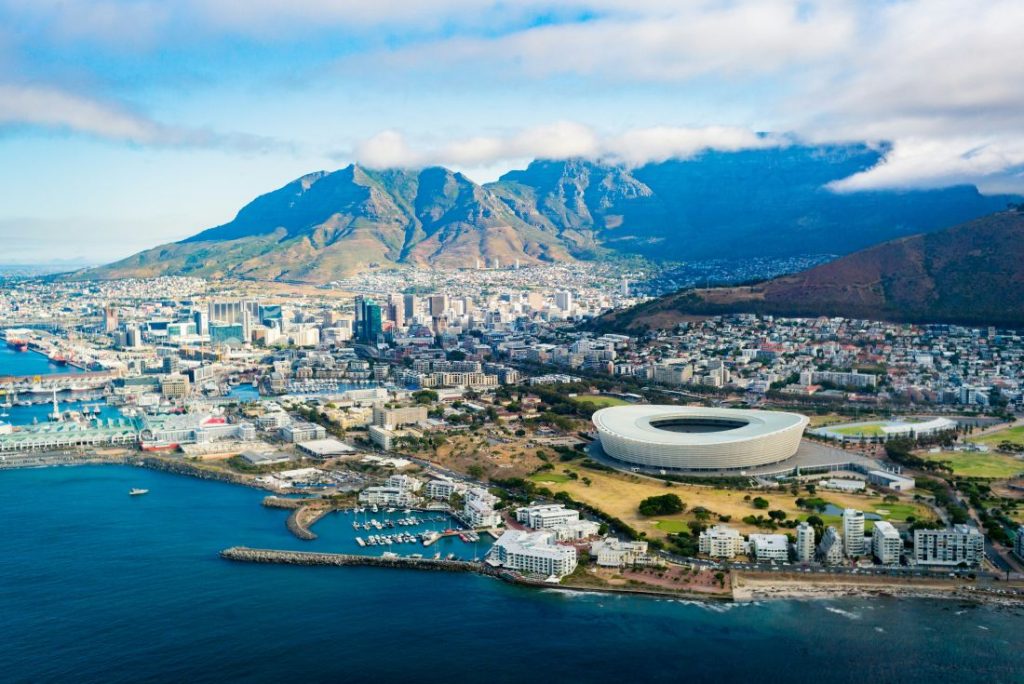
Cape Town as the southern point of Africa is a defining city not only in South Africa, but on the entire continent. Its wonderful location makes it one of the most beautiful cities in the world for many people.
The capital of Western Cape Province, with its unique geographical location, stretches out in a stunning natural environment where high mountains meet the ocean. The metropolis, also known by the nickname „Mother City”, has a rich historical past shaped by the fusion of Dutch, British, and African cultures.
Table of Contents
Cape Town attractions
Table Mountain
Table Mountain is Cape Town’s most famous symbol and the defining element of the city’s panorama. The 1,085-meter-high mountain peak got its name from its flat top, which forms a special geological formation.
The mountain is often covered by cloud cover, which locals call the „tablecloth”. The summit can be reached by a modern cable car that has been transporting visitors since 1929. The panorama from the top is unique: a 360-degree view opens up over the city, the ocean, and the surrounding mountains.
The mountain is part of a national park with rich flora and fauna. More than 1,500 plant species can be found here, many of which are endemic. Walking trails can be taken on the summit, and a particularly stunning view unfolds before visitors at sunset.

Kirstenbosch Botanical Garden
The world-class botanical garden, founded in 1913, is located at the foot of Table Mountain and serves to protect and showcase South Africa’s indigenous flora.
The 528-hectare garden preserves more than 7,000 South African plant species, including many rare and endangered species. In addition to the Protea garden, the medicinal plant garden, and colorful flower beds, there is also a spectacular canopy walkway that is 130 meters long and 12 meters high.
The garden is part of the UNESCO World Heritage Site and hosts regular concerts in summer. The harmony of natural forests and cultivated garden areas provides a special experience, especially in spring when wildflowers bloom.
V&A Waterfront
Cape Town’s most popular tourist and entertainment center, developed around the working harbor. The name refers to Queen Victoria I and her son, Prince Albert.
The complex includes more than 450 shops, restaurants, bars, and entertainment venues. The Two Oceans Aquarium is also located here, showcasing the marine life of the meeting point of the Atlantic and Indian Oceans. Boats to Robben Island also depart from the harbor.
The Waterfront’s architecture combines modern and traditional elements, while the promenades offer beautiful views of Table Mountain. The atmosphere is particularly charming in the evenings.
Bo-Kaap District
The Bo-Kaap district is one of the city’s most colorful areas, famous for its brightly colored houses and rich cultural heritage. The district has been home to the Malay community since the 18th century.
The area was the residence of descendants of slaves and political prisoners of Malay origin, who brought Islam and Malay culture with them. The colorful houses originally received bright paint because residents wanted to express their freedom after the end of slavery.
Today, the Bo-Kaap Museum provides insight into the community’s history and culture. The narrow, cobblestone streets, mosques, and traditional cuisine create a special atmosphere. The district is one of the most important centers of African Islamic culture.

Castle of Good Hope
Africa’s oldest European fortification, built between 1666 and 1679 by Dutch colonists. The pentagonal fort was originally the military and administrative center of the Dutch East India Company.
Within the castle walls is the Military Museum, which presents South Africa’s military history. The William Fehr Collection is also housed here, featuring furniture, paintings, and decorative objects from the colonial period.
The castle courtyard is a regular venue for cultural events and exhibitions. Beautiful views of the city and harbor can be seen from the walls. During the building’s restoration, the original Dutch colonial architectural style was preserved.
St. Mary’s Cathedral
Cape Town’s Roman Catholic cathedral was built in 1851 in neo-Gothic style. The cathedral played a significant role in the fight against apartheid.
Archbishop Desmond Tutu served here for many years, and the church was an important meeting place for the civil rights movement. The cathedral’s beautiful stained glass windows and high tower provide a distinctive sight.
The interior of the church is imposing, decorated with high vaults and detailed wood carvings. The cathedral’s surroundings border the Company’s Garden park, which has additional historical significance in the city’s development.
Rhodes Memorial
The memorial was built in 1912 in memory of British colonizer Cecil Rhodes. Located on the side of Devil’s Peak mountain, it offers stunning views of the city.
Rhodes played a key role in the colonization of South Africa and the development of the diamond industry. There is a park around the memorial, which is a popular excursion destination among locals.
In recent years, the memorial has become a controversial symbol in social discourse related to the colonial past and apartheid legacy. Nevertheless, due to its historical significance and the view, it remains an important tourist point.
Signal Hill
A 350-meter-high hill in the center of Cape Town that historically played an important role in navigation. In the 18th-19th centuries, signals were given from here to incoming ships.
From the hill, an unparalleled panorama opens over Cape Town, the harbor, and the Atlantic Ocean. It is particularly popular at sunset when the city’s lights begin to come on.
Signal Hill is easily accessible by car or on foot and is a favorite location for photographers and romantic walks. The small café and rest area on the hilltop is a perfect stop during city exploration.
Camps Bay
One of Cape Town’s most exclusive seaside resorts, located at the foot of the Twelve Apostles mountains. The four-kilometer-long white sandy beach lies on the Atlantic Ocean shore.
Behind the beach, elegant restaurants, bars, and cafés line up, creating a special atmosphere. The promenade is lined with palm trees and is a popular walking area for both locals and tourists.
The beach received Blue Flag certification for water and beach quality. Property prices in the area are among the highest in Cape Town, and many international celebrities choose it as their vacation destination.

Lion’s Head
The 669-meter-high mountain peak got its name from its characteristic shape – its profile resembles a lion’s head. The mountain lies between Table Mountain and Signal Hill.
The hiking trail to the summit is popular among locals and tourists, especially on full moon evenings. The climb takes about an hour, and chains help climbers on the steeper sections.
From the top, a 360-degree panorama opens over Cape Town, the ocean, and the surrounding mountains. The view is particularly stunning at sunset and sunrise, so many people start for the summit at dawn.
Best museums in Cape Town
South African National Gallery
The museum, founded in 1871, houses the country’s most important fine arts collection. The gallery is located in a classicist building in Company’s Garden park.
The collection contains more than 7,000 artworks, including South African, African, and European works. The representation of 19th and 20th-century South African painting and sculpture is particularly rich.
The museum organizes regular temporary exhibitions featuring contemporary African artists and international creators. The development of South African art can be traced from the colonial era to the present day.
All information can be found here!
District Six Museum
A special memorial site that documents one of the saddest chapters of the apartheid system. The museum is located on the site of the former District Six mixed residential district.
In the 1960s, the white government relocated 60,000 members of the colored population from this area and demolished the district. The museum presents this tragedy through personal stories.
The exhibition evokes the life of the former community with authentic objects, photographs, and personal memories. On the museum floor, former residents could mark the location of their homes on a large map, which is a deeply moving experience.
All information can be found here!
Diamond Museum
The unique museum located in the city center presents the history of South Africa’s diamond mining.
The exhibition shows the geological process of diamond formation, mining techniques, and diamond processing. Original mining tools and reconstructed mine shafts are also visible.
The museum’s collection includes rare and valuable diamonds, including large rough stones and cut jewelry. Visitors can learn how diamond mining shaped South Africa’s history and economy.
All information can be found here!
Iziko South African Museum
One of Cape Town’s oldest and most important museums is located in the Company’s Garden. Founded in 1825, it has since become one of the most important centers of South African natural science and cultural heritage.
The museum’s impressive collection includes millions of objects. Here you can find dinosaur skeletons, fossils, marine life, stone tools, and copies of ancient rock paintings. The planetarium and exhibitions showcasing the lives of African peoples are particularly popular with visitors.
The exhibitions are not only informative but also spectacular, providing an exciting experience for adults and children alike. The museum is the ideal place to discover South African nature and history.
All information can be found here!
Main attractions around Cape Town
Muizenberg Beach
One of Cape Town’s best-known and most popular beaches is located on the outskirts of the city, in Muizenberg.
It is particularly popular with beginner surfers. The long, flat coastline offers perfect waves for learning, and there are several surf schools and rental shops here, making it easy to try out the sport.
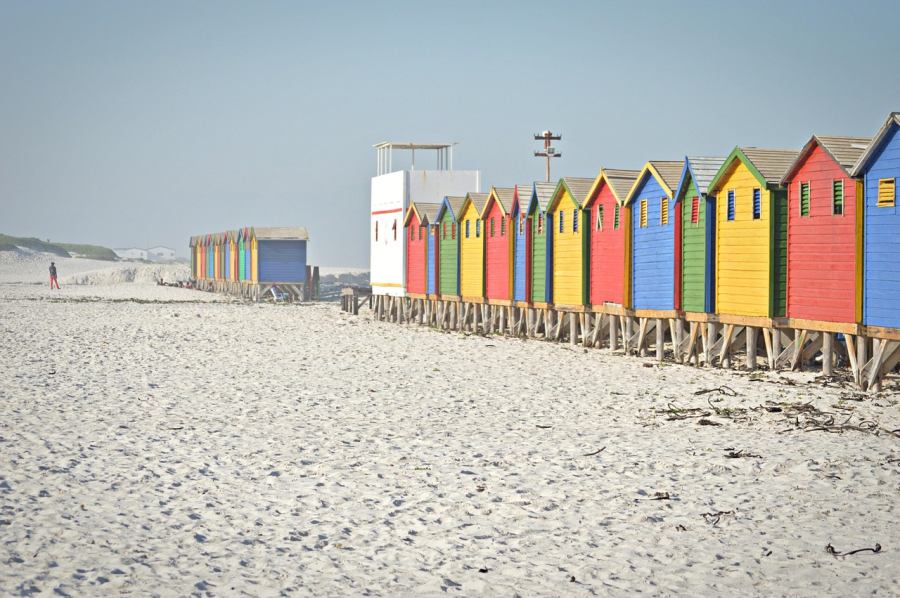
The beach’s iconic attractions are the colourfully painted Victorian-style bathhouses, which make it one of the most photographed locations. The relaxed, friendly atmosphere is particularly appealing to families.
The area is full of restaurants, cafes, and small shops, so you can enjoy yourself even after a day at the beach. Muizenberg is easily accessible by train, making it a great choice for a day trip from Cape Town.
Robben Island
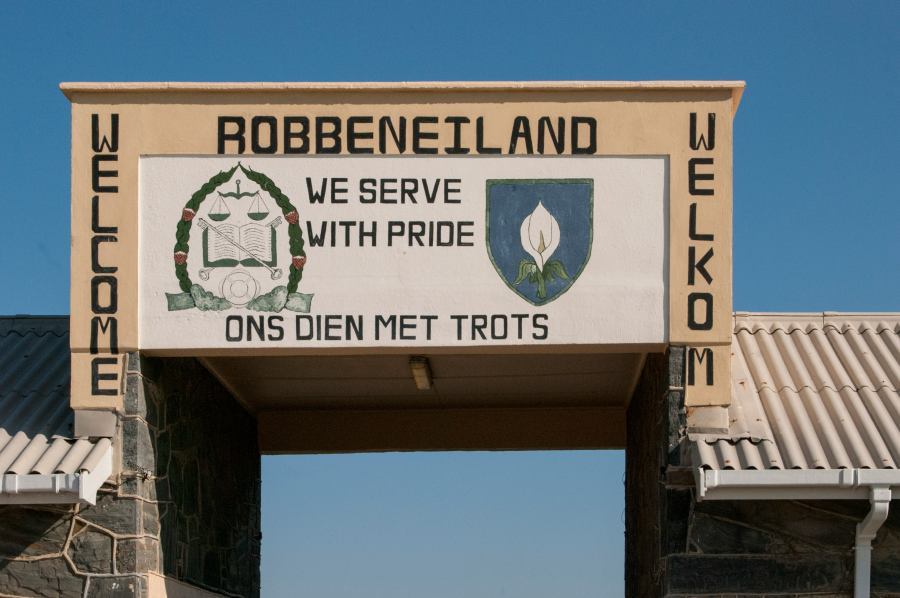
The small island is located seven kilometers from Cape Town and has been a UNESCO World Heritage Site since 1999. The island is most famous for Nelson Mandela spending 18 years here as a political prisoner.
The island can only be visited as part of organized tours, often led by former political prisoners. Visitors can see Mandela’s cell and other parts of the former prison.
During its history, the island was also a hospital, mental institution, and military base. Today a museum operates here, preserving memories of the fight against apartheid. The tour starts by boat from the V&A Waterfront harbor.
Boulders Beach
The most famous beach is 45 kilometers from Cape Town and is famous for its African penguin colony. The beach got its name from the large granite rocks found along the shore.
The penguin colony settled here in the 1980s and is now home to more than 3,000 penguins. Visitors can approach the penguins on special walkways without disturbing them.
It consists of two smaller bays: Foxy Beach serves for penguin observation, while Boulders Beach is for swimming. The crystal-clear, cold water and protected location create an ideal environment for both penguins and humans.

Cape of Good Hope
The southernmost point of the Cape Peninsula and one of the most famous geographical landmarks in Africa. The cape is part of Table Mountain National Park.
Although many believe the Atlantic and Indian Oceans meet here, this actually happens at Cape Agulhas. The cape is still symbolically significant, as ships turned around here on the Far Eastern trade route.
The area has rich flora and fauna, including baboon herds and ostrich birds. Several hiking trails lead through the area, and stunning views of the ocean can be seen from the high cliffs. The visitor center provides information about the area’s natural values.
Cape Town weather: when is the best time to travel?
Cape Town has a Mediterranean climate characterized by mild, rainy winters and warm, dry summers. The city lies on the Atlantic Ocean shore, which moderates temperatures.
Summer (December-February): The warmest season when temperatures range between 20-26°C. This is also the driest period with little precipitation. Summer is the peak tourist season when beaches and attractions are most crowded.
Autumn (March-May): This period is characterized by pleasant, warm weather with temperatures of 18-24°C. Precipitation gradually increases but remains low. An excellent time to explore the city.
Winter (June-August): The coldest and rainiest season with temperatures of 8-18°C. Although colder, thanks to the Mediterranean climate, temperatures rarely drop below freezing. This period is less popular among tourists.
Spring (September-November): The time of nature’s revival when wildflowers bloom. Temperatures range between 15-22°C, and precipitation decreases. A particularly beautiful time for hiking and nature observation.
Best time to travel:
The best times to visit Cape Town are between October and April when the weather is most pleasant. Between December and February it’s warmest, ideal for beach activities and outdoor programs, but this is also the peak tourist season. The periods March-May and September-November are excellent compromises: pleasant temperatures, fewer crowds, and lower prices characterize them. The winter months (June-August) are still not bad for travel, especially for those who prefer museums and indoor attractions and want to avoid summer crowds.
Frequently Asked Questions about Cape Town
Cape Town is in the South African Standard Time zone (SAST, UTC+2) and does not observe daylight saving time.
Cape Town does not have a single official language, as South Africa officially recognizes 11 languages, several of which are used in the city. The most widespread and commonly used language is English, which dominates both daily life and business communication. Many people also speak Afrikaans and isiXhosa, which are also official languages. However, knowledge of English is generally sufficient for getting around and for tourists.
In Cape Town, as in all of South Africa, the official currency is the South African rand (ZAR). Banknotes and coins are available in various denominations, and most places accept card payments as well. Here is a money converter.
From Cape Town International Airport, the fastest and most convenient public transport option is the AeroExpress bus, which provides direct connection to the city center. You can also use minibus taxis or the MyCiTi bus system, which serves several parts of the city and also has routes to the airport stop. It’s important to note that for the MyCiTi bus you need to purchase a chip card in advance. The journey usually takes 20-30 minutes depending on traffic.
In Cape Town, the most convenient and reliable mode of transport is the MyCiTi bus system, which offers fast, clean, and safe services between the city’s main points. Additionally, many people use taxis or app-based ride-sharing services like Uber or Bolt, which are convenient and easily accessible. If you want to explore shorter distances, you can also get around the city well on foot, especially in the downtown and waterfront areas.
Tourists should pay attention to basic safety rules: avoid unknown, poorly reputed neighborhoods, don’t display valuables publicly, and use official taxis or reliable transportation. In well-frequented areas popular with tourists, the environment is generally safer, especially during the day. It’s always worth staying informed and behaving cautiously.
It is prohibited to consume alcohol in public, and smoking is also restricted in certain areas. It’s important not to disturb animals in nature reserves and parks and to stick to designated paths. Due to social sensitivities, avoid publicly discussing politically or historically sensitive topics.
Table Mountain – The city’s iconic landmark, offering breathtaking views of Cape Town and the ocean. It can be reached by cable car or hiking trail.
Robben Island – The famous prison island where Nelson Mandela was imprisoned. Due to its historical significance, it is a UNESCO World Heritage Site.
V&A Waterfront – A bustling waterfront district with shops, restaurants, museums, and the Aquarium, perfect for a pleasant afternoon.
Cape Point and the Cape of Good Hope – An impressive natural spectacle where the Atlantic and Indian Oceans meet – or so they say.
Bo-Kaap district – A historic district known for its colourfully painted houses and local Malay culture, ideal for those interested in photography and culture.
Bobotie – Spiced minced meat dish with a sweet-and-sour flavor profile, with raisins and an egg layer on top, often served with yellow rice. It reflects Malay influences.
Bunny Chow – Originally from Durban but also popular in Cape Town: spicy curry stuffed into the hollowed-out interior of a half-cut bread loaf.
Braai – The South African grilling tradition; sausages (boerewors), meats, and fish are cooked over coals – this is more of an experience than just food.
Cape Malay curry – Milder, aromatic curry dish, often with chicken or lamb, with a sweet-spicy flavor profile.
Koeksister – Braided, syrup-soaked sweet pastry, crispy on the outside, soft on the inside.