
Miami is one of the world’s most renowned coastal metropolises, a bucket-list destination for many. The following questions and answers will help you navigate the most important information, whether it concerns safety, transport, or the best time to travel.
Table of Contents
Basic information
Why is Miami worth visiting?
Miami is one of the most exciting and visited cities in the United States, and its magic lies in the fact that it offers beach relaxation, a vibrant cultural life, and extraordinary gastronomic experiences all at once.
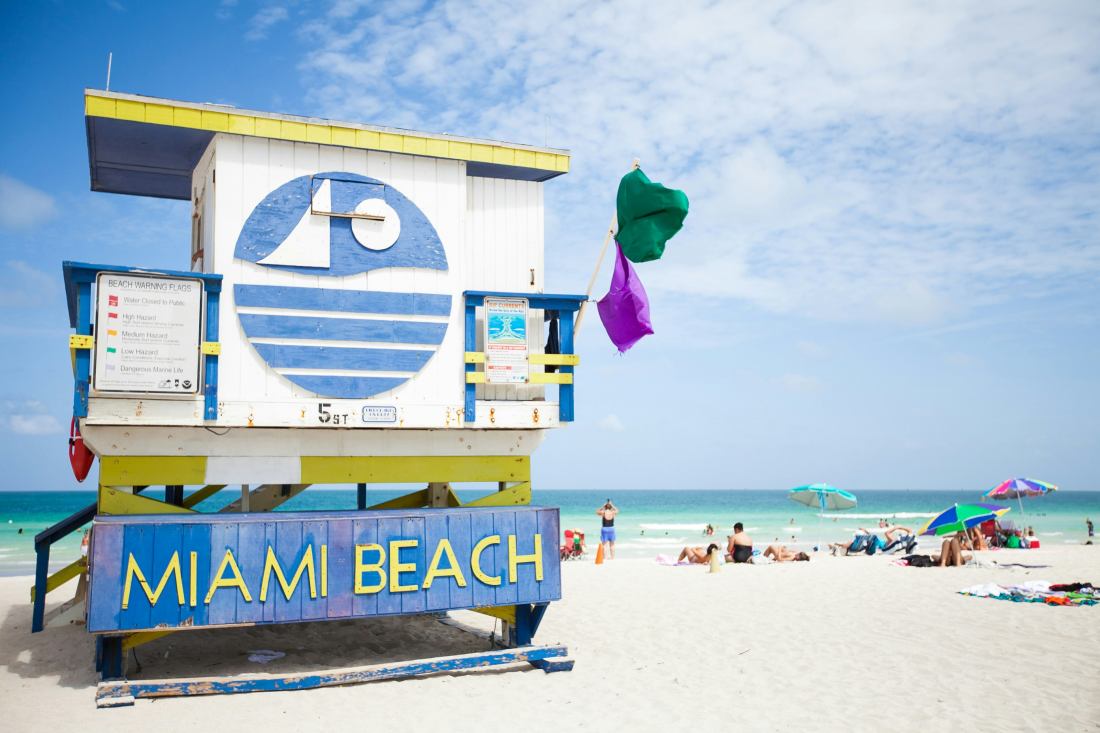
The city’s most famous attraction is South Beach, whose white sandy beaches and Art Deco buildings provide an iconic sight. The Wynwood District features enormous murals and contemporary galleries offering a unique experience for art lovers, while the Little Havana neighborhood transports travelers to the heart of Cuban culture and cuisine. Miami is also one of the most important transit routes for travelers coming from Europe to America, making it easy to combine with other US and Caribbean destinations.
What time zone is Miami in?
Miami is in the Eastern Time Zone (ET, UTC–5). USA observes daylight saving time in March and in October.
When is the best time to visit Miami?
The best time to visit Miami is between November and April, when the weather is dry and pleasant, and the climate is ideal for both beach activities and sightseeing.
The dry season, which lasts from November to the end of April, is Miami’s peak season. During this time, humidity is low, rain is rare, and temperatures generally range between 20–28°C. This period is ideal for swimming, walking, and enjoying all outdoor activities.
The summer months (May–October) represent the rainy and tropical storm season. Temperatures can reach 32–35°C, humidity is high, and regular showers, sometimes tropical storms, are common. However, accommodation and flights are significantly cheaper during this period.
How many days should I spend in Miami?
Generally 4–5 days are recommended to explore Miami, although a shorter 3-day visit can also cover the city’s main highlights.
In 3 days, the main highlights can be covered: South Beach and the Ocean Drive Art Deco district, the Wynwood murals and galleries, and a walk through the Little Havana neighborhood. It is also worth spending an evening exploring the restaurants and bars of the Brickell district.
With 4–5 days, you can explore the city more leisurely. There is time for a day trip to Everglades National Park, a boat trip on Biscayne Bay, or exploring the neighboring Miami Beach islands, such as Key Biscayne. It is also worth leaving time for local markets and gastronomic experiences.
What is the official currency in Miami?
The official currency in Miami is the US dollar (USD), which is universally accepted throughout the city and the USA.
In most places you can pay by card, and ATMs are easily accessible. It is worth exchanging some cash for small purchases, tips, and street vendors, although contactless and mobile payments (Apple Pay, Google Pay) are very widespread in Miami.
Do people speak English in Miami?
This might be a surprising question in the USA, but many local residents speak little or no English. The city has a large Spanish-speaking population, especially due to the influence of Cuban and Latin American communities.
In hotels, restaurants, museums, and shops, almost everyone speaks English. However, in the Little Havana district, at street markets, and in some local restaurants, you may find that staff communicate primarily in Spanish.
What type of power outlet is used in Miami?
In Miami (and throughout the USA), type A and B outlets are used. These are flat-pin connectors so a travel adapter will be needed for European devices.
In the USA, the mains voltage is 110–120 Volts (60 Hz), while in Europa it is 230 Volts (50 Hz). Most modern chargers and laptops automatically handle different voltages (100–240 V), but it is worth checking this on your device in advance. For hair dryers and other higher-power devices, a voltage converter may be needed, or it may be simpler to use the accommodation’s devices.
How does internet and SIM card usage work in Miami?
Miami has excellent internet infrastructure, and free Wi-Fi is available in most hotels, cafés, and shopping centers. If you need continuous mobile internet, it is worth purchasing a local SIM card or eSIM.
The major mobile operators in the USA are T-Mobile, AT&T, and Verizon. As a tourist, the most convenient solution is to purchase a prepaid SIM card at the airport or an electronics store, but eSIM is also increasingly common, which can be activated before traveling, from home. eSIMs are generally available in 7–30-day packages, and most modern smartphones already support this technology.
Is tipping customary in Miami?
Yes, in the United States – including Miami – tipping is not only a custom but a kind of expected cultural norm, especially in restaurants and various services.
In restaurants, it is customary to tip 15–20% of the bill, but 18–22% is increasingly accepted. For taxis, ridesharing services (Uber, Lyft), and hairdressers, 15–20% is also the generally expected amount. For hotel porters and cleaning staff, $1–5 per room is customary. At bars, it is polite to leave $1–2 per drink.
It is important to note that in many US restaurants, the payment terminal automatically offers 18%, 20%, or 22% tip options – you just need to choose one or enter a custom amount.
Travel and transport
How do I get from the airport to downtown Miami?
Miami has two main airports: Miami International Airport (MIA) is located close to the city center, while Fort Lauderdale–Hollywood International Airport (FLL) is about 45–60 minutes away by car.
The most convenient option from the airport is the Metrorail – the airport is directly connected to the city’s metro system. Brickell and the downtown area are reachable within minutes. This is the cheapest mode of transport and is fast regardless of traffic. Uber and Lyft are also extremely popular and reliable alternatives, generally costing $20–40 to downtown depending on traffic.
What is the most convenient mode of transport in Miami?
Miami’s transport infrastructure is relatively good compared to most US cities, but public transport is not as extensive as in a European metropolis. For tourists, a combination of Uber/Lyft, Metrorail, and bicycle is recommended.
Uber and Lyft are one of the most popular modes of transport in Miami, especially among tourists. They are fast, convenient, and easy to manage through the app. The Metrorail main line enables fast travel between the downtown area and the main districts. The Metromover is a free automated urban tram in downtown Miami, excellent for getting around between the Brickell and Downtown districts. The Citi Bike bicycle rental system is an excellent option for exploring South Beach and the immediate coastal areas.
Accommodation and safety
Is Miami a safe city?
Miami is generally a safe tourist destination, especially in the popular districts and the South Beach area. As in any major city, it is worth being careful and avoiding less well-known, deserted areas at night.
Which districts are considered safe?
The most commonly chosen areas by visitors include:
- South Beach – the most famous area, heavy tourist traffic, safe and lively day and night
- Brickell – modern, elegant financial district with restaurants and hotels
- Wynwood – creative district full of galleries, safe and scenic during the day
- Coconut Grove – charming, green neighborhood with restaurants and shops
- Coral Gables – exclusive, quiet district with excellent restaurants
These areas generally have heavy tourist traffic and a strong police presence. It is best to stay away from the Overtown and Liberty City districts, especially at night.
Which neighborhood is best to stay in Miami?
The most popular accommodation districts for tourists in Miami are South Beach, Brickell, Wynwood, and Coconut Grove. When choosing a district, it is worth considering what you primarily want to do in the city.
South Beach is the iconic beachfront district where most tourists stay. The beaches, Ocean Drive’s restaurants and bars, and the Art Deco buildings are all easily walkable from here. Accommodation here is more expensive, but the atmosphere and location make up for it.
Brickell is Miami’s modern financial and entertainment district. It features luxury hotels, excellent restaurants, and direct Metrorail connections. An excellent choice for those who want to stay close to the city center.
Wynwood is primarily the favorite of the creative, younger crowd. It is characterized by boutique hotels, art galleries, and trendy restaurants. Particularly ideal for those arriving during the Art Basel festival.
Coconut Grove is a quieter, greener neighborhood, perfect for those who want to avoid the noise of South Beach. Pleasant walking streets, restaurants, and views of the sea make it attractive.
Health information
Are vaccinations required for travel to Miami?
There are no mandatory vaccinations for Hungarian travelers going to Miami. The United States does not require mandatory vaccination certificates for tourist entry.
It is important to note that healthcare in the USA is extremely expensive, so it is essential to take out valid travel insurance before traveling, which covers medical treatment and repatriation.
Is the tap water drinkable in Miami?
Yes, in Miami tap water is generally drinkable, as drinking water treatment in the USA meets strict standards.
The Miami-Dade Water and Sewer Department regularly monitors and treats the tap water, making it safe to drink. However, some travelers complain about a slightly chlorinated taste – if this bothers you, bottled water is also easy to purchase. In restaurants, filtered or bottled water is generally served.
Experiences
What are the must-see attractions in Miami?
Miami’s most famous attractions include South Beach and the Ocean Drive Art Deco district, the Wynwood Walls mural gallery, the Little Havana neighborhood, the Vizcaya Museum & Gardens, and Everglades National Park. These places showcase Miami’s unique character, where nature, culture, and modern lifestyle converge.
South Beach and Ocean Drive is the iconic location where white sandy beaches, pastel-colored Art Deco buildings, and a bustling street life await. The district is admired both for its 1930s architectural heritage and its vibrant nightlife.
Wynwood Walls is a vast open-air street art gallery painted by the world’s most famous street artists. The district has now become one of the most photographed places in Miami, filled with galleries, design shops, and hipster cafés.
Little Havana is the neighborhood brought to life by Cuban immigrants, where on Calle Ocho you can sip authentic Cuban coffee in cafés and watch domino players. Hand-rolled cigars, Latin music, and the scent of hummingbird gardens create a unique atmosphere.
Vizcaya Museum & Gardens is a stunning Renaissance-style villa and garden on the shores of Biscayne Bay, built in the 1910s by industrialist James Deering. The impressive villa’s European-style gardens and interior promise wonderful photos.
Everglades National Park is located about an hour from Miami and is an excellent destination for a day trip. It is one of the world’s most unique swampy ecosystems, home to alligators, flamingos, and countless bird species. Airboat tours are one of the best ways to explore the park.
What are the most popular foods and drinks in Miami?
Miami’s cuisine is extremely diverse: Cuban and Caribbean flavors are just as present as American classics or modern fusion fine dining. The most popular local dishes include the Cuban sandwich, stone crab, ceviche, and the culinary specialty Key lime pie.
The Cuban sandwich (Cubano) is a toasted sandwich containing ham, roast pork, Swiss cheese, pickles, and mustard. This dish began its worldwide conquest from Miami’s Little Havana district and is today one of the best-known Miami specialties.
Stone crab is Miami’s emblematic seafood dish. Only the claws of the captured crabs are served at the table, then the crab is released back into the sea, where its claw grows back. The season, which runs from mid-October to mid-May, is celebrated as a true event in the city.
Key lime pie is Florida’s iconic dessert: a creamy filling of concentrated lime juice, sweetened condensed milk, and eggs in a crumbly pastry crust. Almost every restaurant in Miami offers its own version.
The gastronomic experiences are perfectly complemented by Cuban coffee (café cubano), prepared as an extremely strong and sweet, thick coffee, as well as tropical cocktails such as the mojito and the daiquiri.
What are the important holidays and festivals in Miami?
Throughout the year, Miami offers numerous festivals and cultural events for unique experiences. The most famous events include Art Basel Miami Beach, the Ultra Music Festival, and the Calle Ocho Festival.
Art Basel Miami Beach takes place every year in early December and is known as one of the world’s best contemporary art fairs. Hundreds of galleries exhibit their works in Wynwood and on South Beach, and the city comes alive with other events and parties.
Ultra Music Festival takes place in March at Bicentennial Park and is one of the world’s best electronic music festivals. The most famous DJs and performers appear, and the event takes over the city for days.
Calle Ocho Festival is one of the world’s largest street festivals, held in March on the main street of Little Havana. It is characterized by Latin music, dance, Cuban cuisine, and huge crowds, celebrating Miami’s diverse culture.