
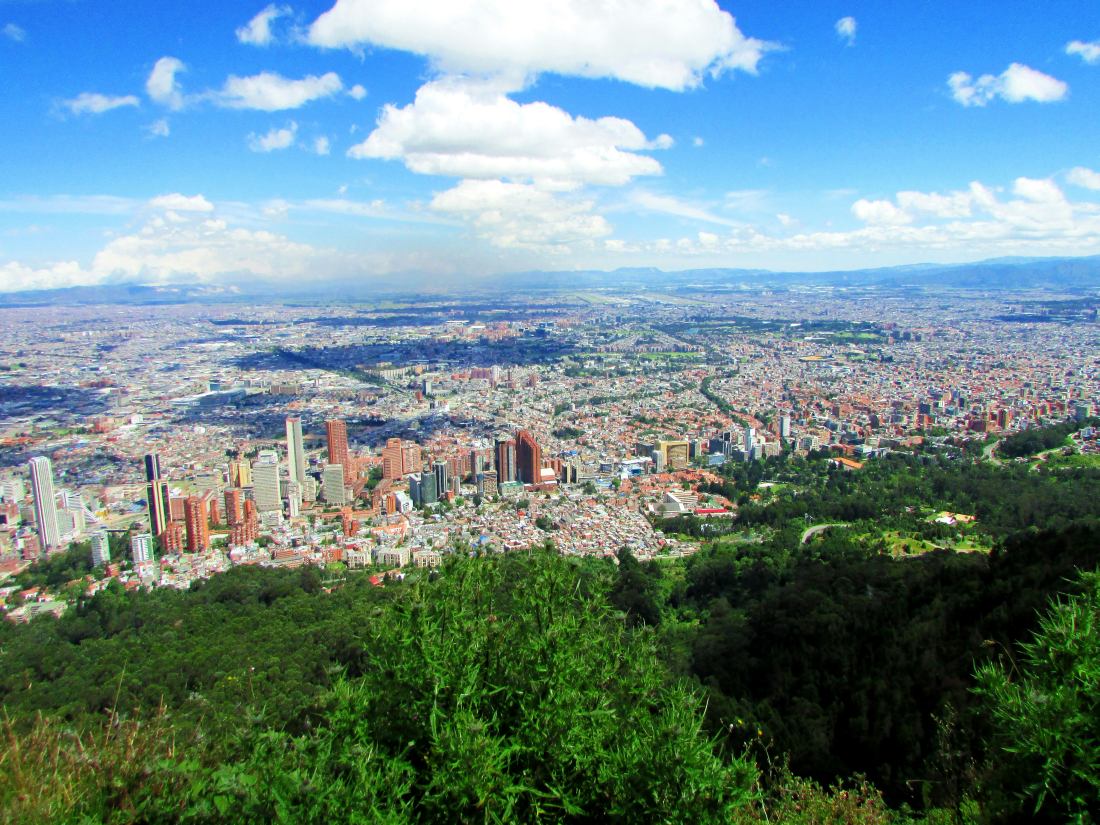
Bogotá, the capital of Colombia, offers travelers fascinating cultural diversity, rich history, and exciting gastronomy. The questions and answers below will help you navigate the most important things to know, whether it’s about safety, transportation, or the best time to travel.
Table of Contents
Basic Information
Why is it worth traveling to Bogotá?
Bogotá is a fascinating mix of colonial-era history, modern metropolitan life, and breathtaking Andean landscapes. Thanks to the city’s cultural richness, vibrant art scene, and friendly locals, it is becoming an increasingly popular destination on South American tours.
Alongside the colorful colonial buildings of the historic La Candelaria district, the golden treasures of the Museo del Oro, and Fernando Botero’s famous sculptures, the green mountains surrounding the city and the Monserrate viewpoint also offer a unique experience. The coffee culture, fresh tropical fruits, and modern Colombian cuisine also attract many visitors to the capital.
What time zone is Bogotá in?
Colombia operates on Colombia Time (UTC-5) and does not observe daylight saving time.
When is the best time to travel to Bogotá?
Bogotá lies close to the Equator but at a high altitude, so the seasons differ more in terms of rainfall than temperature. The best time to visit is generally considered to be the drier months of December–March and July–August.
During the dry periods there are fewer daily showers and more hours of sunshine can be expected, although sudden rainfall can occur in Bogotá throughout the year. Daytime temperatures remain relatively balanced year-round, typically around 14–20°C due to the city’s high altitude.
During the rainier months (April–May and October–November), afternoon showers are more frequent, which can sometimes make outdoor activities more difficult, but does not make sightseeing impossible.
How many days is it worth spending in Bogotá?
3–4 days are generally recommended to thoroughly explore Bogotá. The city is huge and traffic is often slow, so it’s worth starting your activities in the morning and grouping nearby attractions around each district.
In 3 days you can comfortably fit in the historic center of La Candelaria, Plaza de Bolívar and its surroundings, the Museo del Oro, and a visit to Monserrate. With a 4–5 day stay, you can also take time to explore the Museo Botero, the modern Zona Rosa and Usaquén districts, and even take a day trip to the nearby Zipaquirá Salt Cathedral or Lake Guatavita.
What is the official currency in Bogotá?
The official currency of Bogotá and all of Colombia is the Colombian peso (COP). Both cash and card payments are common; mid-range restaurants and larger stores generally accept international bank cards (Visa, Mastercard).
Cash can be exchanged at airports, banks, and currency exchange offices, and both USD and EUR are easy to exchange. At smaller places, markets, and in taxis, it’s worth carrying cash, as card payment is not always available there.
Here is a currency converter calculator where you can check the current exchange rate!
Do people speak English in Bogotá?
In tourist districts, hotels, and better restaurants, many people speak basic English, but the mother tongue of most of the population is Spanish, and everyday life is conducted mostly in Spanish.
In markets, small shops, and public transport, English is often not spoken at all, or only to a very limited extent. In such cases, a few basic Spanish phrases can come in handy, such as: hola – hi; gracias – thank you; por favor – please; cuánto cuesta – how much does it cost?
What type of power outlet is used in Bogotá?
Colombia, including Bogotá, uses type A and B outlets, which are the same as those common in the United States. Because of this, a travel adapter will be needed for European devices with flat or round pins.
In Bogotá, the mains voltage is 110 Volts at a 60 Hz frequency, while in Europe 230 Volts and 50 Hz is standard. Most modern chargers and laptop adapters automatically support the 100–240 V range, so they can be used without issue with an adapter.
How does internet and SIM card use work in Bogotá?
Internet connectivity in Bogotá is generally good, and free Wi-Fi is available in the vast majority of hotels, cafés, and restaurants. If continuous mobile internet is needed, it’s worth buying a local SIM card or eSIM.
Tourist SIM cards can be easily purchased from major Colombian providers (such as Claro, Movistar, Tigo) at the airport or in their stores in the city. eSIMs that can be purchased and activated online before traveling are also becoming increasingly common, working immediately upon arrival.
Is it customary to tip in Bogotá?
Yes, it is customary to leave a tip at restaurants, typically around 10% of the bill. At many restaurants the service charge („servicio voluntario”) is already included on the bill, in which case the waiter usually asks whether you would like to pay it.
Tipping taxi drivers is not expected, but rounding up the fare is a common practice. For porters and housekeeping staff, a small tip is customary depending on the category of the hotel.
Travel and transportation
How can I get from the airport to the center of Bogotá?
Bogotá’s main airport is El Dorado International Airport, located approximately 10–15 kilometers from the city center. The airport is one of the busiest in the country, and downtown is reachable from here by several modes of transportation.
One line of the TransMilenio rapid bus system departs from a stop located directly near the airport, which is the cheapest way to get into the city, although it can be crowded during rush hour. Official airport taxis and Uber-like ride-sharing services are also available, offering a more comfortable but more expensive trip.
What is the most convenient way to get around Bogotá?
Bogotá is a metropolis of more than 8 million inhabitants, where transportation mainly consists of the TransMilenio rapid bus system, conventional buses (SITP), taxis, and ride-sharing apps. The city currently has no metro network, although one line is under construction.
TransMilenio operates in dedicated bus lanes and serves many important tourist spots, at a very affordable price. However, it can be extremely crowded during rush hour, so tourists may want to avoid it then, or choose a taxi or ride-sharing service instead.
For tourists, taxis and Uber-type services are generally the most convenient, as they take you directly to your destination and don’t require knowledge of the network. For shorter distances, it’s also comfortable to get around downtown on foot or by bicycle, especially on Sundays, when major roads are closed to cyclists (Ciclovía).
Accommodation and safety
Is Bogotá a safe city?
Bogotá’s security situation has improved considerably over the past decades, but there are significant differences between neighborhoods. The northern and central districts visited by tourists are generally considered safe during the day, while some southern and peripheral areas are best avoided.
As in any large city, pickpocketing and petty theft are the main risks here, especially on crowded public transport and at places popular with tourists. By following basic precautions (concealing valuables, avoiding walking alone at night), most visits pass without incident.
Which districts are considered safe?
- Chapinero – a popular, lively district with restaurants and bars, chosen by many tourists as a place to stay
- Usaquén – a calm, affluent district with a colonial atmosphere and a popular Sunday market
- Zona Rosa / Parque de la 93 – a modern, safe entertainment district with shopping centers and nightlife
- La Candelaria – the historic city center, safe during the day and offering plenty of sights, though caution is advised at night
These areas typically have high tourist traffic, a strong police presence, and many accommodations and restaurants nearby.
How safe is it at night?
In popular districts such as Chapinero or Zona Rosa, street life remains lively in the evening, with many restaurants and bars welcoming guests. Nevertheless, it’s worth sticking to well-lit, busy streets, and if you need to go farther, it’s better to use a taxi or ride-sharing service instead of walking.
The historic center of La Candelaria is less lively and less safe after dark, so for evening activities it’s better to choose the more modern, busier districts or travel by taxi.
Which neighborhood is best to stay in Bogotá?
Among the most popular and convenient areas for tourists to stay in Bogotá are Chapinero, Zona Rosa, Usaquén, and La Candelaria. These districts are well located, have many restaurants, cafés, and attractions, and are generally considered safer for visitors.
- Chapinero is one of Bogotá’s most popular districts, full of restaurants, cafés, and nightlife venues. It’s a good base for those who want to experience the local vibe while still having relatively easy access to the main attractions.
- Zona Rosa and the nearby Parque de la 93 form a modern, elegant district with luxury hotels, shopping centers, and vibrant nightlife. It’s an excellent choice for those looking for comfortable, high-quality accommodation.
- Usaquén is a quieter district with a colonial feel, famous for its Sunday craft market and cozy cafés. It’s a bit farther from downtown, but for many that quieter atmosphere is exactly why it’s a favored area.
- La Candelaria is the historic city center, home to most of the famous sights – Plaza de Bolívar, the Museo del Oro, and the Museo Botero. It can be a good choice for those who want to be close to the sights and plan to walk a lot around downtown, though using a taxi for evening plans is recommended.
Health information
Are mandatory vaccinations required to travel to Bogotá?
There is generally no mandatory vaccination for most travelers visiting Bogotá. However, certain vaccinations may be advisable, especially if the trip also includes lower-lying tropical regions (such as the Amazon basin or the Caribbean coast).
Bogotá itself lies at high altitude in a temperate climate, so the health risk of staying here in terms of tropical diseases is lower than in the country’s lowland areas. If you’re planning longer rural side trips, it’s worth visiting a travel health clinic before departure.
Is tap water drinkable in Bogotá?
According to official tests, Bogotá’s tap water meets international drinking water standards, and most locals drink it straight from the tap. The company supplying the city (EAAB) regularly monitors water quality, which comes mainly from the clean sources of the nearby Chingaza mountain range.
Nevertheless, due to outdated plumbing in some older buildings, water quality within a given building may differ from that of the mains supply, so travelers with sensitive stomachs, or those staying for a shorter period, may want to choose bottled or filtered water.
For most tourists, tap water can be used for brushing teeth without any problem. If you’d still like to be extra safe, bottled water is available almost everywhere in hotels and restaurants.
What should you know about health risks due to altitude?
Bogotá sits at an altitude of about 2,600 meters above sea level, making it one of the highest capital cities in the world. Due to the thinner air, many people experience mild symptoms in the days after arrival, such as fatigue, headaches, or shortness of breath while walking.
In the first few days, it’s a good idea to start sightseeing at a slower pace, drink plenty of water, and avoid alcohol until your body adjusts to the altitude. Those with cardiovascular conditions should consult their doctor before traveling.
Experiences
What are the must-see attractions in Bogotá?
Bogotá’s best-known attractions include the historic center of La Candelaria, the Museo del Oro, the Museo Botero, the Monserrate viewpoint hill, and Plaza de Bolívar. These places showcase the city’s rich history, art, and everyday life.
- Plaza de Bolívar is Bogotá’s historic and political center, home to the National Capitol, the city hall, and the cathedral. The streets around the square reveal numerous colonial-era buildings and striking street art.
- The Museo del Oro (Gold Museum) holds one of the world’s largest collections of pre-Columbian gold, with tens of thousands of archaeological objects showcasing the metalworking of the region’s indigenous cultures.
- The Museo Botero was created from a donation by the famous Colombian artist Fernando Botero and displays his paintings and sculptures known for their distinctive rounded figures, alongside a few works by Picasso, Dalí, and Monet.
- Monserrate hill can be reached by funicular or cable car, offering a stunning panoramic view over the entire city. The chapel at the top of the hill is also a pilgrimage site.
- The Salt Cathedral, built inside the Zipaquirá salt mine near the city, is also a popular day-trip destination, where the sight of a cathedral carved into mined salt is a truly unique experience.
What are the most popular foods and drinks in Bogotá?
Bogotá boasts a rich and diverse cuisine. The best-known local dishes include ajiaco soup, arepa, and tamal, while among drinks, local coffee and aguardiente are the most popular.
- Ajiaco is the capital’s classic, thick potato soup, made with chicken, corn, and a local herb called guascas, served with cream and avocado.
- Arepa is a flat, round cornmeal cake, eaten plain or filled with cheese or meat, both for breakfast and as a snack. Tamal is also made from corn dough, filled with meat and vegetables, wrapped in banana leaves and cooked.
- Colombia is one of the best-known coffee-producing countries, and in Bogotá you can find cozy cafés serving fresh, top-quality local coffee on almost every corner.
- Among drinks, the anise-flavored spirit called aguardiente is the most distinctive local liquor, often consumed on festive occasions.
What important holidays and festivals are there in Bogotá?
Bogotá holds many important holidays and festivals throughout the year. The best-known include the Rock al Parque music festival, the Festival Estéreo Picnic, and the Christmas holiday season in December.
- Rock al Parque is one of Latin America’s largest free rock festivals, held every year in Parque Simón Bolívar, drawing visitors and bands from all over the continent.
- The Festival Estéreo Picnic also takes place in Parque Simón Bolívar, typically in March, and with international headline acts it has grown into one of the most important pop and alternative music events in South America.
- In early December, during Día de las Velitas (Day of the Candles), families decorate their homes and the streets with candles and lanterns, marking the start of the Christmas season. For the rest of the month, light displays, Christmas markets, and festive events fill the city’s main squares.