
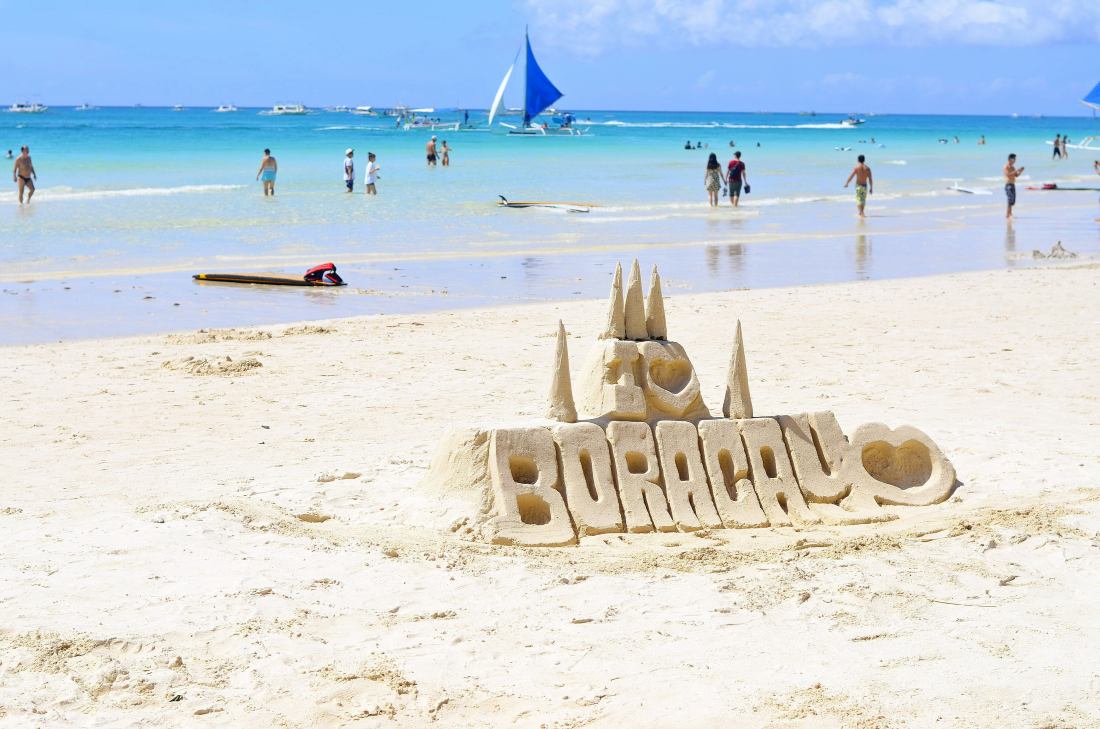
Boracay is one of the most famous resort islands in the Philippines, renowned worldwide for its white sand beaches and turquoise sea. The questions and answers below will help you navigate the most important things to know, whether it’s about entry requirements, transportation, or the best time to travel.
Table of Contents
Basic information
Why is Boracay worth visiting?
Boracay is one of the most popular resort islands in the Philippines, made famous primarily by the crystal-clear water and soft white sand of the world-renowned White Beach.
The island is only about 7 kilometers long, yet it offers an incredibly diverse experience: calm sunsets, a lively nightlife, water sports, and a relaxed tropical atmosphere all await visitors at once. In 2018 the island was completely closed for half a year for a major environmental rehabilitation project, and since then Boracay has featured tidier, cleaner beaches and stricter environmental regulations.
What time zone is Boracay in?
Boracay is located in the Philippine Standard Time zone (UTC+8). The Philippines does not observe daylight saving time.
When is the best time to travel to Boracay?
Boracay is generally best visited during the dry season between November and May. The weather is pleasant at this time, there is less rain, and conditions are ideal for spending time on the beach and sightseeing around the island.
Within the dry season, January to May is the most popular period, with the least rainfall and the warmest sea. The rainy season runs roughly from June to October, when showers are more frequent and tropical storms can also occur, which may temporarily disrupt travel plans.
How many days should you spend in Boracay?
Generally, 3-5 days are recommended to explore Boracay.
In 3 days you can comfortably fit in exploring White Beach, a sunset walk or sailing trip, and an island-hopping boat tour around the island. With a 5-day stay, you can try water sports at a more relaxed pace, visit the quieter Puka Shell Beach, and go up to the Mount Luho viewpoint as well.
What is the official currency in Boracay?
In Boracay, as throughout the Philippines, the official currency is the Philippine peso (PHP).
In the tourist areas of the island, credit cards and sometimes even US dollars are accepted in many places, but for everyday purchases, tricycles, and smaller restaurants, it’s worth carrying cash pesos.
Here is a currency converter calculator where you can check the current exchange rate!
Is English spoken in Boracay?
Yes, English is one of the official languages of the Philippines, so in Boracay’s tourist areas – hotels, restaurants, shops – you can communicate well in English almost everywhere.
Locals often speak Filipino (Tagalog) among themselves, but those working in tourism confidently use English on a daily basis.
What type of power outlet is used in Boracay?
Type A, B, and C outlets are used in the Philippines; types A and B match the flat-pin sockets common in the United States. Because of this, most European devices will need a travel adapter.
In the Philippines, including Boracay, the mains voltage is 220 Volts at a 60 Hz frequency, while in Europe it is typically 230 Volts and 50 Hz. Most modern electronic devices, such as phone chargers or laptops, automatically support voltages between 100-240 V, so they can be used with an adapter without any problem.
How does internet and SIM card use work in Boracay?
Wi-Fi coverage is generally good in hotels and restaurants in Boracay’s tourist areas, while the Globe and Smart networks provide mobile internet coverage.
For continuous mobile internet, it’s worth buying a local SIM card or eSIM, which many people already activate online before their trip so it works immediately upon arrival. It’s also worth keeping in mind that in the busier parts of the island, the network can sometimes be slower in the evenings.
Is it customary to tip in Boracay?
Yes, tipping is generally customary in Boracay, especially at restaurants and for services. About 10 percent of the bill is customary if the service charge is not already included in the price.
In many restaurants the bill already includes a “service charge,” in which case a separate tip is not required, but it is gladly accepted if you were satisfied.
Travel and transportation
How can I get to Boracay?
There is no airport on the island itself, so getting to Boracay always involves flying to a nearby island and then taking a ferry.
Most travelers arrive at Godofredo P. Ramos Airport in Caticlan (formerly Caticlan Airport), from which just a few minutes’ ferry ride leads to Boracay’s Cagban port. The other option is the larger but more distant Kalibo Airport, from which a bus or van transfer of about 1-1.5 hours takes you to Caticlan, from where you can likewise cross to the island by ferry. There are no direct flights from Budapest; the journey typically involves one or two connections, for example through Manila, Seoul, or Kuala Lumpur.
What is the most convenient way to get around in Boracay?
Due to Boracay’s small size, most places can be reached most conveniently on foot or by tricycle.
There is no car traffic on the main promenade along White Beach, so this stretch can also be pleasantly explored on foot. For longer distances, and to reach Puka Shell Beach on the other side of the island, local tricycles (traditional or increasingly electric versions) are the most popular and cheapest means of transportation.
Accommodation and safety
Is Boracay safe?
Boracay is one of the most tourist-friendly and safest destinations in the Philippines, especially along the main beach area and its immediate surroundings.
There is a strong police and security presence in the tourist districts; the most common risks are minor theft and overpricing rather than serious crime.
Which accommodation zone is worth choosing in Boracay?
White Beach is traditionally divided into three sections, known as “stations”, each offering a different atmosphere for finding accommodation.
Station 1 is the most elegant and quietest area, home to the widest stretch of sand and most of the premium hotels. Station 2 is the busiest central section, home to the D’Mall shopping and dining district as well as the lively nightlife. Station 3 is quieter, more family-friendly, and generally offers cheaper accommodation, though it is a bit farther from the central attractions.
How safe is Boracay at night?
In the areas frequented by tourists, there is a lively atmosphere at night too, with plenty of restaurants and bars welcoming guests, which in itself provides a sense of safety.
Nevertheless, it’s worth sticking to lit, busy streets, keeping an eye on your belongings, and using a tricycle rather than walking on longer, more secluded stretches.
Health information
Are any vaccinations required to travel to Boracay?
There are no mandatory vaccinations for most travelers visiting Boracay.
Certain vaccinations – such as hepatitis A and B, and typhoid – may be recommended, especially for longer stays. Since mosquito-borne dengue fever occurs in the Philippines, it’s worth packing mosquito repellent and long-sleeved clothing, especially for dusk and dawn.
Is the tap water drinkable in Boracay?
Drinking tap water is not recommended in Boracay; locals and hotels alike almost exclusively recommend bottled or filtered water for drinking.
Most hotels provide drinking water for guests daily, and in restaurants it’s worth ordering bottled water or hot drinks (coffee, tea) instead of consuming ice made from tap water.
Experiences
What are the must-see sights and activities in Boracay?
- Boracay’s best-known experience is White Beach, but the island also offers quieter beaches, viewpoints, and water activities.
- Besides White Beach, it’s worth visiting the quieter Puka Shell Beach, where shell-fragment sand and fewer tourists await.
- Mount Luho viewpoint offers an unparalleled panorama of the entire island.
- Popular activities include an island-hopping boat tour, snorkeling and diving at nearby coral reefs, and a traditional paraw sailboat sunset cruise on the sea.
- In the evenings, the D’Mall area is home to restaurants, bars, and street vendors.
What are the most popular foods and drinks in Boracay?
Boracay’s cuisine is shaped primarily by fresh seafood and traditional Philippine dishes.
- Freshly grilled fish and prawns are popular at beachfront restaurants, as is traditional lechon (roast pig).
- Halo-halo, a shaved-ice dessert mixed with fruits and sweets, can be found on almost every menu, as can buko shake, a fresh coconut milk drink.
- Among drinks, San Miguel beer is the most popular local choice.
What important holidays and festivals take place in Boracay?
Several traditional Philippine holidays are celebrated in and around Boracay, adding a special atmosphere to the trip.
In January, the Ati-Atihan sa Boracay festival is held, a local version of the nationally known Ati-Atihan festival held in nearby Kalibo, featuring colorful parades and music.
In addition, the Christmas season is especially festive, with hotels and restaurants welcoming guests with holiday lights, and New Year’s Eve ending with a massive fireworks display on White Beach.