
Phuket is Thailand’s largest island and one of the most popular destinations in Southeast Asia. The following questions and answers will help you navigate the most important information, whether it concerns safety, transportation, or the best time to visit.
Table of Contents
Basic information
Why is it worth travelling to Phuket?
Phuket is one of the most popular tropical holiday destinations in the world, made unique by its crystal-clear sea, stunning beaches, vibrant nightlife and rich Thai culture.
The island’s main attraction is its impressive beaches – Patong, Kata, Karon and Nai Harn are just a few of the world-famous stretches of coastline. The tourist infrastructure is excellent: accommodation ranges from luxury hotels to small bungalows, and the restaurant scene spans local Thai cuisine to international dining.
Phuket is ideal not only for beach holidays but also for active pursuits: diving, surfing, kayaking, elephant tours and temple visits are all available. Due to its proximity to the Phi Phi Islands and James Bond Island, many travellers choose Phuket as their base for excursions into Phang Nga Bay.
What time zone is Phuket in?
Phuket is in the Indochina Time zone (ICT, UTC+7). Thailand does not observe daylight saving time.
When is the best time to visit Phuket?
The best time to visit Phuket is between November and April, during the dry season. Sunny days prevail, rain is rare, and the sea is typically calm and clear.
The dry season (November–April) brings the most pleasant weather: temperatures hover around 28–33 °C, rain is infrequent and the breeze is gentle. December and January are peak season, when the most tourists arrive and prices are higher.
The monsoon season (May–October) brings heavy rainfall, especially from June to September. During this period the sea is rougher, diving is more difficult, and red flags on some beaches warn of strong currents. On the other hand, prices are lower and the island is less crowded. April is the hottest month, with temperatures potentially reaching 38–40 °C.
How many days should you spend in Phuket?
Exploring Phuket generally requires 5–7 days, but with nearby islands and excursion sites, even 10 days can pass quickly.
With a 3–4 day stay, you can visit the most important beaches (Patong, Kata, Karon), see the Big Buddha statue and Chalong Temple, and take a half-day trip into Phuket Town.
With 5–7 days, you can also fit in a full-day boat trip to the Phi Phi Islands or James Bond Island, diving, snorkelling, or perhaps an elephant or jungle tour. If you want to make the most of all the attractions, it is worth planning for 10 days.
What is the official currency in Phuket?
Thailand’s official currency is the Thai baht (THB).
Some shops in tourist areas accept euros or dollars, but usually at unfavourable exchange rates. It is advisable to use local currency. There are many ATMs in Phuket where you can withdraw baht. Credit cards are accepted in hotels and larger shops.
Check the current exchange rate here.
Do people speak English in Phuket?
Yes, in tourist areas – hotels, restaurants, tourist offices and most shops – English is generally spoken at a sufficient level. Alongside Thai, English is the second most common language of communication on the island.
In the main tourist districts, such as Patong Beach, Kata and Karon, English communication is generally not a problem. However, in smaller villages, local markets or off the beaten track, locals may not understand English. In such cases, a translation app is useful.
What type of plug sockets are used in Phuket?
Thailand generally uses Type A, B and C sockets. The Type C socket is the same as the European standard, so in many cases European devices can be used without an adapter – though it is worth checking the hotel’s sockets in advance.
Although many modern hotels have Type C (European) sockets, some places only have Type A or B (flat-pin) sockets, which require an adapter. A universal travel adapter is always recommended.
How does internet and SIM card usage work in Phuket?
Phuket generally has an excellent internet connection, especially in tourist areas. Most hotels, restaurants and cafés provide free Wi-Fi. Continuous mobile internet is available by purchasing a local SIM card or eSIM.
Local SIM cards (AIS, DTAC, True Move) can be purchased at the airport or any 7-Eleven store, typically with unlimited data packages for around 30–50 baht per day. An eSIM can also be set up before travelling, so the internet works from the moment you arrive.
Is tipping customary in Phuket?
Tipping is not mandatory in Thailand, but is warmly appreciated – especially in restaurants, at massages and for taxi or tuk-tuk drivers. In restaurants, a 10% tip on the bill is the expected amount if a service charge is not already included.
Masseurs are typically given 50–100 baht for a 1-hour treatment. Rounding up the fare is common for tuk-tuks and taxis, though not obligatory. For hotel staff (porter, room service), 20–50 baht is sufficient.
Travel and transportation
How do I get from the airport to Phuket city centre or the beaches?
Phuket International Airport (HKT) is located in the northern part of the island, approximately 30–45 km from Patong Beach and about 45 km from the city centre. From the airport, you can continue by taxi, hired transfer, bus or car rental.
A pre-booked airport transfer is the most convenient option, taking you directly to your hotel or a specific beach. The Airport Bus (Smart Bus) is a cheaper option but only serves certain stops. Uber is not available in Thailand, but the Grab app works in Phuket.
What is the most convenient way to get around Phuket?
The most common modes of transport in Phuket are the motorised tuk-tuk, Grab-app taxis, moped or car rental, and organised transfers for excursions. Public transport exists to a limited extent.
The Grab app (Asia’s equivalent of Uber) operates with safe and predictable pricing, especially for car bookings (GrabCar). Tuk-tuks are characterful local vehicles, but it is worth agreeing on the price in advance. Renting a moped allows you to reach most attractions, but be mindful of traffic and always wear a helmet.
Accommodation and safety
Is Phuket safe?
Phuket is generally a safe tourist destination, but as with any major tourist location, it is worth being cautious – particularly regarding pickpockets, taxi drivers who try to overcharge tourists, and the intense nightlife districts.
The main beaches and tourist areas are safe during the day. At night, certain parts of Patong Beach have a lively nightlife scene, so it is advisable to travel in groups and keep valuables secure. Strong sea currents also require attention: a red flag prohibits swimming, while a yellow flag urges caution.
Which districts or beaches are considered safe?
The best and safest beaches and districts include Kata Beach, Karon Beach, Nai Harn Beach and Kamala Beach. Patong Beach is the busiest, but requires greater vigilance at night.
Kata and Karon Beach are the quieter, more family-friendly alternatives, with less crowding and noisy nightlife. Nai Harn Beach in the south of the island is beautiful and relatively peaceful. Phuket Town itself is also safe, especially during the daytime.
Which area is best to stay in Phuket?
The most popular accommodation areas in Phuket are Patong Beach, Kata Beach, Karon Beach, Kamala Beach and Phuket Town. The choice depends on the atmosphere and activities you are looking for.
Patong Beach is the liveliest district with the most entertainment venues and restaurants – ideal for those seeking a buzzing nightlife. Kata and Karon Beach are quieter but have beautiful beaches and are close to some good restaurants. Kamala Beach and Nai Harn are the most relaxing choices, with a more subdued atmosphere. Phuket Town is recommended for those interested in Thai culture and an authentic ambience.
Health information
Are any vaccinations required to travel to Phuket?
There are no mandatory vaccinations for travellers visiting Phuket. Recommended vaccinations include hepatitis A, hepatitis B, typhoid and tetanus–diphtheria – particularly for longer stays.
A vaccine against dengue fever is also available; this is especially relevant during the monsoon season when mosquitoes are more active.
Is tap water safe to drink in Phuket?
Drinking tap water in Phuket is not recommended. Most tourists and locals use bottled water for drinking and brushing teeth alike.
Bottled water is cheap and available everywhere (10–20 baht for a 1.5-litre bottle). Hotels generally provide bottled water in the rooms. Ice cubes in restaurants are sometimes made from tap water, so it is worth asking, or avoiding drinks with ice in cheaper establishments.
Experiences
What are the must-see sights and activities in Phuket?
Phuket’s most outstanding attractions and activities: Patong Beach, the Big Buddha statue, Wat Chalong Temple, the old town of Phuket Town, a boat trip to the Phi Phi Islands, and an excursion to Phang Nga Bay (James Bond Island).
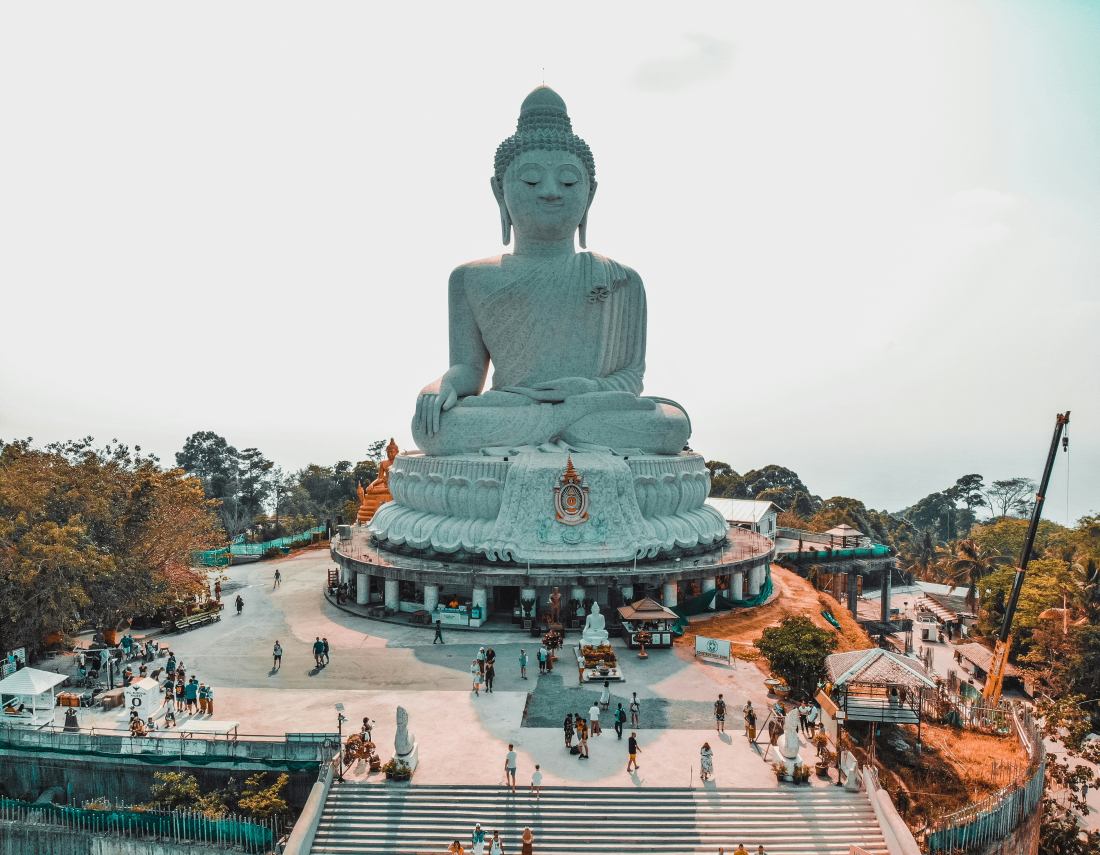
The Big Buddha statue (a 45-metre white marble statue) is one of the island’s iconic landmarks, offering a breathtaking panorama. Wat Chalong is Phuket’s most important Buddhist temple and can be visited without an entrance fee.
Phuket Old Town is known for its Sino-Portuguese architectural style and colourful buildings, making it a particularly popular spot.
A full-day boat trip to the Phi Phi Islands is one of the most popular activities; the turquoise waters and limestone cliffs are breathtaking.
An organised tour of Phang Nga Bay allows you to visit the Ko Tapu rock made famous by the James Bond films and explore mangrove forests by kayak.
The island also has numerous popular and hidden sandy beaches. It is worth visiting the lesser-known ones, as they are not crowded and are often more beautiful than the famous shores (e.g. Patong).
What are the most popular foods and drinks in Phuket?
Phuket’s cuisine is dominated by fresh seafood, aromatic Thai curries and wok-fried dishes. The most popular dishes include Pad Thai, Tom Yum soup, grilled seafood, green curry and mango with sticky rice for dessert.
Pad Thai is the best-known Thai dish: wok-fried rice noodles with prawns, egg, peanuts and lime.
Tom Yum is a sour-spicy Thai soup whose basic ingredients include lemongrass, galangal, kaffir lime leaves, chilli and fish or prawn broth.
Freshly grilled seafood (prawns, lobster, squid) is a speciality of the Rawai Seafood Market or the lakeside restaurants at Bang Pae.
Among drinks, fresh coconut water, Thai iced coffee and fresh fruit shakes are the most widespread. In terms of alcohol, Chang and Singha beers are the local favourite Thai brands.
What are the important festivals and holidays in Phuket?
Phuket offers numerous special festivals and holidays throughout the year. The best known are: the Phuket Vegetarian Festival (October), the Songkran Water New Year celebration (April) and the Loy Krathong Lantern Festival (November).
The Phuket Vegetarian Festival (Tesagan Gin Je) is held every year in October for 9 days. During the festival, devotees follow a vegetarian diet, wear white clothing and hold spectacular processions in which mediums take part in various rituals. It is one of the most colourful and unique events in Thailand.
Songkran, the Thai New Year (13–15 April), is equivalent to the world’s largest water fight: people drench each other with water in the streets, symbolising the washing away of sins and making a fresh start. In Phuket, the celebrations are particularly intense around Patong Beach.
At the Loy Krathong Festival (in November, at full moon), small candlelit boats woven from leaves (krathong) are set adrift on the water to bring good luck and express gratitude to the goddess of water. The sight of thousands of tiny lights floating on the evening sea is an unforgettable experience.