
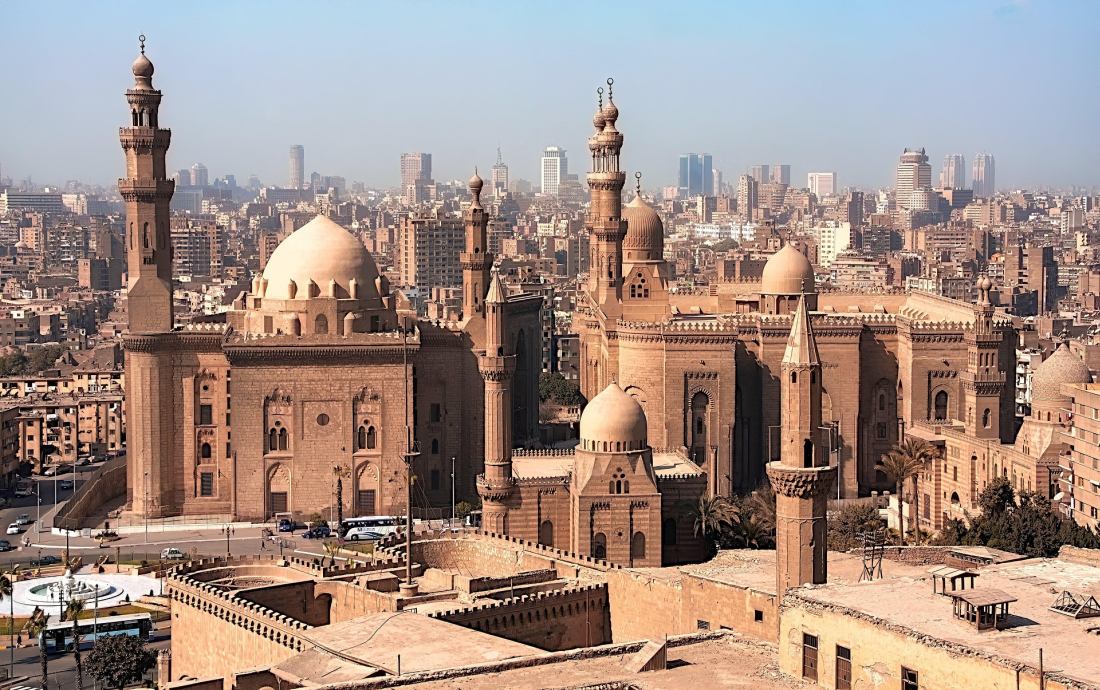
Cairo is one of the oldest cities in the world. That’s why Egypt’s capital is home to a wealth of historic sights!
Greater Cairo is a true megacity: it covers an area of more than 3,000 square kilometers and has a population of over 20 million, making it the most populous city in Africa and the wider Middle East, and – alongside Nigeria’s Lagos region – one of Africa’s largest metropolitan areas.
Table of Contents
Cairo attractions
The Giza Pyramids and the Sphinx
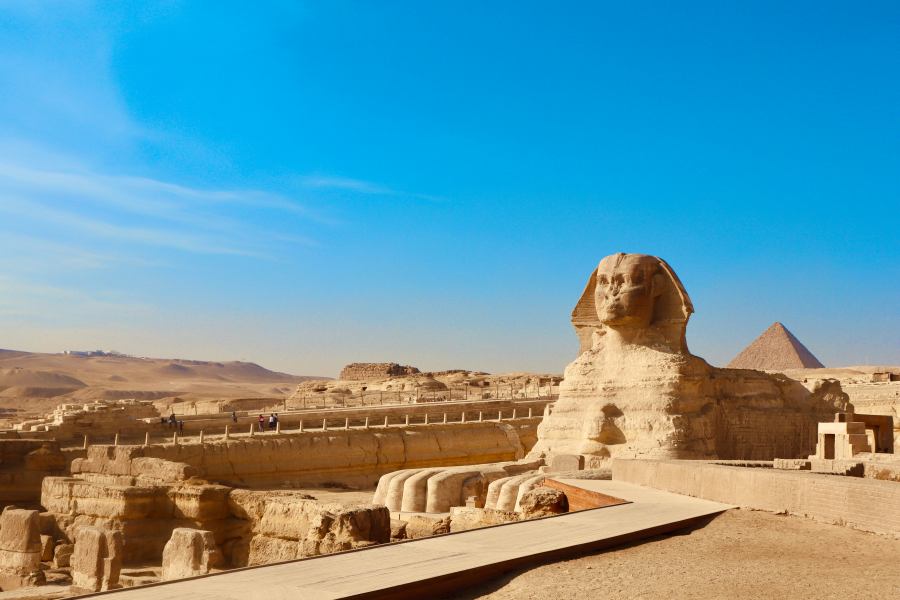
The only surviving wonder of the ancient world, standing unchanged in majestic splendor at the edge of the desert for more than 4,500 years. The three great pyramids – those of Khufu, Khafre, and Menkaure – were built as tombs for the pharaohs of the Old Kingdom, requiring enormous manpower and precise engineering skill. The complex remains the country’s most important tourist and archaeological site, visited by millions every year.
Visitors can walk around the base of the pyramids, and some can even go inside, where narrow passages lead to the burial chambers. The pyramid field is guarded by the mysterious Sphinx, the statue with a human head and a lion’s body, whose origin and exact age remain a subject of debate to this day. The nearby visitor center offers a stunning panorama of the entire complex.
A special feature of the site is the sound-and-light show held at dusk, which tells the story of the pyramids through projected images and music. The site lies on the edge of Cairo, on the border between the modern city and the desert, creating a particularly striking contrast.
The Cairo Citadel and the Mosque of Muhammad Ali
One of the most impressive monuments of medieval Islamic military engineering, built by Sultan Saladin in 1176 for defense against the Crusades. The hilltop fortress served as the seat of Egypt’s rulers for centuries.
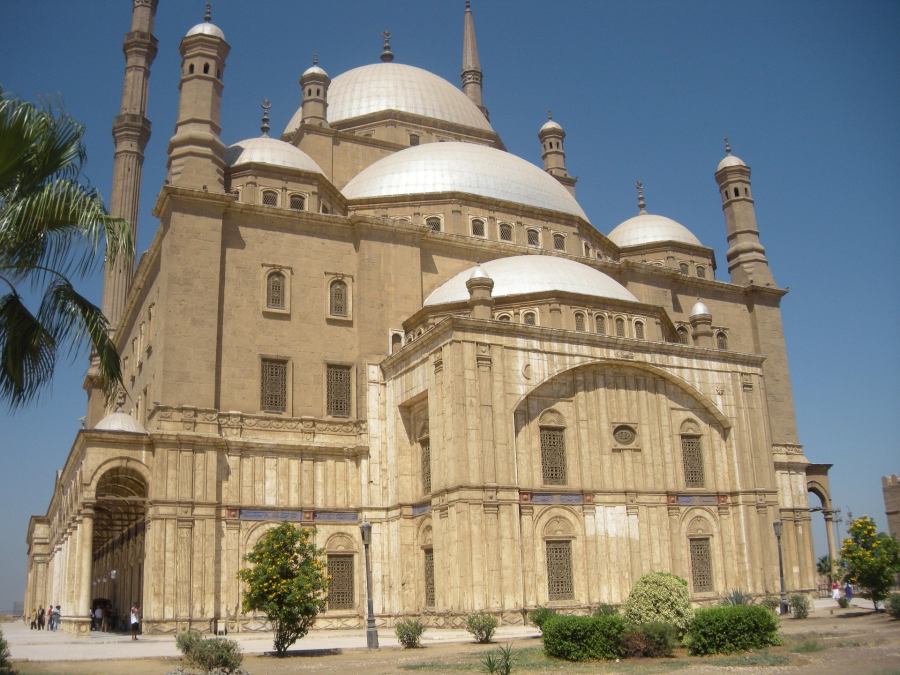
At the heart of the Citadel stands the Mosque of Muhammad Ali, built in the 19th century, whose slender Ottoman-style minarets and alabaster walls make it recognizable from afar. Its huge dome and ornate chandeliers create a stunning interior.
From the top of the walls there is an unrivaled panorama of Cairo’s old town and, in the distance, the pyramids. The complex also houses other mosques and museums, so a single visit reveals several layers of the city’s military, religious, and royal history.
Khan el-Khalili Bazaar
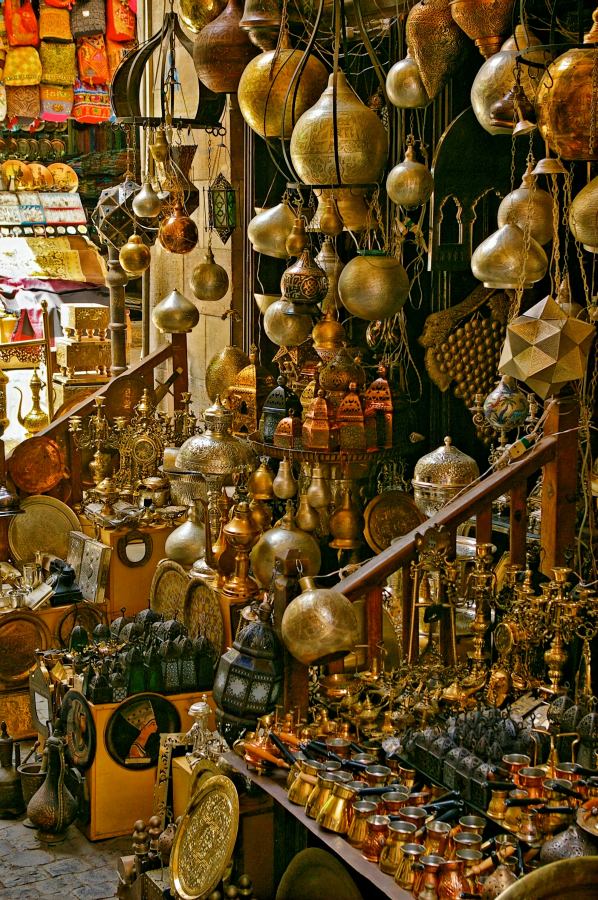
One of the oldest and most atmospheric markets in the Middle East, founded in the 14th century and still the heart of Cairo’s commercial life. Its narrow, maze-like streets preserve centuries-old trading traditions.
The bazaar offers a multitude of spices, gold and silver jewelry, hand-painted ceramics, perfumes, and traditional Egyptian textiles, while the merchants’ lively bargaining gives the place its distinctive atmosphere. Old coffeehouses and tea houses are tucked between the streets, where locals and tourists alike stop to rest.
Near the market stands the Al-Hussein Mosque, so a walk here combines shopping with religious and historical sights. In the evening the bazaar becomes especially lively, when the lights and scents conjure up a truly oriental atmosphere.
Coptic Cairo and the Hanging Church
One of Cairo’s oldest districts, known as the cradle of Egyptian Christianity, nestled within the walls of a Roman-era fortress. From the 4th to the 7th century, the quarter was one of the most important centers of Coptic culture.
The best-known building in the area is the Hanging Church, built on the towers of an old Roman fortress, from which it takes its name. The church’s carved wooden ceiling and ivory-inlaid iconostasis are outstanding examples of Coptic art. Nearby stands the Church of Saint Sergius, said by tradition to have been one of the stops on the Holy Family’s flight into Egypt.
The quarter is also home to the Ben Ezra Synagogue and the Coptic Museum, which preserves the material heritage of Coptic culture. The cobblestone streets and ancient churches lend the district a distinctive, quiet atmosphere.
Al-Azhar Mosque and University
One of the oldest and most prestigious educational institutions in the Islamic world, founded in 970, and still functioning as a university today. The mosque is one of the most important bastions of Sunni Islamic theological thought.
The building complex combines architectural styles from different eras, having been expanded and decorated many times over the centuries. The vast courtyard is lined with slender minarets and ornate gates, while the interiors are adorned with finely carved stucco and calligraphic inscriptions.
The mosque remains an active place of worship and a center of study, where students from all over the world learn Islamic religious studies. Together with the neighboring Khan el-Khalili Bazaar, the district is considered the historic heart of Islamic Cairo.
Cairo Tower
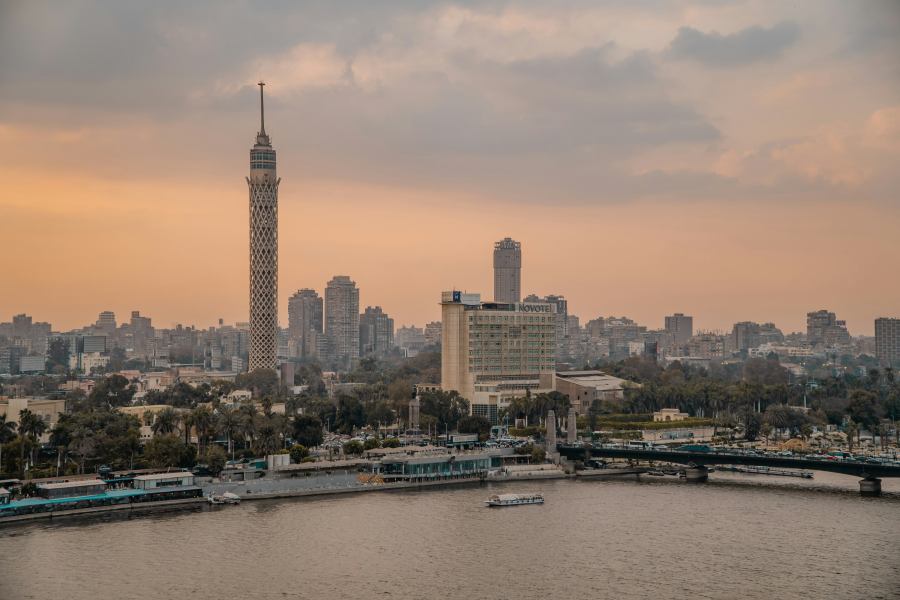
One of the city’s most distinctive modern structures, opened in 1961, and since then one of Cairo’s symbols. The 187-meter-tall, lotus-flower-shaped lattice tower rises on Gezira Island in the Nile.
At the top of the tower, an observation deck and a revolving restaurant await visitors, offering a 360-degree panorama of the city, the Nile, and, on a clear day, even the distant pyramids. The structure’s distinctive, openwork concrete lattice evokes traditional Egyptian motifs in a modern form.
A visit is especially popular at sunset, when the setting sun bathes the city and the river in gold. The park surrounding the tower offers a pleasant place for a stroll, making the attraction a good escape from the bustle of the city.
The Nile River and Cairo’s Corniche
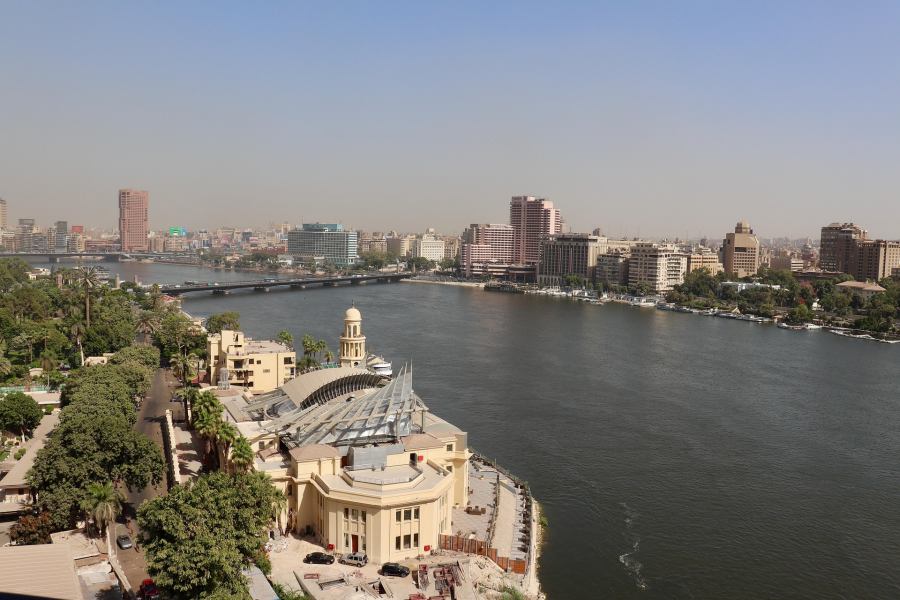
One of the longest rivers in the world, the Nile has shaped Egyptian life and Cairo’s cityscape for millennia. Bridges and promenades connect its two banks, which are popular spots for locals to take an evening walk.
From the promenades along the Nile there are picturesque views of the sailing dahabiyas and feluccas, which still ply the water with their traditional triangular sails. In the evening, numerous dinner cruise boats set out on the river, entertaining passengers on board with live music and traditional dance.
The promenade along the river, known as the Corniche, is lined with cafés, restaurants, and parks where locals spend their free time. A felucca ride at sunset is one of the most romantic and popular activities in the city.
Al-Muizz Street
The historic main street of Cairo’s old town, named after the founder of the Fatimid dynasty, which for centuries was the backbone of the city’s commercial and religious life. Both sides of the street are lined with medieval mosques, madrasas, and fountains.
Walking along the pedestrian street, visitors can discover a dense succession of Islamic architectural styles, from the Fatimid era to the Ottoman period. The buildings’ ornate gates, lace-like stone carvings, and colorful window grilles are the pinnacle of Islamic craftsmanship.
In the evening the street is lit up, and street vendors and musicians often fill it, lending the walk a special, fairy-tale-like atmosphere. Together with the nearby Khan el-Khalili Bazaar, the street is one of the most visited stretches of Islamic Cairo.
The Mosque of Sultan Hassan
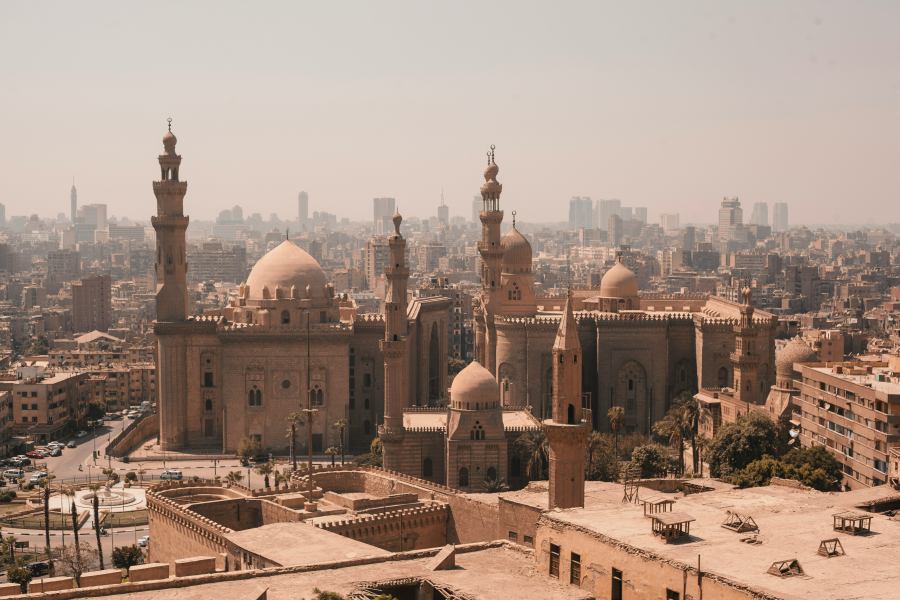
One of the most outstanding works of Mamluk-era Islamic architecture, built in the 14th century by order of Sultan Hassan. The vast complex functioned as both a mosque and a religious school.
The building’s monumental scale and strict geometric forms impress visitors right from the entrance, while on the four sides of the inner courtyard stand four separate teaching halls, known as iwans, each dedicated to a different school of Islamic law. The mosque’s dome and minaret are among the highest points in Cairo’s old town.
The building stands right next to the Citadel, so both attractions can be visited on a single walk. Its austere style, built on form and proportion rather than ornamentation, makes the mosque one of the purest examples of Mamluk architecture.
The Mosque of Ibn Tulun
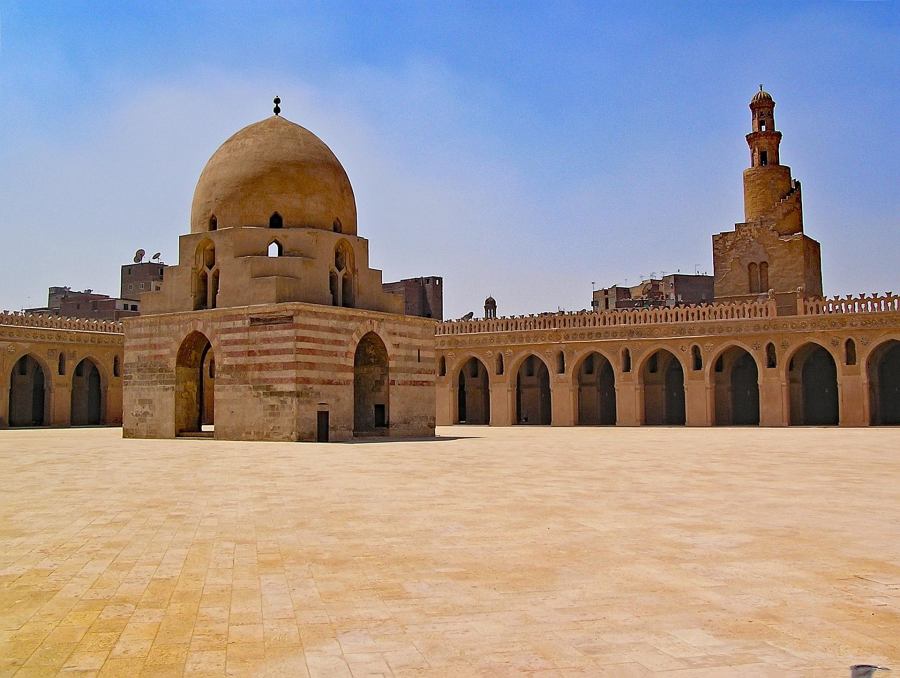
One of Cairo’s oldest and most significant Islamic monuments, built between 876 and 879 by Ahmad ibn Tulun, Egypt’s ruler at the time.
Its special feature is that it has retained most of its original form to this day, offering an exceptional glimpse into 9th-century Islamic architecture. Its vast inner courtyard, arcaded corridors, and distinctive exterior spiral-staircase minaret create a truly unique sight. The decoration is understated yet elegant, creating a calm, distinctive atmosphere.
The mosque is less crowded than other Cairo landmarks, making it ideal for those who want to explore one of the most important works of Islamic art and architecture in a quieter setting.
Ben Ezra Synagogue
Cairo’s oldest and most significant synagogue, traditionally said to stand on the spot where Moses was found as a baby in the waters of the Nile. The building was constructed as a Christian church in the 9th century, then converted into a synagogue in the 12th century.
The synagogue’s special significance comes from the fact that its attic held the famous Cairo Geniza, a collection of nearly two hundred thousand medieval Jewish documents that is an invaluable source for Jewish and Mediterranean history. The building’s interior is decorated with finely carved wooden railings and colorful stained-glass windows.
The synagogue lies in the heart of the Coptic Cairo district, right next to other historic religious buildings, making the district a symbol of religious diversity.
Zamalek and the Cairo Opera House
Located on an island in the Nile, Zamalek is one of Cairo’s most elegant and green districts, home to both colonial-era villas and modern galleries. Since the early 20th century, the district has been a favored home for Cairo’s intelligentsia and the international diplomatic community.
On the southern part of the island stands the Cairo Opera House, which opened in 1988 after the original khedivial opera house was destroyed by fire. The modern complex is home to the Egyptian National Ballet, the Symphony Orchestra, and the Opera Company, with regular international performers.
Zamalek’s shaded streets are home to numerous galleries, boutiques, and cafés, while the Nile bank surrounding the island offers a pleasant escape from the city’s hustle and bustle. The district’s calm yet culturally vibrant atmosphere is a good counterpoint to the hustle of the historic old town.
Best museums in Cairo
The Egyptian Museum
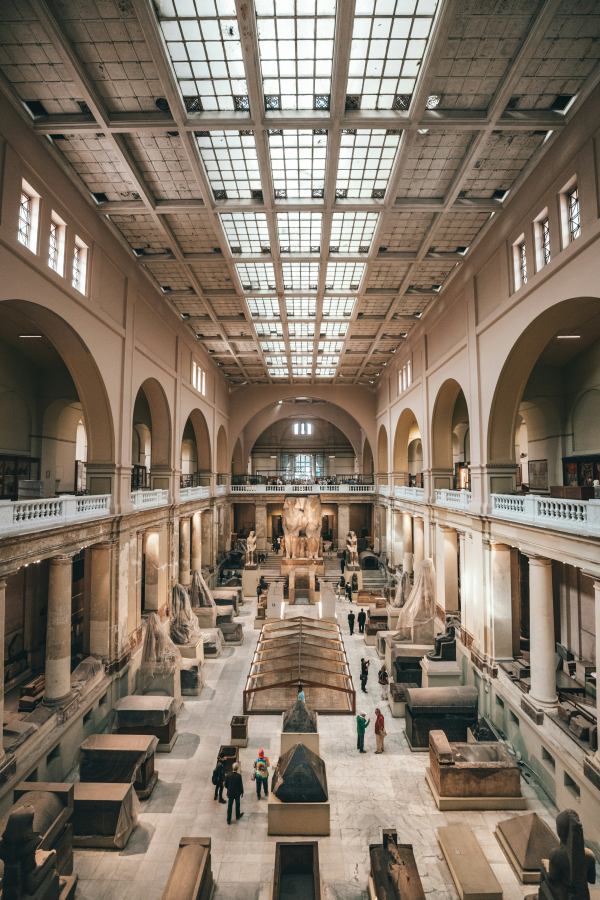
Home to one of the world’s richest collections of ancient Egyptian artifacts, opened in 1902 next to Tahrir Square in a Neoclassical-style building. The museum was originally founded on the initiative of French archaeologist Auguste Mariette to house the country’s ever-growing archaeological finds.
The collection comprises more than 120,000 objects, including Tutankhamun’s golden death mask and burial treasures, as well as royal mummies, sarcophagi, and everyday objects. The galleries present ancient Egypt’s three-thousand-year history in chronological order.
Visitors find the mummy room especially fascinating, where the remains of famous pharaohs, including Ramesses II, can be seen. The building’s crowded halls and the sheer number of objects give the museum a unique, timeworn atmosphere, though many of its treasures have now been transferred to the Grand Egyptian Museum.
The Grand Egyptian Museum
The world’s largest archaeological museum devoted to a single civilization, built barely two kilometers from the Giza pyramids. The grandiose building of glass and stone opened to the public after decades of planning and construction.
The museum’s central attraction is the complete treasure collection of Pharaoh Tutankhamun, comprising more than five thousand objects, displayed together for the first time. The exhibition space also features monumental statues, sarcophagi, and everyday objects, accompanied by state-of-the-art interactive displays.
One of the building’s most striking features is the grand staircase, from which visitors can look directly out at the Giza pyramids, linking past and present. Because of its size and technological standard, the museum is considered one of the most significant undertakings in modern museology.
The National Museum of Egyptian Civilization
One of Cairo’s newest museums, opened in the early 2020s, presenting the country’s history from prehistoric times to the modern era in a single, chronological system. The building stands in the historic district of Fustat, one of Cairo’s oldest inhabited areas.
The museum’s most important and widely reported event was the ceremonial transfer of the mummies of twenty ancient pharaohs and queens from the Egyptian Museum, including the remains of Ramesses I and Hatshepsut. The Hall of Royal Mummies presents the remains in a special, climate-controlled, respectful setting.
The exhibition also presents the everyday life, religion, and scientific achievements of Nile civilization with the help of interactive displays, giving visitors a comprehensive picture of Egypt’s three-thousand-year history in a single location.
The Coptic Museum
One of Egypt’s most important Christian cultural institutions, located in the Coptic Cairo district.
The museum’s rich collection preserves more than 16,000 artifacts, including carved stone monuments, icons, frescoes, manuscripts, textiles, and wooden decorations, illustrating the history of Coptic Christianity from Roman times to the beginning of the Islamic era. The exhibits vividly illustrate the meeting of ancient Egyptian, Greco-Roman, and Christian art.
Cairo weather: when is the best time to visit?
Cairo has a hot desert climate with essentially two main seasons: a long, hot summer and a milder, shorter winter, with precipitation occurring only rarely throughout the year.
Spring (March–May):
Spring warms up quickly in Cairo, with average temperatures ranging from 20–32°C. In April and May, the hot, dusty desert wind known as the khamsin sometimes blows, temporarily raising temperatures significantly and reducing visibility.
Summer (June–September):
Summer is extremely hot and dry, with daytime temperatures often exceeding 35–40°C, while nighttime temperatures rarely drop below 25°C. There is almost no rainfall, but because of the dry air, the heat is more bearable than in cities with humid climates.
Autumn (September–November):
Autumn brings a gradual cooling, with average temperatures dropping to 20–30°C, and the nights becoming increasingly pleasant. This is one of the most popular seasons among tourists, since the daytime heat is milder while there are still plenty of sunshine hours each day.
Winter (December–February):
Cairo’s winter is mild, with daytime temperatures typically around 18–22°C, though at night the temperature can drop to 8–10°C, which feels colder due to the lack of heating. Precipitation is most common at this time, although overall it still rarely rains.
Best time to travel to Cairo:
The most ideal time to visit Cairo is late autumn to early spring, that is, the months between October and April, when daytime temperatures are pleasant, the heat is not yet scorching, and the pyramids as well as walks around the city can be enjoyed comfortably. It’s best to avoid the summer months because of the extreme heat, unless you handle dry, intense heat well.
Frequently Asked Questions about Cairo
Cairo is in the Eastern European Time zone (EET, UTC+2) and observes daylight saving time.
Cairo’s official language is Arabic. English is widely used at tourist attractions, hotels, restaurants, and larger shops. Locals appreciate it when visitors know a few simple Arabic phrases, such as greetings or expressions of thanks.
The official currency is the Egyptian pound (EGP). Larger hotels, restaurants, and shopping centers accept card payments, but it’s advisable to use cash at markets, smaller shops, and street vendors. It’s also worth always keeping some smaller denominations on hand.
You can find a currency converter calculator here!
Egypt uses type C and F outlets, the same as in Europe. The mains voltage is 220V, so electrical devices brought from Europe can be used without a separate adapter.
From Cairo International Airport, downtown can be reached by taxi, Uber, airport bus, or various transfer services. The metro doesn’t currently connect directly to the airport, so most travelers choose a taxi or Uber, which offer a fast and convenient solution.
In Cairo, the metro is one of the fastest ways to get around, especially for avoiding frequent traffic jams. Taxis are also inexpensive, and Uber operates reliably. The bus network is extensive, but due to crowding and Arabic-only signage, it’s less easy for tourists to use.
Cairo is generally a safe destination for tourists, especially around popular attractions and hotels. Pickpocketing can occur in crowded places, so it’s worth keeping an eye on your valuables. In the evening, it’s advisable to stick to well-lit, busy streets and to use official taxis or a well-known ride-sharing service.
For tourists, Zamalek is one of the best choices, popular for its safe, green surroundings, restaurants, and good transport links. Downtown Cairo is ideal for those who want to be close to the historic city center and the museums. Giza is an excellent choice if you want to stay near the pyramids, while Garden City offers a quieter, more elegant setting.
Ramadan and the following Eid al-Fitr (the festival marking the end of the fast) are among the most important religious periods of the year.
Eid al-Adha (the Festival of Sacrifice) is one of the most significant holidays in Islam, marked by family gatherings and religious ceremonies.
Sham El-Nessim is a spring festival of ancient Egyptian origin, celebrated across the country with picnics and outdoor activities.
Koshari: a national dish made of rice, pasta, lentils, chickpeas, and tomato sauce.
Ful medames: a traditional breakfast made of slow-cooked fava beans.
Ta’ameya: Egyptian falafel, made from fava beans.
Molokhia: a thick soup made from a green leafy vegetable, usually served with chicken or rabbit.
Hawawshi: crispy fried pita stuffed with spiced ground meat, a popular street food.