Bavaria is one of Germany’s most beautiful states, where the Alps, crystal-clear mountain lakes, and medieval towns create a wonderful atmosphere.
Bavaria is Germany’s largest federal state, which attracts visitors from all over the world with its rich historical heritage, natural beauty, and cultural treasures. The region is famous for the castles of the Wittelsbach dynasty, medieval towns, and breathtaking Alpine landscapes.
Table of Contents
Best places in Bavaria
Munich
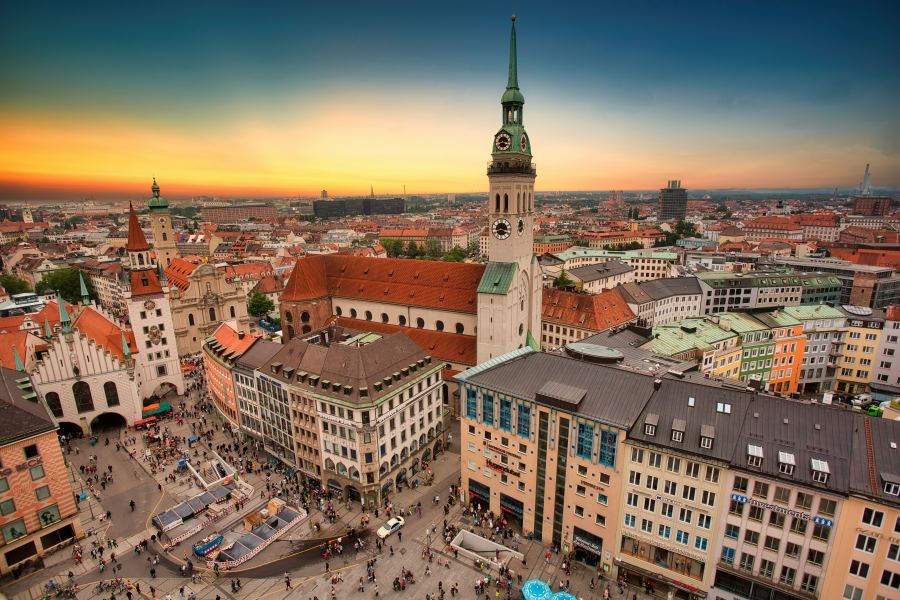
Bavaria’s capital and Germany’s third-largest city, which harmoniously combines traditional Bavarian culture with modern metropolitan life.
At the heart of the city lies Marienplatz, boasting masterpieces of medieval and baroque architecture, while the New Town Hall captivates visitors’ attention daily with its glockenspiel. The city’s cultural offerings are unparalleled: world-class museums, including the German Museum and the Pinakothek museum complex, as well as the Bavarian State Opera all reflect Munich’s intellectual wealth.
The Englischer Garten, the city’s green oasis, is larger than New York’s Central Park and features Europe’s only urban surfing spot on the Eisbach river as a special attraction. Due to the proximity of the nearby Alps, Munich is an excellent starting point for mountain hiking and skiing.
Munich is home to Oktoberfest, the world’s largest beer festival, which attracts millions of visitors every year. The city’s beer gardens, especially the Hofbräuhaus and Biergarten am Chinesischen Turm, offer an authentic Bavarian atmosphere.
Neuschwanstein Castle
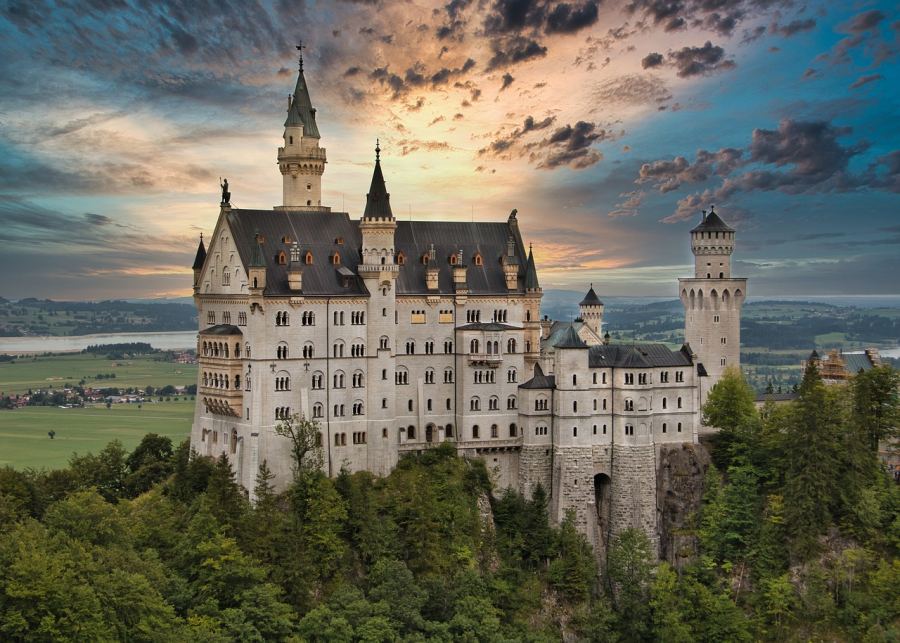
King Ludwig II of Bavaria’s dream castle near Hohenschwangau, which is one of the world’s most photographed buildings and the inspiration for Walt Disney’s Sleeping Beauty Castle. The 19th-century romantic castle stands on a rocky cliff above the Pollat Gorge, and with its fairy-tale appearance, it attracts more than one million visitors annually.
Construction of the castle began in 1869, but due to King Ludwig II’s death in 1886, it was never completely finished. Of the 200 rooms, only 15 were completed, but their magnificent furnishings and paintings depicting motifs from Wagner’s operas provide a stunning spectacle. The throne room is particularly impressive, with its Byzantine-style mosaic floor and starry sky decorating the ceiling.
Visiting the castle requires advance ticket purchase, and during the 35-minute guided tour, visitors can gain insight into the peculiar world of the „fairy tale king”. The landscape surrounding the castle offers beautiful hiking opportunities, and the most beautiful view of the castle opens from the nearby Marienbrücke bridge. In winter, the snow-covered castle shines in an even more magical atmosphere.
Nuremberg
Bavaria’s second-largest city was one of the most important centers of the Holy Roman Empire and still retains its medieval charm today. The old town surrounded by city walls has remained almost completely intact, and with the Kaiserburg castle at its top, it forms one of Europe’s most beautiful medieval cityscapes.
The city is of outstanding historical significance, as it hosted the imperial diets of the Holy Roman Empire, and later became the site of the Nuremberg Laws and the war crimes trials. The Documentation Center and the Nuremberg Trials Memorial now serve educational and commemorative functions.
Nuremberg is famous for its traditional Christmas market, the Christkindlmarkt, which is one of the oldest and most atmospheric in Europe. The city’s culinary specialties include the famous Nuremberg sausages, Lebkuchen gingerbread, and wines. The craftsmen’s workshops in the narrow streets of the old town still preserve the secrets of traditional crafts today.
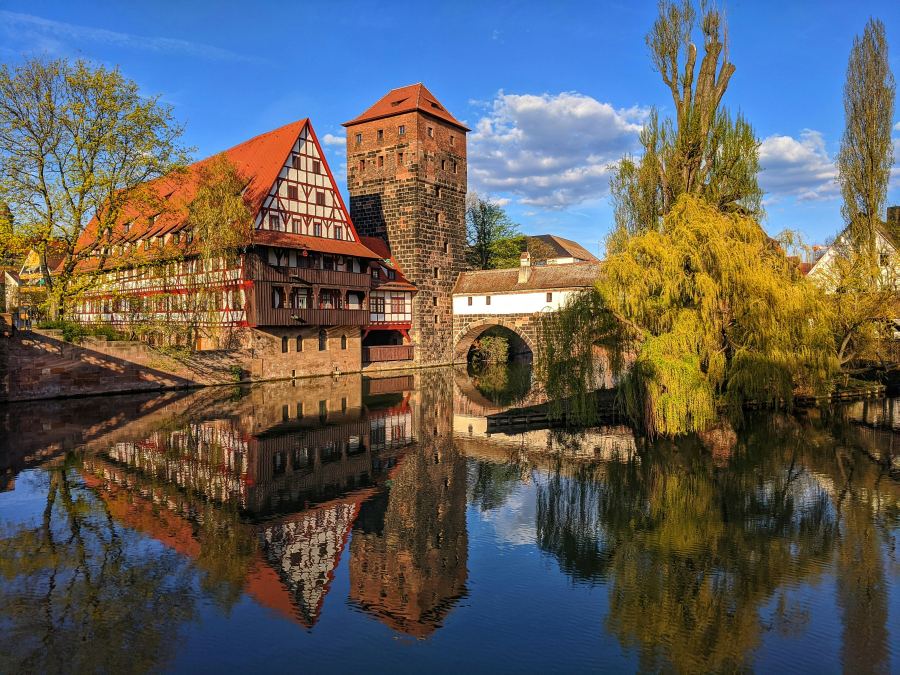
Königssee
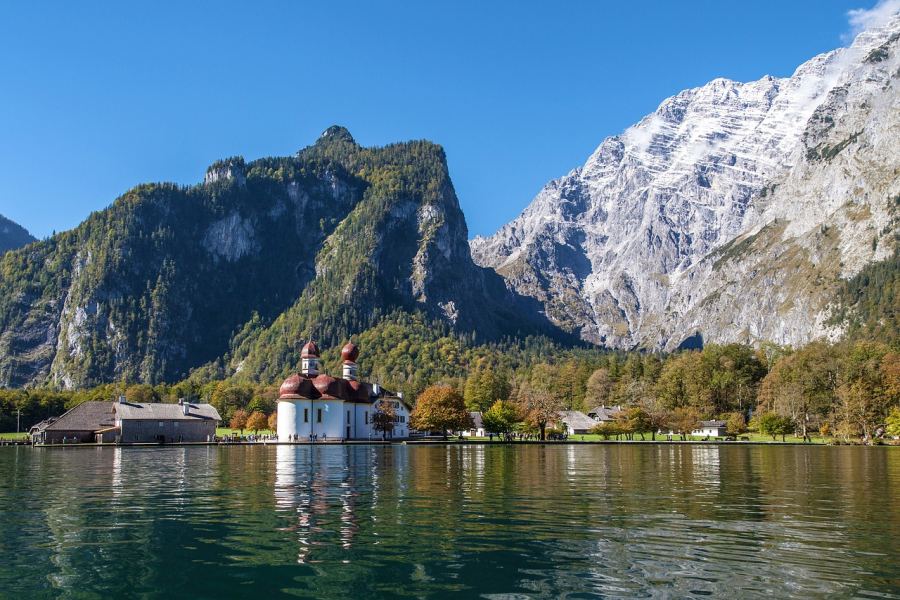
Germany’s deepest and clearest lake, located in Berchtesgaden National Park.
The 8-kilometer-long and 1.2-kilometer-wide lake at the foot of the Watzmann mountain range is a remnant of the Ice Age, and due to its crystal-clear water, it is often called the „Bavarian fjord”.
Only environmentally friendly electric boats operate on the lake, which transport visitors to the famous St. Bartholomew’s Chapel. This tradition has continued since 1909 for the protection of nature. During the journey, the boatmen demonstrate the lake’s famous echo: they play trumpets at the steep rock faces, and the sound, reflected multiple times, provides a magical acoustic experience.
The chapel was built in honor of the patron saint of fishermen. The picturesque white building with red onion domes provides an iconic sight against the surrounding Alpine panorama. Numerous hiking trails lead around the lake, including to the Obersee, where a small waterfall can also be found.
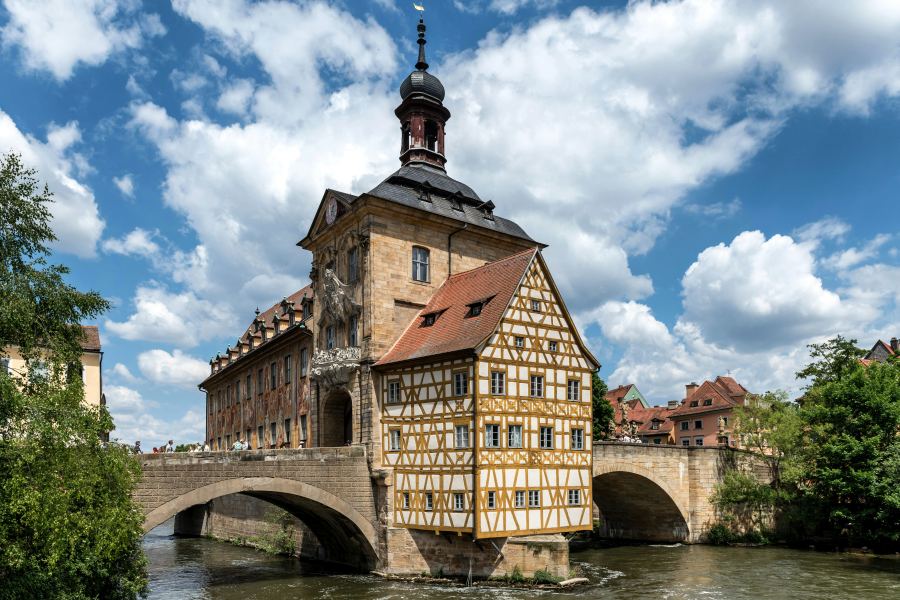
Bamberg
The medieval city on the banks of the Regnitz River, which is part of the UNESCO World Heritage, is one of Europe’s best-preserved historic city centers. The city was built on seven hills, like Rome, and boasts masterpieces of imperial, ecclesiastical, and civic architecture.
The city’s symbol is Bamberg Cathedral, whose four towers can be seen from far away. The cathedral is famous for the Bamberg Horseman, a 13th-century stone sculpture masterpiece that is one of the finest works of medieval sculpture. The nearby Old Town Hall stands on an artificial island in the middle of the Regnitz River and is one of Bavaria’s most photographed buildings.
It’s famous for its brewing traditions, especially smoked beer (Rauchbier), which has earned the city renown with its unique flavor profile. Numerous traditional breweries and restaurants can be found in the narrow streets of the historic downtown. The city’s „Little Venice” district creates a romantic atmosphere with riverside fishermen’s houses, while from the Michaelsberg monastery, a beautiful panorama opens over the entire city.
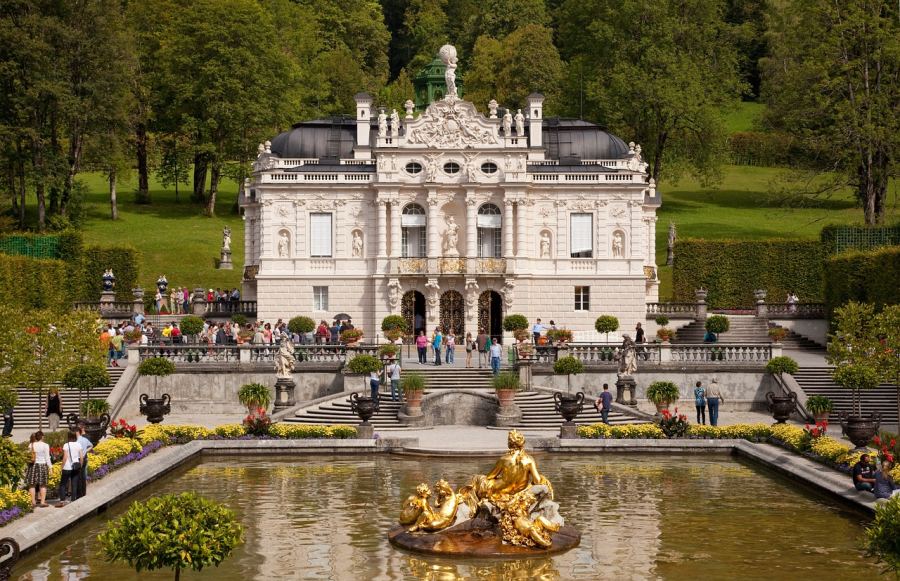
Linderhof Palace
King Ludwig II of Bavaria’s smallest but most intimate castle near Ettal, which was the only one the king managed to complete during his lifetime. The Rococo-style castle was created following the model of French Versailles.
The castle’s interior boasts magnificent Rococo decoration, with the Hall of Mirrors being particularly stunning, where the king played chess and read. The dining room features the so-called „magic table” which rose from the ground serving food so that the king wouldn’t have to meet with servants. The bedroom is covered with gold and blue brocade, and the ceiling paintings depict French King Louis XIV.
Its park is a special work of garden art that combines French formal and English landscape styles. Its greatest attraction is the Venus Grotto, an artificial cave inspired by the first act of Wagner’s opera Tannhäuser. The grotto contains a small lake with colored lighting, and King Ludwig II’s swan-shaped boat once stood here.
Regensburg
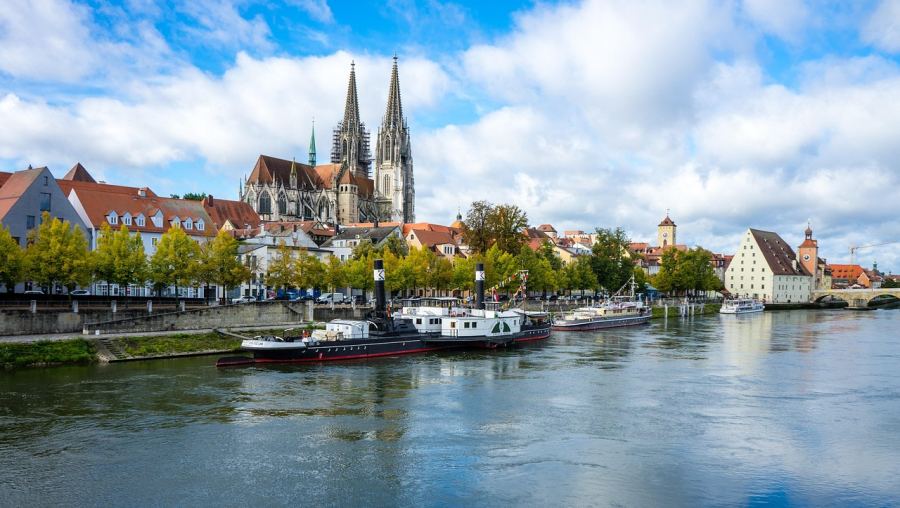
The historic city on the banks of the Danube was one of medieval Germany’s richest commercial centers and is now a UNESCO World Heritage Site. The city’s almost intact medieval city center boasts more than 1,500 monument buildings.
The city’s symbol is the Stone Bridge (Steinerne Brücke) built in the 12th century, which was the Danube’s only bridge in this region for nearly 900 years. Next to the bridge stands the famous Würstküche, the world’s oldest place that has been serving traditional Regensburg sausages since 1146. The Gothic towers of St. Peter’s Cathedral are 105 meters high and form one of the most beautiful architectural ensembles in the Danube Valley.
Regensburg is also famous for the Domspatzen church music tradition; the cathedral choir looks back on more than a thousand years of history. The Thurn und Taxis ducal palace in the city’s old town now serves as a museum and provides insight into the life of German aristocracy.
Bavarian Forest
Germany’s first national park stretches along the Czech border and is Central Europe’s largest contiguous forested area. The park was established in 1970 and operates on the philosophy of „letting wilderness be wilderness”.
The national park offers an almost pristine natural environment where visitors can discover Central Europe’s native flora and fauna. Wolves, lynx, wildcats, and numerous rare bird species live in the park. The Hans-Eisenmann-Haus visitor center features interactive exhibitions showcasing the park’s natural values, while the Baumwipfelpfad canopy walk leads 1,300 meters among the trees.
Numerous hiking trails can be found within the park area, from easy walks to climbing major mountain peaks. Lusen (1,373 m) and Rachel (1,453 m) are the highest points, from which, in clear weather, one can see far across the Bavarian Forest and Bohemian Forest landscape.
Rothenburg ob der Tauber
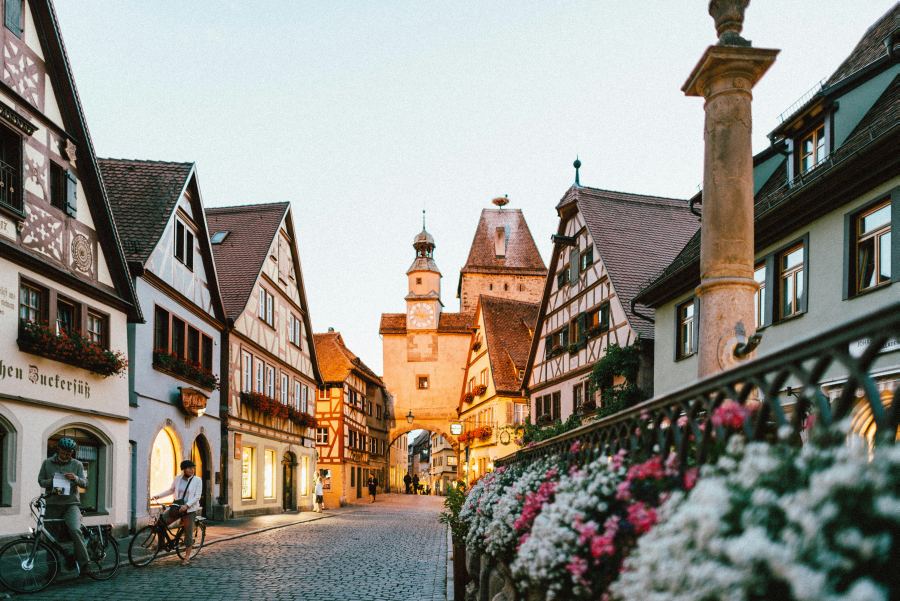
The medieval town rising above the Tauber River preserves the atmosphere of a 16th-century German small town in almost unchanged form.
The city’s main attraction is the market square and the Gothic St. James Church, which houses Tilman Riemenschneider’s famous wooden sculptures. The town hall is a partly Gothic, partly Renaissance building, from whose tower a beautiful panorama opens over the surrounding Tauber Valley. The Plönlein, the city’s most iconic corner, is one of Germany’s most photographed locations.
Rothenburg is famous for its Christmas atmosphere; the Käthe Wohlfahrt Christmas Museum evokes the magic of Christmas holidays year-round. The city is one of the main stops on the Romantic Road (Romantische Straße) and an unparalleled example of late medieval civic architecture. During the night watchman tour, visitors can explore the illuminated old town led by the city’s night watchman.
Eagle’s Nest
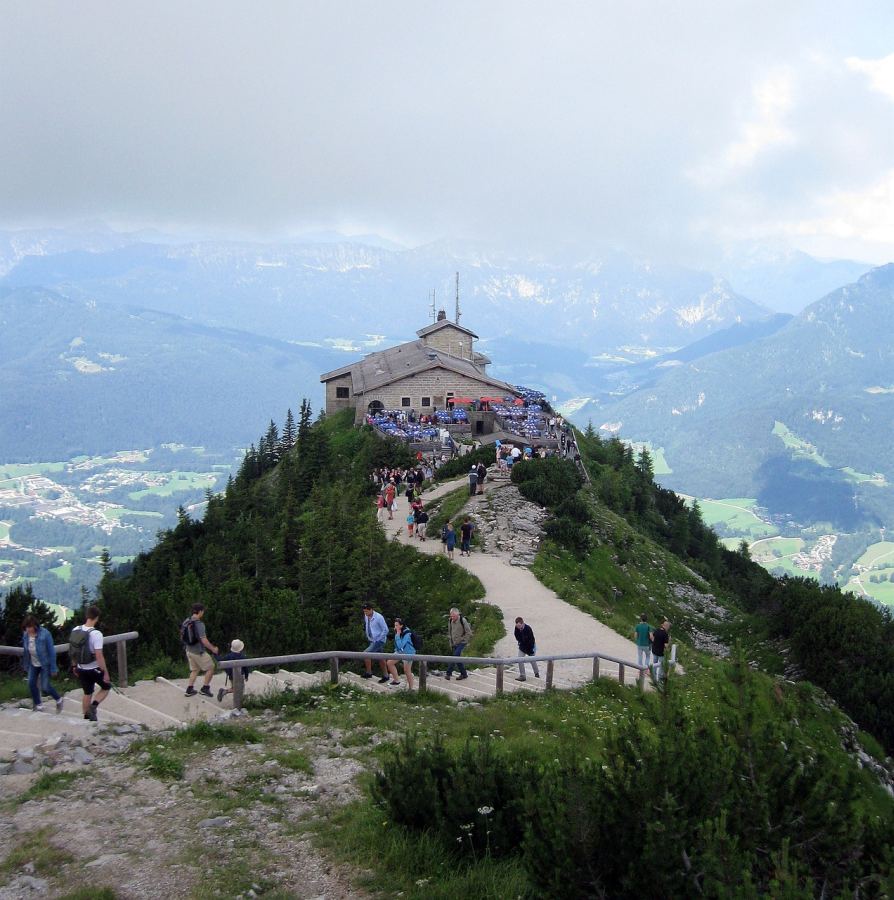
Hitler’s former mountain residence on the Kehlstein mountain at 1,834 meters altitude, which is now operated as a historical memorial site and museum. The building was completed in 1938 for Hitler’s 50th birthday, but the dictator visited it only 14 times in total.
The road leading to the building is itself an engineering marvel: the 6.5-kilometer Kehlsteinstraße serpentine road leads up the mountain with 27 curves, then at the end of a 124-meter-long tunnel, a gold-plated elevator takes visitors to the building. The documentation center objectively presents historical events and the horrors of the Nazi era.
From the Eagle’s Nest, a breathtaking panorama opens over the Berchtesgaden Alps, including the peaks of Untersberg, Watzmann, and Hochkalter. On clear days, one can see as far as Salzburg. The building now operates as a restaurant and museum and is open from May to October. Among the hiking trails, the path leading on foot from the Documentation Center is particularly beautiful.
Tegernsee
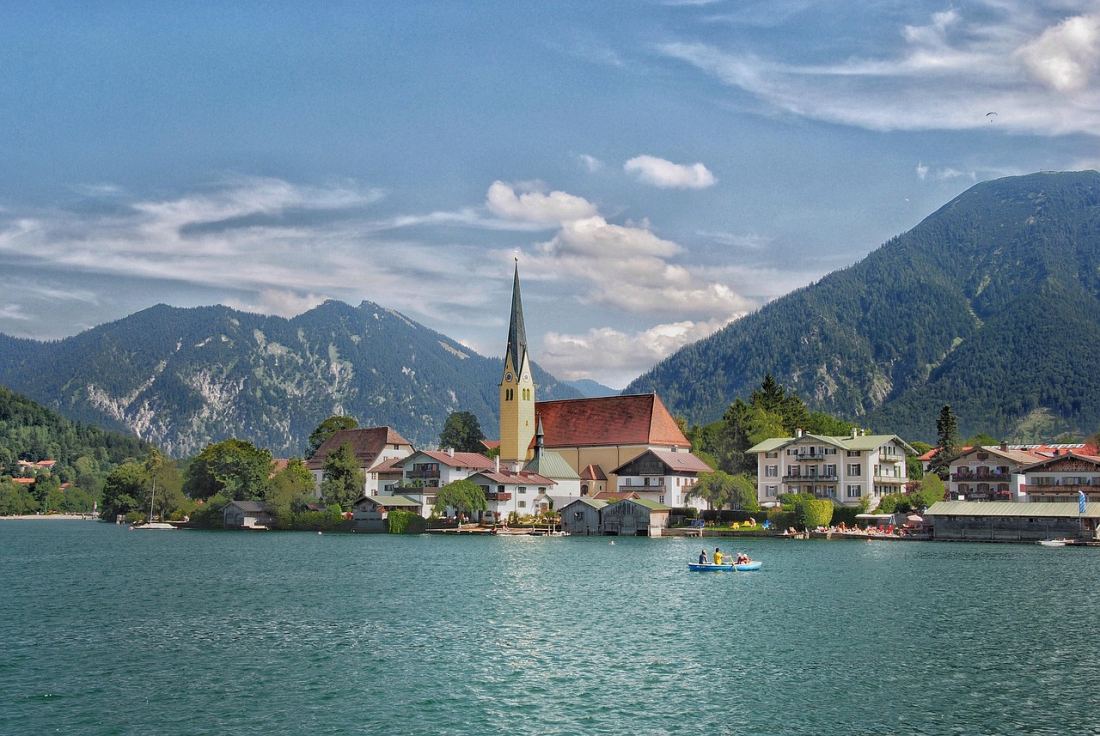
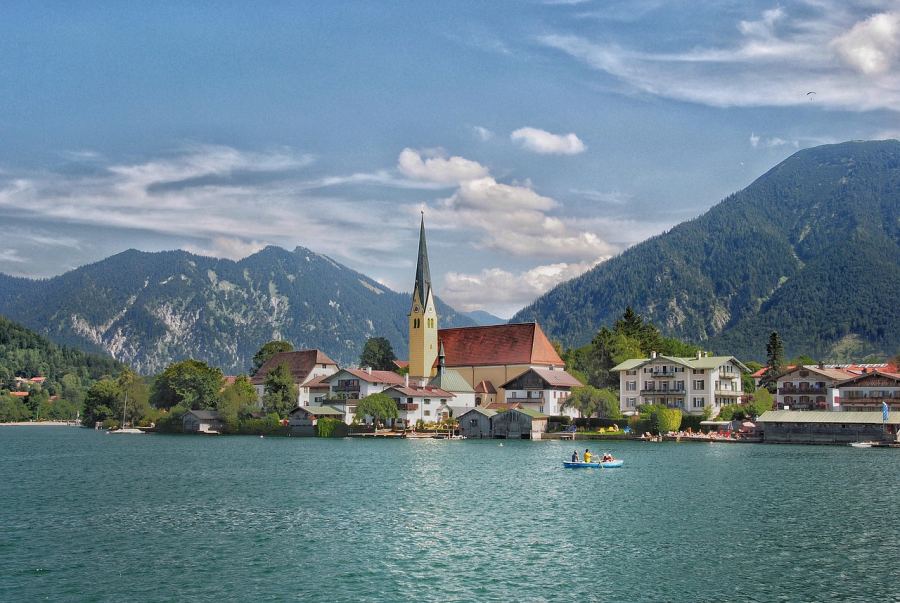
The lake lies 50 kilometers south of Munich and is a favorite weekend destination for Munich residents.
The lake’s water warms to 20-24 degrees Celsius in summer, providing excellent swimming opportunities. Numerous sailing and boat rental facilities can be found along its shores, while the surrounding mountains offer excellent hiking opportunities. The nearby Wallberg (1,722 m) features Germany’s longest toboggan run, which operates in both winter and summer.
The Tegernsee area is famous for wellness tourism, with numerous luxury hotels and spas located here. The region’s culinary specialties include local fish, especially yesterday’s trout, as well as fresh Alpine cheeses. The former Benedictine monastery on the lake’s southern shore now operates as a cultural center and brewery, where the famous Tegernseer beer is brewed.
Passau
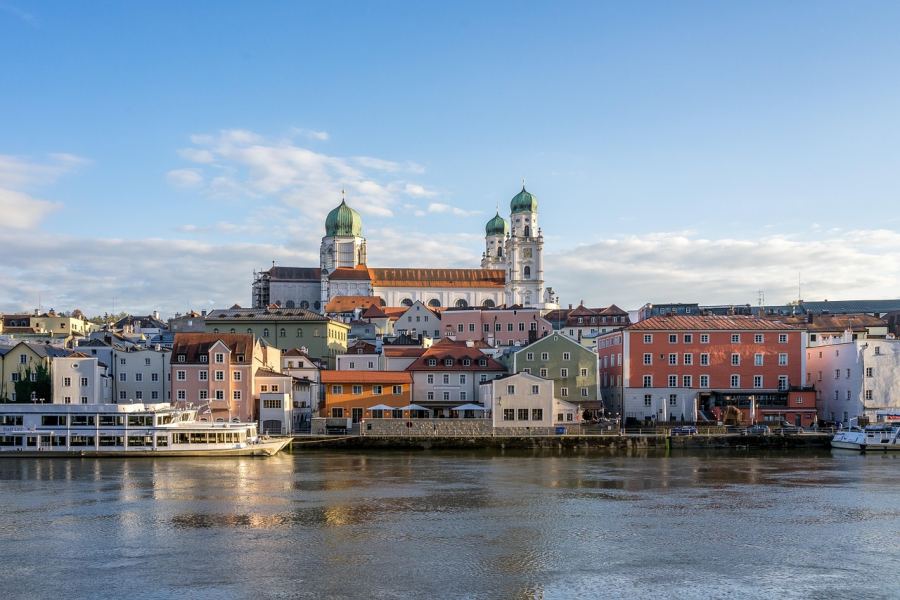
The „City of Three Rivers” at the confluence of the Danube, Inn, and Ilz rivers, near the Austrian border. Due to its unique geographical location and Italian-style baroque architecture, it is often called Bavarian Venice.
The Veste Oberhaus fortress towering above the city dates from the 13th century and now serves as a museum providing insight into the city’s and region’s history. From the fortress terraces, a beautiful view opens over the confluence of the three rivers, where the different colors of the waters are clearly visible: the Danube is grayish, the Inn greenish, and the Ilz has blackish water.
St. Stephen’s Cathedral in the heart of the city boasts the world’s largest church organ, which has 17,974 pipes and 233 registers. The cathedral’s baroque interior is stunning, and the regular organ concerts provide an unforgettable experience.
Herrenchiemsee Palace
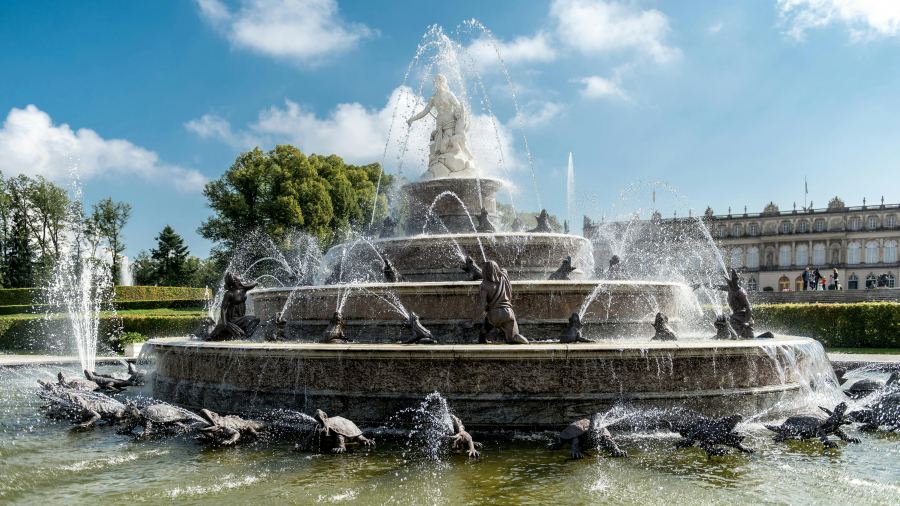
King Ludwig II of Bavaria’s castle designed after the model of Versailles stands on the largest island of Chiemsee. The castle is a copy of the French royal residence but was never completely finished because the king died in 1886.
Twenty rooms were completed, but only 10 of these served as living quarters. The most impressive room is the Hall of Mirrors, which is even larger and more magnificent than the original at Versailles. The king’s bedroom is covered with gold brocade, and the ceiling paintings proclaim the glory of French King Louis XIV.
The castle’s park was created following the French model, decorated with geometric shapes and water fountains. However, the park was never completely finished because work was stopped after the king’s death. Next to the castle is a museum that presents Ludwig II’s life and the history of the castle’s construction. From Chiemsee, a beautiful view opens over the surrounding Alpine peaks.
Zugspitze
Germany’s highest mountain at 2,962 meters altitude stands on the Bavarian-Austrian border and is accessible year-round by cogwheel railway or cable car. From the summit, an unparalleled panorama opens over the peaks of the German, Austrian, Swiss, and Italian Alps.
There are three ways to reach the Zugspitze: the Zugspitzbahn cogwheel railway departs from Garmisch-Partenkirchen and arrives at Zugspitzplatt, from where a cable car takes you to the summit. The second option is the Zugspitze cable car departing from Eibsee, which covers the 1,945-meter elevation difference in 10 minutes. The third route is the Tiroler Zugspitzbahn from the Austrian side.
The AlpspiX viewing platform is located at the summit. This consists of two 24-meter-long steel beams that cross each other and hang over a 1,000-meter depth. On clear days, visibility extends up to 200 kilometers, and the Grossglockner, the Dolomites, and even the Swiss Alps are visible. The Zugspitze area is a ski paradise in winter and attracts hikers in summer, and due to the glacier, there is snow year-round.
Eibsee
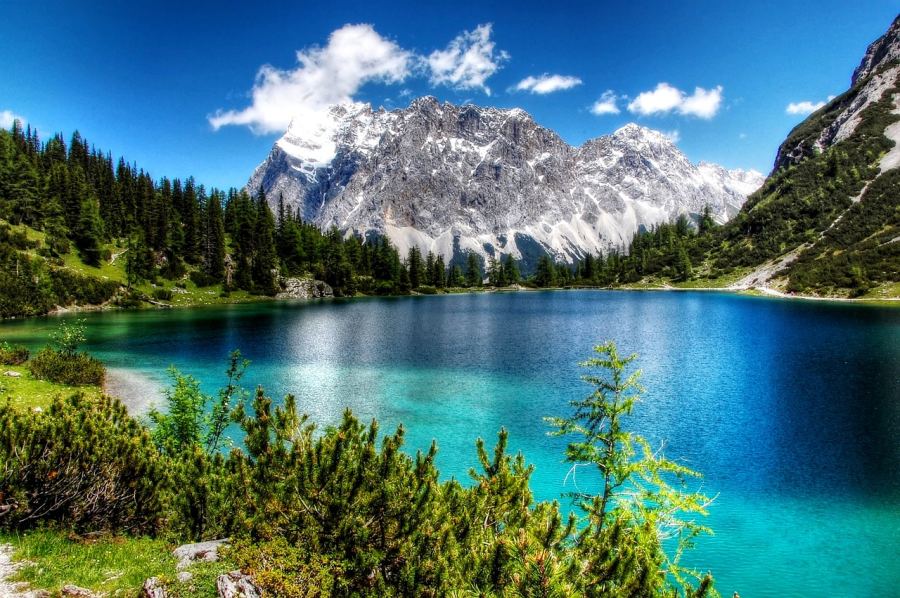
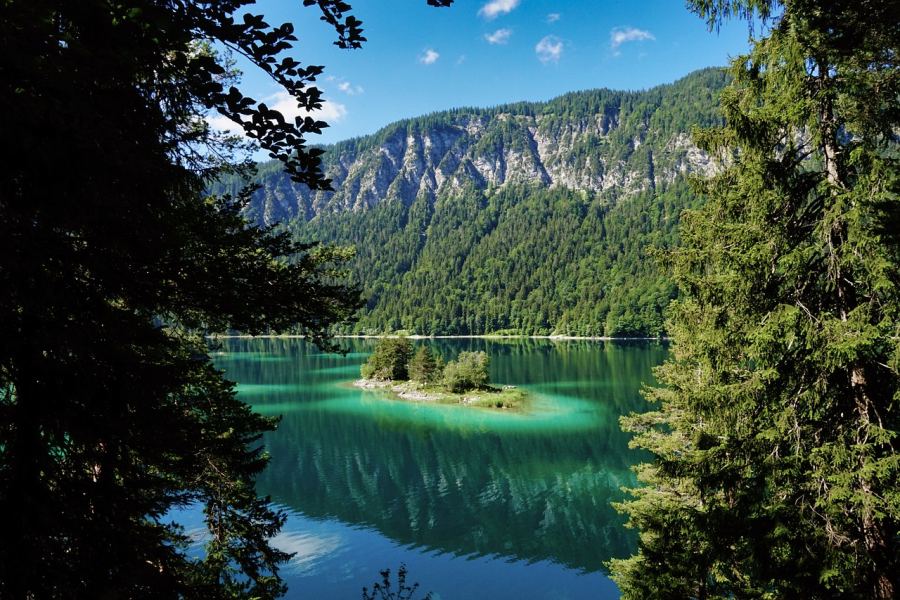
The emerald-green mountain lake at the foot of the Zugspitze is one of Bavaria’s most beautiful natural attractions. The lake lies at 1,000 meters above sea level, and the snowy peak of the Zugspitze is reflected in its crystal-clear water.
A 7.5-kilometer walking path surrounds the lake, which is about a 2-hour pleasant walk suitable for families. The path leads past various viewpoints from which beautiful photos can be taken of the lake and surrounding mountains. The lake’s water is cold even in summer, usually 16-18 degrees Celsius, but some people still take a dip.
The modern cable car leading to the Zugspitze departs from Eibsee, which is an engineering marvel: it covers almost 2,000 meters of elevation difference through only three pillars. Numerous hiking trails lead around Eibsee into the surrounding mountains, such as the Eibsee-Rundweg and the path leading to Frillensee.
Garmisch-Partenkirchen
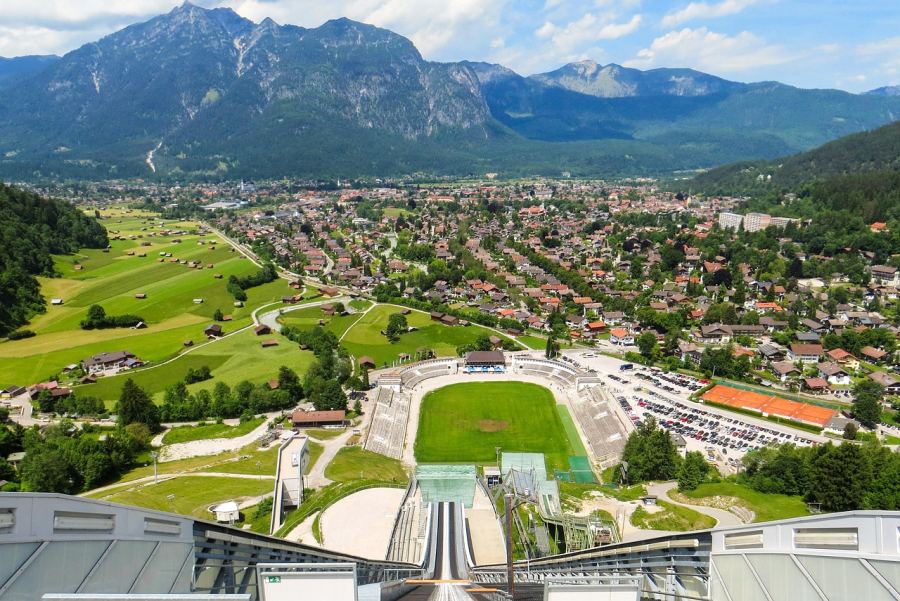
The world-famous winter sports center and resort town is located at the foot of the Zugspitze. The city was the venue for the 1936 Winter Olympics and the 2011 Alpine Ski World Championships.
Traditional Bavarian houses stand in the city’s old town, decorated with „Lüftlmalerei” facade painting. These colorful frescoes depict religious or secular scenes and are characteristic elements of Bavarian folk art. The main street, Ludwigstraße, features numerous shops, restaurants, and cafés.
It’s an excellent starting point for Alpine hiking and mountaineering. The Partnach Gorge, Höllentalklamm, and numerous other natural wonders are easily accessible from here. In winter, the city transforms into a ski paradise; the surrounding ski areas, such as Hausberg and Kreuzeck, offer opportunities for skiers of all levels, from beginners to professionals. The city annually hosts the famous New Year’s ski jumping competition.
Partnachklamm
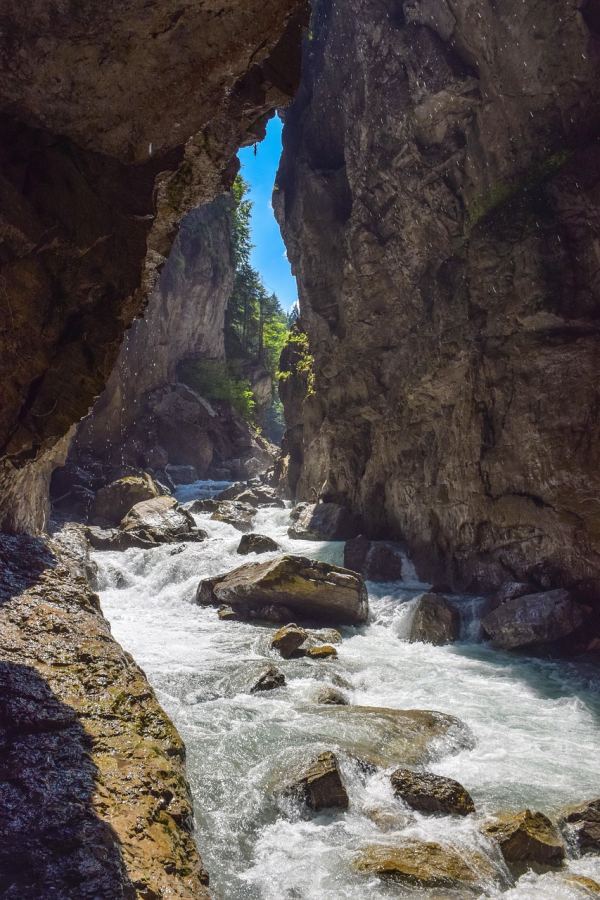
The mountain gorge near Garmisch-Partenkirchen was carved by the Partnach stream into the limestone rocks.
The path through the 699-meter-long and 80-meter-deep gorge is equipped with safe railings and tunnels, allowing visitors to closely admire the rock walls that are more than 100 meters high. From the gorge entrance to the end, there’s about a 20-30 minute walk, and several viewpoints along the way offer opportunities to take beautiful photos.
The Partnachklamm is particularly spectacular in winter, when icicles hanging from the rock walls and frozen waterfalls provide a fairy-tale sight. A small restaurant can also be found at the end of the gorge.
Augsburg
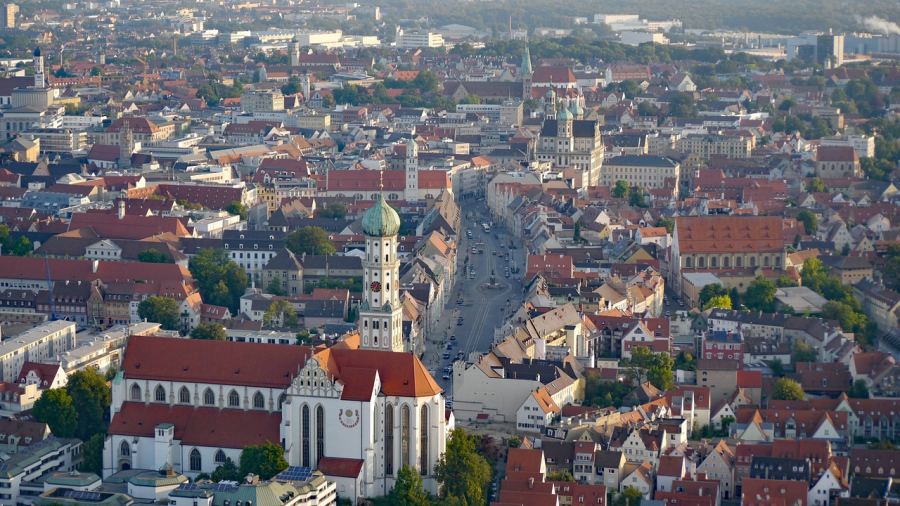
Bavaria’s third-largest city boasts more than 2,000 years of history and is one of Germany’s oldest settlements. The city was founded by the Romans in 15 AD and named after Emperor Augustus.
The city experienced its golden age in the late Middle Ages and Renaissance when the Fugger and Welser merchant families made it Europe’s richest financial center. The Fuggerei is the world’s first social housing estate from 1521, which still operates today and can also be visited as a museum.
The Peace of Augsburg was concluded here in 1555, which ended the religious wars in the Holy Roman Empire. The city boasts numerous beautiful churches, including the St. Ulrich and Afra Basilica and the Romanesque cathedral. The Renaissance town hall building with the Golden Hall (Goldener Saal) is one of Germany’s most beautiful secular interiors.
Wieskirche
The „Church in the Meadow” is a Rococo church built in the mid-18th century in the Pfaffenwinkel region, which has been a UNESCO World Heritage Site since 1983. Its special story began with a weeping Christ statue around which a pilgrimage site developed.
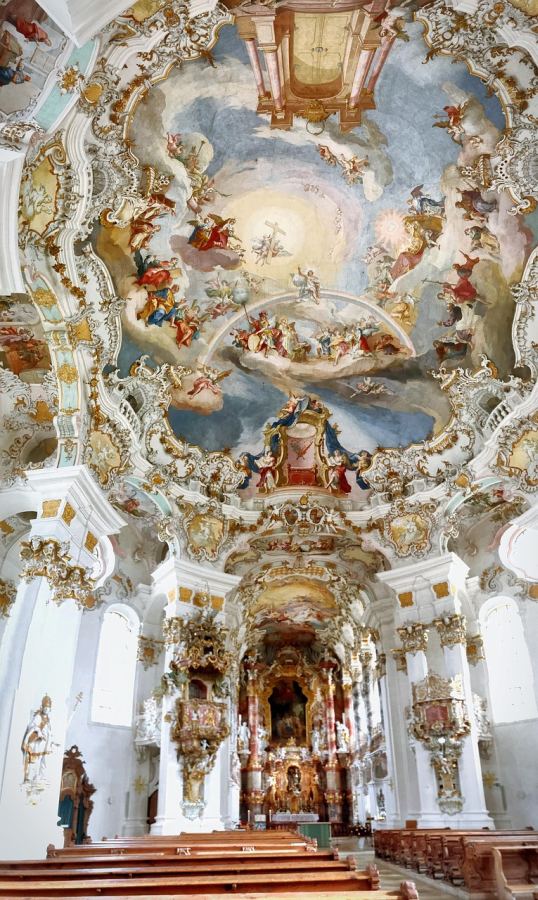
The church’s exterior is simple, but its interior is one of the pinnacles of European Rococo art. The creation of architects and artists Dominikus and Johann Baptist Zimmermann demonstrates the perfect harmony of stucco work, frescoes, and gold decoration. The ceiling fresco above the main altar bears the title „The Open Gate of Heaven” and depicts Christ’s Second Coming.
Its specialty is the ceiling painting created with trompe-l’oeil technique, which creates the illusion that the church’s ceiling is open and one can look toward the sky. Beautiful Alpine landscape surrounds the pilgrimage church. It regularly hosts classical music concerts as well.
Burghausen
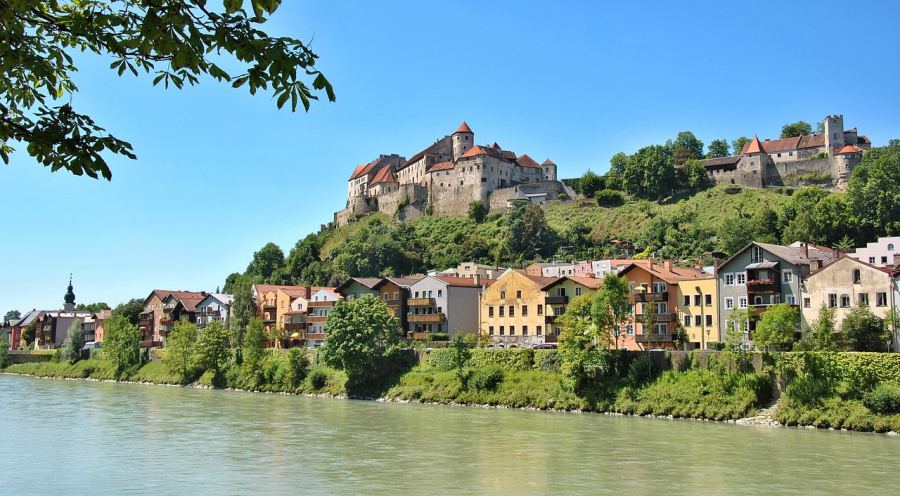
The world’s longest castle complex is located on the banks of the Salzach River, near the Austrian border.
The more than 1,000-meter-long castle dates from the 11th century and was one of the most important fortifications of the Bavarian dukes. It consists of six courtyards, each representing a different historical period. The main castle houses a museum that presents the castle’s and region’s history, as well as medieval weapons and artifacts. From the castle walls, a beautiful view opens over the Salzach Valley and the Austrian landscapes on the opposite side.
Colorful burgher houses line the historic old town of the castle town, reflecting the wealth of medieval merchants. The main square features St. James Church with its Gothic tower, as well as numerous cafés and restaurants.