
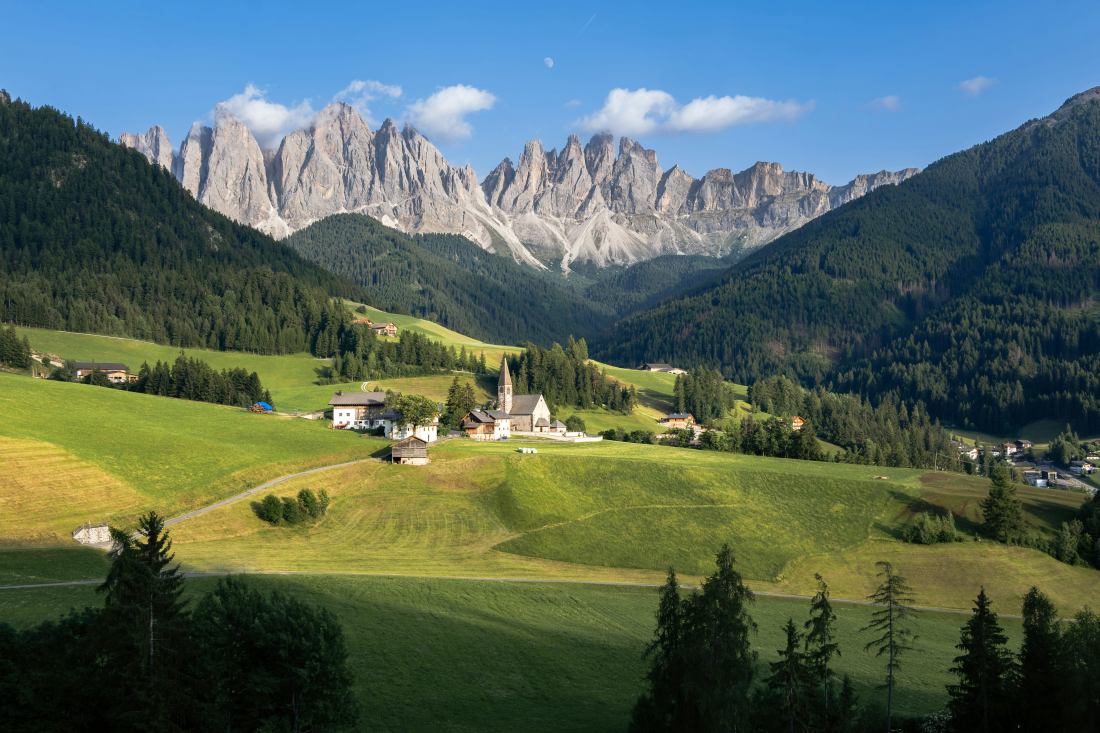
The Dolomites, dominating northern Italy, are perhaps the most beautiful part of the Alps with countless natural attractions. The Italian-Austrian culture makes this region even more wonderful.
Tourist traffic reaches its peak during two periods. The winter sports season begins in December and ends at the end of March. The summer season from July to September 15th is even more popular. During this time, rock climbers and tourists „invade” the Dolomites, taking advantage of the mountain region’s hiking trails and rocks.
There are two main routes that provide the easiest access: from Innsbruck in the north and from Lake Garda and Verona in the south.
Table of Contents
Best places in the Dolomites
Tre Cime di Lavaredo
The „Three Peaks of Lavaredo” is one of the most famous and iconic natural wonders of the Dolomites.
The three massive rock towers – Cima Piccola, Cima Grande, and Cima Ovest – boldly rise from the surrounding Alpine landscape, their sight breathtaking in every season. The mountains’ special shape attracts hikers, photographers, and nature lovers from all over the world.
The most popular hiking trail in the area is the Tre Cime circuit, which is about 10 kilometers long and can be completed in 3-4 hours. The path is easy to follow, while the peaks show different faces from every side. Along the way, we can rest at Alpine refuges where we can taste local delicacies.

Seceda
Seceda is one of the most breathtaking panoramas in the Dolomites.
After taking the Seceda cable car from the Ortisei valley, we find ourselves on a plateau at 2,519 meters high, from where there’s a 360-degree view of the surrounding peaks. The mountain range’s characteristic light gray limestone towers rise here in a particularly dramatic way above the green pastures.
Seceda’s specialty lies in its varied hiking opportunities. From easy walks to challenging via ferratas for experienced mountaineers, every difficulty level can be found here. The trail leading to Col Raiser peak is particularly popular, as along the way we can admire the wild romantic landscape of Puez-Odle Nature Park from numerous viewpoints.

Alpe di Siusi
Europe’s largest high-altitude pasture, a magical plateau of 57 square kilometers between 1,680-2,350 meters. This unique natural environment harmoniously combines Alpine meadows, traditional Tyrolean wooden houses, and the sight of steeply rising Dolomite peaks.
The pasture’s history goes back centuries, when local farmers drove their animals here in summer. Traditional mountain farms still operate today, where we can taste fresh cheeses and other Tyrolean specialties.
Alpe di Siusi is also known as a hiking paradise, with more than 300 kilometers of marked trails. In winter, it becomes a destination for cross-country skiers and winter hikers, when snow buries the green meadows under a thick blanket. The rock formations called „Witches’ Benches” are particularly popular photo subjects, where nature has carved special sculptures from limestone.

Sella Pass (Passo Sella)
The 2,244-meter-high Sella Pass is one of the busiest crossings in the Dolomites, connecting four valleys: Val Gardena, Val di Fassa, Val Badia, and Livinallongo del Col di Lana valleys. Due to the pass’s central location, it plays a key role in the region’s tourism network.
The Sella Ronda, one of the world’s most famous ski circuits, starts from here. In summer, it’s a paradise for cyclists and motorcyclists, as the serpentine roads offer excellent views of the surrounding peaks.
The pass’s historical significance is not negligible either: it was a strategically important location during World War I, and wartime tactical monuments are still visible today. Among the Sella massif’s Via Ferrata tours is one of the most beautiful, the Piz da Lech trail, which offers an unforgettable experience for intermediate hikers.

Passo Pordoi
The 2,239-meter-high Pordoi Pass rightfully bears the title „Queen of the Dolomites” as it offers the most comprehensive panorama of the mountain range’s peaks.
The cable car from the pass to the top of Sass Pordoi provides direct access to the 2,950-meter „Terrace of the Dolomites”, from where on clear days you can even glimpse the distant Ortler peak. This viewpoint is particularly popular during sunset times.
The geological richness of the pass area is exceptional: here dark volcanic rock meets light Dolomite limestone, creating a special contrast in the landscape. The Pordoi Pass Museum here presents the area’s geological development and World War I events in detail. Next to the museum stands a 52-meter observation tower that provides an even higher perspective.

Sassolungo Group
One of the most recognizable and photographed mountain ranges in the Dolomites, whose 3,181-meter main peak confidently dominates the surrounding landscape.
It consists of five main peaks, of which Sassopiatto (3,026 m) is the most famous alongside Sassolungo. These steep peaks, divided by vertical walls, offer a monumental sight, especially when viewed from Alpe di Siusi.
The mountain group is extremely interesting from a geological perspective: coral reefs from the Triassic period shaped its current form, which explains the characteristic light color and the terraced structure alternating with steep walls. The Sassolungo Via Ferrata is one of the most classic Dolomite hiking routes, offering an unforgettable experience for experienced hikers near the main peak.
Around the mountain group are several refuges, of which Rifugio Sasso Piatto and Rifugio Demetz are particularly popular. Hiking trails from here also lead to the nearby Puez-Odle Nature Park.

Tofane Mountain Group
The group’s three main peaks – Tofana di Rozes (3,225 m), Tofana di Mezzo (3,244 m), and Tofana di Dentro (3,238 m) – tower above Cortina d’Ampezzo.
These massive peaks, divided by steep walls, offer a monumental sight especially when viewed from the south side. The Tofane’s geological structure is exceptionally varied: the alternation of dark gray main dolomite and lighter limestone layers draws a special pattern on the rocks.
During World War I, the Tofane became strategically important, and numerous historical monuments still preserve the events of that time. The Via Ferrata delle Trincee („trenches via ferrata”) offers a unique hiking experience, as it leads through wartime trenches and bunkers. The Lagazuoi tunnel, which Italian soldiers blew under Austrian positions, now operates as a museum and provides insight into the difficulties of mountain warfare.
The Tofane area’s hiking opportunities are extremely varied: from easy family hikes to extreme rock climbing, everything can be found. Rifugio Giussani and Rifugio Dibona are excellent starting points for exploring higher regions, while the Ra Valles ski lift makes the middle altitudes easily accessible.

Marmolada
Also called the „Queen of the Dolomites” as it contains the mountain range’s highest point, the 3,343-meter Punta Penia.
This imposing mountain range differs from other Dolomite peaks not only in size but also in character: a huge glacier covers the summit regions, which is the Dolomites’ only significant glacier. However, the Marmolada glacier is continuously shrinking due to climate change, giving special significance to visiting it.
The massif’s southern wall is the Dolomites’ largest and steepest rock face, rising more than 1,000 meters above the valley. This „Silver Wall” is beloved by rock climbers, where some of the world’s most difficult climbing routes can be found. The Via Ferrata delle Trincee also runs through the World War I front line here, where Italian and Austro-Hungarian troops fought in the icy heights.
The Marmolada cable car system allows visitors to easily reach 3,265 meters altitude, from where a breathtaking panorama opens over the entire Dolomite mountain range. From the peak on clear days, you can even glimpse the Adriatic Sea, while to the north, the peaks of the Tyrolean and Austrian Alps appear.

Villnöss Valley (Val di Funes)
Perhaps the most photographed Alpine landscape in the world, where the small church of St. Magdalena against the backdrop of the Odle mountain group creates an image that has appeared on countless postcards, calendars, and tourist publications.
The valley’s cultural heritage is special: the population still speaks German today and preserves the traditional Tyrolean architectural style. The peasant houses decorated with carved wooden balconies, the onion-domed church towers, and the traditional form of hayricks create an authentic Alpine atmosphere. The farmers living here still cultivate their lands using traditional methods and make their famous cheeses and meat products.
It’s also known as a hiking paradise: the Adolf Munkel Weg starts from here, which is the valley’s most beautiful panorama route. During the hike, we walk through flowering meadows, cross streams, and can continuously admire the changing faces of the Odle group. The Zanser Alm at the upper end of the valley is a particularly popular destination, from where a short hike leads to the heart of Puez-Odle Nature Park.

Fassa Valley (Val di Fassa)
It belongs to the last bastions of Ladin culture, where a significant part of the population still speaks this ancient Romance dialect today.
Canazei, the valley’s central settlement, is one of the most important tourist centers in the Dolomites. From here, cable cars depart to Belvedere and Col Rodella, from where there’s an unparalleled view of the Marmolada and Sella sections. The settlement’s gastronomy uniquely combines Italian, Austrian, and Ladin traditions: in local restaurants, we can taste canederli dumplings, casunziei filled pasta, and special mountain cheeses.
Among the valley’s natural beauties, the proximity of Lake Carezza and the world of flowering meadows under the Catinaccio group stand out. In summer, the color splendor of Alpine roses and mountain orchids provides a dazzling sight.

Rosengarten Group (Catinaccio)
The mountain group boasts one of the most romantic legends of the Dolomites.
According to tradition, the dwarf king Laurin planted his kingdom with roses, which still make the rocks glow red at sunset – this is the „Enrosadira” phenomenon. The rock towers grouped around the 3,004-meter main peak Catinaccio d’Antermoia offer the most beautiful sight especially when viewed from Lake Carezza.
Among the several Via Ferratas around Rosengarten, the Santner and Laurin routes are the most popular, offering unforgettable experiences for intermediate-level hikers. The surrounding rifugios, especially Rifugio Vajolet and Rifugio Re Alberto, are excellent accommodations.

Bletterbach Gorge
Often referred to as „South Tyrol’s Grand Canyon”: the 8-kilometer-long and 400-meter-deep geological wonder reveals 15 million years of Earth’s history.
40 different rock layers can be observed on the gorge walls, including 280-200 million-year-old Permian red sandstone and the famous dinosaur footprints.
During the gorge tour, numerous fossils and rock samples can be studied: marine shells, corals, and plant remains tell of the time when this area still lay under a tropical sea. The hiking trail is equipped with professional explanatory boards that help understand the phenomena seen. The gorge is a protected natural area, so it can only be visited with a guide.
Around Bletterbach is the Geopark museum, which makes the area’s geological specialties even more understandable with interactive exhibitions and 3D models. The gorge can also be visited in winter, when icicles and snow-covered rock walls create a magical winter landscape.
Most beautiful lakes in the Dolomites
Lago di Carezza
Lake Carezza bears the name „Pearl of the Dolomites”: a magical mountain lake 85 meters long and 295 meters wide, lying at 1,534 meters altitude at the foot of the Catinaccio group.
The lake’s water color constantly changes: from turquoise to emerald green, from deep blue to almost black shades, depending on light conditions and seasons. This color play is due to the lake’s special mineral composition and light refraction.
According to Ladin legend, the lake was created when a wizard failed to seduce a water fairy, so in anger he threw his emeralds and pearls into the lake. The walk around the lake can be completed in about 40 minutes and offers numerous photo spots with the peaks of the Latemar mountain group towering in the background.
The forests around the lake are extremely varied: spruces, silver firs, and red pines alternate, among which numerous rare plant and animal species live. The Carezza ski area near the lake provides excellent skiing opportunities in winter, while in summer you can hike around the Latemar group.

Lago di Braies
Commonly known as „Pragser Wildsee”, it is the Dolomites’ largest natural lake and undoubtedly one of the most beautiful sights in the mountain range.
The 31-hectare lake at 1,496 meters altitude perfectly reflects the surrounding Seekofel (2,810 m) and Croda del Becco (2,810 m) peaks in its emerald green water surface. The lake’s special color is due to limestone dissolved in the water and light reflection, which creates different shades on the water surface at different times of day.
The 3.5-kilometer walking path around the lake offers a breathtaking experience in every season: in spring the lakeside meadows are full of wildflowers, in summer the forests provide cool shade, in autumn the colorful foliage of deciduous trees reflects in the water, and in winter the frozen lake and snow-covered surroundings create a fairytale atmosphere. At the southern end of the lake is the Pragser Wildsee Hotel, which was already a favorite resort of the monarchy’s aristocracy at the end of the 19th century.
Several hiking trails start from around the lake toward the surrounding peaks: the Dürrenstein viewpoint can be reached with a 2.5-hour hike, while experienced hikers can undertake climbing Seekofel. Boating is also available at the lake, though this can only be used during summer months.

Lago di Misurina
Lake Misurina lies at 1,754 meters altitude and is rightfully called the „Mirror of the Dolomites” as the surrounding peaks are perfectly reflected in its crystal-clear water: the Tre Cime di Lavaredo, the Cristallo group, and the rock towers of Cadini di Misurina.
The 15-hectare lake is of natural origin, and its special microclimate is considered healing: the allergology institute has been receiving patients suffering from respiratory diseases for decades.
The 2.6-kilometer walking path around the lake is an easy, family-friendly hike, during which we can admire the panorama of the surrounding mountains. The Grand Hotel Misurina on the northern shore of the lake has historical significance: several famous personalities stayed here, and the hotel itself is part of the lake’s romantic atmosphere. In winter it freezes completely and is also suitable for ice skating.

Lago di Sorapis
Lake Sorapis is perhaps the most uniquely colored lake in the Dolomites: its water is intense turquoise blue, creating an almost surreal effect among the gray rocks.
The lake’s special color is due to rock flour suspended in the water, which comes from the erosive activity of surrounding glaciers. Despite the lake’s small size, it is deep, and the water temperature remains very low even in summer.
The lake at 1,923 meters altitude lies at the foot of the Sorapis group and can only be reached on foot during an approximately 3-hour hike from Misurina. The hiking trail initially passes through forested areas, then leads to increasingly rocky terrain before reaching the lake’s wild romantic environment.
Access to the lake is made difficult by the fact that the last section of the route is equipped with safety ropes, so basic mountaineering experience is required. During the hike, there’s an unparalleled view of the Cristallo group and the distant Tre Cime di Lavaredo peaks. The Sorapis lake area is particularly popular among nature photographers.

Most beautiful settlements in the Dolomites
Bolzano
The capital of South Tyrol serves as the gateway to the Dolomites, where Austrian and Italian cultures blend.
The city’s special beauty comes from being located at the confluence of three valleys: the Adige, Isarco, and Talvera valleys embrace it, while the outlines of peaks are already visible in the distance. The city’s cable car, the Funivia, quickly takes you up to the Renon plateau, from where there’s a breathtaking panorama of the surrounding mountains.
Its main attraction is the Ötzi Museum, where the 5,300-year-old ice mummy and his complete equipment can be seen, representing one of the most important archaeological finds of human civilization. In the heart of the medieval old town is the Gothic cathedral with its 14th-century colored tile tower, while Walther Square is the center of vibrant city life.
Bolzano’s gastronomic world is unique: alongside Mustafa, speck, and other Tyrolean specialties, Italian delicacies can also be found in local restaurants and colorful markets.
Bolzano attractions, museums, weather

Ortisei (St. Ulrich)
The capital of the Gardena Valley considers itself one of the most important centers of Ladin culture, where trilingual daily life in German, Italian, and Ladin is still a living tradition. The settlement’s special charm comes from being located in a narrow valley basin, surrounded by the breathtaking panorama of Seceda, Rasciesa, and Alpe di Siusi.
The city is world-famous for its wood carving tradition, which has been practiced here since the 17th century. The works of Gardena Valley wood carvers can be found all over the world, especially among religious-themed sculptures. In Ortisei’s pedestrian street, numerous wood carving workshops and galleries can be found, where you can buy these unique creations directly from the masters.
The Seceda cable car starts directly from the center and takes you up to one of the most beautiful viewpoints in just a few minutes. In winter, Ortisei is part of the Dolomiti Superski area, and in summer it’s the starting point for numerous hiking trails.

San Candido (Innichen)
Located at the eastern end of the Pusteria Valley, it is rightfully considered one of the most authentic settlements in the Dolomites, where the atmosphere of the Austro-Hungarian monarchy can still be felt today.
The city is in a unique geographical position: it simultaneously serves as a passage to the Tre Cime di Lavaredo World Heritage site and as a gateway toward the Austrian border. San Candido’s special beauty is given by the surrounding mountains: from the north the Haunold, and from the south the famous Drei Zinnen (Tre Cime) peaks border it.
Its main attraction is the Collegiate Church from the 12th century, which is one of South Tyrol’s most significant Romanesque churches. The church’s specialty is the 13th-century fresco cycle depicting the life of Christ, which is one of Europe’s most intact medieval painting monuments.
San Candido is an excellent starting point for discovering the surrounding natural wonders. Near the city is the Wildbad Innichen wellness center, which attracts visitors with its natural hot springs. From here starts the panoramic road leading toward Auronzo, which leads to the base of Tre Cime di Lavaredo.

Selva di Val Gardena (Wolkenstein)
Located as the uppermost settlement of the Gardena Valley, directly at the foot of the Sella massif and Sassolungo, making it one of the most spectacular locations in the Dolomites.
The village’s special beauty comes from being almost completely surrounded by the Dolomite peaks that are part of the World Heritage, with breathtaking mountain panoramas in every direction. Selva is the highest of the three settlements in Val Gardena, making it particularly attractive for skiers in winter.
The settlement is located in the heart of the Dolomiti Superski area, and cable cars to the famous Sella Ronda ski circuit start directly from here. The Ciampinoi and Plan de Gralba cable cars operate in both winter and summer, allowing easy access to the high mountains.

Bressanone (Brixen)
South Tyrol’s second-largest city boasts more than a thousand years of history and unique cultural heritage.
The city’s special beauty comes from its historical center remaining almost untouched, with medieval streets, baroque palaces, and colorful facades forming a harmonious unity. It lies at the confluence of the Isarco and Rienza valleys, which gave it strategic importance throughout history and still serves as an important passage to the northern parts of the Dolomites today.
In the city’s heart is the stunning Cathedral complex with its 18th-century baroque main building and medieval cloister, which preserves one of Europe’s most beautiful fresco cycles. The Diocesan Museum is one of the richest ecclesiastical collections in Europe, particularly famous for its collection of medieval textiles and liturgical objects.
Bressanone is an excellent starting point for discovering the surrounding natural beauties. The Plose mountain cable car starts directly from the city, turning the area into a ski area in winter and a hiking paradise in summer. The nearby Novacella monastery (Kloster Neustift) was founded in the 12th century and is famous for its winery and baroque church.

Cortina d’Ampezzo
The „Pearl of the Dolomites” is not only the former venue of the 1956 Winter Olympics but also an elegant mountain resort.
The town at 1,224 meters altitude spreads in the heart of the Ampezzo Valley, embraced by the breathtaking panorama of the Tofane, Cristallo, and Sorapis mountains. The Corso Italia pedestrian street in the city center boasts both boutiques and traditional Tyrolean buildings.
The settlement’s cultural life is extremely rich: numerous festivals and concerts enliven life during summer months, while in winter a world-class ski area awaits everyone. The famous Olimpia delle Tofane ski slope is one of the most challenging women’s downhill slopes in the world. The Faloria and Cristallo cable cars provide quick access to the surrounding peaks, from where there’s an unparalleled view over the entire eastern part of the Dolomites.
Cortina’s history is deeply rooted in Ladin culture, which still lives vividly in the local population’s language, gastronomy, and traditions. The city’s museums present this unique cultural heritage in detail, while numerous via ferratas and hiking trails in the surrounding mountains await adventurous visitors.
