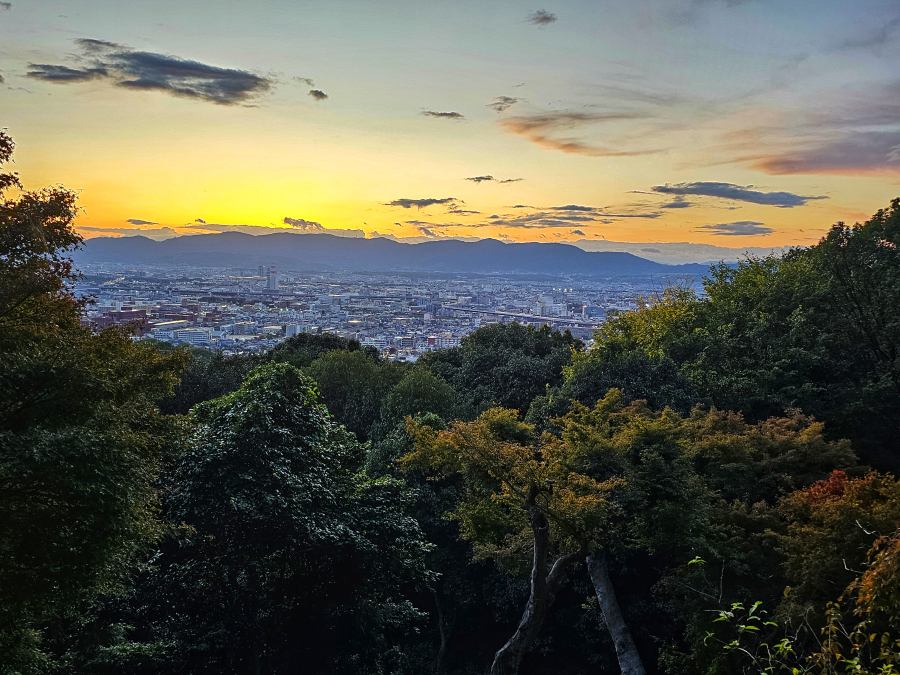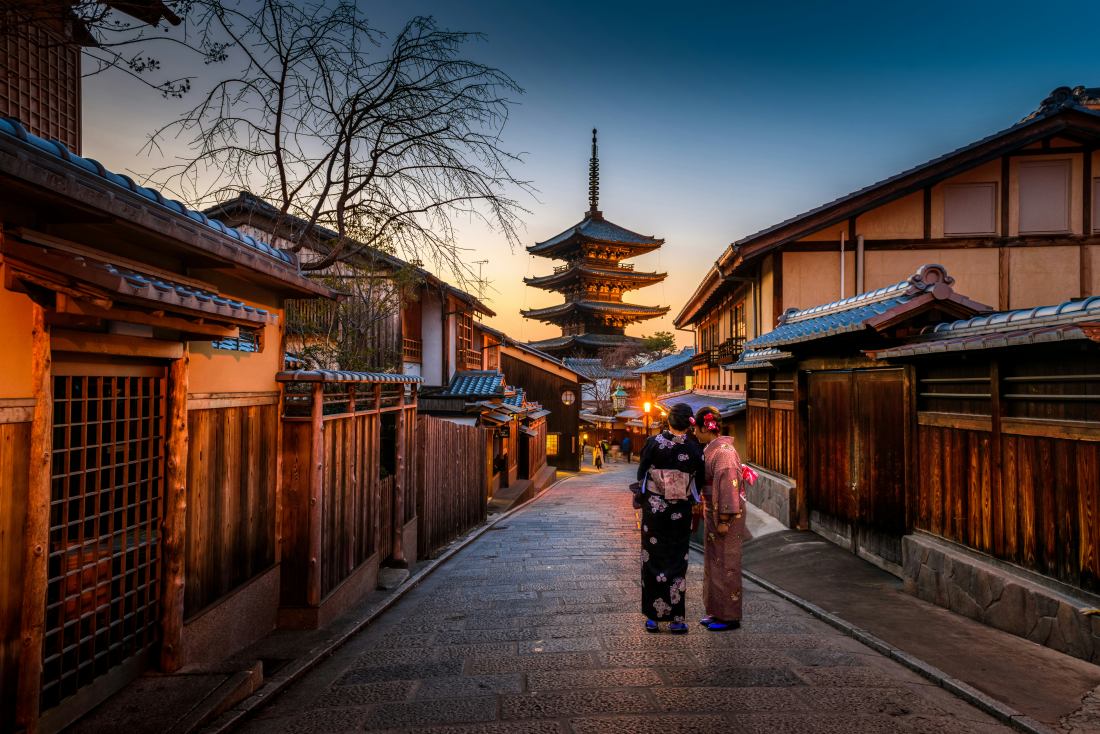
Kyoto is one of the most authentic major cities in Japan. The following questions and answers will help you navigate the most important information, whether it concerns safety, transportation, or the best time to travel.
Table of Contents
Basic information
Why is it worth traveling to Kyoto?
For more than a thousand years, Kyoto was Japan’s imperial capital, and today it is perhaps the country’s richest cultural destination, where tradition and modern life are closely intertwined.
The city is characterized by more than seventeen hundred Buddhist temples, numerous Shinto shrines, traditional teahouses, carefully tended gardens, and lantern-lined alleys. Kyoto is also the city of geisha and maiko, where visitors can still encounter living memories of traditional Japanese culture on the narrow streets of the Gion district. With its seventeen local UNESCO World Heritage sites, Kyoto is an almost unmissable stop on any tour of Japan.
What time zone is Kyoto located in?
Kyoto is located in the Japan Standard Time zone (JST, UTC+9). Japan does not observe daylight saving time.
When is the best time to travel to Kyoto?
The spring and autumn are considered Kyoto’s most beautiful and popular seasons, mainly because of the cherry blossoms and the autumn foliage.
Cherry blossoms typically peak between late March and early April, when the city is covered in a cloud of pink blooms and temperatures are pleasant, usually around 14–22 °C. The peak of the autumn foliage season runs from the second half of November to early December, when the red and gold hues of the maple trees create a picturesque sight around the temples.
Summer, which lasts from June to August, is hot and humid, often rising above 30 °C, but it is also the season of festivals, including the famous Gion Matsuri. Winter is cool and relatively dry; temples and gardens are sometimes covered in snow, lending the city a special, more peaceful atmosphere with fewer tourists.
How many days should you spend in Kyoto?
To explore Kyoto, at least 3–4 days are generally recommended, although the city’s richness could easily fill an entire week.
In 3 days you can comfortably cover the main sights, such as Fushimi Inari Shrine, Kiyomizu-dera Temple, the Arashiyama Bamboo Grove, and the Gion district. With a 4–5 day stay, you can explore the city at a more relaxed pace, leaving time for less crowded temples, local markets, and even a day trip to nearby Nara.
What is the official currency in Japan?
Japan’s official currency is the Japanese yen (JPY), which is used throughout the country, including in Kyoto.
Cash still plays an important role in everyday life, although more and more places accept credit cards and various mobile payment solutions. Smaller restaurants, markets, and shrines often only accept cash, so it’s a good idea to always carry enough yen.
Here you can find a currency converter calculator to check the current exchange rate!
Is English spoken in Kyoto?
In Kyoto’s touristic areas, hotels, larger restaurants, and major attractions, English is generally spoken, but the vast majority of locals are native Japanese speakers.
In smaller restaurants, local shops, or residential neighborhoods, staff may speak only limited English. In such cases, a few basic Japanese phrases or a translation app can come in handy, since many signs and menus are only available in Japanese further from the tourist centers.
What type of power outlet is used in Japan?
Japan uses Type A outlets, common in the United States, so most European devices will need a travel adapter.
What is the mains voltage?
Japan’s mains voltage is unusually low, only 100 volts, compared to the standard 230 volts in Europe.
Most modern electronic devices, such as phone chargers and laptops, automatically support voltages between 100–240 V, so they can be used without issue with an adapter. It’s also worth knowing that Eastern Japan uses a 50 Hz mains frequency, while Western Japan, including Kyoto, uses 60 Hz, which may matter for some sensitive devices.
How do internet and SIM card use work in Kyoto?
Internet connectivity in Kyoto is generally good; hotels and many cafés and restaurants offer free Wi-Fi, but for continuous mobile internet it’s worth renting a local SIM card, an eSIM, or a portable Wi-Fi router.
An eSIM is a particularly convenient solution for individual travelers, since it can be purchased and activated online before the trip, so mobile internet works immediately upon arrival at the airport. For larger groups or connecting multiple devices, a portable Wi-Fi router may be more practical, as several phones and laptops can use it at the same time.
Is it customary to tip in Japan?
No, tipping is not customary in Japan, including Kyoto, and it can often even embarrass the staff.
Excellent service is a fundamental part of Japanese service culture, for which no extra reward is expected. In restaurants, taxis, and hotels alike, the amount shown on the bill is the final amount due; instead of offering a tip, a polite thank-you is customary.
Travel and transportation
How can I get from the airport to Kyoto?
Kyoto has no international airport of its own; most travelers arrive via Kansai International Airport (KIX), which is about 75–80 kilometers from the city.
The fastest and most convenient option is the JR Haruka express train, which connects the airport to Kyoto Station in about 75 minutes. There are also direct airport bus services, which take somewhat longer but are cheaper and require no transfers. Travelers arriving from Tokyo can reach Kyoto in just two hours by Shinkansen high-speed train.
What is the most convenient way to get around Kyoto?
Most tourist attractions in Kyoto are easily accessible by bus or on foot, since the city center’s subway network is relatively limited.
The city bus network is extremely extensive, and direct routes lead to most major temples and shrines, although these can get crowded during peak hours. The two subway lines are mainly used for quick travel between the city center and the train station. It’s worth getting an ICOCA rechargeable transit card, which can be used to easily pay for buses, subways, and trains, and is also accepted at many shops and vending machines.
Accommodation and safety
Is Kyoto a safe city?
Yes, Kyoto is one of the safest major cities in the world; the crime rate is extremely low, and the neighborhoods visited by tourists are considered calm both day and night.
The order and discipline characteristic of Japanese society are also felt in everyday life: the streets are clean, public transportation is punctual, and locals are helpful to lost tourists. The main risks are related more to natural phenomena, such as earthquakes and the summer typhoon season, than to ordinary crime.
How safe is it at night?
It is safe to move around Kyoto at night, even for solo travelers, in the well-lit tourist districts and around the train station.
The Gion and Pontocho districts are especially atmospheric in the evening, full of restaurants and teahouses, where street life stays lively late into the night. Nevertheless, it’s worth respecting local customs, such as avoiding harassing or aggressively photographing geisha and maiko, and behaving quietly in residential neighborhoods.
Which neighborhood is best to stay in in Kyoto?
The most popular and convenient areas for tourists to stay include the area around Kyoto Station, Gion and Higashiyama, the Kawaramachi-Gion-Shijo district, and Arashiyama.
The area around Kyoto Station is an excellent choice for those who prioritize transportation, since buses, trains, and airport express services all depart from there. Gion and Higashiyama are ideal for those who love a historic atmosphere, with narrow alleys, wooden machiya houses, and the nearby Kiyomizu-dera Temple. The Kawaramachi-Shijo district is the commercial heart of the city, with countless restaurants, bars, and shopping options. Arashiyama offers a quieter, nature-close setting with its famous bamboo grove and the Hozugawa River, although it’s a bit farther from the city center.
Health information
Are mandatory vaccinations required for traveling to Kyoto/Japan?
There are no mandatory vaccinations for most travelers visiting Japan, including Kyoto.
The country’s healthcare system is well developed and hygiene standards are high, so most European travelers need not worry about infectious diseases. Before traveling, it’s always worth consulting your family doctor and finding out about any recommended, though not mandatory, vaccinations, especially for longer stays.
Is tap water drinkable in Kyoto?
Yes, tap water is safe to drink in Kyoto and throughout Japan; the water quality and the condition of the pipe system are of exceptionally high standard.
Locals regularly drink tap water, and it poses no problem for most tourists. Since the taste may vary slightly from city to city, it’s worth trying it, and if you don’t like it, bottled mineral water is easily available in most shops and vending machines.
Experiences
What are the must-see attractions in Kyoto?
Kyoto’s best-known attractions include Fushimi Inari Shrine, Kiyomizu-dera Temple, the Arashiyama Bamboo Grove, the Kinkaku-ji Golden Pavilion, and the Gion district.
- Fushimi Inari Shrine is lined with thousands of vivid red torii gates, which wind up the hillside forming picturesque tunnels.
- Kiyomizu-dera is a UNESCO World Heritage temple with a history of more than twelve hundred years, famous for its wooden terrace extending over the hillside and its breathtaking panorama.
- The Arashiyama Bamboo Grove is known for its walk among towering bamboo stalks, which creates a special, almost magical atmosphere.
- Kinkaku-ji, or the Golden Pavilion, with its gold-leaf-covered façade and the mirror-smooth pond surrounding it, is one of Kyoto’s most photogenic sites.
- The Gion district is home to traditional geisha culture, where visitors can still encounter traditional wooden machiya houses and teahouses on the narrow, lantern-lit streets.
What are the most popular foods and drinks in Kyoto?
Kyoto is one of the strongholds of Japanese cuisine, where kaiseki multi-course meals, tofu-based dishes, and matcha tea enjoy the greatest renown.
- Kaiseki is a traditional, multi-course, carefully composed dinner that focuses on the changing seasons and local ingredients.
- Yudofu, tofu simmered in hot water, is one of Kyoto’s characteristic, simple yet refined dishes, often familiar from traditional temple vegetarian cuisine, shojin ryori.
- The hills surrounding the city have centuries of tea-growing tradition, so matcha tea and sweets made from it are available almost everywhere.
- Among drinks, sake, the traditional Japanese beverage fermented from rice, deserves special attention, since the Fushimi district is one of the country’s oldest and best-known sake-brewing centers.
What important holidays and festivals are there in Kyoto?
Kyoto holds many important holidays and festivals throughout the year, the best known of which are the July Gion Matsuri and the October Jidai Matsuri parade.
- The Gion Matsuri takes place throughout the month of July, its climax being the grand parade held mid-month, when elaborately decorated, enormous wooden floats move through the streets of downtown.
- The Jidai Matsuri, or “Festival of the Ages”, is held on October 22, with participants dressed in historical costumes representing Kyoto’s thousand-year history.
- The evening illuminations held during the spring cherry blossom and autumn foliage seasons are also an important part of Kyoto’s annual calendar: at these times, many temples and gardens are open at night, and the illuminated trees and ponds create a particularly spectacular, festive atmosphere.