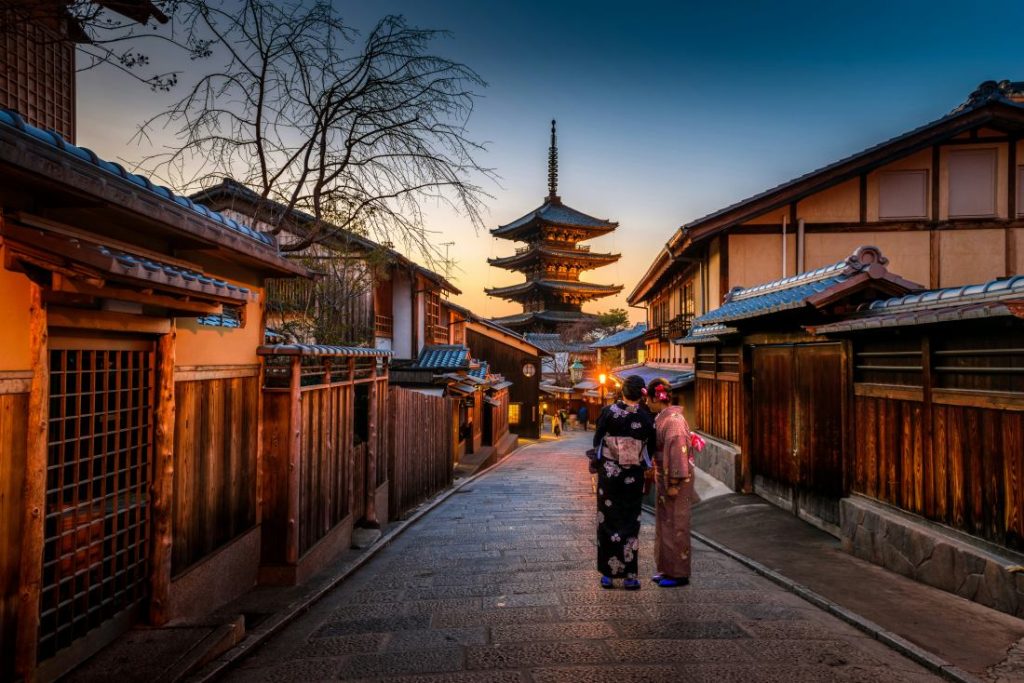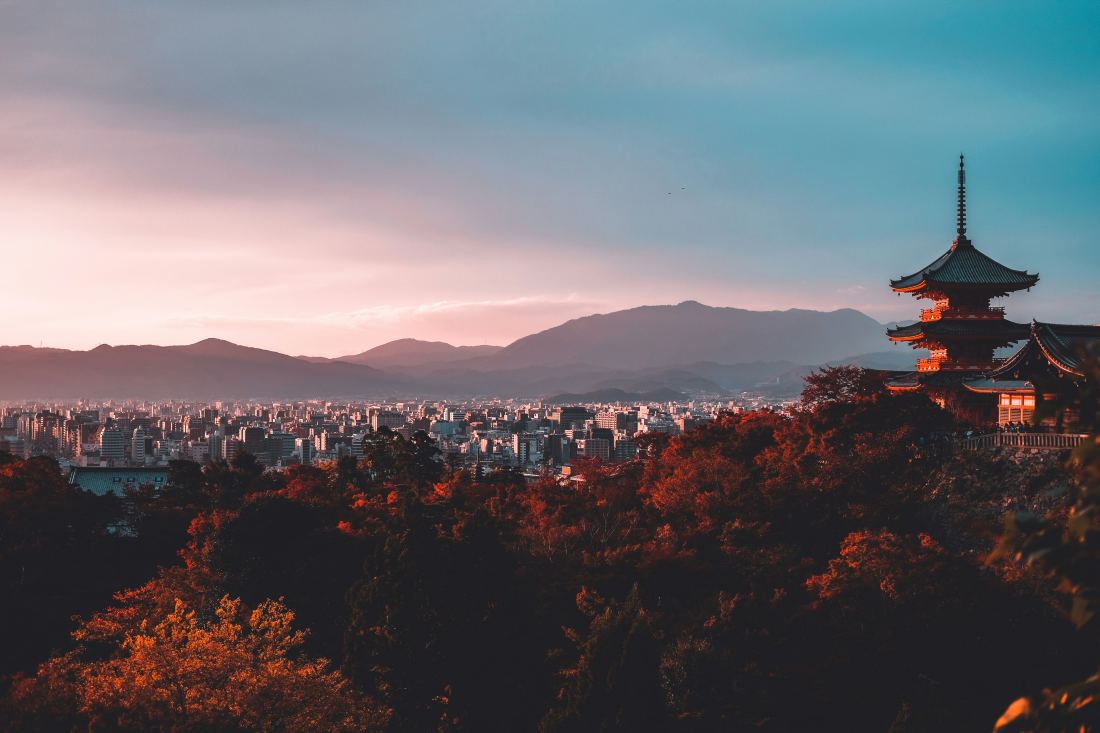
Kyoto is one of Japan’s most enchanting cities, where centuries-old temples, shrines, and traditional gardens await visitors.
Until the Meiji Restoration, it was the de jure capital of Japan. Today, it is the capital of Kyoto Prefecture, which, together with the cities of Osaka and Kobe, forms the Osaka-Kobe-Kyoto urbanized region.
Buddhist and Shinto temples are the primary attractions. 20% of Japan’s national treasures and 14% of Japan’s cultural heritage are located in Kyoto. Seventeen shrines in the city were listed as UNESCO World Heritage Sites in 1994.
Here is my report about Kyoto!
Table of Contents
Kyoto attractions
Fushimi Inari Taisha
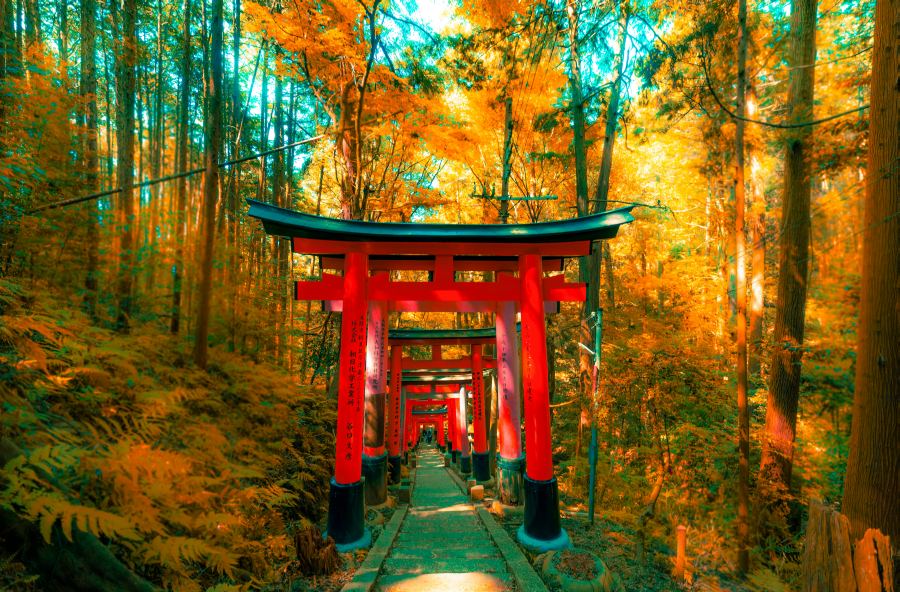
One of Kyoto’s most iconic shrines is located at the foot of a mountain. It is dedicated to Inari, the deity of rice, fertility, and wealth.
The shrine’s most famous attraction is the thousands of bright red torii gates that form a winding path up the mountainside. The gates were donated by businesses and individuals, with their names and the date of donation engraved on the sides of the gates.
The area features numerous smaller shrines, statues, and stone lanterns, as well as fox statues, which are considered Inari’s messengers. The path to the mountain top is about 4 kilometers long, and the entire hike takes approximately 2-3 hours. Many people only walk up to the first rest area, which already offers a beautiful view of the city.
Kinkaku-ji
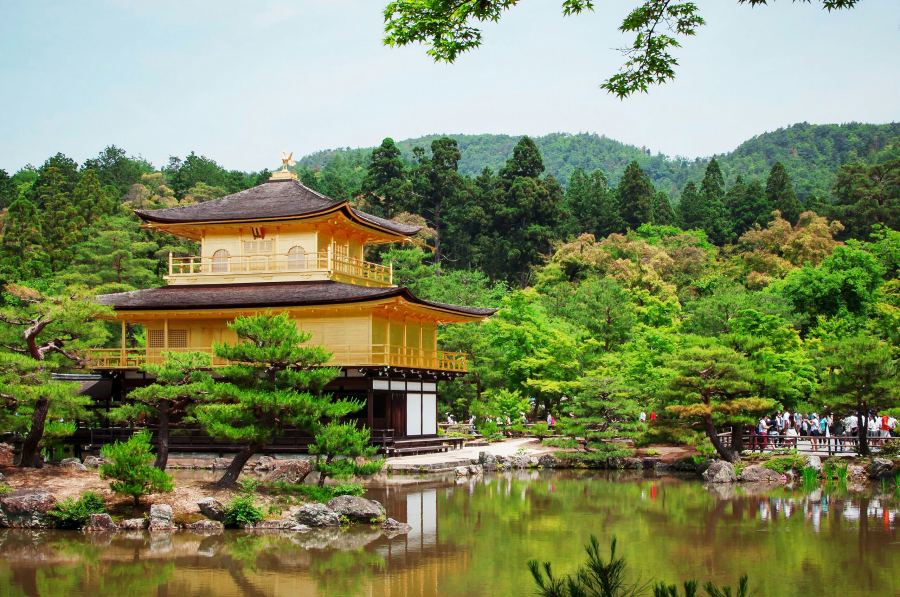
One of Japan’s most beautiful and famous temples, also called the Golden Pavilion due to its walls covered with gold leaf.
The temple, originally built in 1397, was used as a villa by shogun Ashikaga Yoshimitsu, and after his death, it was converted into a Zen Buddhist temple. The building combines three different architectural styles: the first floor features palace architecture, the second floor reflects the style of samurai residences, while the upper floor was built in the form of a Zen Buddhist temple. The pavilion is topped with a golden phoenix statue, which symbolizes resurrection and rebirth.
Around the temple is a beautiful Japanese garden designed to offer spectacular views in every season. The gold-plated building reflected in the central pond is one of the most photographed sights in all of Japan. Small islands rise from the pond’s water, symbolizing longevity and immortality.
To-ji Temple
One of Kyoto’s oldest and most important Buddhist temples was founded in 796 when the city was still the capital of Japan.
On the temple grounds stands Japan’s tallest five-story pagoda, reaching 55 meters in height and dominating the skyline from afar. The pagoda’s five levels symbolize the five elements: earth, water, fire, wind, and ether. Inside the building are Buddha statues and paintings depicting Buddhist teachings and stories.
The To-ji temple complex also includes the Kodo (Lecture Hall) and the Kondo (Main Hall), which house valuable Buddha statues. In the garden surrounding the temple is the Kobo-ike pond, where water lilies bloom during the summer months. On the 21st of each month, a traditional market called Kobo-san is held on the temple grounds, where antiques, crafts, and local food specialties can be purchased.
Kyoto Tower
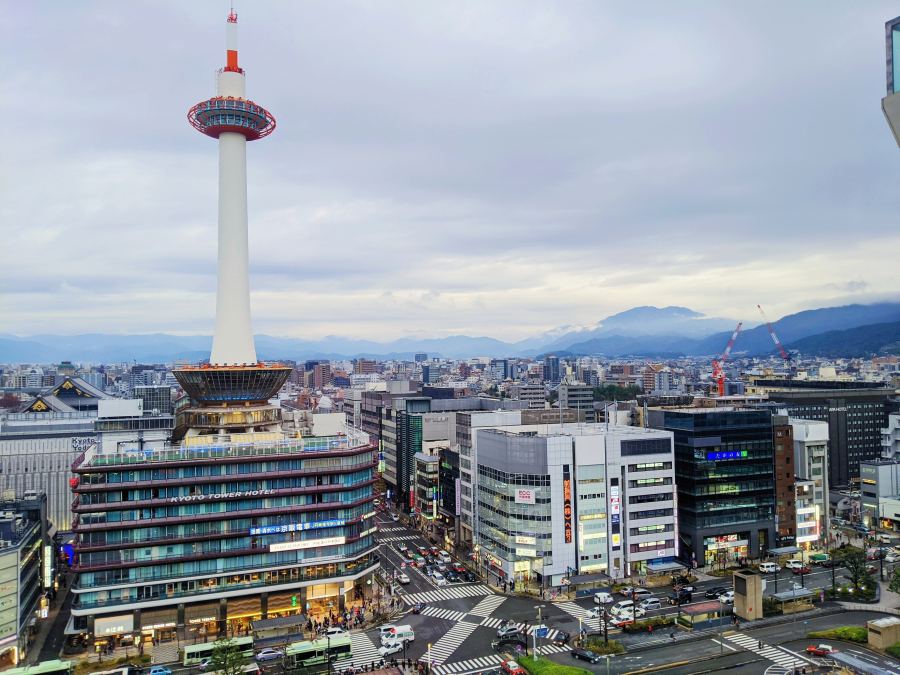
A symbol of modern Kyoto, this 131-meter-high tower offers splendid views of the city.
The tower was built in 1964, the year of the Tokyo Olympics, and has since become one of the city’s most popular tourist attractions. The slender, white structure is topped with a red observation dome that resembles a traditional Japanese candle. The tower’s design took into account the city’s historical character, with the steel frame weighing only 800 tons, compared to other towers of similar size.
The observation deck offers a 360-degree panorama of the entire city, and on clear days, you can see all the way to the distant mountains. The tower houses a restaurant, gift shop, and a small museum showcasing the city’s history. A shopping center and a popular bathhouse are located at the base of the tower, making the facility attractive to visitors throughout the day.
Nishiki Market
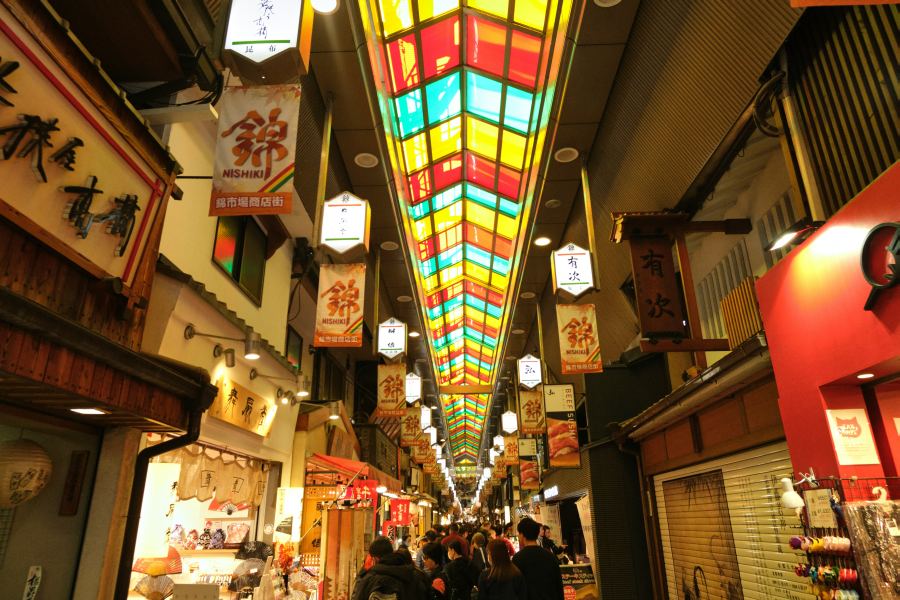
Kyoto’s gastronomic paradise, often called the „kitchen of the city”, has a history of more than 400 years.
In this covered shopping street, nearly 400 meters long, more than 100 small shops and stalls line up side by side, offering fresh ingredients, traditional Kyoto food specialties, and handcrafted products.
The market’s specialty is that many vendors offer samples of their products, allowing visitors to taste local specialties such as tsukemono (pickles), yuba (tofu skin), or special sweets.
Kiyomizu-dera
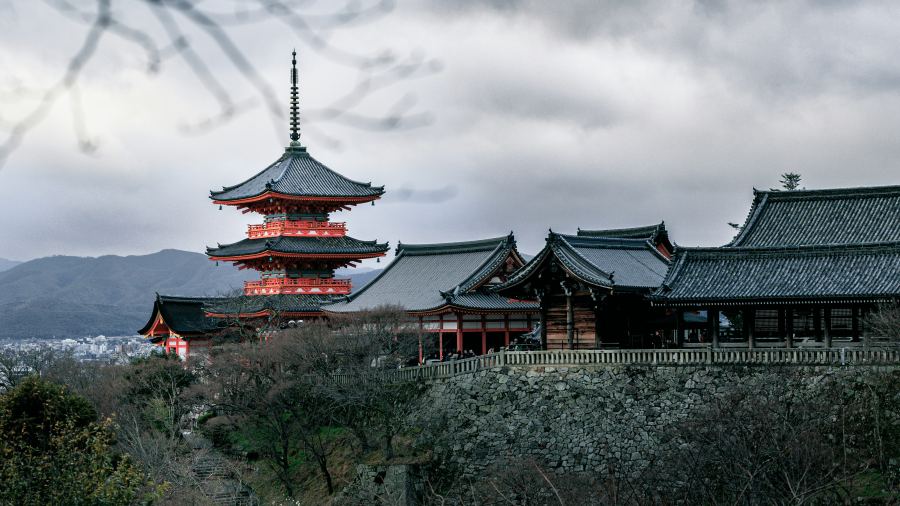
This World Heritage site is one of Kyoto’s most spectacular Buddhist temples, built into a hillside and offering unparalleled views of the city.
Founded in 778, the temple’s name means „pure water temple”, referring to the nearby waterfall whose water is considered sacred. The temple’s main building features a huge wooden terrace that extends 13 meters from the hillside, built without using a single nail.
The temple grounds contain numerous subsidiary shrines, including the Jishu Shrine, dedicated to the goddess of love and marriage. Here, there are also two „love stones” placed 18 meters apart – according to legend, those who can walk from one stone to the other with their eyes closed will be lucky in love.
Yasaka Shrine
Located in the heart of Kyoto’s historic Gion district, this more than 1300-year-old Shinto shrine becomes the center of the city especially during the famous Gion Matsuri festival.
The shrine’s main entrance is marked by an impressive red torii gate and two guardian lion statues. The main hall is unique in that it houses three shrines at once: for Susanoo, the god of storms and the sea; his wife, Kushinadahime; and their child, Yahashira-no-mikoto. Believers say these deities protect visitors from illness and misfortune.
The shrine grounds include numerous smaller shrines, pavilions, and a stage where traditional dances and musical performances are held. It offers an especially beautiful sight in the evening when hundreds of lanterns around the shrine create a magical atmosphere.
The shrine is open to visitors 24 hours a day, year-round. It often serves as a starting point for exploring the surrounding Gion district, where traditional geisha culture still thrives.
Gion District
Kyoto’s most distinctive traditional district preserves the atmosphere of old Japan and geisha culture to this day.
It developed in the Middle Ages near the Yasaka Shrine to serve pilgrims coming to the shrine. Today, it is famous for its meticulously preserved machiya-style wooden houses lined along narrow, cobblestone streets. Its most famous part is Hanamikoji Street, where numerous ochaya (teahouses) and okiya (geisha houses) can be found, with characteristic wooden lattice windows and traditional lanterns.
The district offers a particularly impressive sight in evening illumination. Here, one can still see kimono-clad maiko (geisha apprentices) and geiko (geishas) hurrying from one event to another.

Arashiyama Bamboo Grove
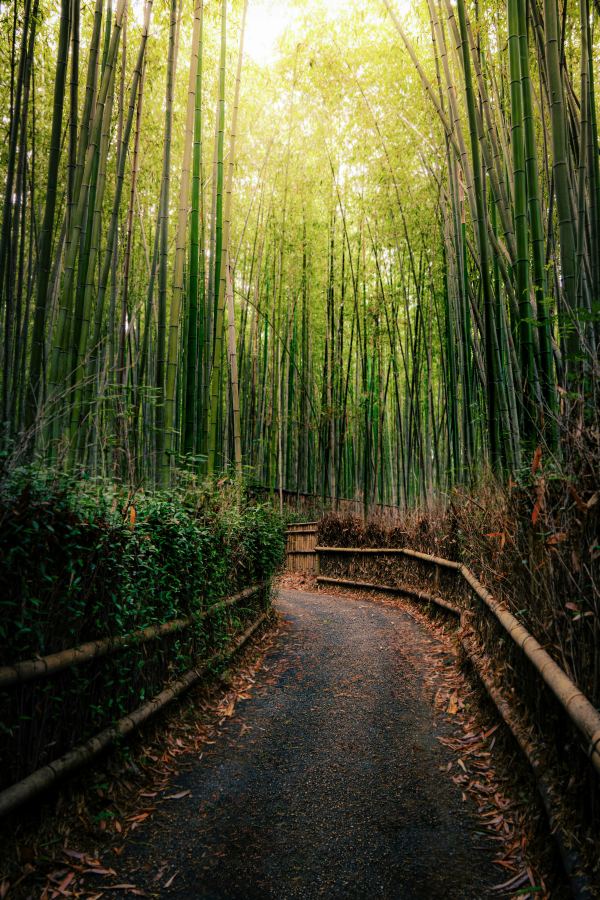
This forest, located in western Kyoto at the foot of Mount Arashiyama, is one of Japan’s most enchanting natural attractions.
The bamboo grove path winds among tall, straight bamboos that grow densely next to each other. Due to the natural light effects and atmosphere, the grove is a favorite location not only for tourists but also for filmmakers and photographers.
Several other attractions are nearby, such as the Tenryu-ji temple and its beautiful garden, or the picturesque Togetsukyo Bridge spanning the Katsura River. The Arashiyama district is especially popular in spring during cherry blossom season and in autumn.
Kyoto Gyoen National Garden
The Kyoto Gyoen National Garden, a vast green area in the heart of the city, served as a protective buffer zone for the Imperial Palace for centuries.
The special feature of this 65-hectare park is that it has preserved many elements of traditional Japanese garden architecture. The garden contains about 50,000 trees, including cherry trees, maple trees, and pine trees, which continuously show new faces with the changing seasons.
The Kyoto Imperial Palace is located within the garden. The park is bordered by several gates and crossed by numerous walking paths. Cherry blossom season (sakura) and autumn foliage (momiji) are especially popular periods for visitors.
Kyoto Imperial Palace
This impressive complex was the official residence of Japanese emperors for centuries before the capital was relocated to Tokyo in the late 19th century.
The palace grounds cover approximately 1.3 square kilometers, surrounded by walls and accessible through several gates. The main palace building, the Shishinden Imperial Audience Hall, is particularly impressive, built in traditional Japanese architectural style. Here is also the Takamikura throne, where imperial enthronement ceremonies were held. The rest of the building complex includes the imperial family’s private residence (Seiryo-den), the empress’s quarters (Ko-gosho), and several administrative buildings.
The garden surrounding the palace is carefully maintained and is home to numerous rare plant and tree species. Today, the palace grounds are open to visitors, and regular guided tours provide insight into the daily life of the imperial family and the rich history of the complex.
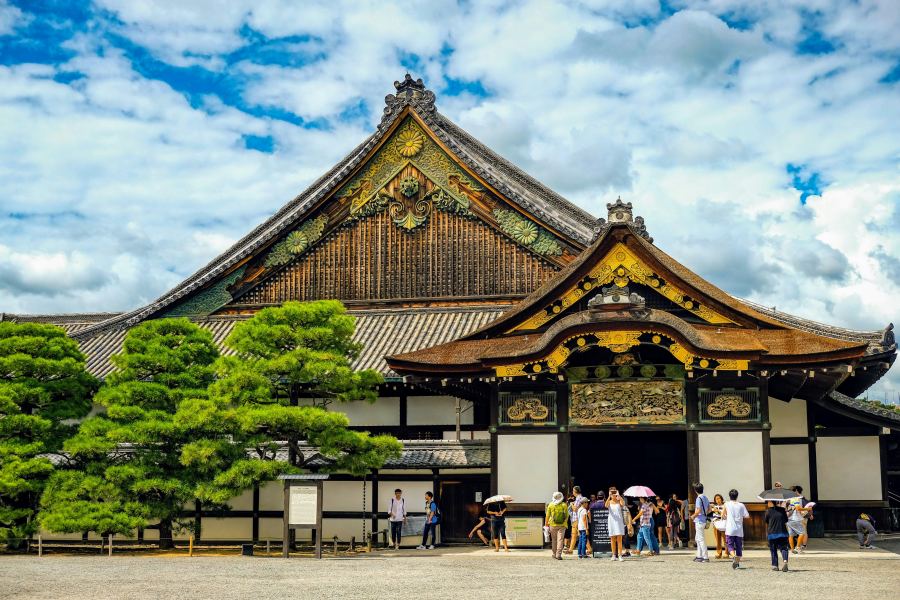
Nijo Castle
This monumental fortress is a symbol of shogunate power, built in 1603 by Tokugawa Ieyasu, the founder of the Tokugawa shogunate. In 1867, the last shogun announced the return of his power to the emperor in this castle, marking the beginning of modern Japan.
The castle grounds are surrounded by two concentric moats and massive stone walls, excellent examples of feudal Japanese defensive architecture. The central building of the complex is Ninomaru Palace, consisting of five separate interconnected buildings. It is famous for its „nightingale floor”, specially designed floorboards that make a sound similar to bird chirping under visitors’ steps, thus warning the residents of intruders.
The palace’s interior is richly decorated with paintings of tigers, leopards, and other noble animals against golden backgrounds, symbolizing the shogun’s power. The garden surrounding the castle is a masterpiece of Japanese garden design, combining various styles and featuring a large pond with islands.
Philosopher’s Path
This picturesque walkway runs between the Ginkaku-ji and Nanzen-ji temples. It got its name because the famous Japanese philosopher Nishida Kitaro regularly walked here while contemplating.
About 500 cherry trees line the path, which offers a beautiful sight in spring during cherry blossom season. The walkway runs along a canal at the foot of the Higashiyama mountains, with a total length of about two kilometers.
There are numerous small shrines, teahouses, and cafes along the route. The Honen-in temple is a particularly popular stopping point, known for its beautiful moss garden and peaceful atmosphere despite its small size.
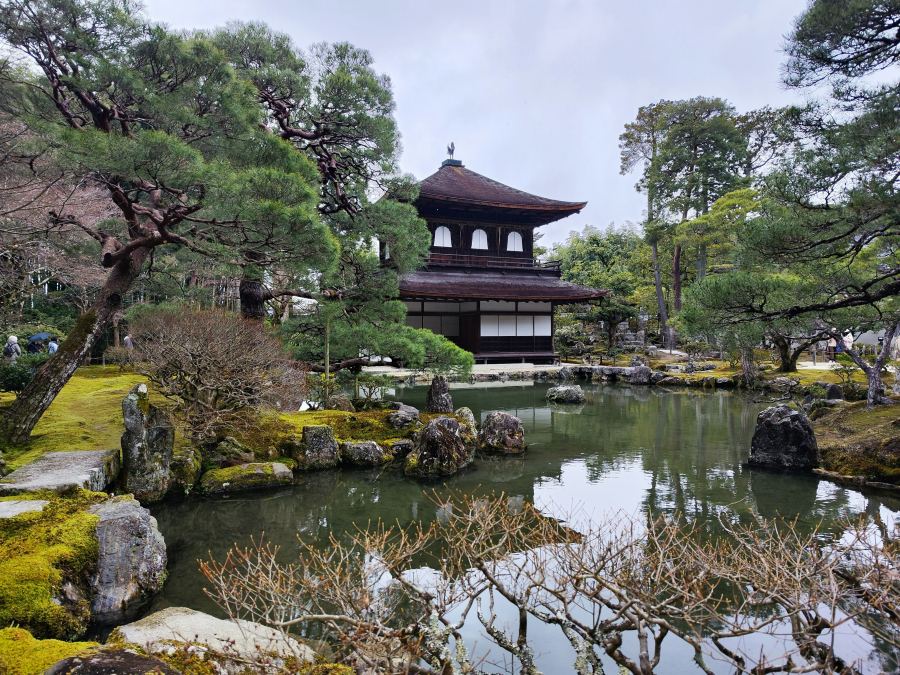
Ginkaku-ji
This Zen Buddhist temple, officially called Jisho-ji, was an important center of culture and arts during the Muromachi period.
The main building, known as the Silver Pavilion, actually never received the silver covering that was originally planned. The building consists of two levels: the lower level bears the characteristics of traditional Japanese architecture, while the upper level follows the style of Zen Buddhist temples. Its uniqueness lies in the fact that while its exterior appears simple, its interior spaces are richly decorated and house numerous valuable works of art.
The temple garden is one of the masterpieces of Japanese garden design, created by Soami, the renowned artist and garden designer. It has two special elements: the Ginsadan (Silver Sand Terrace), a carefully raked sand mound symbolizing moonlight, and the Kogetsudai (Moon-Viewing Platform), a smaller sand mound that is a miniature replica of Mount Fuji.
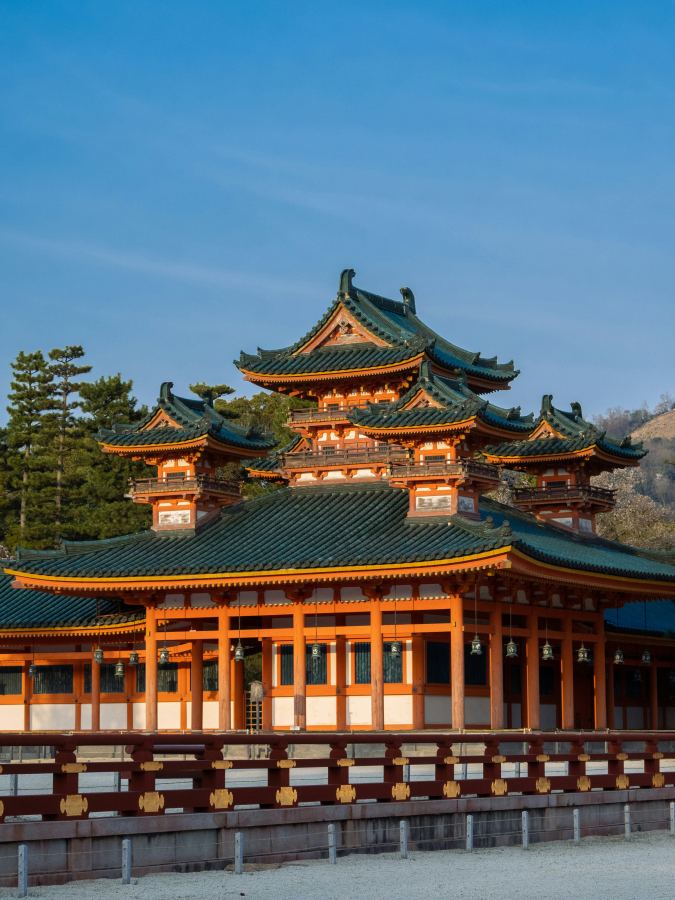
Heian Jingu Shrine
This impressive Shinto shrine was built in 1895 to commemorate the 1100th anniversary of Kyoto’s founding.
The shrine’s architectural style recalls the imperial palace of the Heian period, though built at two-thirds of its size. The main entrance is marked by a huge torii gate, one of the largest such structures in Japan, standing 24 meters tall with its vermilion color standing out from afar. The shrine’s main building complex consists of four halls that follow the layout of the imperial palace, with the offering hall (Haiden) and inner shrine (Honden) at its center.
One of its most famous parts is the garden, which consists of four different style sections, each designed according to a specific season. The eastern garden is famous for its cherry blossoms in spring, the southern garden for its irises in summer, the western garden for its lotuses in autumn, and the northern garden for its snow-covered landscape in winter.
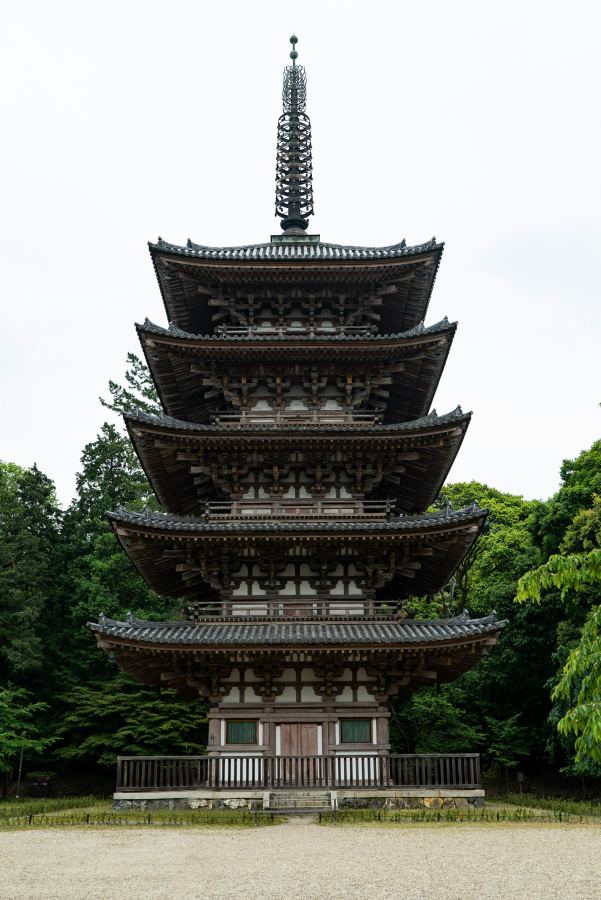
Daigo-ji Temple
This Buddhist temple complex, part of the World Heritage, is located in the southeastern part of Kyoto and boasts a history of more than 1200 years.
The temple’s five-story pagoda is Kyoto’s oldest wooden structure, built in 951, and miraculously survived the wars and fires that afflicted the city over the centuries. It houses the so-called Godai Rinju Mandala, one of the most important works of Buddhist art and a treasure of Japanese cultural heritage.
Each level of the pagoda symbolizes a Buddhist element, and its interior spaces house valuable Buddha statues and paintings. The temple complex is divided into two main parts: the lower Shimo-Daigo and the upper Kami-Daigo areas, connected by a mountain path.
It is particularly famous for its beautiful garden, built by Toyotomi Hideyoshi, one of the greatest Japanese warlords of the 16th century. The Sanboin garden was designed to show a different face in each season.
Kurama Village
This picturesque mountain village is located in northern Kyoto at the foot of Mount Kurama. It attracts visitors with its wonderful natural environment, ancient shrines, and famous thermal bath.
Its most famous attraction is Kurama-dera, a Buddhist temple with a history of more than 1200 years. The path to the temple leads up the mountainside via steep stairs, passing several smaller shrines along the way.
From the uppermost part of the temple complex, there is a breathtaking view of the surrounding mountains and valleys. A special feature of Kurama-dera is the shrine of the Sōnten deity, built to honor the deity of love, light, and energy.
Another attraction of Kurama is the famous thermal bath, Kurama Onsen, where visitors can relax in outdoor and indoor pools. Near the village is also the Kibune Shrine, built on the bank of a crystal-clear mountain stream. It is famous for its „water divinations”. These prophecies written on pieces of paper only become visible when the paper is immersed in the shrine’s sacred water.
Samurai Ninja Museum
This special interactive museum takes visitors into the world of legendary Japanese warriors, the samurai and ninjas.
The museum displays numerous original and reconstructed weapons, armor, and martial arts equipment from medieval Japan. Visitors can learn about the history, lifestyle, martial arts techniques, and philosophy of samurai and ninjas. Particularly interesting are the secret ninja tools, such as disguised weapons and special movement equipment.
One of its most popular programs is the live demonstration held several times a day, where trained martial artists showcase elements of samurai swordsmanship and ninja combat techniques. Visitors can handle various types of swords, and the braver ones can even put on traditional costumes.
Kyoto weather: when is the best time to visit?
Kyoto has a temperate climate with four distinct seasons, each giving the city a unique atmosphere.
Spring (March-May):
Spring in Kyoto is a magical period when cherry trees bloom, especially in early April. The average temperature ranges between 10-20°C, and the amount of precipitation gradually increases. The cherry blossom (sakura) period is extremely popular with tourists, so it’s advisable to book accommodation in advance.
Summer (June-September):
Summer is hot and humid, with average temperatures between 25-35°C, and the high humidity can make it feel even hotter. The rainy season (tsuyu) lasts from mid-June to mid-July, when frequent showers can be expected. August is especially hot and humid, but many traditional festivals, including the famous Gion Matsuri, are held during this time.
Autumn (September-November):
Autumn is perhaps the most pleasant season in Kyoto. The weather gradually cools, with average temperatures between 15-25°C, and the amount of precipitation decreases. In mid-November, the foliage of maple trees and ginkgos display spectacular red, orange, and gold colors (momiji), making this period the second most popular tourist season.
Winter (December-February):
Winter in Kyoto is relatively mild but can be cold, with average temperatures between 3-10°C. Snowfall is rare, but in higher areas, such as Arashiyama or Mount Kurama, snow can be encountered more frequently.
Best time to visit:
The ideal time to visit Kyoto is spring (late March-early May) and autumn (October-November), when the weather is pleasant, the city’s natural beauties are most impressive, and numerous cultural events await visitors.