Osaka is Japan’s second-largest city and its gastronomic capital. The following questions and answers will help you navigate the most important information, whether it concerns safety, transport, or the best time to travel.
Table of Contents
Basic information
Why is it worth visiting Osaka?
Osaka offers a unique experience for anyone who wants to discover the true face of Japan. The city’s world-famous cuisine, lively street life, and friendly locals (Osaka residents are known to be the most open-minded in Japan) immediately make travelers feel at home.
Osaka is both modern and traditional: alongside entertainment districts filled with neon signs, beautiful castles, temples, and markets await visitors. All of this is complemented by excellent transportation links, making it easy to visit Kyoto, Kobe, and Nara on day trips.
What time zone is Osaka in?
Osaka is in the Japan Standard Time zone (JST, UTC+9). Japan does not observe daylight saving time.
When is the best time to visit Osaka?
The best seasons to visit Osaka are generally spring (March–May) and autumn (October–November). The weather is mild and these seasons bring Japan’s two most beautiful natural spectacles: cherry blossom (sakura) and colourful autumn foliage.
In spring, especially late March and early April, the cherry trees are in bloom – one of the most iconic Japanese experiences. The weather is pleasant, around 15–20 °C, and the whole country takes on a festive atmosphere.
Autumn, particularly October and November, is also a beautiful period: maple and other deciduous trees bathe parks and temples in red and gold. Temperatures hover around 15–22 °C with fewer rainy days.
Summer (June–August) is hot and humid, with temperatures sometimes exceeding 35 °C. The rainy season (tsuyu) arrives in June. Winter (December–February) is cool but generally not extremely cold; snowfall is possible.
How many days should you spend in Osaka?
To explore Osaka, at least 3–4 days are recommended. The city is packed with districts, temples, markets and culinary experiences, though the highlights can be covered in just a few days with good planning.
In 3 days you can visit the Dōtonbori entertainment district, Osaka Castle, Kuromon Market and Shinsekai. Many people dedicate one day to the city of Nara, where deer roam freely.
With a 4–5 day stay you can extend the itinerary with a full-day trip to Kyoto, just 15 minutes away by Shinkansen bullet train. There is also time to visit Universal Studios Japan.
What is the official currency in Osaka?
Japan’s official currency is the Japanese yen (JPY), used throughout the country.
Japan is a heavily cash-based society, so tourists should always carry sufficient cash. Smaller restaurants, temples and local shops often do not accept credit cards. ATMs in 7-Eleven, Lawson and FamilyMart convenience stores generally accept foreign cards and allow yen withdrawals.
Current exchange rates can be checked here.
Do people speak English in Osaka?
Yes, in tourist areas and larger hotels, restaurants and museums you can generally get by in English, but locals’ English skills are typically limited. Osakans – like the Japanese in general – are extremely helpful and happy to assist with gestures or a translation app.
Metro stations, tourist maps and the signs at major attractions usually include English translations. In smaller restaurants, markets or local shops, however, English is less likely to be spoken – in those situations a translation app such as Google Translate, which can instantly translate Japanese signs using your camera, is very handy.
What type of plug socket is used in Osaka?
Japan uses Type A and Type B sockets with flat-blade plugs. A travel adapter will be needed for most Europeandevices.
The Japanese mains voltage is 100 V, lower than Europe’s 230 V. Most modern chargers and laptops handle the 100–240 V range automatically and can generally be used with just an adapter. For hairdryers and other high-power appliances, a voltage converter may be needed – or simply use the hotel’s own devices.
How does internet and SIM card usage work in Osaka?
Osaka has excellent internet connectivity, and free Wi-Fi is available in most hotels, cafés and restaurants. If you need continuous mobile data, it is worth buying a local SIM card or eSIM, or renting a pocket Wi-Fi router.
SIM cards can be rented or purchased at Kansai Airport and Osaka’s main train stations, and they generally provide good coverage. eSIM cards, which can be purchased online before your trip, activated instantly and require no physical swap, are becoming increasingly popular.
Pocket Wi-Fi routers (which can serve multiple devices simultaneously) are also widely used in Japan; they can be picked up and returned at the airport.
Is tipping customary in Osaka?
No, in Japan – including Osaka – tipping is not customary, and in certain situations it is considered outright rude. Restaurant bills, taxi fares and hotel rates already include everything, and staff take pride in their work.
This is one of the most surprising cultural differences for many European travellers. If you are satisfied with the service, a sincere thank you (arigatō gozaimasu) and courteous behaviour are the best forms of appreciation.
Travel and transport
How do I get from the airport to central Osaka?
Osaka’s main international airport is Kansai International Airport (KIX), located on an artificial island about 50 km from the city centre. The city centre can be reached by several means of transport.
The Haruka express train is the most convenient option, reaching Osaka’s Tennoji and Umeda stations in approximately 50–75 minutes. It can be used at a discount or for free with a Japan Rail Pass.
Airport Limousine buses offer direct services to major hotels and train stations, with a journey time of around 60–90 minutes. The Nankai Rapi:t express train is also a cheaper alternative, running to the Namba district.
Taxis are available but are the most expensive option and may be slower depending on traffic. Uber has limited availability in Japan, so taxis are generally booked in the traditional way or hailed in the street.
What is the most convenient way to get around Osaka?
Osaka has an excellent public transport system, and for tourists the best combination of affordability and convenience is the metro and train network. The Osaka Metro covers the city with 9 lines and runs frequently and punctually.
It is worth getting a day pass or one of the Kansai Tourist Pass cards, which provide unlimited travel on the metro network and certain JR trains, as well as free entry to several attractions.
The Dotonbori and Umeda districts are walkable, but for more distant attractions (e.g. Osaka Castle, Shinsekai) it is better to take the metro or tram.
Bicycle hire is also popular: Osaka has many bike-sharing stations available with a daily pass.
Accommodation and safety
Is Osaka a safe city?
Yes, Osaka is one of the safest major cities in the world. Street crime is very low and tourists can generally move around any part of the city safely – day and night.
Pickpocketing and street crime are virtually unknown in Japan. Lost items regularly turn up at lost property offices. The only thing to be mindful of is the occasional pickpocket on crowded metro trains – but even this is rare.
Which districts are considered the best places to stay?
The most popular accommodation areas in Osaka:
- Namba / Dotonbori – the heart of the city, full of entertainment, restaurants and shopping streets
- Umeda / Kita – the northern business and shopping district with excellent transport links
- Shinsekai – retro, authentic atmosphere with more affordable accommodation options
- Tennoji – quieter, well-connected, close to the zoo and park
All of these areas have excellent public transport connections, with many restaurants, shops and attractions within walking distance.
Which neighbourhood is the best place to stay in Osaka?
Namba is Osaka’s tourism and entertainment centre, at the heart of which lies the world-famous Dotonbori canal and neon signs that have become the symbol of Osaka. If you love being in the thick of the action, enjoying nightlife and getting straight to the sights, this is the ideal district.
Umeda is the northern business district with huge shopping centres, elegant restaurants and an excellent railway hub. Those planning day trips to Kyoto or other cities can easily reach the Shinkansen from Umeda.
Shinsekai is a unique retro district evoking the atmosphere of the 1920s. Kushikatsu (skewered, breaded and deep-fried food) is most authentic here, and prices are lower than in the tourist districts.
Tennoji is a quieter, more residential district where you can get a better feel for everyday local life. It is close to the Abeno Harukas skyscraper (Japan’s tallest building) and Tennoji Park.
Health information
Are any vaccinations required for travel to Japan?
Generally no vaccinations are required for Hungarian travellers visiting Japan. Japan’s healthcare infrastructure is excellent, and the risk of infection from a tourist perspective is low.
Is tap water safe to drink in Osaka?
Yes, tap water in Osaka is safe to drink. Japan’s drinking water is of excellent quality throughout the country, and Osaka is particularly renowned for the exceptionally good taste of its tap water, which locals drink proudly.
This is one of the pleasant surprises in Japan: you don’t need to buy bottled water. Tap water is also provided free of charge in most restaurants. Osaka’s water comes from Lake Biwa, considered one of Japan’s purest natural water sources.
Experiences
What are the must-see attractions in Osaka?
Osaka’s most famous sights include the Dotonbori entertainment district, Osaka Castle, Kuromon Market, Shinsekai district and Umeda Sky Building. These places showcase the city’s rich history, vibrant street culture and breathtaking skyline.
Dotonbori is the city’s most iconic district, with flashing neon lights, giant billboards and restaurants lining the canal that have made it the symbol of Osaka. It is especially spectacular at night.
Osaka Castle is one of Japan’s best-preserved castles, surrounded by a beautiful park. The interior operates as a museum displaying the history of the building and the Toyotomi clan.
Kuromon Ichiba Market – known locally as ‘Osaka’s Kitchen’ – offers fresh seafood, spices and street food. It is a perfect place for breakfast or a culinary adventure.
Shinsekai is a retro district and a charming remnant of industrial Osaka in the 1920s. With its distinctive Tsutenkaku Tower and kushikatsu diners, it offers a true time-capsule experience.
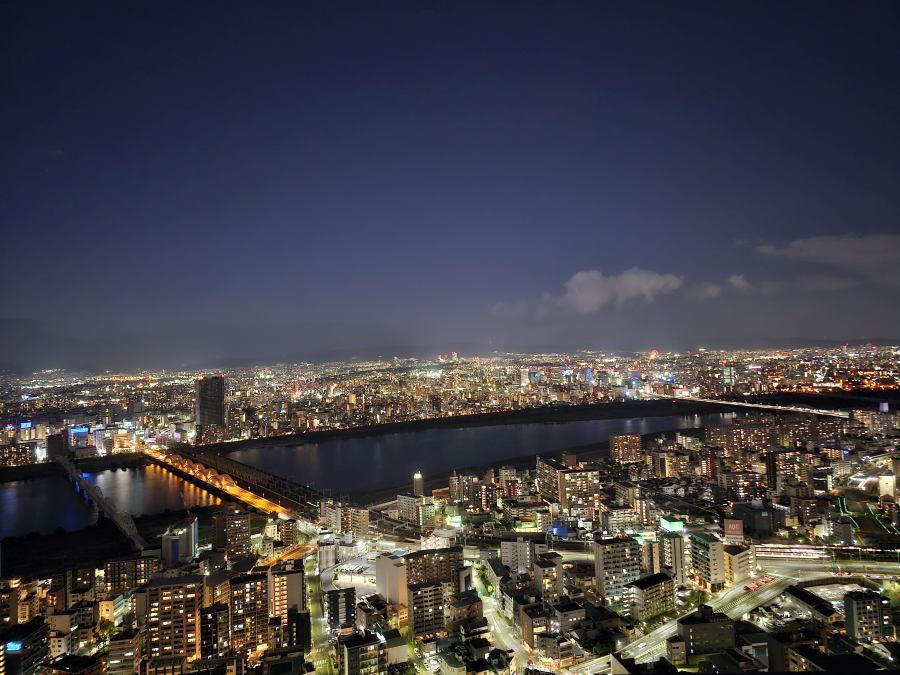
Umeda Sky Building‘s spectacular rooftop terrace offers a 360-degree panorama over Osaka – an unforgettable view, especially at sunset or after dark.
What are the most popular foods and drinks in Osaka?
Osaka is proud of its takoyaki, okonomiyaki and kushikatsu, the city’s most famous street food dishes. The Osakan saying is: “kuidaore” – meaning: eat yourself to ruin.
Takoyaki are small, round dough balls with a creamy interior containing pieces of octopus, tempura scraps and ginger, served with bonito flakes, mayonnaise and okonomiyaki sauce.
Okonomiyaki is a Japanese savoury pancake made from a mixture of cabbage, meat or seafood and topped with various sauces. In Osaka, the hotplate is built into the table, and you can grill it yourself.
Kushikatsu is the signature dish of the Shinsekai district: various ingredients (meat, vegetables, cheese) are skewered, breaded and deep-fried. There is one golden rule when eating: do not double-dip in the sauce!
For drinks, it is worth trying Asahi or Sapporo beer, Japanese whisky, and the chilled matcha tea from a local konbini (convenience store).
What important holidays and festivals are there in Osaka?
Osaka hosts numerous festivals throughout the year. The most well-known include the Tenjin Matsuri, hanami (cherry blossom viewing) and the autumn momiji (maple leaf viewing) season.
Tenjin Matsuri (24–25 July) is one of Japan’s largest and oldest festivals, held at the Temmangu Shrine. The two-day celebration includes a boat procession, fireworks and traditional processions, attended by hundreds of thousands of visitors.
Hanami season (late March – early April) is one of Japan’s most beloved traditions: people picnic under cherry trees. In Osaka, the most beautiful venues are Kema Sakuranomiya Park, Osaka Castle Park and Namba Parks.
The autumn momiji season (October–November) is equally spectacular: the red-gold foliage of maple and deciduous trees is particularly beautiful around temples and parks, for example on the Minoo Waterfalls trail.
At New Year’s Eve (ōmisoka), temple bells ring 108 times at midnight, symbolising – in Buddhist belief – the number of human sufferings. This is a deeply moving and quiet form of celebration.