
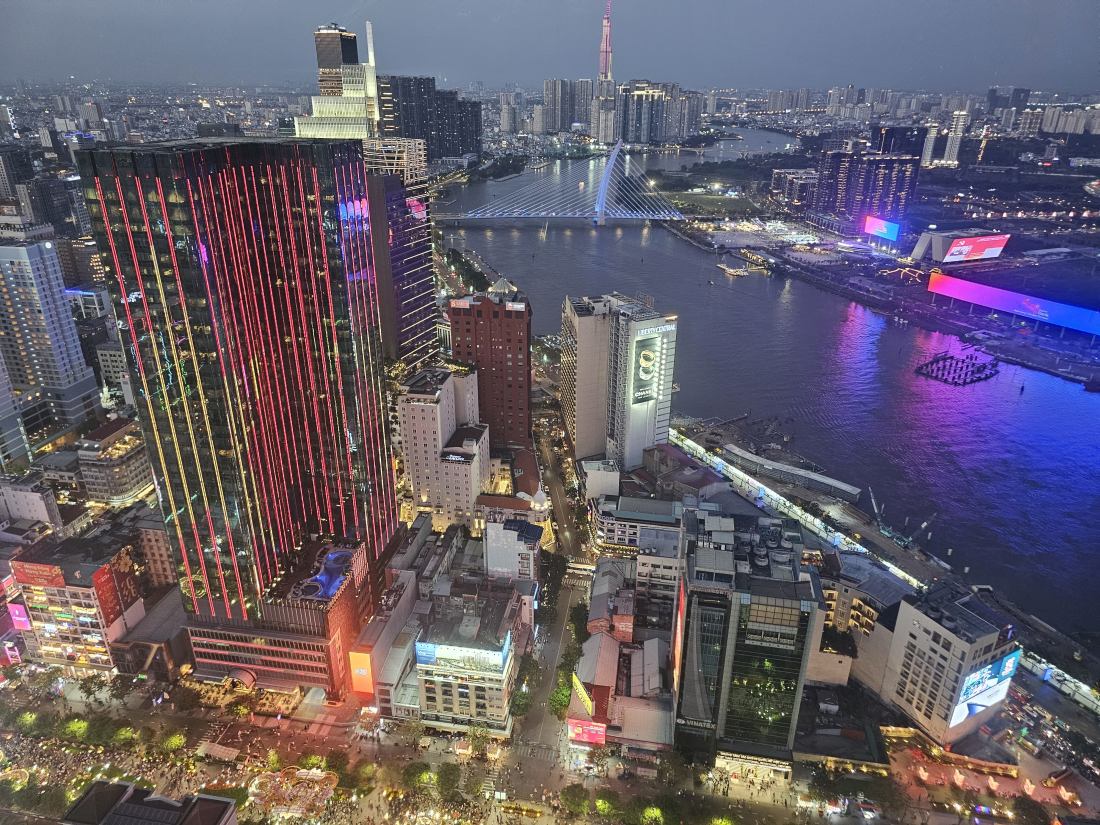
Ho Chi Minh City (formerly Saigon) is Vietnam’s economic and cultural hub, where the French colonial past blends perfectly with modernity. The questions and answers below will help you navigate the most important things to know, whether it’s about visas, transportation, or the best time to travel.
Table of Contents
Basic information
Why is it worth visiting Ho Chi Minh City?
Ho Chi Minh City is Vietnam’s largest city, where the colonial past and the modern metropolitan experience blend into a unique mix.
Buildings from the French colonial era, such as Notre-Dame Cathedral or the Central Post Office, create a striking contrast with the Bitexco Financial Tower skyscraper. The city’s past is showcased by the War Remnants Museum and the Reunification Palace, while Ben Thanh Market and the bustling streets capture everyday Vietnamese life. The food scene is not to be missed either: from pho soup to fresh spring rolls and famous Vietnamese coffee, Ho Chi Minh City is one of the most exciting culinary destinations in Southeast Asia.
What time zone is Ho Chi Minh City located in?
Ho Chi Minh City is in the Indochina Time zone (ICT, UTC+7). Vietnam does not observe daylight saving time.
When is the best time to visit Ho Chi Minh City?
The dry season, generally between December and April, is considered the best time to visit Ho Chi Minh City, as this is when the chance of sudden downpours is lowest.
During the dry season, daytime temperatures typically range around 28–35°C, and humidity is lower than in the rainy months. This is ideal for sightseeing in the city and for excursions to the surrounding area, such as the Mekong Delta or the Cu Chi Tunnels.
The rainy season lasts roughly from May to November. During this time, short but heavy afternoon showers occur almost every day, usually clearing up within a few hours, after which the sun quickly comes out again. Temperatures remain high year-round, so Ho Chi Minh City can practically be visited at any time, as long as the traveler is prepared for the humid, tropical climate.
How many days should I spend in Ho Chi Minh City?
Generally, 2-3 days are recommended to explore Ho Chi Minh City, if the traveler is only interested in the most important downtown attractions.
In 2-3 days, you can comfortably see the historic downtown area (District 1) with Notre-Dame Cathedral, the Reunification Palace, and Ben Thanh Market, and it’s worth dedicating half a day to the War Remnants Museum and the Chinese quarter (Cho Lon). If a traveler spends 4–5 days in the city, there’s also time for a full-day excursion to the Cu Chi Tunnels or the floating markets of the Mekong Delta, which are a few hours away from downtown by car.
What is the official currency in Ho Chi Minh City?
The official currency of Ho Chi Minh City, and all of Vietnam, is the Vietnamese dong (VND).
For everyday purchases, at markets, and in street restaurants, payment is made almost exclusively in cash, so travelers should always carry enough local currency. Larger hotels, restaurants, and shopping malls generally also accept credit cards, and US dollars are also accepted in cash at some tourist locations, though usually at a less favorable exchange rate.
Here is a currency converter calculator where you can check the current exchange rate!
Do people speak English in Ho Chi Minh City?
Yes, in tourist areas, hotels, restaurants, and travel agencies, you can generally get by in English, but most locals speak only Vietnamese in everyday life.
At markets, smaller street restaurants, and in less touristy areas, staff may know only a few basic English words, or a translation app may be needed to communicate. Learning a few simple Vietnamese phrases can help a lot, for example: xin chào – hello; cảm ơn – thank you; bao nhiêu – how much does it cost?
What type of power outlet is used in Ho Chi Minh City?
Type A and C outlets are most commonly used in Ho Chi Minh City, and some newer hotels may also have Type G sockets.
European two-pin round plugs (Type C) can be inserted into most outlets without an adapter, since many places have universal sockets that accept both types. A travel adapter is nevertheless recommended, since older buildings and more rural accommodations may have only Type A (flat-pin) outlets.
In Ho Chi Minh City, as in all of Vietnam, the mains voltage is 220 volts at 50 Hz, which is very close to the 230 volts used in Europe.
How does internet and SIM card use work in Ho Chi Minh City?
Internet connectivity is generally good in Ho Chi Minh City, and the vast majority of hotels, cafés, and restaurants offer free Wi-Fi.
For continuous mobile internet access, it’s worth buying a local SIM card (Viettel, Mobifone, Vinaphone) or an eSIM, which is available both at the airport and in city shops, offering a large amount of data at an affordable price. An eSIM can even be purchased and activated online before your trip, so mobile internet is ready to use as soon as you arrive.
Is it customary to tip in Ho Chi Minh City?
Tipping is not mandatory in Vietnam, but it is an increasingly common and welcome gesture at tourist restaurants and services.
In restaurants, a tip of 5–10% of the bill is customary if the service charge is not already listed separately. It’s also customary to leave a small tip for drivers, porters, and tour guides if you were satisfied with the service, while tipping is less common at local street restaurants and markets.
Travel and transportation
How do I get from the airport to downtown Ho Chi Minh City?
Ho Chi Minh City’s international airport is Tan Son Nhat (SGN), just 7 kilometers from downtown District 1, so the city center is quickly accessible.
The most convenient option is a car or motorbike taxi booked through the Grab app, which offers a predictable price and a fixed route. Official airport taxis (Vinasun, Mai Linh) are also reliable, but it’s worth insisting on using the meter. The air-conditioned bus route 109 is the cheapest option, serving several points downtown, taking 30–45 minutes depending on traffic.
What is the most convenient way to get around Ho Chi Minh City?
For tourists, a car or motorbike taxi booked through the Grab app is the most convenient and widely used way to get around the city.
Traditional taxis (Vinasun, Mai Linh) are also reliable, especially at night or with luggage. The local bus network is very cheap, but often hard for tourists to navigate. At the end of 2024, the city’s first metro line (Bến Thành–Suối Tiên) opened, gradually playing an increasingly important role in transportation between downtown and the eastern districts. It’s important to know that a huge number of scooters travel through the city, so crossing the street may initially feel unusual: it’s best to cross slowly, at a steady pace, clearly visible against the traffic.
Accommodation and safety
Is Ho Chi Minh City a safe city?
Overall, Ho Chi Minh City is a safe destination for tourists, with a low rate of serious crime.
The most common problems are pickpocketing and bag or phone snatching from motorbikes, especially in bustling markets and busy streets. It’s worth keeping valuables close to your body in a closed bag, and not using your phone in your hand on the side facing the sidewalk.
Which neighborhoods are considered safe?
Among the areas most frequently chosen by visitors as safe are:
- District 1 – the historic downtown, where most of the famous sights are located
- District 3 – a quieter, charming neighborhood with cafés and restaurants
- Thao Dien (Thu Duc City) – a green, elegant expat neighborhood with parks and international restaurants
These areas see significant tourist traffic and a strong police presence.
How safe is it at night?
In tourist areas, such as Bui Vien backpacker street, street life is lively even in the evening, with many restaurants and bars welcoming visitors.
Nevertheless, it’s worth staying on well-lit, busy streets, avoiding dark side streets, and using a Grab car or taxi instead of walking if you need to go further.
Which neighborhood is best to stay in Ho Chi Minh City?
For tourists, District 1, District 3, and the Thao Dien neighborhood are the most popular and convenient areas to stay in Ho Chi Minh City.
District 1 is the historic and touristic heart of the city, home to Notre-Dame Cathedral, Ben Thanh Market, and most of the hotels, restaurants, and entertainment venues. If you want to be close to the main sights and do a lot of walking downtown, this is the best choice.
District 3 offers a quieter, more authentic atmosphere, with fewer tourists, charming specialty cafés, and proximity to the War Remnants Museum.
The Thao Dien neighborhood is located on the other side of the Saigon River, offering a greener, quieter environment with international restaurants and cafés, popular mainly among travelers staying longer or traveling with families, though it’s a bit further from downtown.
Health Information
Are vaccinations required for travel to Ho Chi Minh City?
There are no mandatory vaccinations for most tourists traveling to Ho Chi Minh City or Vietnam in general.
However, vaccination against hepatitis A and B, diphtheria-pertussis-tetanus (DTaP), and, for longer or rural trips, typhoid fever, is recommended.
Drinking tap water is not recommended in Ho Chi Minh City. Locals also typically drink bottled or filtered water.
Although the city’s water network is officially treated, contamination can enter the water along the way due to old pipes and storage conditions, which can cause stomach upset in travelers.
Most tourists use tap water for brushing their teeth without any issue, but those with a more sensitive stomach may prefer to use bottled water for this as well.
Is tap water safe to drink in Ho Chi Minh City?
Drinking tap water is not recommended in Ho Chi Minh City. Locals also typically drink bottled or filtered water.
Although the city’s water network is officially treated, contamination can enter the water along the way due to old pipes and storage conditions, which can cause stomach upset in travelers.
Most tourists use tap water for brushing their teeth without any issue, but those with a more sensitive stomach may prefer to use bottled water for this as well.
Experiences
What are the must-see attractions in Ho Chi Minh City?
Ho Chi Minh City’s best-known attractions include Notre-Dame Cathedral, the Central Post Office, the Reunification Palace, the War Remnants Museum, and Ben Thanh Market, which showcase the city’s colonial past and turbulent history well.
Notre-Dame Cathedral was built between 1863 and 1880, entirely from materials imported from France. The red-brick basilica, with its two 40-meter towers, stands in the heart of District 1 and is one of the city’s most popular photo spots.
The Central Post Office was built according to designs by Gustave Eiffel between 1886 and 1891. In the spacious, vaulted hall, antique telephones and painted maps decorate the walls, offering a peaceful haven after a long day of sightseeing.
The Reunification Palace, also known as Independence Palace, was once the presidential residence of South Vietnam. In 1975, the Vietnam War symbolically ended here, when a North Vietnamese tank broke through the main gate. Today it’s open to visitors as a museum.
The War Remnants Museum presents the devastation of the Vietnam War and its impact on the civilian population with unflinching honesty, through photographs and original military equipment.
Ben Thanh Market is the bustling heart of the city, where a wealth of fresh food, handicrafts, and street food await visitors. In the evenings, the streets around the market also fill with street vendors.
Outside the city center, it’s worth dedicating a full day to the Cu Chi Tunnels, where you can see the underground tunnel system used by Viet Cong guerrillas, as well as the floating markets of the Mekong Delta, which offer a glimpse into a completely different, rural Vietnam.
What are the most popular foods and drinks in Ho Chi Minh City?
Ho Chi Minh City is famous for its rich and varied cuisine. The best-known local dishes include pho soup, banh mi sandwiches, and com tam, while iced milk coffee is the most popular drink.
Pho is a famous Vietnamese noodle soup, served with beef or chicken, fresh herbs, and rice noodles, and is also commonly eaten for breakfast.
Banh mi is a crispy sandwich born from the meeting of French colonial cuisine and Vietnamese flavors, typically filled with pâté, grilled meat, pickled vegetables, and coriander.
Com tam (broken rice) is a typically southern Vietnamese dish served with grilled pork, fried egg, and pickles, and is especially popular in Ho Chi Minh City.
Goi cuon, or fresh spring rolls, are made with rice paper wrapped around shrimp, pork, fresh vegetables, and vermicelli noodles, served with peanut sauce.
Among the drinks, ca phe sua da stands out, which is iced milk coffee made from strong Vietnamese coffee and condensed milk. Local beer (bia hoi), served fresh and cheap in street beer gardens, is also popular.
What important holidays and festivals are there in Ho Chi Minh City?
Holidays are celebrated year-round in Ho Chi Minh City, but the most important and impactful event is the Vietnamese Lunar New Year, Tet.
Tet (Vietnamese Lunar New Year) is generally held between late January and February and is the most important family holiday in Vietnam. During this time, the city’s streets are decorated with flowers, lanterns, and festive lights, though many shops and restaurants close for days as locals travel home to their families.
Reunification Day, celebrated on April 30, symbolizes the end of the Vietnam War and the reunification of the country. Military parades and national celebrations take place in the city at this time.
The Mid-Autumn Festival (Tet Trung Thu) takes place around September-October, when colorful lanterns, dragon dances, and the traditional mooncake, banh trung thu, characterize the mood of the streets, especially as a children’s festival.