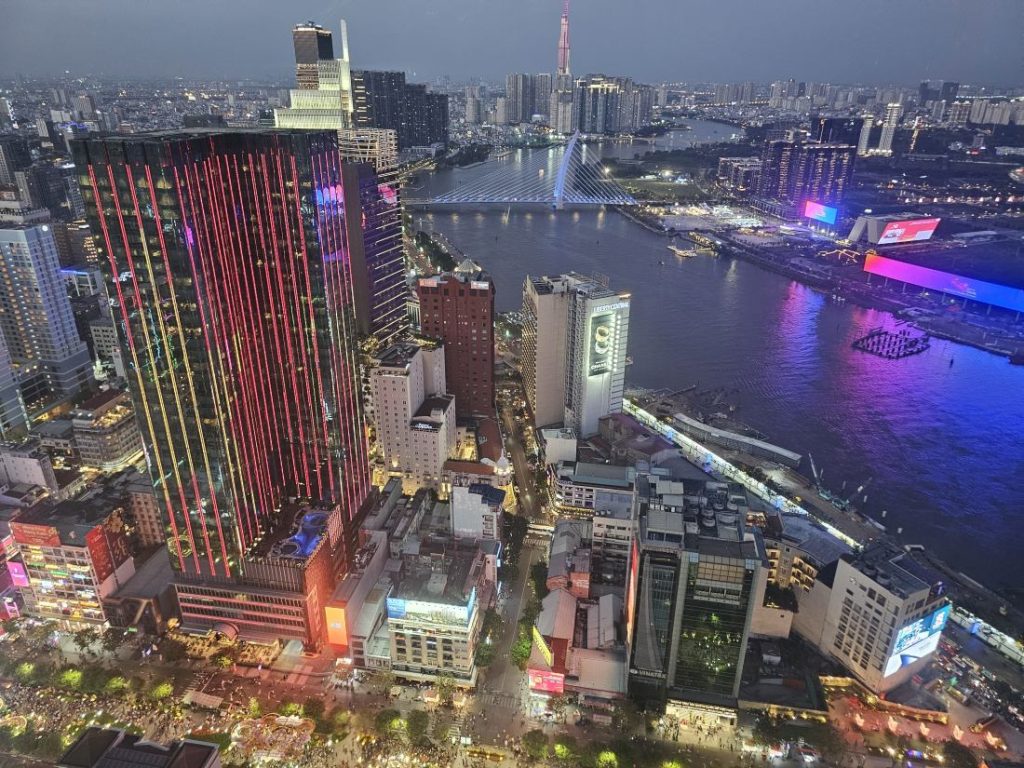
Ho Chi Minh City is Vietnam’s economic center, where both the colonial past and modern present can be found. There are countless impressive attractions while visiting the former Saigon!
Vietnam’s largest city is located in the southern part of the country, on the banks of the Saigon River. Known as Prey Nokor, it was Cambodia’s most important port until the Vietnamese occupied it in the 16th century. Until 1954, it was part of French Indochina, and until 1975, until the end of the Vietnam War, it was the capital of South Vietnam.
Table of Contents
Ho Chi Minh City attractions
Notre-Dame Cathedral
One of Vietnam’s most famous and iconic religious buildings is an outstanding architectural memorial of the French colonial period.
The cathedral was built between 1863 and 1880 by French colonizers, entirely from imported materials. The red brick facade, the two 40-meter towers, and the huge rose window were inspired by the Notre-Dame in Paris. What makes this building special is that all construction materials were shipped from France, including the red bricks, which still retain their original color to this day.
The interior of the cathedral is impressive: a high vaulted ceiling, colorful stained glass windows, and a statue of the Virgin Mary welcome visitors. The statue of the Virgin Mary in front of the church allegedly shed tears in 1959, which started a major pilgrimage. The area around the cathedral is still one of the most romantic places in the city and a popular photo location.

Saigon Central Post Office
One of Ho Chi Minh City’s most beautiful colonial buildings still operates in its original function.
The post office, built between 1886 and 1891, was designed by Gustav Eiffel, the designer of the Eiffel Tower. Behind the neoclassical facade, a spacious, elegant hall welcomes visitors. The high, vaulted ceiling, classic columns, and painted maps offer an impressive sight. In the center of the building is a portrait of Ho Chi Minh, while the walls are decorated with antique telephone sets and vintage letter scales.
There are also small souvenir shops in the building where visitors can purchase unique, Vietnam-themed memorabilia.

Independence Palace
One of the city’s most important historical sites and a defining building in Vietnamese history.
On the site of what is also known as the Reunification Palace, the residence of the French Governor-General once stood. The current palace was completed in 1966 in a modernist style, designed by architect Ngo Viet Thu. The building became a symbol of Vietnam’s war history when North Vietnamese tanks broke through its gates on April 30, 1975, effectively ending the war.
The interior of the palace provides a unique insight into the daily life of the former South Vietnamese president. Visitors can see the presidential office, bedrooms, luxury banquet halls, and the underground bunker system where the communication center operated during the war. The huge garden surrounding the palace is decorated with exotic plants and sculptures.

„Book Street”
This charming street is located right next to Notre Dame Cathedral and the Main Post Office. This pedestrian street is a real cultural oasis in the middle of the bustling city, where visitors can immediately escape the noise of motor traffic.
Shaded by leafy trees, the 100-meter-long promenade is lined with bookstores, publishers’ pavilions, and stylish open-air cafes. The location is not only a paradise for book lovers, but also an excellent photo opportunity, thanks to its changing decor that combines modern and vintage elements.
It is worth taking a break here after a sightseeing tour and picking up some special souvenirs, postcards, or English-language books. The peaceful atmosphere and the aroma of fresh Vietnamese coffee provide an unforgettable experience for every traveler.
Saigon Skydeck
One of Ho Chi Minh City’s most modern and spectacular buildings offers a wonderful panorama of the metropolis.
Located on the 49th floor of the Bitexco Financial Tower, the Skydeck is 262 meters high and provides a 360-degree view of the city and the winding Saigon River. The building’s special lotus flower-inspired form is one of the masterpieces of modern Vietnamese architecture. The helicopter landing pad, which encircles the tower as a protruding platform, is a particularly distinctive element of the building.
Next to the observation deck is the World of Heineken experience center, which presents the history of beer brewing, and the entrance fee includes a refreshing drink.

Japan Town
Hidden behind Le Thanh Ton and Thai Van Lung streets is the Japanese quarter known as „Little Tokyo.” This labyrinthine system of alleys transports travelers to a completely different world, creating a sharp contrast to the usual hustle and bustle of the Vietnamese metropolis.
The narrow streets are decorated with red lanterns, illuminated neon signs, and traditional wooden portals, which create a truly magical atmosphere after dark. The area is a gastronomic stronghold: countless authentic ramen bars, sushi restaurants, and smoky izakayas await fans of Asian cuisine.
Exploring the neighborhood is an exciting adventure, where walking among the hidden bars and small shops makes you feel as if you have been transported to Japan for a moment.
Bùi Viện
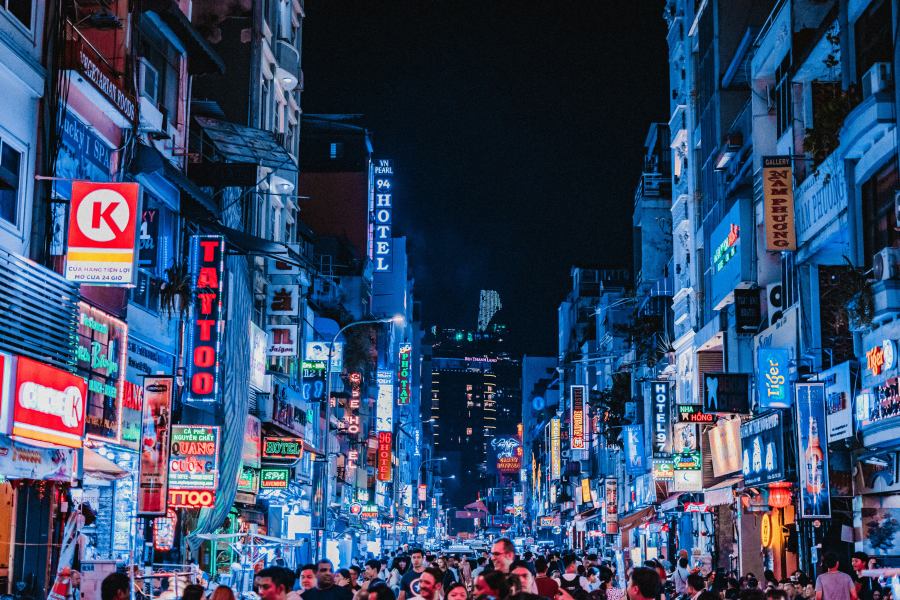
The undisputed center of Ho Chi Minh City’s nightlife is the main street of the infamous „backpacker district”.
During the day, it is relatively quiet, but after sunset, the area is transformed into a pulsating party zone bathed in neon lights, which is the number one meeting place for tourists and local youth.
On weekends, when traffic is banned, the street becomes one huge open-air entertainment venue. The sidewalks are lined with characteristic low plastic chairs where visitors can enjoy cheap local beers and street food specialties.
Ben Thanh Market
The city’s most famous and iconic market has been the heart of local commercial life for centuries.
The history of the market dates back to the 17th century when it was still a gathering place for informal street vendors. The current building was completed in 1912 in French colonial style and has become one of the most recognizable symbols of the city. The characteristic clock tower above the main entrance is visible from afar.
In the huge covered hall, thousands of merchants offer their goods, from fresh food to handicrafts and all kinds of souvenirs. Bargaining is a fundamental part of the shopping process here.
Cu Chi Tunnels
A historical site about 70 km from Ho Chi Minh City, which is one of the most important memorials of the Vietnam War.
The tunnel system, originally more than 250 kilometers long, was built by Viet Cong guerrillas during the French colonial period and was significantly expanded during the American war. This complex was a real underground city with kitchens, hospitals, weapons depots, and dormitories. The tunnels were so narrow that American soldiers couldn’t fit in, while the smaller Vietnamese fighters could easily move through them.
Visitors today can see part of the tunnels, which have been expanded for tourists but still provide a claustrophobic experience. The complex showcases the traps, weapons, and everyday tools used by the guerrillas. Spectacular demonstrations show how the guerrillas hid and used ingenious methods to resist the overwhelming enemy.
Jade Emperor Pagoda
One of the city’s most beautiful and important Buddhist temples.
The pagoda, built in 1909, was originally erected by the Cantonese Chinese community in honor of the deity Ngoc Hoang. The richly decorated pagoda is a masterpiece of Chinese architecture and art, with its roof adorned with colorful ceramic figures and dragons.
In the main hall, the statue of the Jade Emperor sits enthroned, surrounded by a multitude of Buddhist and Taoist deities. The Hall of Hells is particularly impressive, where meticulously crafted woodcarvings depict the punishments of the afterlife. The small pond in the pagoda’s courtyard is full of turtles, which are symbols of long life in Chinese mythology. Locals often come here to pray and make offerings.
Thien Hau Temple
A gem of Chinese architecture built in honor of the sea goddess Thien Hau in the Cholon Chinese quarter.
The temple was founded in the early 19th century by Cantonese immigrants who gave thanks to the goddess for their safe crossing of the sea. The facade of the building is relatively modest, but the interior is decorated with breathtaking details. The roof structure is adorned with meticulously crafted porcelain figures that tell stories from Chinese mythology. The special feature of the temple is the spiral-shaped incense coils that hang from the ceiling.
On the altar stands the statue of the goddess Thien Hau, with continuously burning incense in front of it. The temple contains numerous woodcarvings, calligraphy, and bronze statues that are masterpieces of Chinese-Vietnamese art. On holidays, especially during the lunar new year, the temple is the scene of colorful and noisy celebrations where lucky visitors can see lion dances and other traditional performances.
Vĩnh Nghiêm Pagoda
Ho Chi Minh City’s largest Buddhist temple is one of the most beautiful examples of traditional Vietnamese architecture.
The pagoda was built between 1964 and 1971, combining local and Japanese architectural styles. The impressive main hall’s roof structure follows the style of traditional Vietnamese pagodas, while the seven-story pagoda tower shows Japanese architectural influences.
A huge Buddha statue welcomes believers and visitors in the main hall. The special feature of the building complex is the wealth of wood carvings that depict Buddhist stories and symbols.
Buu Long Pagoda
One of Ho Chi Minh City’s most picturesque and peaceful Buddhist sanctuaries.
The temple was founded in 1942 but gained its current impressive form during a complete renovation in 2007. The architectural style uniquely combines the characteristics of traditional Vietnamese and Thai Buddhist temples.
The pagoda is located on a hilltop, surrounded by carefully tended gardens and a scenic lake where lotus flowers bloom in the warm months. Climbing the main staircase, visitors are greeted by a monumental, gilded Buddha statue. The special feature of the pagoda complex is the seven-level tower that symbolizes the levels of Buddhist cosmology.
In the main hall, there is a huge white jade Buddha statue, in front of which fresh flowers and incense are constantly fragrant. The walls and ceiling are decorated with meticulously crafted frescoes and carvings depicting Buddha’s life and Buddhist teachings.

Nguyen Hue Walking Street
An elegant boulevard in the heart of the city, which is one of the most popular places in modern Ho Chi Minh City.
The former Charner Boulevard was established during the French colonial period and was converted into a pedestrian zone in 2015. The 670-meter-long and 64-meter-wide boulevard stretches from the Saigon River to City Hall. The promenade is decorated with fountains, carefully maintained green areas, and flower beds.
The street is particularly lively in the evening hours when it is crowded with locals and tourists. Exclusive shops, restaurants, and cafes line the promenade. A special feature of the street is the flower promenade, which is particularly impressive during the New Year (Tet) celebration when it is decorated with thousands of flowers.

Tao Dan Park
One of the city’s largest and most beautiful public parks.
The 10-hectare park was created during the French colonial period and has since been a favorite resting place for city dwellers. The park is home to more than 1,000 different species of trees, including rare and native local plants. A special attraction of the park is the bonsai garden showing miniature Vietnamese landscapes.
Every morning, bird enthusiasts gather in the southeast corner of the park, bringing their caged birds to the „Bird Club”. Cultural events and celebrations are often held in the central area of the park.

War Remnants Museum
A museum presenting the horrors and consequences of the Vietnam War, which is a shocking but important place to visit.
The museum was opened in 1975, originally named the „Documentation Center for American War Crimes” but was later renamed. The building is divided into eight thematic galleries that show different aspects of the war. In the courtyard of the museum, American military vehicles, tanks, and aircraft captured during the war are on display.
In the exhibition halls, shocking photographs, personal items, and documents recall the horrors of the war. Particularly distressing is the section showcasing the effects of chemical weapons, such as Agent Orange, which illustrates the long-term consequences of the war. The „Memories of War” gallery presents the work of war photojournalists – including many fallen journalists.
All information is here!
Ho Chi Minh City Museum
A comprehensive museum presenting the history and culture of the city and all of South Vietnam, housed in the Gia Long Palace.
The neo-baroque style palace, built between 1885 and 1890, originally served as the residence of the French governor and later became the headquarters of the South Vietnamese government. The impressive building itself is historically significant, as it was the site of numerous important events in 20th-century political life. The museum opened to the public in 1978.
The museum’s exhibitions chronologically present the development of the city from ancient times to the present day, with particular emphasis on the revolutionary period. Visitors can see archaeological finds, documents from the colonial period, and memories of revolutionary struggles. Particularly valuable are the exhibitions showcasing the city’s traditional crafts and historical photographs depicting early Saigon. Various sculptures and monuments can be found in the museum’s garden.
All information is here!
Ho Chi Minh City weather: when is the best time to travel here?
Ho Chi Minh City has a tropical monsoon climate characterized by high temperature and humidity throughout the year, with two distinct seasons.
Dry Season (November-April):
The dry season is the most popular tourist period. The temperature ranges between 22-35°C, with lower humidity and minimal precipitation. December and January are particularly pleasant when the temperature is somewhat lower and the air less humid. In February and March, the temperature gradually increases but remains enjoyable. In April, the approaching rainy season can be felt, with temperatures rising above 30°C and increasing humidity.
Rainy Season (May-October):
The rainy season is characterized by high humidity and regular, short but intense showers that generally occur in the afternoon hours. The temperature varies between 25-35°C, but due to the high humidity, it may feel even hotter. Most of the precipitation falls in June and July. The monsoon reaches its peak in September when floods may occur.
Best time to travel:
The most ideal period for visiting Ho Chi Minh City is the dry season (November-April), especially in December and January, when the weather is pleasant, precipitation is minimal, and tourist attractions can be explored under optimal conditions.