
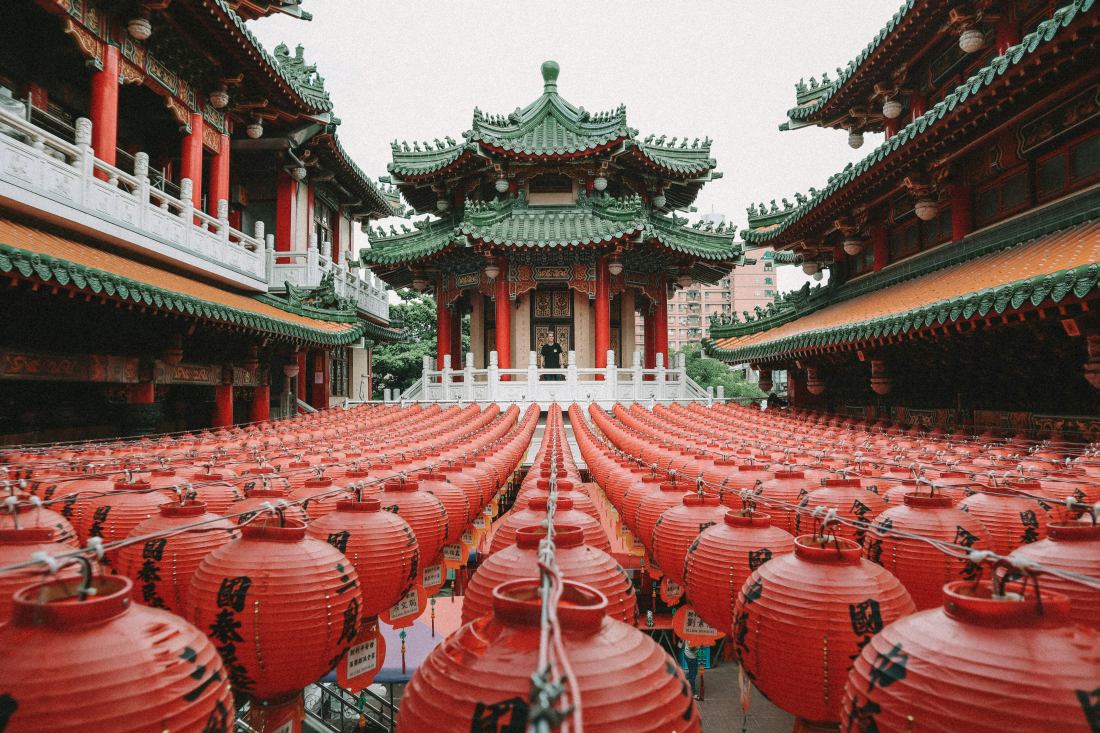
Taiwan is a modern technological country, which is a popular tourist destination thanks to its ancient temples, traditional markets, and natural wonders. Here are 13 attractions I’d like to introduce!
Taiwan is located in East Asia, in the western part of the Pacific Ocean, to the east of China. The island’s rich cultural heritage, where Chinese traditions blend with Japanese and indigenous influences, creates a unique cultural mosaic. The island’s climate is subtropical and tropical, so pleasant weather awaits travelers year-round, ideal for both city sightseeing and nature exploration.
Table of Contents
Best places in Taiwan
Taipei
Taiwan’s capital and economic center is a wonderful blend of modern architecture and ancient Chinese traditions. The city’s symbol is Taipei 101, which was once the world’s tallest building and still offers an impressive sight at 508 meters high. From the tower’s observation deck, an unparalleled panorama unfolds before visitors.
The cultural heart of the city is represented by the Chiang Kai-shek Memorial Hall, which boasts a huge park and buildings in traditional Chinese architecture. Longshan Temple is the city’s oldest and most beautiful Buddhist temple, dating from the 18th century. The National Palace Museum houses one of the world’s largest Chinese art collections, with nearly 700,000 artifacts.
Taipei’s night markets, especially Shilin Night Market and Raohe Street Night Market, are the centers of Taiwanese street food culture. Here you can taste local specialties like stinky tofu, bubble tea, or guabao. The Beitou district is famous for its hot springs, where visitors can try traditional Japanese-style hot baths.

Taroko Gorge
Located on Taiwan’s eastern coast, this is one of the island’s most spectacular sights. The gorge, situated in Taroko National Park, was formed over millions of years as the Liwu River cut through the marble mountains.
In the nearly 19-kilometer-long gorge, vertical marble walls rise up to 1,000 meters high in places. The most famous route leads to the Eternal Spring Shrine, a temple built in memory of workers who lost their lives during the gorge’s construction. The Swallow Grotto section is particularly popular, where the narrow path runs directly alongside the marble walls.
Taroko Gorge offers numerous hiking trails, from easy walks to multi-day treks. The Shakadang Trail winds alongside the river’s crystal-clear pools, while the Zhuilu Old Trail is a historic path offering breathtaking views of the gorge. Thanks to the area’s rich flora and fauna, you can often encounter Taiwanese macaques and special bird species.

Kaohsiung
Taiwan’s second-largest city in the southern part of the island is an important port city and cultural center.
Alongside the city’s symbol, Longshan Temple, are the Dragon and Tiger Pagodas, two seven-story pagodas on Lotus Lake, which can be reached via a dragon-shaped bridge. The Fo Guang Shan Buddhist monastery near the city is one of the world’s largest Buddhist complexes. At the center of the area stands the monumental Great Buddha statue, which is 120 meters tall.
Pier-2 Art Center is a former warehouse district that has been transformed into an art quarter, filled with galleries, cafés, and street art. The night markets, especially Liuhe Night Market, are excellent venues for discovering local cuisine. One of the gems of the city’s modern public spaces is the 1,914-meter-long Love River promenade, which creates a romantic atmosphere.

Alishan Mountain Range
A stunning mountain range in central Taiwan, located at an altitude of 2,000-2,500 meters and famous for its sunrises, sea of clouds, and ancient cypress trees.
The Alishan National Forest Recreation Area is the center of the mountain range’s tourist experiences. The most popular activity is the dawn train ride to watch the sunrise, when visitors can witness the sun slowly emerging from the sea of clouds. This experience is one of Taiwan’s most iconic natural spectacles.
The mountain range is home to the Alishan Forest Railway, a historic narrow-gauge railway built in 1912 that still operates today. Along the route, spectacular views of the mountains and valleys unfold. The Sister Ponds are two picturesque mountain lakes associated with a romantic legend about two indigenous sisters. The Sacred Tree, a 2,300-year-old cypress, was once the area’s symbol, though now a museum preserves its memory.

Sun Moon Lake
Taiwan’s largest natural lake in the central part of the island, near the small town of Yuchi. The lake gets its name from its unique shape: one part is round like the sun, the other is crescent-shaped.
Around the lake, you’ll find several temples and cultural attractions. Wenwu Temple is an imposing structure dedicated to Confucius and the god of war. Ci-En Pagoda is a 46-meter-high tower offering an unparalleled view of the lake and surrounding mountains. Lalu Island in the middle of the lake is a sacred site for the indigenous Thao people.
The cycling path around the lake is nearly 30 kilometers long and was chosen by CNN as one of the world’s most beautiful bike routes. The route passes grassy hills, bamboo forests, and tea plantations. Visitors can try the cable car, which crosses above the lake and leads to the nearby Formosa Aboriginal Culture Village. In the evening, shops and restaurants along the lakeshore create a romantic atmosphere.

Jiufen
A picturesque hillside town in northern Taiwan that was once a gold mining settlement and is now a favorite destination for artists, craftsmen, and tourists. Due to its narrow, stepped alleyways and traditional teahouses, it’s often called „Taiwan’s Santorini„.
The town’s main street, Jiufen Old Street, is a labyrinthine alley where traditional sweets, handicrafts, and local specialties are sold. The teahouses are particularly famous, where visitors can experience the traditional Taiwanese tea ceremony while enjoying stunning views of the Pacific Ocean.
Jiufen inspired Hayao Miyazaki’s famous animated film Spirited Away, and indeed exudes a fairy-tale atmosphere, especially in the evening when red lanterns illuminate the narrow streets. The Gold Mine Museum provides insight into the town’s gold mining past. The nearby village of Jinguashi is also worth visiting, where the Crown Prince Chalet Museum is located.

Yushan National Park
Taiwan’s largest national park encompasses the island’s central mountain range. At the heart of the park is Yushan, or Jade Mountain, which at 3,952 meters is the highest peak in Taiwan and all of Northeast Asia.
Climbing Yushan is one of Taiwan’s greatest adventures. The hike takes two days, with a night spent at a mountain hut. From the summit, in clear weather, a breathtaking 360-degree panorama unfolds. During the climb, you pass through different vegetation zones, from bamboo forests at lower levels to alpine vegetation near the summit.
The national park includes more than 30 peaks over three thousand meters, offering numerous challenges for experienced mountaineers. The area’s rich wildlife includes the Taiwanese black bear, the island’s national animal, as well as more than 200 bird species. Waterfalls and crystal-clear mountain streams in the park’s lower regions are additional attractions.

Tamsui
A historic port town at the mouth of the Tamsui River in northern Taipei, now a popular excursion destination for both locals and tourists. The town’s rich history dates back to Spanish and Dutch colonial times.
The town’s symbol is Fort San Domingo, built of red brick, a 17th-century fortification originally under Spanish and later Dutch control. The fort operates as a museum and provides insight into Taiwan’s colonial era. The nearby Tamsui Old Street is a bustling promenade where local street food, handicrafts, and souvenirs are available.
Fisherman’s Wharf is particularly popular for watching sunsets and offers great dining options. Lover’s Bridge, a white, sail-shaped pedestrian bridge, creates a romantic atmosphere. Several historic temples are found in Tamsui’s old town, including Fuyou Temple and Longshan Temple. The area’s tea plantations and hillside trails offer excellent hiking opportunities.

Kenting National Park
This tropical paradise at Taiwan’s southernmost point was the island’s first national park. The park uniquely combines mountain landscapes, coral reefs, tropical forests, and white sandy beaches.
Its most famous beaches include Nanwan Beach, popular with surfers, and Baisha Beach, whose white coral sand and crystal-clear water are ideal for swimming and snorkeling. Eluanbi Lighthouse stands at the park’s southern tip, surrounded by a beautiful park from which the Philippines can be seen on clear days.
Longpan Park is a grassy plateau that drops steeply to the ocean and is particularly popular for stargazing due to minimal light pollution. Maobitou is a rocky peninsula that got its name from its cat-head-shaped formation. The Kenting Forest Recreation Area within the park welcomes visitors with rich vegetation and hiking trails.

Tainan
Taiwan’s oldest city was once the island’s capital and is now the center of traditional Taiwanese culture and history. The city boasts numerous temples, historic buildings, and traditional markets.
Chihkan Tower is a 17th-century structure that was originally a Dutch fort, later supplemented with Chinese-style pavilions. Anping Old Fort also dates from the Dutch colonial period and is an important historical monument. The city has more than 300 temples, including the Confucius Temple, built in 1665 and Taiwan’s oldest Confucius temple.
Tainan is also known as a gastronomic paradise, with local cuisine offering many dishes not found elsewhere. Shennong Street is a picturesque street with traditional wooden houses that have been converted into cafés, galleries, and workshops. The night markets, especially Garden Night Market, are full of local specialties. Nearby salt flats and mangrove forests are additional natural attractions.

Shifen Waterfall
This natural wonder, also known as „Taiwan’s Niagara Falls”, is located in the northern part of the country, in New Taipei City. The waterfall is 20 meters high and 40 meters wide, making it Taiwan’s widest waterfall.
The waterfall’s distinctive feature is its curtain-like water flow, where water cascades down an even, wide surface, creating a mist-like fog around it. On sunny days, a rainbow is often visible in front of the waterfall, making the sight even more spectacular. The walkways created around it allow visitors to admire this natural phenomenon up close.
Shifen town itself is also an interesting sight, where the railway tracks run directly through the main street. It’s traditional for visitors to release sky lanterns inscribed with wishes, especially during the Lantern Festival, when thousands of colorful lanterns cross the sky. The nearby Pingxi Line is a scenic railway connecting several small towns, each with its own unique charm.

Lukang
A historic town on Taiwan’s central-western coast, one of the country’s best-preserved traditional settlements. Once Taiwan’s second most important port city, it is now a living museum of ancient Chinese culture.
At the heart of the town is Longshan Temple, built in 1647 and one of Taiwan’s most beautiful and best-preserved temples. The temple is stunning with its carved wooden decorations, stone carvings, and traditional architectural style. The Lukang Folk Arts Museum provides insight into traditional Taiwanese lifestyle and craftsmanship.
The narrow alleys of the old town, „Nine Turns Lane” and „Half-Edge Well” are historic sights showcasing ancient architectural solutions. The alleys were deliberately built narrow to provide protection from wind and pirates. Local craftsmen still create their works using traditional techniques, so you can buy handmade lanterns, wood carvings, and temple decorations.

Yehliu Geopark
A unique geological wonder on Taiwan’s northern coast, famous for its special rock formations. The rocks in the coastal park have been shaped over millions of years by wind, rain, and seawater.
The park’s most famous formation is the „Queen’s Head”, a mushroom-shaped rock resembling a human head with a crown. This formation is the park’s symbol, though due to natural erosion, the „neck” is getting thinner, and geologists say it may break off within a few decades. Other notable formations include the „Fairy Shoe”, „Candle Rocks”, and „Elephant Rock”.
The geopark is divided into three zones, each with different types of rock formations. The first zone is the most accessible and contains most of the iconic formations. The second zone offers a wild, untouched natural environment, while the third zone stands out with pools formed by seawater and special erosion. Visitors can walk among the rock formations, but climbing on them is prohibited for protection purposes.
