
Mexico City is a vast metropolis offering countless experiences for travelers. The following questions and answers will help you navigate the most important things to know, whether it’s about safety, transportation, or the best time to visit.
Table of Contents
Basic information
What time zone is Mexico City in?
Mexico City is located in the Central Mexico time zone (Central Standard Time, UTC–6). Mexico does not observe daylight saving time.
When is the best time to visit Mexico City?
The best time to visit Mexico City is generally the dry season between November and April. The weather is pleasant, there is less rain, and conditions are ideal for exploring the city.
The dry season, which typically lasts from November to April, is the most favorable period for travel. The weather is mostly sunny with little precipitation, and daytime temperatures generally range around 20–25 °C. This is ideal for sightseeing and excursions.
The rainy season lasts roughly from May to October. During this period, showers and thunderstorms occur more frequently, usually arriving in the afternoon or evening. Although the rain generally does not last all day, sightseeing can be less comfortable due to the high humidity and frequent downpours.
One of the city’s most unique periods is early November, when the Day of the Dead celebrations take place. At this time, the streets of Mexico City fill with decorations, parades, and cultural events, making it a special experience for many travelers.
How many days should you spend in Mexico City?
To explore Mexico City, at least 3–4 days are recommended. Mexico City is one of the largest cities in the world and therefore offers countless attractions. Although some of the most famous sites are relatively close to each other, the distances are large and traffic can slow things down.
In 3 days you can generally fit in the most important sights. This is when it’s worth visiting the historic city center (Zócalo square), the cathedral, the National Palace, and the famous Chapultepec Park and its museums. Many people dedicate one day to one of the city’s special neighborhoods, such as Coyoacán.
A 4–5 day stay allows you to explore Mexico City at a more relaxed pace. This allows time for world-famous museums, local markets, atmospheric neighborhoods, and a day trip to the Teotihuacán pyramids near the city.
What is the official currency in Mexico City?
The official currency of Mexico City is the Mexican peso (MXN), which is used throughout the country.
In most places in Mexico City, payment is made in Mexican pesos, and although US dollars are sometimes accepted in tourist areas, this is usually at an unfavorable exchange rate. Therefore, tourists are advised to use pesos for everyday purchases.
Credit cards are also generally accepted at larger establishments – such as shopping malls, hotels, and restaurants.
Here is a currency exchange calculator where you can check the current exchange rate!
Do people speak English in Mexico City?
Yes, English is generally spoken in the tourist areas of Mexico City, especially in hotels, restaurants, museums, and popular neighborhoods. However, the native language of most locals is Spanish, so it is not always possible to communicate in English in everyday situations.
In local restaurants, markets, or smaller shops, however, the staff may not speak English or may only know a few basic phrases. In these situations, a few simple Spanish words or a translation app on your phone can come in very handy.
It can be useful for tourists to learn a few basic Spanish phrases, for example: hola – hello ; gracias – thank you ; por favor – please ; cuánto cuesta – how much does it cost?
What type of electrical plug is used in Mexico City?
In Mexico City, type A and B electrical sockets are used, which are the same as those common in the United States. Therefore, most Hungarian devices will require a travel adapter to be connected.
What is the electrical voltage?
The electrical voltage in Mexico City is generally 110–127 Volts. Most modern electronic devices, such as mobile phone chargers and laptops, automatically support voltages between 100–240 V, so these can generally be used without any issues with an adapter.
Some higher-powered devices are not always compatible with the Mexican voltage, such as hair dryers. If these are designed only for 220–240 V, a voltage converter may be needed, or it may be simpler to use the appliances provided by the accommodation.
How does internet and SIM card usage work in Mexico City?
Internet connectivity in Mexico City is generally good, and free Wi-Fi is available in most hotels, cafés, and restaurants. If you need continuous mobile internet, it is worth purchasing a local SIM card or eSIM.
Mexico City is a modern metropolitan area, so internet access is generally not a problem for tourists. Most hotels offer stable Wi-Fi, and free internet is also available in many restaurants, shopping malls, cafés, and the airport.
More and more people are using eSIMs, which can be purchased and activated online before the trip. This is particularly convenient because mobile internet works immediately upon arrival at the airport or in the city.
Is it customary to tip in Mexico City?
Yes, tipping is generally customary in Mexico City, especially in restaurants and for various services. In restaurants, it is customary to leave about 10–15% of the bill as a tip, if the service charge is not already included.
In Mexico, tipping is an important part of the service culture, and a significant portion of many hospitality workers’ income comes from it. As a result, tourists are generally also expected to leave a small tip if they are satisfied with the service.
In some restaurants, a service charge („servicio”) may already appear on the bill, so it is worth checking the bill before paying. If it is not included, it is appropriate to leave a separate tip.
Travel and transportation
How do I get from the airport to the center of Mexico City?
Mexico City’s main airport is Benito Juárez International Airport (MEX), located just 5–10 kilometers from the historic city center. As a result, the city center can be reached relatively quickly by various means of transport.
The metro is the cheapest transportation option from the airport. Near the airport is a station called Terminal Aérea, which is located on metro line 5. From here, the Pantitlán junction, where several metro lines converge, is easily accessible.
Another main public transportation option is the Metrobus. This is a rapid bus system that runs in dedicated lanes, making it often faster than conventional buses.
Official airport taxi services operate at the airport, working on a pre-paid system. Ride-sharing services such as Uber are also available.
What is the most convenient way to get around Mexico City?
Mexico City is a huge metropolitan area with more than 20 million inhabitants, so the transportation system is extremely extensive. The most common options for tourists are generally the metro, Metrobus, taxi, and Uber.
The Mexico City metro is one of the fastest and cheapest modes of transportation in the city. The network consists of 12 lines. Its advantage is that it is very affordable and many attractions are easily accessible by it.
The Metrobus is a rapid bus system that runs in dedicated bus lanes along the city’s main avenues. Modern, high-capacity vehicles operate on it, and it also covers many important tourist areas.
It is worth obtaining the transit card called Tarjeta de Movilidad Integrada in the city. With this, you can easily pay for multiple modes of transportation.
Accommodation and safety
Is Mexico City a safe city?
Mexico City is a vast metropolis, so the assessment of safety largely depends on which neighborhood you are in and how cautious you are. Most of the neighborhoods visited by tourists are generally safe, especially during the day.
Which neighborhoods are considered safe?
Among the most popular areas chosen by visitors are:
- Centro Histórico – the historic city center, home to many famous sights
- Polanco – an elegant, safe neighborhood with luxury shops and restaurants
- Roma and Condesa – popular, youthful neighborhoods with cafés and parks
- Coyoacán – a charming, cultural neighborhood with museums
These areas generally have high tourist traffic and a strong police presence.
How safe is it at night?
In the neighborhoods visited by tourists, there are many restaurants and bars in the evening, so street life is generally lively. Nevertheless, it is advisable to stick to well-lit streets, and if you need to travel further, it is better to use a taxi or a ride-sharing service.
Which neighborhood is the best to stay in Mexico City?
The most popular and convenient neighborhoods for tourists in Mexico City include Centro Histórico, Polanco, Roma, Condesa, and Coyoacán. These districts are well-located, offer many attractions, restaurants, and cafés, and are generally safer for visitors.
The Centro Histórico is the historic center of the city, home to many famous attractions such as the Zócalo main square, the cathedral, and several museums. If you want to be close to the historic landmarks and plan to walk a lot in the city center, this can be a great choice.
The Polanco is one of Mexico City’s most elegant and safest neighborhoods. Luxury hotels, shopping streets, excellent restaurants, and museums are found here. The area is particularly popular among those looking for comfortable, high-quality accommodation.
The Roma and Condesa neighborhoods are known for their youthful, bohemian atmosphere. They are full of cafés, restaurants, galleries, and green parks. These areas are particularly popular with tourists and digital nomads because they are pleasant to walk through and offer many activities.
The Coyoacán is a quieter, historically atmospheric neighborhood known for its small squares, colorful houses, and cultural sights. The Frida Kahlo Museum is located here, for example. The area is a little further from the city center, but many travelers love it for its atmosphere.
Health information
Are any vaccinations required for traveling to Mexico City?
For traveling to Mexico City, there are generally no mandatory vaccinations required for European travelers. However, certain vaccinations may be recommended, especially for longer stays or travel to rural areas.
Most European travelers do not need to present a mandatory vaccination certificate to visit Mexico for tourism purposes. This is especially true for Mexico City, which is a large, modern metropolis and is generally considered a lower-risk area from a health perspective than some of the country’s tropical regions.
Is tap water drinkable in Mexico City?
Drinking tap water is not recommended in Mexico City. Most locals also use bottled or filtered water for drinking.
Why is it not recommended?
Although the water is officially treated and disinfected, the problem is often not the water quality itself, but the old pipe network and storage conditions. Contamination can enter the water along the way, which can cause stomach problems for travelers.
Can it be used for brushing teeth?
Most tourists use it for brushing their teeth without any problems, but if you have a sensitive stomach, it is worth using bottled water for this as well.
Experiences
What are the must-see attractions in Mexico City?
Among the most famous attractions in Mexico City are the historic city center (Zócalo), the National Museum of Anthropology, Chapultepec Park, the Frida Kahlo Museum, and the pyramids of Teotihuacán. These places provide an excellent showcase of the city’s rich history, culture, and art.
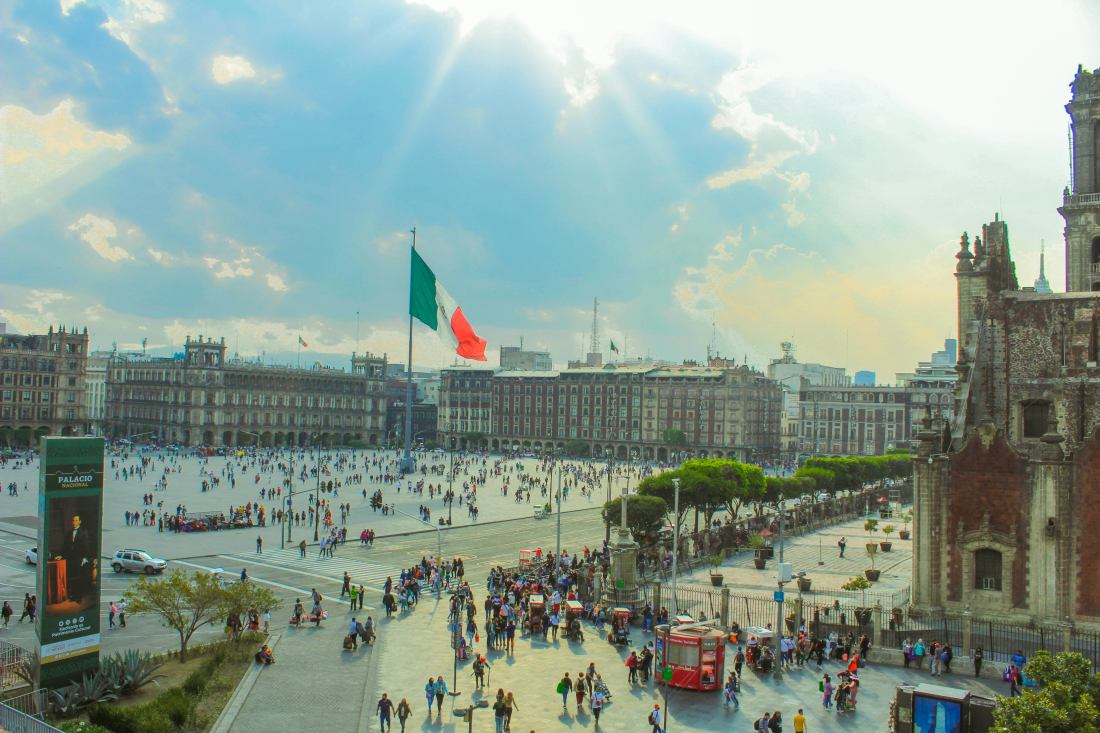
The Zócalo, or Plaza de la Constitución, is the heart of Mexico City’s historic center. The Metropolitan Cathedral, the National Palace, and several important historical buildings are located around this vast square. This area is a UNESCO World Heritage Site and one of the city’s most important tourist hubs.
The National Museum of Anthropology is one of the most significant museums in Latin America. Here you can see the most important archaeological finds of Mexico’s ancient civilizations – such as the Aztecs and the Maya – including the famous Aztec calendar stone.
The Chapultepec Park is Mexico City’s largest green space, home to several museums, a lake, and Chapultepec Castle. The park is a popular retreat for both locals and tourists.
The Frida Kahlo Museum, located in the painter’s former home, the famous „Blue House” in the Coyoacán neighborhood, is one of Mexico’s most visited museums. The exhibition presents Frida Kahlo’s life, art, and personal belongings.
Near Mexico City lies the Teotihuacán archaeological site, which is one of the most spectacular ancient cities in Mexico. Here rise the Pyramid of the Sun and the Pyramid of the Moon, impressive architectural relics of the pre-Columbian civilizations.
What are the most popular foods and drinks in Mexico City?
Mexico City is famous for its rich and varied cuisine. The most well-known local dishes include tacos, quesadillas, tamales, and guacamole, while the most popular drinks include tequila, mezcal, and various fresh fruit drinks.
One of the most well-known dishes is the taco, which consists of meat, vegetables, and sauces filled into a corn tortilla. There are countless different varieties in Mexico City, such as the taco al pastor, which is made from spiced pork.
The quesadilla is also very popular. This is a tortilla-based dish, usually made with cheese and various fillings – such as meat, mushrooms, or vegetables.
The tamales is a traditional Mexican dish consisting of corn flour dough filled with various ingredients. The dough is wrapped in corn husks and then steamed.
One of the most well-known accompaniments in Mexican cuisine is guacamole, a cream made from avocado, lime juice, onion, and spices.
Among the drinks, tequila is known worldwide, a Mexican spirit made from blue agave. Another traditional drink is mezcal, which is made from similar ingredients but has a distinctly smoky flavor.
Also very popular in Mexico City are the so-called aguas frescas drinks. These are refreshing beverages made from fresh fruit, water, and a little sugar, which are especially popular on hot days.
What are the important holidays and festivals in Mexico City?
Numerous important holidays and festivals are held in Mexico City throughout the year. Among the most well-known are the Day of the Dead (Día de los Muertos), Mexican Independence Day, and the Christmas holiday season.
One of the most well-known holidays is the Day of the Dead (Día de los Muertos), which is held every year between November 1–2. During this time, colorful parades, altars, floral decorations, and traditional skull motifs appear on the streets of the city. Families remember their deceased loved ones while a festive atmosphere reigns throughout the city.
Another very important event is Mexican Independence Day, celebrated on September 16th. The festivities begin on the evening of September 15th with the famous „Grito de Independencia” ceremony, when the Mexican president symbolically repeats the historic cry that marked the beginning of the independence struggle at Zócalo square. Huge crowds, concerts, and fireworks fill the city center at this time.
The Christmas season is also very festive in Mexico City. In December, light decorations, Christmas markets, and ice rinks appear in several squares. Local traditions include the festive processions and community events called „posadas”, which reenact the story of the birth of Jesus.