
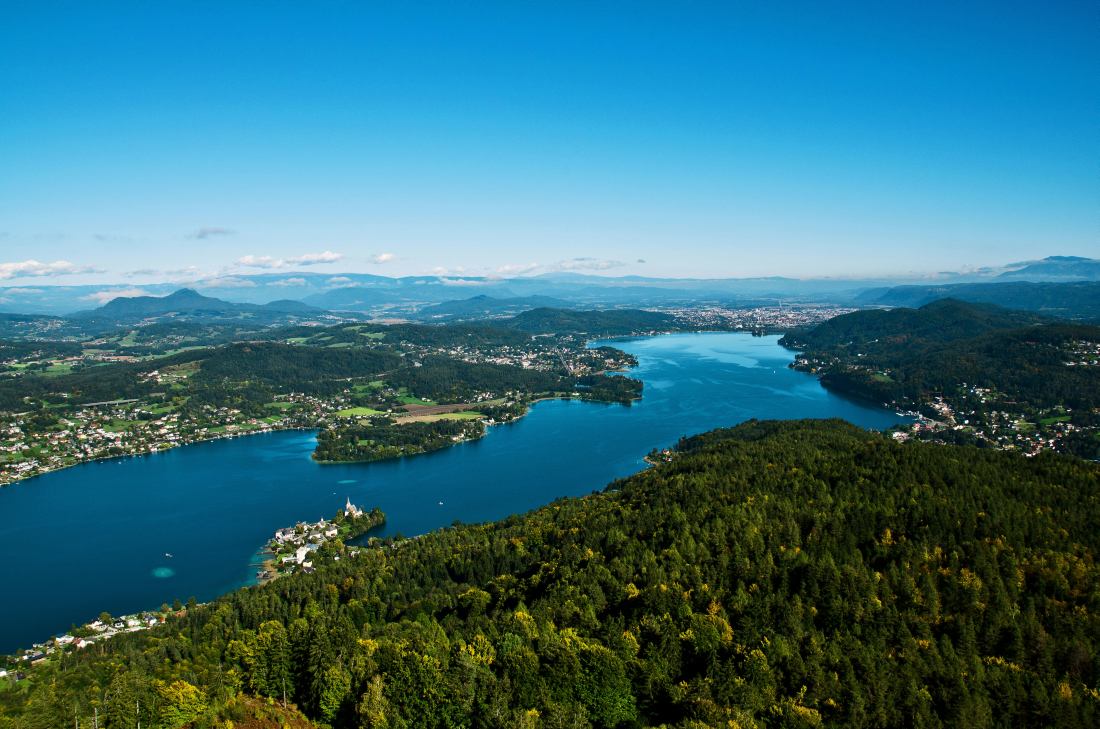
In Klagenfurt am Wörthersee, Austrian and Italian culture and atmosphere blend together, making it very popular among the Alpine ranges.
The capital of Carinthia province and Austria’s sixth-largest city lies on the eastern shore of the picturesque Wörthersee. Founded in the 16th century, the city is today the cultural and economic center of Southern Austria, where traces of Italian Renaissance architecture blend with the splendor of the Habsburg era. Klagenfurt’s special atmosphere can also be attributed to the influence of nearby Italy: a southern lightness can be felt in the city’s ambiance, made even more attractive by the nearby Alps and the crystal-clear lake.
Table of Contents
Klagenfurt attractions
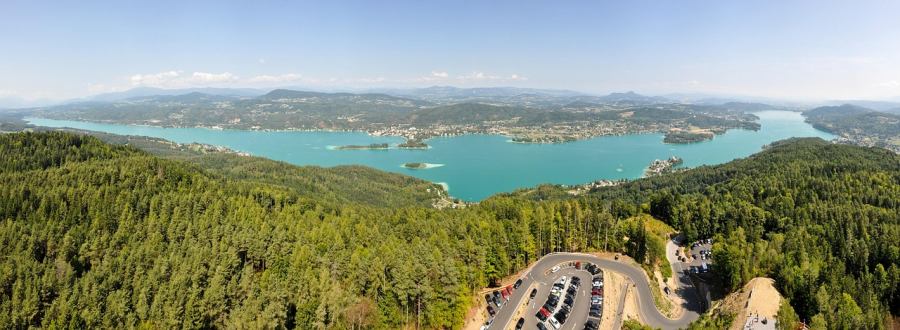
Wörthersee
The region’s most famous natural attraction and Carinthia’s tourism jewel is considered one of the warmest lakes in the Alps, where water temperature can reach 27-28 degrees Celsius in summer. The nearly 20-kilometer-long and maximum 1.6-kilometer-wide lake has been dubbed Austria’s „Riviera” due to its turquoise color and crystal-clear water.
Countless beaches, harbors, and water sports opportunities await visitors along the lake shore. The city of Klagenfurt is located directly at the eastern end of the lake, where several bathing areas and promenades can be found. Strandbad Klagenfurt is one of the most popular beaches, offering sunbathing terraces, playgrounds, and sports fields.
Walking paths and cycling trails along the lakeshore offer opportunities to explore the area, while boat excursions allow you to admire the lakeside villas and mountains rising in the background along the entire length of the lake. Wörthersee is not only attractive in summer: it’s also an excellent destination for nature lovers and hikers in spring and autumn, when the landscape displays special colors.
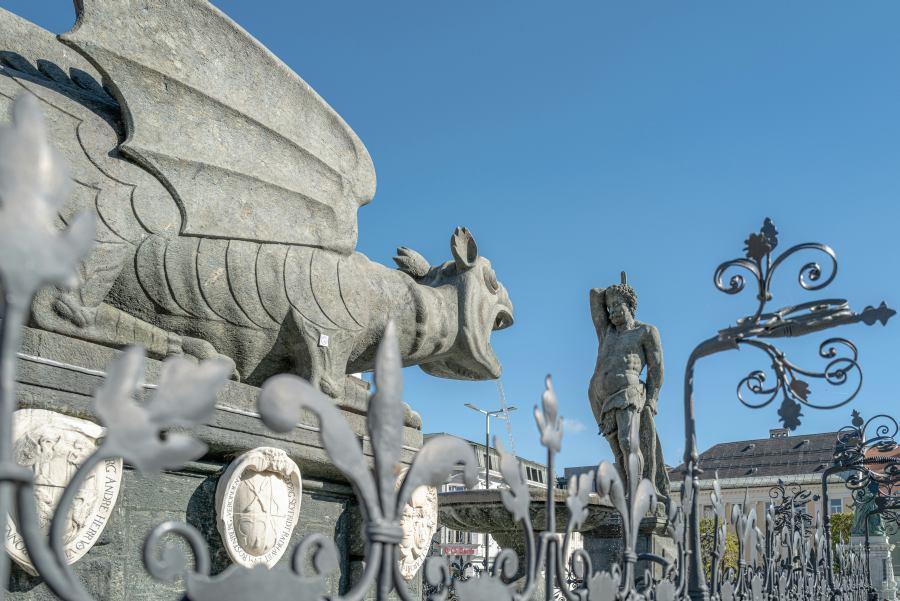
Lindwurm Statue (Lindwurmbrunnen)
The city’s symbol and most photographed artwork is the monumental dragon statue standing opposite the New Square, which commemorates the medieval Klagenfurt legend. According to the 16th-century tale, a dragon once dwelt in the region, keeping the local inhabitants in terror until a brave knight defeated the monster.
The statue was cast in bronze in 1590 based on Ulrich Vogelsang’s creation, originally using the head of an older artwork. The six-meter-high creature rises from the fountain’s central basin with a fearsome gaping mouth, serpentine body, and wings, protected by an iron railing around it.
According to legend, the city’s name also derives from this dragon (Lindwurm) and the ford (Furt) crossing the marshy area. The sculpture group also includes a Hercules statue added to the composition in 1636, with the mythological hero watching the monster.
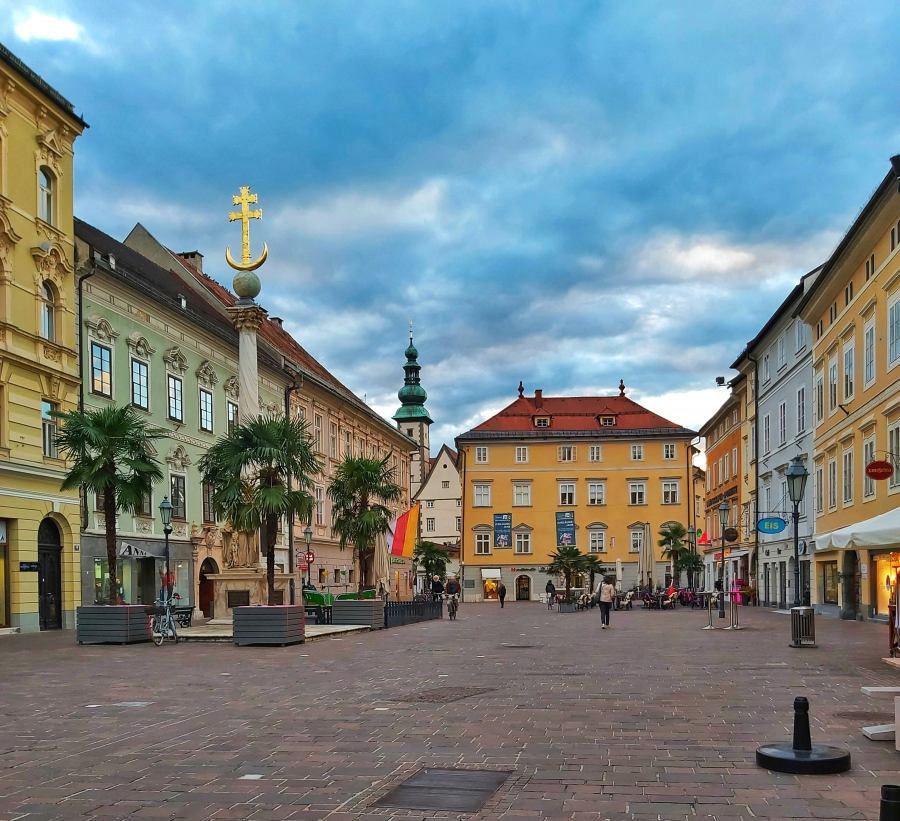
Neuer Platz
The city’s central and largest square has formed the heart of Klagenfurt since the 18th century, where the pulse of urban life can be felt most strongly. The world-famous Lindwurm statue is located in the southern part of the square, surrounded by baroque and neoclassical buildings, where locals and tourists alike enjoy meeting.
The colorful-fronted houses surrounding the square host cafés, restaurants, and shops. The Trinity Column (Dreifaltigkeitssäule) at the northern end of the square was built in 1680 to commemorate the end of the plague. Markets and cultural events are regularly held in the square, and during Christmas time, a traditional Advent market sets up here.
It’s an excellent starting point for exploring the city center, as the main attractions of the historic quarter are easily accessible from here. In the early morning hours, it’s particularly atmospheric to have coffee at one of the terrace cafés in the still-quiet square as the city comes alive around you.
Alter Platz
The city’s oldest and most beautiful square, which formed the center of the medieval town core. The elongated square, established in the 13th century, is lined on both sides by Renaissance and Baroque townhouses, many of which preserve 16th-17th century fresco decorations on their facades.
The square’s defining element is the Old Town Hall (Altes Rathaus), built around 1650, which still attracts attention with its impressive baroque facade. In the middle section of the square, the three-story Renaissance building with courtyards, the „Haus zur Goldenen Gans” (Golden Goose House), is particularly noteworthy, with its inner courtyard and arcades offering a fairytale-like sight.
Today it’s a pedestrian zone where elegant boutiques, galleries, and traditional cafés await visitors. The Trinity Column at the southern end of the square is an additional baroque ornament to the environment. In summer, the terraces in front of the buildings fill with life, and street musicians often entertain passersby.
Cathedral (Domkirche St. Peter und Paul)
The city’s most important sacred monument, a Catholic cathedral converted from a 16th-century Protestant church, received cathedral status in 1787. The three-nave church, originally built between 1581-1591, combines Renaissance and early Baroque architectural elements, with a rather restrained and simple exterior.
The church’s true treasure is the interior space, which dazzles with its richly stuccoed ceiling, monumental main altar, and 18th-century frescoes by Daniel Gran. The main altar in the sanctuary dates from 1752 and depicts the martyrdom of St. Paul of Sárvár. The church’s side chapels boast valuable baroque altars and numerous art treasures.
A special feature of the church is that Giuseppe Bonomo painted magnificent ceiling frescoes here in 1725, depicting biblical scenes. The imposing Diocesan Museum (Diözesanmuseum) on the southern side of the building is worth a separate visit for its ecclesiastical art treasures. From the cathedral tower, there’s a beautiful view over the city and to the nearby mountains.
Provincial Palace (Landhaus)
The impressive Renaissance complex housing Carinthia’s provincial parliament was built between 1574-1594 and is one of Klagenfurt’s most beautiful secular buildings. The palace’s northern facade is particularly impressive with its two-story arcaded courtyard, one of the finest Alpine examples of Italian Renaissance architecture.
The arcades of the inner courtyard rest on Tuscan and Ionic columns, with walls decorated by numerous coats of arms and stucco ornaments. The building’s most important hall is the Great Hall (Grosser Wappensaal), whose ceiling is decorated with 665 Carinthian noble family coats of arms and hosts representative events.
Joseph Ferdinand Fromiller’s ceiling frescoes from the 1740s are the building’s special art treasures, depicting Carinthia’s history in allegorical scenes. The Landhaus is still a functioning government building but can be visited through guided tours. The area in front of the building is particularly enchanting in autumn when the trees bathe the surroundings in golden colors.
City Parish Church Tower (Stadtpfarrturm)
The city’s highest point and one of its most famous attractions is the independent 91-meter-high bell tower next to the cathedral, built between 1592 and 1604. The late Renaissance-style tower was originally constructed as a standalone structure and was never organically connected to the adjacent Holy Church.
From the viewing terrace inside, a 360-degree panorama unfolds before the visitor: on clear days, you can see all the way to the Karawanks mountain range, Wörthersee, and all of the city’s landmarks. Climbing the 265 steps leading to the tower requires some effort, but the view amply rewards it.
In the middle of the tower is the bell chamber called the Silent Towers (Stummen Türme), where seven historic bells can be seen. The onion dome at the top of the tower was added to the building in the 18th century. Opening hours depend on the season; in summer it can be visited for longer periods, and there’s an admission fee to reach the viewing platform.
Europapark
The nearly 22-hectare city park stretching along the shore of Wörthersee is one of the most popular recreational and leisure areas in Klagenfurt. Created in the late 19th century and continuously developed since, it now welcomes families and sports enthusiasts with modern playgrounds, sports fields, and rest areas.
In addition to Minimundus, the area includes Reptilienzoo Happ, where nearly 1,000 reptiles and amphibians can be admired, as well as a beach bathing area directly on the lakeshore. The walking paths crossing the park are ideal for jogging or cycling.
In the northern part of the park is the famous Planetarium, which offers a modern technology-equipped observatory and interactive exhibitions. In summer, the park hosts various cultural events and concerts, while in autumn the colorful foliage makes the environment special.
Minimundus
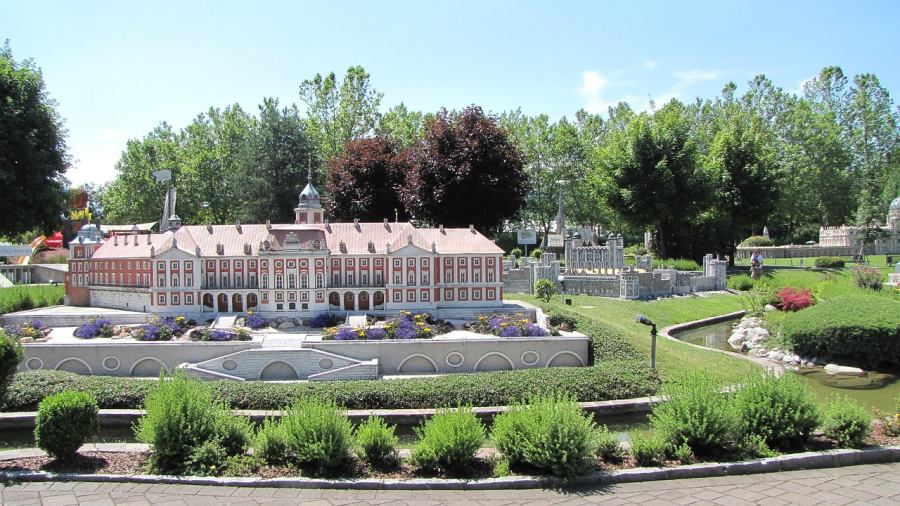
This unique open-air museum showcasing miniature versions of the world’s architectural wonders has welcomed visitors on the shores of Wörthersee since 1958. The park features more than 150 models, all faithful replicas at a 1:25 scale of the world’s most famous buildings, monuments, and technical marvels.
Hours can be spent walking among the tiny masterpieces on the approximately 26,000 square meter site: here you can see New York‘s Statue of Liberty, Paris‘ Eiffel Tower, India‘s Taj Mahal, the Sydney Opera House, or Rome‘s St. Peter’s Basilica. The execution of the models is extremely detailed, with hundreds of thousands of tiny elements composing each structure.
The park’s special feature is that every building was made from original materials, and the construction time for individual models could take several years. Minimundus was founded for a charitable purpose: proceeds are still used today to support children with disabilities. Visitors also encounter interactive elements, such as some railway models that actually operate.
Viktring Cistercian Monastery (Stift Viktring)
Located about 6 kilometers southwest of the city, the former Cistercian abbey is one of Carinthia’s most significant medieval monuments, founded in 1142. The monastery church is a monument of European significance due to its Gothic architecture and especially the fresco cycle created around 1400.
The frescoes covering the walls of the church’s sanctuary and nave are considered the site’s most valuable treasure: they rank among the most significant medieval wall paintings in the Alpine region, depicting biblical scenes in exceptionally fine execution. The freshness of the colors and wealth of detail remains impressive even after more than 600 years.
The monastery complex was dissolved by Joseph II in 1786, most of its buildings were demolished, but the church survived and now functions as a parish church. The former monastery building next to it now houses a museum presenting the history of the Cistercian order and the region’s ecclesiastical history. The church can be visited by prior arrangement or during worship services; the sight of the frescoes alone makes the trip worthwhile.
Carinthian Provincial Museum (Landesmuseum Kärnten)
The museum presenting the province’s history, culture, and natural treasures is one of Klagenfurt’s oldest cultural institutions, founded in 1844. The institution’s modern building, renovated in 2020, is located in the historic center and offers exhibition spaces equipped with the most modern museum technology.
The museum’s permanent exhibition presents Carinthia’s history from the Stone Age to the present day: archaeological finds, ethnographic collections, historical documents, and artworks guide visitors through the millennia. Particularly valuable are the Roman-era finds documenting the region’s significance in the province of Noricum, as well as the medieval ecclesiastical art collection.
The natural science section reveals Carinthia’s unique geological and biological world: the mineral treasures of the mountains, Alpine flora and fauna are all featured. A separate section deals with the Wörthersee ecosystem and the area’s protected natural values. The museum’s temporary exhibitions always address current topics and make visits more enjoyable for all three generations with interactive elements and digital installations.
All information can be found here!
Carinthian Museum of Modern Art (Museum Moderner Kunst Kärnten)
An important institution in the city’s cultural life has been operating since 2003 in the historic city center, in a renovated building. The museum houses Carinthia and Southern Austria’s most significant modern and contemporary art collection, numbering more than 3,000 artworks.
The collection focuses on 20th and 21st-century art: paintings, sculptures, graphic works, photographs, and video art pieces can all be found here. Special attention is given to works by Austrian Expressionists and modern-era works by local Carinthian artists. Works by Maria Lassnig, Arnulf Rainer, and other Austrian art luminaries are also included in the collection.
The museum organizes 6-8 temporary exhibitions annually, featuring both international and regional artists. The building’s modern exhibition spaces are ideal for presenting contemporary art, with interactive elements and multimedia installations particularly attracting younger audiences. The museum also includes a museum shop and café.
All information can be found here!
Klagenfurt weather: when is the best time to visit?
Klagenfurt has a temperate continental climate, influenced by both the proximity of the Alps and the presence of Wörthersee. Four distinct seasons alternate in the city, each with special atmosphere and program possibilities. Due to the lake’s proximity, summer temperatures become more pleasant, while in winter, cold air arriving from the mountains determines the weather.
Spring (March–May):
The spring period is variable; snow showers can still occur in March, but by the end of April, temperatures generally settle around 15-18 degrees Celsius. May is already pleasant, often with values above 20 degrees, when nature blooms in full splendor. Precipitation is moderate, and the number of sunny hours gradually increases.
Summer (June–August):
Summer months are warm but not too hot: daytime temperatures generally range between 24-28 degrees Celsius, rarely exceeding 30 degrees. Wörthersee’s water warms up to 26-28 degrees, providing ideal beach weather. In July and August, brief showers and thunderstorms can be expected occasionally, but these generally pass quickly.
Autumn (September–November):
September still counts as a pleasant late summer season with daytime temperatures of 20-23 degrees Celsius. From early October, days gradually cool, and rainy periods become more frequent. November is already cold, but the autumn colors of the mountain region are particularly spectacular, and the number of tourist groups significantly decreases.
Winter (December–February):
Winter months are cold, with temperatures frequently dropping below freezing, especially at night. Daytime temperatures typically range between -2 and +4 degrees Celsius. Snowfall occurs but is not very frequent; thick snow cover is more characteristic of the surrounding mountains. The city’s Christmas market and winter atmosphere attract many visitors.
Best time to travel Klagenfurt:
The best period to visit Klagenfurt runs from late May to early September, when the city and Wörthersee are most attractive. June, July, and August are the ideal beach months, when the water is pleasantly warm and sunshine is abundant – you can expect 8-10 hours of sunshine daily. During this peak season, it’s worth booking accommodation in advance. For those who want to avoid crowds but still visit in pleasant weather, late May or early September is a perfect choice: temperatures range around 20-25 degrees Celsius, and attractions can be viewed more peacefully. For active nature lovers, late September and early October can also be excellent, when autumn foliage creates a special atmosphere and hiking trails are less crowded.