
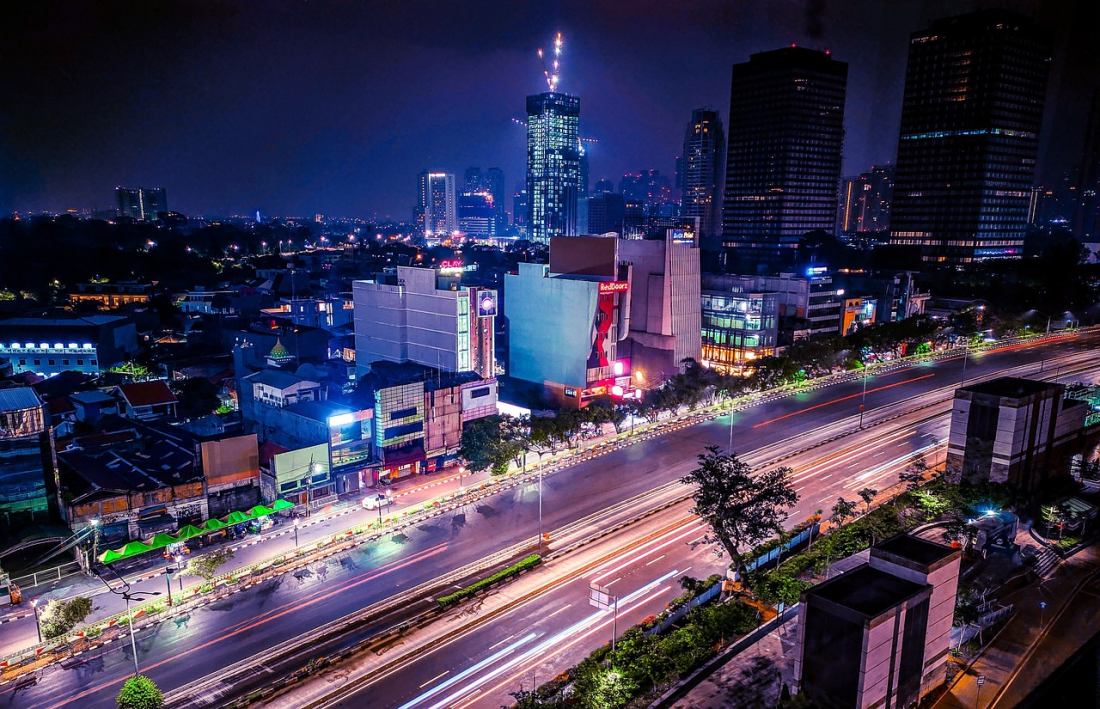
Jakarta, Indonesia’s de facto capital, is a unique blend of modern metropolitan life and tropical exoticism.
The metropolis of over 10 million inhabitants is also one of Southeast Asia’s most dynamically developing centers, where reminders of the Dutch colonial past are surrounded by futuristic skyscrapers. The city’s character is defined by constant change and diversity.
Table of Contents
Jakarta attractions
National Monument (Monas)
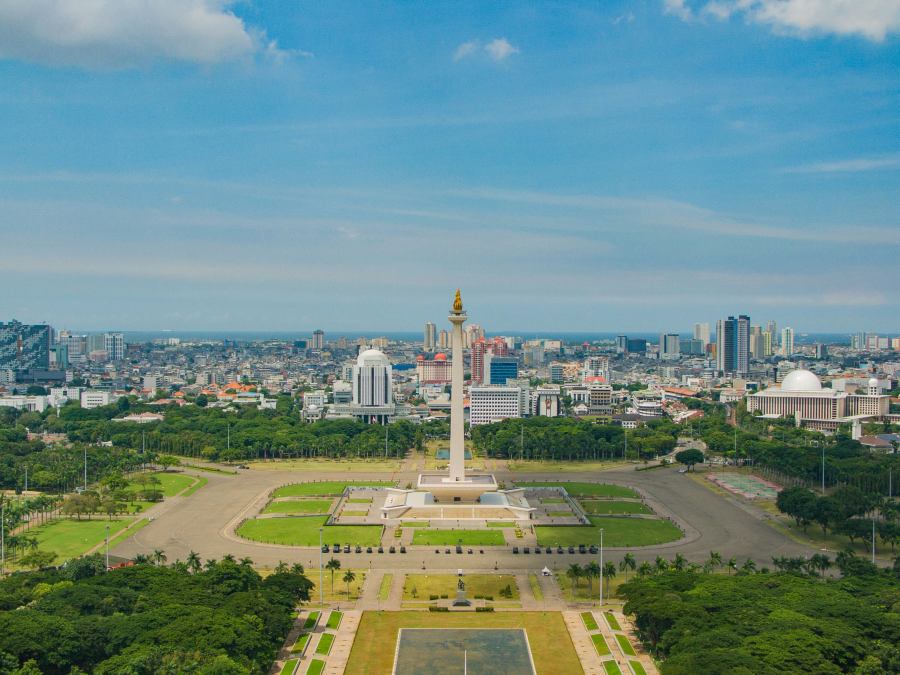
The 137-meter-tall monument is Jakarta’s most recognizable symbol, built in memory of Indonesia’s independence struggle. The obelisk, completed between 1961 and 1975, is topped with a flame made of 35 kilograms of gold, symbolizing the nation’s desire for freedom. President Sukarno envisioned this monumental structure, which rises in the center of Merdeka Square.
The National Historical Museum is housed in its base, where dioramas present turning points in Indonesian history. Visitors can take an elevator to the observation deck, which offers an unparalleled panorama of the entire Jakarta area. On clear days, everything from the sea to the mountains is visible from here.
The surrounding Merdeka Square, with its 1 square kilometer area, is one of the largest public parks in the world. Deer and fawns roam freely in the park around the monument, providing an unusual sight in the urban environment.
Kota Tua (Old Town)
The historic Batavia quarter founded by the Dutch has preserved a significant portion of its 17th-18th century building stock. The area around Fatahillah Square was once the Southeast Asian headquarters of the Dutch East India Company, and VOC traders directed their empire’s business from here. The characteristic Dutch colonial architecture – brick walls, tiled roofs, tall windows – still defines the area’s character today.
The specially named Café Batavia, a legendary coffee house, has been operating in unchanged form since 1805, where guests can enjoy their coffee among furniture and antique objects evoking the atmosphere of past centuries. The area is filled with galleries, antique shops, and local craft stores, walking among which takes you on a time journey to the colonial era.
On weekends, locals flood Fatahillah Square with colorful bicycles that can be rented, and various street performances and puppet shows add color to the program for children. The old town’s port, Sunda Kelapa, still operates today, where hundreds of traditional phinisi sailing ships dock loaded with spices and goods.
Istiqlal Mosque
The largest mosque in the Southeast Asian region opened in 1978 and can accommodate 120,000 worshippers at once. The modern architectural style prioritizes functionality: its massive central dome is 45 meters in diameter and supported by twelve pillars, symbolizing Indonesia’s twelve islands and the month of Muhammad’s birth. A view of the city is available from the 90-meter-tall minaret.
Christian architect Friedrich Silaban designed the mosque, which has become a symbol of Indonesian religious tolerance. The building, located near the Monas, is named „independence”, referring to the country’s liberation. Its interior is monumental: a 2-ton chandelier hangs in the center of the main prayer hall, a gift to the mosque from Morocco.
Non-Muslims can also visit outside prayer times, though appropriate dress is mandatory. Guided tours are available for visitors, during which they can learn about the mosque’s architectural features as well as the basics of the Islamic faith. Pleasant walkways can be found in the surrounding park, and fountains offer refreshment on hot days.
Selamat Datang Monument
One of Jakarta’s most famous city symbols, located in the middle of the Bundaran HI roundabout.
Unveiled in 1962 on the occasion of the Asian Games, the purpose of this sculpture group was to welcome guests arriving in Indonesia. Its name means „welcome”. The bronze figures, created by sculptor Edhi Sunarso, depict a waving man and a woman holding a flower, symbolizing openness and hospitality.
Standing on a pedestal approximately 30 meters high, the monument is particularly spectacular when illuminated at night and is an important meeting place for the city’s residents and a popular photo opportunity for tourists.

Jakarta Cathedral
The neo-Gothic Catholic cathedral, named after the Assumption of Mary, was completed in 1901 based on Dutch architects’ plans.
With its white facade and three towers, it is one of Jakarta’s most beautiful colonial-era religious buildings, standing opposite the Istiqlal Mosque, symbolizing Indonesia’s religious pluralism. The building’s dimensions are impressive: 60 meters long, 30 meters wide, with towers reaching 60 meters high.
Its interior combines classic neo-Gothic elements with tropical adjustments: soaring vaults, stained glass windows, and a carved altar characterize it. The 19th-century organ arrived from Holland and is still regularly used during mass. Each chapel behind the sanctuary is dedicated to a different saint.
Taman Mini Indonesia Indah
The „Mini Indonesia” cultural park, opened in 1975, was the dream of President Suharto’s wife to showcase the country’s incredible diversity in one place.
On the 150-hectare site, traditional houses and pavilions representing all 34 provinces of Indonesia stand, which are authentic replicas of the original structures. Each pavilion displays its own region’s handicraft products, traditional clothing, and distinctive architecture.
In the center of the park is a lake containing miniature versions of Indonesia’s islands in their exact geographical positions. A dragon bridge connects the islands, and visitors can zip-line across the lake. The area includes several museums: the Indonesian Museum, the Textile Museum, and the Transportation Museum alike.
The park also features an IMAX cinema, bird park, orchid garden, and a traditional market where handicraft products can be purchased. On weekends, cultural performances are held, where dance and music productions bring to life the traditions of different regions. The Keong Emas (Golden Snail) structure is a special dome-shaped theater where multimedia performances showcase Indonesian history. At least a full day is needed to explore the park.
Ragunan Zoo
Jakarta’s largest zoo opened in 1864 and is home to nearly 3,000 animals and 270 species on 140 hectares.
The institution founded by the Dutch is one of Southeast Asia’s oldest zoos, particularly proud of its collection of Indonesian animals. Komodo dragons, Sumatran tigers, orangutans, and Javan rhinoceroses can be observed in enclosures imitating their natural environments.
The Schmutzer Primate Center opened in 2002 and operates as one of the world’s most modern ape houses. The building provides habitat for endangered primates, including gorillas and chimpanzees, in a closed system. Visitors can observe the animals up close through a glass corridor without disturbing them. The center plays an active role in conservation and species preservation.
Ancol Dreamland
The beachfront amusement park has been entertaining families since 1966 on the shore of Jakarta Bay. The 552-hectare complex is one of Southeast Asia’s largest integrated tourist centers, offering unparalleled entertainment opportunities in one place. Four main theme parks operate on the park grounds: Dunia Fantasi (Fantasy World), Atlantis Water Adventure, Ocean Dream Samudra, and the Gelanggang Samudra dolphinarium.
Dunia Fantasi welcomes adventure-seeking visitors with over 40 rides, including roller coasters, a Ferris wheel, and family adventures. Atlantis Water Adventure’s huge slide park and pool complex is tropical-themed, surrounded by lush vegetation. Ocean Dream Samudra’s dolphin shows and marine animal exhibitions are particularly popular among children.
Beyond entertainment, the complex includes a beach section, hotels, restaurants, and an art market. Boats depart from the harbor to the nearby Thousand Islands. In the evenings, live musical productions make the program colorful at the Carnaval Beach Club, and on weekends, fireworks close out the day.
Grand Indonesia Mall
The shopping center, opened in 2007, is Jakarta’s largest and most modern shopping complex.
The giant, located near the Hotel Indonesia roundabout and consisting of two buildings, has a total of 250,000 square meters of retail space, where more than 300 shops, restaurants, and entertainment venues operate.
The East Mall offers a premium shopping experience, while the West Mall focuses on entertainment and gastronomy. On the building’s roof is an incredibly large IMAX cinema and multi-screen Blitz multiplex showing the latest Hollywood and Asian films. On the third floor, the food court’s tables serve several thousand guests at once, and here you can taste Indonesia’s entire gastronomic palette.
Sunda Kelapa Port
The historic port has served trade for over 500 years and still operates as a traditional working port.
Wooden phinisi sailing ships – the traditional vessel type of the Bugis people – still arrive loaded with goods from Kalimantan, Sulawesi, and other Indonesian islands. Port workers manually unload spices, wood, cement, and other goods from the ships, exactly as they did centuries ago.
The port is within walking distance of Kota Tua, and the best time to visit is in the morning hours when life is most active. Walking along the docks, you can admire up close the beautifully carved and painted ships, some of which may be 100 years old. Watching the work processes is fascinating: lighter crews pass the cargo to each other in chains.
Near the port is the Bahari Museum, housed in a former VOC warehouse building. The museum presents Jakarta’s maritime history, from old maps to ship models. Small eateries along the port promenade offer fresh seafood, and locals like to watch the sunset here. The area is not very touristy and gives an authentic picture of everyday Jakarta life.
Taman Suropati Park
Located in the Menteng colonial residential district, the park was designed by Dutch architects in the 1920s. The 16,000 square meter green oasis is named after Untung Suropati, a Javanese hero who fought against the Dutch. The park’s fenced, well-maintained area has a circular layout, with a modern fountain at its center that lights up with colored LED lights in the evenings.
The park’s defining characteristic elements are the monumental statues representing ASEAN member countries, erected in 1980. Each statue symbolizes a different Southeast Asian culture in various artistic styles. Free concerts are regularly held in the park, and aerobics classes take place on Sunday mornings that anyone can join.
The surrounding Menteng district is one of Jakarta’s most elegant neighborhoods, where beautiful villas from the Dutch colonial era line wide, tree-lined streets. Many foreign embassies are located nearby. The park is a perfect place for a peaceful walk and is surrounded by cafés and small restaurants.
Pasar Baru
Founded in the 1820s, the New Market is one of Jakarta’s oldest and most authentic shopping places.
Established during the Dutch colonial period, the market initially served the European community, but today it is a favorite destination for both locals and tourists. Densely packed shops along the long street offer textiles, shoes, jewelry, electronics, and all kinds of household items at affordable prices.
The market’s specialty is that Jakarta’s most famous food vendors and traditional confectioneries can be found here. Kue Balok pastries, still made according to the original recipe, are legendary among the city’s residents. Toko Merah, operating since the Dutch colonial period, sells old fashion items and Chinese porcelain in the same building where it has been present since 1730.
The built environment has preserved its colonial character: narrow streets, colorful facades, iron balconies, and antique shops characterize it. The northern part of the market belongs to textiles and tailors who sew clothes with short deadlines. The southern section deals with food and spices, where visitors are greeted by a dazzle of scents and colors. Bargaining is mandatory, it’s part of the local culture.
Best museums in Jakarta
National Museum
The institution, opened in 1868, is Indonesia’s largest and oldest museum.
Commonly known as the Elephant House, thanks to the bronze elephant standing in front of the entrance, which was gifted in 1871 by the King of Thailand. The neoclassical-style white building’s collection contains 140,000 objects presenting Indonesian history and culture from prehistoric times to the present day.
The ground floor exhibitions contain prehistoric finds, bronze, gold, and ceramic objects. The famous gold collection contains more than 200 pieces from the kingdoms of Java and Sumatra, including the 9th-century gold objects of the Wonoboyo treasure. The upper galleries house ethnographic exhibitions where traditional clothing, dwellings, and weapons of Indonesia’s various peoples can be explored.
The textile room boasts a collection of Indonesia’s finest batik and ikat woven fabrics. The historical section includes prehistoric stone tools, Sanskrit inscribed stones, and a room full of Hindu-Buddhist statues. Copies of Java Man fossils can also be viewed here. Temporary exhibitions and educational programs also take place in its event halls. Huge stone statues – Ganesha, Buddha, Hindu deities – line the lawn in the garden.
Museum Bank Indonesia
The museum, opened in 2006, is housed in the stunning neoclassical building of the Dutch colonial central bank, built in 1828. The building’s facade is decorated with Corinthian columns, and its inner courtyard is covered with a glass dome that illuminates modern galleries.
The museum presents Indonesia’s financial and economic history through interactive exhibitions. The exhibition spaces span three floors. The first floor showcases the colonial era’s banking system and the various currencies that were in circulation under Dutch rule. The second level discusses the development of the post-independence Indonesian financial system, from the inflation of the 1960s to the 1997 Asian financial crisis. On the third floor, visitors can learn about economics through interactive games.
One of its most valuable parts is the gold artifact collection, which preserves gold and silver coins issued in different eras of the Indonesian rupiah. In a separate room, General Van Heutsz’s original desk and old safes can be viewed.
Museum Wayang (Puppet Museum)
The 1912 building on Fatahillah Square was originally a Dutch church, which opened its doors as a museum in 1975. The collection preserves more than 4,000 puppets from Indonesia and various parts of the world. The wayang tradition – traditional puppet theater – was added to the UNESCO World Heritage list in 2003 as a fundamental part of Indonesia’s cultural identity.
The museum’s exhibition showcases different types of puppets: wayang kulit (leather puppet), wayang golek (wooden puppet), wayang wong (live actors), wayang beber (scroll painting). The oldest pieces date from 1500, while modern experimental puppets can also be viewed. Behind each puppet tradition explains stories from the Indian epics Ramayana and Mahabharata.
Free wayang performances are held on Sunday mornings in the museum courtyard, where you can follow the work of a dalang (puppet master) live. The master handles all the puppets alone, gives voice to every character, and directs the gamelan orchestra as well. Miniature puppets and related handicraft products can be purchased in the museum shop. The building’s colonial architecture is itself an attraction, with its columned portico being a masterpiece of Dutch architecture.
Jakarta weather: when is the best time to travel?
Jakarta has a tropical monsoon climate, which can be divided into two main seasons: the rainy and dry periods. Due to the proximity of the equator, the temperature remains relatively constant throughout the year, ranging between 26-30 degrees Celsius, without significant seasonal fluctuations. Humidity is extremely high, often reaching 75-85%, which makes the heat much more intense. Nights don’t bring significant relief either, as the temperature rarely drops below 24 degrees.
Rainy Season (November–March):
This period is characterized by heavy, often afternoon and evening showers that can last for hours. In December and January, precipitation can reach 300-400 mm per month. Rainfall is often accompanied by thunderstorms and sudden floods, which make transportation in the city difficult. However, the wet period also means greener vegetation and somewhat cleaner air.
Dry Season (April–October):
Precipitation decreases significantly during this period, especially during July and August, when the weather can remain rainless for entire weeks. The number of sunny hours increases, although occasional showers can occur even then. During the dry months, air pollution often worsens since less rain washes particles from the atmosphere.
Best time to travel Jakarta:
The ideal period for visiting Jakarta is between May and September, when the dry season prevails but hasn’t yet reached its hottest peak. July and August are particularly popular among tourists, as rainfall probability is minimal during these months and city touring is more comfortable. The transitional periods of April and October can also be good, as the weather isn’t too rainy yet, but there are fewer tourists. Swimming at the beachfront Ancol area is also most pleasant during these months, as the sea is calmer and the number of sunny hours is at its maximum.
Frequently Asked Questions about Jakarta
Jakarta is located in the Western Indonesia Time Zone (WIB, UTC+7).
Indonesia’s official language is Indonesian (Bahasa Indonesia), which is used everywhere in Jakarta. English is generally well understood by the younger generation, in hotels, shopping malls, and by tourism service providers, but it is less commonly spoken in local markets and small shops.
The official currency of Jakarta is the Indonesian rupiah (IDR). Cash is still widely used, especially in small shops and by street vendors. Larger stores, restaurants, and hotels accept bank cards and mobile payments, but it is advisable to always carry some cash with you. Here is a currency calculator.
Jakarta’s main airport is Soekarno–Hatta International Airport (CGK). The fastest way to reach the city center is the Airport Rail Link, which provides a direct connection to the central railway station. Buses and official taxis are also available.
Traffic in Jakarta is extremely congested, so the TransJakarta bus rapid transit system and the newly built MRT and LRT lines are the most reliable means of transportation. Taxis and app-based services (Grab, Gojek) are convenient but can be slow during peak hours.
Jakarta is generally safe for tourists, especially in central and business districts. Pickpocketing may occur in crowded areas, so it is advisable to keep an eye on your valuables. At night, it is best to avoid less familiar neighborhoods and use official transportation options.
Central Jakarta is an ideal choice for tourists, as many attractions and good transport connections are located there. Menteng is a quiet, green residential area, while Sudirman and Thamrin offer modern hotels and shopping centers. South Jakarta is also popular for its restaurants and cafés.
Monas (National Monument): The symbol of Jakarta, with an observation deck overlooking the city.
Istiqlal Mosque: The largest mosque in Southeast Asia.
Jakarta Old Town (Kota Tua): Dutch colonial buildings and museums.
National Museum: Showcasing Indonesia’s history and culture.
Ancol Dreamland: A seaside entertainment and leisure complex.
Jakarta’s cuisine is extremely diverse. Must-try dishes include nasi goreng (fried rice), satay (grilled meat skewers with peanut sauce), rendang (spicy beef), soto betawi (coconut milk-based soup), and gado-gado, a local specialty made of vegetables with peanut sauce.