
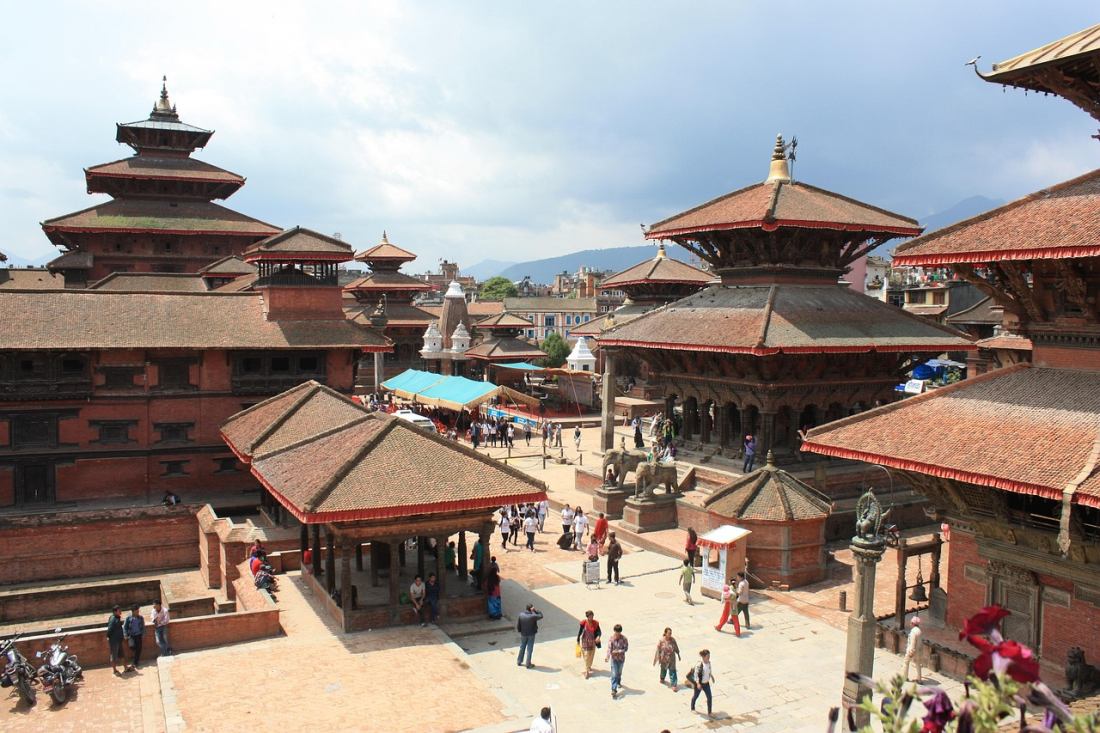
Kathmandu is a religious center preserving millennia of history, where a multitude of Hindu temples and Buddhist stupas surround the busy streets.
The capital and largest city of Nepal is located at the foot of the Himalayas, in a valley situated at 1,350 meters altitude. Kathmandu is simultaneously home to a collection of UNESCO World Heritage monuments, spiritual pilgrimage sites, and the starting point for Himalayan expeditions.
Table of Contents
Kathmandu attractions
Boudhanath Stupa
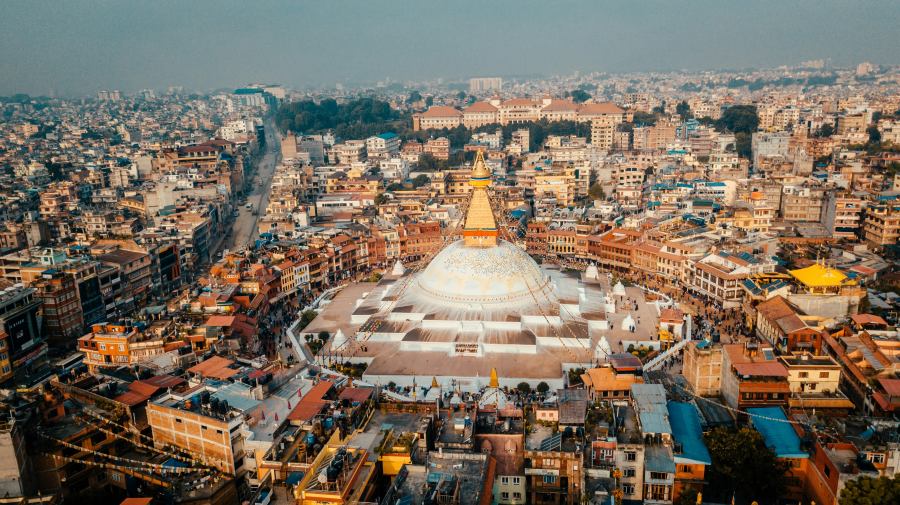
One of the world’s largest Buddhist stupas, with its hemispherical 36-meter-high structure, is one of Kathmandu’s most recognizable symbols. The sanctuary, founded in the 5th century, had its central dome section renovated after the 2015 earthquake restoration, dipped in white lime, while its top is crowned with a golden tower bearing Buddha’s all-seeing eyes.
Around the stupa, Tibetan Buddhist monasteries and monastic schools line up, which have made the place the spiritual center of the Tibetan diaspora since the 1950s. Morning and evening, hundreds of pilgrims circle the monument clockwise while turning their prayer wheels and chanting mantras.
The area is surrounded by atmospheric cafes and Tibetan handicraft shops, where thangkas, prayer flags, and Tibetan silver jewelry are available. The stupa is particularly stunning at dusk, when the sunset light turns the white dome golden, and the flickering light of a hundred oil lamps from surrounding buildings illuminates the evening prayers.
Pashupatinath Temple
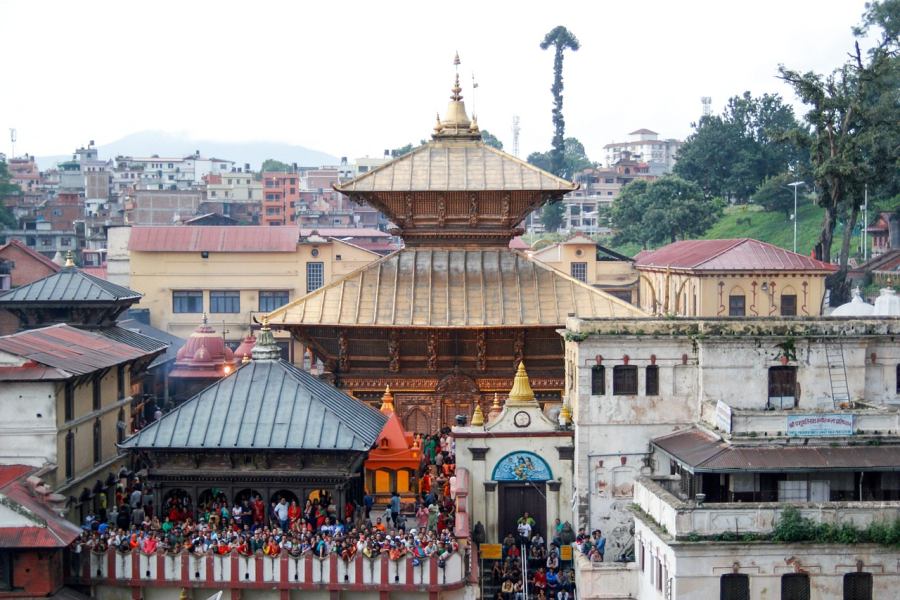
The Hindu temple complex standing on the banks of the Bagmati River is among South Asia’s most important Shiva sanctuaries, visited by more than one million pilgrims annually. The main temple is a pagoda-style building from the 15th century, decorated with a gilded copper roof, which only Hindus may enter, but the rest of the complex is open to all visitors.
At the burning ghats along the riverbank, Hindu funeral ceremonies take place continuously, where bodies are cremated on ritual fires, and then the ashes are scattered into the sacred river. The sight deeply touches every visitor, providing insight into the Hindu philosophy that equally honors life and death.
The temple complex contains more than 500 smaller shrines, sadhus (wandering monks) live in caves, and freely roaming monkeys populate the area. During the Maha Shivaratri festival, around February-March, hundreds of thousands of pilgrims make their pilgrimage here in honor of Shiva, providing a special colorful and spiritual experience.
Swayambhunath
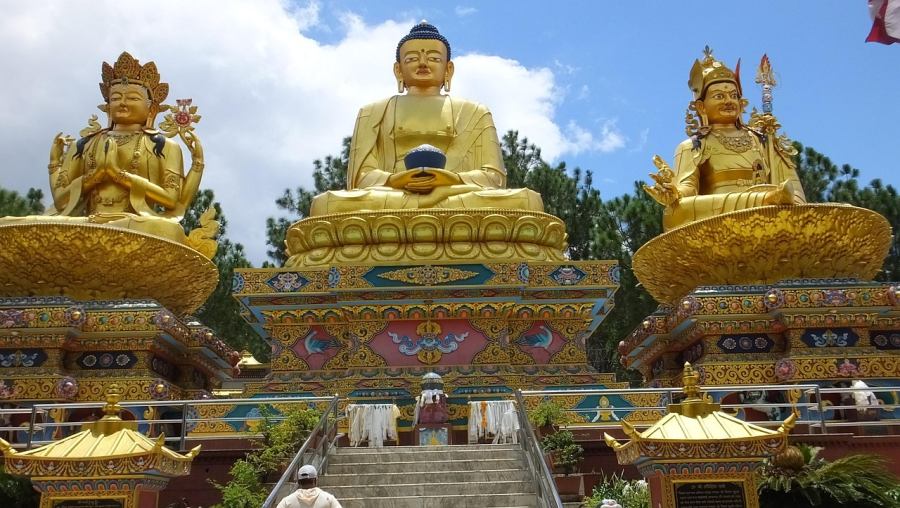
The 2,500-year-old Buddhist stupa rising on a 365-step staircase atop the western part of the city is the oldest religious site in the Kathmandu Valley. Above the white dome rises a gilded tower on which Buddha’s eyes, watching in all directions, are painted, expressing omnipresent awareness and wisdom.
The site is called the Monkey Temple because of the sacred monkey troops living in the area, which according to legend originated from the hair of the bodhisattva Manjushri. The complex surrounding the stupa contains Tibetan and Newari Buddhist temples, Hindu shrines, and monastic cells, reflecting religious harmony.
From the hill, there is an unparalleled panorama of the Kathmandu Valley, which is particularly stunning in the early morning hours when the sun rises amid the monks’ prayer rituals. The area is decorated with thousands of prayer flags.
Dharahara Tower
One of Kathmandu’s most famous landmarks, which is a symbol of Nepal’s history and rebirth.
The original tower was built in 1832 by Prime Minister Bhimsen Thapa, and for a long time was the city’s tallest structure. From the white, slender tower, there was a stunning panorama of the Kathmandu Valley and the Himalayan ranges.
The Dharahara was severely damaged in the 1934 earthquake, then completely collapsed in the 2015 catastrophe. The tower, rebuilt with modern technology, now serves as both an observation point and a memorial site.
Durbar Square
The royal square in the city’s historic heart is the former palace complex of the Malla dynasty and Shah kings, containing more than 50 temples and monument buildings. The UNESCO World Heritage site consists of mostly pagoda-style structures built from wood and brick between the 12th-18th centuries, with extremely rich carvings and artistic decoration.
The square’s central elements include Hanuman Dhoka, the former royal palace, which now operates as a museum, and Kumari Bahal, the residence of the living goddess, the Kumari children. The Kumari is a young girl worshipped as a divine incarnation who occasionally appears at the palace window for visitors.
The 2015 earthquake caused significant damage to the square, several temples collapsed, but restoration work is ongoing. Around the square are bustling bazaars, handicraft shops, and local restaurants where traditional Newari cuisine can be tasted.
Thamel District
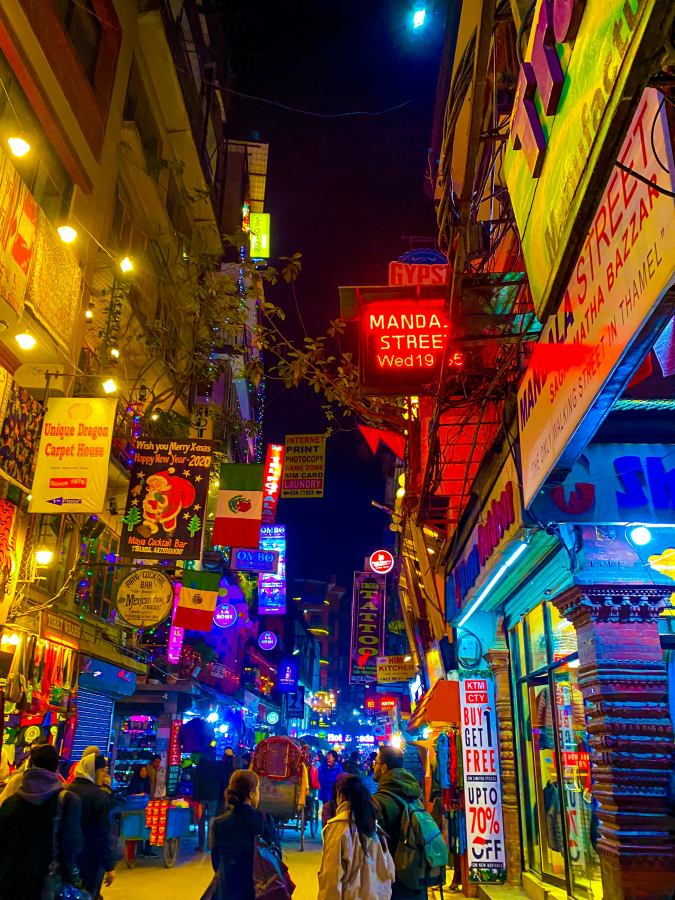
Kathmandu’s tourist center is a labyrinthine network of narrow streets lined with hotels, restaurants, shops, and travel agencies. Since the 1960s, this has been a legendary stop on the hippie trail, then became the starting point for Himalayan treks, attracting adventurers from all over the world.
The district is full of outdoor equipment stores where hiking boots, sleeping bags, and mountaineering equipment can be rented or purchased. On the streets, colorful Tibetan carpets, mandala paintings, Nepali handicrafts, and counterfeit hiking gear await shoppers, requiring bargaining and patience.
At night, the district boasts lively nightlife, with live music bars, rooftop terraces, and various international cuisine offerings. Thamel is an excellent place to organize Himalayan expeditions, with offices of experienced trek guides and Sherpa agencies also located here.
Patan Durbar Square
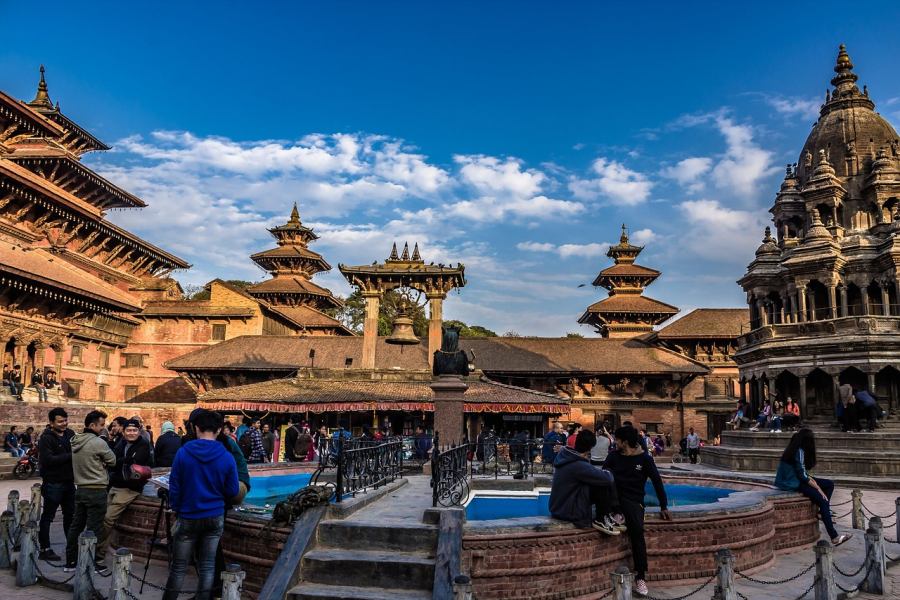
The historic center of Patan (or Lalitpur), located south of Kathmandu across the Bagmati River, is also a UNESCO World Heritage site showcasing the finest examples of Newari architecture. The square’s palace complex was the 16th-18th century residence of the Malla kings, which today contains museums arranged in three courtyards.
The Krishna Mandir temple opening onto the square was built entirely of stone in 1637, which is unusual among Nepali temples that are mostly made of wood and brick. Scenes from Hindu epics are carved on the building’s facade, with shikhara-style towers rising on the roof.
Patan is traditionally the city of craftsmen, especially the metalworkers who are famous for casting bronze and copper statues. Traditional workshops still operate around Durbar Square, where tourists can observe the masters at work. The museum on the eastern side of the square has a rich collection of Hindu and Buddhist artistic works.
Bhaktapur Durbar Square
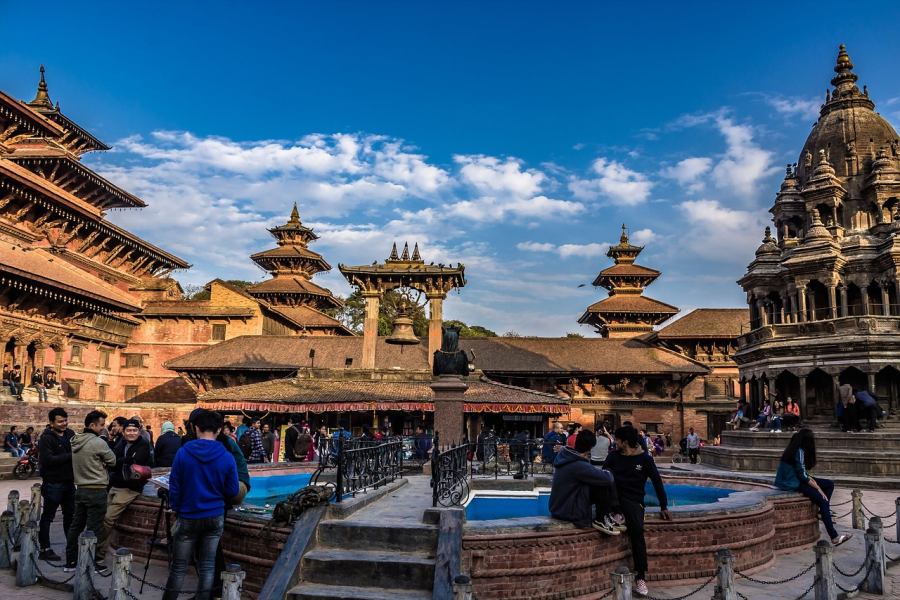
The third major royal square in the Kathmandu Valley is located in Bhaktapur, about 13 kilometers east of the capital. This is the best-preserved medieval city in the valley, where most of the 15th-18th century buildings have remained in their original form, with car-free streets and a traditional lifestyle.
The square’s most famous monument is the 55-Window Palace from 1427, whose carved wooden balcony is the pinnacle of Nepali woodworking. The nearby Golden Gate, a special drinking fountain above which a golden snake sculpture rises, was an important part of the city’s water supply for centuries.
Bhaktapur is famous for producing juju dhau (yogurt), served in clay pots, and for traditional pottery making. In the Potters’ Square, you can still see craftsmen hand-forming ceramics and drying them in the sun.
Garden of Dreams
The neoclassical-style garden on the edge of the Thamel district was created in the 1920s, commissioned by Field Marshal Kaiser Shumsher, who gained inspiration in Europe. The six-hectare area originally boasted six pavilions, of which three remain after restoration in the 2000s.
The garden evokes Victorian and Edwardian European parks with white pavilions, pergolas, waterfalls, and fountains. The inner space offers peaceful refuge from Kathmandu’s chaos, with manicured lawns, flower beds, and bird-populated areas where locals and tourists alike rest.
The garden was renovated by the Nepal-Austria restoration project in 2007, restoring its original splendor. The garden is also increasingly used as a venue for weddings and cultural events.
Skywalk Tower
One of the most modern attractions in Kathmandu, the Nepali capital, from where the view is perfect.
The glass-floored skywalk constructed at the top of the tower provides a special experience: visitors can literally walk above Kathmandu while a stunning panorama of the city and surrounding mountains unfolds before them.
The structure is a combination of tradition and modern engineering solutions and has become an important tourist attraction. The Skywalk Tower is not only an observation point but also a symbol of rebirth after the 2015 earthquake.
Kopan Monastery
The Tibetan Buddhist monastery located on a hillside north of the city was founded in 1969 by Lama Thubten Yeshe and Lama Zopa Rinpoche. The center following the Gelugpa tradition became internationally known for Buddhist courses and meditation retreats organized for Westerners.
More than 360 monks live and study in the monastery, conducting daily rituals, debates, and studies. The main building of the complex contains an ornately painted prayer hall, library, and stupa, from which there is a breathtaking view of the Kathmandu Valley and the more distant Himalayan peaks.
The monastery organizes one-month meditation courses in November and December, which provide an introduction to Tibetan Buddhist practices. Visitors can participate in daily morning prayers and walk around the stupa, where they can meditate while turning prayer wheels.
Asan Market Square
Kathmandu’s oldest and busiest market is located at the center of medieval trade routes, where traders between Tibet and India met for centuries. Around the small square, spice shops, fruit and vegetable stands, textile stores, and religious equipment vendors crowd together.
Opening onto the square is the Annapurna Temple, a place dedicated to the goddess of abundance, where locals make daily offerings with fruits and flowers. The market is especially lively in the morning when local women sell freshly brought vegetables and flowers in colorful heaps.
The surrounding labyrinth of alleys is bordered by traditional Newari houses, where three-story brick residential buildings are adorned with carved wooden windows and balconies. The market provides an authentic experience of Nepali daily life, where tourists rarely venture from the main tourist routes. The nearby Indra Chowk and Makhan Tole bazaars offer further opportunities to discover local culture.
Changu Narayan Temple
The Hindu temple standing on a hill on the eastern edge of the Kathmandu Valley is the oldest surviving monument in the valley, dating from the 5th century. The temple complex dedicated to the god Vishnu boasts finely carved stone columns and sculptures that are masterpieces of Licchavi dynasty art.
The inscription written on the column in front of the temple entrance is the oldest known Sanskrit inscription in Nepal, from 464, which records historical events and the deeds of the king of that time. The sculptures on the temple walls and courtyard depict Vishnu’s various incarnations, his bird Garuda, and other Hindu deities with extraordinary artistic execution.
The small village in the area, Changu, preserves the traditional Newari architectural style and way of life. From the hill, there is a beautiful panorama of the Kathmandu Valley and the Himalayan peaks in clear weather. Due to the place’s tranquility and historical significance, fewer tourists visit than the more central attractions, thus providing a more authentic experience.
Dakshinkali Temple
Located 22 kilometers south of central Kathmandu, in a forested gorge, the temple is the most important sanctuary dedicated to the goddess Kali in Nepal. The temple is especially popular among pilgrims every Tuesday and Saturday, when animal sacrifices are presented in honor of the multi-armed goddess.
The road leading to the temple passes through forested areas, making the place a natural sanctuary. The black stone goddess statue stands beside a small stream, where devotees sacrifice chickens, goats, and ducks, after which the meat is distributed among families and prepared for communal eating.
The spectacle is culturally extremely interesting but may be difficult for the sensitive-minded. The place provides insight into the tantric and shakti traditions of the Hindu religion, which is based on the worship of the feminine divine power, shakti.
Best museums in Kathmandu
Nepal National Museum
The country’s oldest museum near the Swayambhunath stupa opened in 1928 and comprehensively presents Nepal’s history, culture, and art. The building consists of three main parts: the historical building, the Buddhist art gallery, and the natural history building.
The historical section preserves royal objects from the Shah dynasty era, weapons, armor, and 18th-19th century artifacts. Particularly valuable are the traditional Nepali weapons, including various versions of the famous khukuri knives and decorated swords. The collection also contains coins, stamps, and documents from Nepal’s modern history.
The Buddhist art gallery displays bronze and copper statues, thangka paintings, and ritual objects from the 2nd century to the present day. The collection demonstrates the development of Tibetan, Newari, and other Buddhist artistic traditions. The natural history section presents Nepal’s rich flora and fauna with specimens, butterfly and insect collections, although this section is less maintained than the art sections.
Narayanhiti Royal Palace Museum
The former royal residence opened as a museum to the public in 2008, after the abolition of the monarchy. The palace building was built in 1970 in a modern style and gained tragic notoriety in 2001 when the royal family massacre occurred here.
In the museum’s 52 rooms, the royal families’ personal belongings, crowns, thrones, ceremonial clothing, and the palace’s furniture can be viewed. The building is modern but has retained Nepali and Eastern design elements, with marble floors, chandeliers, and luxury furnishings.
The institution provides special insight into Nepal’s modern history and the royal family’s life. Visitors can view the throne room where official ceremonies took place, and the banquet halls where guests at state dinners gathered. We can also take a leisurely walk in the garden surrounding the palace.
All information can be found here!
Nepal Art Museum
One of the important institutions of Kathmandu’s cultural life, which gives a comprehensive picture of the country’s rich artistic heritage.
The collection ranges from traditional Newari, Buddhist, and Hindu art monuments to modern Nepali works. Visitors can also admire paintings, sculptures, metal and wood carvings, as well as religious objects that have shaped Nepal’s visual culture for centuries.
Although not a large museum, its significance is greater: it contains the works of several generations of Nepali artists, contrasting modern styles with ancient themes.
All information can be found here!
Kathmandu weather: when is the best time to travel?
Kathmandu has a subtropical monsoon climate, moderated by its high elevation (1,350 meters). Three main seasons can be distinguished in the city: the dry season (October-May), the monsoon season (June-September), and the winter period (December-February), which is part of the dry season.
Dry Season (October-May):
This period is characterized by pleasant, sunny weather and clear skies, especially from October to April. Daytime temperatures are around 20-25°C, while at night they can drop to 2-10°C, especially in winter. The Himalayan peaks are most spectacular in clear weather during this time.
Monsoon Season (June-September):
During this period, the city is characterized by heavy rainfall, usually in the afternoons and evenings. Humidity is high, daytime temperatures are 25-30°C, which can be suffocating. The mountains are often shrouded in clouds, limiting visibility.
Winter Period (December-February):
This period is characterized by cold winter dawns and nights, when temperatures can drop close to 0°C at night. However, during the day it can warm up to 15-20°C in sunny weather, providing pleasant excursion opportunities.
Best time to travel Kathmandu:
October and November are considered the best travel period for visiting Kathmandu, when after the monsoon the air is crystal clear, daytime temperatures are pleasantly around 20-25°C, and the Himalayan panorama is stunning. From March to May, favorable weather can also be expected, although by April it’s already warmer, with temperatures reaching 28-30°C, and dusty air is more common in spring. For trekking and mountain hikes, the autumn months are ideal, while March-April is the time for rhododendron blooming in the higher regions.
Frequently Asked Questions about Kathmandu
Kathmandu is in Nepal’s time zone (NPT, UTC+5:45). This is a rare time zone with a 45-minute offset.
Nepal’s official language is Nepali, but English is surprisingly widely spoken in Kathmandu, especially in tourism. Staff in hotels, restaurants, travel agencies, and shops generally speak good English.
The official currency in Kathmandu is the Nepalese rupee (NPR). Cash is very widely used, especially in small shops, markets, and local restaurants. Credit cards are mainly accepted in hotels, better restaurants, and travel agencies. It’s a good idea to always carry some cash. Here is a currency exchange calculator.
Several plug types are used in Kathmandu, most commonly types C, D, and M. The standard voltage is 230 V, so most European devices can be used without any issues.
Kathmandu’s main airport is Tribhuvan International Airport (KTM), located relatively close to the city center. Public transport options are limited, so most travelers choose a taxi or a hotel transfer. Taxis are a fast and affordable option, but it’s recommended to agree on the price in advance.
Taxis are the most convenient means of transport for tourists in Kathmandu. Motorcycle taxis and local buses are also popular, but they can be crowded and difficult to navigate for first-time visitors. For short distances, walking is also a good option, especially around the Thamel area.
Kathmandu is generally a safe city for tourists. Violent crime is rare, but pickpocketing can occur in crowded areas. It’s advisable to keep an eye on your valuables, especially in markets and crowds, and to avoid deserted streets at night.
Most tourists choose the Thamel district, which is Kathmandu’s main tourist hub. It offers a wide range of accommodations, restaurants, shops, and travel agencies. Lazimpat is a quieter and more upscale area, while Patan (Lalitpur), with its cultural attractions and charming streets, is ideal for those seeking a more authentic experience.
Swayambhunath (Monkey Temple): An iconic stupa with stunning views over the city.
Boudhanath Stupa: One of the largest Buddhist stupas in the world.
Pashupatinath Temple: Nepal’s most sacred Hindu temple complex.
Kathmandu Durbar Square: A complex of royal palaces and historic temples.
Thamel District: The lively heart of the city with shops, streets, and local atmosphere.
Dal bhat: Lentil soup with rice, Nepal’s national dish.
Momo: Filled dumplings, steamed or fried, served with various sauces.
Thukpa: A hearty noodle soup of Tibetan origin.
Sel roti: A sweet, deep-fried rice flour ring.
Yomari: A steamed rice dough dessert filled with sweet stuffing.