Andalusia, Spain’s southernmost region is known for its beautiful cities, mosques, bullfights, magnificent horses, and sherry. And of course, for its wonderful beaches, where you can still comfortably swim in the sunshine even in late autumn!
The region, which borders both Gibraltar and Portugal, stretches from the several-thousand-meter peaks of the Sierra Nevada all the way to the sandy beaches of the Costa del Sol.
It’s worth visiting Andalusia even in winter, as there’s a good chance you’ll travel from winter into pleasant spring weather!
Table of Contents
Andalusia attractions
Sevilla
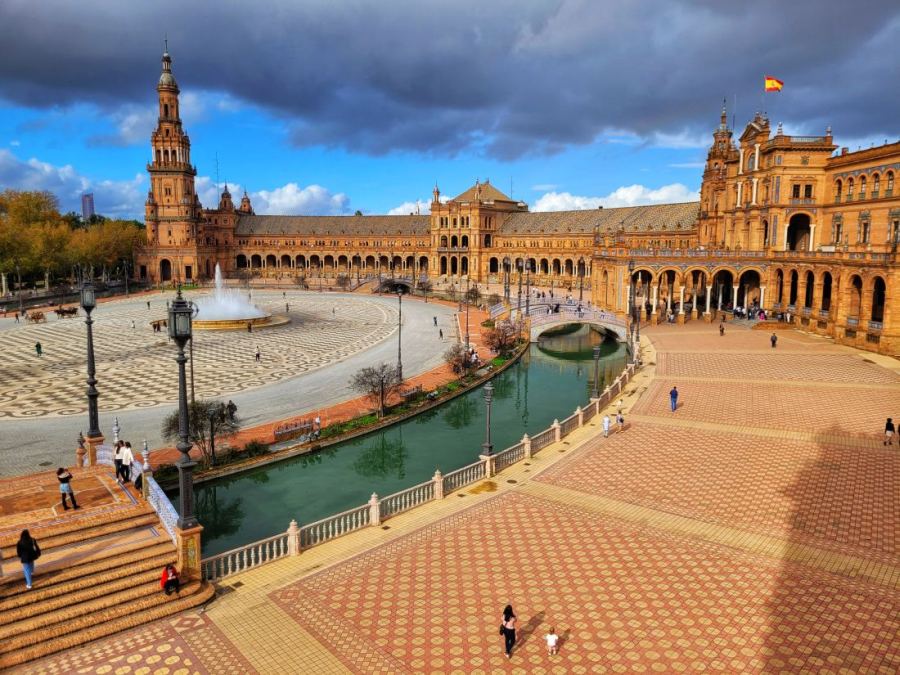
The center of Andalusia is a blend of Spanish Mediterranean atmosphere and Moorish architectural style with countless attractions.
Spain’s 4th largest city is home to the world’s largest Gothic cathedral. But the Alcazar is also a must-see, which as a Moorish royal palace symbolizes medieval wealth.
And of course, you must attend a flamenco performance, as this is also an integral part of the Andalusian lifestyle.
Seville – a place where every part is a true wonder
Malaga
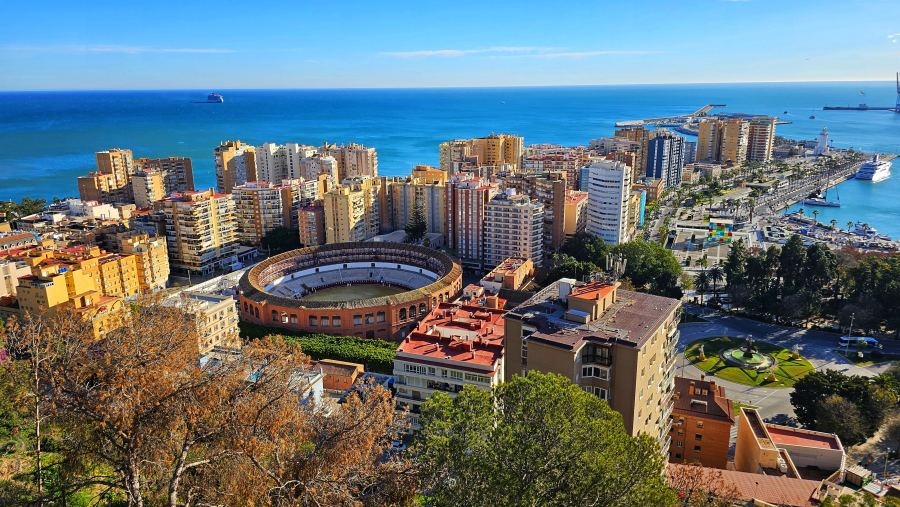
Picasso’s birthplace is the center of the sunny coast and one of the favorite tourist destinations, thanks to its excellent wines, mild climate, and extraordinarily high number of sunny hours.
Malaga also has a palace converted from a Moorish fortress (Alcazaba), which once consisted of more than 100 towers. The city’s other attractions include Europe’s 3rd largest cathedral and a beautiful bullfighting arena.
Malaga can be an excellent starting point for the coastal towns to the south, as well as for the mountainous inland region!
Malaga, where we can escape in winter
Granada
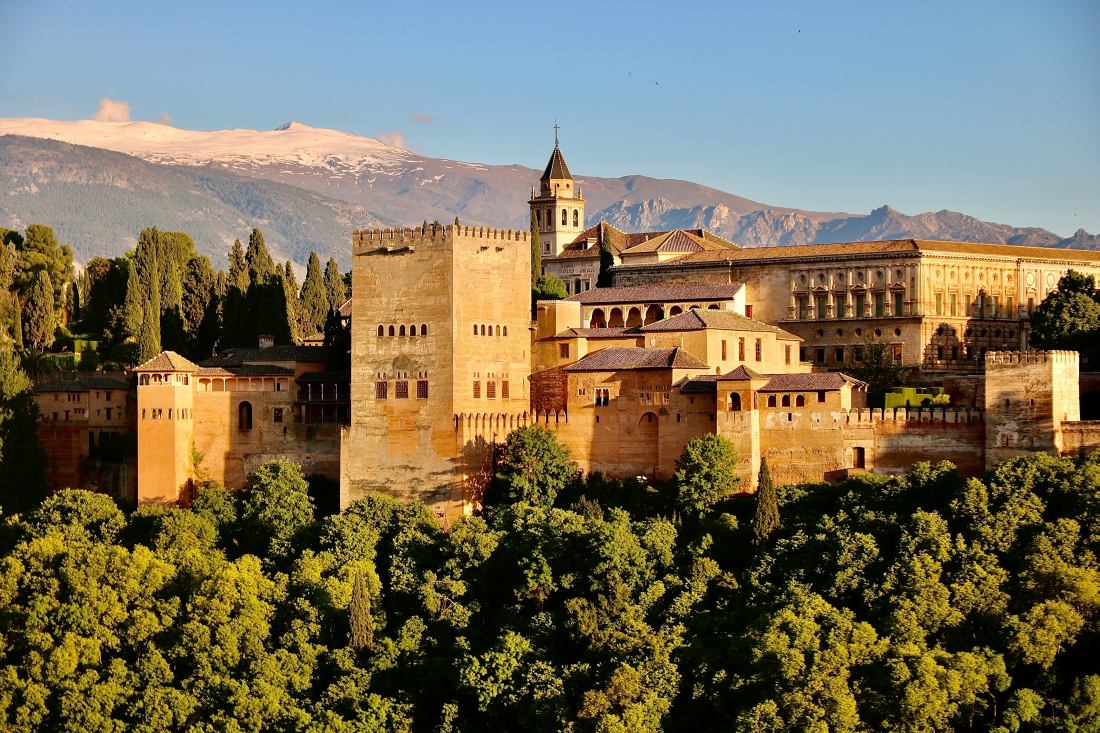
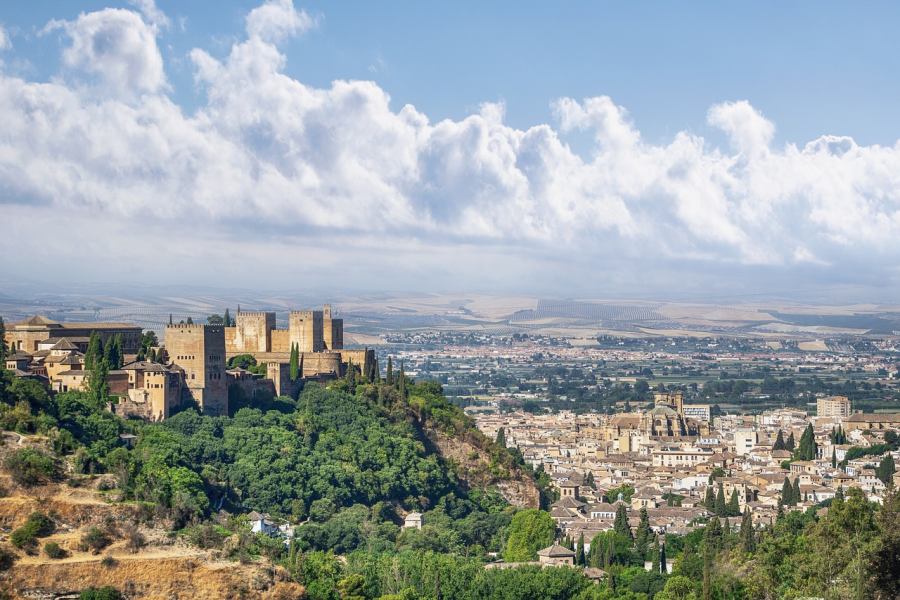
Besides Córdoba, Granada is a must-visit, especially if you’re staying in Malaga. Its city center is one of the most beautiful medieval legacies.
Among its historic buildings, the Alhambra fortress and palace is one of the country’s most important monuments, which UNESCO declared a World Heritage Site in 1984, together with the garden known as Generalife and the Albaicín neighborhood.
The Granada Cathedral is considered Spain’s first Renaissance church. In the Royal Chapel belonging to the cathedral, you can find the tombs of the Catholic Monarchs: Queen Isabella I of Castile and King Ferdinand II of Aragon, as well as Queen Joanna I ‘the Mad’ of Castile and King Philip I ‘the Handsome’ of Castile.
Costa del Sol
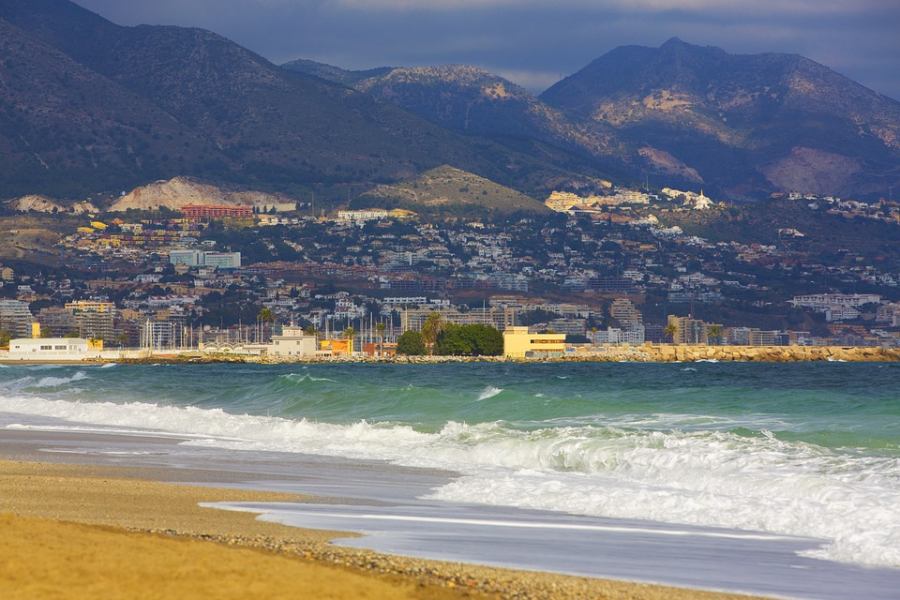
The most famous of Andalusia’s four coastal sections. Its name means sunny coast, referring to the fact that the sun shines an average of 320 days a year. It’s not called Europe’s California for nothing.
Spain’s and thus Europe’s southernmost point, separated from Africa by a strait only 14 km wide at La Línea and Gibraltar.
Several popular holiday destinations can be found along the coast, the most famous being Marbella. There are also several wonderful towns near Malaga, such as Torremolinos, Fuengirola, and Benalmádena.
Ronda
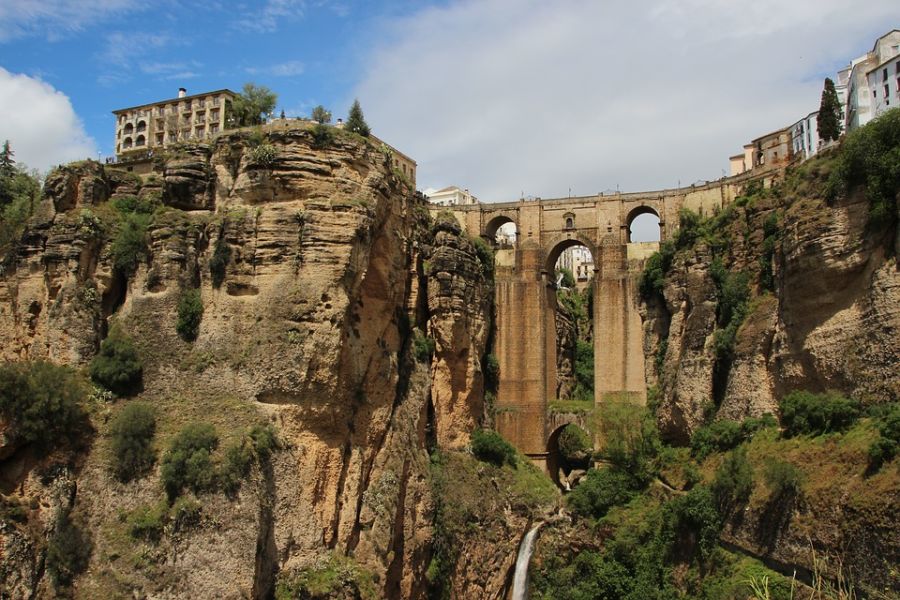
According to many, Spain’s most beautifully situated settlement is this city perched 750 meters high.
Its beauty comes from two massive rock sections and the connecting New Bridge. The sight of houses built on the rocks and the bridge has made the city of Ronda unique.
Several architectural styles can be discovered in its architecture, as several ethnic groups ruled the region. This can be seen in the houses on the narrow streets and alleys.
Here too, you shouldn’t miss visiting the bullfighting arena (one of Spain’s oldest) and the Moorish palace.
Cádiz
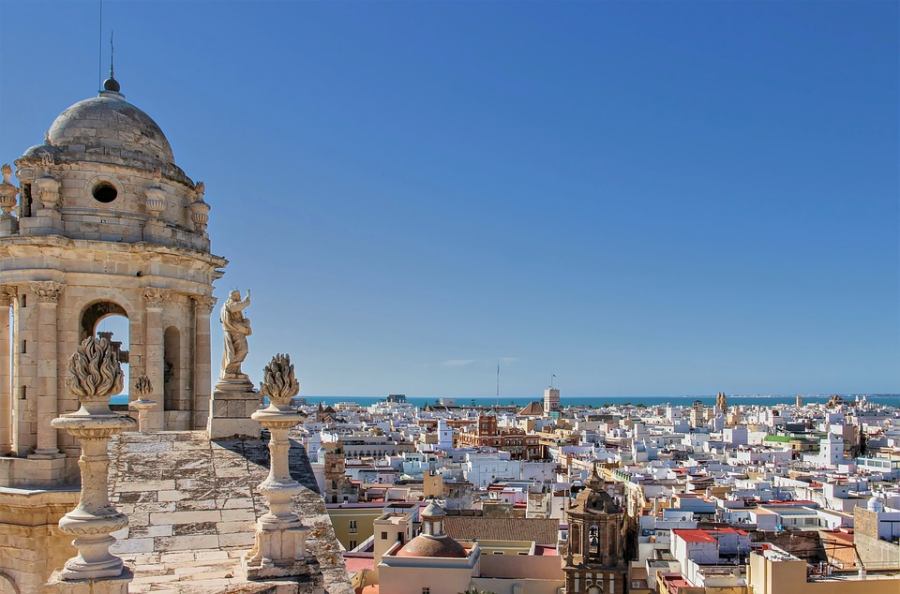
Located in the southwestern part of Andalusia on a peninsula jutting into the Bay of Cádiz on the Atlantic Ocean coast.
Its old town preserves Andalusian traditions, which are reflected in narrow streets leading to small squares.
The city founded by the Phoenicians was an important port city even in ancient times, which still forms an integral part of Cádiz today. This is why about 160 watchtowers were built in and around the city over the centuries.
The city’s most popular part is the San Sebastian fortress and the nearby golden sandy beach, La Caleta.
Córdoba
The city at the foot of Sierra Morena was one of the world’s largest cities in the 10th century, making it a cultural and economic stronghold.
The city is also called the city of three cultures, as it represents a blend of Jewish, Christian, and Arab influences. Its city center is wonderful, which is why it’s part of the UNESCO World Heritage. It’s full of small, narrow cobblestone streets, beautiful squares, and characteristic inner courtyards (patios).
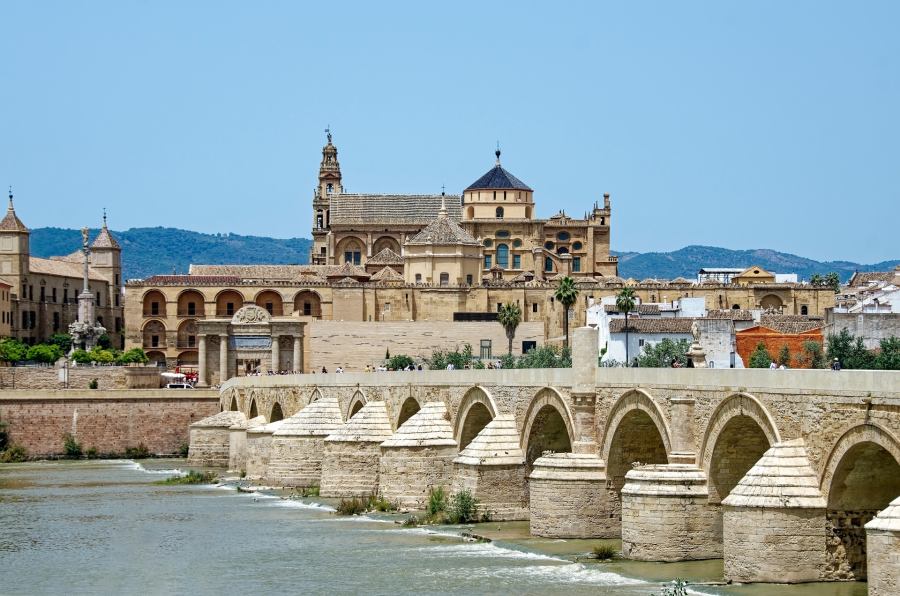
One of its most beautiful parts is the Puente Romano de Córdoba, the Roman bridge, from which there is a magnificent view of the city. Another unmissable attraction is the Mezquita, the former Moorish mosque converted into a cathedral. Its interior is made unique by 850 columns built from marble, jasper, and granite.
Córdoba attractions, museums, weather
Caminito del Rey
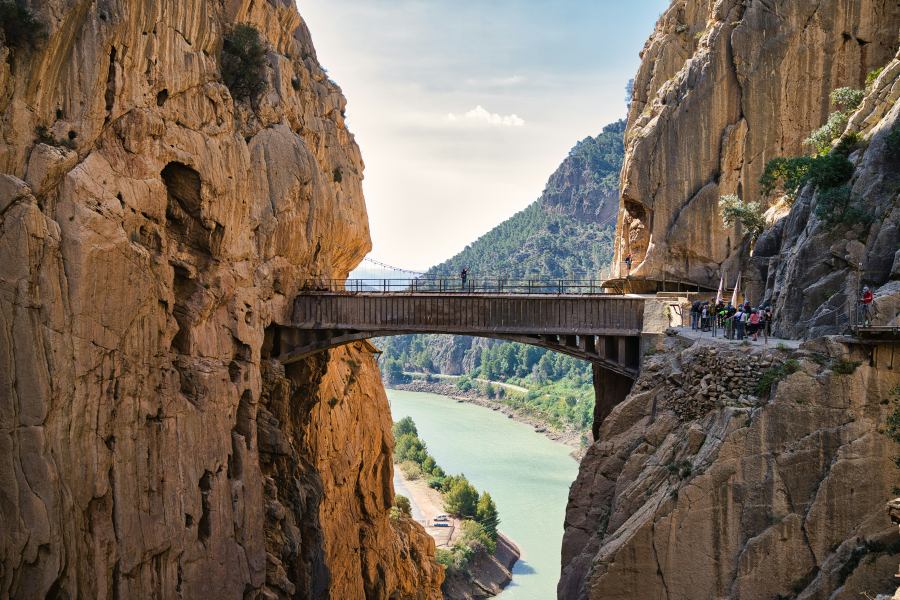
This stunning footpath carved into the cliffs is located north of Málaga.
Originally built for hydroelectric workers in the early 20th century, it was long known as „the most dangerous path in the world” after its condition deteriorated to the point where it became life-threatening.
It was renovated and made safe in 2015 and has since become a popular tourist attraction, offering dramatic views of the Guadalhorce River canyon. Bridges, walkways, and sections carved into the rock alternate along the approximately 8 km long trail.
Zahara de la Sierra
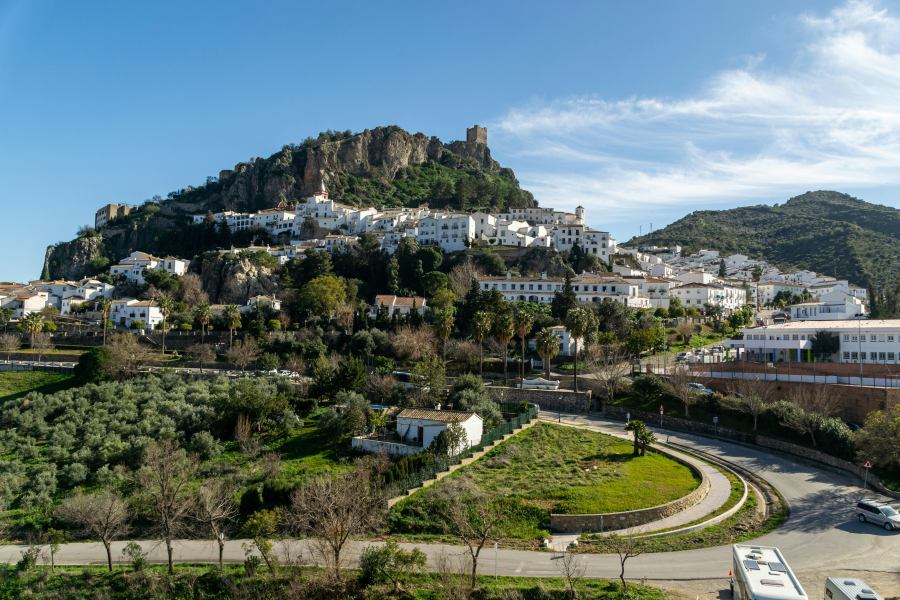
This charming little village is located in the heart of the Sierra de Grazalema Natural Park.
It sits atop a rock, and the ruins of a medieval Moorish castle dominate the panorama. The village is surrounded by an artificial lake, the Embalse de Zahara-El Gastor, whose turquoise waters contrast with the white houses and green landscape.
Its narrow cobbled streets, charming squares and magnificent views make it a popular destination.
Setenil de las Bodegas
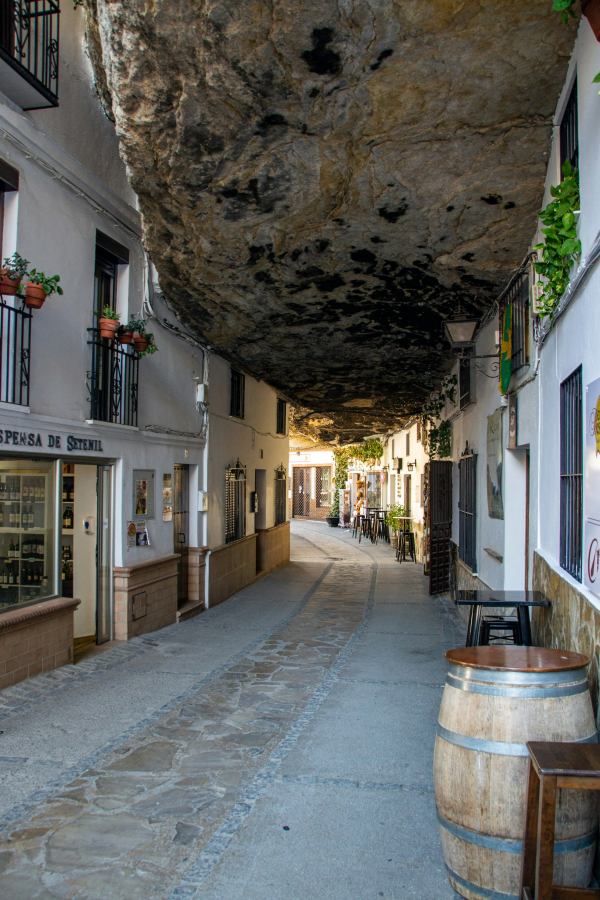
This unique Andalusian village is famous for its houses built directly into the cliffs along the river.
The gorge carved by the Rio Trejo creates a special atmosphere, with the rock walls serving as a natural roof over some streets and buildings. This unique architectural solution, „houses under the rocks”, makes Setenil an unforgettable experience.
The village is also known for its delicious cuisine, especially its pork specialties.
Antequera
This historic town in the heart of the province of Málaga has a rich heritage.
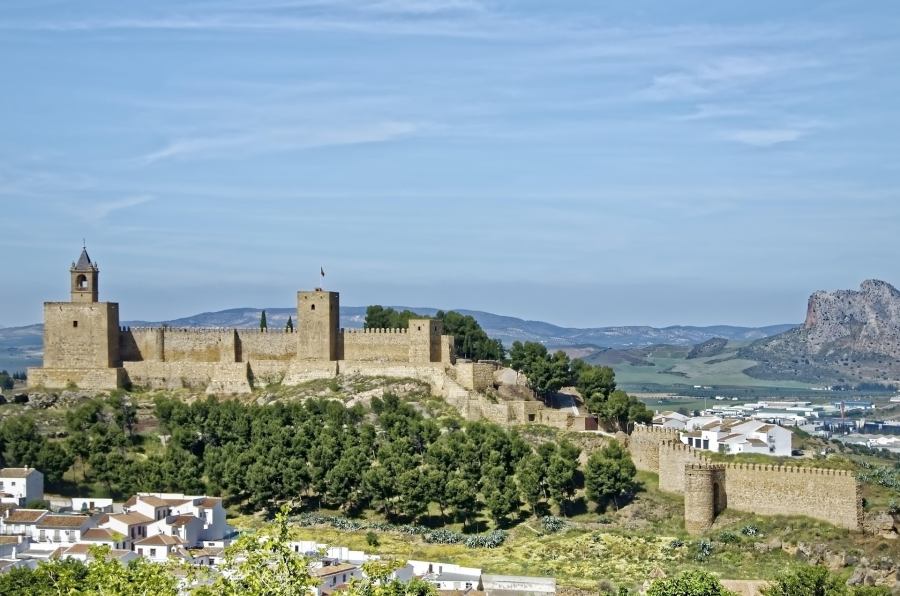
It is known for its dolmens, which are part of the UNESCO World Heritage Site and offer a fascinating glimpse into prehistoric times. The town has a Moorish fortress, the Alcazaba, which offers panoramic views of the countryside, as well as several Renaissance and Baroque churches.
Due to its strategic location, Antequera is also known as the „heart of Andalusia” as it lies halfway between the main Andalusian cities.
Gibraltar
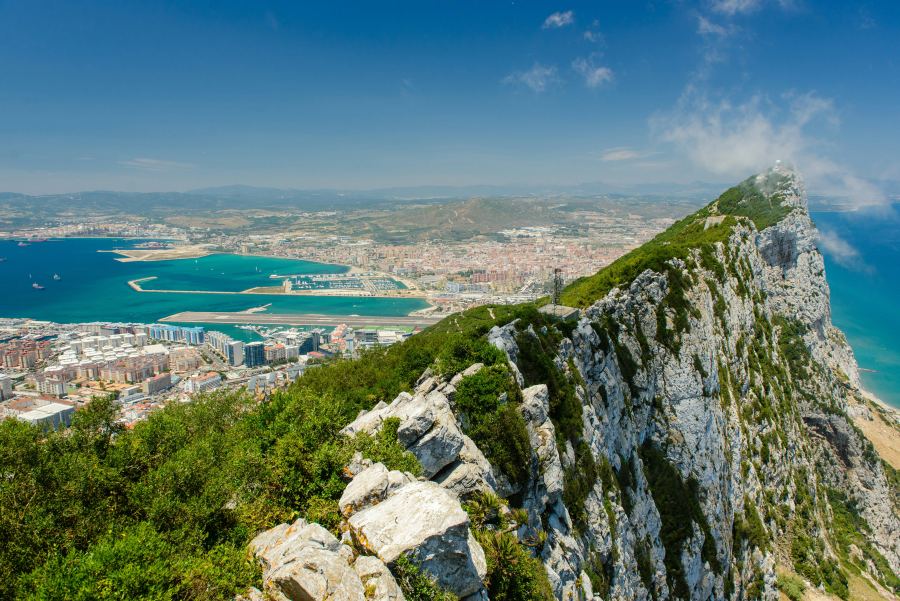
Although it doesn’t belong to Spain, the city-state is a must during an Andalusian trip! Gibraltar is essentially a 425 m high, 1250 m wide limestone cliff, the Rock of Gibraltar.
The British-controlled city is a perfect blend of English and Spanish-Andalusian style and atmosphere.
Even entering the city-state is quite interesting. You have to walk or drive across an airport runway to enter the city. When a plane arrives, we get a red signal with a barrier.
If you’re in Gibraltar, it’s definitely worth seeing the 400-meter-high robust rock, which offers a breathtaking panorama. You can also reach it by cable car.
Gibraltar attractions, weather
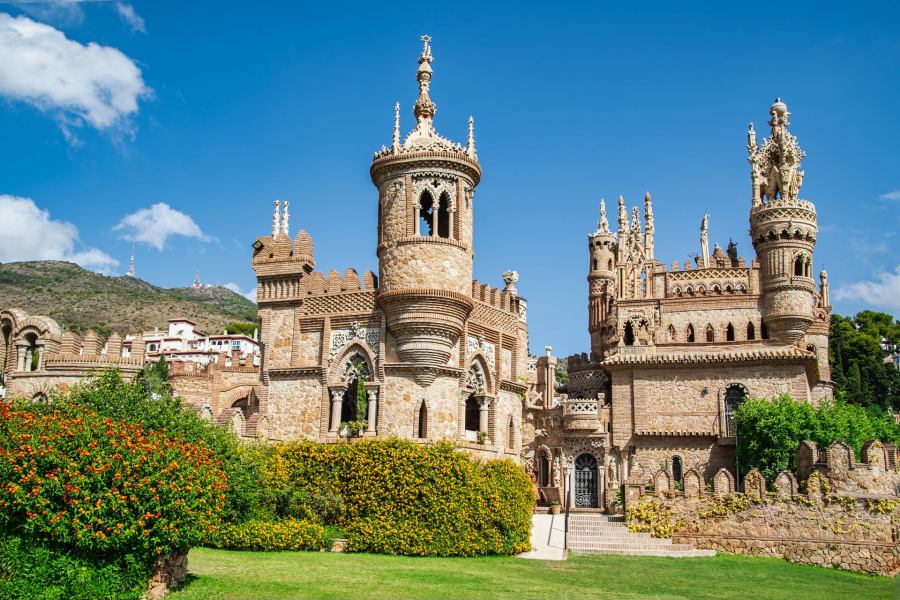
Colomares Castle
And finally, a building located in the town of Benalmádena.
The extremely unique castle-like structure was built at the end of the 20th century by Dr. Esteban Martín and his two assistants in memory of Christopher Columbus and the Age of Discovery.
It combines elements of many styles, such as Byzantine, Roman, Gothic, and Mudéjar, creating a truly unique building. The view of the beach is also very beautiful, so it’s definitely worth visiting!