
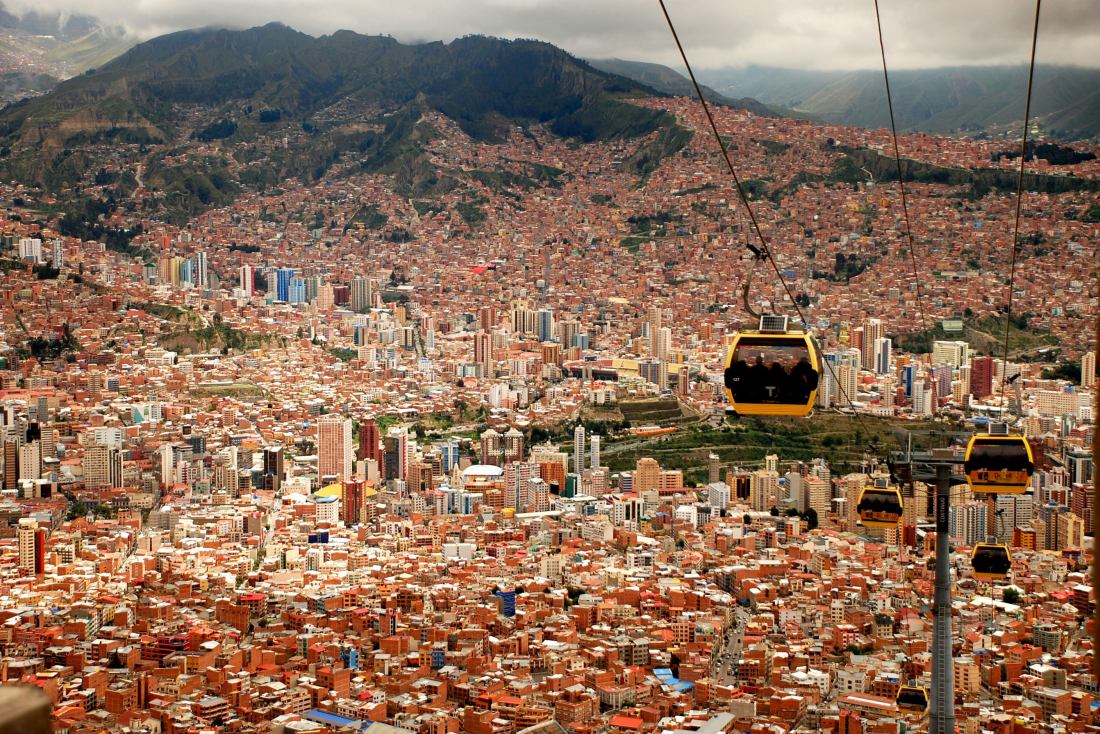
La Paz is one of the highest-altitude capital cities in the world, situated at nearly 3,600 metres above sea level among the ridges of the Andes. Its basin surrounded by volcanoes, its colourful markets and the imprints of the ancient Aymara culture offer a unique experience to every visitor.
Bolivia’s capital can be divided into two parts: the lower-lying, bustling city centre, where markets, government buildings and colonial architecture dominate, and the higher-elevated El Alto district, which offers an unrivalled panorama of the entire basin.
Table of Contents
La Paz attractions
Plaza Murillo
The centre of Bolivian political life is Plaza Murillo, the city’s representative main square, which has been imbued with the symbolism of power since the 19th century. The square’s name refers to Pedro Domingo Murillo, one of the martyrs of the Bolivian independence movement, who was hanged on the square in 1810.
Three iconic buildings surround the square: the neo-Gothic Bolivian Cathedral (1835), the presidential palace (Palacio Quemado) and the Legislative Palace. The presidential palace is particularly interesting: its name („the burnt palace”) alludes to the fact that it was set on fire during a political uprising in 1875.
Witches’ Market (Mercado de las Brujas)
Perhaps the most characteristic location in La Paz is this bewildering, exotic market along Jiron Linares and Sagarnaga streets, where the props of Aymara shamanic tradition line the shelves of shops and stalls. Traders offer medicinal herbs, amulets, ritual objects and traditional talismans.
The goods here play a genuinely ritual role in Bolivian folk religion: dried llama foetuses, for example, are traditionally embedded in the foundations of new houses to bring good fortune. The traders are happy to explain the function of the objects if you show interest.
Both tourists and local shoppers pass through the market every day. It is worth asking permission before taking photographs, as local women (cholitas) sometimes object.
Sagarnaga Street and Craft Market
One of La Paz’s most vibrant and most-visited streets is Calle Sagarnaga, lined with craft shops, textiles, souvenir stores and small cafés. The Witches’ Market also opens onto this street, making the whole neighbourhood a seamless experience.
Products available here include Aymara and Quechua woven hats (chollos), alpaca jumpers, hand-painted ceramics, jewellery and fair-trade coffee. Prices are negotiable, although fixed-price shops are becoming increasingly common.
In the evening, backpackers gather in the small restaurants and bars around Sagarnaga – the street remains lively, safe and atmospheric after dark. The best locally-regarded salteña shops (Bolivian stuffed pastries, eaten by locals as breakfast) can be found nearby.
Teleférico
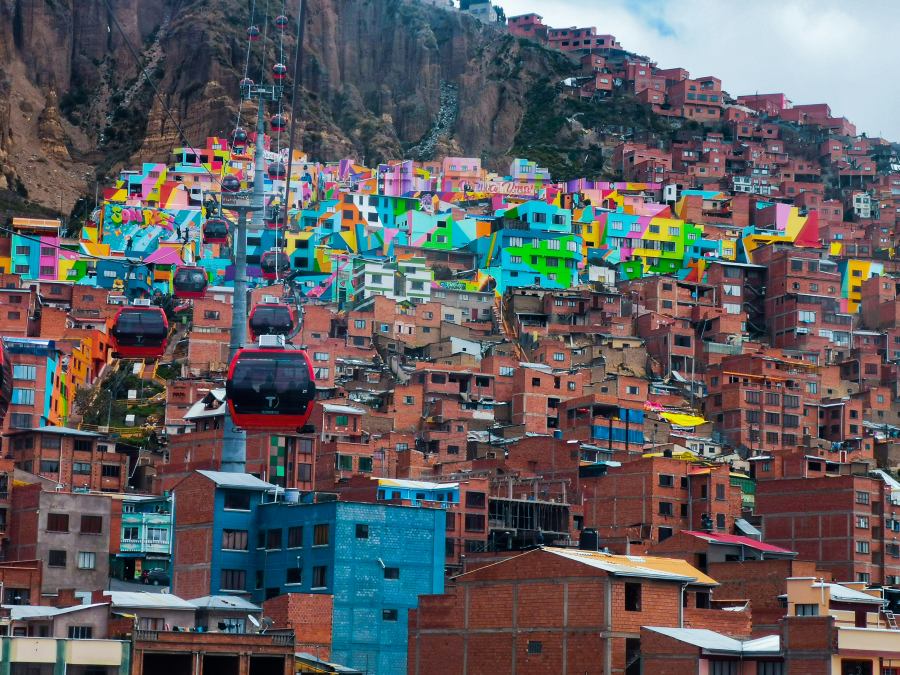
One of the world’s longest and highest urban cable car systems has been built in La Paz since 2014, and now connects the city to El Alto across ten lines, rising to approximately 4,000 metres altitude. This feat of infrastructure is simultaneously a public transport system and a tourist attraction.
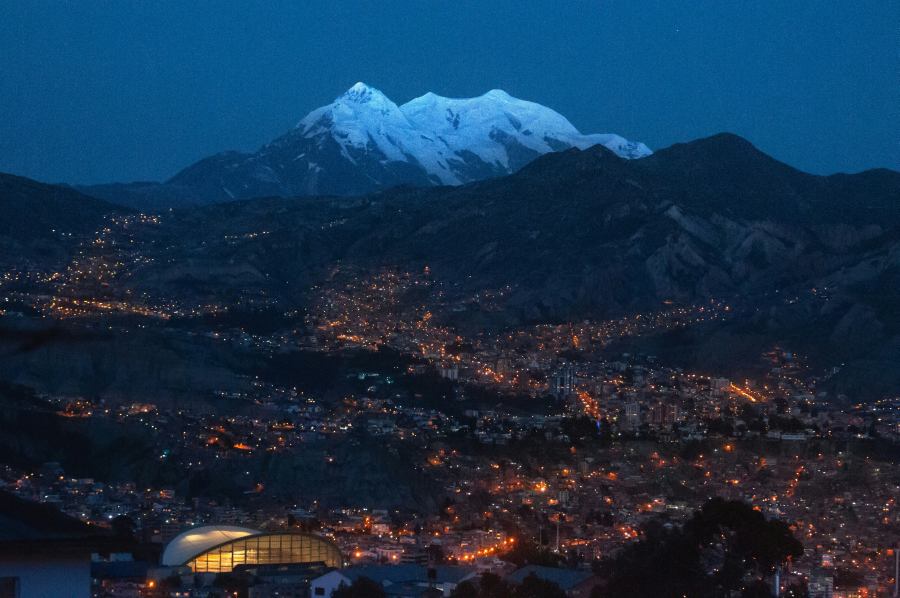
From the gondola, an unforgettable panorama unfolds: the seas of red and white rooftops, the snow-capped peak of Illimani volcano (6,438 m) and the teeming streets of the city centre are all visible. Each line reveals the city from a different perspective.
The Roja (red), Amarilla (yellow) and Verde (green) lines are the most popular from a tourist standpoint. On some lines, cabins depart every 10–15 minutes and the fare is a fraction of a taxi’s price. It is well worth making at least one complete section there and back.
Calle Jaén
This is one of La Paz’s best-preserved 18th-century streets, which today houses a row of museums and evokes the atmosphere of colonial Bolivia for passers-by. Noticing the cobblestone paving, painted facades and arched gateways is almost like travelling back in time.
Four small museums stand side by side in the street: the Costumbrista Museum, the Metal Museum, the Jewellery Museum and the Murillo House. Entry is inexpensive and they can be visited together.
The atmosphere of the street is especially beautiful in the evening, when the lamp posts illuminate the facades. At weekends, painters and craftspeople also set up here, opening galleries and occasional exhibitions that enrich the experience.
El Alto Sunday Market
Every Sunday in the El Alto district – with a population of seven million – one of Latin America’s largest open-air markets takes place, where absolutely everything can be found: from foodstuffs to electronics to car parts. It is estimated that around 100,000 vendors and shoppers appear at the Uyustus market each week.
The market is a genuinely local event: few tourists visit, and the atmosphere is authentic and unpretentious. The Aymara women in their round hats and colourful skirts are the most dazzling element of the street. It is worth arriving early in the morning, as the streets become almost impassable by midday due to the crowds.
Practical tip: watch your valuables, as pickpocketing is not uncommon at crowded markets. Haggling is expected and accepted – the first price quoted should never be accepted without negotiation.
Mirador Killi Killi
One of the best viewpoints within the city is the Killi Killi lookout, from which the city centre, the El Alto district and the Illimani volcano (6,438 m) rising in the background can all be seen at once. The lookout is free of charge and easily accessible by taxi.
Illimani is a symbol for the people of La Paz: the snow-capped, three-peaked giant is visible from the city centre on every clear day. The park around Killi Killi is also a pleasant resting place, where local families sit and picnic.
San Francisco Basilica
One of La Paz’s most significant colonial religious monuments is the Franciscan basilica, founded in 1549 and completed in its current form by 1753, located in the city centre. Its facade is a unique fusion of baroque and Andean indigenous ornamentation – this style is also referred to as mestizo baroque.
The stone carvings on the facade are filled with plant and animal motifs, angels and local symbols, giving the church an entirely different character from European baroque. The interior is more modest, but the wooden carved altars and the cloister arcade are noteworthy.
The small museum adjacent to the basilica displays religious artworks and archaeological finds.
Valle de la Luna (Moon Valley)
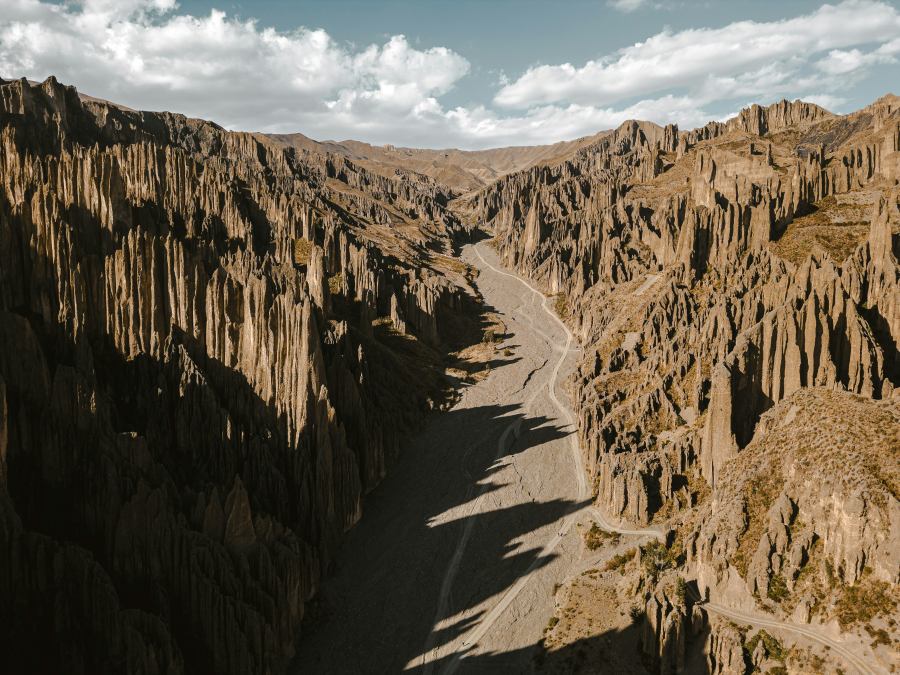
Just 10 kilometres from La Paz, not far from the Mallasa district, lies this natural wonder, which was named not after the Moon itself but after the lunar quality of its landscape. The clay and sandstone spires, cones and gorges shaped by millions of years of erosion truly create the sensation of being on another planet.
Marked paths wind between the grey, ochre and reddish-brown rock formations, which can be walked in approximately 45–60 minutes. The area has a visitor centre and an entrance fee, but the price is very modest.
The light is most beautiful at sunrise and before sunset, but the weather can change suddenly – it is worth preparing against wind and dust. Cacti also grow nearby, and hummingbirds can be spotted in some areas.
Best museums in La Paz
Bolivian National Museum of Art (Museo Nacional de Arte)
Founded in 1960, the building itself is far older: it is housed in an 18th-century colonial baroque palace, which was previously used as the governor’s residence and as a public building. The inner courtyard and the corridors of the upper floors are spectacular in their own right.
The collection spans the history of fine art from 16th-century colonial painting to 20th-century modern Bolivian art. Particularly valuable is the collection presenting works from the Cusco school, which display a synthesis of Aymara and European stylistic influences. The museum also hosts temporary exhibitions, so repeat visits always offer something new.
Coca Museum (Museo de la Coca)
This unique thematic museum opened in 1997 with the aim of presenting the role of the coca leaf in Andean culture, history and contemporary society. Its location on Calle Linares (near the Witches’ Market) is deliberate: coca and shamanic tradition are closely intertwined.
The collection covers the botany of the coca leaf, its centuries-old ceremonial use, the relationship of the Spanish colonisers and the Inca Empire with coca cultivation, as well as contemporary drug policy debates. Visitors can learn why chewing coca leaves is different from consuming cocaine.
Several rooms of the museum are interactive: you can smell aromatic samples, and explanations accompany images in both English and Spanish. At the end, a coca tea tasting is offered, which helps with acclimatisation to the altitude.
Ethnographic and Folklore Museum (MUSEF)
Bolivia’s richest ethnographic museum was founded in 1962. It is housed in an 18th-century colonial palace in the heart of the city centre, whose painted stucco ceilings and carved doorway are themselves valuable historical monuments.
The collection contains more than 60,000 objects: traditional costumes, ritual masks, woven textiles, musical instruments, ceramic vessels and shamanic tools from Bolivia’s 36 recognised indigenous cultures. The masks from the Carnaval de Oruro are particularly spectacular.
Natural History Museum (Museo de Historia Natural)
One of the continent’s oldest institutions was founded in 1897. It currently operates within the campus of the UMSA (Universidad Mayor de San Andrés) and is particularly popular with local schoolchildren and visitors interested in natural history.
The collection presents Bolivia’s extraordinarily diverse wildlife: Andean birds, fossils (including mammoth teeth), butterflies, minerals and the fauna of the Amazon basin. The fossil section is outstanding, partly due to dinosaur remains found in the Chiquitos region. Part of the exhibition is somewhat dated compared to modern museums, but the rare Bolivian fauna assemblage offers a unique spectacle. A recommended destination for nature-loving travellers more interested in ecology than culture.
La Paz weather: when is the best time to visit?
La Paz has a subtropical highland climate, decisively shaped by its altitude of 3,600 metres above sea level. Two distinct seasons alternate: a dry winter period (May–October) and a rainy summer season (November–April). Temperatures are moderate throughout the year: daytime temperatures generally range between 12–18°C, and nights between 2–7°C, which may seem cold by European standards, but sunny days bring pleasant warmth.
Dry season (May–October):
This is the so-called „Bolivian winter”, although temperatures are not extreme. Precipitation is minimal, the sky is clear and blue, and visibility is excellent – this is when the peak of Illimani can be seen most clearly. Nights are cool (potentially close to freezing), but days are characterised by pleasant sunshine. This is the best period for excursions, visiting Lake Titicaca and the Salar de Uyuni.
Rainy season (November–April):
The southern summer brings rains – generally short, intense downpours are typical in the late afternoon, but whole days can also be beautiful and sunny. However, roads can become slippery, and some excursion sites are harder to reach. During the rainy season, the hillsides around El Alto turn green and the landscape looks refreshed.
Best time to travel to La Paz:
The best period to visit La Paz is one of the May–September months, particularly June and August. During these months clear skies are almost guaranteed, tourist numbers are more moderate (except during carnival and Easter periods), and it is also possible to attend the Tiwanaku winter solstice celebrations (21 June). In July and August there are slightly more tourists, but the weather is at its best. November is worth avoiding, as the rainy season is just beginning and roads become more difficult, although the autumn festivities (Día de los Muertos, 2 November) offer a special cultural experience.