

Bolivia attracts travelers with exciting sights due to the Andes and the legacy of the Incas. Here are 16 wonderful locations!
This South American country borders Brazil to the north and east, Paraguay and Argentina to the south, and Chile and Peru to the west. Before Spanish colonization, its Andean region was part of the great Inca Empire.
Bolivia is „the country of extremes”: it has one of the world’s highest major cities (La Paz), the world’s highest navigable lake (Lake Titicaca), Earth’s most extensive salt desert (Salar de Uyuni), and South America’s highest percentage of indigenous population.
Table of Contents
Best places in Bolivia
La Paz
Bolivia’s capital, La Paz, is the world’s highest administrative headquarters.
The city is surrounded by the massive Andes mountains. Due to its unique location, many points in the city offer spectacular views of the landscape, especially from the cabins of the famous Mi Teleférico cable car transportation system.
The city’s historical center is full of colonial-style churches and colorful markets. One of the most interesting locations is the Witches’ Market (Mercado de las Brujas). Here, indigenous Aymara and Quechua women sell various herbs, amulets, and spiritual items. The impressive building of the San Francisco Basilica, blending baroque and Andean architectural styles, is one of the city’s most beautiful attractions.
La Paz attractions, museums, weather

Lake Titicaca
The world’s highest navigable lake lies on the border of Bolivia and Peru.
Located at an altitude of 3,812 meters above sea level, the lake is considered the birthplace of Inca mythology, giving it enormous spiritual significance. The lake’s cobalt blue mirror, the snow-capped mountains in the distance, and the tiny floating islands create a unique atmosphere.
Several indigenous communities live on the lake, preserving their ancient traditions to this day. The best known are the Quechua and Aymara people, who build floating islands from totora reeds and fish in traditional ways. Isla del Sol (Sun Island) is the center of Inca mythology, where ancient Inca temple ruins and beautiful bays exude a mystical atmosphere.

Copacabana
The city on the shores of Lake Titicaca is one of Bolivia’s most important religious centers, popular both as a pilgrimage site and tourist destination.
The city’s most important building is the impressive Copacabana Basilica, home to the famous Dark Virgin (Virgen de Copacabana) statue. This devotional statue is considered Bolivia’s patron saint and attracts thousands of pilgrims each year.
The city’s atmospheric streets are full of craft markets where visitors can buy local textiles, jewelry, and traditional Aymara handicrafts. One of Copacabana’s most popular traditions is the blessing of cars, performed in front of the basilica: car owners decorate their vehicles with flowers and holy water to receive divine protection.

Salar de Uyuni
The world’s largest salt flat is one of Bolivia’s most famous natural wonders.
This approximately 10,000 square kilometer area was formed by the drying of an ancient lake and is now covered with a dazzlingly white salt crust. During the rainy season, a thin layer of water reflects the sky like a mirror, making visitors feel as if they’re walking among the clouds.
In the middle of the salt flat lies the famous Incahuasi Island, covered with giant cacti, offering a fantastic view of the endless whiteness. Tours organized around Uyuni give visitors the opportunity to visit the special salt hotel, where everything – even the furniture – is made of salt.

Sajama National Park
One of Bolivia’s least known but most impressive natural treasures.
At the center of the park stands the Sajama volcano, the country’s highest mountain at 6,542 meters. The surrounding landscape offers a spectacular sight; the volcanic cone, high mountain lagoons, and endless grass-covered plains provide a great experience for hikers.
The park has rich wildlife: wild vicuñas, Andean flamingos, and pumas live here. There are numerous hot springs in the area where visitors can relax in natural thermal baths. Among the most special attractions are the ancient Aymara chullpa towers, which served burial purposes and provide insight into the region’s ancient culture.

Noel Kempff Mercado National Park
One of Bolivia’s largest and most pristine natural areas is located in the northeastern part of the country, on the edge of the Amazon Basin.
The park encompasses unique ecosystems, including rainforests, savannas, and stunning waterfalls, offering a true paradise for nature lovers. Declared a UNESCO World Heritage Site, the area’s rich biodiversity and breathtaking landscapes impress every visitor.
The park abounds with wildlife: jaguars, tapirs, giant otters, and rare bird species live in this area. The pristine rainforest offers plenty to discover, and some parts of the park can only be reached with experienced guides.
Among the park’s iconic attractions is the Arco Iris waterfall, which cascades down the rocks as a huge torrent and takes its name from the constantly appearing rainbows.
Sucre
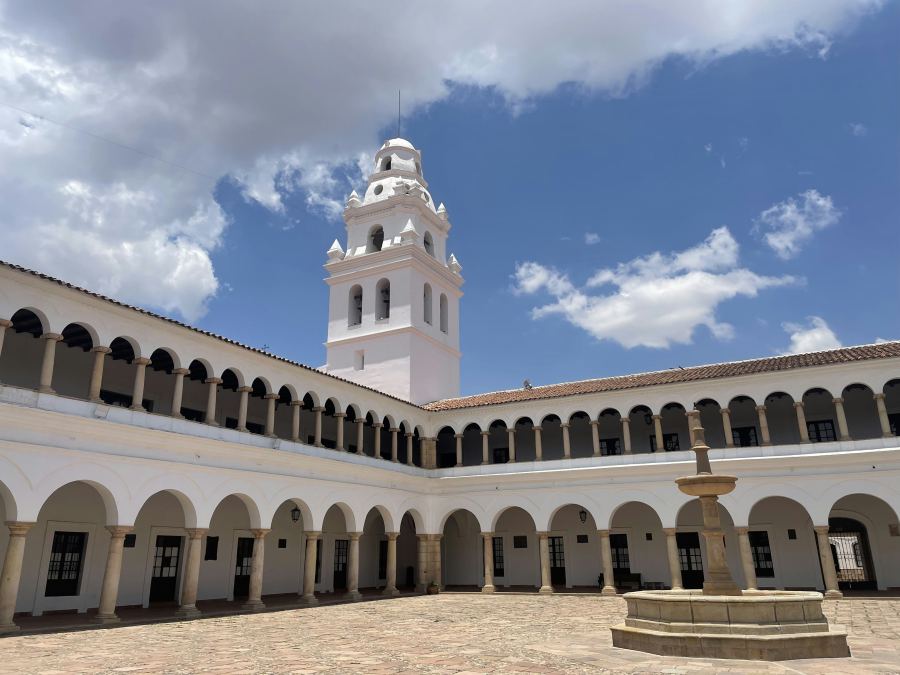
Bolivia’s constitutional capital is one of the country’s most beautiful and best-preserved colonial cities.
The historical center, also on the UNESCO World Heritage list, has snow-white buildings, elegant monasteries, and cobblestone streets as its main attractions. The city’s cultural heritage and friendly atmosphere make it one of the most popular destinations in Bolivia.
In the heart of the city is the Casa de la Libertad, where Bolivia’s declaration of independence was signed in 1825. The building now functions as a museum, providing insight into the country’s history.
The city is famous not only for its historical attractions but also for its vibrant markets and gastronomy. At the Mercado Central, you can taste fresh fruits, local cheeses, and traditional foods, while the city’s restaurants offer the flavors of Andean cuisine.
Tarija
The city in southern Bolivia is known as the country’s wine-producing center.
Its Mediterranean climate, charming streets, and friendly inhabitants make it one of the most pleasant places in Bolivia. The weather provides ideal conditions for grape growing, and Tarija is famous for its high-altitude wines.
Wineries around the city, such as Campos de Solana and Aranjuez, offer guided tours and tastings where visitors can learn about winemaking traditions and enjoy excellent quality wines. Local specialties like cheese and charque (dried meat) perfectly complement an afternoon of wine tasting.
The city’s cultural life is also vibrant, with numerous festivals and celebrations making Tarija even more attractive. The Fiesta de San Roque, for example, is one of the most important events, during which locals celebrate their patron saint with traditional dances and music.
Tuni Condoriri
A stunning mountain range in the Andes, about 60 kilometres northeast of the city of La Paz.
Part of the Apolobamba range, the Condoriri peak and the surrounding glaciers form a picturesque landscape. The mountain takes its name from its shape, reminiscent of the wings of a condor: its central peak resembles a soaring bird surrounded by two smaller peaks.
The region is also famous for its crystal-clear turquoise lakes, which feed on meltwater from glaciers. The best known lake is Laguna Chiarkhota, a major campsite for hikers and climbers. From here, expeditions depart for the 5648-metre Condoriri peak, which can be reached by climbing of moderate difficulty.

Madidi National Park
One of Bolivia’s most diverse protected ecosystems stretches from the foothills of the Andes to the Amazon jungle.
The pristine rainforests and vast river systems are home to unique wildlife. The park is famous for its incredibly rich biodiversity: jaguars, tapirs, giant anteaters, and hundreds of bird species can be found here.
Jungle and boat tours are popular in the park. Night tours are particularly exciting, as the jungle shows a completely new face, and visitors can observe animals that remain hidden during the day.
Yungas Road
One of the world’s most famous and dangerous roads runs between La Paz and the lower-lying Yungas region.
The narrow road carved into steep hillsides winds alongside huge ravines while offering breathtaking views of the Andes’ lush green valleys.
The Yungas Road was once one of Bolivia’s busiest main routes, but due to the high accident rate, it is now primarily used by tourists and cycling adventurers. Cycling the entire section known as the „Road of Death” offers not only an adrenaline-rich experience but also an unforgettable view of the serpentine roads descending into the rainforest.

Eduardo Avaroa National Park
One of Bolivia’s most spectacular nature reserves is located in the southwestern part of the country, in the highlands of the Andes.
The park boasts impressive volcanic landscapes, colorful lagoons, and thermal springs, making it one of Earth’s most extreme yet breathtaking regions. The reserve, located at over 4,000 meters elevation, hides a special ecosystem where wildlife, including rare Andean flamingos, live.
Among its most famous attractions is the Sol de Mañana geyser field, which is most active in the early morning hours, while steam and hot mud erupting from the ground provide a fantastic sight. Hot springs nestled among rocky, volcanic formations offer a pleasant resting place.
There are numerous colorful lakes in the park area, including Laguna Colorada, which owes its reddish hue to microorganisms and minerals living there. The landscape is made even more special by distant volcanoes and salt deserts.
Samaipata
A magical small town at the meeting point of the tropical highlands and Andean culture in eastern Bolivia.
Nestled in an idyllic environment, the settlement is a favorite destination for hikers and history lovers, as it boasts not only impressive landscapes but also ancient Inca and pre-Inca ruins.
The town’s most important attraction is El Fuerte de Samaipata, a huge archaeological site carved into rock. The ruin site, listed as a UNESCO World Heritage Site, was once the Incas’ sacred center, offering a fantastic panorama of the surrounding hills and valleys.
For nature lovers, it’s a great starting point for exploring the nearby Amboró National Park. With dense jungle, crystal-clear waterfalls, and rare bird species, the area is a perfect destination for hikers and birdwatchers.
Valle de la Luna (Moon Valley)
The valley not far from La Paz is known for its clay columns and winding paths formed by natural erosion, reminiscent of the Moon’s surface.
Its rock formations have developed over centuries due to rain and wind, and their variously colored layers offer an impressive sight. There are several hiking trails in the area, offering panoramic views of the valley and distant mountains from different heights.
Potosí
One of Bolivia’s most significant historical cities is located in the Andes highlands, above 4,000 meters.
It owes its fame to silver mining, as the nearby Cerro Rico mountain was one of the world’s richest mines during the Spanish colonial period. In its golden age, Potosí became one of the Spanish Empire’s most important cities, with a rich architectural heritage and impressive colonial palaces.
One of the city’s main attractions is the Casa de la Moneda, which once served as Bolivia’s mint. Today it functions as a museum, providing insight into the region’s mining and minting history.
For the more adventurous travelers, the mines of Cerro Rico offer a special experience. During guided tours, visitors can get a glimpse into the miners’ difficult daily lives and learn about the place that was once a source of South America’s wealth.

Laguna Verde
The Green Lake is one of Bolivia’s most special natural wonders, located in the southern part of Eduardo Avaroa National Park.
The salt lake, situated at an altitude of 4,300 meters, gets its name from its emerald green color, which comes from dissolved minerals and the geological characteristics of the lake bed.
The lake’s most spectacular backdrop is the Licancabur volcano, which towers above the crystal-clear water mirror. The landscape’s unique beauty is particularly effective in the morning and early afternoon hours when sunlight colors the water’s surface with vibrant green hues. The lake’s shoreline is extremely harsh and desert-like, but despite this, flamingos and other special bird species can be observed in the area.
