
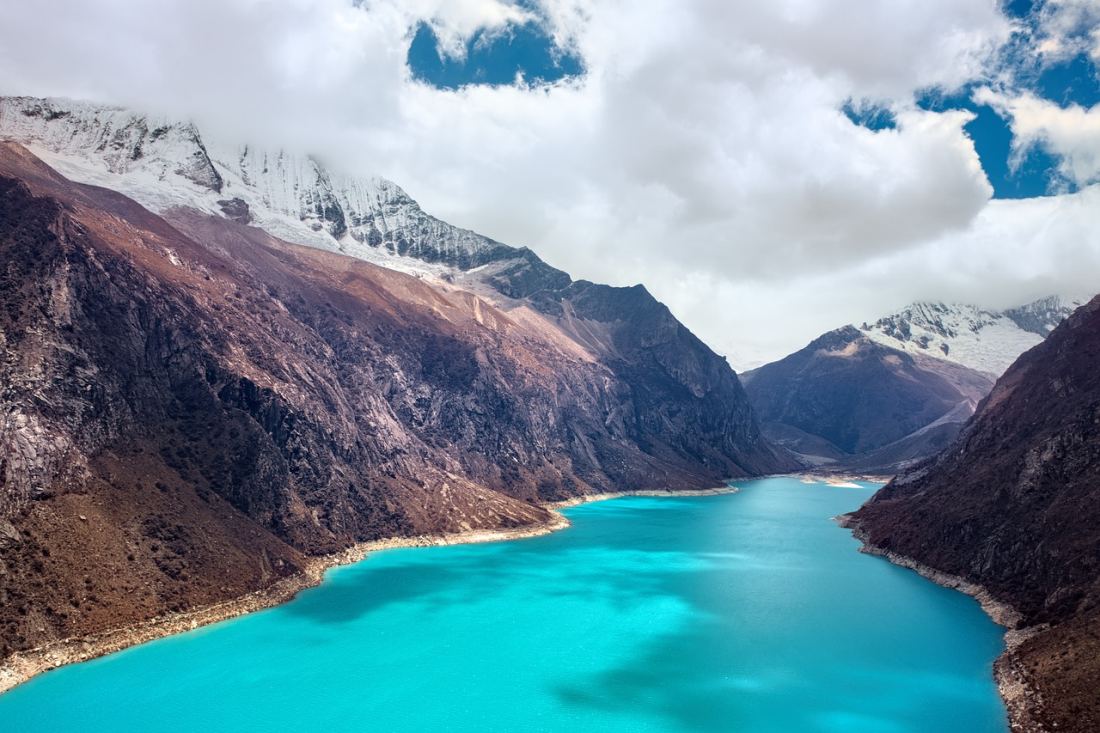
Peru has numerous historical and natural attractions in the former territory of the Inca Empire. Here are 17 sights to showcase!
Peru is the third largest country in South America and the largest country in the Andes. It is bordered by Ecuador and Colombia to the north, Brazil and Bolivia to the east, Chile to the south, and the Pacific Ocean to the west for about 2000 km.
It is one of the countries with extremely high natural biodiversity; its zoological and botanical habitats range from the dry plains of the Pacific region through the high mountain areas of the Andes to the tropical Amazon Basin.
Table of Contents
Best places in Peru
Machu Picchu
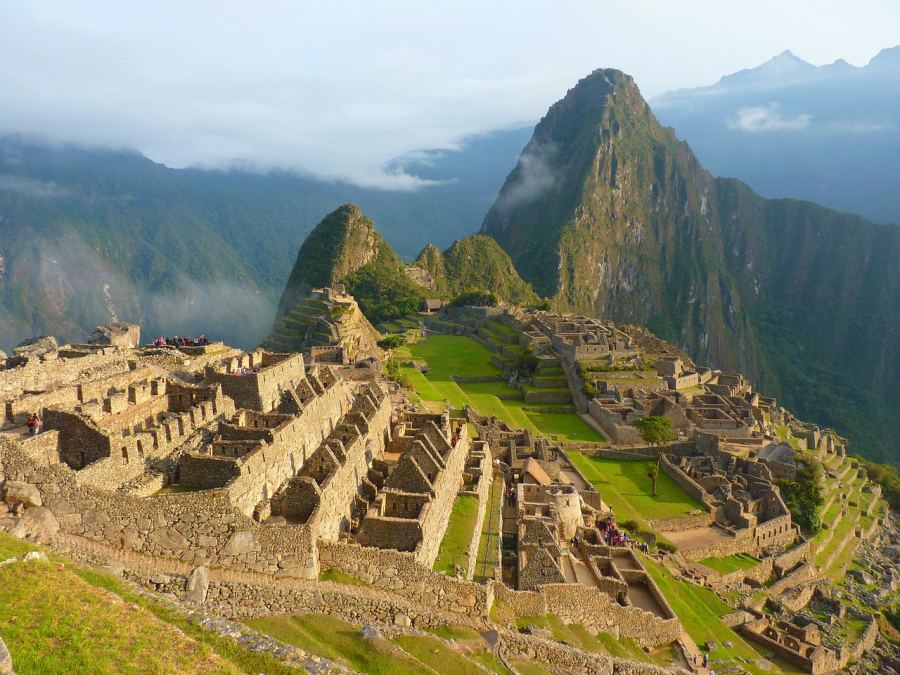
One of the world’s most famous ancient civilization sites, which is part of the World Heritage and became one of the New Seven Wonders of the World in 2007.
Hidden between the Andean mountain ranges on an almost inaccessible mountain saddle is this small fortified city. It was built around 1450 on the orders of Inca King Pachacutec Yupanqui and abandoned in 1570. The ruined city consists of several parts: Sun Temple, Sacred Plaza, residential quarter, Temple of the Condor and the prison, Main Square, Intihuatana, Huayna Picchu.
According to our current knowledge, Machu Picchu was not a real city, but rather a complex of temples, palaces, and observatories built for the ruling classes of Inca society, where traces of special reverence for the Sun can also be found.
Cusco
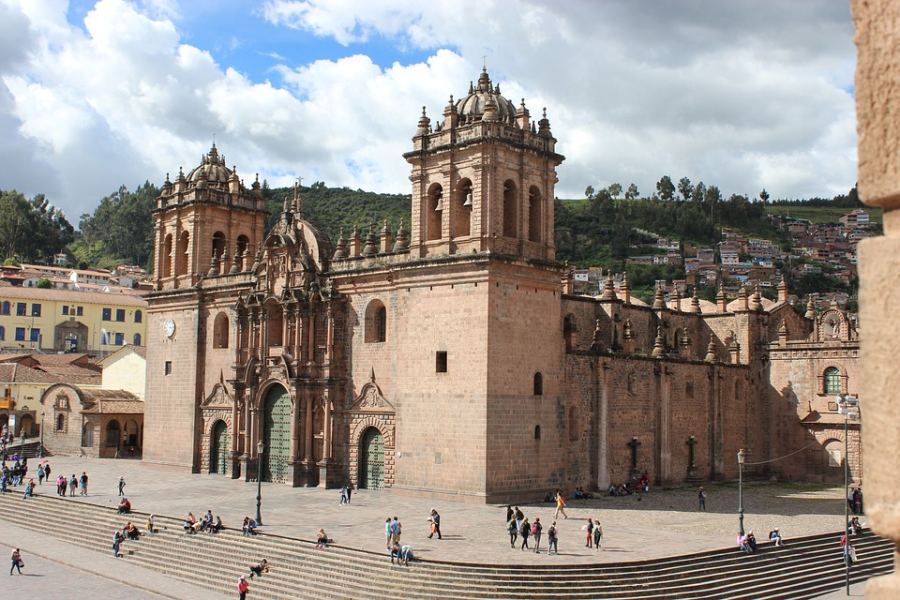
An important city for tourism, also called the Rome of America due to its many monuments. It has been a UNESCO World Heritage site since 1983.
It is located in the Watanay River valley at an altitude of 3400 meters above sea level. It was once the capital of the Inca Empire, and most of its inhabitants are still of Indian origin. In terms of the number of its houses, markets, and streets, it was as large as one of the major cities of medieval Europe.
One of its most beautiful sights is the Santo Domingo Church. During the Inca Empire, it was one of the most important shrines where the Incas sacrificed to Inti, the sun god. After the arrival of the Spanish conquerors, the church was built on the ruins of the shrine. Its uniqueness lies in the combination of Inca architecture and Spanish colonial style: massive Inca walls and finely crafted stone surfaces.
Cusco attractions, museums, weather
Nazca Lines
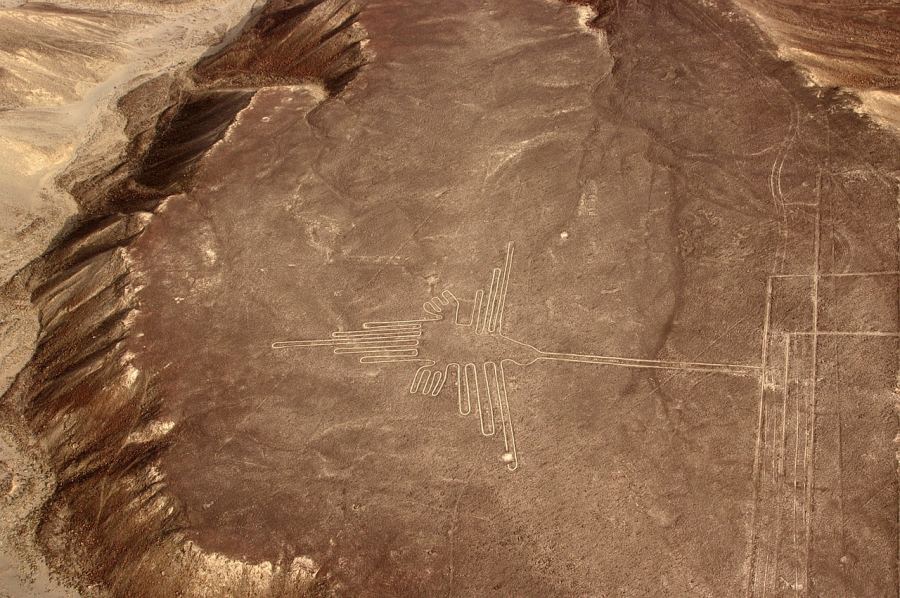
Gigantic geometric shapes discovered on the plateau called Pampas de Jumana depict monumental animal figures and other shapes, and extend across the region as almost straight lines.
They are approximately 2000 years old. More than a hundred shapes were carved into the desert red rock, including contours of well-known animals and plants, geometric patterns, and series of straight lines. Their purpose is unknown. A common characteristic of the drawings is that they consist of a single line that never intersects itself.
Lima
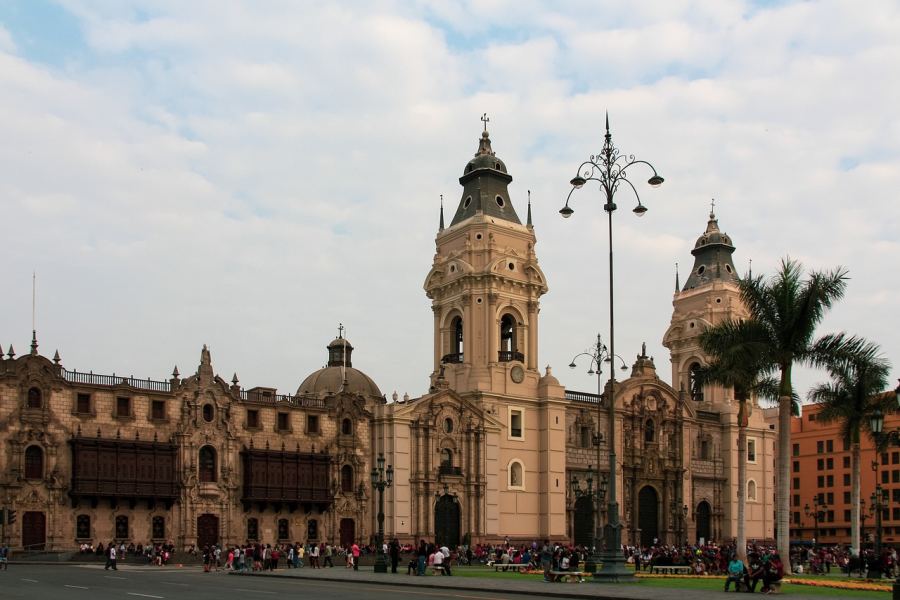
The capital of Peru is called the city of „eternal spring” due to its climate. The city, located on the Pacific coast, was founded in 1535 by Spanish conqueror Francisco Pizarro.
Its center is Plaza Mayor, also known as Plaza de Armas. The city began to develop around this square in the 16th century, and it is one of the most popular destinations for tourists. Several of the country’s most important buildings are located around it: the Government Palace, the Cathedral of St. John, the Municipal Palace, the Archbishop’s Palace, and the Club de la Unión building.
The city also attracts visitors with its important seaside promenades and beaches, such as the Miraflores and Barranco districts.
Lake Titicaca
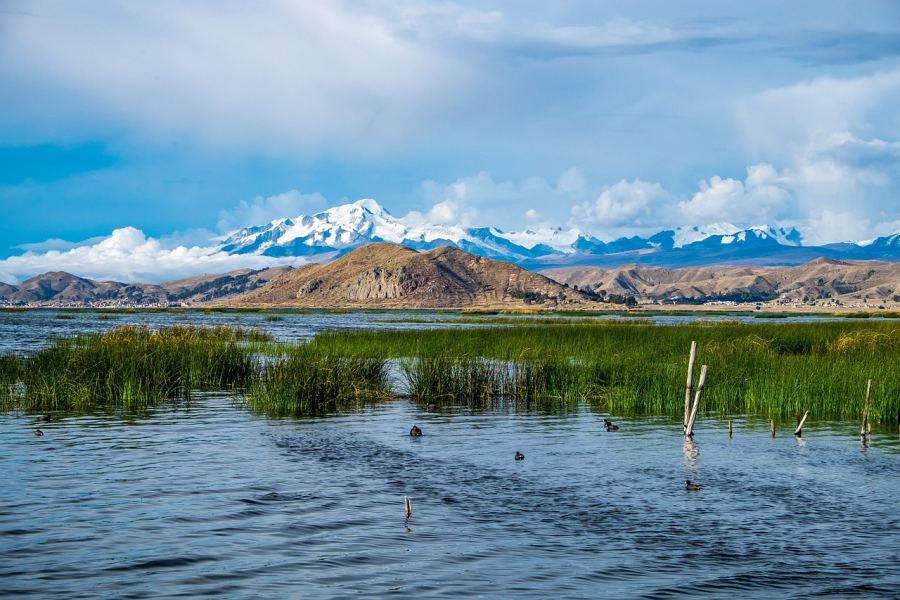
It is South America’s largest lake in terms of water volume and area, and the world’s highest navigable lake.
The lake, approximately 190 kilometers long and 80 kilometers wide, is surrounded by the Andean mountain ranges, which makes it a popular natural attraction. It has special cultural and historical significance as it was an important sacred center of the Inca Empire and other pre-Columbian civilizations.
The lake’s most famous inhabitants are the Uros Indians, who live on traditional floating islands made of reeds and continue to preserve their unique culture and way of life to this day.
Chan Chan
Located near the city of Trujillo on Peru’s northwestern coast, it was once the capital of the ancient Chimu civilization.
The adobe brick city is the world’s largest pre-Columbian clay-built city, which flourished between the 9th and 15th centuries AD. The city covers about 20 square kilometers and consisted of more than ten thousand buildings, including palaces, temples, residential quarters, and warehouses.
Its design and architecture were extremely advanced. The city was composed of fortress-like complexes called „ciudadelas” surrounded by high walls, each serving as the residence of a ruler or noble family.
The Chimu civilization flourished until the Inca conquest at the end of the 15th century when Chan Chan was incorporated into their empire. The city now lies mostly in ruins, but the surviving walls provide insight into the life of one of the largest and most advanced civilizations in pre-Andean Peru.
Arequipa
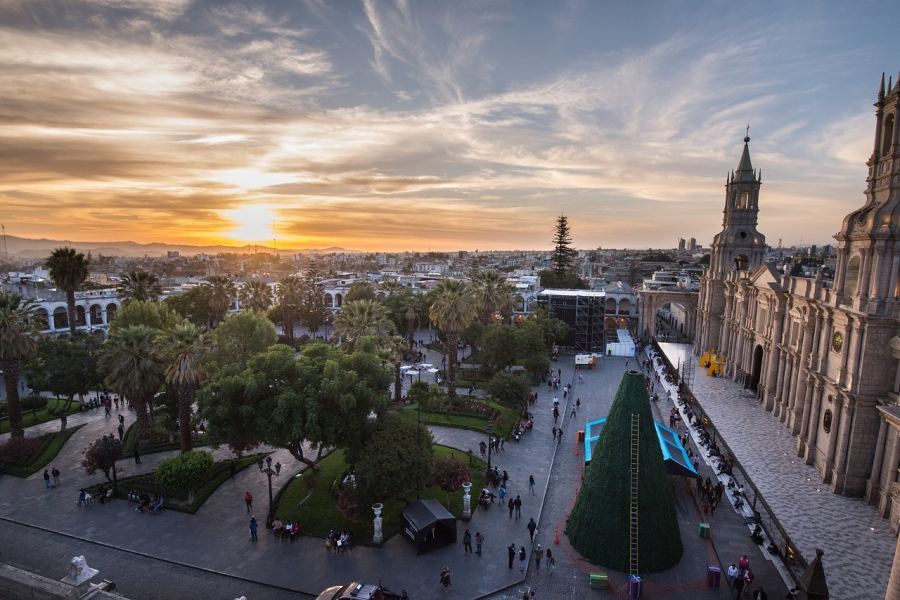
Peru’s second-largest city. It is often referred to as the „White City” because many of its buildings are made of local white volcanic rock called sillar.
It is located at the foot of the Andes Mountains, at an altitude of 2335 meters above sea level. It’s an excellent starting point for the nearby Misti Volcano and Colca Canyon, which are wonderful natural attractions.
Its center is a UNESCO World Heritage Site, thanks to its well-preserved colonial buildings and Baroque-style churches built during the Spanish conquest. Its most beautiful sight is the Santa Catalina Monastery, a large monastery complex founded in the 16th century.
Misti Volcano
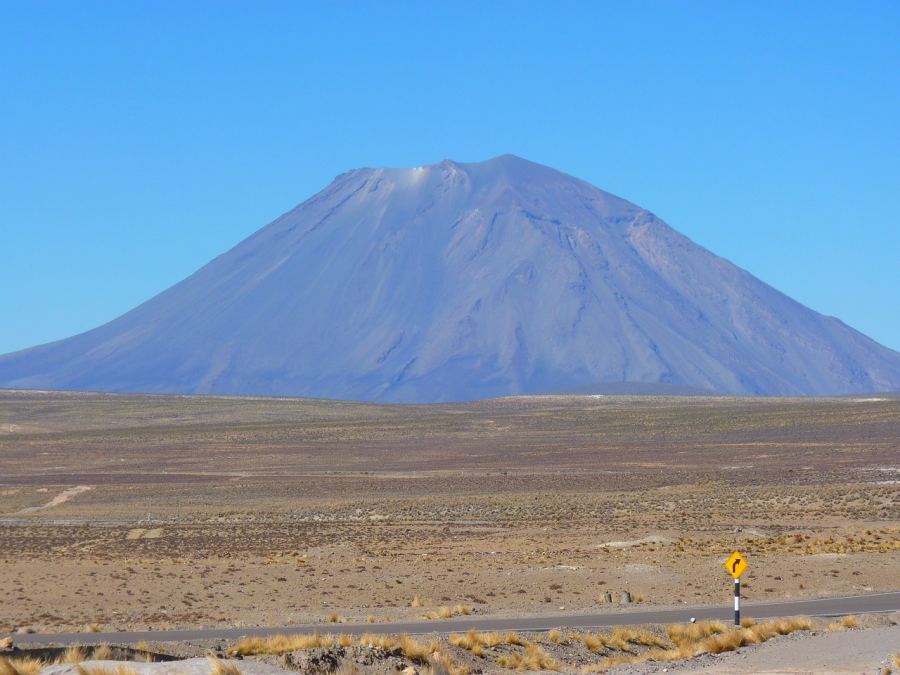
This active volcano, famous for its conical shape and snow-covered peak, rises in the background of Arequipa city.
It’s approximately 5822 meters high, located in the Pacific Ring of Fire, one of the world’s most active volcanic zones. It last showed activity in 1985, and although currently dormant, it’s continuously monitored for signs of reactivation.
It played an important role in ancient culture. The Incas revered it as a sacred place, and archaeological evidence suggests that sacrifices were made at its peak to express reverence to the gods.
Although the volcano is climbable, it’s considered very difficult terrain due to its altitude and resulting weather uncertainties.
Colca Canyon
One of the world’s deepest canyons is located about 160 kilometers northwest of Arequipa city.
The canyon is 70 km long, with depths varying between 1000-2000 meters. The area is characterized by terraces dating back to Inca times, still used for agricultural purposes today. On the canyon walls and in the surrounding area, there are numerous traditional Andean villages where people have preserved their ancient culture and way of life.
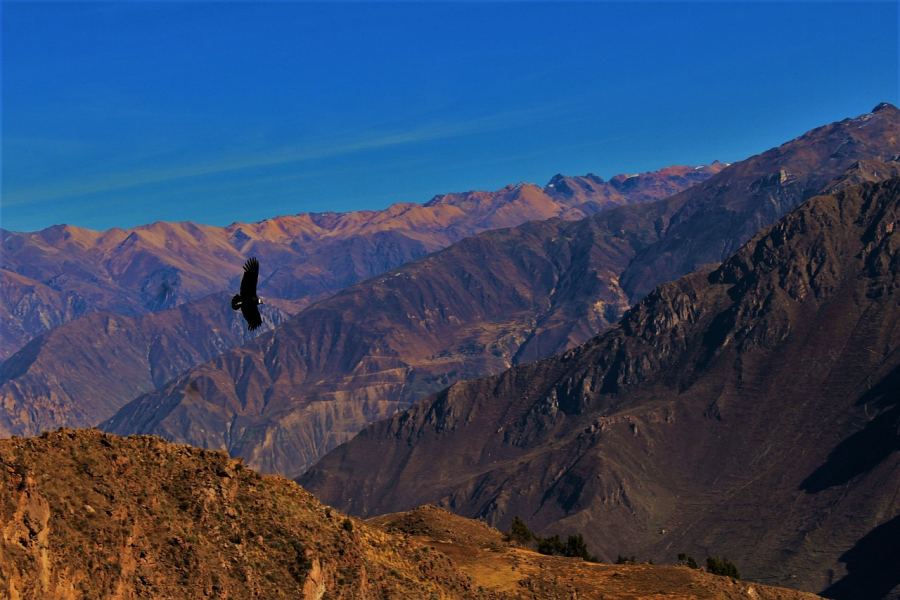
Its iconic animal is the Andean condor. One of the world’s largest flying birds can often be seen soaring over the canyon. The Cruz del Condor viewpoint is one of the most famous spots where we can observe these birds.
Kuélap
One of Peru’s important archaeological sites. The fortified city was founded and inhabited by the Chachapoyas.
The fortress on the mountaintop is surrounded by cliffs on three sides. The bird-wing shaped area, 584 meters long and an average of 120 meters wide, consists of two huge, artificially created platforms placed one above the other, on which the houses and other buildings of Kuélap were built.
The plateau is surrounded by stone walls reaching up to 30 meters in height in places. Besides the houses, characteristic buildings include the 7-meter high watchtower and the structure called the Inkwell, a truncated cone-shaped building that narrows downwards, which probably served ritual purposes.
In 2018, a cable car was put into operation that takes tourists from the village of Nuevo Tingo in the valley to the ruins, covering 4 km in 20 minutes.
Gocta Waterfall
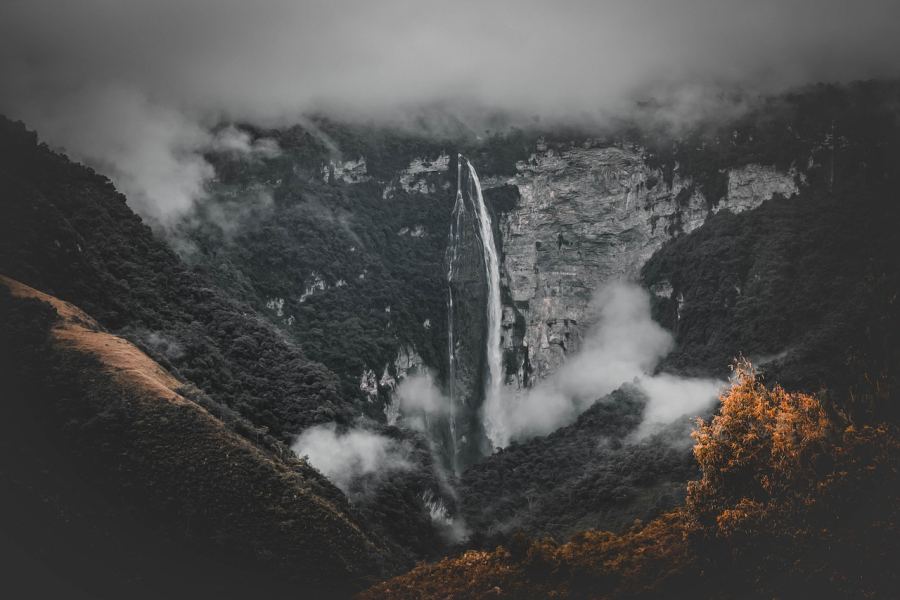
Located in the Amazonas region in northern Peru, it’s one of the highest waterfalls in the world.
Interestingly, it remained „hidden” for a very long time, as the locals kept it secret partly due to a legend. It only became widely known in 2005 when a team of scientists brought international attention to it.
The 771-meter high waterfall consists of two sections: the upper part is 231 meters high, the lower 540 meters. Reaching the waterfall requires a medium difficulty hike, usually starting from the village of Cocachimba. The hike takes about 5-6 hours round trip.
Ollantaytambo
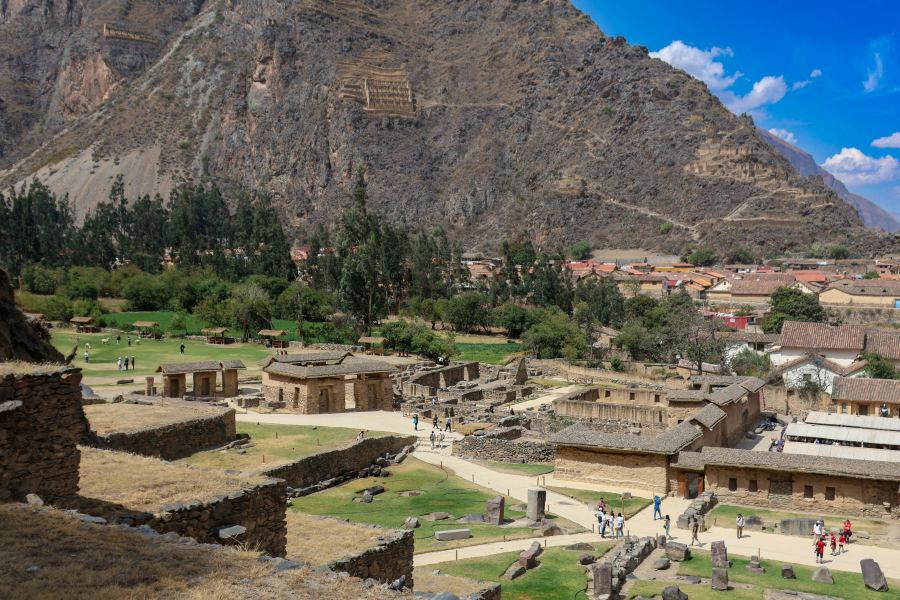
The small town and archaeological site in the Urubamba Valley was one of the most significant settlements of the Inca Empire.
One of the best-preserved Inca cities is located at an altitude of 2792 meters and is a popular stop for tourists heading to Machu Picchu. Its streets and residential quarters still preserve the Inca architectural style, many buildings are built on original Inca foundations, and the city’s structure still follows the Inca layout.
Its most beautiful part is the fortress built in the 15th century. From its top, there’s a wonderful view of the surrounding valley and mountains, as well as the Urubamba River. One of the most significant structures within the fortress is the Temple of the Sun, made of huge monolithic stones and likely served ceremonial purposes.
Rainbow Mountain
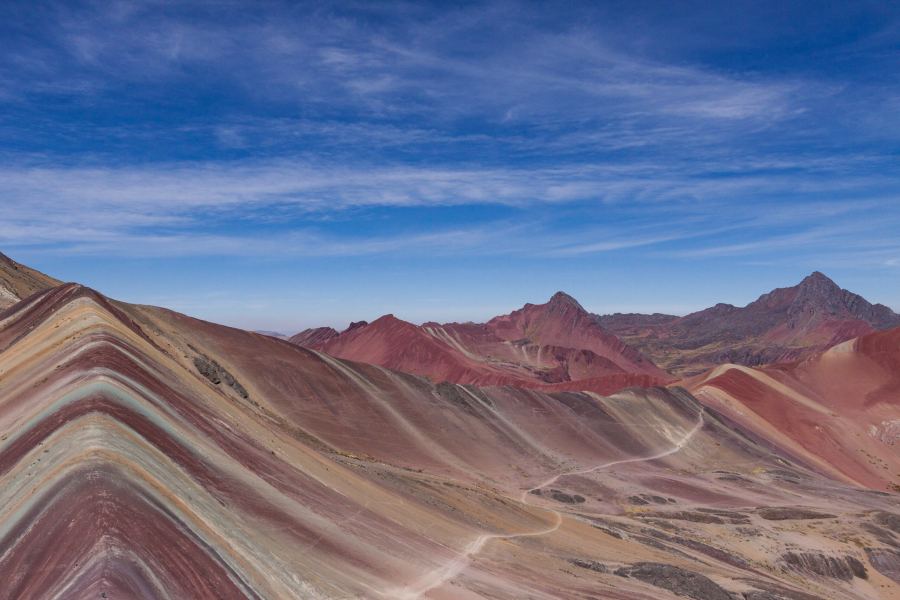
One of Peru’s most spectacular natural wonders is located about 100 kilometers southeast of Cusco city, as part of the Vilcanota mountain range.
It’s famous for its vibrant, layered colors that shine in shades of red, green, yellow, blue, brown, and pink. These are caused by the presence of various minerals that were deposited in the area millions of years ago. Iron oxides give red and pink hues, copper gives green shades, while sulfur compounds give yellow colors to the mountain sides.
Hikes often depart from nearby Cusco city and involve several hours of walking from the base of the mountain to the summit. However, its beauty is becoming increasingly attractive to tourists, so more and more people are visiting this wonderful mountain.
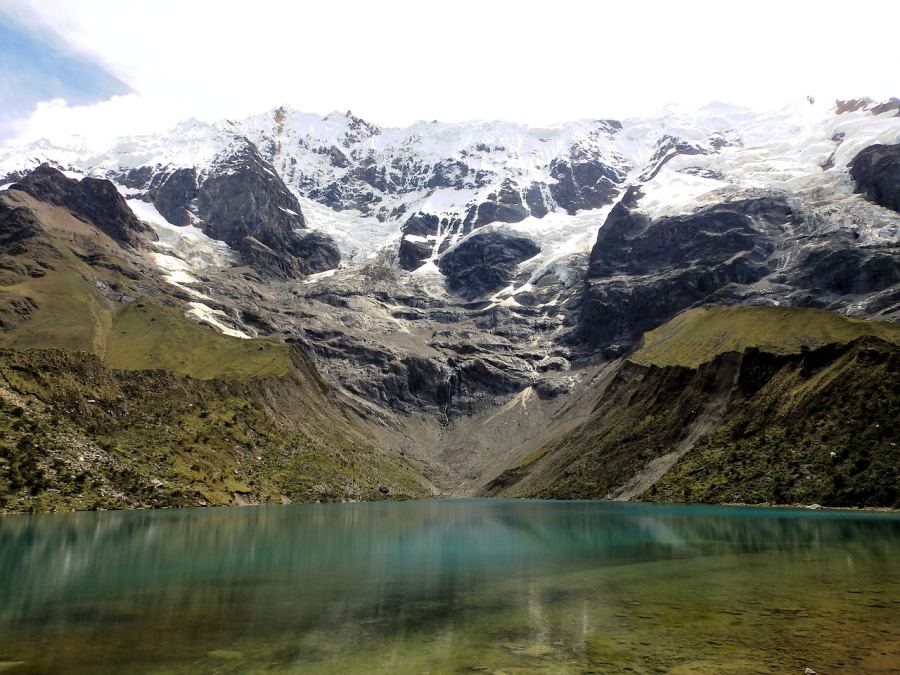
Lake Humantay
Located in southwestern Peru at an altitude of 4200 meters above sea level in the Humantay mountain range.
The ice-blue lake is fed by meltwater from high mountain glaciers. Its crystal-clear water and the imposing mountains rising around it provide a magical panorama. It’s very popular among hikers.
Hikes most often start from the village of Mollepata. This follows a medium-difficulty, rocky terrain, but the panorama makes it worth trying this route.
Huascaran National Park
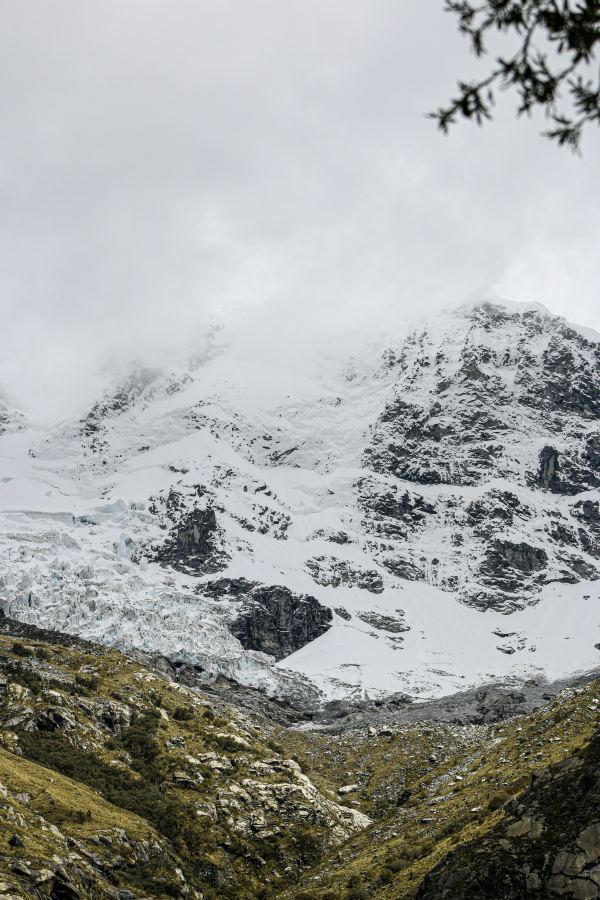
One of the country’s largest and most important nature reserves is a UNESCO World Heritage Site, thanks to its natural beauty and biodiversity.
The park covers an area of about 340,000 hectares, with its highest peak, Huascarán, at 6768 meters. This is Peru’s highest mountain peak. The park boasts rich flora and fauna: Andean condors, wild llamas, alpacas, as well as numerous plant species, such as the „puya raimondii”, which is the world’s largest bromeliad.
The park is also a popular destination for hikers and mountaineers. Numerous hiking trails and climbing opportunities are available at various difficulty levels.
Laguna 69
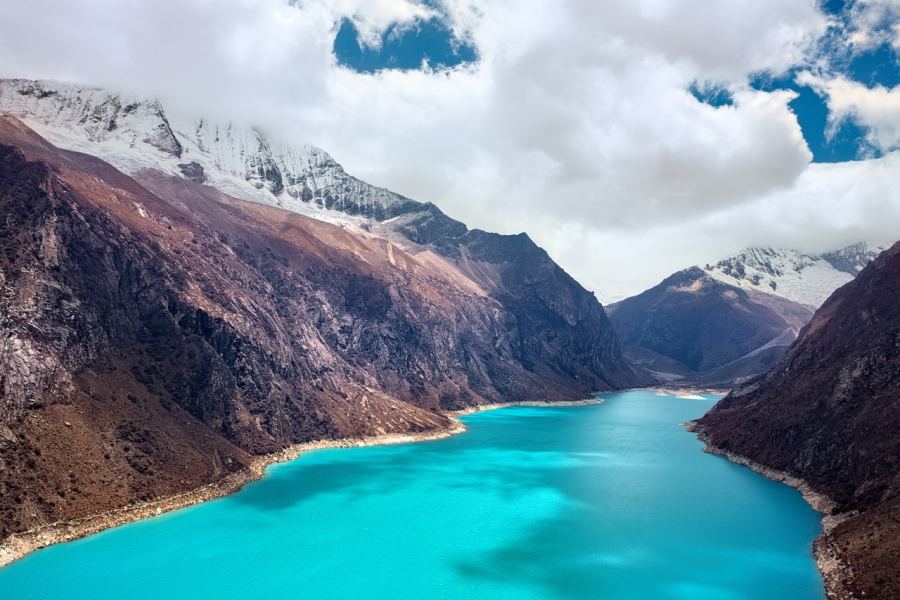
The lake located in Huascaran National Park is one of the park’s most beautiful attractions.
It’s famous for its crystal-clear blue water and the mountain peaks rising around it. The color of the lake is vivid blue due to the effect of sunlight and glacier meltwater, providing a wonderful sight with the snow-capped mountains and green alpine meadows.
Most people start from near the city of Yungay. On a gradually ascending path, we reach the Llanganuco Lakes, known for their greenish-blue color. From here, Laguna 69 can be reached via another uphill path.
Huaraz
The settlement at an altitude of 3050 meters above sea level is often referred to as the „Capital of the Andes”, as the city is an ideal starting point for famous mountain hikes and adventures in the area.
Its history dates back thousands of years, and the area was inhabited even during the Inca Empire. After that, Spanish conquerors also influenced the history of the area, and the city preserves many buildings and monuments that reflect the colonial period.
Due to its popularity, it’s a particularly vibrant city. It’s full of markets, restaurants, and craft shops, making it a perfect destination for those who want to explore the local culture as well.

Wonderful World Heritage sites in South America
South America has numerous natural and cultural World Heritage sites.