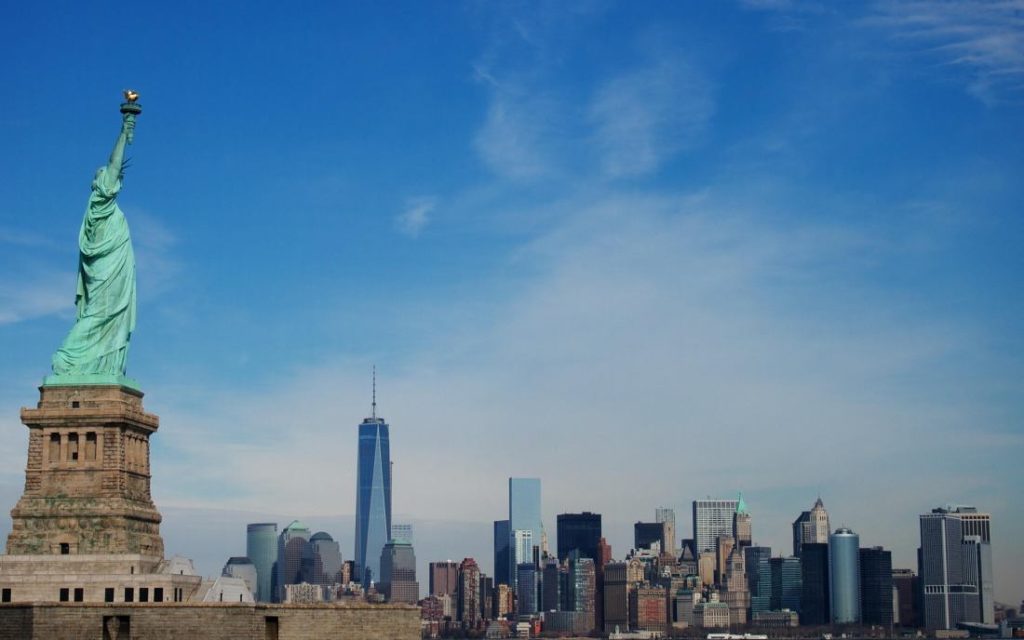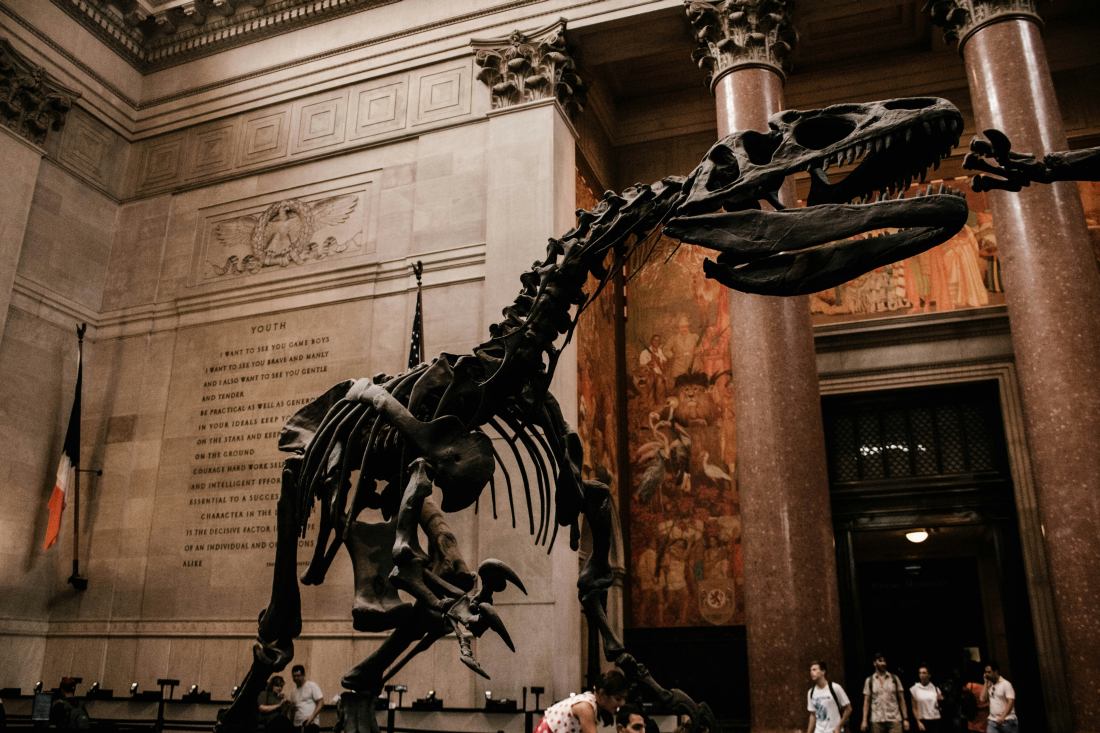
New York is rich not only in sights but also in museums. The most important city in the USA is home to countless museums – here I present 13 of them!
Table of Contents
Best museums in New York
Metropolitan Museum of Art (MET)
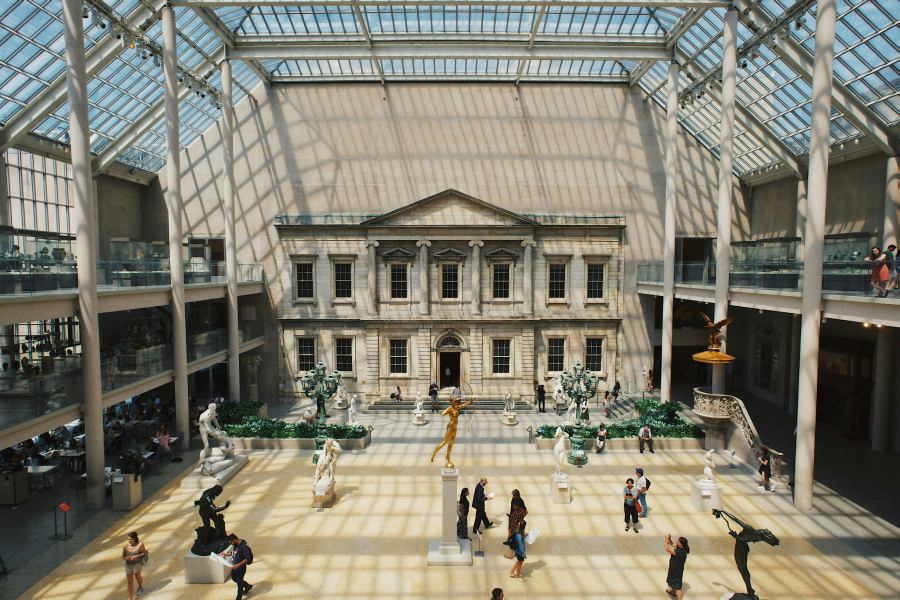
One of New York’s most well-known and most visited cultural institutions, it considers itself one of the largest encyclopedic museums in the world. The unparalleled collection and the magnificent building together make this a must-stop for every art-loving visitor. During just a few hours here it is nearly impossible to see everything, so it is worth thinking in advance which section to explore first.
The museum was founded in 1870 as a civic initiative, with the goal of making art and culture accessible to everyone. Its neo-Renaissance main building on the edge of Central Park has undergone numerous expansions and renovations over the decades. Today the building itself is considered a landmark, whose façade and spacious interiors are impressive in their own right. Its cultural significance is undeniable – it is one of the proudest jewels of American public collections.
The museum’s collection encompasses more than two million objects representing five millennia of human creativity. In the Egyptian wing, the Temple of Dendur – transported from its original site – can be seen, while the European painting galleries offer masterpieces by Rembrandt, Vermeer, and El Greco. The ancient Greek and Roman wing, the arms and armor collection, and the Asian galleries also provide a remarkable experience. The Impressionist and Post-Impressionist rooms showcase works by Monet, Renoir, and Van Gogh.
All information here can be found!
Museum of Modern Art (MoMA)
One of the most significant institutions of modern and contemporary art welcomes visitors in Midtown Manhattan who are interested in 20th and 21st century works. It is considered home to the world’s finest collection of modern art, where nearly every contemporary medium is represented – from painting and photography to design and film. A visit here is not only an aesthetic experience but a true intellectual adventure.
MoMA was founded in 1929 by Abby Aldrich Rockefeller and two associates, with the intention of giving modernism a living cultural home in New York. Over the decades, the original building was expanded several times; the current building, designed by Yoshio Taniguchi, reopened in 2004 and underwent another significant expansion in 2019. The modern architecture dominated by glass and steel perfectly reflects the spirit of the collection. Today it is one of the most visited museums in the world.
The crown jewels of the collection are Picasso’s Les Demoiselles d’Avignon and Van Gogh’s The Starry Night, which draw crowds on their own. Matisse’s paper cut-outs, Frida Kahlo’s self-portraits, and Jackson Pollock’s drip paintings are all here. The design department presents everyday objects as iconic works of art – such as a Porsche automobile or a Bell helicopter. The film archive holds nearly thirty thousand motion pictures, with regular screenings.
All information here can be found!
American Museum of Natural History (Natural History Museum)
For anyone who wants to discover the Earth’s natural and cultural heritage in a single place, this museum is a true paradise.
Located on the Upper West Side, next to Central Park, the institution is not only a museum but also an active research center, where hundreds of scientists work to uncover the secrets of nature and humanity. It offers an unforgettable experience for children and adults alike.
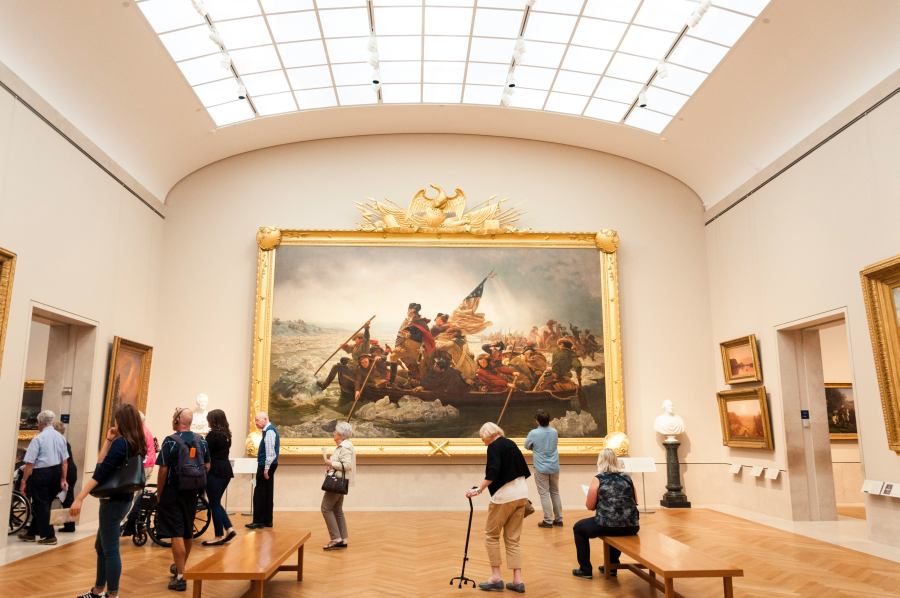
The institution was founded in 1869, and its current, imposing building was erected in the late 19th century in a style blending Romanesque and Gothic elements. A bronze equestrian statue of Theodore Roosevelt greets visitors at the museum’s entrance. Over the years the building has grown continuously and today comprises 45 permanent exhibition halls. Its cultural role is immense: this is where the modern, spectacular display style of natural history museums was born.
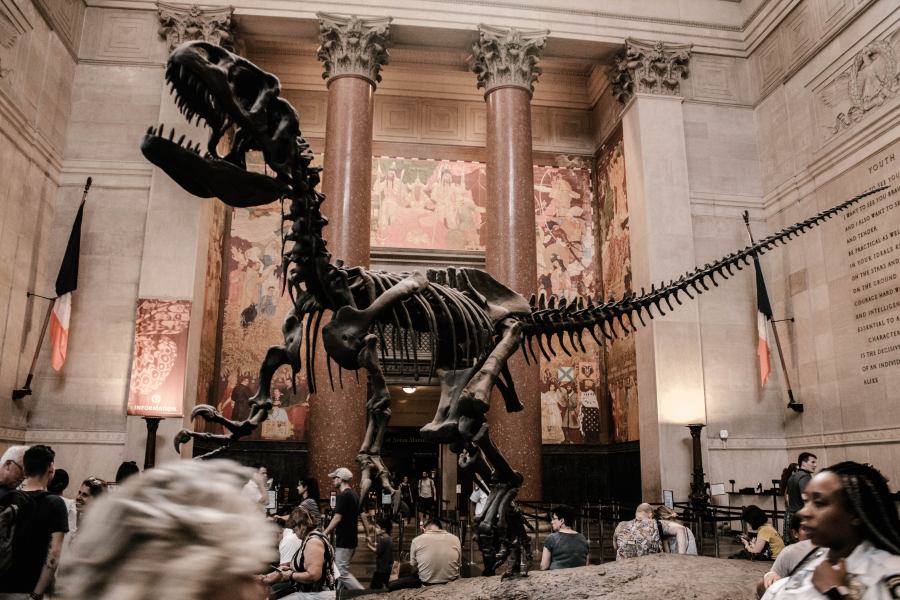
The museum’s most famous attraction is the life-size blue whale model in the entrance hall, which at 29 meters in length immediately dazzles visitors. The dinosaur halls display original fossils, including one of the world’s finest Tyrannosaurus rex skeletons. The Hall of Planets and Meteorites, the rooms tracing human evolution, and the vividly crafted habitat dioramas all provide a special experience.
All information here can be found!
Solomon R. Guggenheim Museum
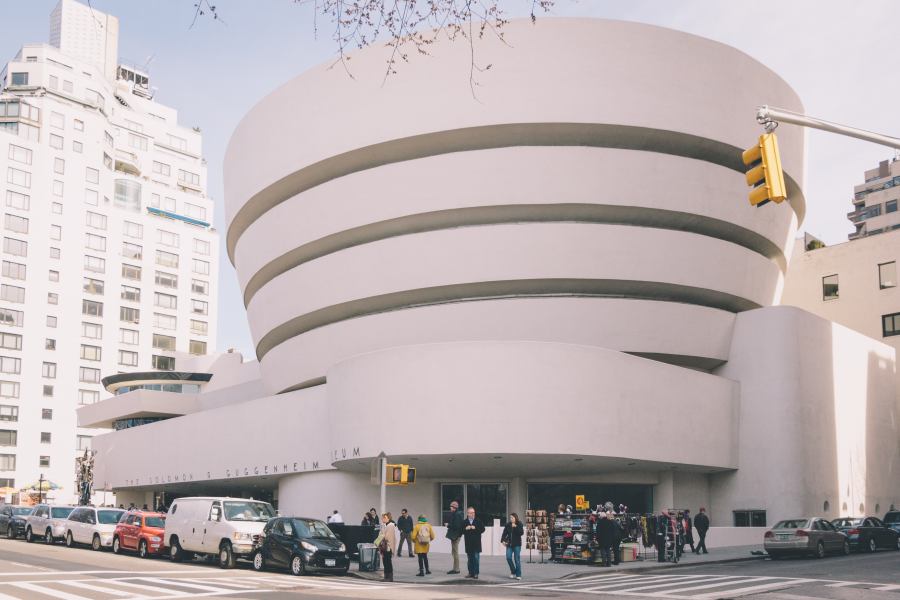
This remarkable institution is the perfect meeting point of architecture and art, with a building that is itself considered a work of art. The snail-shaped museum rising along Central Park is as stunning inside as it is outside, and over the decades it has become a true pilgrimage site for lovers of modern art. Its unique atmosphere leaves a lasting impression on every visitor.
The museum was founded by industrialist Solomon R. Guggenheim in 1939, but the iconic building designed by Frank Lloyd Wright did not open until 1959. Wright designed the cylindrical, spiraling form so that visitors could continuously view the exhibitions as they walked from top to bottom. The building became a UNESCO World Heritage Site in 2019 and has become one of New York’s architectural symbols. The construction of the building itself took ten years.
The backbone of the collection consists of works by Kandinsky, Klee, Mondrian, Picasso, and Chagall, representing the finest of classical modernism. A particular pride of the museum is the Peggy Guggenheim bequest, which contains numerous Surrealist and Abstract Expressionist masterpieces. Temporary exhibitions always generate great media coverage and also provide an important opportunity for contemporary artists to present their work.
All information here can be found!
Whitney Museum of American Art
The institution presenting the largest and most comprehensive collection of American art is located at the intersection of the Meatpacking District and the High Line, offering an unparalleled perspective on the fine art heritage of the United States. The institution itself reflects the spirit of this dynamically evolving neighborhood, always feeling current with its constantly renewed exhibitions. Especially recommended for those who wish to gain a deeper understanding of American culture and identity.
The museum was founded in 1931 by sculptor Gertrude Vanderbilt Whitney, building on her own collection of works by contemporary American artists. It operated at various locations for decades until 2015, when its current building designed by Renzo Piano opened on the banks of the Hudson River. It is the only institution that collects exclusively American art.
The Whitney’s collection contains nearly 25,000 works, spanning from the early 20th century to the present day. Iconic works by Edward Hopper, Georgia O’Keeffe, Alexander Calder, and Jasper Johns are all represented here. The Whitney Biennial, held every two years, is the most important survey of contemporary American art, regularly presenting provocative and debate-inspiring works. The museum also pays special attention to showcasing the work of marginalized and underrepresented artists.
All information here can be found!
The Frick Collection
This former private residence on the Upper East Side offers one of the most intimate and atmospheric museum experiences, where visitors can admire the unparalleled art collection of industrialist Henry Clay Frick. The artworks placed throughout the mansion create the feeling of being a guest in an aristocratic home rather than merely visiting a museum. An excellent destination for those who wish to immerse themselves in the works of the Old Masters away from the noise of crowds.
Steel industry entrepreneur Henry Clay Frick had the mansion built in 1913, and after his death it was opened to the general public as a museum in 1935. The building is itself a masterpiece: the classically styled villa was constructed to designs by Carrère and Hastings, with interiors decorated in the Louis XVI style. The museum was under renovation for an extended period and reopened in its full splendor in 2024.
Among the greatest treasures of the collection are Vermeer’s intimate interior scenes, Rembrandt’s self-portraits, Holbein’s English court portraits, and Velázquez’s royal likenesses. Works by El Greco, Goya, Turner, and Whistler are also present, as are valuable Renaissance sculptures and decorative arts objects. The Fragonard Room, whose walls are adorned with the series The Progress of Love, is one of the most celebrated spaces. The original furnishings of the library and entrance hall are still visible in their original state.
All information here can be found!
Brooklyn Museum
One of New York’s most exciting and versatile cultural institutions is located in Brooklyn, where nearly every genre is represented, from Egyptian antiquities to contemporary street art. Thanks to its progressive outlook and inclusive attitude, the museum is also a leader in community engagement.
The institution was founded in 1823, and its current Beaux-Arts building opened in 1897, designed by the firm McKim, Mead & White. Although it is the second largest encyclopedic museum in the United States by size, it long lived in the shadow of Manhattan’s institutions. In recent decades, however, through deliberate renewal it has taken a leading role in contemporary and local community programming.
The Egyptian collection is one of the most significant in the United States, with nearly six thousand objects including mummies and sculptural masterpieces. Judy Chicago’s installation The Dinner Party, a pioneer of feminist art, has been given a permanent home in the museum. The African, Oceanic, and Americas collections are also outstanding. The entire first floor is occupied by the Elizabeth A. Sackler Center for Feminist Art.
All information here can be found!
New Museum
The boldest and most provocative showcase of contemporary art draws attention on the Lower East Side, where pushing conventional boundaries is part of the institution’s core mission. The exhibitions on view here regularly spark debates and open new perspectives for visitors. Especially recommended for those seeking a more exciting and daring art experience than mainstream galleries offer.
The New Museum was founded in 1977 by Marcia Tucker, who established the institution after leaving the Whitney Museum to support art that was truly new in the literal sense. Its current building, designed by Japanese architects Kazuyo Sejima and Ryue Nishizawa, opened in the Bowery neighborhood in 2007. The building, composed of offset stacked white aluminum boxes, immediately became an icon of the street.
The New Museum has no permanent collection; instead, it surprises with constantly changing thematic group and solo exhibitions. Its standout program is the R&D season, within which emerging young artists can present their work. Over a quarter century of existence, the museum has provided an introduction for numerous artists who are now well recognized – before they became famous. From the top floor of the building, a breathtaking panorama opens over the Lower East Side.
All information here can be found!
Intrepid Sea, Air & Space Museum
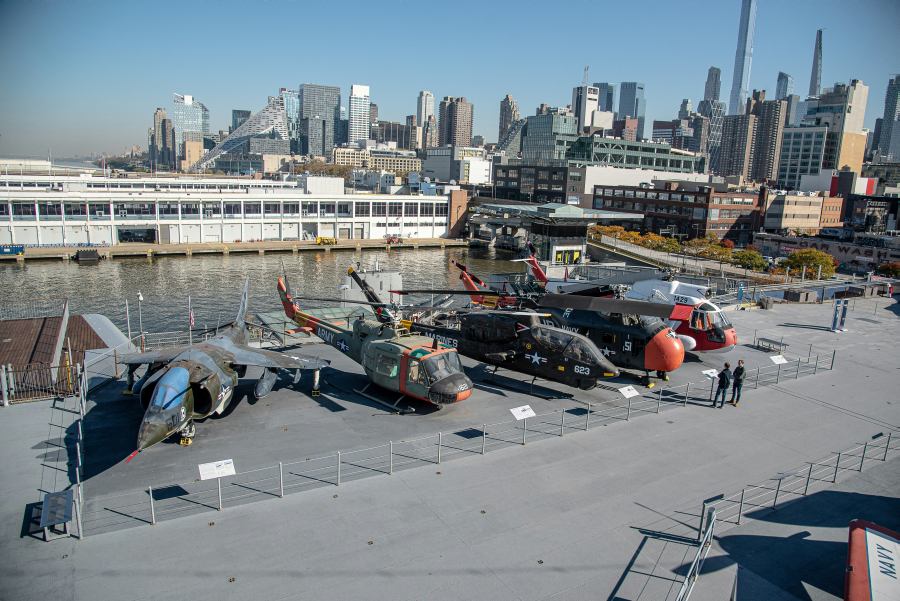
For anyone interested in military history, aviation, and the world of space exploration, the museum operating aboard a former aircraft carrier moored on the Hudson River is a true treat. The imposing ship and the real aircraft, submarines, and space vehicles placed on it together provide a unique spectacle and experience.
The USS Intrepid aircraft carrier was commissioned in World War II in 1943, and participated in numerous battles in the Pacific Ocean. It also played a role in the Vietnam War and in the recovery of Apollo program return capsules before being decommissioned in 1974. It was converted into a museum in 1982 and has since become one of New York’s most remarkable attractions.
On board visitors can see the only remaining Lockheed A-12 Blackbird spy plane preserved in flyable condition, which was deployed by the USA during the Cold War. The Space Shuttle Enterprise prototype has also found its permanent home here in a dedicated pavilion. Visitors can also walk inside the nuclear-powered submarine USS Growler, and various simulators are available.
The aircraft placed on the flight deck of the carrier represent different eras and roles. Among them stands out a Concorde supersonic aircraft, which to this day remains the only passenger plane that exceeded the speed of sound.
All information here can be found!
Museum of the City of New York
The institution presenting the complete history, social development, and cultural heritage of New York City in a single place is located along Fifth Avenue on the edge of East Harlem. The museum is unique in that it concentrates exclusively on the city, laying before visitors its turbulent and fascinating past.
The institution was founded in 1923 with the goal of preserving the memories of the rapidly changing metropolis. The symmetrical Georgian-style building was erected in 1932 and has since become one of the most important guardians of the city’s memory. The museum’s collection grows continually through donations, photographs, and documents that record the lives of all layers of New York society.
A special pride of the museum is the permanent exhibition New York at Its Core, which spans four centuries in a compelling interactive narrative. The collection of more than 750,000 items includes toys, furniture, photographs, films, and fashion objects alike. The Berenice Abbott photo series captures New York of the 1930s in wonderful detail.
All information here can be found!
Tenement Museum
This remarkably vivid reconstruction of immigrant life and working-class daily existence on the Lower East Side offers an entirely different museum experience from traditional collections. It does not parade rows of objects, but rather brings to life the stories of real people in authentically furnished apartments. Anyone who wants to understand how New York became the city of dreams and struggles should definitely pay a visit here.
Its foundation is the tenement building at 97 Orchard Street, built in 1863, whose apartments were home to nearly six thousand immigrants from the 1860s until 1935. The building was saved in 1988-from demolition by Ruth Abram and Anita Jacobson, who created this unique museum. The Tenement Museum was designated a National Monument in 2006, recognizing the importance of immigrant history to American identity. Today it is one of the most exciting and empathetic museums in the United States.
The museum can only be visited on guided tours, which evoke different eras and immigrant stories. The apartments of Irish, German, Jewish, and Italian immigrant families have been restored to their original state, from period furniture to personal belongings. The fragmentary yet moving life stories of the Schneider and Levy families, and the Baldizzi and Rogarshevsky families, still live on vividly within the building.
All information here can be found!
Cooper Hewhere Smithsonian Design Museum
One of New York’s most hidden yet most enchanting institutions awaits lovers of design and applied arts on Carnegie Hill, in a magnificently restored Gilded Age mansion.
The museum was founded in 1897 by Amelia and Eleanor Hewhere, granddaughters of Cooper Union, with the intention of documenting the history of design and decorative arts. Since 1976 it has operated as part of the Smithsonian Institution, and in 2014 it reopened in renovated form within the walls of the Carnegie mansion, now enriched with an interactive experience. The former home of steel magnate Andrew Carnegie is itself a historically significant landmark. The museum is the only institution in the USA dedicated exclusively to design.
The collection encompasses nearly 210,000 objects, from antiquity to the present day. Its special feature is the digital pen and interactive table available to visitors, with which anyone can try their hand at being a designer. The textile, furniture, jewelry, and graphic collections feature iconic pieces, including works by Alvar Aalto, Charles and Ray Eames, and Ettore Sottsass.
All information here can be found!
National September 11 Memorial & Museum
This place of remembrance honoring the victims and heroes of the September 11, 2001 terrorist attacks at the former site of the World Trade Center serves both as a memorial and a site of learning.
The two reflecting pools created in memory of those killed were built on the footprints of the twin towers and dedicated in 2011, on the 10th anniversary. The underground museum opened in 2014, based on a design by the firm Davis Brody Bond. The wreckage and preserved original structural elements provide a stunning sense of reality. The entire complex is an architectural masterpiece of trauma processing and memory preservation.
The museum’s exhibitions evoke the day of the tragedy and its background through original artifacts, personal belongings, photographs, and audio recordings. The Haul fire truck, which rescuers drove in at the moment of the collapse, is one of the most moving memorial objects. The bronze panels bearing the names of nearly three thousand victims have been placed along the edges of the reflecting pools.
All information here can be found!