
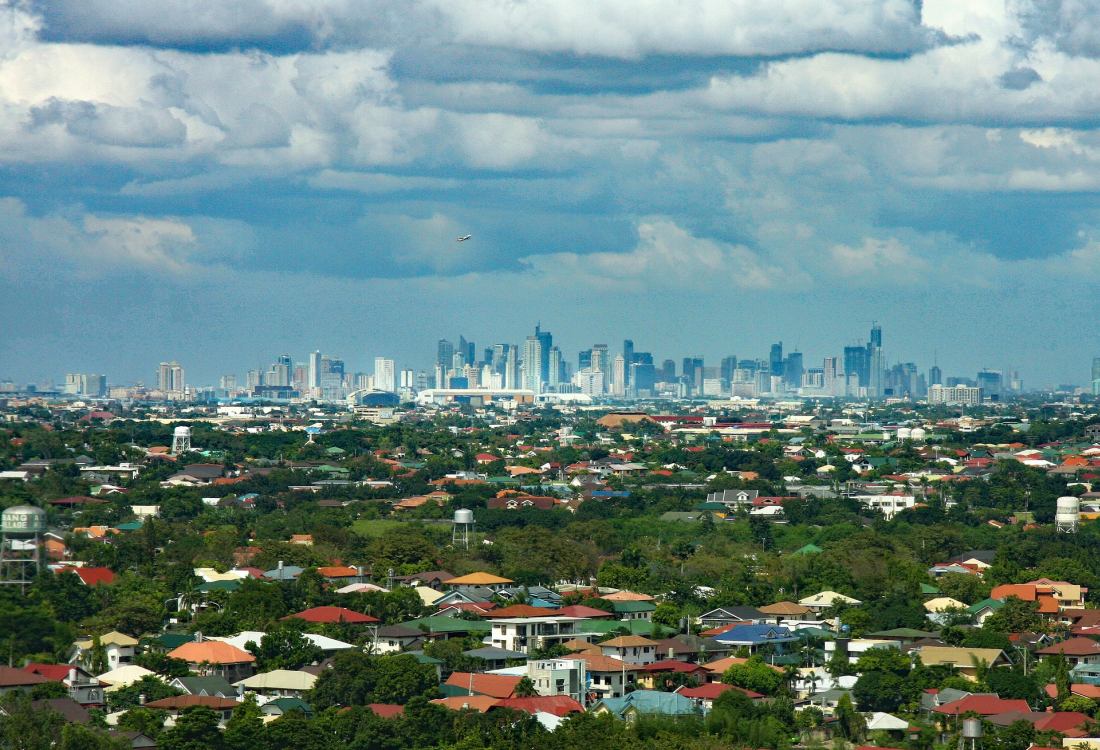
Manila, the vibrant capital of the Philippines, is a unique blend of Spanish colonial past and modern Asian metropolitan life.
The city, located 14 meters above sea level, is a realm of eternal summer, although the tropical heat is somewhat moderated by the proximity to the sea.
Table of Contents
Manila attractions
Intramuros
The „walled city” is Manila’s historic core, founded by the Spanish in 1571. The 4.5-kilometer stone wall and bastion system built around the 64-hectare area is still visible today, preserving Manila’s most authentic colonial quarter.
Walking along the cobblestone streets, we can discover beautifully restored Spanish colonial buildings, churches, and museums. The district’s special feature is that it remains an inhabited neighborhood where local families live in the historic buildings.
A walk along the city walls is particularly recommended, offering unparalleled views of Manila Bay and the modern city’s skyscrapers. The area can also be explored by kalesa horse-drawn carriage, which lends a special atmosphere to the visit.
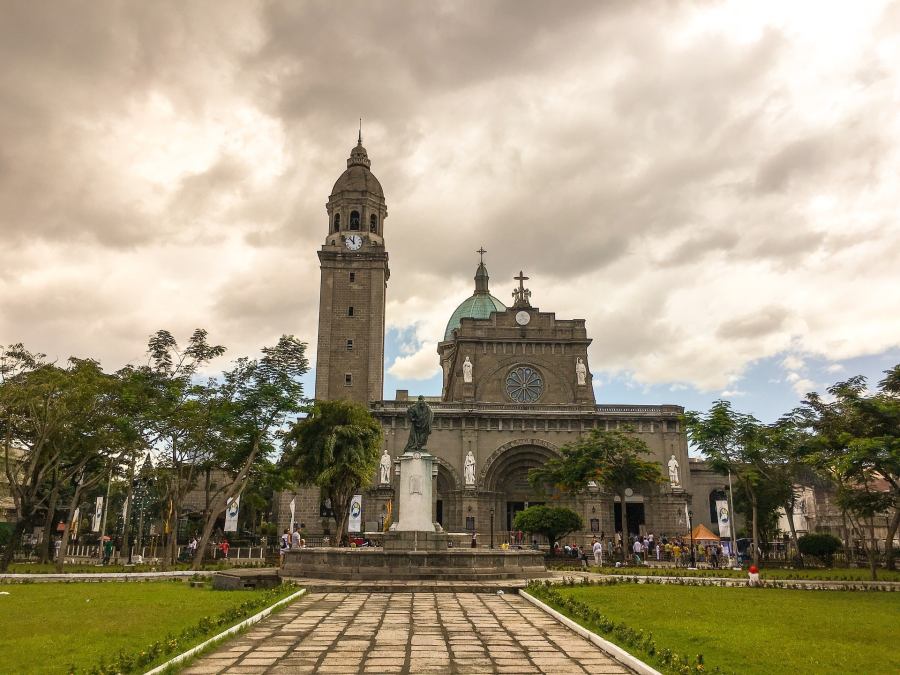
Manila Cathedral
The current cathedral was rebuilt in the early 1950s for the sixth time, after previous temples were destroyed by earthquakes and wars. The neo-Romanesque style building’s massive dome and two towers are visible from afar in Intramuros.
The cathedral’s interior is impressive: beautiful rose windows, Italian mosaic floors, and a 4,500-pipe German organ adorn it. Bronze statues behind the main altar depict important figures from Philippine history.
Filipino archbishops and bishops rest in the crypt beneath the church. Each chapel beside the sanctuary is dedicated to a different saint. During Sunday masses, the locals’ singing and the massive organ create an unforgettable experience.
San Agustin Church
The Philippines’ oldest stone church was completed in 1607 in Baroque style and is the only building in Intramuros that survived World War II. The UNESCO World Heritage church is famous for its impressive trompe-l’œil ceiling paintings.
The church’s interior is a true artistic masterpiece: the frescoes on the vaults create a spectacular optical illusion, as if they were real carved stone decorations. The museum operating next to the church preserves an outstanding collection of religious art from the Spanish colonial era.
The building’s walls were constructed from volcanic stone and coral rock. The monastery next to the church features a beautiful Spanish courtyard where visitors can walk among tropical plants.
Rizal Park (Luneta Park)
The 58-hectare urban park is Manila’s „lungs” and a memorial to national hero José Rizal, who was martyred here in 1896. The national hero’s remains are kept beneath the Rizal Monument in the park’s central section, guarded by a permanent honor guard.
The park features a sunken garden, Japanese and Chinese gardens, and a giant relief map of the Philippines. On weekends, local families picnic here, roller skate, and enjoy outdoor programs.
The park is particularly spectacular in the evening when the fountains are illuminated. From the park’s western end, there’s a beautiful view of Manila Bay, and the bay-side promenades also start from here. The area is full of street vendors offering local delicacies.
Manila Bay Promenade (Baywalk)
The several-kilometer promenade along Manila Bay is a favorite spot for locals and tourists, especially at sunset. The renovated promenade is lined with palm trees and equipped with modern lighting and benches.
This promenade is the site of one of the region’s most spectacular sunsets, when the sun sets in fiery red over Manila Bay. The area is full of restaurants, cafes, and outdoor concerts frequently entertain the audience.
On weekends, the promenade is particularly lively, with local musicians performing and families spending their evenings here. Along nearby Roxas Boulevard are restaurants specializing in seafood, where fresh catches can be tasted.
Manila Ocean Park
Southeast Asia’s largest oceanarium opened in 2008 on the shores of Manila Bay. The 8,000-square-meter main aquarium houses more than 14,000 marine creatures, including rare shark species and manta rays.
The ocean park is divided into several themed areas: there’s a 25-meter tunnel where marine animals swim around us, an ice area with penguins, and a jellyfish gallery. Visitors can have interactive experiences, such as touching rays in special pools.
The musical fountain show on top of the complex is particularly spectacular in the evening. Professional divers provide commentary during feeding times in the aquarium several times daily. The park is an ideal program for families and children.
Fort Santiago
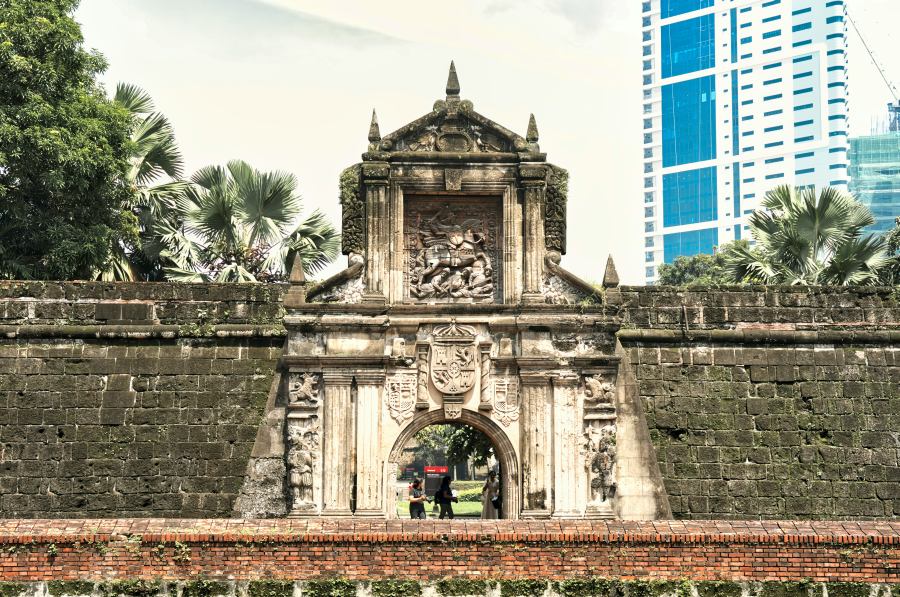
The 16th-century Spanish fort was built in the northern part of Intramuros, at the mouth of the Pasig River, to defend Manila. The citadel is particularly significant in the Philippine independence movement, as national hero José Rizal was imprisoned here before his execution.
The fort grounds contain the Rizal Shrine museum, which presents the national hero’s life and his final hours before execution. The museum’s exhibits include Rizal’s last manuscript, his personal belongings, and the path from his cell to the execution site is accessible.
From the top of the massive stone walls, there’s a wonderful view of the Pasig River and modern Manila. Statues and memorials have been erected in the fort’s atmospheric gardens. In the evening, the illuminated area is particularly romantic, when history becomes tangible.
Binondo (Chinatown)
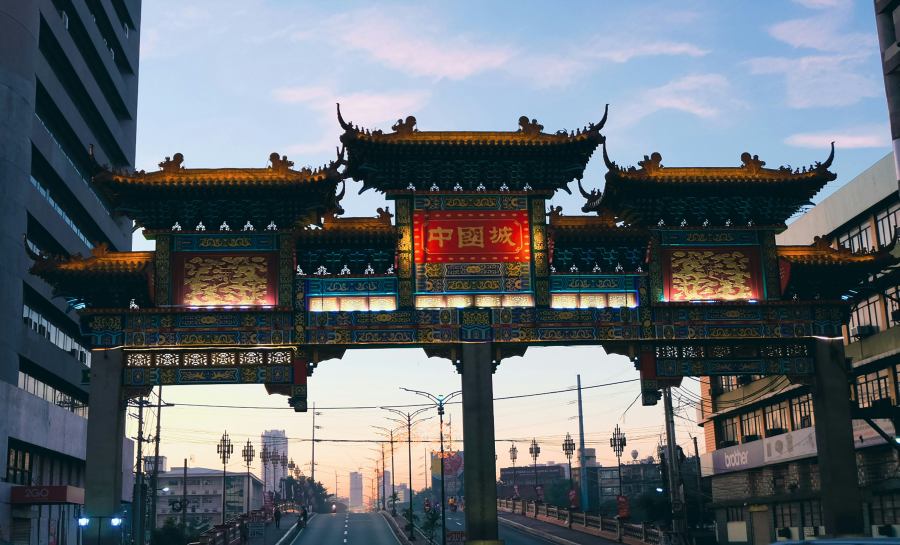
The world’s oldest Chinatown was established in 1594 when the Spanish allowed Chinese merchants who converted to Christianity to settle. The district’s narrow streets are filled with traditional pharmacies, temples, and family businesses.
The Church of San Lorenzo Mártir stands in the heart of the district and is an interesting mix of Chinese and Spanish architectural elements. Ongpin Street is the liveliest commercial street, where everything is available from traditional Chinese medicine to electronics.
From a culinary perspective, Binondo is a true paradise: most of Manila’s best Chinese restaurants are located here, where authentic Cantonese, Hokkien, and other regional Chinese cuisine can be tasted. The district is famous for tikoy (sticky rice cake) and various dim sum delicacies. It’s worth trying Eng Bee Tin’s hopia, an iconic pastry of Filipino-Chinese cuisine.
Quiapo Church and Market
The Quiapo Church was founded in 1586 and is home to the Black Nazarene, a dark-skinned Jesus statue, making it Manila’s most crowded pilgrimage site. Every January 9th, on the Black Nazarene feast day, several million faithful gather to celebrate the procession.
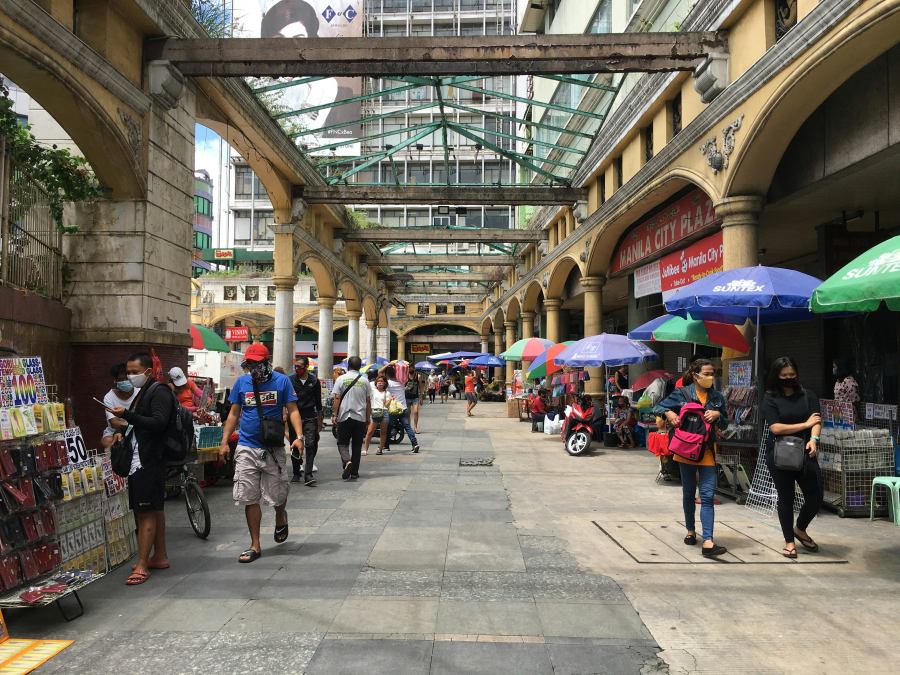
The Quiapo Market around the church is Manila’s most chaotic but liveliest commercial area. Everything can be purchased here from ivory to amulets, from fake brand watches to freshly pressed fruit juices. The market is a genuine Manila experience where we can directly experience the pulse of local life.
In the „ilkesdi” market under the church, traditional medicines, lucky charms, and religious items are sold. On Friday evenings, the church and surrounding area are particularly crowded. The market’s lively traffic and atmosphere provide an authentic glimpse into local culture, but watch out for pickpockets.
Malacañang Palace
The Philippines’ presidential palace was originally built around 1750 as a Spanish aristocrat’s vacation home on the banks of the Pasig River. From the late 19th century, it became the official residence of Spanish, then American governors-general, and finally Philippine presidents.
Part of it has been made accessible as a museum, where rooms, furnishings, and gifts used by various presidents can be viewed. Particularly interesting is part of Imelda Marcos’s shoe collection, which showcases the former first lady’s extravagant lifestyle.
The palace combines Spanish colonial and neoclassical style elements, with reception rooms decorated with beautiful chandeliers. Visits require advance registration and are only possible on specific days and times. The palace’s location along the Pasig River lends a special atmosphere.
Paco Park
The circular cemetery built in the 1820s was originally the resting place of wealthy Spanish families and priests. The 4,000-square-meter area is walled, circular in design, with a small chapel in the center.
National hero José Rizal was originally buried here in 1896, before his remains were transferred to Rizal Park. Today the park is a quiet oasis in Manila’s hustle and bustle, where weddings and concerts are also held.
The park is dominated by beautiful tropical vegetation, and the former burial chapels are now used as museums and event spaces. It’s a particularly atmospheric venue for Friday evening classical music concerts, when the historic setting and music create a special atmosphere. The park entrance opens from General Luna Street.
Greenhills Shopping Center
One of Manila’s largest and most famous markets, operating since 1970 in San Juan district. The complex consists of more than 2,000 shops and vendor stalls, where almost anything can be purchased at favorable prices.
The area is divided into three parts: the air-conditioned interior of Virra Mall, the covered sections of the outdoor market, and the Shoppesville arcade. Manila’s most famous pearl and jewelry markets are located here, where Tahitian and freshwater pearls are available at wholesale prices.
This is the best place to bargain in Manila, and the selection is extremely wide: from electronics to designer replicas, everything is available. Sunday morning is the liveliest when locals also shop. It’s also one of the favorite places to search for antiques and vintage items.
Best museums in Manila
National Museum Complex
The national museum complex consists of three main buildings: the Fine Arts Museum, the Anthropology Museum, and the Natural History Museum. The institution, founded in 1901, preserves the most significant collection of the Philippines’ cultural and natural heritage.
The Fine Arts Museum contains masterpieces by Juan Luna and Félix Resurrección Hidalgo, including the famous Spoliarium painting. The Anthropology Museum showcases the culture of the archipelago’s various ethnic groups, while the Natural History Museum displays Philippine biodiversity.
The complex also displays treasures recovered from the remains of the famous San Diego galleon, which was sunk in 1600. During the visit, we can gain insight into the development of Philippine art and the archipelago’s rich natural world.
Ayala Museum
The museum was founded in 1967 in Makati, Manila’s modern business district, to showcase Philippine history and culture. The building’s modern, air-conditioned spaces provide a pleasant visitor experience in the tropical heat.
The museum’s most famous exhibition is a series of dioramas presenting Philippine history from pre-colonial times to the present day in 60 scenes. The gold exhibition displays pre-colonial era gold jewelry and objects that prove the advancement of the archipelago’s early civilizations.
The ship model collection is one of Southeast Asia’s most significant such collections, with replicas of more than 60 ships. The museum regularly hosts temporary exhibitions of contemporary Philippine artists.
Casa Manila Museum
The completely reconstructed Spanish colonial noble house in the 1850s style provides insight into upper-class life in the 19th century. The building opened as a museum in 1981 and faithfully follows period architecture in every detail.
The two-story house displays original Chinese, European, and Philippine furniture, porcelain, and paintings. The courtyard surrounding the house is a masterpiece of typical Spanish colonial style, decorated with tropical plants and wrought-iron balconies.
The special feature is that every room is furnished as if people still lived there: the dining table is set, bedding in the bedroom, dishes in the kitchen. The building is located on Intramuros’ Plaza San Luis.
Manila weather: when is the best time to visit?
Manila has a tropical monsoon climate divided into two main seasons: the dry and rainy seasons. Throughout the year, temperatures remain relatively constant, ranging between 25-32°C, so there’s no real winter. Humidity is consistently high, around 70-80%, which can result in oppressive heat.
Dry season (November-April):
This period is characterized by less precipitation and lower humidity, although temperatures remain high. December and February are the coolest months when temperatures can drop to 24-25°C in the evening. March and April are the hottest period when the thermometer often reaches 35°C.
Rainy season (May-October):
Monsoon rains characterize this period, with the strongest showers between July and September. Precipitation usually occurs as short, intense afternoon or evening showers, not continuous rain. Typhoon season runs from July to October when the Philippines can be affected by strong tropical storms.
Best time to travel Manila:
The ideal time to visit Manila is between December and February, when the weather is pleasant: lower humidity, less rain, and tolerable temperatures. During this period, sightseeing and outdoor programs are more enjoyable as the heat isn’t suffocating and rain doesn’t interrupt programs. March and April are also dry but much hotter, which can be particularly exhausting for sightseeing. If you want to enjoy Manila Bay’s beaches, the December-February period is perfect, as the ocean water is a pleasant 27-28°C.
Frequently Asked Questions about Manila
Manila is in the Philippine Time Zone (PHT, UTC+8) and does not use daylight saving time.
The official languages of the Philippines are Filipino (Tagalog) and English. English is extremely widespread in Manila, with most of the population speaking it well, so communication is generally not difficult for tourists. Locals are friendly and helpful, and basic English proficiency is completely sufficient.
Manila’s official currency is the Philippine peso (PHP). Cash use is very common, especially in smaller shops, markets, and street vendors. Credit cards are accepted in shopping centers, hotels, and better restaurants, but it’s always worth carrying cash. ATMs are widely available throughout the city. Here is a currency converter calculator.
Types A, B, and C plugs are most commonly used in Manila. The voltage is usually 220 V, so most Europeran devices can be used without problems. Nevertheless, it’s worth bringing a universal adapter as plug types can vary by accommodation.
Manila’s main airport is Ninoy Aquino International Airport (NAIA). You can get to the city center by airport bus, taxi, or Grab (local ride-sharing service). Public transport is less transparent for tourists, so taxi or Grab is considered the most convenient and safest solution, especially with luggage.
Traffic in Manila is often congested, so transportation can be time-consuming. Jeepneys are the most iconic and cheapest vehicles, but they’re harder for tourists to navigate. LRT and MRT lines offer quick alternatives on certain routes. For most travelers, Grab or taxi is the most convenient choice, especially for shorter distances.
Certain parts of Manila are safe, especially tourist and business districts like Makati, Bonifacio Global City (BGC), or some areas of Pasay. However, it’s worth being cautious, watching your valuables, and avoiding deserted or less familiar areas, especially at night. Pickpocketing can occur in crowded places.
For tourists, Makati and Bonifacio Global City are the most popular choices as these are modern, safe districts with many restaurants, shopping centers, and good transportation. Pasay can be ideal if you want to be close to the airport or Manila Bay attractions. Ermita and Malate are good choices for exploring historical attractions, but it’s worth choosing accommodation carefully here.
Intramuros: The historic walled old city with Spanish colonial monuments.
San Agustin Church: UNESCO World Heritage site and one of the city’s oldest churches.
Rizal Park: Spacious urban park, important national memorial.
Manila Ocean Park: Modern marine experience park, family favorite.
Manila Bay Promenade: Famous for its sunsets and evening atmosphere.
Adobo: The most famous Filipino dish, meat cooked in vinegar-soy marinade.
Sinigang: Sour soup with tamarind, vegetables, and meat.
Lechon: Crispy roasted whole pig, festive specialty.
Pancit: Various noodle dishes with vegetables and meat.
Halo-halo: Popular dessert with ice, fruits, jelly, and ice cream.