
Nairobi, Kenya’s vibrant capital, is not only an economic and cultural center but also the perfect starting point for safaris.
The city’s character is defined by the unique contrast between skyscrapers and savannas. Nairobi is situated approximately 1,660 meters above sea level, which provides a pleasantly cool climate despite its equatorial location. In the local Swahili language, „Enkare Nairobi” – meaning „cold water” – refers to the former water sources around which British colonizers founded the settlement as a railway junction in 1899.
Table of Contents
Nairobi attractions
Nairobi National Park
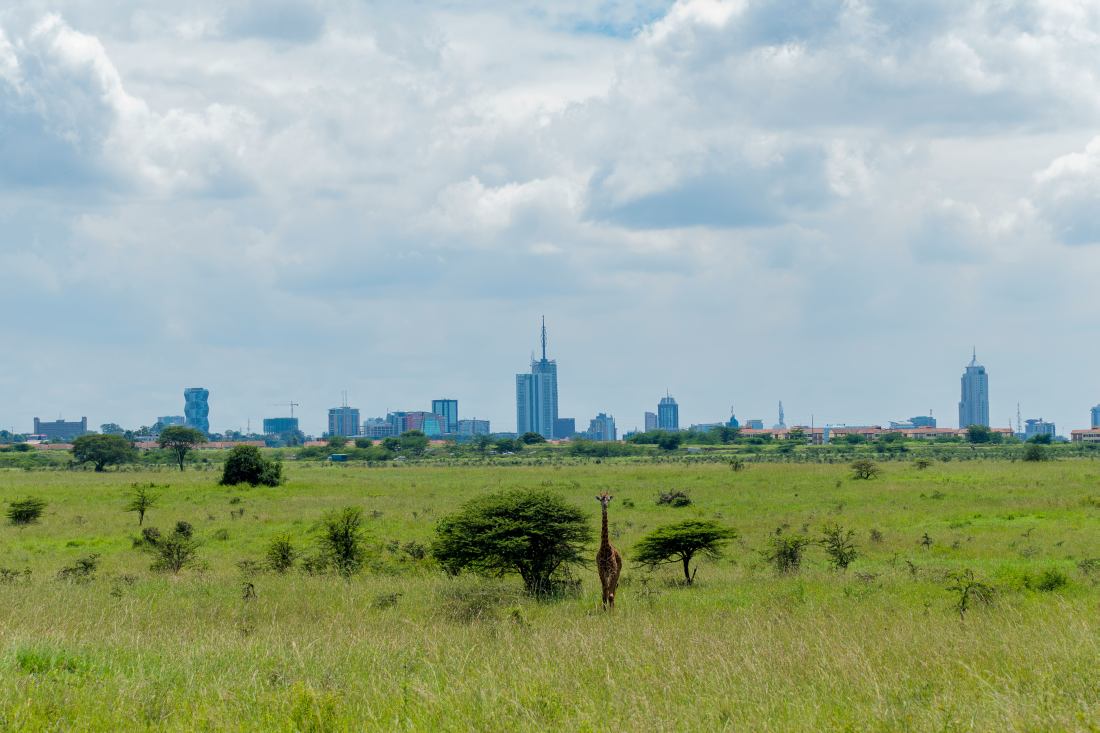
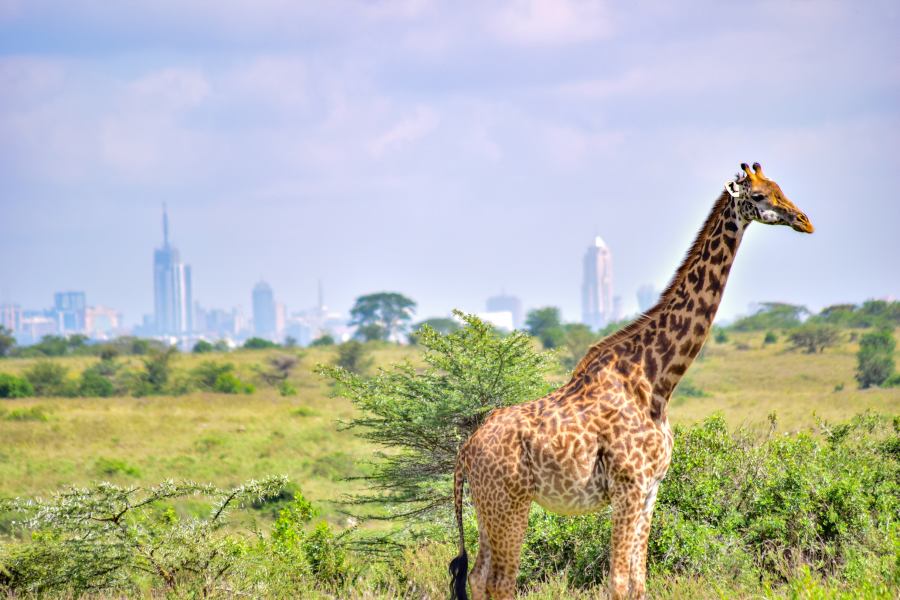
The world’s only big game reserve located directly on the border of a capital city, just 7 kilometers from the city center. Founded in 1946, the 117 square kilometer area is home to lions, leopards, cheetahs, rhinos, and over 400 bird species living freely, while the city’s skyscrapers rise in the background.
The park is separated from urban areas by an electric fence, but the southern side is open, allowing migratory animals to move freely through the Kitengela migration corridor. The Nairobi Safari Walk is a special experience trail where animals can be observed from covered boardwalks in their natural environment.
The Ivory Burning Site Monument is one of the park’s most important locations, where in 1989 and 2016, huge stockpiles of ivory were burned as part of the government’s anti-poaching campaign. The park’s uniqueness lies in the fact that with a simple half-day excursion, you can see wild animals without leaving the capital.
David Sheldrick Wildlife Trust
Founded in 1977, this elephant orphanage is the world’s most successful elephant and rhino rescue center, having raised and released over 300 orphaned elephant calves back into the wild. The center is located at the gate of Nairobi National Park and was established in memory of Dr. David Sheldrick, Kenya’s legendary conservation expert.
It is open to the public daily from 11 AM to 12 PM, when visitors can watch as caregivers bottle-feed the baby elephants, who playfully frolic and take mud baths. Each elephant has its own story – most were orphaned after their parents fell victim to poaching or habitat loss.
A special feature is that you can adopt an elephant, and supporters receive monthly reports on their adopted animal’s progress. The center plays a pioneering role in elephant therapeutic treatments and the rehabilitation of traumatized animals, while also conducting educational work in local communities.
Giraffe Centre
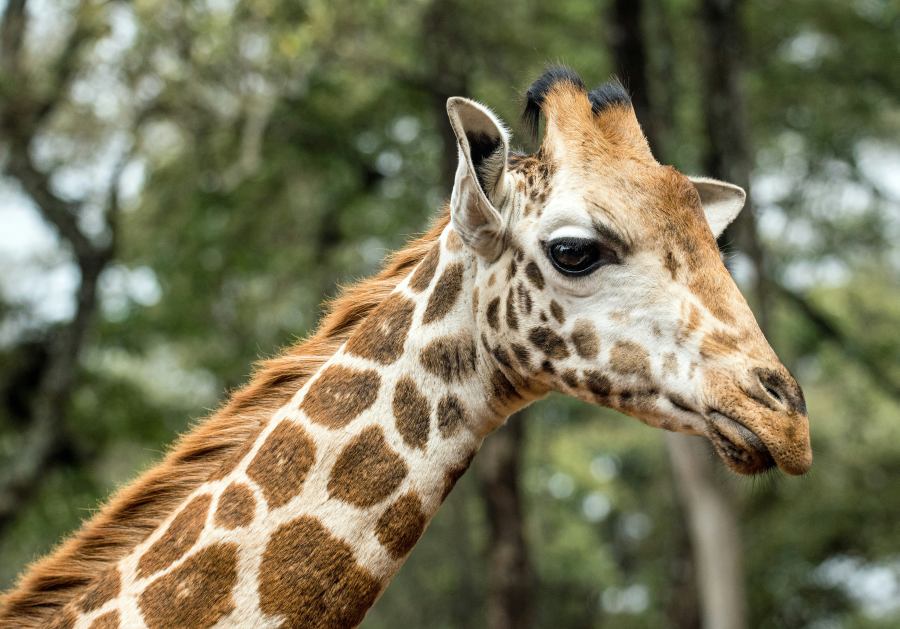
Located in the Karen neighborhood, this center opened in 1979 specifically to protect the endangered Rothschild’s giraffe, of which only 130 individuals lived in the wild at the time. The facility was founded by Jock Leslie-Melville and his wife Betty after they adopted an orphaned giraffe calf named Daisy.
Visitors can hand-feed the giraffes special pellets from an elevated platform, and the braver ones can even kiss them – the giraffes use their tongues to take the food. The center’s grounds also feature a nature conservation education center and a nature trail where warthogs and other East African animal species can be observed.
Thanks to the program’s success, over 400 Rothschild’s giraffes have been relocated to Kenyan and Ugandan national parks. The experience is particularly popular with families and children, as there is rarely an opportunity to meet the world’s tallest mammal up close.
Bomas of Kenya
Founded in 1971, this cultural center is located on the outskirts of the city along Langata Road and showcases the traditions, architecture, and lifestyle of Kenya’s 42 different ethnic groups. The word „boma” is Swahili for a traditional fenced settlement.
On the 15-hectare site, characteristic huts and dwellings of each major tribe have been constructed from authentic materials – you can study the architectural styles of the Kikuyu, Maasai, Luo, Kamba, and other ethnic groups. A spectacular cultural performance begins daily at 2:30 PM in the central auditorium, which can accommodate over 1,500 spectators.
During the one-hour show, professional performers bring to life the dances, music, and ceremonies of different tribes – from Maasai warrior dances to Kikuyu harvest celebrations. Visitors can also view traditional craft workshops where bead jewelry, statuettes, and textiles are made. The center plays an important role in preserving and presenting Kenyan cultural heritage to tourists.
Kazuri Beads Factory
Located in the Karen neighborhood, this bead factory opened in 1975 at the initiative of Lady Susan Wood, a British aristocrat, specifically to employ single or disadvantaged Kenyan women. The word „kazuri” is Swahili, meaning „small and beautiful”, perfectly describing the handcrafted products made here.
Visitors can follow the entire production process: watch as women hand-shape clay beads, paint them in vibrant colors, fire them in kilns, then glaze and fire them again. Approximately 200 women work in the workshop daily, receiving not only employment but also healthcare and support for their children’s education.
The factory shop offers thousands of different types of jewelry and ceramics for purchase – earrings, necklaces, bracelets, and ceramic animal figures. The shop’s revenue directly supports the workers’ livelihoods. The visit is free and offers an excellent opportunity for tourists to support the local community through ethical and sustainable shopping.
Uhuru Gardens
Kenya’s official independence memorial site, where the national flag was first raised at midnight on December 12, 1963.
The 37-hectare park is located along Langata Road, and its centerpiece is the 24-meter Uhuru Monument, unveiled in December 2021 on the 58th anniversary of independence. The monument’s spiral-shaped tower commemorates Kenya’s development and the struggle for freedom. The park also features the largest example of the Kenyan flag, flying on a 60-meter-high pole.
Beyond its historical significance, the garden is an increasingly popular picnic and recreation spot for Nairobi residents. It attracts the largest crowds especially on national holidays – Independence Day and Madaraka Day – when official ceremonies and cultural events are held.
Karura Forest
Located in the northern part of the city, this 1,063-hectare urban forest is Kenya’s largest community green space, which became a protected area in 1932 but only opened to the public in 2009. The forest’s existence is truly miraculous, as several attempts were made in the 1990s to clear and develop it, which were thwarted by the resistance of Nobel Peace Prize-winning environmental activist Wangari Maathai and the Green Belt Movement.
The area features over 50 kilometers of marked hiking trails, cycling paths, and horseback riding trails. The forest is home to waterfalls, caves, rivers, and rich wildlife – mainly monkeys, duikers (small antelopes), and over 200 bird species. Visitors can also discover World War II bunkers and the secret cave of Mau Mau freedom fighters.
The Karura Environmental Education Trust maintains the area and organizes various educational programs. The forest is free to visit on weekdays, while on weekends a symbolic entrance fee is charged. It’s a favorite sports and relaxation spot for Nairobi residents.
Kenyatta International Conference Centre (KICC)
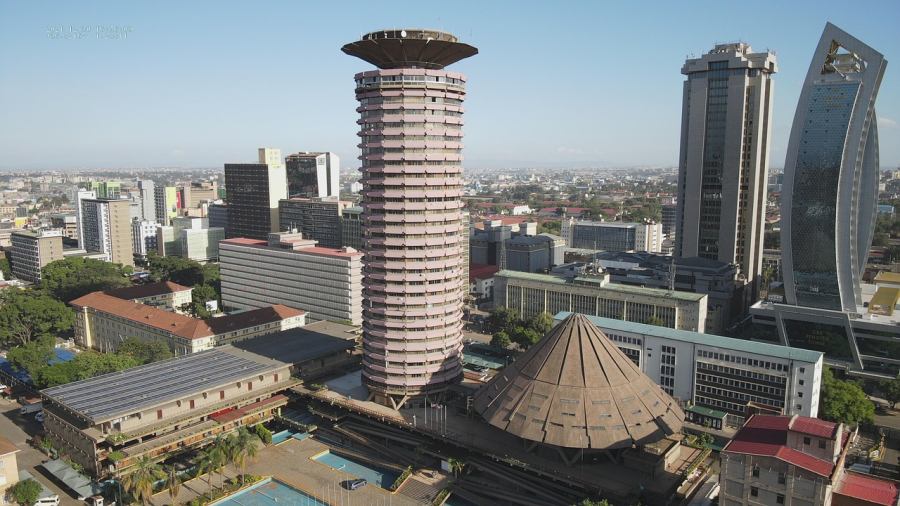
Considered a symbol of the city, this building was completed in 1973, and with its 28-story tower, it is one of the tallest structures in Nairobi. Designed by Norwegian architect Karl Henrik Nøstvik, its architectural style evokes the form of traditional African round huts (rondavel) in a modern interpretation.
On the ground floor is a massive amphitheater with 4,000 seats, used for international conferences and events. With 28 conference rooms of various sizes, the building hosts East Africa’s most important business and diplomatic meetings.
The observation deck on the 27th and 28th floors offers a 360-degree panorama of Nairobi and its surroundings – on clear days, you can see the nearby Ngong Hills and even distant Mount Kilimanjaro. Elevators take visitors up the tower, and the entrance fee is symbolic. The area around the building, including Uhuru Park and Central Park, is also a popular meeting place, especially crowded with local families on weekends.
Jamia Mosque
The city’s largest and oldest mosque was built in 1925 in the central business district on Banda Street and is the spiritual center of Nairobi’s Islamic community. The building represents traditional Asian-Arab style architecture, with characteristic domes and minarets visible from far away among the surrounding modern buildings.
The mosque is especially crowded during Friday prayers, when thousands of people gather. The interior is decorated with beautiful arabesque ornaments and calligraphy. It is also open to non-Muslims outside prayer times, with certain etiquette rules: women must wear headscarves, and everyone must remove their shoes.
The area around the mosque is a lively commercial district lined with Asian restaurants, spice shops, and textile stores.
Ngong Hills
The mountain range rising to the southwest of the city consists of four separate peaks, ranging in height from 2,460 meters to 2,460 meters. The name derives from the Maasai word „enkong’u”, meaning knuckle – the shape of the hills from above does indeed resemble knuckles.
The Ngong Hills played a central role in Karen Blixen’s novel; the writer often walked in the hills and described the panorama in detail in her book. Today it’s a popular hiking destination, with a 15-kilometer ridge trail connecting the peaks. The hike is moderately difficult, but the views of the Great Rift Valley and surrounding savannas are breathtaking.
At the foot of the hills operates a wind farm – one of Kenya’s first renewable energy projects. On weekends, it’s a popular excursion spot for many Nairobi families, so an early morning or weekday visit is recommended to avoid crowds. It’s important to know that for safety reasons, it’s advisable to hike in groups, and armed ranger escorts are also available.
Maasai Market
Nairobi’s most authentic markets, which open at different locations throughout the week on a rotating basis – Tuesday at Village Market, Friday at Village Market Parking, Saturday at High Ridge, and Sunday at Yaya Centre. These are not permanent buildings but mobile markets set up from tents.
At the markets, primarily Maasai artisans and members of other tribal communities sell their products: colorful beaded jewelry, woven blankets and scarves (shuka), hand-carved wooden and stone statuettes, leather bags, and traditional Maasai sandals. The selection is incredibly varied, and every piece is unique, handmade work.
Prices are negotiable; in fact, bargaining is an integral part of the shopping experience – it’s generally worth bargaining down to 30-50% of the initial price. Maasai vendors often wear their traditional clothing and are happy to talk about their culture.
Best museums in Nairobi
Kenya National Museum
Founded in 1910, East Africa’s largest museum is located on Museum Hill, a few kilometers from the city center. The institution reopened in 2008 after a major renovation that expanded the exhibition space to 9,000 square meters.
The museum consists of four main sections: natural history, history, contemporary art, and local cultures. The natural history section showcases Kenya’s rich biodiversity – giant elephant taxidermy specimens, bird collections, and insect sections can be found here. The history gallery displays finds documenting humanity’s East African origins, including Richard Leakey’s famous hominid fossils.
The contemporary art gallery exhibits works by Kenyan and East African artists, while the cultural section presents the lifestyles, traditions, and crafts of different tribes. In the museum’s garden, copies of the famous paintings by Joy Adamson depicting various tribal communities can be viewed. The Snake Park allows you to observe live snakes and other reptiles.
All information can be found here!
Nairobi Gallery
Located in the heart of the city on Kenyatta Avenue, it was established in 2001 in the former provincial governor’s building. Built in 1913, the white-façaded building preserves its colonial architectural style and is itself a historical monument.
The gallery is spread across three floors and showcases contemporary paintings, sculptures, and photographic exhibitions by Kenyan artists. The exhibitions constantly change, so visitors always encounter new works. It functions as a platform for the local art scene and particularly supports young, emerging artists.
The ground floor often hosts thematic exhibitions – art projects about urban life, conservation, or social issues. The gallery’s garden also features a small sculpture exhibition. It’s free to visit and offers an excellent opportunity to explore Kenya’s contemporary art scene.
All information can be found here!
Karen Blixen Museum
The setting of the worldwide bestselling book „Out of Africa” and the Oscar-winning film, where Danish writer Karen Blixen lived from 1914 to 1931. The colonial-style house is located in the Karen neighborhood at the foot of the Ngong Hills and faithfully preserves the early 20th-century atmosphere.
The museum displays Blixen’s original furniture, personal belongings, typewriter, and books. From the building’s veranda, there’s a stunning view of the Ngong Hills, which the writer loved so passionately. The coffee plantation where Blixen operated her farm no longer exists, but the gardens around the house have retained their original character.
Visitors can walk through the room where Blixen received her guests, including the hunter-pilot Denys Finch Hatton, whose relationship played a central role in the writer’s life and work. The museum’s special feature is that it has not only literary but also film historical significance, as the 1985 adaptation popularized Kenya’s romantic image worldwide.
Nairobi Railway Museum
Located along Uhuru Highway, this museum preserves Kenya’s rich railway history collection, which is particularly interesting since Nairobi was founded specifically as a railway junction in 1899. The museum is housed in the former railway station building.
In the outdoor exhibition area, more than ten original steam locomotives and railway carriages can be viewed, including the famous Uganda Railway locomotives that transported passengers and goods from Mombasa to Uganda from the 1890s. Perhaps the most special piece is a period dining car where you can evoke the atmosphere of luxury travel during the colonial era.
The indoor exhibition space contains maps, documents, photographs, and railway paraphernalia – ticket punches, lamps, locomotive bells. The museum also presents the story of the infamous „man-eaters of Tsavo”: during construction in 1898, two lions killed more than 130 workers. Children especially enjoy being able to climb into some of the locomotives. Despite its modest size, the museum provides important insight into the history of East Africa’s colonization and development.
Nairobi weather: when is the best time to visit?
Despite its equatorial location, Nairobi enjoys a pleasant, temperate climate thanks to its altitude of 1,660 meters above sea level. The city doesn’t have the classic four seasons but alternates between two rainy and two dry seasons annually. Daytime temperatures typically range between 20-26 degrees Celsius throughout the year, while at night it cools to 10-15 degrees. The city’s weather is predictable, with no extreme temperature fluctuations.
Long rainy season (March–May):
This is the wettest period of the year, when daily showers are common, especially in the afternoons. Average rainfall can reach up to 200 mm per month. The landscape becomes lush and green, but dirt roads can be difficult to navigate.
Dry season (June–October):
The most pleasant period, with sunny and cool weather. June and July months are cooler, with mornings sometimes reaching 8-10 degrees, so a light jacket is recommended. This is peak season for tourists, and wildlife is also more easily observed on safaris as they concentrate around water sources.
Short rainy season (November–December):
A shorter and less intense rainy period when afternoon showers are typical but don’t significantly hinder tourist activities. Nature blooms again, and the air is clearer.
Dry transitional period (January–February):
A dry, warm, and sunny period when temperatures can reach 26-28 degrees. Excellent weather conditions for city tours and excursions.
Best time to travel Nairobi:
The dry season from June to October is ideal for visiting Nairobi, characterized by sunny, cool days and clear nights. This period is perfect both for sightseeing and visiting the nearby Nairobi National Park, as animals are more easily observed. January-February is also an excellent choice, with dry, warm weather expected and fewer tourists than during peak season.
Frequently Asked Questions about Nairobi
Nairobi is in the East Africa Time zone (EAT, UTC+3) and does not observe daylight saving time.
Kenya’s official languages are Swahili and English. In Nairobi, English is widely used, especially in tourism, shops, hotels, and restaurants. However, knowing basic Swahili phrases is always well-received by locals.
The official currency is the Kenyan shilling (KES). Cash is commonly used, but in Nairobi, card payments and mobile payments (especially M-Pesa) are also extremely widespread. It’s worth carrying cash for smaller shops and markets. Here is a currency converter.
Nairobi uses Type G (British standard) plugs. The voltage is 240V, and most modern electronic devices can be used without problems.
Nairobi’s main airport is Jomo Kenyatta International Airport (NBO). The city center is most conveniently reached by taxi or Uber. Local bus services exist, but they are less transparent for tourists. Using an official taxi or ride-sharing service is recommended.
For tourists, taxis and Uber are the most convenient forms of transportation. Local minibuses, called matatu, are cheap but can be crowded and unpredictable. Traffic is often heavy, so it’s worth planning travel time flexibly.
Safety in Nairobi varies by neighborhood. The central, well-known districts and tourist attractions are generally safe during the day. At night, it’s advisable to use taxis and avoid deserted areas. Basic caution and avoiding displaying valuables is recommended.
Popular and safe neighborhoods for tourists include Westlands, which has modern hotels, restaurants, and shopping centers. Karen offers a quieter, greener environment, while Gigiri is the diplomatic quarter, close to the UN headquarters and several international hotels.
Nairobi National Park – wildlife safari with skyscrapers in the background.
David Sheldrick Wildlife Trust – caring for orphaned elephants.
Giraffe Centre – giraffes up close.
Karen Blixen Museum – the home of the Out of Africa author.
Ngong Hills – hiking and panoramic views of the city.
Nyama choma – charcoal-grilled meat, a Kenyan specialty.
Ugali – a side dish made from cornmeal.
Samosa – fried pastry with spiced filling.
Chapati – flatbread with Indian influence.
Sukuma wiki – sautéed leafy greens, a common side dish.