India’s long history has rightfully made it a country of diverse cultural values. As one of the fastest-developing nations, it is becoming increasingly popular among tourists.
The world’s most populous country is bordered by Pakistan to the west, China, Nepal and Bhutan to the northeast, and Bangladesh and Myanmar (Burma) to the east. It also shares maritime borders with Sri Lanka, the Maldives and Indonesia. Its diversity and territorial size is reflected in the fact that it has 16 official languages.
Table of Contents
Best places in India
Taj Mahal
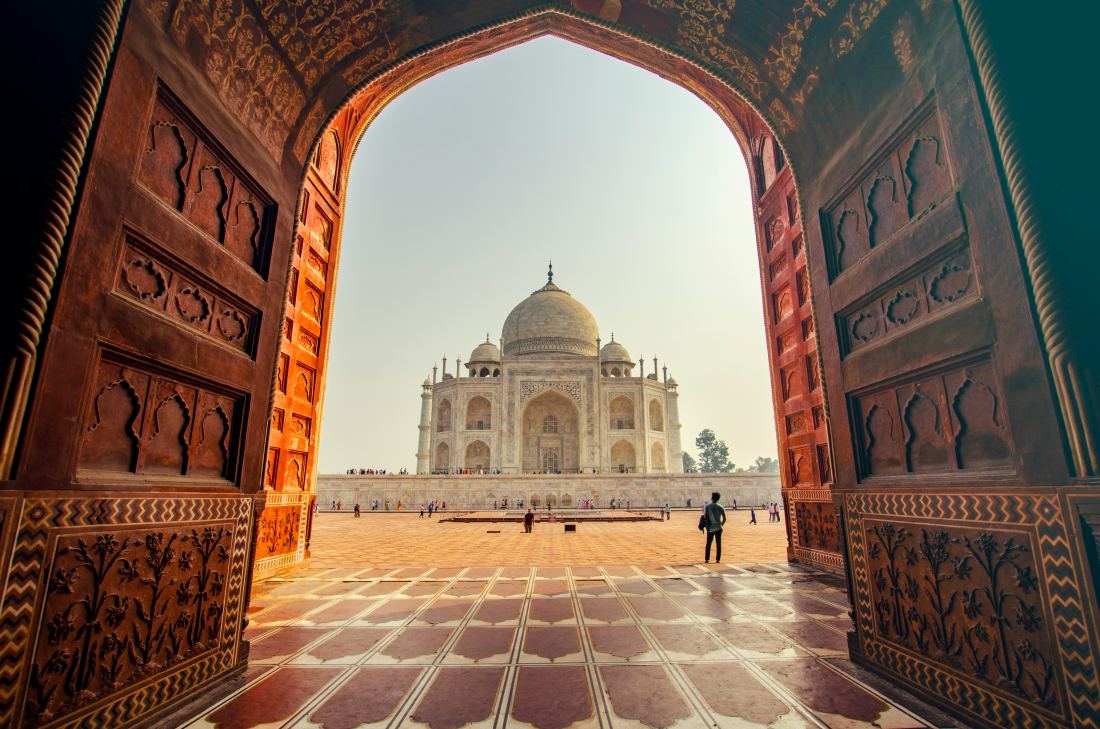
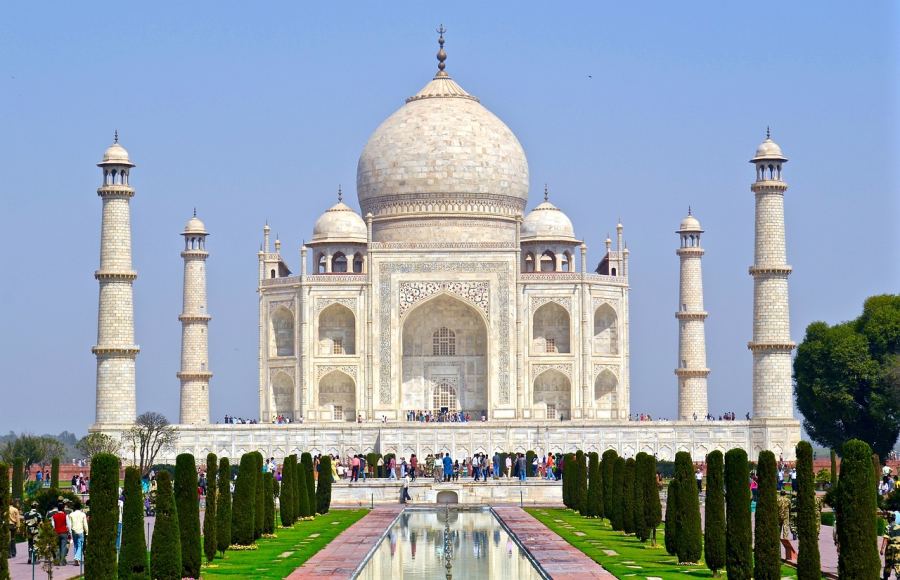
India’s most famous landmark, a Muslim mausoleum located in Agra on the banks of the Yamuna River. It has been included in the UNESCO World Heritage List as a cultural site.
It encompasses an entire building complex, including the white marble tomb itself. The Mughal Emperor Shah Jahan built it between 1632 and 1647 in memory of his beloved wife Mumtaz Mahal, who died in childbirth in 1631. She is also laid to rest here.
It is the pinnacle of Mughal tomb architecture, combining traditional styles with local traditions. Though it influenced the construction of later tombs, its unique proportions and intricate decorations make it inimitable.
Mumbai
The center of India, famous for its diverse cuisine, festivals, and cultural events.
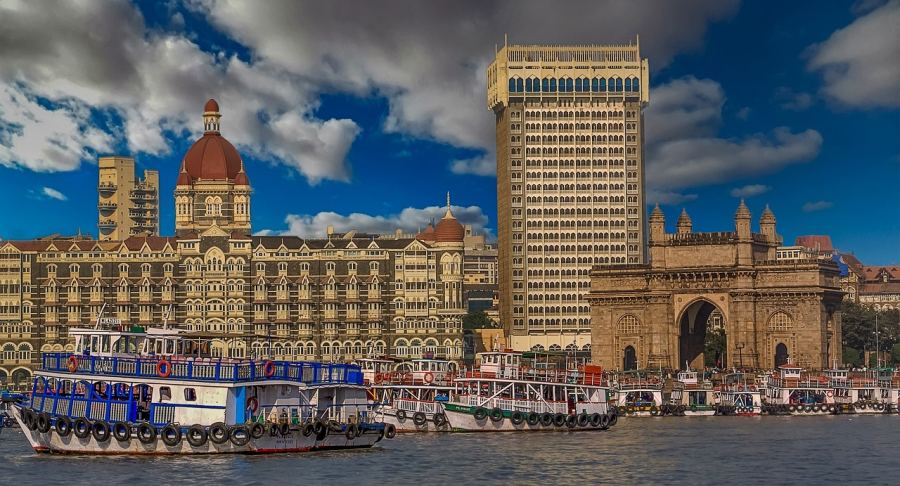
The city’s symbol is the Gateway of India, an arch built in the early 20th century to commemorate the visit of King George V and Queen Mary to India. Another landmark is the Taj Mahal Palace, a 565-room building with a view of the Gateway of India and the Arabian Sea.
Among the temples, the Siddhivinayak stands out. Its uniqueness lies in the black stone statue of the deity Ganesha, from whose trunk a lotus flower grows, symbolizing knowledge and wisdom.
Mysore Palace
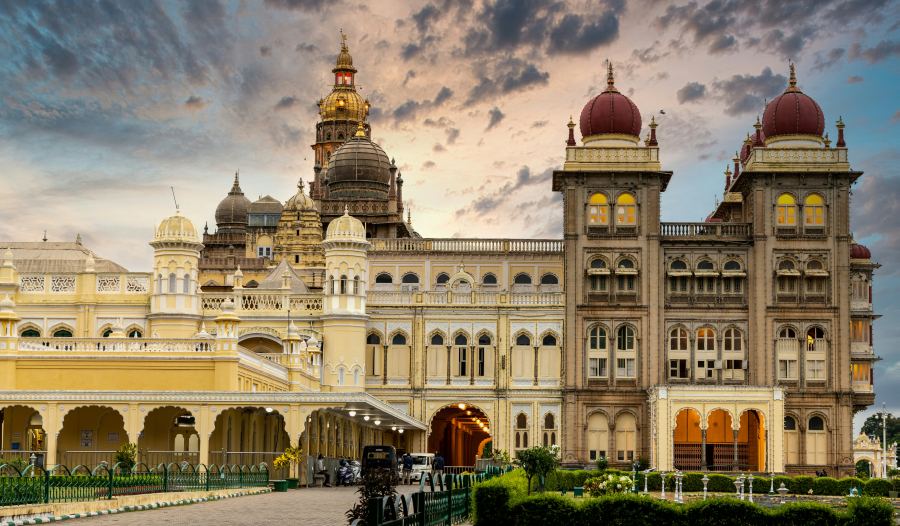
Located in Mysore, the palace was the residence of the Wodeyar dynasty rulers, who governed the region for over 500 years. It is considered one of the most beautiful palaces in the world.
The palace is an architectural masterpiece, three stories high, made of gray granite. It represents the Indo-Saracenic architectural style, which blends elements of Hindu, Muslim, Rajput, and Gothic styles.
Its most striking features are the double-domed, square corner towers. Its interiors are adorned with masterfully carved doors, fine chandeliers, stained glass ceilings, and wall frescoes depicting scenes from Indian epics.
Golden Temple
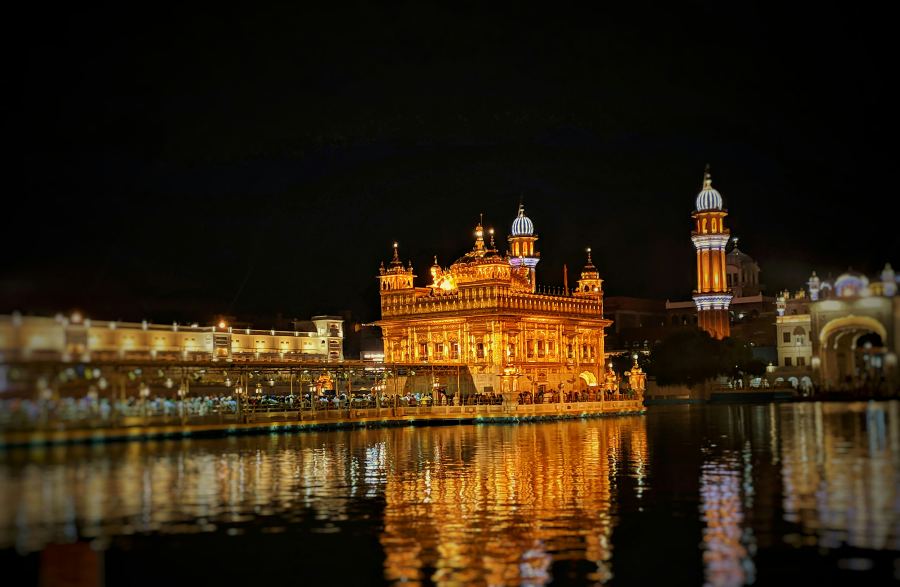
The central temple of the Sikh religion is located in Amritsar, in the northern tip of India. It hosts the world’s largest free kitchen.
Built at the end of the 16th century, the temple stands in the middle of a lake surrounded by marble steps („Amrita” meaning nectar lake). Its popular name comes from the gold-plated bronze plates covering its surface. It is accessible via a 60-meter-long bridge.
The building has three levels; the lower one is made of white marble inlaid with mother-of-pearl and precious stones, adorned with floral designs. The upper floors are covered with thickly gilded bronze and copper plates, with inscriptions from the holy book on their surface.
Jaipur
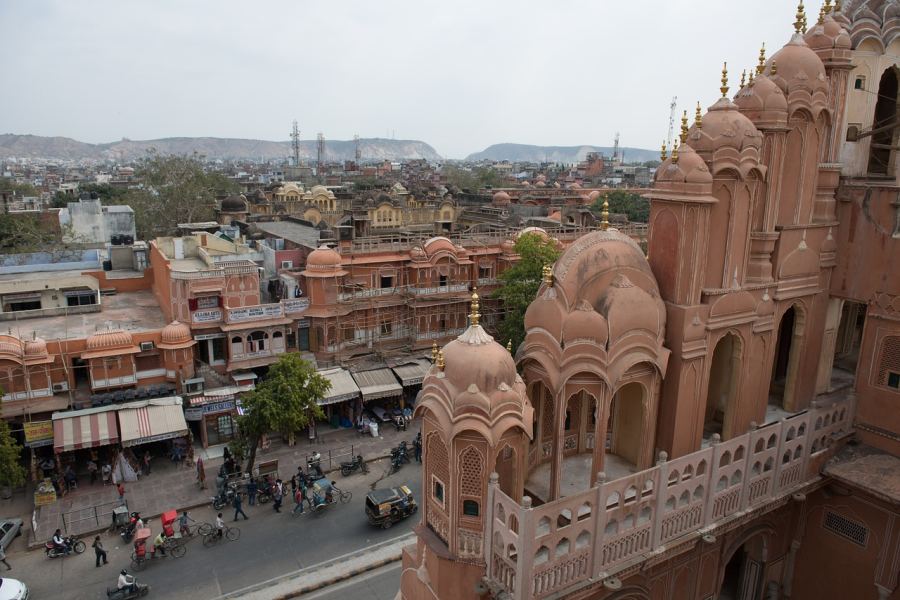
The capital of Rajasthan state is often referred to as the Pink City. It was founded in 1727 by Maharaja Jai Singh II, who named the city after himself.
Jaipur is the first city in India to be planned according to a grid structure, resulting in a well-thought-out and organized urban layout. The city is famous for its pink-painted buildings, which were repainted in 1876 for the visit of Prince Edward of Wales to give a friendly and welcoming impression.
Its most famous building is the Hawa Mahal (Palace of Winds). Its uniqueness lies in its honeycomb-shaped facade with 953 small windows. These windows allowed the royal women living in the palace to observe street life and festivities invisibly, as they could not appear in public according to the customs of the time.
Amber Fort
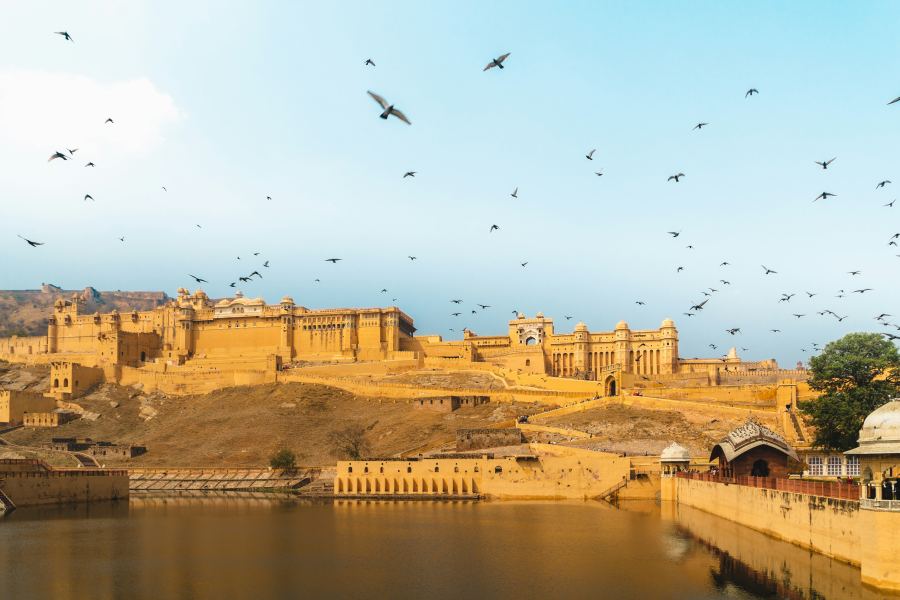
Located about 11 kilometers from the city of Jaipur, this fort is one of India’s most impressive and most visited historical sites.
For centuries, it was the residence of the Kachwaha Rajput dynasty rulers. The fort is a masterpiece of Indian architecture, combining elements of Hindu and Muslim architectural styles. It has four levels, each with its own courtyard and palaces.
Reaching the fort is a unique experience in itself, as the main gate can be approached either by elephant ride or by jeeps.
Ranthambore National Park
One of India’s largest and most significant wildlife reserves, covering an area of 1,334 square kilometers.
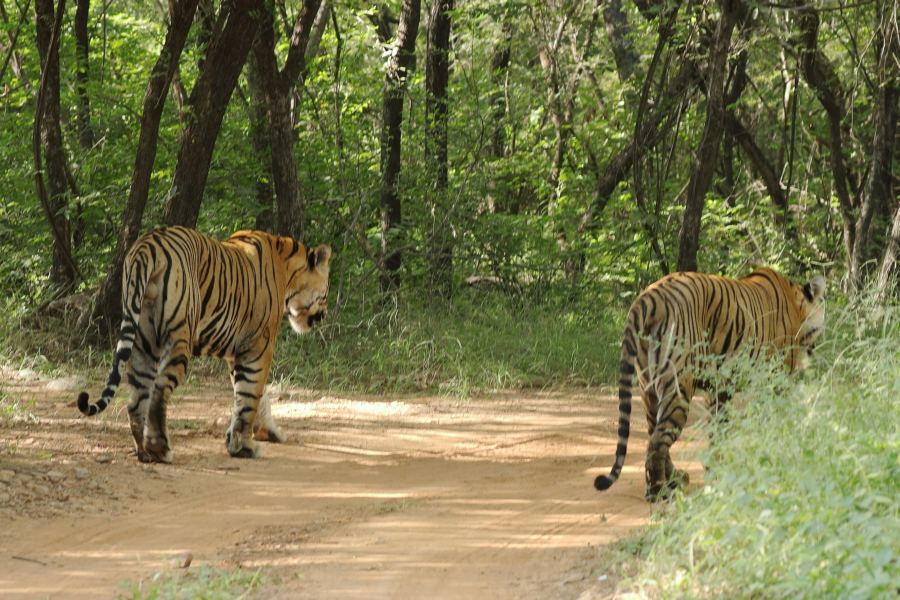
The park is especially famous for its Bengal tigers and is one of the best places in India to see these predators in their natural habitat.
In the middle of the park is the historic Ranthambore Fort, which is a UNESCO World Heritage Site. The fort offers stunning views of the surrounding landscape and forest.
The best time to visit is between October and June, when the weather is favorable and the wildlife is more active. Visitors can go on safaris with jeeps or larger accompanying vehicles.
Varanasi
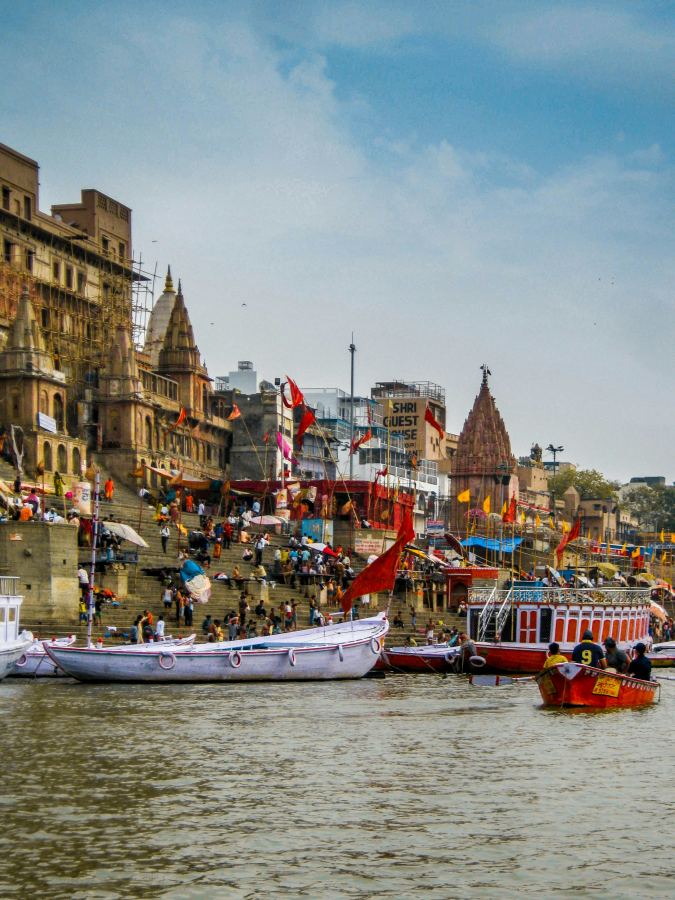
A city located on the banks of the Ganges River, it is a defining center of Indian culture, religion, and history.
One of the world’s oldest continuously inhabited cities, it has a history of over 3,000 years. Under various dynasties and empires, it was an important religious, cultural, and commercial center.
Varanasi is the holy city of Hinduism, where believers believe that bathing in the Ganges River purifies the soul and frees it from sins. Dying in the city and being cremated in the Ganges is believed to lead to eternal salvation for Hindu devotees.
Varanasi has about 87 ghats, which are steps leading to the Ganges, serving as sites for various religious rituals and ceremonies.
Goa
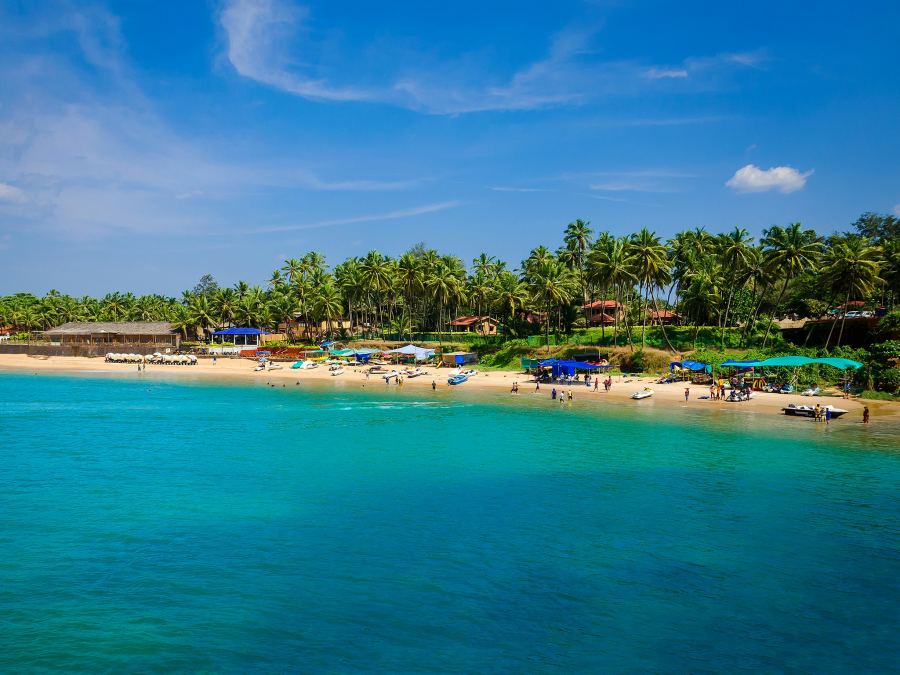
Located on India’s western coastline, it is the country’s smallest state, famous for its beautiful beaches and vibrant nightlife.
It was under Portuguese rule for over 450 years, which has left a deep mark on the state’s culture and architecture. One of the finest examples of this is the Se Cathedral, one of the largest churches in India.
Numerous beautiful sandy beaches await visitors, such as Baga, Calangute, Anjuna, and Palolem Beach.
Goa is also known for its music and lifestyle. In the 1960s, it became a center for the idea of living in harmony with nature.
Dudhsagar Falls
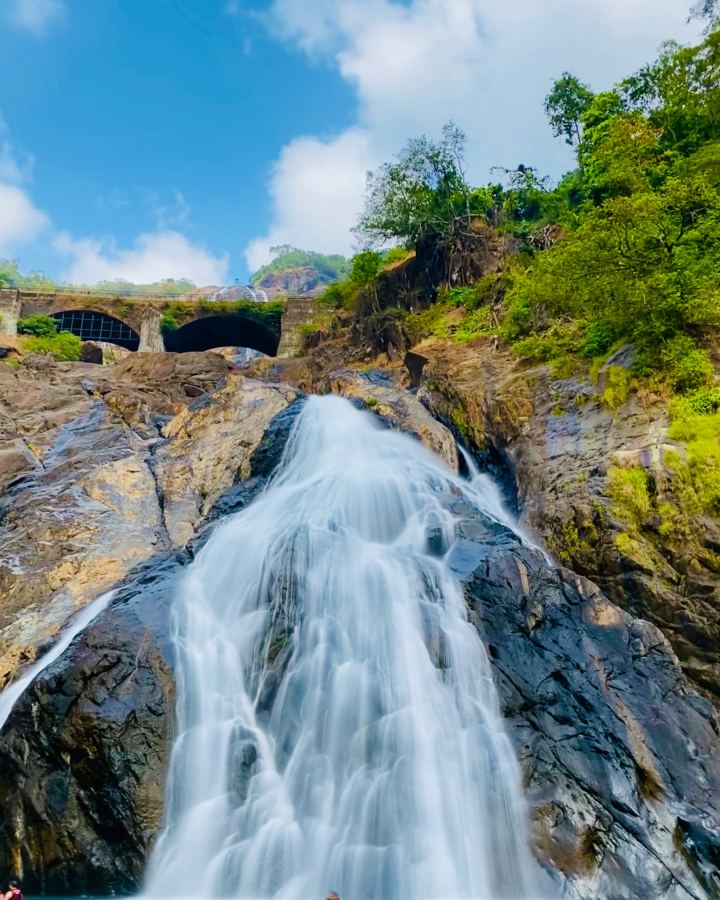
Located on the border of Goa and Karnataka, it is one of the largest and most spectacular waterfalls in India.
About 310 meters high and 30 meters wide, its name means „Sea of Milk”. This refers to the white, frothy mass of water created during its fall, truly resembling milk being poured down the rocks.
It can be reached by jeep and on foot. The best time to visit is during the monsoon (between June and September), when the waterfall is in full flow.
Delhi
India’s capital city is one of the world’s oldest continuously inhabited cities, having been the center of numerous empires throughout its history.
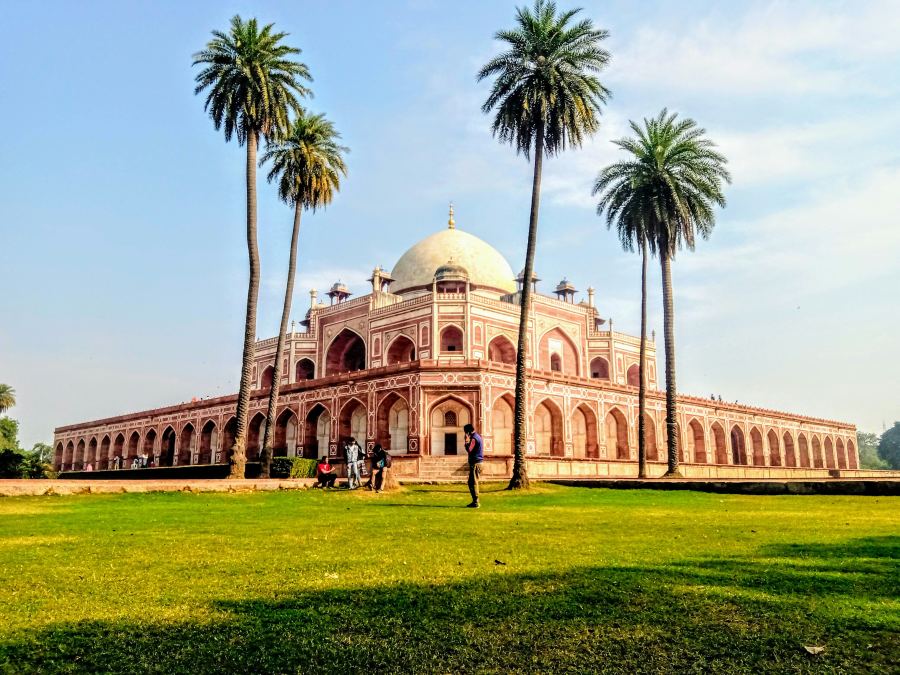
In the Old City area, the Mughals and Turkish leaders created many architectural wonders, including the world’s largest mosque, the Jama Masjid, and the Red Fort. The latter, along with the Qutb Minar (part of the Qutb complex) and Humayun’s Tomb, are UNESCO World Heritage Sites.
An iconic landmark is the India Gate, a 42-meter-high triumphal arch built in memory of Indian soldiers who died in World War I and the Afghan Wars. Among the museums, the Indira Gandhi Memorial Museum is a must-visit. The former Indian Prime Minister’s home showcases her life and political career, as well as the place where she was assassinated.
Mehrangarh Fort
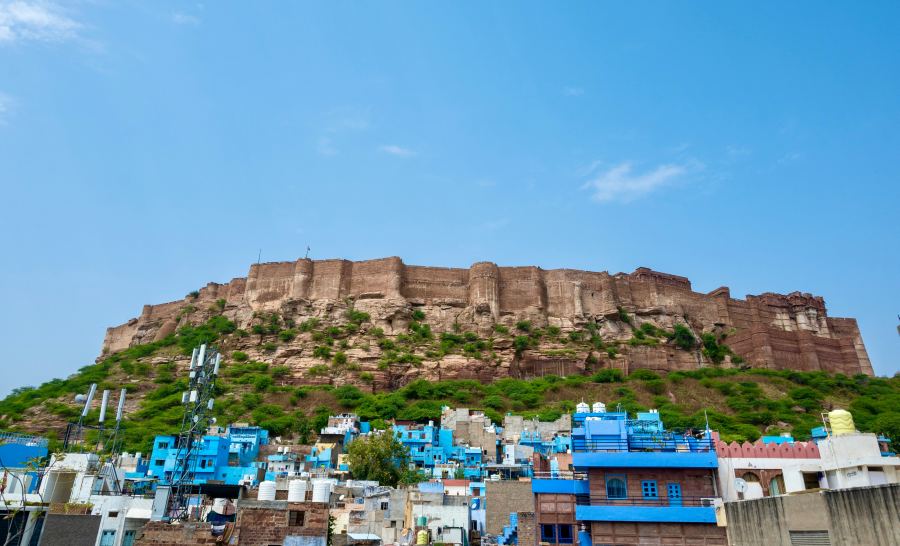
One of India’s most impressive forts, it towers over Jodhpur, situated atop a 125-meter-high rocky hill.
Its construction was initiated by Rao Jodha, the leader of the Rathore clan, in 1459 when he founded Jodhpur. The fort was strategically important for the Rathore rulers, serving both as the region’s defense and the center of their power.
Its massive walls reach up to 36 meters in height and 21 meters in width at places. The fort is accessed through multiple gates. Inside, there are numerous beautifully decorated palaces and courtyards that reflect the luxurious lifestyle of the Rathore rulers. These include the Moti Mahal (Pearl Palace), the Phool Mahal (Flower Palace), and the Sheesh Mahal (Mirror Palace).
Today, it operates as a museum, showcasing weapons, armor, royal carriages, miniature paintings, textiles, and other artifacts. One of its most interesting parts is the intricately carved elephant howdah, used during royal parades.
Madurai
One of the oldest and most significant cities in South India, it attracts visitors with its rich cultural heritage and iconic temples.
Madurai has a history of over 2,500 years, making it one of the oldest continuously inhabited cities in the world. It was the capital of the Pandya kingdom and later became part of the Chola and Vijayanagar empires.
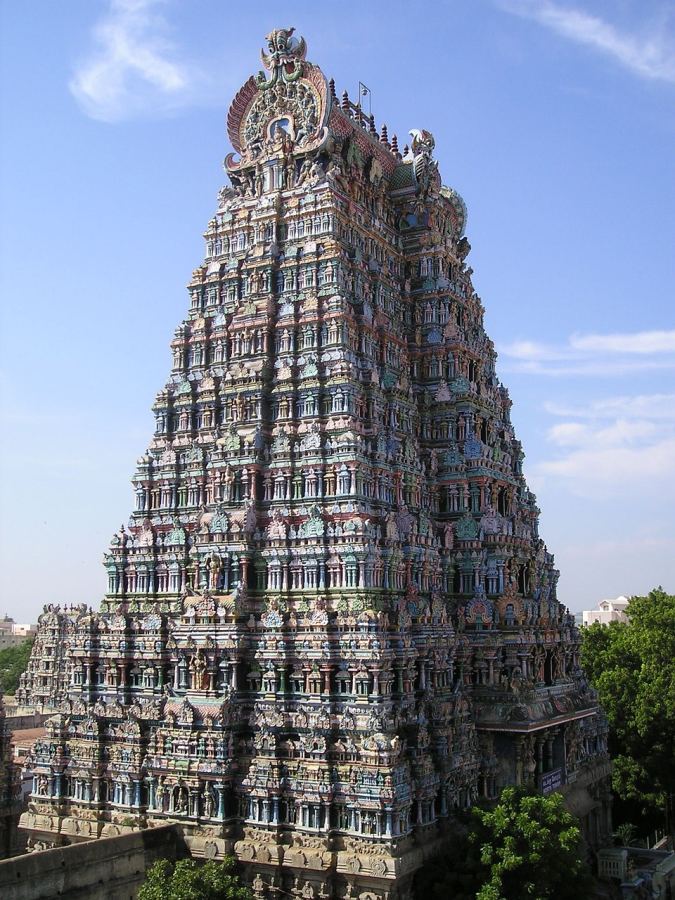
Its most beautiful attraction is the Meenakshi Amman Temple, dedicated to the goddess Parvati (Meenakshi) and the god Shiva. The temple complex is a masterpiece of Dravidian architecture, impressing visitors with its more than 14 towers.
Another notable attraction is the Thirumalai Nayak Palace. Built in the 17th century during the reign of King Thirumalai Nayak, the palace is a unique blend of South Indian and Islamic architectural styles.
Jaisalmer
Often called the Golden City due to its golden sandstone buildings.
It is also an ancient city, founded in 1156 by Rao Jaisal, a Bhatti Rajput ruler, after whom the city is named. In the medieval period, it was an important trading center as it was located along caravan routes connecting India with Central Asia.
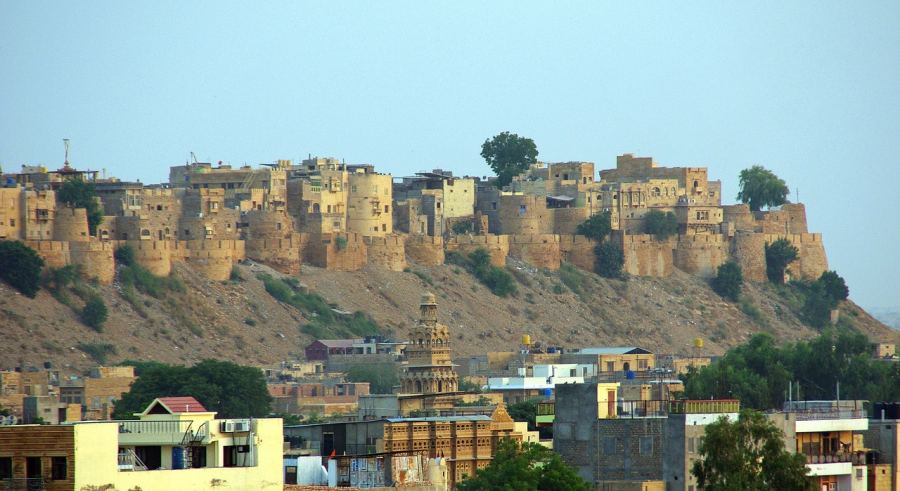
Its former strategic significance is marked by the fort that rises in the center of the city, one of the largest fortifications in the world. The fort houses the Raj Mahal (royal palace), the Laxminath Temple, and various Jain temples, richly adorned with carvings.
Khajuraho
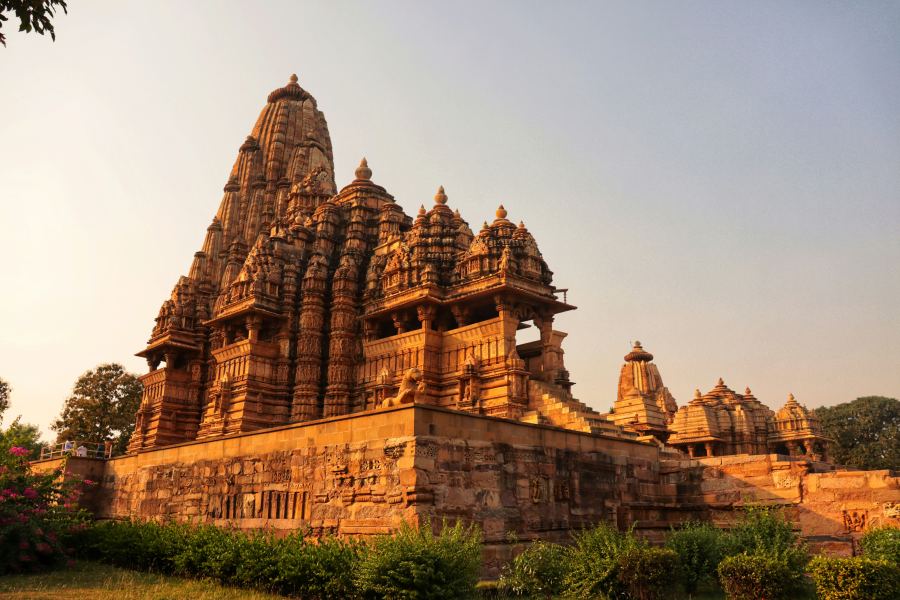
A small town famous for its stunning temples known for their erotic sculptures. These are part of the UNESCO World Heritage sites.
The temples were built during the reign of the Chandela dynasty, between 950 and 1050. Originally, there were more than 85 temples, but today only 25 have survived.
The largest and most ornate among them is the Kandariya Mahadeva Temple, dedicated to the god Shiva. The temple is decorated with about 900 sculptures depicting various gods, goddesses, mythological creatures, and everyday scenes.