The character of Delhi is defined by diversity: here traditional India meets the modern, poverty meets wealth.
India’s capital, with more than 30 million inhabitants, is the world’s second-largest urban area. Located on the banks of the Yamuna River, it simultaneously preserves its millennia-old historical heritage and the dynamism of a modern metropolis. Delhi uniquely combines the massive Mughal architectural legacy, monuments from the British colonial period, and contemporary India’s ambitions. The narrow streets of the historic Old City still maintain a medieval atmosphere while New Delhi’s wide boulevards and monumental buildings are masterpieces of early 20th-century urban planning.
Table of Contents
Delhi attractions
Red Fort
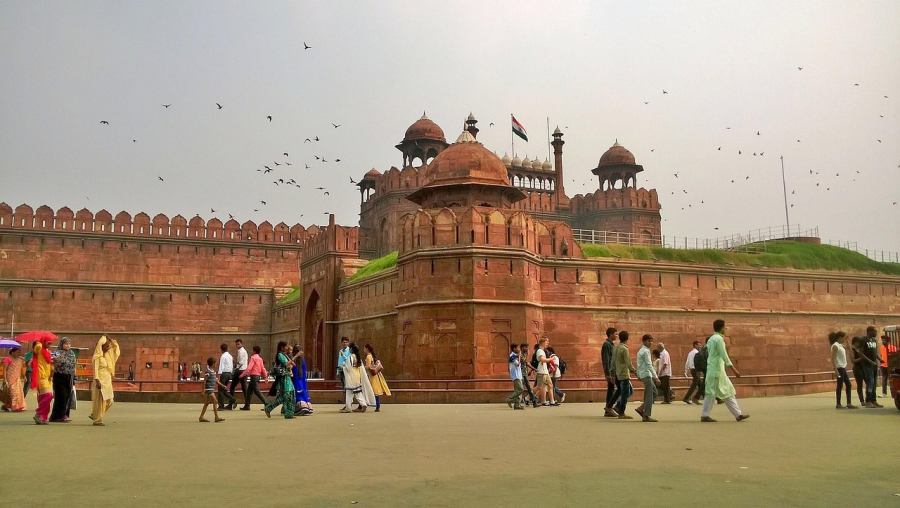
Delhi’s most famous architectural masterpiece was completed in 1648 on the orders of Mughal Emperor Shah Jahan V. This UNESCO World Heritage site’s red sandstone walls extend 2.5 kilometers around the 255-hectare area, which was once the center of the Mughal Empire’s capital.
Within the fort’s walls are numerous palaces, mosques, and gardens, including the Diwan-i-Aam (public audience hall) and the Diwan-i-Khas (private audience hall), which was once home to the famous Peacock Throne. Among the complex’s most beautiful parts are the Rang Mahal (Palace of Colors) and the Khas Mahal (Imperial Private Apartments), whose walls are decorated with fine marble inlays and Persian calligraphy.
Today, the Red Fort is also a symbol of India’s independence, as every August 15th, on Independence Day, the country’s Prime Minister delivers his speech from here. The fort’s museum displays a rich collection showcasing the golden age of the Mughal court: weapons, jewelry, textiles, and calligraphic works documenting the empire’s wealth.
Qutub Minar
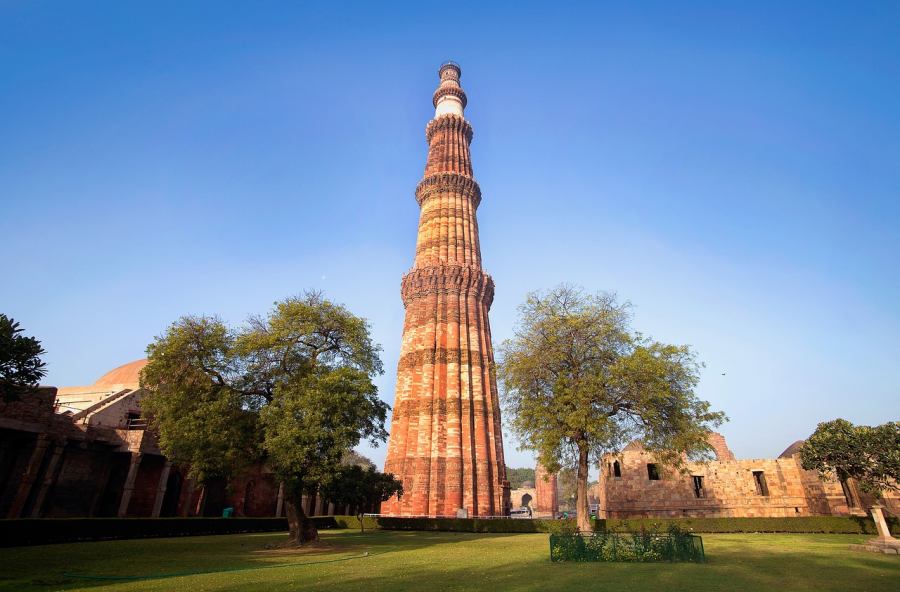
The world’s tallest brick tower rises 72.5 meters high in southeastern Delhi.
Construction began in the 12th century under Sultan Qutb-ud-din Aibak’s rule and was expanded over several centuries. The tower is five stories high, each with different decoration and architectural style.
The complex also includes the Quwwat-ul-Islam mosque, which was India’s first mosque, as well as the Iron Pillar, a rust-resistant iron column from the 4th century. The pillar’s uniqueness lies in its resistance to rust for centuries, testifying to the advanced metallurgical knowledge of its time.
The tower and its surroundings are interesting not only architecturally but also as important documentation of the early history of the Sultanate. Inscriptions in Arabic and Persian on the walls tell of the early years of Turkish conquest, when Islam first appeared on the Indian subcontinent.
Humayun’s Tomb
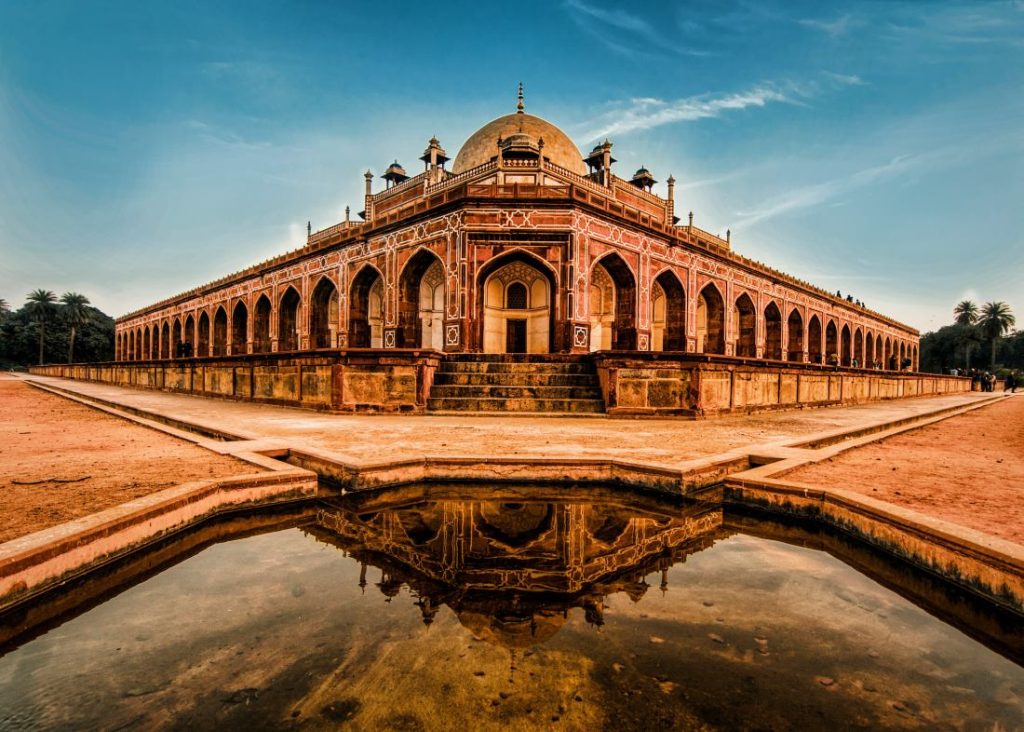
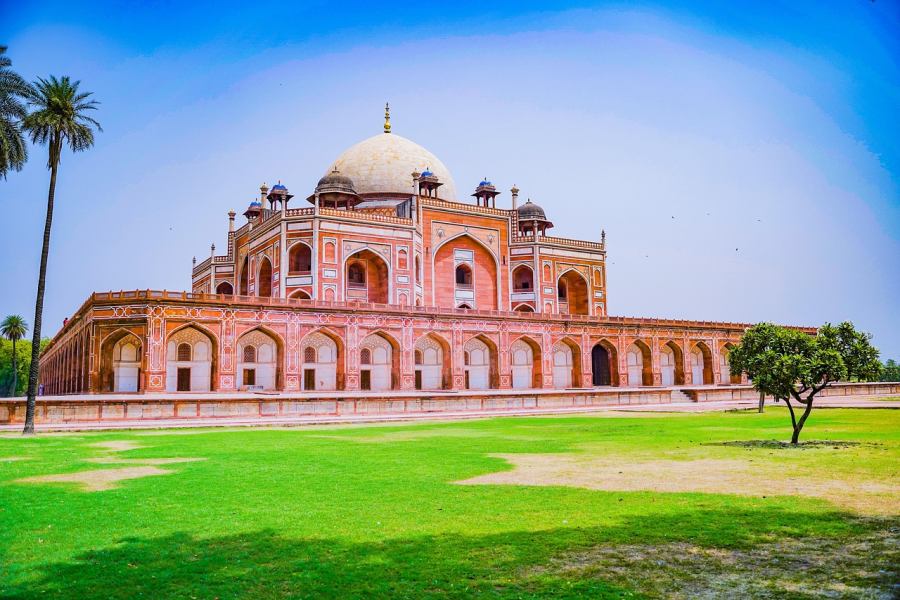
India’s first garden tomb and precursor to the Taj Mahal was completed in 1570. Built in memory of the second Mughal emperor, Humayun, by his widow Bega Begum with Persian architects. The tomb’s central dome is 42.5 meters high, surrounded by four cube-shaped building sections.
The Char Bagh (four gardens) style around the mausoleum originates from Persia: a symbolic representation of paradise in a garden divided into four parts, with water channels and geometric order. The combination of red sandstone and white marble later became characteristic of Mughal architecture.
This UNESCO World Heritage site contains more than 100 tombs, including Isa Khan’s tomb and Baber’s death site. The complex was restored in the 1990s when the gardens and water system were returned to their original form.
Shri Laxminarayan Temple (Birla Mandir)
The modern Hindu architectural style temple was built in 1938 with financing from the wealthy Birla family. The building is dedicated to Laxmi, goddess of wealth, and her husband, the god Narayana (Vishnu).
The temple was built from red sandstone and marble, combining North Indian and South Indian architectural elements. The main building’s central dome is 50 meters high, surrounded by smaller domes and towers. The temple walls are decorated with Hindu mythological scenes and religious texts.
Mahatma Gandhi personally inaugurated the temple, which has since become one of Delhi’s most important religious centers. The temple’s uniqueness lies in being open to people of all castes and religions, symbolizing the modernization of Hinduism.
Lotus Temple
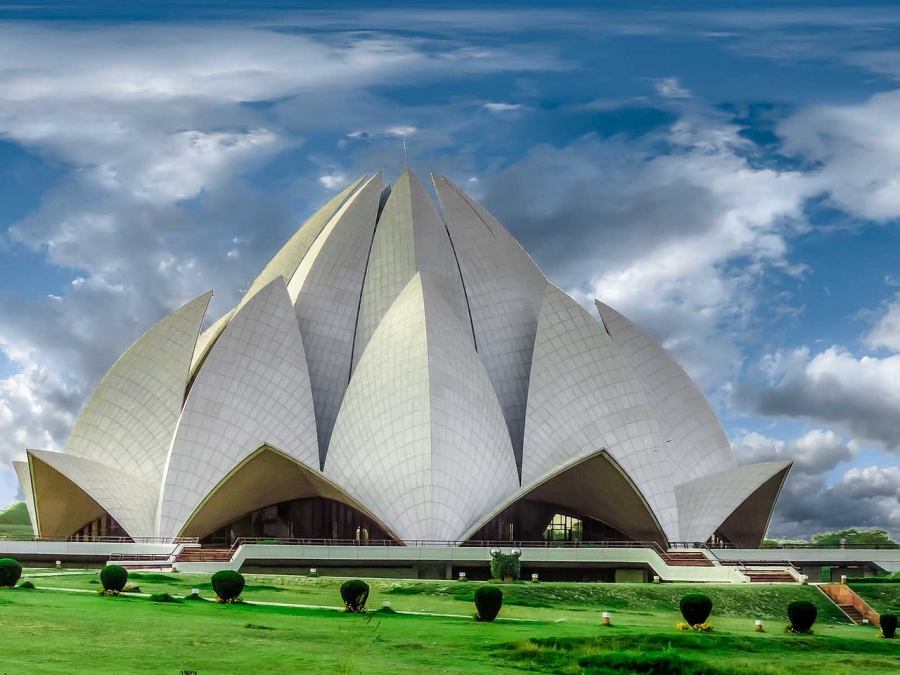
Officially called the Baháʼí House of Worship, it’s one of Delhi’s most unique architectural creations.
Inaugurated in 1986, it mimics the form of a lotus flower with 27 marble-clad „petals”. The building, designed by Iranian Fariborz Sahba, is 34 meters high and 70 meters in diameter. According to Baháʼí principles, the temple is open to followers of all religions, and no ceremonies or sermons are held inside. The interior space can accommodate 1,300 people.
The building’s surroundings feature nine pools and extensive parks that reinforce the lotus symbolism. The temple receives several million visitors annually and is often mentioned among the „seven wonders of the modern world”. The structure has a steel-concrete frame, but the marble cladding so perfectly mimics the flower’s natural form that from afar it appears to be an organic formation.
Akshardham Temple (Swaminarayan Akshardham)
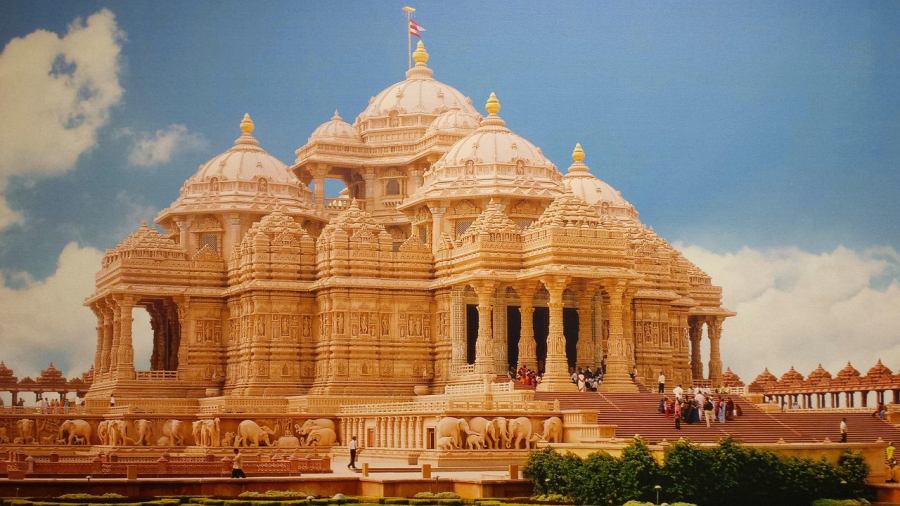
The temple complex opened in 2005 is the world’s largest Hindu temple complex.
The main temple on the 100-hectare site is 43 meters high, 96 meters long, and 109 meters wide, made entirely from Rajasthani pink sandstone and Italian Carrara marble. It was built by the Bochasanvasi Akshar Purushottam Swaminarayan Sanstha in traditional Indian architectural styles.
The temple was built by 20,000 volunteers with 300 million hours of work, using only traditional tools and techniques. The main building is decorated with 234 ornate pillars, 9 domes, 20 square towers, and 20,000 religious figures and plant motifs. The central sanctuary houses a gilded statue of Bhagwan Swaminarayan.
The complex’s special attractions include the Sahaj Anand water show, IMAX cinema, and cultural exhibition. The Yagnapurush Kund is the world’s largest stepwell with 108 smaller shrines and 2,870 steps. The entire complex is alcohol-free and vegetarian, operating under strict security measures.
India Gate
The gate stands in the heart of Delhi at the end of Rajpath (King’s Way) and commemorates British Indian soldiers who fell in World War I and the Afghan Wars.
Designed by Edwin Lutyens and inaugurated in 1931, the 42-meter-high triumphal arch-style monument preserves the names of 13,515 soldiers who fell between 1914 and 1921. The structure is made of sandstone with simple but monumental form. Under the arch, the Amar Jawan (immortal soldier) flame burned since 1971 in memory of India’s war heroes. However, in 2022, this flame was relocated to the nearby National War Memorial.
The park around India Gate is one of Delhi’s most popular meeting places, especially in the evenings when the gate’s illumination provides a spectacular sight. The area along Rajpath hosts numerous cultural events and military parades, including the January 26th Republic Day celebration.

National War Memorial
Inaugurated in 2019 south of India Gate, commemorating victims of post-1947 wars. The modern memorial consists of four concentric circles: Amar Chakra (immortal circle), Veerta Chakra (brave circle), Tyag Chakra (sacrifice circle), and Rakshak Chakra (protector circle).
Around the central Amar Jyoti (eternal flame) are 25,942 golden tablets bearing the names of soldiers who fell since 1947. The stones surrounding the memorial come from different geographical regions, symbolizing India’s diversity.
The memorial was designed by WeBe Design Lab, and its modern architectural approach contrasts with the traditional India Gate. The colored illumination in evening hours provides particularly impressive views, quickly becoming one of Delhi’s most popular photo spots.
Purana Quila
The Old Fort is the remnant of Delhi’s sixth historic city, Dinpanah, which Emperor Humayun began building in 1533 and Sher Shah Suri completed in 1545. The 60-hectare fortification’s walls are 18 meters high, with three massive gates: Humayun darwaza, Talaqi darwaza, and Bara darwaza.
Within the fort stands the Qila-i-Kuhna mosque, one of Sher Shah Suri’s finest architectural legacies. The mosque’s five arches blend Indo-Islamic style with beautiful calligraphic inscriptions and geometric patterns. The nearby Sher Mandal was a two-story octagonal library where Humayun suffered a fatal accident in 1556.
The complex includes an archaeological museum displaying finds from excavations conducted on the site, including objects dating from the 3rd century BCE. The lake and surrounding park are popular spots for locals, especially during winter months.
Feroz Shah Kotla
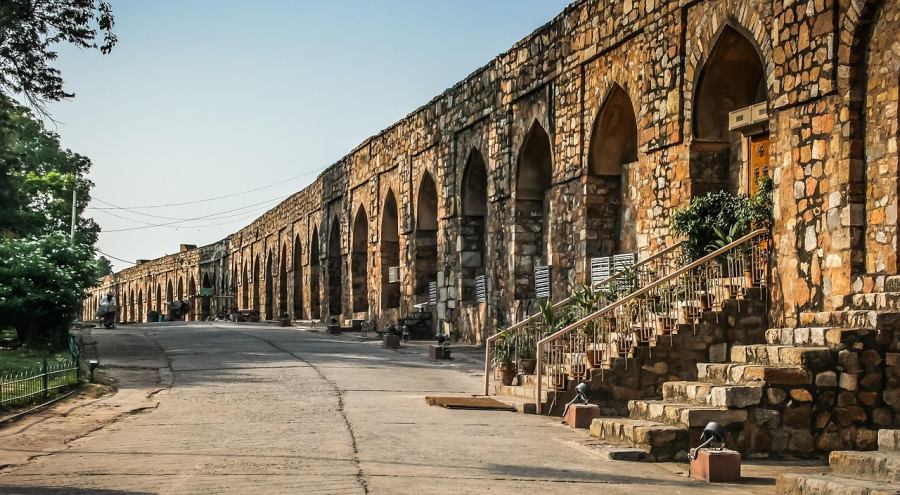
The ruins of the Delhi Sultanate’s fifth city, Firozabad, founded by Sultan Feroz Shah III in 1354. The complex’s central element is the Feroz Shah Kotla fort, whose walls once housed magnificent palaces, mosques, and gardens.
The site’s most unique attraction is an Asoka pillar from the 3rd century BCE, which Feroz Shah had transported here from the city of Topra (present-day Haryana). The 13-meter-high polished sandstone column bears Asoka’s edicts in Brahmi script, emphasizing Buddhist ethics and non-violence.
Today, a peculiar folk belief has developed among the ruins: many believe that jinns (spirits) live here, and large numbers of devotees arrive on Thursdays, lighting candles and making wishes. This tradition is a unique mixture of historical heritage and folk religiosity.
Chandni Chowk
The heart of Delhi’s Old City is a bazaar created in 1650, designed by Shah Jahan’s daughter, Princess Jahanara. The name means „moonlit square”, referring to the central canal that once reflected the moon’s light.
The three-kilometer-long main street and the narrow alleys crossing it offer one of India’s most exciting shopping experiences. Everything can be found here: from spices to textiles, jewelry to electronics, traditional sweets to modern gadgets. Kinari Bazaar is particularly famous for wedding accessories, while Dariba Kalan is known for silver jewelry.
The area also contains numerous historical buildings, including the Digamber Jain Temple and Sis Ganj Gurudwara Sikh shrine. This district is a paradise for street food: parathe, chaat, kulfi, and countless local specialties are available.
Lodhi Gardens
The gardens spread over 90 hectares in central Delhi, winding parks among tombs of the Lodhi and Sayyid dynasties who ruled in the 15th-16th centuries. The gardens are historically significant with Mohamed Shah’s tomb, Sikandar Lodhi’s tomb, and the Bara Gumbad complex.
The park was created in 1936 under British Lady Willingdon’s direction and has since been one of Delhi’s most beloved recreational areas. Yogis and picnickers spend time on the carefully maintained grassy areas, while the rose garden boasts more than 250 rose varieties.
Among the tombs, the most imposing is Mohamed Shah’s mausoleum (1444), which is octagonal and an early example of late Mughal architecture. The Bara Gumbad (Great Dome) is actually a mosque and guesthouse complex from the 15th century, with rich stucco decoration and geometric patterns. The gardens are particularly popular in winter.
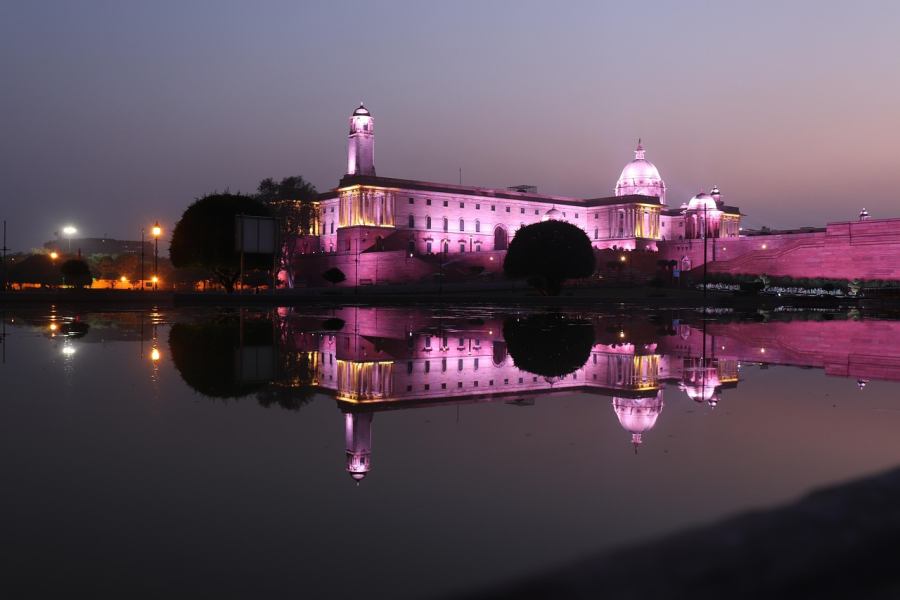
Rashtrapati Bhavan
The official residence of India’s President, once the seat of the British Viceroy.
Designed by Edwin Lutyens and Herbert Baker, completed in 1929. The 340-room palace is one of the world’s largest leaders’ residences, surrounded by 130 hectares of gardens. The building combines classical and Indian architectural elements: the central dome evokes the form of Buddhist stupas, while the facade is in British Palladian style.
The 15-hectare Mughal Gardens are open from February to March when roses, tulips, and other flowers bloom in magnificent colors. The garden’s specialty is an approximately 250 kg distillery for making rose oil. The palace museum showcases the history of the presidential office and protocol gifts.
Safdarjung Tomb
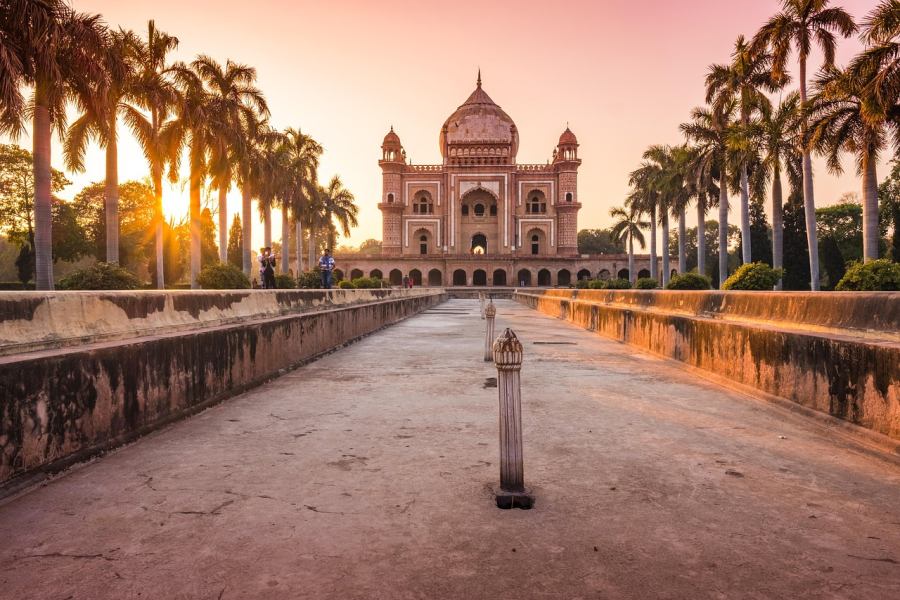
One of Delhi’s most impressive Mughal-era architectural works, built in 1754 in honor of Nawab Safdarjung, who was Avadh’s last independent ruler. The tomb is the last great example of Mughal architecture in India and is often called „the last garden mausoleum”.
The structure’s central dome is 28 meters high, surrounded by four smaller domes, while the sandstone and marble walls are decorated with beautiful geometric patterns. The mausoleum is surrounded by a massive, symmetrically designed garden following the Persian char bagh (four gardens) arrangement with water channels and pavilions.
The tomb’s uniqueness lies in the fact that although built in the 18th century when the Mughal empire was already in decline, it still preserved the monumental architectural traditions of earlier eras. The peaceful, park-like environment is an ideal location for photography, especially at sunset.
Sikandar Lodhi Tomb
The tomb of the Lodhi dynasty’s second sultan, Sikandar Lodhi (1489-1517), which is one of Delhi’s earliest examples of Afghan-Indian architectural style. The tomb, built around 1517, is located in Lodhi Gardens park, which is also one of Delhi’s most beloved outdoor recreational areas.
The octagonal-based mausoleum is made of sandstone and shows characteristic Afghan architectural elements: broken arches, geometric decorations, and an imposing central dome. The tomb’s walls are decorated with calligraphic inscriptions containing Persian and Arabic verse quotes from the Quran.
The surrounding 90-hectare Lodhi Gardens area contains numerous other tombs from the 15th-16th centuries, so visitors can tour several historical periods with one walk. It’s extremely popular among locals for jogging, yoga, and picnicking, so during a visit, one can gain insight into the daily life of Delhi residents.
Jama Masjid
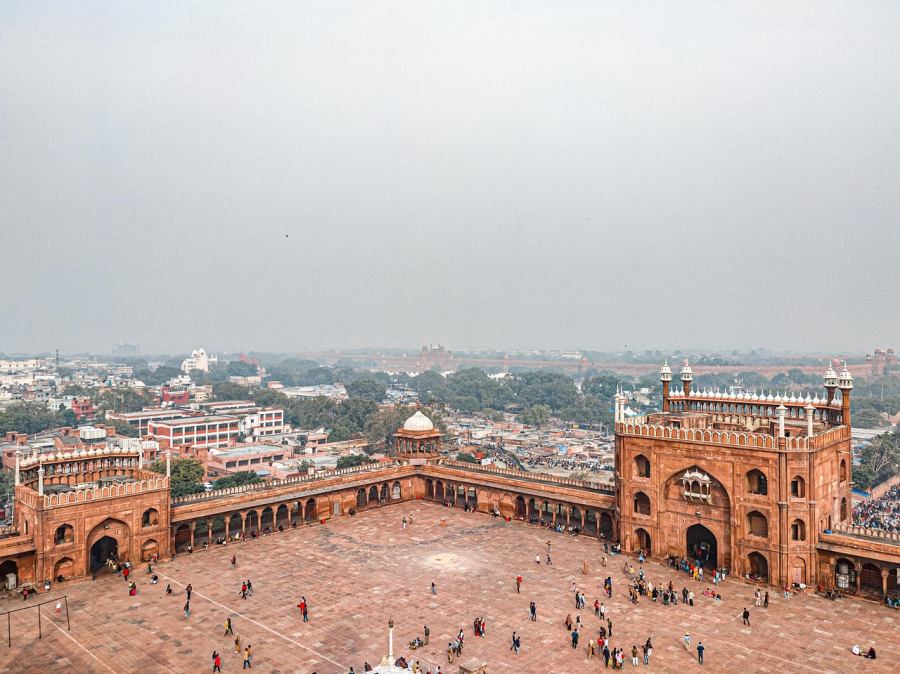
Delhi’s largest and most significant mosque, built by Mughal Emperor Shahjahan between 1650 and 1656. The original name Masjid-i Jahan-Numa (the world-revealing mosque) refers to it being the Mughal empire’s largest religious center, capable of accommodating up to 25,000 worshippers simultaneously.
The mosque made of red sandstone and white marble boasts three huge domes and two 40-meter-high minarets. The main courtyard covers 408 square meters, bordered by three-story arcades, while the prayer hall walls are decorated with precious calligraphy and geometric mosaics. During construction, 5,000 craftsmen worked on it for six years, and the total cost was one million rupees in contemporary currency.
The mosque’s cultural significance goes beyond its religious function: Mughal emperors held the most important state celebrations here, and the most significant Islamic religious events still take place here today. After climbing the 130 steps leading up one of the two minarets, a breathtaking panorama opens of Old Delhi’s labyrinthine streets and the Red Fort.
Jantar Mantar
One of the 18th century’s most beautiful scientific monuments, built by Maharaja Jai Singh II in 1724 for astronomical observations. This is the second member of a five-location Indian observatory chain representing the last great flowering of medieval Islamic and Hindu astronomy.
The complex contains 13 different astronomical instruments built from red sandstone and limestone in enormous sizes for accuracy. The most imposing instrument is the Samrat Yantra, a 22.5-meter-high sundial capable of showing time accurate to hours, minutes, and even seconds. The Ram Yantra’s two cylindrical structures serve to measure stars’ altitude and azimuth.
The use of individual instruments can still be demonstrated today: the Jai Prakash Yantra’s concave hemisphere-shaped device can determine the Sun and Moon’s position, while the Misra Yantra shows local time for four different geographical locations simultaneously. The stone-made giant instruments are still functional, and their accuracy is surprisingly competitive with contemporary metal tools. In 2010, UNESCO declared this scientific history wonder a World Heritage site.
Hauz Khas Village
One of Delhi’s most unique neighborhoods, combining 14th-century historical monuments with 21st-century bohemian cultural life. The name means „royal lake”, referring to a 13th-century water reservoir built by Sultan Alauddin Khilji to ensure Delhi’s water supply.
The historical core is the 14th-century madrasa (Islamic school) and mausoleum complex built by Feroz Shah Tughlaq, which uniquely combines educational and burial functions. The walkways winding among the stone-built institute’s ruins offer beautiful views of the lake and city. The madrasa walls contain Arabic and Persian inscriptions showing characteristics of the contemporary educational system.
Modern Hauz Khas Village has transformed into Delhi’s creative center since the 1980s. Today, more than 40 bars, restaurants, galleries, and fashion boutiques operate in the narrow streets, among which numerous local and international artists’ workshops are located. The area’s uniqueness is that we can have coffee among historical ruins while browsing contemporary Indian artists in galleries.
Agrasen Ki Baoli
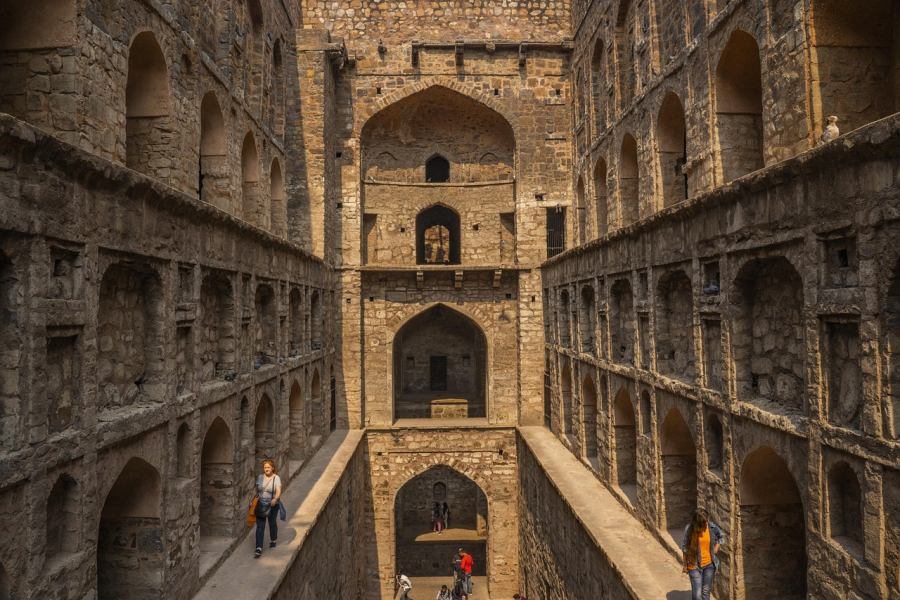
One of Delhi’s most mysterious attractions is a 14th-century stepwell (baoli), a unique water architectural monument from the pre-Mughal period. The name refers to Maharaja Agrasen, though the current structure was probably rebuilt in the 14th century on earlier foundations.
The 60-meter-long and 15-meter-wide structure consists of 103 steps leading down to the water surface on three levels. The red sandstone walls are decorated with geometric arches and columns creating stunning perspective. The baoli’s original function was water collection and storage during Delhi’s dry seasons, but it also served as a community life center. According to legends, the baoli is a haunted place whose mystical atmosphere intensifies especially in the evening.
The structure’s uniqueness is its refined acoustic system: words whispered from the top level are clearly audible at the bottom level. The stepped structure and play of shadows are particularly popular among photographers, as unique geometric compositions can be created. There’s no longer water in the well, but the cool, shady environment still provides refuge during Delhi’s hot days.
Dilli Haat
The unique handicrafts market and cultural center opened in 1994 to promote traditional Indian craftsmanship. The 6-hectare area simultaneously functions as a permanent exhibition, market, and cultural event venue where folk artists from every Indian state showcase their creations.
Besides the market’s 62 permanent stalls, an additional 200 temporary vendor spots operate where we can buy textiles, jewelry, wood carvings, ceramics, and spices directly from craftsmen. Individual stalls follow regional specialization: Kasta textiles from Rajasthan, Kashmiri shawls, Bengali terracotta figures, and South Indian bronze statues are all available here.
Dilli Haat’s specialty is the food court offering specialties from every Indian region in one place. Alongside South Indian dosa and idli, we can taste North Indian tandoori dishes, Bengali fish curries, and Gujarati vegetarian delicacies. Cultural performances are often held in the evenings: classical Indian dances, folk music concerts, and puppet shows.
Delhi weather: when is the best time to visit?
Delhi has a subtropical continental climate characterized by three main seasons: hot summer, monsoon rainy period, and pleasant winter.
Winter (December-February):
This is the most pleasant period in Delhi when temperatures range between 8-20°C. Days are sunny and warm, nights are cool. Foggy mornings may occur in December and January, but weather is generally clear and dry.
Summer (March-June):
Summer months are extremely hot and dry with temperatures ranging 25-45°C. In April and May, temperatures frequently reach 40-45°C while dust storms also occur. This is the most difficult period for visitors.
Monsoon (July-September):
The monsoon rainy season lasts from July to September when 80% of annual rainfall occurs. Temperatures are between 25-35°C, but high humidity makes it barely tolerable. Rains are often heavy but short.
Best time to visit to Delhi:
The ideal time to visit Delhi is between October and March when temperatures are pleasant 15-25°C with minimal precipitation. November and February are the most ideal months: days are sunny and warm (20-25°C), nights are cool (10-15°C), perfect conditions for sightseeing and outdoor programs. During this period, air quality is also better than the rest of the year, and visiting tourist attractions is a more comfortable experience.
Frequently asked questions about Delhi
Delhi is in the Indian Standard Time zone (IST, UTC+5:30), and India doesn’t observe daylight saving time.
India’s official languages are Hindi and English, both widely used in Delhi. Tourist sites, hotels, restaurants, and transportation hubs generally speak English, so visitors can easily get by.
India’s official currency is the Indian Rupee (INR). Cash use is still very common, especially in smaller shops and markets. Larger restaurants, hotels, and shopping centers widely accept credit cards and mobile payments. Here is a money converter.
Delhi’s international airport, Indira Gandhi International Airport, offers several transportation options. The fastest is the Delhi Airport Metro Express, which takes about 20 minutes to downtown. Taxis, buses, and pre-bookable transfers are also available, but due to traffic, metro is usually the most reliable solution.
The Delhi Metro is the most practical transportation form in the city: fast, clean, and safe. The metro network is extremely extensive and simple to use for tourists. Auto-rickshaws and taxi services (e.g., Ola, Uber) are also popular, but road traffic can slow travel.
Delhi is a bustling, metropolitan environment where tourists can generally feel safe. However, caution is important: it’s advisable to avoid dark, less frequented places at night and watch our valuables in crowded areas. Choosing official taxis and reliable accommodations is also recommended.
Respect for others is extremely important in India. Shoes must be removed before entering temples, and modest dress is appropriate. Instead of handshakes, „namaste” greeting is often used. Bargaining is customary in markets, and tipping is expected for taxi drivers, waiters, and guides.
Red Fort – stunning Mughal fort, one of the city’s most famous historical monuments.
India Gate – World War I heroes’ memorial, popular walking area.
Qutub Minar – one of the world’s tallest minarets, UNESCO World Heritage site.
Lotus Temple – modern, uniquely shaped religious building open to all religions.
Humayun’s Tomb – beautiful garden mausoleum, precursor to the Taj Mahal.
Chaat – spicy, tangy street snack with several variations.
Butter Chicken – rich chicken in buttery-tomato sauce, one of Delhi’s most famous dishes.
Paratha – stuffed flatbread, often eaten for breakfast.
Biryani – fragrant, spiced rice dish with meat or vegetables.
Jalebi – syrup-soaked, spiral-shaped sweet that can be tasted at street vendors.
Tap water consumption is not recommended in Delhi; bottled water should always be consumed, ensuring the cap is unopened. Street foods are tasty and varied, but should only be tried at reliable, busy places. Fruits and vegetables should be peeled or thoroughly washed to avoid possible stomach problems.