

Crete, the largest and one of the most diverse Greek islands, is extraordinary for its historical and natural features. This makes a trip to Crete perfect for those seeking active relaxation. These factors confirm that Crete offers a multitude of attractions for visitors.
Crete, Greece’s largest island, lies close to the coasts of Africa. It stretches 260 kilometers in an east-west direction, with its widest point being 60 kilometers and its narrowest 12 kilometers. Its capital is Heraklion (Iraklio).
The center of the Minoan civilization (circa 2600-1400 BC), the oldest known European civilization, has greatly influenced the historical and architectural treasures that Crete offers today, along with the Venetian rule from the 13th century that lasted for four centuries.
I spent a few days in Crete, where I visited some of the most beautiful beaches.
Table of Contents
Attractions in Crete
Heraklion
The largest city of Crete, it is also the capital and main port. Situated around the center of the island, it’s an ideal starting point for exploring Crete.
The Archaeological Museum displays in chronological and thematic order from the early Bronze Age to Roman times highlight the island’s archaeological heritage, particularly the Minoan civilization. Famous exhibits include frescoes from the Knossos palace. More information is available here!
Venetian City Walls are 3 km long with seven angular bastions and two gates (Porta Hánion and Kenuria Porta). A prominent feature is the Pili Iszu, or Jesus Gate.
Rocca a Mare Fortress is two-tiered fortress in the port, though not extensive, is worth the modest entrance fee for the views and ambiance.
The CretAquarium mainly showcases the Greek and Mediterranean marine life with about 60 aquariums. The shark species are among the most visited. The area is not large and can be explored in a few hours. More information is available here!
Several fountains can be found in Heraklion. The most beautiful is Morosini Fountain in Venizelu Square, adorned with bas-reliefs of mythological figures. The island’s oldest fountain is Bembo, over 450 years old.

Knossos
Located 7 km south of Heraklion, it is one of Europe’s oldest city ruins.
Likely the religious and political center of the Minoan civilization, the current ruins are from the third palace built around 1700 – 1400 BC. Originally 5-6 stories high, the palace had a spacious courtyard surrounded by a labyrinth of smaller rooms, totaling nearly 1500.
Excavated by Sir Arthur Evans of the Ashmolean Museum in Oxford, he controversially reconstructed the site based on his interpretations.
More information are available on the official website!

Waterpark
Located about 15 km east of Heraklion, this waterpark is universally praised for its wave pool, slides, and pools. Try the slides that require the park’s own inflatable rings!
More information is available here!
Rethymno
Situated between Heraklion and Chania, this charming city features a 16th-century Fortezza fortress built against the Turks, who later captured it.
Visible inside are the old armory, commandant’s office, and mosque. The fortress offers great views of the harbor and city.
The Venetian Old Town, owned by the Venetians since the early 13th century, features houses in their style, many of which remain in their original form.
Stone carvings, gateways, arches, windows, and balconies can be seen on houses along the narrow streets and alleys.
East of the port, the city’s coastal area stretches along the beach. The golden sandy beach with shallow waters is perfect for holidays as the city center is just minutes away.
Lake Kournas
Located not far from the Rethymno-Chania main road, it is the island’s largest freshwater lake.
Set in a beautiful environment, it’s an ideal place for a hike and picnic.

Chania
The most significant city in West Crete and a starting point for exploring the wonderful beaches on the western coast.
Like other cities, the old town encompasses the harbor area, bordered by remnants of a 16th-century city wall. This area hides old, eye-catching Venetian buildings, quaint cafes, and restaurants.
The Old Chania Market, a large covered market, offers a variety of delicious foods and goods.
Chania also hosts several renowned museums: Military, Ethnographic, Archaeological, Greek National Football Museum.

Samaria Gorge
Europe’s longest gorge at 16 km, a must-visit for hiking enthusiasts and one of Europe’s most beautiful hiking routes!
It’s a north-south oriented gorge. The northern starting point is near Omalos plateau at Xyloskalo, 1230 meters high. There are drinking water and restroom facilities along the way. The southern end is at Agia Roumeli on the Libyan Sea coast, from where you need to take a boat to Sougia.
Surrounded by fantastic flora and fauna within a national park, the gorge’s cliffs sometimes exceed 500 meters, and at one point, it narrows to just 3 meters wide!
Hiking is allowed from May 1 to October 31.
Organized trips from Chania are available for those who prefer not to deal with logistics. It’s a full-day activity.

Gramvousa Island and Balos Beach
It’s advisable to take a boat as Balos can be reached by car but the route is rough and parking can be challenging during busy times.
Like Elafonissi, it attracts tourists with its pink-blue waters and scenery. Ideal for children as the water in most of the bay is only ankle-deep.
Accessible by boat from Kissamos. Boat information can be found here!

Falassarna
A nearly 1 km long sandy beach, but it deepens quickly. More developed than other seaside beaches.
Easily accessible by car, located 15 km from Kissamos.
Elafonissi
Often cited as one of the world’s most unique beaches. Its pink hue is due to crushed coral and shell fragments.
Like Balos, the water is shallow in many places, making it ideal for families with small children.
The name refers to a small island you can walk to through a lagoon. If you seek tranquility, it’s worth walking over. It’s a top sight among Crete’s attractions.
Also reachable by a paved road.

Paleochora
Not overcrowded even in peak season, Paleochora is a south-Cretan town not focused on mass tourism. Its surrounding mountains offer great hiking opportunities.
Its most visited beach is the sandy Pahia Ammos, located on the town’s western side.
Loutro
If you’re looking for a quiet, serene Cretan village, Loutro is the answer, accessible only by foot or boat.
It offers a few apartments, but there’s a good selection of restaurants and cafes.

Matala Beach
The town’s sandy-pebbly beach is unique for its large rock wall with various caves.
Ierapetra
An important hub in the south of the island, divided into the alley-filled old town and the modern, newly built city area. The waterfront promenade houses numerous shops, bars, and taverns.
Ierapetra is Greece’s sunniest city, with weather similar to North Africa. Prepare for warm temperatures if vacationing here!
From its port, you can reach Chrissi Island.
Chrissi Island and its beaches
Accessible by boat from Ierapetra, this island offers beautiful beaches. Chrissi is also home to Europe’s largest cedar forest, adding to its uniqueness.
Arriving on the south, a 400-meter walk leads to the popular Belegrina Beach on the north coast.
Information available on the official website.
Dikteon Cave
Located on the Lassithi Plateau, this cave is where Zeus was born according to mythology. A must-visit during a trip to Crete!
The cave descends about 60 meters, where you can see extraordinary stalactites, stalagmites, and a lake.
Sitia
The most significant, tourism-reliant city in the northeast.
Perfect for a tranquil getaway, it’s not overcrowded and offers a choice of bars and taverns.
Vai Palm Beach
East Crete’s most beautiful beach, backed by Europe’s largest natural palm forest.
A well-developed beach, easily accessible with options for water sports like jet-skiing and wakeboarding.

Agios Nikolaos
Located about 60 km east of Heraklion, this beautiful Cretan coastal city is a popular resort due to its excellent location.
Its center is almost a closed bay, known as Voulismeni Lake, surrounded by numerous taverns and bars, offering beautiful views, especially in the evening. According to legend, Pallas Athena bathed in it.
Recommended for those seeking peaceful relaxation.

Hersonissos
About 28 km east of Heraklion, combined with Sarantaris, Chersonisou, it forms a popular resort area, even featuring a dedicated party district.
Aquaworld Aquarium, smaller than CretAquarium, is praised for its family-friendly environment.
You can see a variety of aquatic creatures, not just fish, and interact with free-roaming reptiles in the yard. You can even handle several types of snakes. All information can be found here!
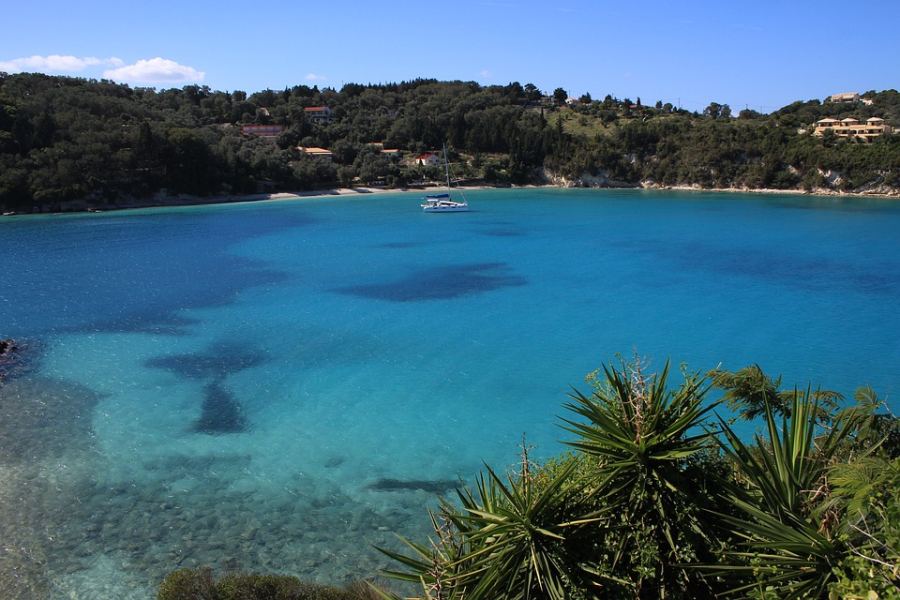
Have you heard of these Greek islands?
I’ll introduce 16 lesser-known Greek islands that are worth visiting!