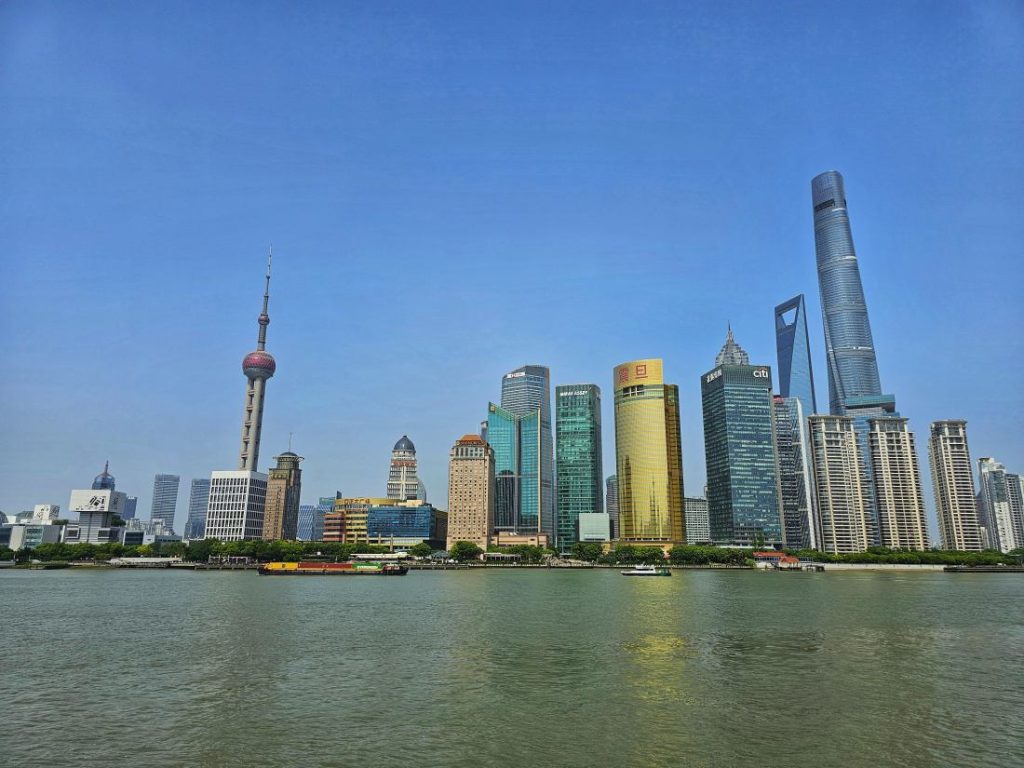
Shanghai is one of China’s most important cities alongside Beijing. It has become a world-famous metropolis, yet the old culture has also been preserved, making it an exciting city for tourists.
One of the economic centers of the Far East, it is located in the middle part of the eastern Chinese coastline, in the Yangtze River estuary area. For a long time, the British ruled the city, then the French, Americans, and Japanese also created their own districts, called concession areas. These still define Shanghai’s character today.
Table of Contents
Shanghai attractions
Oriental Pearl Tower
The tower is one of the most recognizable symbols of Shanghai’s skyline.
The 468-meter tall tower is located in the Pudong business district and is particularly impressive due to its futuristic design. Its three main spheres and smaller connecting elements provide a unique aesthetic experience, especially at night when the building is illuminated with colored lights.
The tower has several observation decks offering breathtaking panoramic views of the city. The highest viewing point is at 351 meters, from where you can see even the distant suburbs on clear days. One of the most exciting parts is the glass-floored observation deck, which provides a special experience for those who enjoy heights.
Inside the Oriental Pearl Tower, there is also a museum showcasing Shanghai’s history. Through interactive exhibitions, visitors can learn about the city’s development from ancient times to the present day. The building also houses a revolving restaurant where guests can enjoy the city’s panorama while dining.

The Bund (Wai Tan)
One of the most beautiful and spectacular parts of Shanghai’s historic center.
The promenade along the western bank of the Huangpu River is lined with impressive European-style buildings constructed at the turn of the 19th and 20th centuries. The famous panorama of the Bund creates a sharp contrast with the modern skyscrapers rising on the opposite side.
The area is particularly popular in the evening hours when the skyscrapers shine in colored lights, and the river water reflects the spectacular cityscape. One of its iconic attractions is the Peace Hotel, which attracts visitors with its art deco style and rich history. The riverside promenade is an excellent location for photography.

Shanghai Tower
One of China’s and the world’s tallest buildings, at 632 meters, it dominates the city’s skyline. The spirally twisted design is not only aesthetically special but also aerodynamically optimized, making it more resistant to wind and earthquakes.
The tower’s observation deck is located at 561 meters, making it one of the world’s highest public viewing points. From here, there is a breathtaking panorama of the city, especially at night when Shanghai’s lights are shining. The ultra-modern elevators take visitors to the top in less than a minute.
The Shanghai Tower is also special from a sustainability perspective: its glass covering provides energy-efficient heat regulation, while inside the building, green terraces and natural ventilation systems support environmentally friendly operation. The building also houses luxury offices, hotels, and shopping centers.

Yu Garden (Yuyuan)
The traditional Chinese garden was built in the 16th century during the Ming Dynasty. It is one of the most beautiful and well-preserved classical gardens in Shanghai.
The garden area features meticulously designed ponds, ornate bridges, and pavilions, all among the finest examples of Chinese landscape architecture. The famous Dragon Wall, with its special decorative elements and undulating lines, is one of the most well-known parts of the garden.
Around Yu Garden, there are traditional markets and restaurants where visitors can taste local specialties, such as the famous xiaolongbao steamed dumplings.

Nanjing Lu (Nanjing Road)
One of Shanghai’s most famous shopping streets reflects the vibrant energy of the modern metropolis.
The street consists of two parts: the western section is filled with luxury brand stores, while the eastern section offers more traditional, Chinese-style shops and markets. The famous Shanghai No.1 Department Store, one of the city’s oldest shopping centers, is located on this street.
The evening lights of Nanjing Lu are particularly impressive when the colorful array of neon advertisements and LED displays illuminate the street. The street is full of restaurants, cafes, and entertainment venues, making it a perfect place for an evening stroll.

Jade Buddha Temple (Yufo Si)
One of Shanghai’s most important Buddhist sanctuaries is home to two beautiful jade statues. One is a 1.9-meter seated Buddha, a masterpiece carved from white jade, and the other is a smaller reclining Buddha, symbolizing the tranquility of enlightenment.
The temple was founded in 1882 and has undergone several renovations over the years but has preserved its traditional Chinese architectural style. The building’s red walls, ornate carvings, and gilded Buddha statues create a special atmosphere.
In the sanctuary, visitors can light candles and offer incense. The temple is one of the city’s important spiritual centers, worthily representing China’s religious traditions.
Shanghai Old Street
One of the city’s most authentic districts evokes the old times.
The historic street is located near the Yuyuan Garden and was once one of the city’s most important commercial centers. Most of the buildings reflect the traditional Chinese architectural style from the Ming and Qing dynasties, with red wooden columns, ornate roof structures, and elegant pagodas.
It is famous for its traditional Chinese shops selling handicrafts, silks, calligraphy, and antiques. In the teahouses, you can taste famous Chinese teas, and it’s particularly attractive for food lovers. You can taste traditional city dishes such as the famous xiaolongbao (soup dumplings) and fried crab rolls.
Tianzifang
One of Shanghai’s most charming cultural districts offers a unique blend of traditional Chinese hutongs and modern art galleries.
The area, interwoven with tiny alleys, is located in the former French Concession area and has become a popular tourist attraction. Among the shikumen-style houses built in the early 20th century, there are cozy cafes, design shops, and contemporary art galleries that create a unique atmosphere.
In the shops, you can find unique handicrafts, paintings, and works by local artists. Live music is often heard on the streets, further enhancing the vibrant atmosphere of the place. Food lovers won’t be disappointed either, as there are numerous international and Chinese restaurants in the area where you can taste the city’s traditional flavors.

Xintiandi
One of Shanghai’s most exclusive districts combines traditional shikumen architecture with contemporary shops and restaurants.
What was once a quiet residential area has now become a vibrant area that attracts both tourists and locals. Among the carefully restored buildings, you can find stores of world-famous fashion brands, elegant cafes, and fine dining restaurants.
However, it is not only a paradise for shopping and gastronomy enthusiasts but also has important historical significance. The site of the first congress of the Chinese Communist Party is located here, preserved as a museum.

Wukang
One of the most interesting districts is located in the former French Concession area.
The area is famous for its shikumen-style buildings and art deco architectural solutions that represent one of the defining styles of early 20th century Shanghai. The elegant, shady streets lined with plane trees and historical buildings of the district are popular with tourists.
One of its most famous attractions is the Wukang Building, formerly known as the Normandie Apartments. Built in 1924, it is one of Shanghai’s oldest and most iconic residential buildings, designed by the famous Hungarian-born architect László Hudec. The triangular corner building stylistically recalls the Parisian Haussmann era, a prominent example of French Renaissance and art deco architecture of the time. It closely resembles Flatiron Building in New York.

Qibao
The historic district is famous for its well-preserved old town, canals and traditional Chinese architecture.
It is one of Shanghai’s best-known water towns, dating back to the Sung Dynasty (10th-13th centuries). Its name means „Seven Treasures”, which according to local legend refers to the treasures found in the region.
Its main attraction is the old town canal system, lined with charming stone bridges and traditional wooden houses. The narrow alleys are full of authentic restaurants and street vendors. And the Qibao Museum offers an insight into the history and traditions of the area.
Longhua Temple
Shanghai’s oldest and most significant Buddhist temple has a history spanning more than a thousand years.
The sanctuary, originally built during the Tang Dynasty, has survived numerous wars and reconstructions but still retains its original structure and spiritual significance. The temple complex’s impressive pagoda is particularly noteworthy as it is one of the oldest standing wooden and brick pagodas in China.
The temple area consists of several buildings, including the Hall of the Heavenly Kings and the Great Buddha Hall. Visitors can admire the massive Buddha statues, the smoking incense, and the peaceful inner courtyards. In spring, beautiful cherry trees bloom in the temple garden, providing a special attraction for visitors.

Century Park
Shanghai’s largest urban park is located in the Pudong district, near the modern skyscrapers.
The park covers about 140 hectares, combining Chinese, English, and Japanese garden design elements. It’s an ideal place for nature lovers to relax, with vast green spaces, lakes, and promenades welcoming visitors.
Its central feature is Century Lake, surrounded by shady walkways and pleasant picnic spots. Boat rentals are also available. The park’s various themed gardens, such as the flower garden and bamboo grove, showcase the beauty of nature.
Shanghai Museum
One of the most important cultural institutions boasts an unparalleled collection.
The impressive building, shaped like a bronze vessel, is located in the heart of People’s Square and houses more than 120,000 artifacts. The exhibits include ancient bronze sculptures, porcelain, calligraphy, and classical Chinese paintings.
The museum’s particularly noteworthy bronze collection showcases masterpieces from China’s early dynasties. Visitors can learn about the country’s artistic development from the Neolithic period to the Qing Dynasty. The various galleries are arranged thematically, making it easy to overview the rich history of Chinese art.
All information can be found here!
Shanghai Natural History Museum
One of China’s most modern and comprehensive natural science institutions showcases the Earth’s wildlife and history with impressive exhibitions.
The museum contains more than 10,000 exhibits, including ancient fossils, rare animal specimens, and interactive scientific displays. It is divided into different thematic zones showcasing nature’s evolution, geological eras, and the diversity of life.
One of the most impressive exhibitions is a giant dinosaur skeleton. In the evolutionary gallery, visitors can learn about the development of living organisms from the simplest unicellular organisms to modern humans. The geological section is particularly exciting, showing the planet’s geological changes, volcanic activities, and mineral resources.
All information can be found here!

Chinese Art Museum
Located in the former main building of the 2010 Shanghai World Expo, the distinctive red pavilion houses one of the country’s most significant art institutions.
The museum primarily displays modern and contemporary Chinese art, providing excellent insight into Chinese art trends of the 20th and 21st centuries. The permanent exhibitions include traditional Chinese paintings, calligraphy, and innovative multimedia installations.
One of the museum’s most popular attractions is the digital reconstruction of the famous painting „Along the River During the Qingming Festival” which interactively presents life in ancient China.
All information can be found here!
Shanghai Disneyland
The Walt Disney Company’s most modern and one of its largest amusement parks opened in 2016.
The park is divided into six themed zones and features numerous unique attractions specifically designed for Chinese visitors. The Enchanted Storybook Castle is the world’s largest Disney castle, which is not only an iconic attraction but also offers interactive experiences, such as a magical journey into Cinderella’s story.
The amusement park holds special experiences for all age groups. The TRON Lightcycle Power Run is a futuristic roller coaster based on the popular film and is one of the fastest Disney attractions. For adventure seekers, Pirates of the Caribbean: Battle for the Sunken Treasure offers a unique experience created with innovative technology, where visitors find themselves in the middle of a naval battle.
All information can be found here!

Shanghai Ocean Aquarium
One of Asia’s largest and most modern marine life institutions provides an impressive insight into the wildlife of the world’s oceans and rivers.
The aquarium is divided into nine thematic zones, displaying aquatic creatures according to geographical regions. The exhibitions include China’s native aquatic species, the special creatures of the Amazon jungle, and rare animals living in the icy waters of Antarctica.
One of the most exciting parts of the facility is the world’s longest underwater tunnel, which takes visitors through various marine habitats over 155 meters. Through the tunnel’s glass walls, sharks, rays, and other extraordinary marine creatures can be observed up close. The floating movement of giant jellyfish and the sight of colorful coral reefs provide a particularly impressive experience.
The exhibitions are enriched with interactive elements, allowing children and adults alike to discover the wonders of the aquatic world in an entertaining and educational way.
All information can be found here!
Zhujiajiao
The picturesque water town is located on the outskirts of Shanghai and has a history spanning more than 1700 years.
Also known as the „Venice of the East,” the settlement with its narrow canals, traditional stone bridges, and ancient buildings exudes a special atmosphere. The old town quarter is connected by dozens of historical bridges, the most famous being the Fangsheng Bridge, built in 1571, which with its five arches is one of the region’s most impressive structures.
The town holds numerous cultural and historical attractions. The Kezhi Garden, once owned by a wealthy merchant, still preserves the traditional characteristics of Chinese garden design. The temples, traditional teahouses, and period residences offer insight into the everyday life of old China. The old town market is particularly attractive to visitors, as they can taste authentic local foods, handicrafts, and traditional Chinese delicacies there.

Shanghai weather: when is the best time to visit?
Shanghai has a four-season, humid subtropical climate that includes hot, rainy summers and cool, occasionally freezing winters.
- Spring (March-May): Spring is mild and gradually warming, with average temperatures ranging from 10-22°C. This season is rainy, especially during April and May, when humidity also increases. The blooming parks and pleasant weather make this one of the best times to explore the city.
- Summer (June-September): Summer is hot and humid, with frequent rain and storms. Average temperatures range from 25-35°C, but the heat index can feel even higher due to the high humidity. The mei-yu (plum rain) season begins in June, bringing heavy rainfall, while typhoons may occur in August and September.
- Autumn (September-November): Autumn is the most pleasant season, with mild, dry, and sunny weather. Average temperatures range from 15-25°C, and precipitation decreases significantly compared to summer. The fresh air and autumn foliage make this period particularly attractive for tourists.
- Winter (December-February): Winter is cool and occasionally wet, with average temperatures ranging from 2-10°C. Although it rarely snows, the cold, windy weather and high humidity can make it feel colder than the actual temperature.
Best time to visit
The most ideal time to visit Shanghai is during spring (March-May) and autumn (September-November).