

Maui is one of Hawaii’s most magical islands, full of impressive natural wonders, scenic panoramas, and rich cultural heritage. The island has rightfully earned the nickname „Valley Isle”!
Often called „The Pearl of the Pacific”, Maui is Hawaii’s second-largest island after the Big Island. With its diverse landscapes, volcanic mountains, and breathtaking coastlines, it’s a paradise for nature lovers.
Table of Contents
Maui attractions
Haleakalā National Park
One of Hawaii’s most impressive natural wonders and one of Maui’s most important attractions.
Rising to an elevation of 3,055 meters, the Haleakalā volcano („House of the Sun”) is located in the eastern part of the island. The crater of this extinct volcano is famous for one of the world’s most spectacular sunrises – many people climb to the summit before dawn to experience this unforgettable sight. The moon-like landscape surrounding the crater, with its reddish-brown color and unique rock formations, creates a stunning contrast with the blue sky.
The park features more than 30 kilometers of hiking trails with varying difficulty levels. The Sliding Sands Trail is the most famous, leading into the interior of the crater where visitors can admire the unique flora up close, including the silversword plant (Argyroxiphium sandwicense) found exclusively here.
During nighttime hours, the park is also a perfect location for astronomical observations, as the environment free from light pollution offers an unparalleled view of the starry sky.

Hāna Highway
This 84-kilometer scenic road section is known as one of Maui’s most iconic attractions, following the northern coastline of the island.
The road leads from Kahului to the town of Hāna and includes more than 600 curves and 59 bridges, many of which are single-lane. Along the road, visitors can find numerous waterfalls, bamboo forests, lava fields, botanical gardens, and hidden bays. The most famous stops include the Waikamoi Forest, the Keanae Peninsula, and the Wailua Falls, all worth a break during the journey.
It’s advisable to allocate at least a full day for this trip to see all the important attractions. Many choose to stay overnight in Hāna to avoid having to return on the same day. Locals often mention the phrase „Hāna mentality”, referring to a slow, relaxed lifestyle – this road shouldn’t be rushed either, as each turn reveals new, impressive sights.

Waiʻānapanapa State Park
This special park is one of Maui’s most unique attractions.
The park’s most famous feature is the black sand beach, Honokalani Black Sand Beach, which gets its color from volcanic rocks. The contrast created by the lush green vegetation surrounding the beach and the crystal-clear blue ocean provides a stunning view. The park also features a natural sea cave and a stone arch, which are popular photography spots.
The park is rich in hiking trails, along which you can see ruins of ancient Hawaiian temples (heiau), lava tubes, and natural rock formations. The name Waiʻānapanapa means „glistening water”, referring to the brightness of waves breaking on the black sand beach.
The area is connected to many Hawaiian legends, the most famous being the story of Princess Kihawahine, who hid in a rock cave due to heartbreak.

ʻĪao Valley State Monument
One of Maui’s most important historical and natural attractions, located in the central part of the island.
Among the impressive green mountains of the ʻĪao Valley, we find the ʻĪao Needle, a 370-meter-high volcanic rock tower that has become the symbol of the valley. The lush vegetation surrounding the needle and the crystal-clear ʻĪao Stream create a picturesque environment.
The area is significant not only for its natural beauty but also for its important role in Hawaiian history. In 1790, the legendary Battle of Kepaniwai took place here, when King Kamehameha united the Hawaiian islands. In memory of the battle, the park includes a botanical garden featuring traditional buildings and plants of various Polynesian cultures.
Lahaina
Maui’s former capital, and today one of the island’s most vibrant cultural and historical sites.
Along Front Street, buildings from the 19th century now house galleries, restaurants, and shops.
Perhaps the town’s most iconic attraction is the giant banyan tree in Banyan Tree Square, planted in 1873, which has now expanded to more than 16 trunks and covers more than 8,000 square meters. This tree is one of the largest of its kind in the United States.
Whale-watching tours (between December and May) depart from Lahaina Harbor, as well as ferries to the neighboring islands of Lanai and Molokai. The town is home to several historical sites maintained by the Lahaina Restoration Foundation, including the Baldwin Home Museum and the Hale Paʻi printing museum.

Molokini Crater
This crescent-shaped underwater volcanic crater is located 4 kilometers off the coast of Maui and is one of the best diving sites in the world.
The Molokini Crater is a partially submerged volcanic cone that provides natural protection to the inner lagoon, home to more than 250 fish species. The crystal-clear water allows visibility of up to 45 meters, creating ideal conditions for diving and snorkeling. On the inner side of the crater, we can swim in shallow water, while experienced divers can descend along the steep walls on the outer side.
The island is also a state marine life conservation district and bird sanctuary, where many endangered bird species find refuge. The crater can only be reached through organized tours, which typically depart from the ports of Maʻalaea or Kīhei.

Waihee Ridge Trail
This impressive hiking trail is located in the western part of Maui and offers one of the most beautiful panoramas of the island.
The moderately difficult, 4-kilometer trail ascends 300 meters to the ridge. After the initial steep section, the path winds along the Waihee Valley, offering constantly changing, breathtaking views of valleys, waterfalls, and the distant ocean. On clear days, the island of Molokai can be seen in the distance.
Along the path, the forest gradually changes, starting from drier, lower sections to the wet, humid forests of the higher regions. The highlight of the hike is the highest point of the ridge, where a 360-degree panorama opens up to the ocean and the West Maui Mountains. It’s advisable to start the hike in the early morning hours before clouds cover the peaks, though one should be prepared for rain as the area is famously wet.

Pipiwai Trail
This scenic hiking trail is located in the Kīpahulu district of Haleakalā National Park.
During the 6.4-kilometer round trip, visitors pass through various ecosystems, including a bamboo forest where tall bamboo creates a dense canopy and a unique atmosphere. Along the trail, there are several smaller waterfalls and natural pools. The main attraction of the route is the magnificent Waimoku Falls, which marks the end point of the hike.
At the beginning of the trail, the Makahiku Falls offers an impressive sight, then the path continues along a stream where hikers must cross several small bridges. The ascent is gradual, making the hike feasible for most visitors.
Waimoku Falls
The impressive Waimoku Falls is located at the end of the Pipiwai Trail and is considered one of Maui’s most imposing natural attractions.
The 120-meter-high waterfall cascades down a black basalt rock face, surrounded by lush tropical vegetation. The path to the waterfall itself is a magical experience, as visitors pass through bamboo forests, cross bridges over streams, and see smaller waterfalls before reaching the main attractions. The natural pool formed under the waterfall is not suitable for swimming due to the force of the falling water and the rocks.
The best photos can be taken in the morning hours when the sun doesn’t directly illuminate the waterfall and the light is more even. It’s worth noting that the waterfall’s volume can vary significantly depending on the seasons and rainfall.
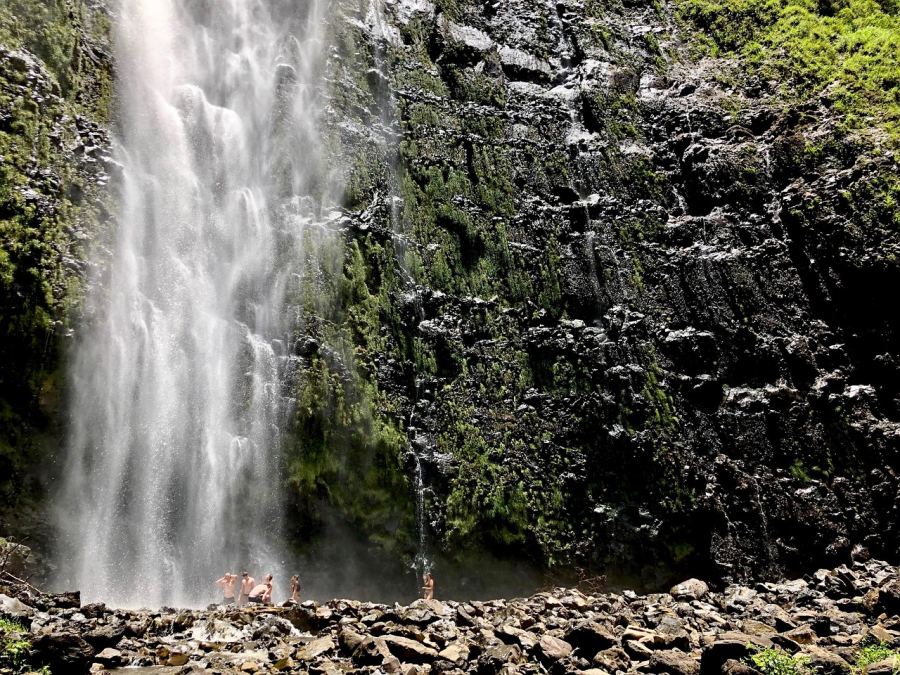
Hanawi Falls
This picturesque waterfall is located along the famous Hāna Highway.
The waterfall is found at the 32-mile marker and is relatively easy to access as it’s located right next to the road. It actually consists of two separate cascades flowing into a natural pool. The upper waterfall is about 9 meters high, while the lower one is somewhat shorter.
The pool beneath the waterfall is a popular bathing spot, although the water can often be quite cold. The best time to visit is in the morning hours when there are fewer tourists in the area and the light is also more favorable for photography.
Maui Ocean Center
One of the island’s most important attractions provides insight into Hawaii’s rich marine life.
The aquarium complex features more than 60 exhibition spaces, showcasing more than 2,000 fish and marine species living in the waters surrounding the Hawaiian Islands. The facility’s pride is the Açores marine habitat, a massive 2.8-million-liter tank where sharks, rays, and other large marine creatures swim. A unique characteristic of the aquarium is that it exclusively exhibits Hawaiian species.
Visitors can learn about coral reef ecosystems through the Living Reef exhibition, then observe Hawaiian green sea turtles in the Turtle Lagoon. The center also features a special 3D projection room.
Napili Bay
This semicircular, golden sand bay is located on Maui’s northwestern coast and is one of the most popular beaches on the island.
The water in Napili Bay is generally calm and crystal clear, making it ideal for snorkeling and swimming. The rocky areas at both ends of the bay are home to colorful tropical fish and turtles.
The Kapalua Coastal Trail at the northern end of the bay is a beautiful path. It follows the coast for several kilometers and offers additional beautiful views of the bay.

Honolua Bay
The bay is located on the northwestern coast of Maui and is known as one of the island’s premier snorkeling and surfing paradises.
This bay is a marine life conservation area of the state of Hawaii, which means that the aquatic wildlife is particularly rich and diverse. Swimming in the crystal-clear water, we find ourselves in the company of coral reefs, colorful tropical fish, and often sea turtles. The rocky area in the northern part of the bay is a particularly good place for snorkeling, where special rock formations and caves can also be found underwater.
In winter, the bay is a favorite spot for professional surfers, where world-class waves break on the shore. During this time, snorkeling is generally not recommended due to the strength of the waves. The best time to visit is during the summer months when the sea is calmer and ideal for water activities.

Makena Beach
This 1-kilometer-long golden sand beach is often called „Big Beach” and is one of Maui’s most beautiful natural beaches.
It is one of the least developed beaches on the island, which has preserved its natural beauty and wild character. The beach is bordered on one side by Puʻu Ōlaʻi, a 110-meter-high extinct volcanic cone, while the ocean stretches on the other side.

Kāʻanapali Beach
This white sand, 5-kilometer-long beach was once the resting place of Maui kings.
Located on the western coast, it offers a stunning view with its crystal-clear water and the Maui Mountains rising in the background. At the northern end of the beach is Black Rock (Puʻu Kekaʻa), a sacred place in Hawaiian culture, believed to be the point where souls cross over to the afterlife. Today, this spot is popular for cliff-diving demonstrations and is an excellent snorkeling location where sea turtles and colorful fish can often be seen.
Along the beach, luxury hotels, shopping centers, and restaurants line up to form the Whalers Village complex. Every evening at sunset, a torch-lighting ceremony is held at Black Rock, where a young Hawaiian man climbs the rock and, after throwing the torch into the water, dives into the sea with a spectacular header.
Maui weather: when is the best time to travel here?
Maui has a tropical climate that provides pleasant, warm weather year-round, although the climate can vary significantly in different parts of the island.
Spring (March-May):
Spring is an ideal time to visit Maui, when the weather is pleasant and tourist traffic is lower. The average temperature ranges between 21-29°C, and the amount of precipitation gradually decreases compared to the winter months. The waters are already warm enough for swimming and water sports, while in the mountains and valleys, the vegetation is particularly green and lush thanks to the winter rains.
Summer (June-September):
Summer in Maui is warm and mostly dry, especially on the western and southern coasts. The average temperature ranges between 23-32°C, but in the high parts of the island, such as the summit of Haleakalā, it can be significantly cooler. In July and August, there is hardly any rain along the coastline, although short showers remain common along Hāna and the northern coast. During the summer months, the ocean is calmer, which is ideal for snorkeling and swimming.
Fall (September-November):
Fall is similar to the spring period, with pleasant temperatures and lower tourist traffic. The average temperature ranges between 22-30°C, and although rainfall begins to increase in November, there are generally still many sunny, dry days. This period offers an excellent opportunity to travel at more favorable prices, while weather conditions are still ideal for most outdoor activities.
Winter (December-February):
Winter in Maui is slightly wetter but still pleasant, with average temperatures between 20-28°C. This is the migration period for humpback whales, when these impressive marine mammals can often be observed along the coast. The southern and western coasts generally remain drier, while showers are more frequent in the northern and eastern parts. Winter is the island’s busiest tourist season, especially around Christmas and New Year, when prices are also higher.
Best time to travel:
The most ideal period for visiting Maui is April-May and September-October, when the weather is pleasant, tourist traffic is lower, and the island’s natural beauties can be enjoyed in their full splendor. For whale watching, the period between December and March is best, while surfers find the biggest waves during the winter months.