
Marrakesh, one of West Africa’s most popular destinations, offers a perfect blend of Moroccan historical and architectural styles.
Located in southwestern Morocco at the foothills of the Atlas Mountains, the city is the country’s fourth-largest. The city has numerous markets that employ thousands of people in pottery, copperware, leather, and other handicraft industries. Besides Fez, it is another popular destination in the country.
Table of Contents
Marrakesh attractions
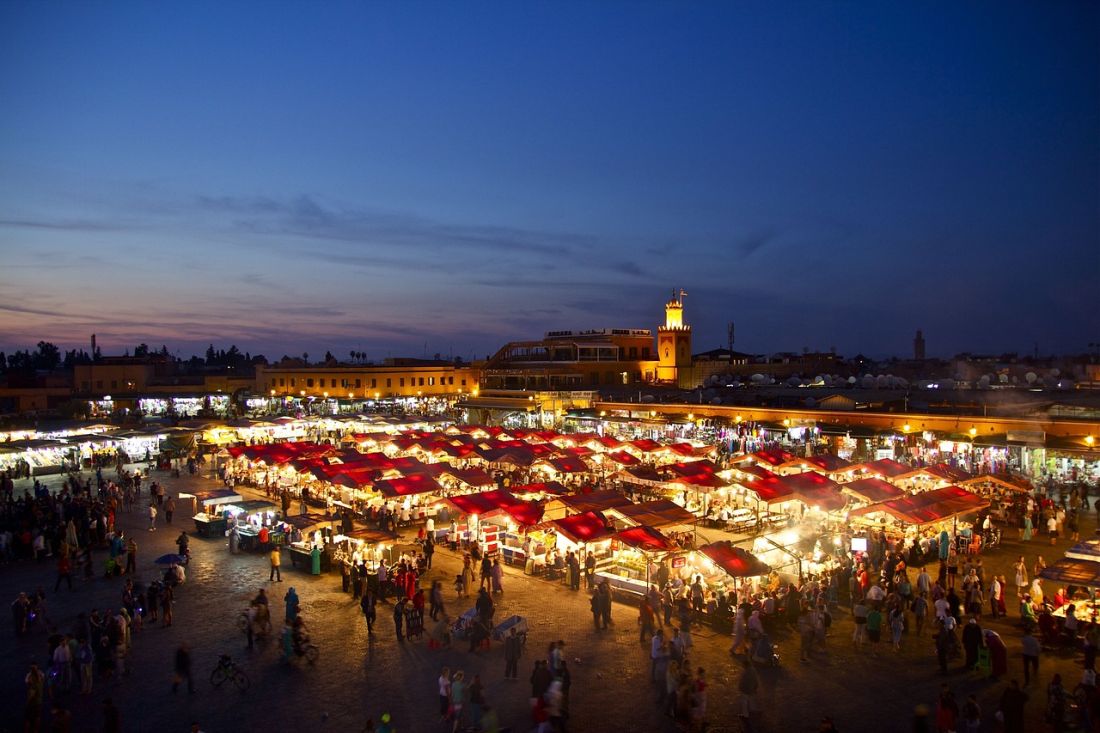
Djemaa el-Fna Square
Marrakesh’s iconic central square is famous for its unique atmosphere and cultural significance.
During the day, it hosts various market vendors, henna artists, and snake charmers. By evening, the square transforms. Mobile food stalls appear, offering traditional Moroccan dishes such as tagine, couscous, grilled meats, and fresh orange juice. The square becomes a true gastronomic adventure for food enthusiasts during this time.

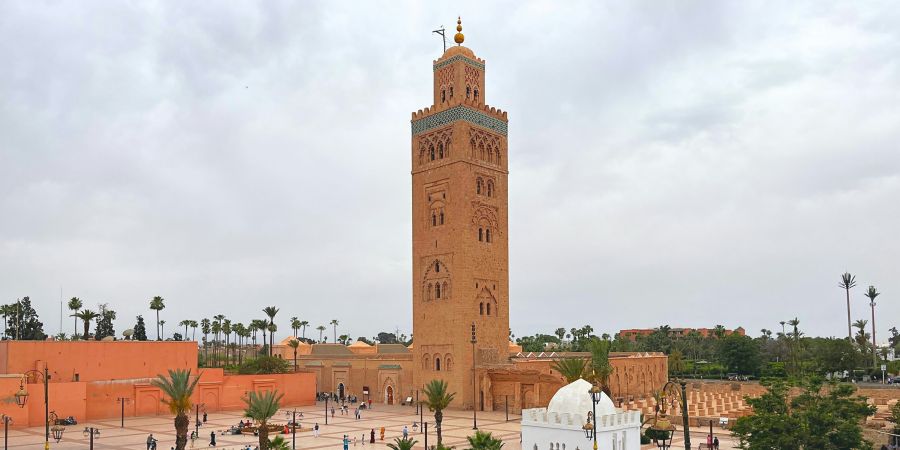
Koutoubia Mosque
One of Marrakesh’s most significant and well-known buildings is located near Djemaa el-Fna square.
Built in the 12th century during the Almohad dynasty’s rule, it’s known as one of the largest and most beautiful mosques in both Morocco and North Africa. Its name comes from the Arabic word „al-Koutoubiyyin”, meaning „booksellers” as booksellers and calligraphers once worked around the mosque.
Its most defining feature is the 77-meter-high minaret, a beautiful example of Almohad architecture. It’s covered with geometric patterns in brick, terracotta, and tile elements. This minaret inspired the later-built famous Giralda tower in Seville, Spain, and the Hassan tower in Rabat.
Unfortunately, non-Muslims cannot enter the interior, but the garden is freely accessible.
Bahia Palace
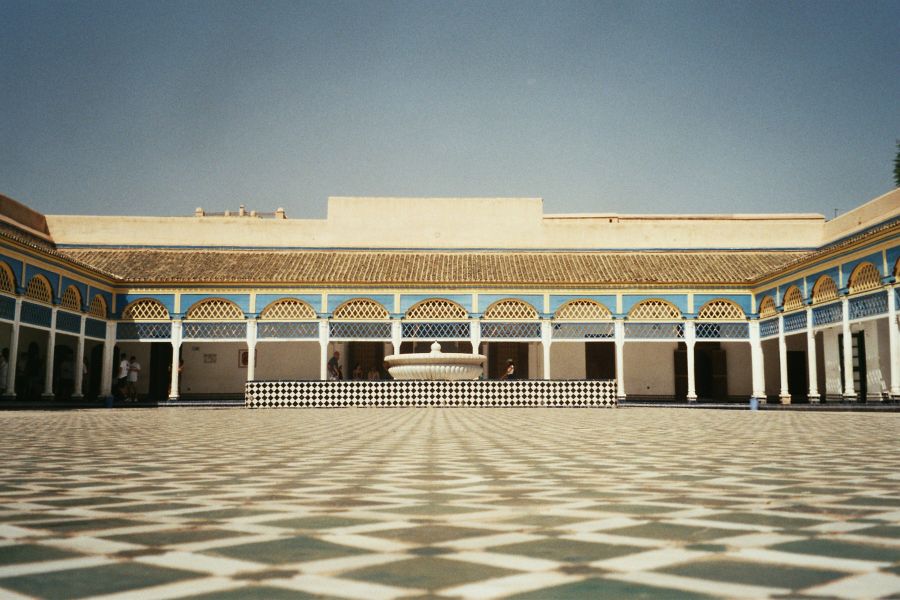
One of Morocco’s most impressive palaces, its name „Bahia” means „beauty” or „brilliance”.
Built in the 19th century, it was constructed by Si Moussa, the grand vizier at the time, to impress the country’s leaders. Later, his son Bou Ahmed expanded and made it even more luxurious.
The palace represents a perfect combination of Arabic, Islamic, and Moroccan architectural styles. The complex includes multiple pavilions, courtyards, gardens, and interior rooms decorated with intricate tile patterns, carved wooden details, and painted ceilings.
One of the building’s most spectacular parts is the central courtyard, featuring palm trees, fountains, and paved marble stones. The interior spaces are extremely rich, covered with mosaic tiles, plasterwork, and painted ceilings.
All information can be found here!
Majorelle Garden
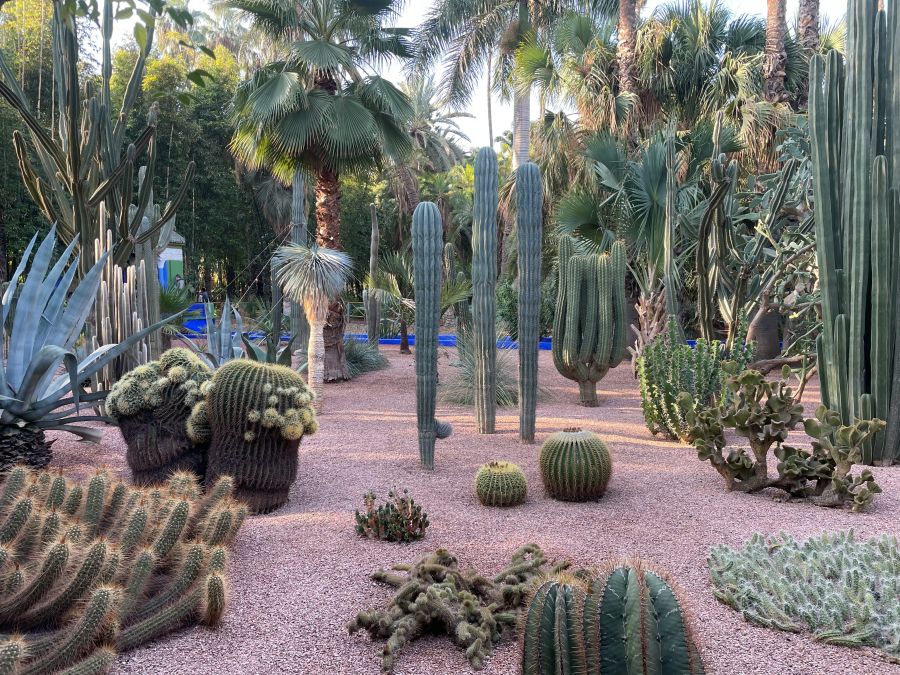
This garden with its exotic plant collection was made famous by notable personalities.
French painter Jacques Majorelle moved to Marrakesh in 1919, where he later built this oasis. The painter used a special blue color, the famous „Majorelle Blue”, on buildings and decorative elements, which became the garden’s trademark. After his death, the garden fell into decline until Yves Saint Laurent and Pierre Bergé discovered it, restored it, and opened it to the public.
It includes about 300 species, including various cacti, palm trees, bamboo, and other tropical plants. In the center of the garden is a small cobalt blue villa house that currently houses a Berber art museum. This building preserves the memory of Yves Saint Laurent and Pierre Bergé.
All information can be found here!
Saadian Tombs
These are the burial places of the Saadi dynasty rulers. They stood forgotten and abandoned for centuries but have become one of the city’s most famous attractions today.
During the dynasty’s rule, Marrakesh flourished and became the country’s religious and cultural center. The tombs are located in a hidden garden within the kasbah (fortress) area. They are arranged around a beautiful, ornate courtyard surrounded by a special structure decorated with marble columns and mosaics.
The most important tomb belongs to Sultan Ahmed al-Mansur, who was one of the greatest and most famous rulers of the Saadi dynasty. His tomb is the most magnificent and extremely richly decorated.
All information can be found here!
Ben Youssef Madrasa
This medieval religious school was built at the end of the 14th century and operated as the largest religious school in Marrakesh for over 400 years.
Built during the Marinid dynasty, it was a center for Islamic religious studies. The madrasa was named after the famous Sultan Youssef ibn Tashfin, who founded the Almoravid dynasty and had a significant impact on the city.
It was built around a large courtyard. Its walls are decorated with beautiful arabesque patterns, with green, blue, gold, and white tiles standing out. The ceilings and wooden carvings are particularly beautiful.
All information can be found here!

El Badi Palace
Once the city’s most impressive and richest palace, it now stands in ruins.
Construction of the palace began in 1578, and it served as the official residence of the Saadi rulers for a significant time. It was famous for its rich decorations, marble, gilded details, beautiful gardens and fountains, and the work of the best artists and craftsmen. In the 17th century, under the rule of the Alaouite dynasty, the palace was abandoned.
Even in its ruined state, it’s worth visiting. We can admire the surviving elements, such as the huge fountain, special mosaics, ornate columns, and the walls surrounding the space.
All information can be found here!
Menara Gardens
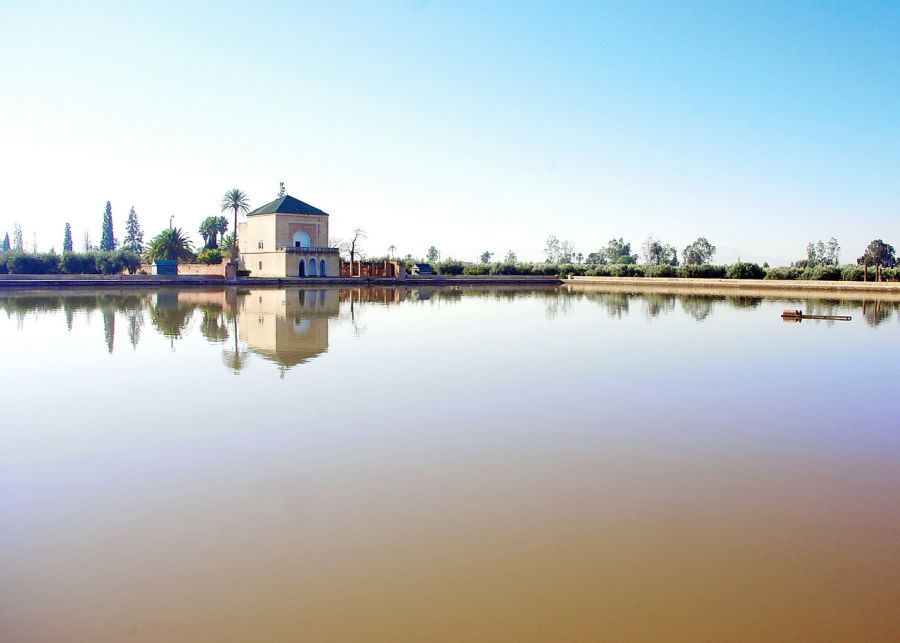
The vast area covered with olive trees offers a wonderful panorama of the Atlas Mountains in the background.
Its central element is the huge square pool surrounded by olive tree groves. The pool provides a reflective water surface that offers a magical sight, especially at sunset.
At one end of the pool is a beautiful pavilion with a green tiled roof, representing Moroccan architectural style. Locals refer to this as the Menara pavilion, and it’s an iconic part of the garden.
Almoravid Qubba
One of the city’s oldest surviving architectural monuments dates from the Almoravid dynasty period.
It was a ritual building originally used for religious purposes, probably belonging to a mosque and serving as a purification room for believers.
Both the exterior and interior of the building feature some of the finest examples of Islamic art, including intricate arabesque patterns, geometric tile and plaster decorations, and calligraphy.
Marrakech Museum
One of Marrakesh’s most interesting cultural sites showcases Moroccan art, history, and culture.
Located in the 19th-century Dar Menebhi Palace, which was the residence of a wealthy local leader, Mehdi Menebhi’s family. Its most impressive part is the central courtyard, decorated with a huge chandelier.
Its exhibitions display various Moroccan artistic and cultural objects:
- Traditional and Modern Arts: The museum features a wide selection of paintings, sculptures, and other artworks showcasing Morocco’s rich artistic heritage.
- Islamic Arts and Calligraphy: displays various calligraphy, tiles, and decorative vessels and textiles.
- Berber Artifacts and Textiles: showcases the rich heritage of North African Berber culture, including traditional clothes, textiles, and ornaments.
- Antique jewelry, weapons, and ceramics: provides insight into Morocco’s history and local craftsmanship.
All information can be found here!