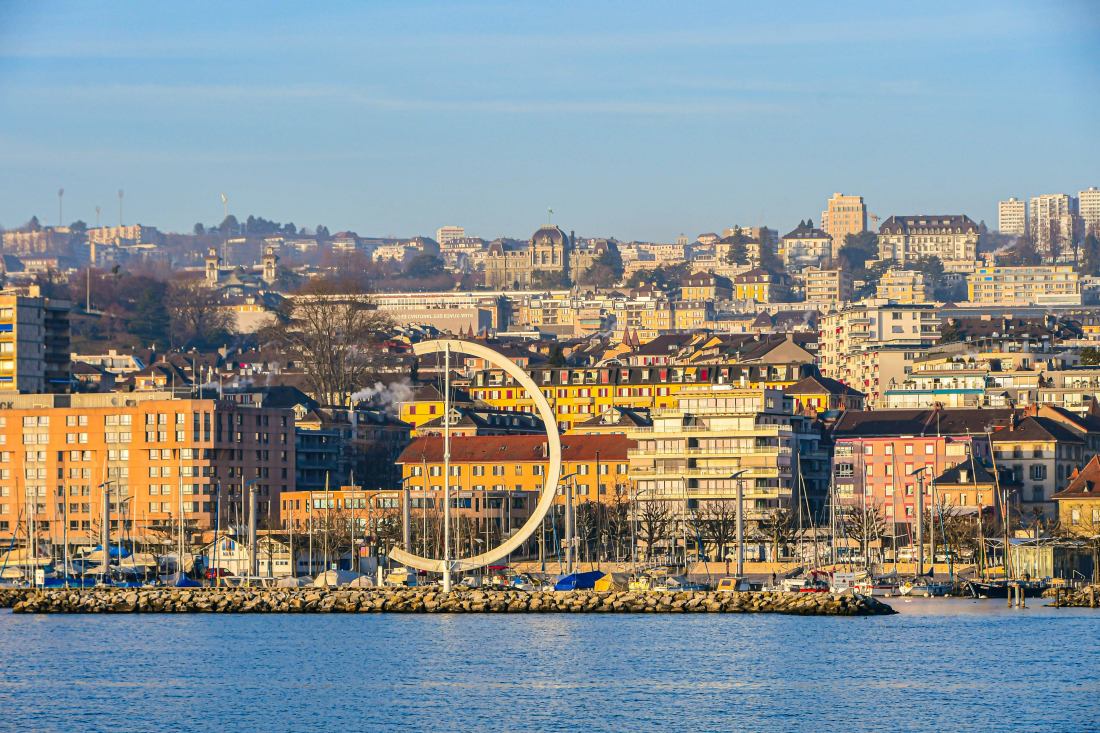
Lausanne exudes a special atmosphere: the narrow streets and stepped alleyways of the medieval old town evoke bygone eras, while the modern city district and university environment lend a vibrant, youthful spirit to the settlement.
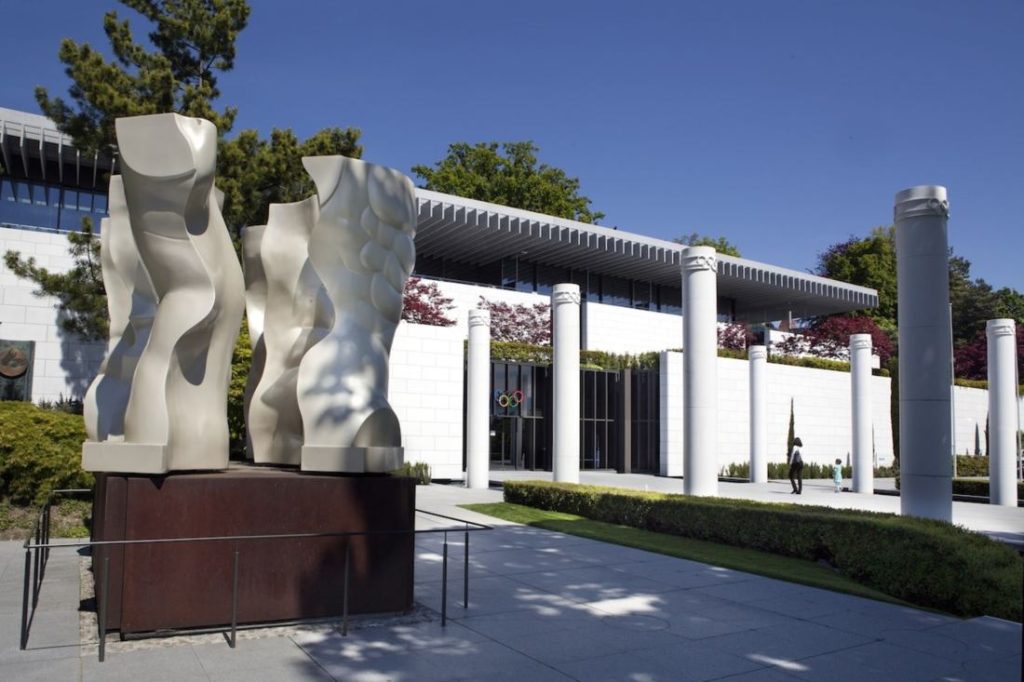
Lausanne is the cultural capital of French-speaking Switzerland, a dynamic city built on three hills along the shores of Lake Geneva. It is the country’s fourth-largest city after Basel, Geneva, and Zurich. In the 20th century, it became one of the centers of international sports, as it is home to the International Olympic Committee, the Court of Arbitration for Sport, and approximately 55 international sports federations.
Table of Contents
Lausanne attractions
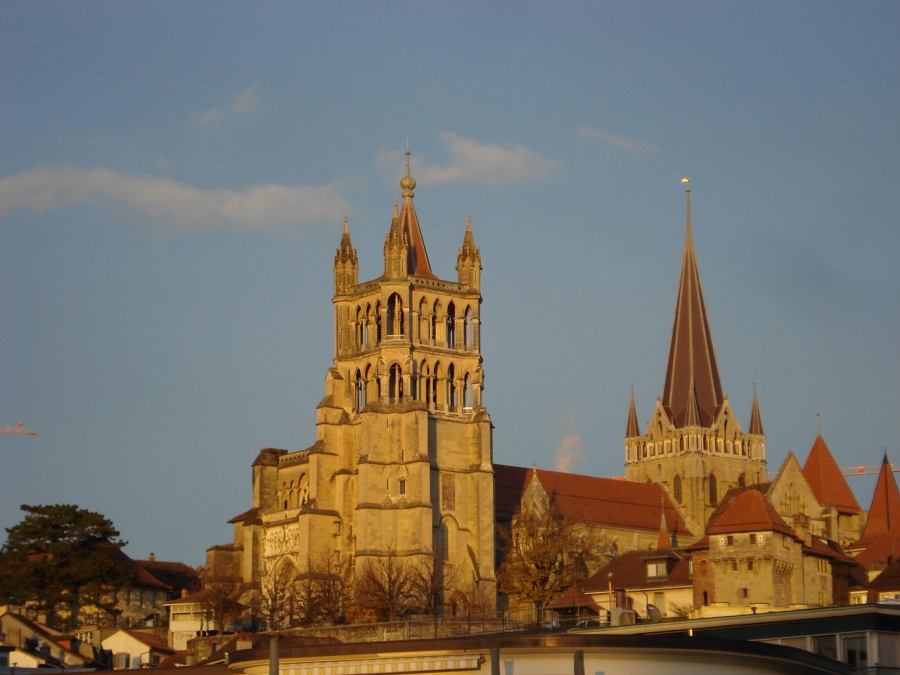
Lausanne Cathedral
The most significant achievement of Swiss Gothic architecture was built in the 12th-13th centuries and has become the symbol of Lausanne over the centuries. The cathedral, consecrated in 1275 in the presence of Emperor Rudolf of Habsburg, features a special rose window on its facade depicting the months of the year and the seasons in allegorical form.
Inside the church, visitors are greeted by stunning stained glass windows, the most famous of which is the 13th-century rose window with its unique cosmological representations. A distinctive feature of the structure is the richly carved tympanum of the south portal, depicting the Last Judgment with 260 figures.
It’s worth climbing the 75-meter bell tower, not only for the 360-degree panorama but also because Switzerland’s last night watchman lives here, calling out the hour toward the city’s four cardinal directions every hour between 10 PM and 2 AM. This tradition has been unbroken since 1405 and is part of UNESCO’s intangible cultural heritage.
Château St-Maire
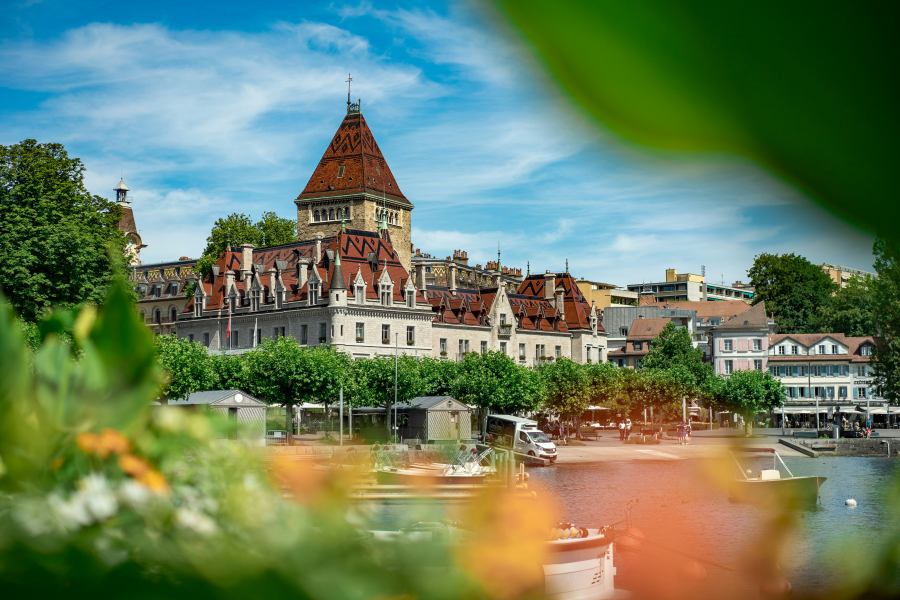
One of the most important historic buildings in Lausanne’s old town, built at the end of the 14th century as a fortified episcopal residence.
The thick stone walls, narrow windows, and massive towers still exude a medieval atmosphere, clearly reflecting its original defensive function. The castle later took on an administrative role and today serves as the seat of the Vaud canton government.
Although its interior spaces are not freely accessible to visitors, it is an important sight due to its exterior appearance and location. Together with the nearby cathedral, it is a defining element of the city’s historic character.
Ouchy Harbor and Lakeside Promenade
The Ouchy district on the shores of Lake Geneva is one of the city’s most popular meeting places, from where regular ferry services depart for Évian and French towns on the opposite shore of the lake.
The several-kilometer lakeside promenade takes us past palm trees and Mediterranean vegetation, offering an unusual sight at the foot of the Alps. Along the promenade, numerous restaurants, cafés, and ice cream shops await visitors.
The Château d’Ouchy, a neo-Romanesque castle built on the ruins of a 12th-century fortress, now operates as a hotel but has historical significance: the Treaty of Lausanne was signed here in 1923. In summer, the beach and swimming pools make the area special, while in winter it’s the Christmas market.
Lake Sauvabelin and Observation Tower (Lac de Sauvabelin)
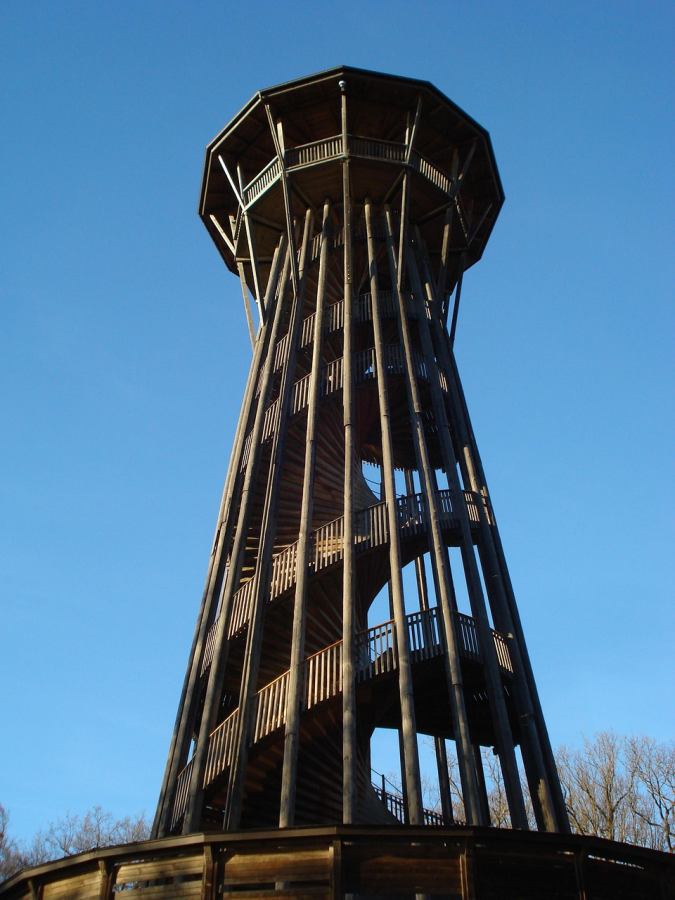
The wooden observation tower rising 30 meters above the city, built in 2003, is a unique architectural creation accessible via 302 steps. The structure is made from 1,140 cubic meters of Swiss pine, and its spiral form offers a special sight both from the outside and inside.
From the top of the tower, a 360-degree panorama unfolds: on clear days, not only the entire city of Lausanne, Lake Geneva, and the French Alps are visible, but also Mont Blanc. The path leading to the observation point runs around a picturesque 3.8-hectare forest lake, which is an excellent spot for picnicking or an easy walk.
The zoo in Sauvabelin forest park is unique in that it’s not a conventional zoo: European wild animals – deer, wild boars, goats – can be freely observed in their natural environment. The wooden restaurant on the grounds has a terrace that is a popular destination for local families who like to take trips here on weekends to escape the urban hustle. Several hiking trails cross the area, leading into the surrounding forests.
Place de la Palud and Old Town
This medieval square is the heart of the old town, where the Fountain of Justice (Fontaine de la Justice), built in 1505, stands opposite the town hall. Among the figures of the sculpture group, the most notable is the enthroned Justitia, at whose feet kneel a pope, a sultan, an emperor, and a Bernese bailiff, symbolizing that the law stands above everyone.
Nearby is the 17th-century town hall, on whose facade a mechanical clock operates: at every hour, moving figures appear depicting important moments in Lausanne’s history. On Tuesday and Saturday mornings, there is also a market in the square where local products and handicrafts are available.
The narrow medieval streets, steep staircases, and covered passageways (escaliers du Marché) of the old town create a unique atmosphere. The area is filled with small boutiques, antique bookshops, galleries, and traditional restaurants. The Escaliers du Marché, the main stairway, connects the lower and upper town with 163 steps and remains the busiest pedestrian passage in the historic center today.
Flon District
The former district of warehouses and industrial buildings has been transformed into Lausanne’s cultural and entertainment epicenter since the 1990s. During brownfield rehabilitation, the old buildings were creatively repurposed: today design shops, art galleries, dance studios, concert halls, and trendy restaurants line the area.
At the heart of the district is Les Arches, an imposing railway viaduct under which there is much nightlife: a multitude of clubs, bars, and concert venues can be found here. Flon is one of Switzerland’s most famous underground music scenes, where international artists perform on a weekly basis.
Street art works and modern installations visible on building facades and walls add further color to the district. MAD (Musée des Arts Décoratifs) offers eclectic design exhibitions, while Cinémathèque shows classic films in an Art Deco cinema. The district is easily walkable, and the M2 metro line also passes through it.
Place Saint-François
This square, forming the business and commercial heart of the city, was developed on the site of a Franciscan monastery built in the 1300s, from which it takes its name. Today, the square’s only medieval reminder is the church built in the 13th century, whose tower originally served as the monastery’s bell tower but later continued to function as a Protestant church.
The square also serves as Lausanne’s main bus station, from where countless local and regional services depart. Among the buildings surrounding the square are impressive palaces and banks, masterpieces of 19th-20th century architecture. The M2 metro, one of Europe’s shortest underground lines, also has a station beneath the square.
The surrounding area forms Lausanne’s busiest shopping district: Rue de Bourg and neighboring streets await visitors with luxury shops, Swiss watches, and chocolate specialties. At Christmas, the square hosts a Christmas market, while in summer open-air concerts and events are held here. From the roof terrace of the nearby Globus department store, there is a beautiful panoramic view of the old town.
Esplanade de Montbenon
This expansive terrace is an excellent location for taking panoramic photos: from here opens one of the best views of Lake Geneva, the French Alps, and the Lavaux vineyards. The park-like space, created in the 1880s, was once home to a casino and palace but today functions as a cultural center and popular meeting place.
The central building of the area is the Casino de Montbenon, which is no longer a casino but a congress center and concert hall. On the square in front of the building, summer concerts, film screenings, and various city events are held, which are freely accessible.
On the eastern part of the terrace is the building of the Cinémathèque suisse, which is Switzerland’s national film archive and an arthouse cinema in one. The institution has more than 70,000 films and organizes regular screenings and retrospectives. Montbenon park is also popular among families due to its playgrounds and shady trees.
Le Flon Market (Marché du Flon)
The covered market operating in the Flon district’s modern business center opened in 2006 and has since become the city’s gastronomic hub.
The industrial-style space of the former warehouse building now houses more than twenty stalls where local producers, bakers, butchers, cheese sellers, and greengrocers offer their wares. Wine fairs and gastronomic events are also regular around the market, showcasing the culinary treasures of Vaud canton.
But it doesn’t just function as a traditional market: several restaurants, cafés, and street food stands can also be found here where freshly prepared food can be consumed. The venue is popular at lunchtime among office workers, while on weekends locals visit with their families.
Palais de Rumine
This monumental neo-Renaissance style building was built in 1904 and dominates the northern side of Place de la Riponne.
Gabriel de Rumine, a Russian-born patron, left his fortune to Lausanne in his will with the condition that it be used for community and cultural purposes – thus this palace was born, housing five museums. The six allegorical statues visible on the building’s facade symbolize branches of science: geography, history, archaeology, zoology, geology, and fine arts.
On the building’s ground floor is the Cantonal and University Library, which preserves Vaud canton’s most important scientific collection. The upstairs rooms house the Zoological Museum, Geological Museum, Archaeological and Historical Museum, and the Numismatic Cabinet.
The Zoological Museum has an outstanding collection: more than 150,000 specimens, the most impressive of which is a 14-meter-long shark and dioramas depicting Alpine fauna. The Geological Museum preserves thousands of minerals, fossils, and meteorites, including an 80-kilogram quartz crystal.
Lavaux Vineyards
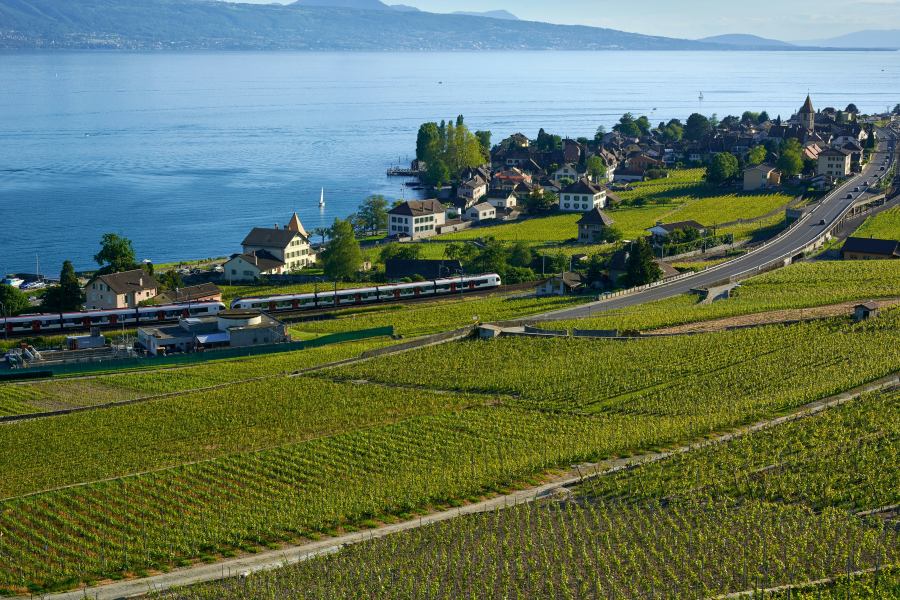
Although administratively not part of Lausanne, the World Heritage vineyard terraces stretching along the shores of Lake Geneva in the city’s immediate vicinity offer a wonderful sight and experience.
The vineyards extending over 800 hectares were created thanks to the work of Cistercian monasteries founded in the 11th century, and the terraces bordered by stone walls built on steep slopes can still be seen in their original form today.
The region’s specialty is the „three suns” effect: the grapes simultaneously receive direct sunlight, light reflected from the lake’s surface, and warmth radiating from the stone walls. This microclimate enables the cultivation of excellent quality white wines, primarily the Chasselas grape variety. Lavaux is divided into six wine regions, the most famous of which are Dézaley and Calamin.
Numerous hiking trails are found in the region that guide visitors through the terraces: the most popular is the section between St-Saphorin and Lutry. Along the route, wineries, small villages, and panoramic viewpoints await interested visitors. The area is easily accessible from Lausanne by train or boat, with the Cully or Grandvaux stops being particularly ideal as starting points. In autumn, harvest festivals and wine celebrations add color to the offerings.
Lausanne weather: when is the best time to visit?
Spring (March–May):
March still brings cool and variable weather, but by April real spring arrives: temperatures rise to between 12-18°C, and trees blossom in parks and gardens. In May, pleasant temperatures around 20°C can be expected, although rain may occasionally occur. This period is ideal for exploring the city, as there are no large crowds yet and nature is splendid in beautiful colors. Walking around Lake Sauvabelin and in the Lavaux vineyards is particularly enjoyable.
Summer (June–August):
The summer months are warm and sunny, with temperatures generally ranging between 25-28°C, though in July-August they can reach 30°C. The proximity of Lake Geneva has a pleasant cooling effect, and the lakeside beaches and bathing areas are excellent for use. In summer, the city’s cultural life also picks up: open-air concerts, festivals, and events await visitors. The number of rainy days is relatively low, although heavy thunderstorms can occasionally occur in August.
Autumn (September–November):
September still offers pleasant temperatures around 20-22°C and is a great time to visit the wine regions, as the harvest takes place at this time. In October, the weather turns cooler (12-16°C), but autumn foliage displays the surrounding forests and parks in wonderful colors. By November, foggy, gray weather sets in, which is relatively common around the lakes during this period. Autumn is ideal for those who prefer a quieter, less touristy atmosphere.
Winter (December–February):
Winter in Lausanne is relatively mild, with temperatures rarely falling below -5°C, generally ranging between 0-5°C. Snowfall occurs but persistent snow cover is not typical in the city – though the nearby Alps’ excellent ski areas are only 30-60 minutes away. December awaits visitors with magical Christmas markets and festive decorations. January-February are the wettest months, with drizzling rain and foggy days being common.
Best time to travel Lausanne:
The best time to visit Lausanne is from late May to late September, when pleasant, warm weather can be expected and the city’s cultural life is most vibrant. May and June are ideal choices for those who want to avoid summer crowds but still explore in sunny, pleasant weather. July-August is perfect for lakeside beach activities and outdoor programs, although tourist traffic is highest then. September is particularly recommended: temperatures are still pleasant (18-22°C), harvest festivals begin in the Lavaux vineyards, and lively cultural programs await interested visitors in the city as well.