Poland, due to its history, has many sights to see. Let’s look at the 20 most beautiful places!
The country, located next to Germany, is over a thousand years old and was one of the strongest states in Europe in the 16th century. I It is bordered to the south by the Czech Republic and Slovakia. It is separated from Denmark and Sweden by a maritime border. It borders Lithuania and Kaliningrad in Russia to the north.
Table of Contents
Best places in Poland
Krakow
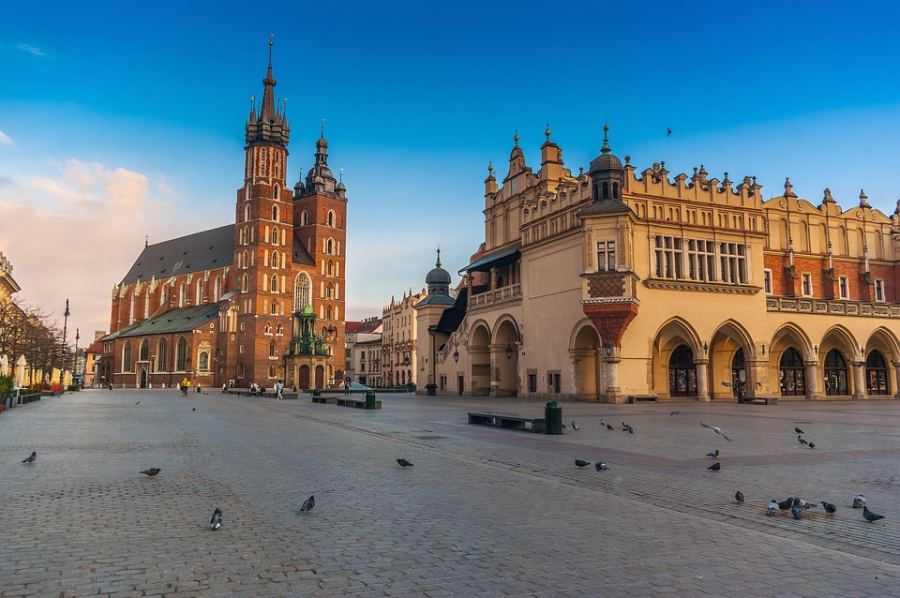
Not surprisingly, the list of beautiful places starts with Krakow, one of the cities with the most beautiful old towns.
Krakow is one of Poland’s most important cultural centers and a major tourist destination in Europe. Its historic Old Town and the Kazimierz district were listed as UNESCO World Heritage Sites in 1978.
The Old Town is home to Europe’s largest market square and one of Poland’s most famous monuments, St. Mary’s Basilica.
Zakopane
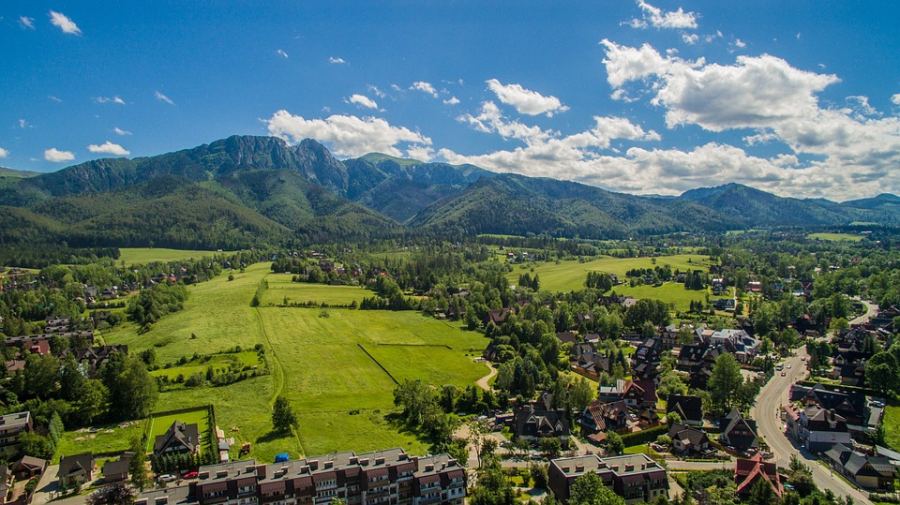
Zakopane is probably a name everyone has heard! It’s the most famous tourist center on the northern side of the Tatra Mountains, particularly popular in winter for its international winter market.
Not just for skiers, Zakopane welcomes hikers and strollers too. You can take a cable car to the 1123-meter-high Gubalowka, making it a sought-after destination in summer too.
The unique Zakopane architectural style deserves a special mention. The buildings are more ornate, a mix of local folk motifs and Art Nouveau.
Warsaw
Poland’s capital, Warsaw, naturally makes the list of beautiful places. Due to its history, almost every European architectural style and period is represented in Warsaw: Gothic, Renaissance, Baroque, and Classicism.
The Old Town was almost completely destroyed during World War II but was successfully rebuilt, now listed on UNESCO’s World Heritage Sites. Most of the city’s attractions are located here.
One of the city’s landmarks is the Palace of Culture and Science, built by Stalin and modeled after Moscow’s Seven Sisters. The view from the top offers a panoramic view of Warsaw.
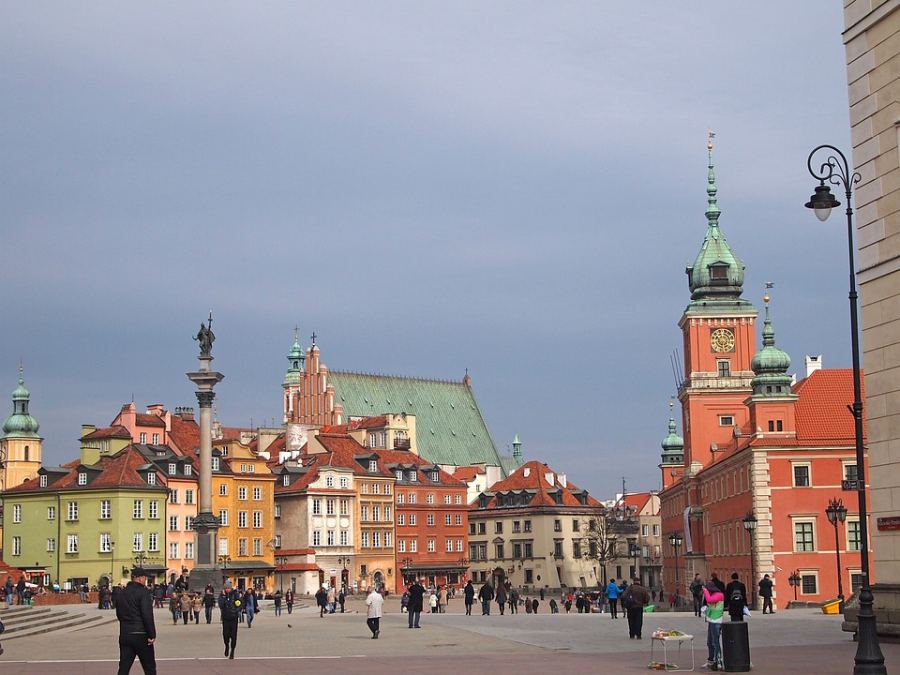
Białowieża Forest
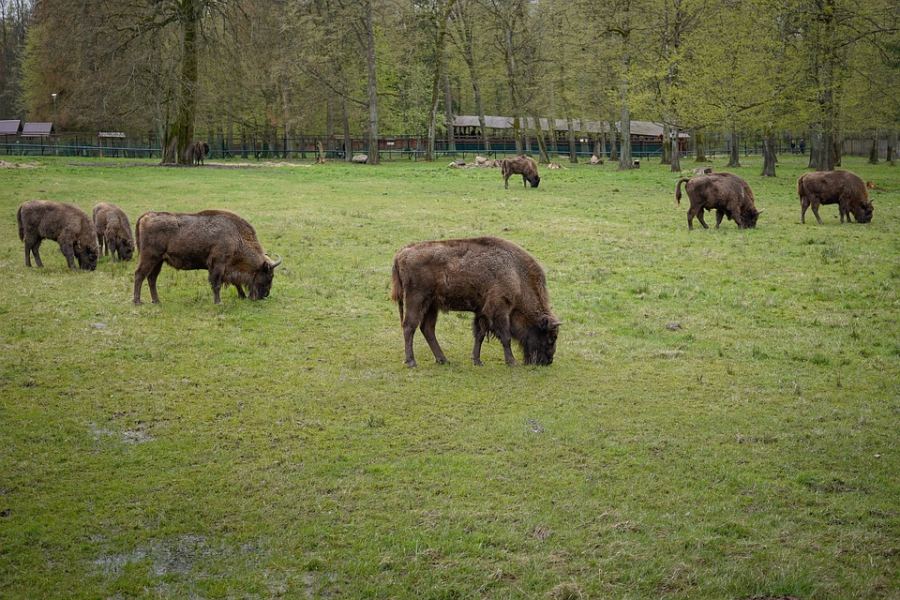
The largest remaining part of the immense deciduous and mixed primeval forest that once covered the European plain is located on the border of Poland and Belarus.
A UNESCO World Heritage Site and biosphere reserve, it shelters the world’s largest free-living population of European bison, Europe’s largest land animal.
In the national park, there are also a wildlife park, a natural and forestry museum, a castle park, and designated bison observation areas.
Auschwitz
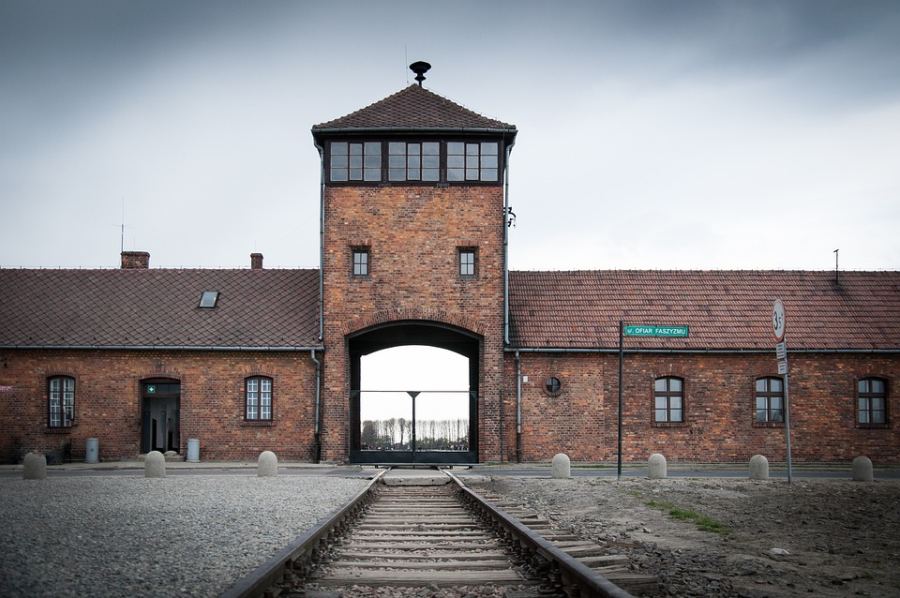
This place hardly needs an introduction as everyone knows it. The site of the former death camp established during World War II can be visited today.
Wieliczka Salt Mines
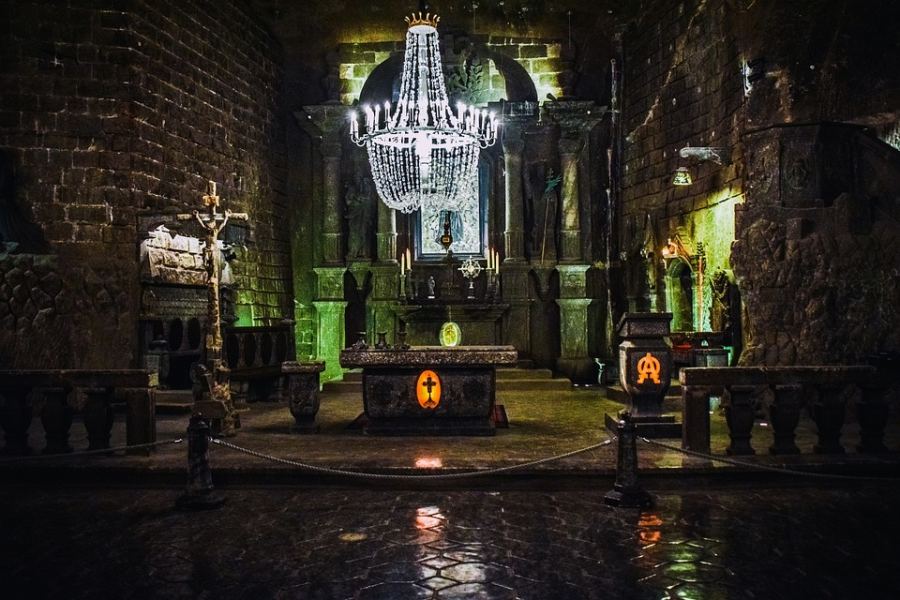
Located a few kilometers southeast of Krakow, in the town of Wieliczka, are some of Poland’s oldest salt mines, among the world’s oldest rock salt mines.
The mine has nine levels, the first at 64 meters deep and the deepest at 327 meters. The total length of the mines, including connecting corridors, lakes, chambers, shafts, exceeds 300 kilometers. The visitor’s route is about 2 km long and includes 20 chambers.
The mine has a unique microclimate with constant temperature (about 12-14 °C), pressure, ionization, and lighting, alongside high humidity and sodium chloride content.
Gdansk
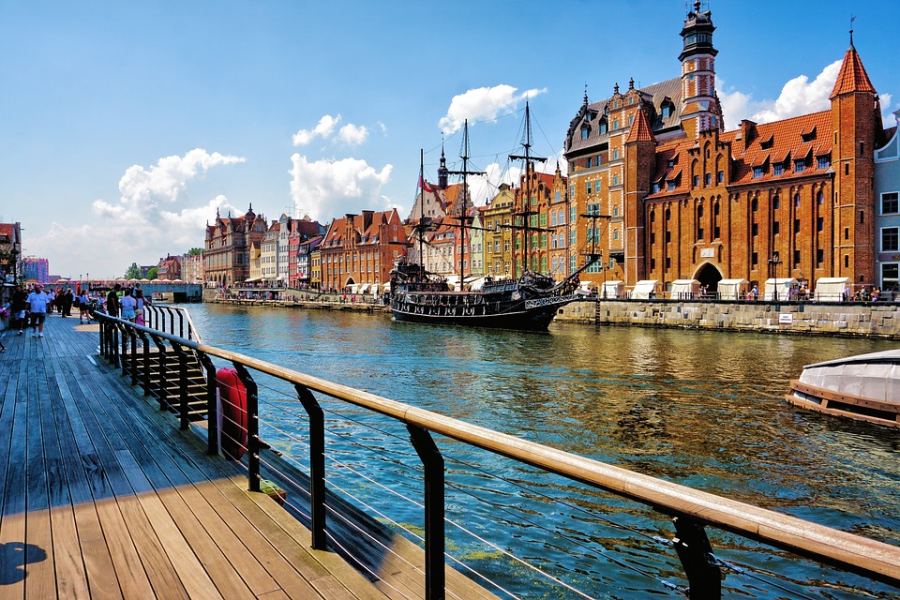
Poland’s most important port city has a rich cultural past, thanks to its long history.
The city retains many beautiful buildings from its time as a member of the Hanseatic League. Its colorful architecture and atmosphere almost make it feel like a different country.
Gdansk hosts the St. Dominic’s Fair, which has been held since 1260, and is considered one of Europe’s largest commercial and cultural events.
Malbork Castle
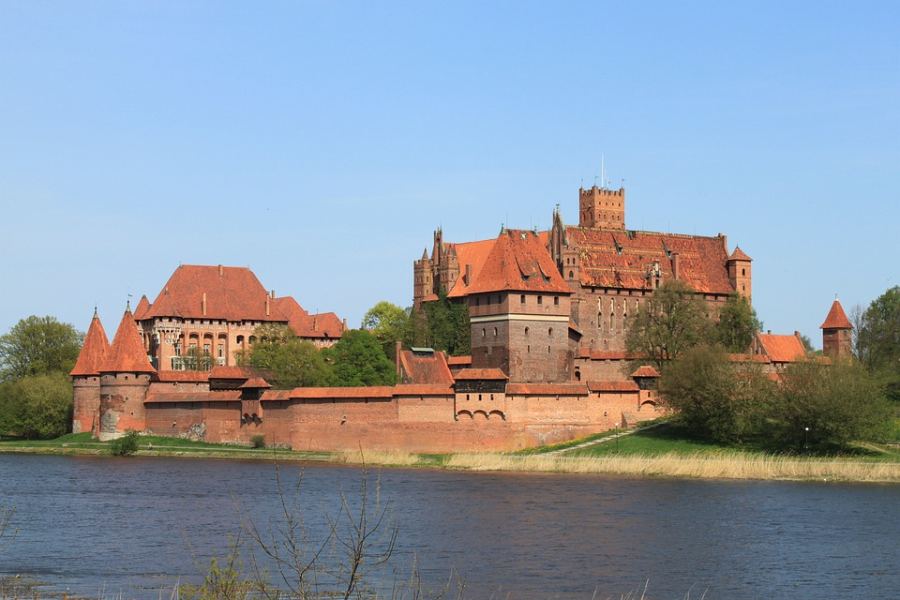
The world’s largest brick castle, a UNESCO World Heritage Site since 2000.
Built by the Teutonic Knights at the end of the 13th century, it gained prominence after 1309. The entire castle was constructed along the Nogat (a tributary of the Vistula), with the castle moat filled with the river’s water, encircling the castle.
The castle is a magnificent sight, especially from the opposite side of the river. It’s worth a detour if you’re heading to Gdansk.
Wroclaw
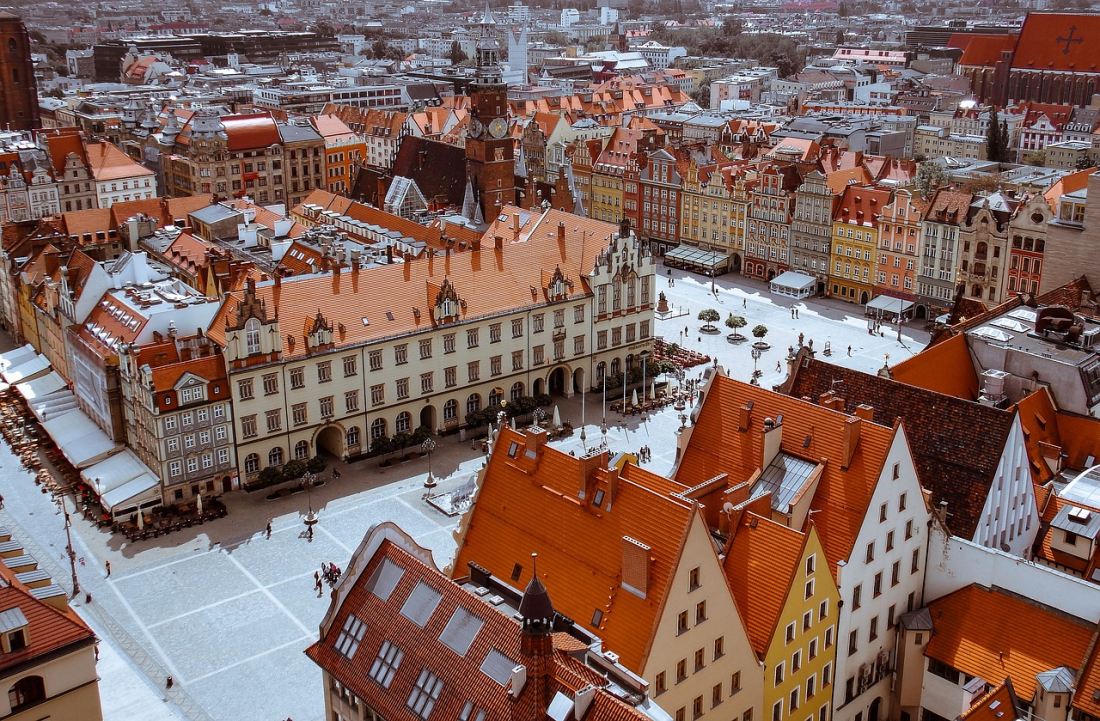
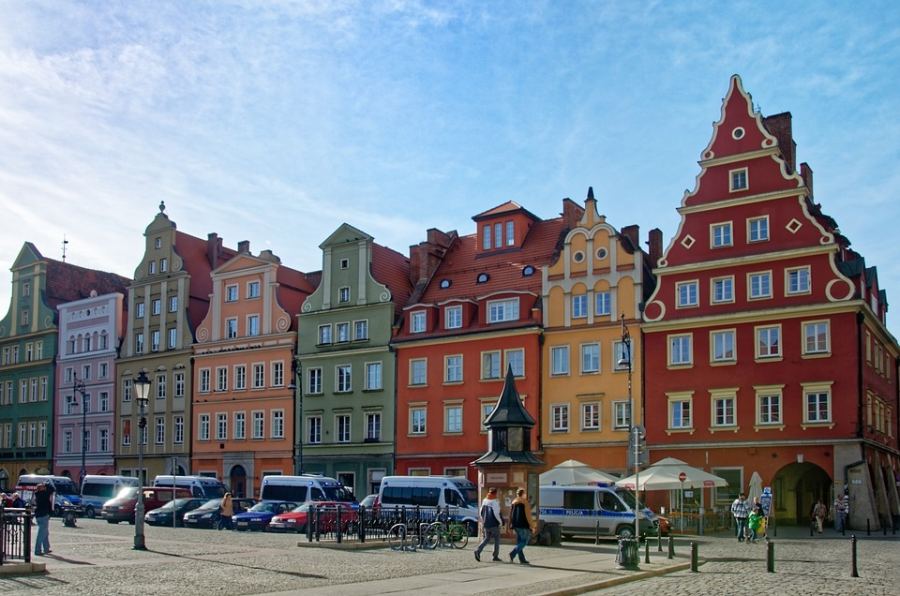
This southwestern Polish city has been part of several empires, reflected in its architecture.
Much of its architecture was destroyed during World War II, but many buildings were reconstructed in their original form. As a result, we can see the Gothic town hall and cathedral, the Baroque part of the university, and the neo-Gothic main train station.
Wroclaw’s numerous bridges, due to the Oder River and its tributaries, add to the city’s charm.
Wrocław attractions, museums, weather
Zalipie
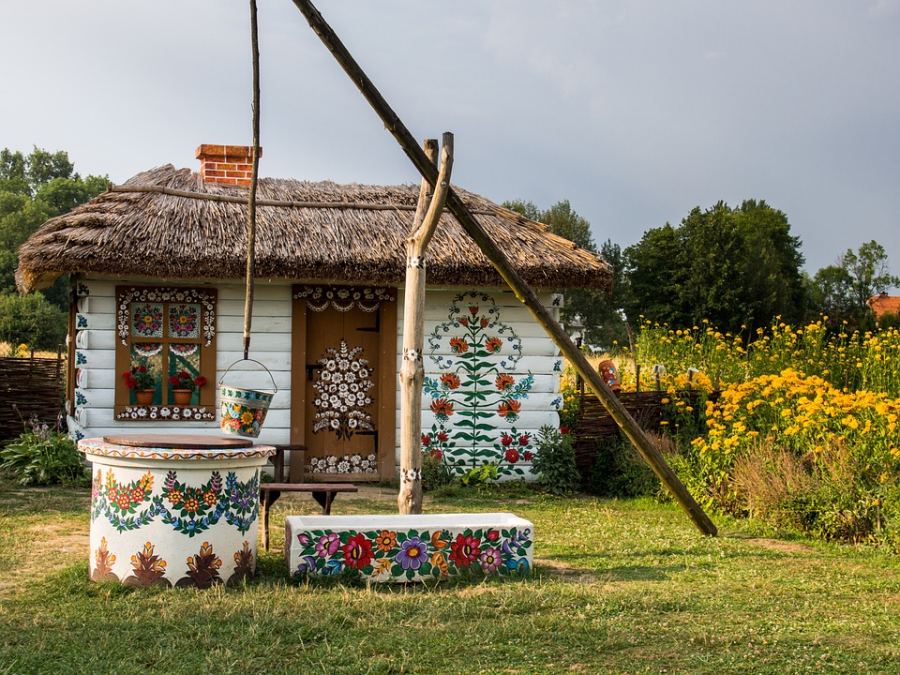
Every country has a „folk art village” and in Poland, it’s Zalipie, northeast of Krakow.
The village is known for its wooden houses decorated with hand-painted floral motifs. There are over 30 such cottages, many still inhabited.
The House of Women Painters, functioning as a museum, is a highlight, allowing visitors to admire these motifs.
Toruń
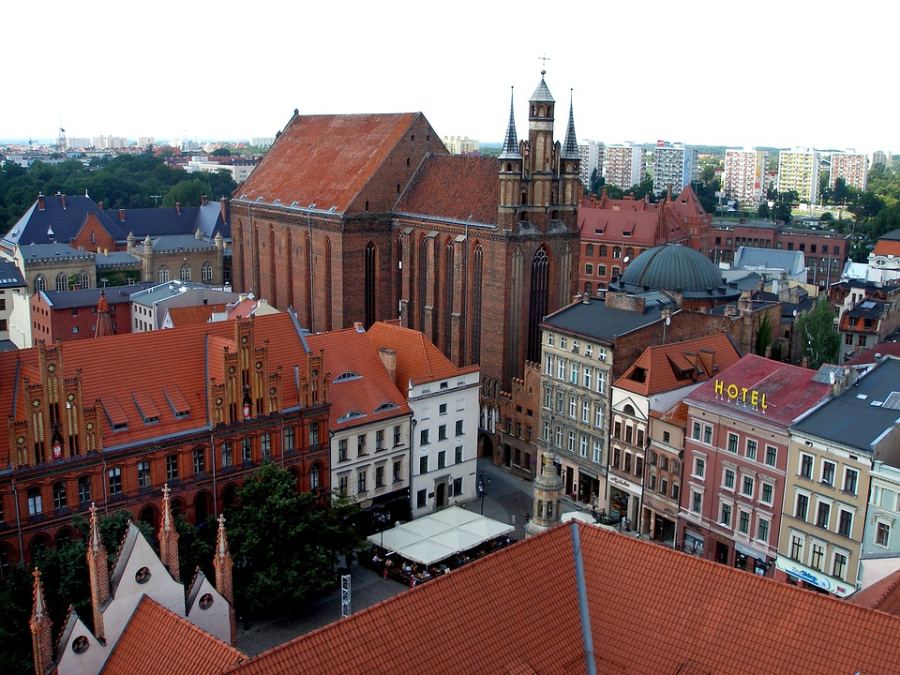
Situated on the Vistula River, between Warsaw and Gdansk, this city is one of Poland’s most beautiful historical towns. Its Old Town is a UNESCO World Heritage Site.
Famous for being the birthplace of the renowned astronomer Copernicus, it naturally has a museum dedicated to his life and work.
The city is characterized by colorful houses and buildings of various styles. Notable among them are the St. John’s Cathedral, the city’s fortifications, and the old town hall.
Chapel of Skulls
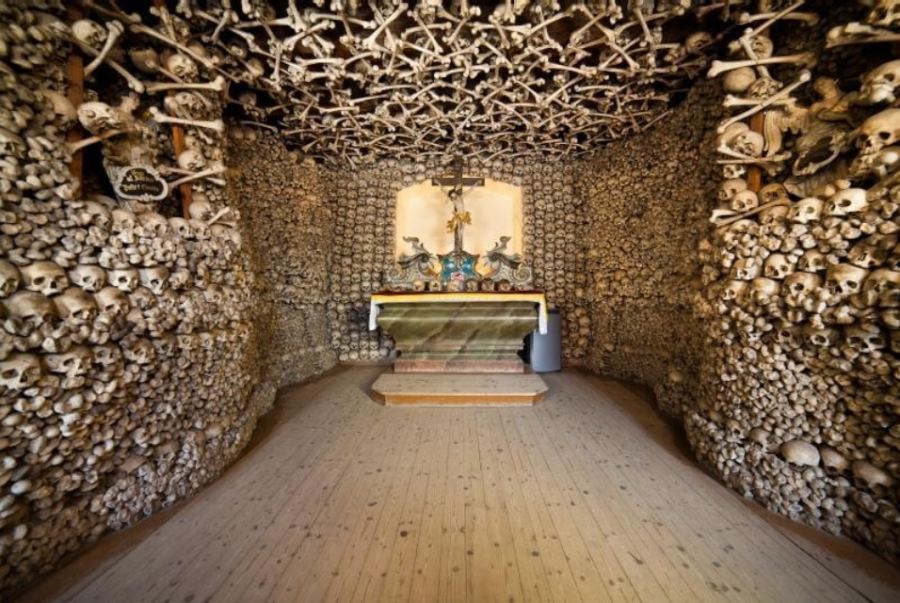
As the name suggests, this chapel in Kudowa Zdrój near the Czech border is decorated with human bones.
The skulls and leg bones on the walls and ceiling are the remains of over three thousand people, with more remains under the floor.
Zamość
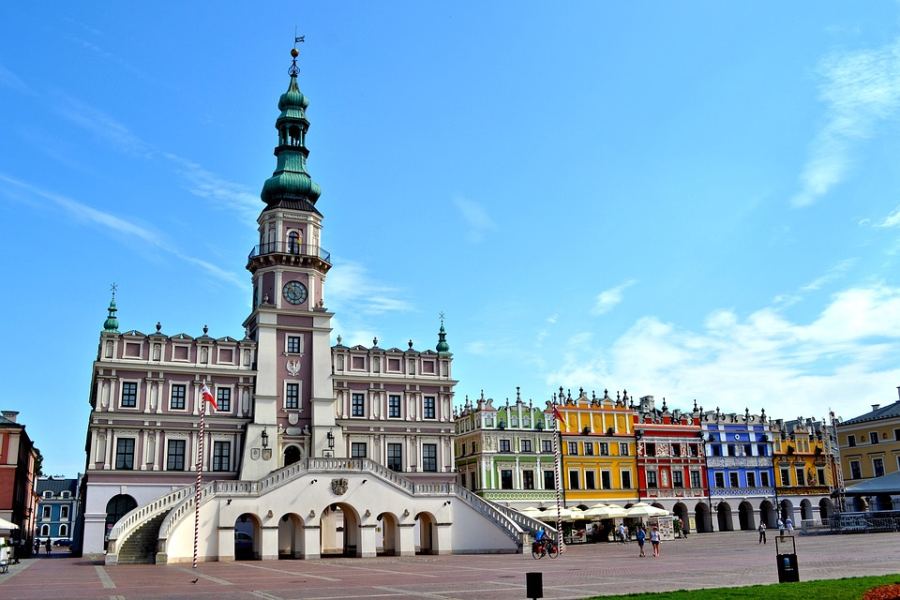
Near the Ukrainian border, this city is often referred to as the „North Padua” or „City of Arcades” for its 16th-century Italian architectural designs. Its Old Town is part of the World Heritage Site.
The originally Renaissance-style city also blends different styles, exemplified by the Renaissance-Baroque town hall and the neoclassical cathedral.
Frombork
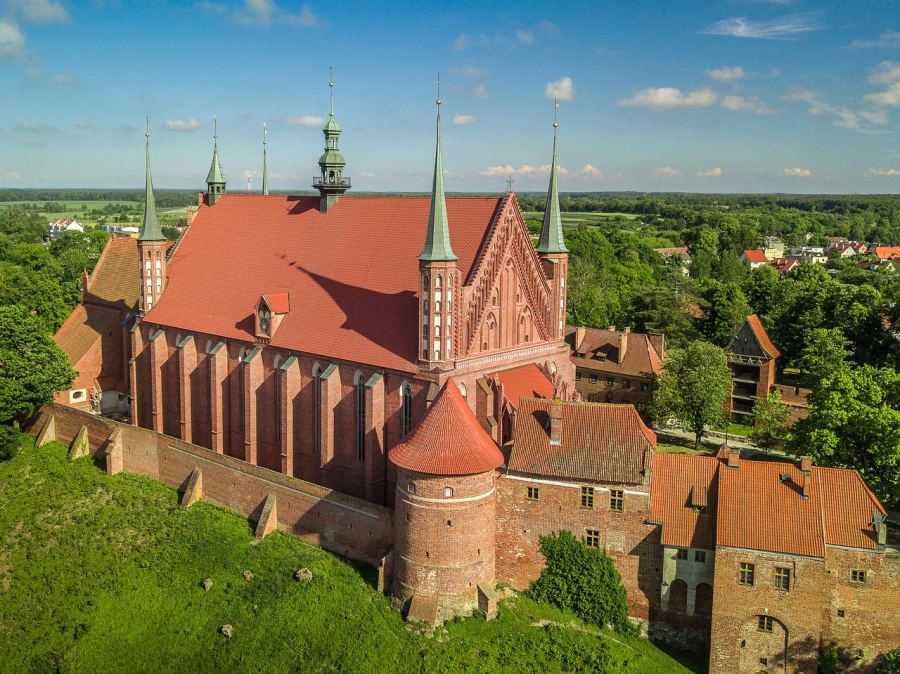
Near the Kaliningrad region, by the Vistula Lagoon, is the small town famous for Copernicus. He lived and died here, influencing the town’s present.
The oldest buildings are the Gothic cathedral surrounded by defensive walls and the 14th-century episcopal palace, now housing the Copernicus Museum. The view from the hill is stunning.
Książ Castle
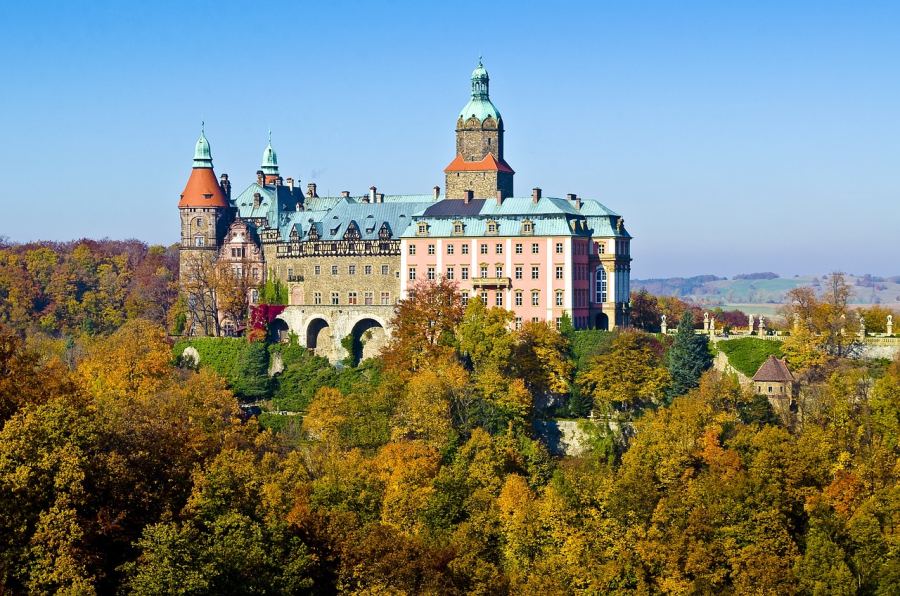
It is the third largest castle in Poland and, due to its location, it is also one of the most beautiful attractions in the country.
The most wonderful part of the castle is the baroque palace interior with the Maksymilian Hall, decorated in the rococo style from the first half of the 18th century. The castle is surrounded by a terraced ornamental garden.
Biskupin
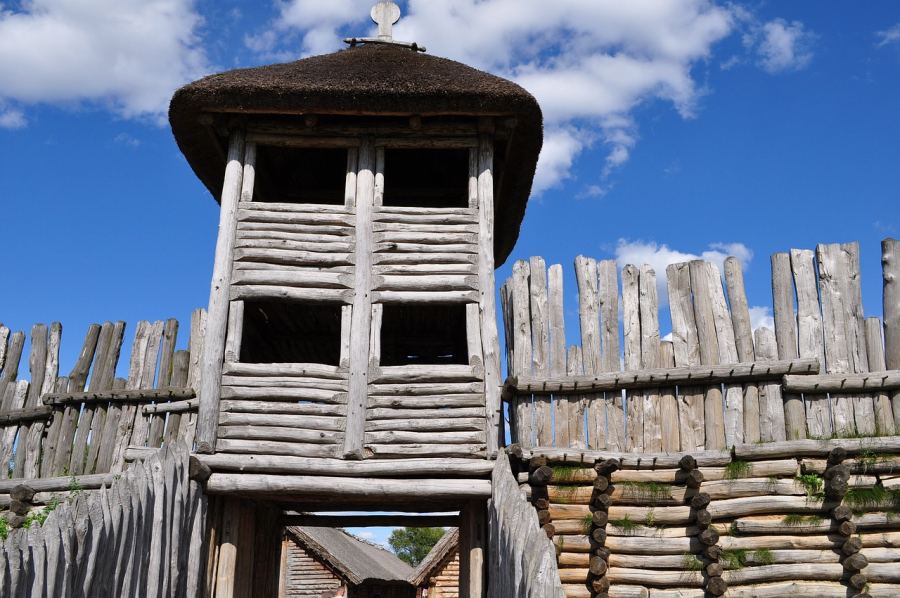
The ancient Iron Age settlement, which existed approximately between 738 BC and 622 BC, is one of the most important and best-preserved examples of Polish archaeology.
In Biskupin, a waterfront fortified settlement was found, consisting of a wooden settlement surrounded by fortification walls. The houses were built from wooden structures and covered with shingle roofs. The inhabitants of the settlement engaged in agriculture and fishing.
During excavations, numerous artifacts were discovered, including wooden tools, pottery, and various objects related to the settlement’s structure. The inhabitants likely formed a wealthy, well-organized community that was able to survive and develop even during difficult periods. One of the most important discoveries was that the settlement was protected by a moat and a strong wall, which is particularly interesting from the perspective of technology and defense of that era.
Sandomierz
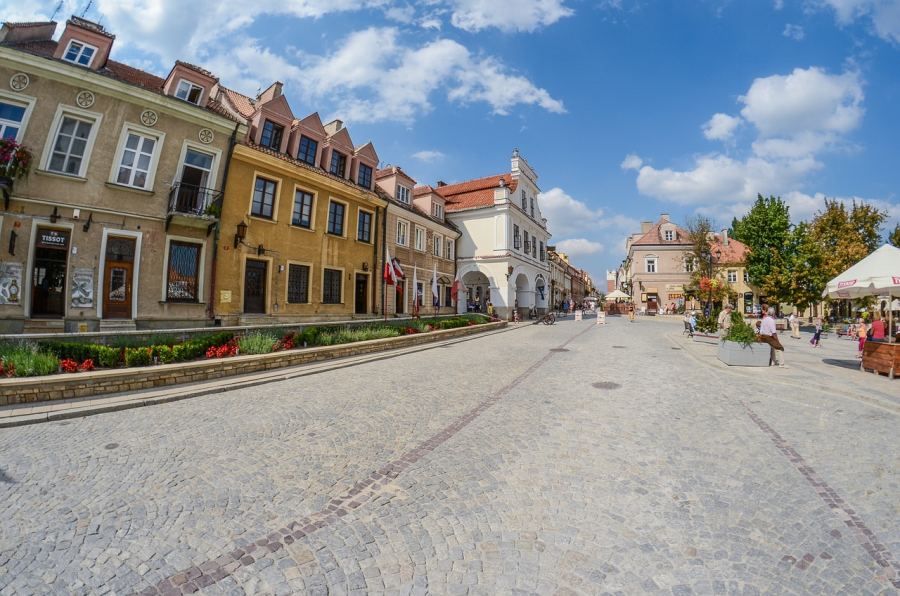
A picturesque small town in southeastern Poland on the banks of the Vistula River. It is often called the „Pearl of the Vistula”.
The Old Town, the city center, has preserved its medieval character well and provides the city’s main attraction. Here you can find old merchant houses and other historically significant buildings.
The Sandomierz Cathedral is the most famous church, an impressive Gothic-style building that has been an important religious site since the 12th century. Next to the cathedral is the famous Sandomierz Castle, which was part of the medieval city fortifications.
Kazimierz Dolny
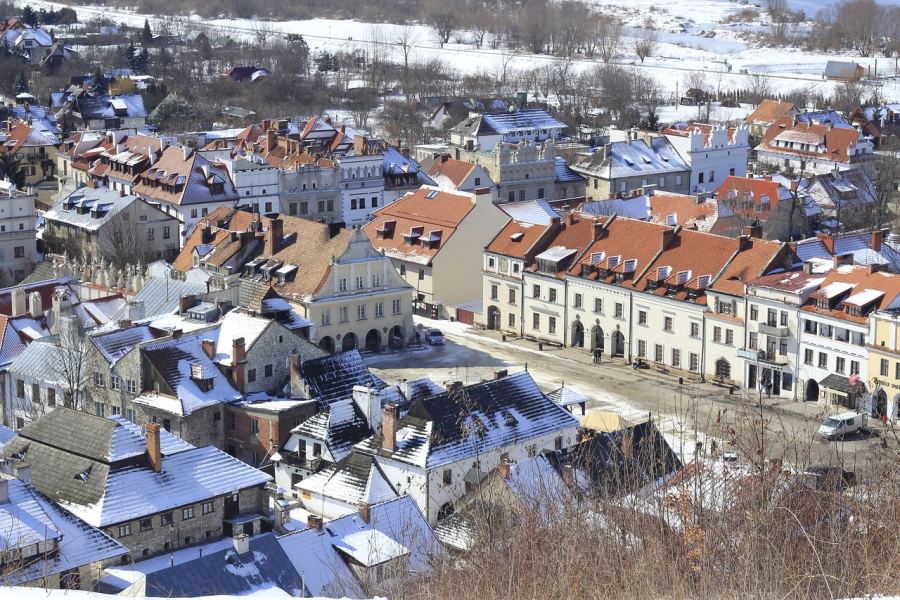
This settlement on the banks of the Vistula River is one of the most popular destinations for those interested in Polish rural life and art centers.
One of the town’s most famous attractions is the Kazimierz Dolny market square, surrounded by beautiful medieval and Renaissance-style buildings, including the famous Renaissance town hall, which symbolizes the town’s economic prosperity in the 16th century.
In the 20th century, it became famous among Polish artists who created works in various styles of painting and graphics. The picturesque landscape, historical buildings, and riverside views all inspired artists. This is evidenced by the numerous galleries and art events in the town.
Gniezno
One of Poland’s most important historical cities, known as the center of Polish state formation.
In the 10th century, Gniezno was Poland’s first capital, and it was here that Duke Mieszko I of Poland and his son Bolesław, who became the first Polish king, were crowned.
The city is famous for the Gniezno Cathedral, one of the most important churches of the Polish Catholic Church. Built in Gothic style, a Roman Catholic church existed here as early as the 10th century. It is famous for its carved reliefs on the Gniezno Door, which depict the history of Polish Christianity and the medieval Polish kingdom.
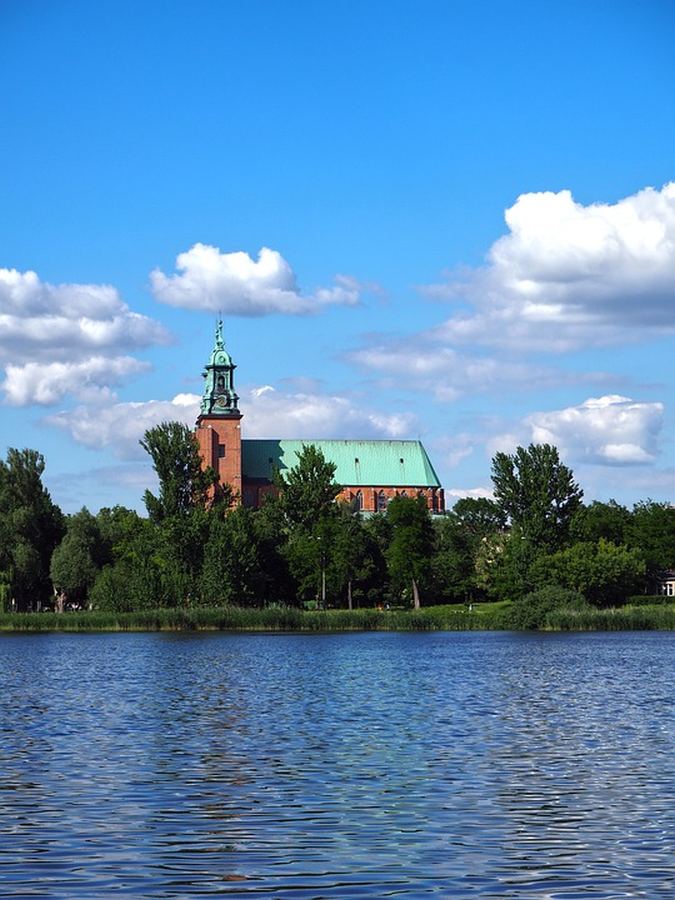
Mazurian Lake District
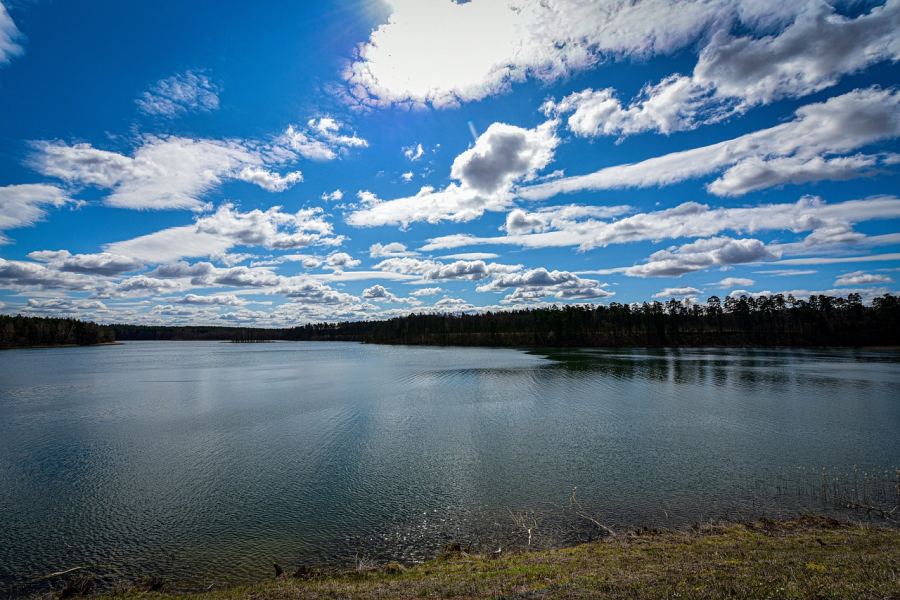
The lake system in the northeastern region, forming numerous smaller and larger lakes, is a popular region.
It is Poland’s largest lake system: extending about 290 km eastward from the lower course of the Vistula to the Polish-Russian border. Here are the country’s two largest lakes, Lake Śniardwy and Lake Mamry. The lakes are connected by rivers and canals, forming an extensive network of waterways.
Masuria is known for its lakes and forests, accordingly offering numerous sports and hiking opportunities from sailing to kayaking to swimming. Its rivers are popular fishing waters, and its forests are crisscrossed with hiking and cycling trails.