
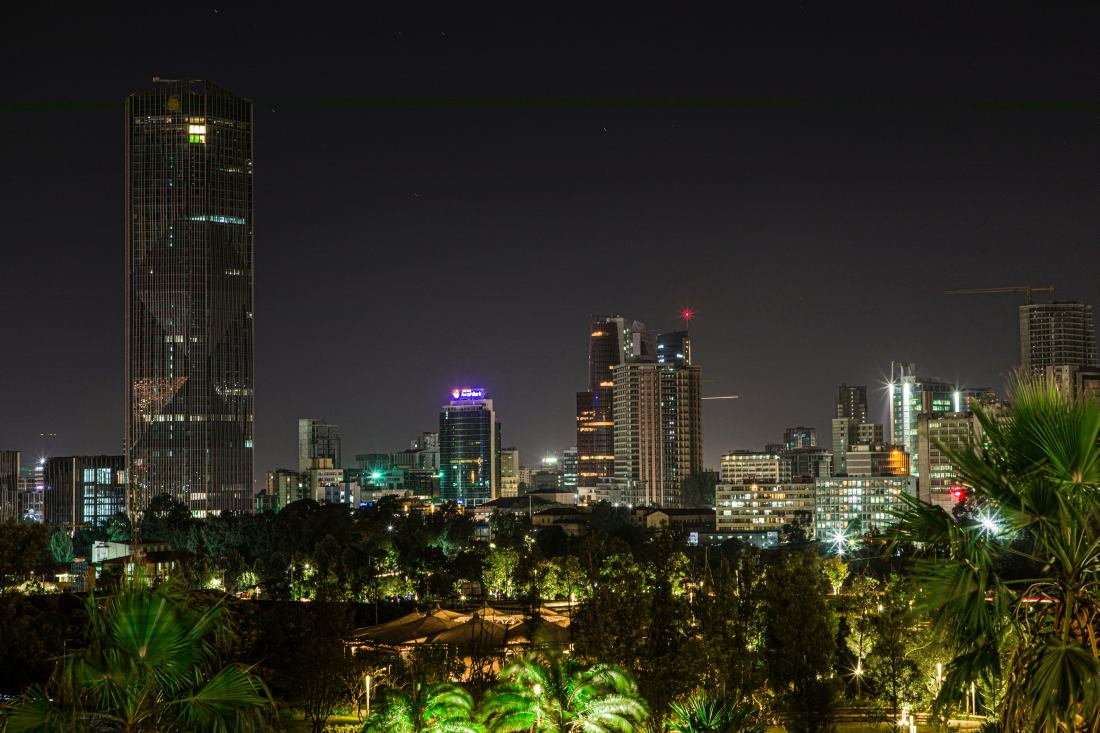
Addis Ababa is not only the capital of Ethiopia but also the headquarters of the African Union. As a result, it is one of Africa’s most important cities, undergoing significant development.
As one of Africa’s highest-altitude capitals, it sits at 2,400 meters above sea level at the foot of the Entoto Mountains. The metropolis, whose name means „New Flower”, is a unique blend of ancient Ethiopian Christian culture and modern African urban life. The streets are lined with Orthodox churches, magnificent palaces, and contemporary museums.
Table of Contents
Addis Ababa attractions
Meskel Square
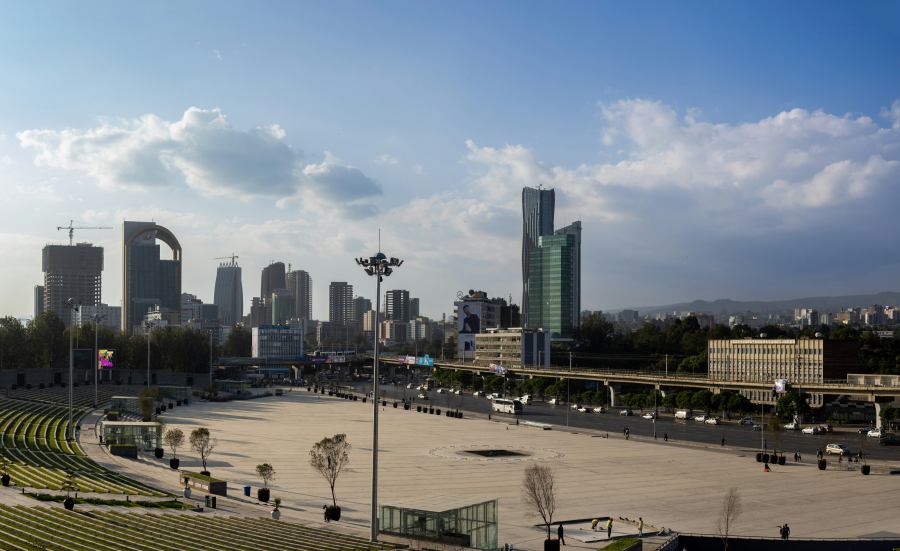
The city’s central square was built in the 1960s and serves as one of Ethiopia’s most important public spaces. It is named after the Meskel festival, celebrating the Finding of the True Cross, which is held here every September with the lighting of a massive bonfire in the presence of tens of thousands of people.
The square is surrounded by modern buildings, including hotels, government offices, and shopping centers. The area is constantly evolving: in 2007, the Abyot Monument that stood here was demolished to make way for a Chinese-funded light rail station.
On weekends and holidays, the square becomes a venue for concerts, cultural events, and political rallies. It is a favorite meeting place for locals, where young people stroll, families relax, and tourists try to grasp the city’s vibrant rhythm. From the terraces of nearby restaurants, there is an excellent view of the entire area.
Lion of Judah
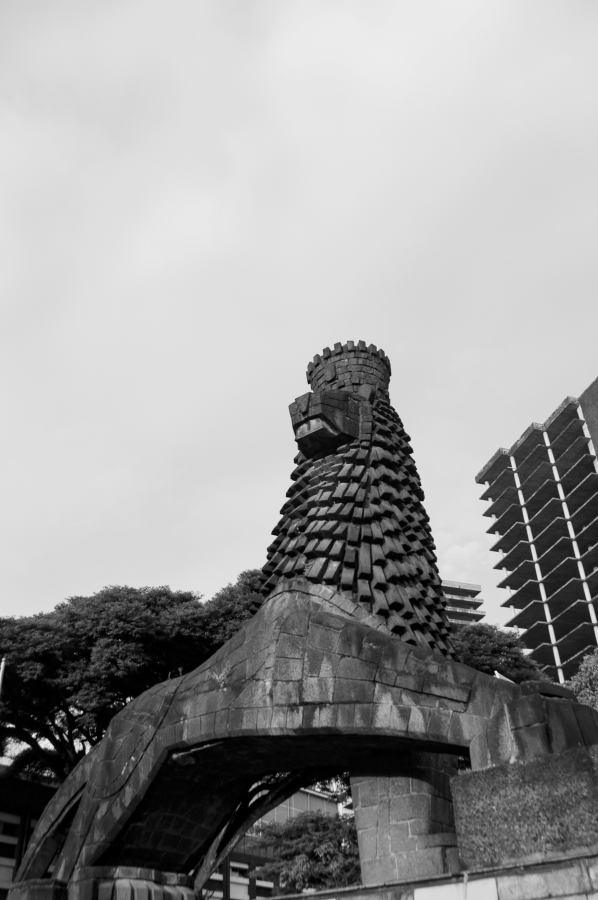
Standing near the train station, this monument depicts Ethiopia’s most famous symbol, the crowned lion. The monumental bronze statue was created in 1930 for the coronation of Emperor Haile Selassie, who bore the title „Lion of Judah”.
The statue is a proud symbol of Ethiopian imperial power and the dynasty tracing back to King Solomon. The lion wears a crown and holds a flag, symbolizing independence and national pride.
It is a popular photo spot for both tourists and locals. The imposing statue is one of Addis Ababa’s most iconic landmarks.
Unity Park
Opened in 2019, Unity Park is located within Emperor Haile Selassie’s former palace complex, which had been closed to the public for decades. The 40-hectare area welcomes visitors with stunning gardens, historic buildings, and museums.
The park houses a zoo featuring native Ethiopian animal species, as well as a museum showcasing imperial court life and Ethiopia’s political history. The carefully restored buildings and palm-lined walkways create a peaceful oasis.
Merkato
The continent’s largest open-air market spans more than ten square kilometers, where an estimated 7,000 vendors offer their wares daily. Operating since the 1930s, this bazaar labyrinth has everything from spices to gold to livestock.
The market is divided into sections by product type: there is a textile area, a metalwork section, a household goods section, and a massive spice market.
Holy Trinity Cathedral
Built in 1941, this Orthodox cathedral is Ethiopia’s holiest church, where numerous emperors and the legendary independence fighter Haile Selassie rest. The building, occupying a quarter hectare, blends traditional Ethiopian and European architectural elements and is built of pink granite.
The church interior is adorned with stunning frescoes, a gilded iconostasis, and a massive chandelier, reportedly one of the world’s largest Orthodox church lamps. In the courtyard crypt lie patriots and significant figures of the Ethiopian Orthodox Church.
Wide steps lead to the main entrance, where pilgrims and tourists frequently meet. The church surroundings are landscaped like a park, filled with trees and flowers. On Sunday mornings, crowds of worshippers gather for festive liturgy.

African Union Headquarters
Inaugurated in 2012, this futuristic complex was built as a gift from China and serves as the headquarters of the African Union. The 99-meter-tall main tower is visible from afar, with its modern architectural style sharply contrasting the city’s traditional buildings.
The complex houses conference rooms, offices, and a 2,500-seat assembly hall where African leaders hold regular meetings. At the top of the tower is an observation deck offering an unparalleled panorama of Addis Ababa and the surrounding mountains.
While the interior spaces are mostly reserved for official events, the surrounding park and exterior architecture are freely accessible. The building holds symbolic significance: it is a modern symbol of African unity and cooperation, emphasizing Addis Ababa’s role as an African diplomatic center. The square in front displays the flags of numerous African countries as a monument to continental unity.
Bole Road
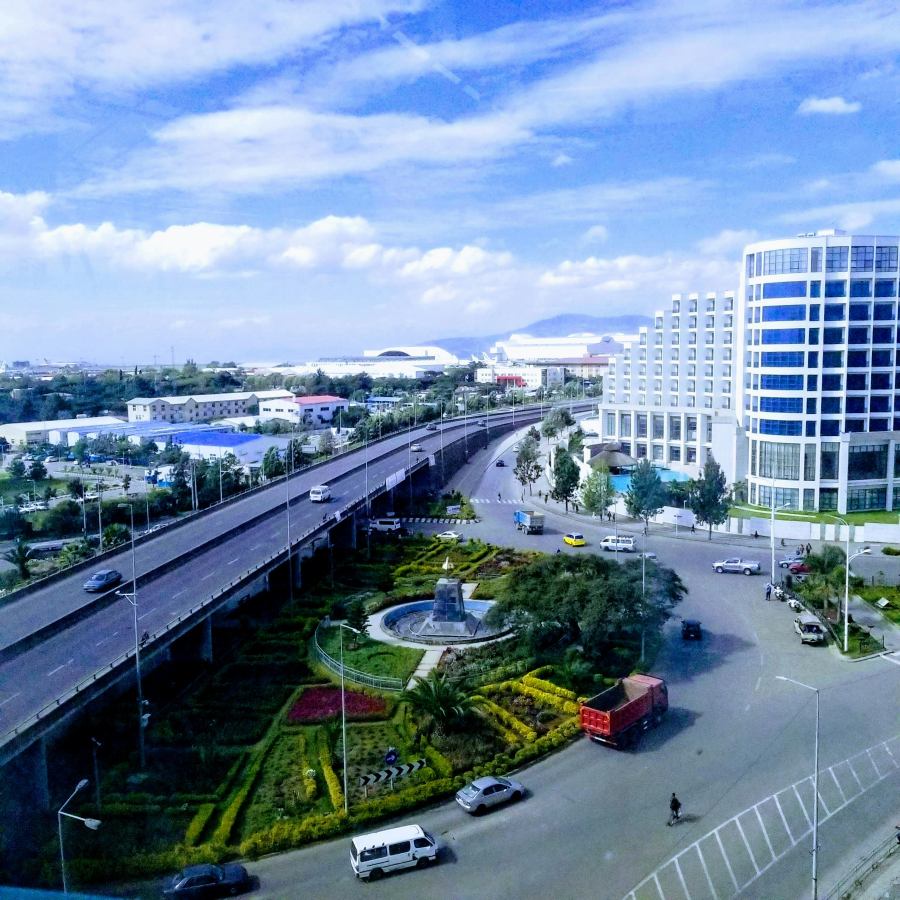
The city’s most modern shopping and business district exudes an international atmosphere with international restaurants, luxury hotels, and shops. The road leads from the airport toward the city center, practically serving as a gateway for tourists arriving in Addis Ababa.
The area is home to the Edna Mall shopping center, Ethiopia’s first modern mall, where international brands and local shops can both be found. The cafes lining the street represent the city’s vibrant coffee culture, as Ethiopia is the birthplace of coffee.
Evenings are particularly lively: restaurants, bars, and nightclubs open their doors to those seeking entertainment. The district excellently illustrates Addis Ababa’s modern face, where traditional Ethiopian culture meets the influences of globalization. Most foreign embassies are also located in this area.
Piassa District
The city’s historic center has preserved the atmosphere of old Addis Ababa since its 1886 founding with Italian colonial-era buildings and narrow streets. The district’s name derives from the Italian word „piazza” (square), preserving memories of the 1936-1941 Italian occupation.
The labyrinth of Art Deco-style buildings, small shops, and traditional restaurants creates a unique atmosphere. Here stands the famous Taitu Hotel, Ethiopia’s oldest hotel, opened in 1907 by Empress Taitu, wife of Menelik.
The area is filled with small jewelers, bookstores, and antique shops where traditional Ethiopian handicrafts can be purchased. During walks, one often encounters ancient Orthodox churches. Piassa is an excellent place to experience the contrast between old and new Addis Ababa.
Shiro Meda Market
The country’s largest traditional textile market, where hand-woven Ethiopian clothes, shawls, and blankets can be purchased directly from makers. The market’s specialty is finding the finest quality traditional Ethiopian garments, handmade by artisans from various parts of the country.
White canvas-based clothes decorated with distinctive colorful borders (tibeb) are part of Ethiopia’s cultural identity. The market is not just a shopping opportunity but a living museum of traditional craftsmanship, where you can observe the making of garments.
Bargaining is necessary when shopping, but prices remain friendlier than in tourist shops. It’s worth taking time to wander the market and chat with artisans who gladly demonstrate their work.
Arat Kilo District
One of the city’s oldest and most significant districts, where Addis Ababa University’s central campus is located. The district takes its name from the former „four kilometers” (arat kilo) road sign that marked one of the main routes at the city’s founding.
Within the university campus’s park-like environment are historic buildings, including the Ethnological Museum. The area is filled with bookstores, cafes, and small restaurants.
The district is also a cultural center: art galleries, theaters, and the Ethiopian Cultural Center are all located here. The area is best explored on foot, observing student life and local community daily activities.
Yekatit 12 Monument and Square
This monument commemorates the victims of the massacre that occurred on February 19, 1937, when Italian occupiers killed over 30,000 Ethiopians in response to an assassination attempt on the Italian viceroy. This tragic event is one of the darkest chapters in Ethiopian history.
The monument, erected in the 1970s, consists of a tall obelisk surrounded by relief sculptures depicting the events. The square serves as a memorial site and frequent venue for national celebrations and remembrance ceremonies.
The area around the monument is peaceful, with benches and trees providing an ideal place for reflection. For Ethiopians, this site symbolizes the struggle for independence and national unity.
Entoto Mountain
Rising 3,200 meters above sea level, this mountain offers spectacular panoramic views of Addis Ababa and the surrounding area. Historically significant, as Emperor Menelik II established his first residence here before founding the new capital.
At the summit stands Entoto Maryam Church, one of Ethiopia’s oldest Orthodox churches, built in the late 19th century. Near the church, a small museum displays the emperor’s personal belongings, clothing, and weapons.
The eucalyptus forests covering the mountain provide ideal hiking opportunities. Weekends see locals and tourists trekking to the summit for fresh air and breathtaking views. The area is known for its honey and handicrafts sold by local women.
Menagesha National Park
Located 50 kilometers west of the capital, this national park is one of Ethiopia’s oldest protected areas, having been managed as a forest reserve since the 19th century. The park covers 2,500 hectares and is mainly covered with native juniper and podocarpus trees.
The area offers excellent hiking trails where wild boars, monkeys and more than 200 bird species can be observed in their natural habitat. The highest point of the park, Menagesha Peak, is 3,385 meters high, from where you can see far into the surrounding countryside on a clear day.
It offers ecotourism opportunities for visitors, with rest areas, picnic areas, and an environmental education center. It is a popular weekend destination for Addis Ababa residents. The park also plays an important role in the capital’s water supply, as several springs originate here.
Best museums in Addis Ababa
National Museum of Ethiopia
Opened in 1958, this museum houses Ethiopia’s most valuable archaeological and cultural treasures. The most famous exhibit is „Lucy”, the 3.2-million-year-old Australopithecus skeleton discovered in 1974, considered one of humanity’s most significant paleontological finds.
Lucy revolutionized our understanding of human evolution, as this almost complete skeleton provided crucial evidence about our ancestors’ bipedalism and anatomy. The museum displays a plaster replica, while the original is stored in the Ethiopian Cultural Ministry’s research center.
Beyond the paleontological collection, the museum preserves Ethiopian royal thrones, crowns, and other archaeological finds. The exhibition chronologically presents the country’s millennia-long history from ancient times to the modern era.
For visitors, seeing Lucy’s replica up close is particularly impressive, along with the rich collection of traditional Ethiopian art objects. The museum provides an excellent introduction to Ethiopian history for every tourist arriving in the city.
Ethnological Museum
Operating in Emperor Haile Selassie’s former palace since 1955, this museum showcases Ethiopia’s diverse peoples’ cultures. The neoclassical building itself is a sight: through its two levels, we can glimpse Ethiopian ethnographic richness and imperial court life.
The exhibition presents traditional clothing, home furnishings, tools, and religious objects of over 80 Ethiopian ethnic groups arranged in thematic rooms. Special sections deal with Christian and Islamic religious art, as well as traditional Ethiopian painting and craftsmanship.
The emperor’s former bedroom, bathroom, and study are also accessible, furnished with original furniture. The museum garden forms part of Addis Ababa University campus.
Addis Ababa Museum
Located in the heart of the city, this museum opened in 1986 and dedicates its exhibition to Addis Ababa’s history and development. The building is simple, modern style, providing functional spaces for the rich collection.
The exhibition uses documents, photographs, and artifacts to present the history spanning from the capital’s founding to the present day, including various stages of urban development. Special emphasis is placed on the 19th-century founding, the Italian occupation era, and the modern urbanization process.
Visitors gain insight into the city’s daily life, traditional furnishings, and local community cultures.
Ethiopian Railway Museum
Located in the La Gare district, this museum occupies the original 1917 railway station building, the endpoint of the historic railway line to Djibouti. The French-style building is itself a city curiosity with its yellow color and colonial architecture.
The museum preserves a rich collection: old locomotives, railway cars, tickets, uniforms, and photographs documenting Ethiopian railway development history. The exhibition uses both outdoor and indoor space, with original rolling stock viewable in the courtyard.
The railway played a defining role in Ethiopia’s modernization in the early 20th century, and the museum aims to showcase this era. It’s an exciting place for both railway enthusiasts and history lovers.
Addis Ababa weather: when is the best time to visit?
Addis Ababa’s climate is moderate subtropical highland, providing pleasant temperatures year-round thanks to its 2,400-meter altitude. Average daily temperatures range between 16-20°C, rarely exceeding 25°C. The city’s weather is defined by two main seasons: the dry and rainy periods.
Rainy season (June-September):
This is the major rainy season, with daily showers and thunderstorms, especially in afternoons and evenings. Temperatures remain pleasant, but overcast skies and frequent rain may limit outdoor activities. Road conditions can become more difficult, particularly in suburbs.
Short rainy season (February-May):
This transitional period is characterized by brief but often intense showers. The landscape turns green, and temperatures remain pleasant. While rain should be expected, it is not as unpredictable as during the major rainy season.
Dry season (October-January):
The most pleasant period with clear skies, sunny days, and minimal precipitation. Daytime temperatures hover around 20-24°C, while nighttime temperatures range around 10-12°C. December and January are the coldest months, when mornings can drop to 5-8°C.
Best time to visit Addis Ababa:
The ideal visiting period is between October and February, when the dry season provides pleasant weather, clear views, and easily navigable roads. October and November are particularly recommended, when everything is green after the rains but the weather is already dry. January and February are also excellent choices for crystal-clear skies, though mornings and evenings can be cooler, making layered clothing advisable. Most cultural festivals also occur during the dry season, making city life livelier with more program opportunities.
Frequently Asked Questions about Addis Ababa
Addis Ababa is in the East African Time zone (EAT, UTC+3) and does not observe daylight saving time. You can find all the information about the exact time and time zone here!
Ethiopia’s official language is Amharic, and it is the most widespread in Addis Ababa. English is often spoken in hotels, restaurants, and tourism services, but less so in local markets and smaller shops. Most travelers get by with basic English knowledge.
The official currency is the Ethiopian birr (ETB). Cash use is very common, especially in smaller shops, markets, and local restaurants. Credit cards are mainly accepted in larger hotels and international-standard restaurants, so it’s advisable to always carry sufficient cash. Here is a currency converter!
In Addis Ababa, C, F, and L type plugs are primarily used. The voltage is 220V, matching Europe’s, so generally no voltage converter is needed, but a universal adapter may be useful.
Addis Ababa’s main airport is Bole International Airport (ADD), located close to the city center. Downtown can be reached by taxi, hotel transfer, or local minibus. Taxis are the most convenient solution, especially upon arrival and with larger luggage.
Within the city, taxis and app-based ride services represent the most convenient mode of transportation. Local minibuses are cheap but crowded and less transparent for first-time visitors. Addis Ababa also has a light rail that offers a quick alternative on certain routes.
Addis Ababa is generally one of Ethiopia’s safest cities, especially in central and tourist districts. Nevertheless, it’s worth paying attention to valuables, especially in crowded places and markets, and avoiding less familiar neighborhoods at night.
As a tourist, the Bole district is one of the best choices, as it’s close to the airport with many hotels, restaurants, and shopping opportunities. The Kazanchis area is also popular due to its central location and good infrastructure.
National Museum: Home to Lucy, the famous early human skeleton.
Entoto Mountain: Panoramic city views and historically significant site.
St. George’s Cathedral: One of Ethiopia’s most important religious buildings.
Merkato Market: One of Africa’s largest open-air markets.
Red Terror Martyrs’ Memorial Museum: Important memorial of modern Ethiopian history.
Injera: Tangy pancake-like bread that serves as the base for meals.
Doro wat: Spicy chicken stew, one of the most famous Ethiopian dishes.
Kitfo: Spiced raw or lightly seared beef.
Shiro: Chickpea or bean-based thick sauce.
Ethiopian coffee: The traditional coffee ceremony is an unmissable experience.