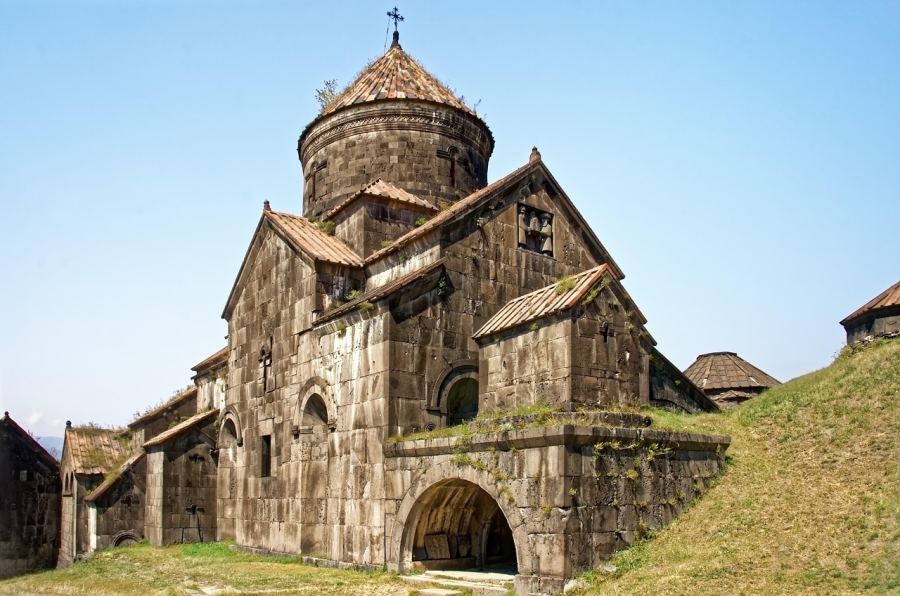
Armenia, located in the Caucasus, offers wonderful natural attractions and numerous monasteries. Discover the most beautiful places in this hospitable small country!
Armenia is bordered by Georgia to the north, Azerbaijan to the east, Turkey to the west, an Azerbaijani exclave (the Nakhchivan Autonomous Republic) to the southwest, and Iran to the south. The majority of this state located east of Asia Minor geographically belongs to Asia; however, for historical and cultural reasons, it is often classified among European countries.
Table of Contents
Best places in Armenia
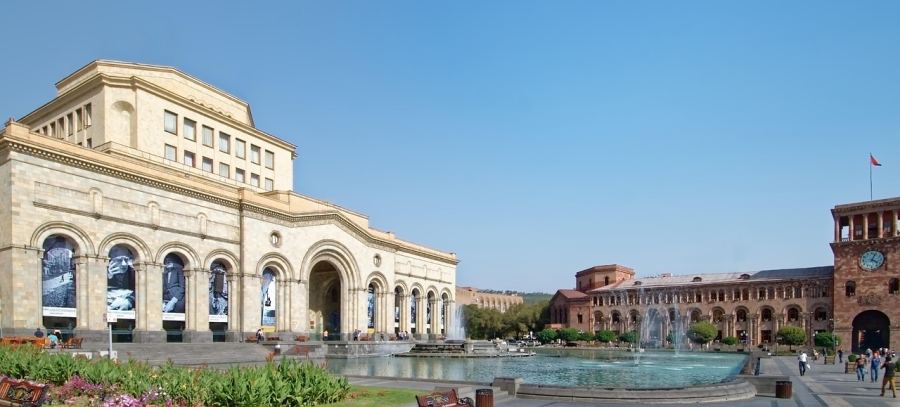
Yerevan
The capital and largest city of Armenia. It is one of the oldest continuously inhabited settlements in the Caucasus, with a history spanning more than 2,800 years.
One of the city’s most famous attractions is the Cascade complex, a huge staircase that also serves as a sculpture park and art center. The Cafesjian Center for the Arts located here welcomes visitors with contemporary exhibitions and outdoor artworks. From the top of the staircase, there is an unparalleled view of the city and Mount Ararat.
Yerevan boasts a rich cultural life. The Matenadaran ancient manuscript repository preserves rare Armenian and world literature documents. The Armenian Genocide Memorial and Museum provides a shocking but important insight into one of the most tragic chapters of Armenian history.
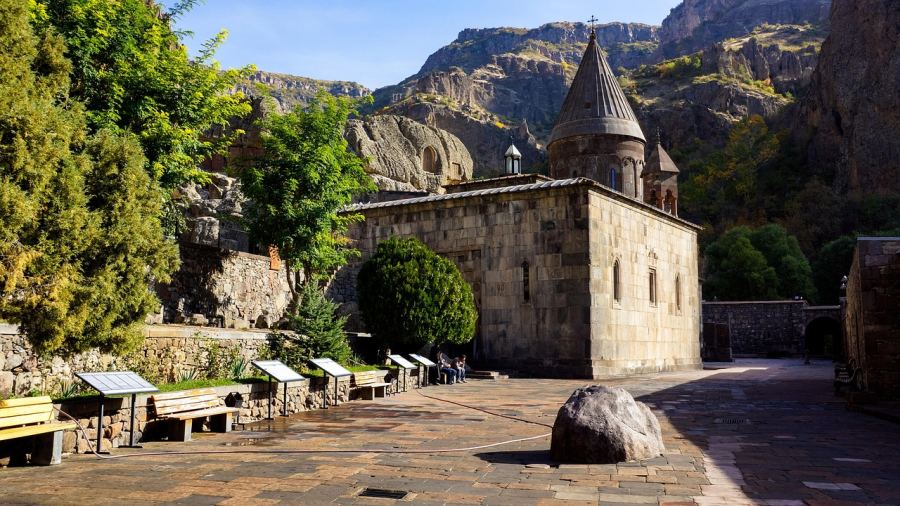
Geghard Monastery
A UNESCO World Heritage site located about 40 kilometers from Yerevan in the breathtaking Azat River Valley.
The monastery’s name means „Monastery of the Spear”, referring to the holy spear traditionally kept here that allegedly pierced Christ’s side during the crucifixion. Although the spear is now housed in the Etchmiadzin Treasury, the monastery continues to hold spiritual significance.
Founded in the 4th century during the early years of Christianity, most of the monastery’s current buildings date from the 12th-13th centuries. Its uniqueness lies in the fact that some parts were carved directly into the surrounding rock walls.
The monastery complex contains several churches and chapels covered with ornate stone carvings and ancient Armenian inscriptions. The main church stands out with its impressive dome and stone-carved cross motifs.
Lake Sevan
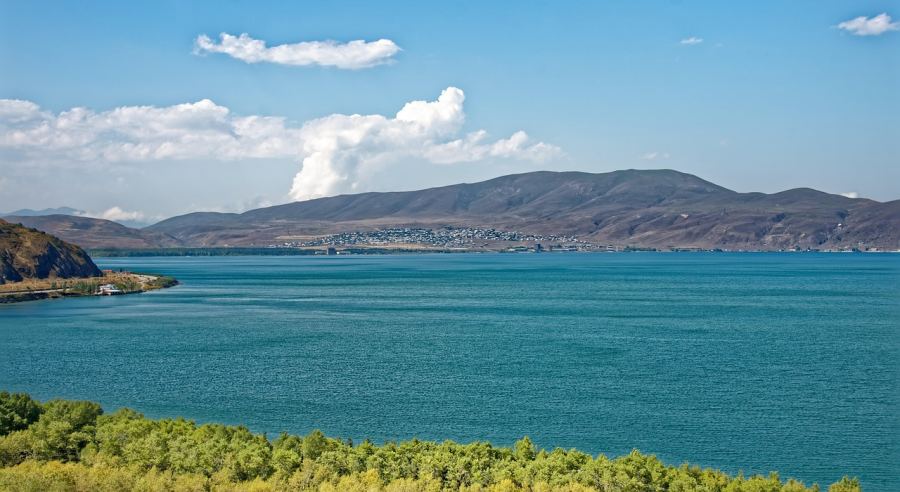
Armenia’s largest lake and one of the largest freshwater lakes in the Caucasus region.
Often referred to as the „Blue eye of Armenia” due to its crystal-clear water and impressive natural environment. It is situated approximately 1,900 meters above sea level, making it one of the highest large lakes in the world. The lake is especially popular in summer.
One of its most famous attractions is the Sevanavank Monastery, located on a small peninsula. Built in the 9th century from black tuff stone, the monastery once served as an important religious center.
Khor Virap Monastery
One of Armenia’s most iconic historical sites and one of the most important symbols of Armenian national identity.
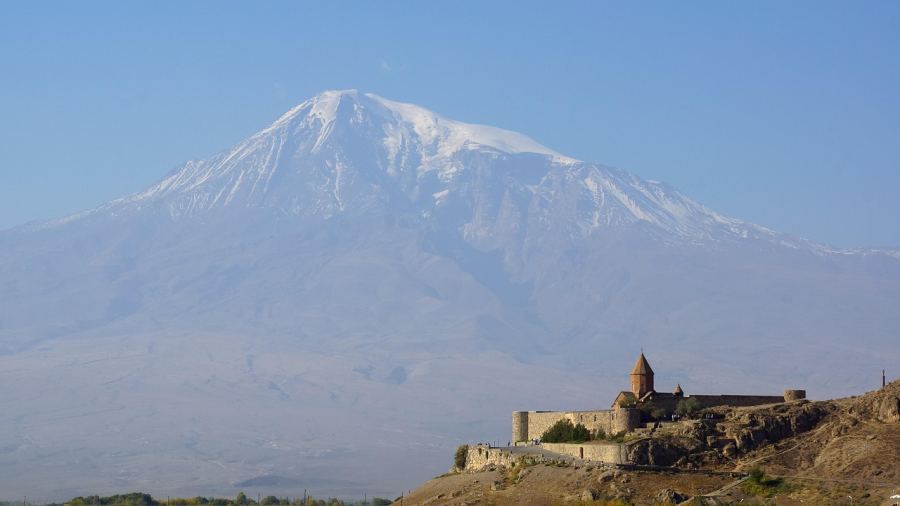
Its name means „deep pit,” referring to the underground prison where, according to legend, Saint Gregory the Illuminator – later the patron saint of Armenia – was held captive for 13 years at the end of the 3rd century. The story goes that King Trdat, who persecuted Christians, imprisoned Gregory, but the king later fell ill and was only healed through Gregory’s prayers. As a result, in 301, Armenia became the first country in the world to officially adopt Christianity.
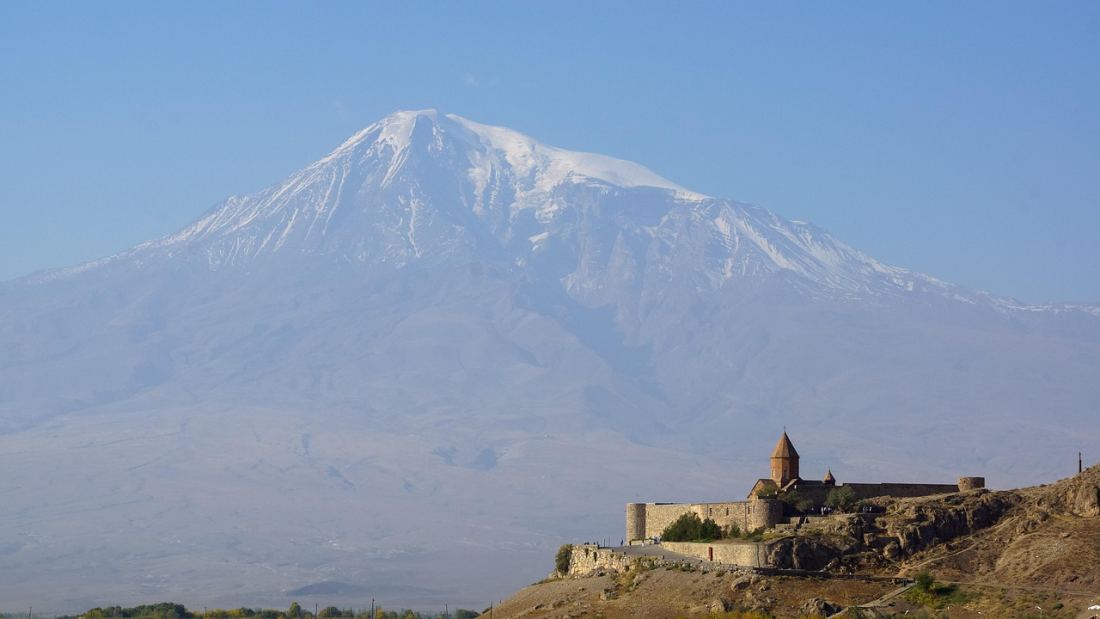
The current monastery dates from the 17th century, although the site itself has held religious significance since the 4th century. The monastery complex includes a small chapel, a bell tower, and the famous prison pit, which can still be descended via a narrow ladder.
One of its most special attractions is the magnificent panorama of Mount Ararat.
Gyumri
Armenia’s second-largest city and its cultural capital.
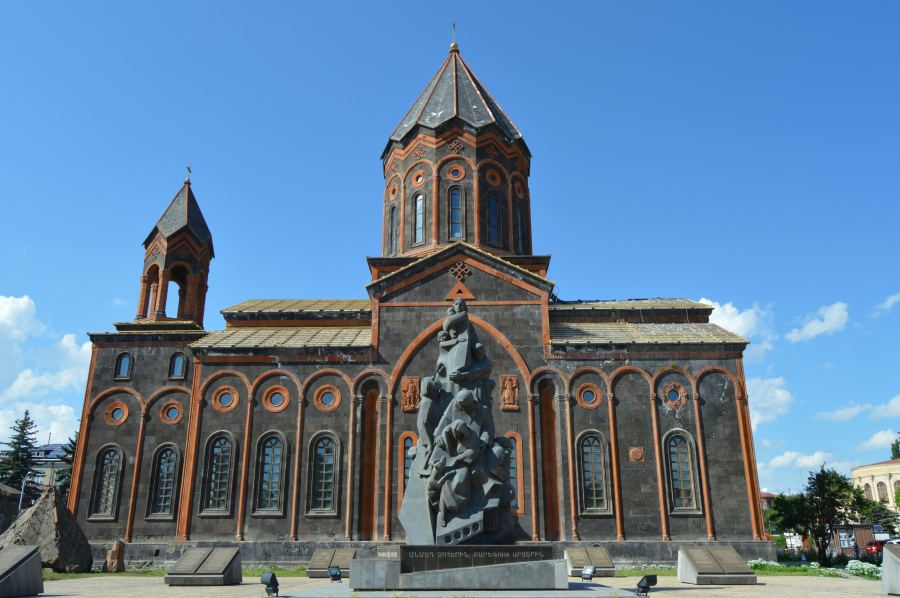
Its modern development began in the 19th century when the Russians developed it into one of the most important fortress cities in the Caucasus. It became a stronghold of Armenian art, sculpture, and music, and many famous artists were born here.
A tragic event in its history was the 1988 Spitak earthquake, which claimed more than 25,000 lives and destroyed much of the city’s buildings. The city has since undergone a long reconstruction process, but traces of the destruction can still be seen today.
The city is famous for its traditional houses built from black tuff stone. The Fortress District (Kumayri historical district) is particularly interesting, as it contains the most beautiful examples of 18th-19th century Armenian architecture. Among these, the Church of the Holy Savior and Vartanants Square stand out.
Garni Temple
A unique ancient architectural monument in the Caucasus region, located about 30 kilometers east of Yerevan.
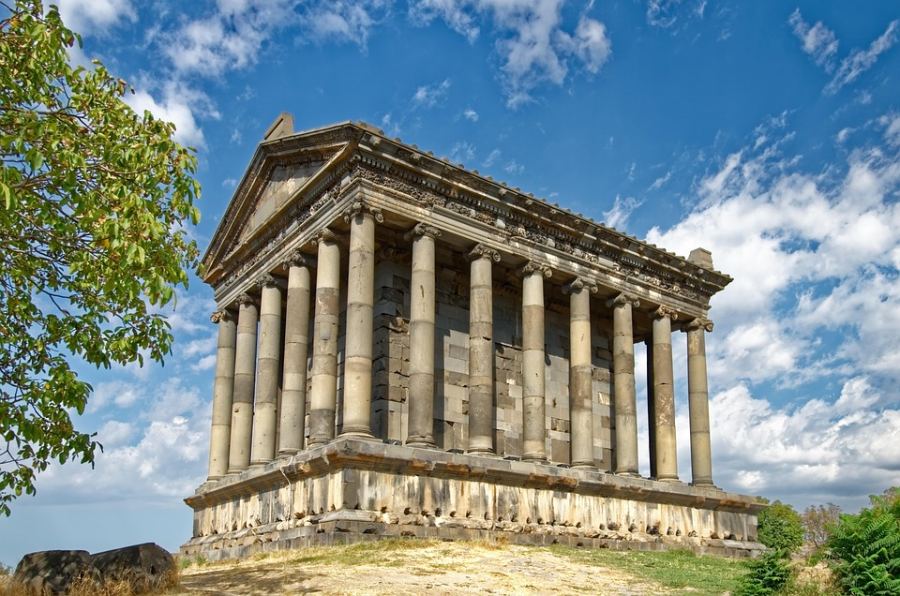
The temple is the only surviving pagan temple in Armenia that dates back to pre-Christian times. According to research, it was built during the reign of King Trdat I (Tiridates) in the 1st century and was dedicated to Mihr, the Armenian sun god.
With the advent of Christianity, most pagan sanctuaries were destroyed, but Garni survived this period. This was probably because it was part of a royal summer residence. In 1688, an earthquake severely damaged the building, and it remained in ruins for a long time. Today it can be seen again in its original form.
The temple was built in the classical Greco-Roman style and bears a strong resemblance to ancient Greek peripteros temples. It has 24 Ionic columns decorated with finely carved patterns. From the large terrace, there is a magnificent panorama of the Azat River Valley and the surrounding mountains.
Khndzoresk Cave City
One of Armenia’s most exciting historical sites is set in a natural environment, amid steep cliffs and deep canyons.
People here carved cave dwellings into the soft volcanic rock and lived in them for centuries. By the end of the 19th century, about 15,000 people lived here, making it one of the country’s largest settlements at the time. The village had its own schools, churches, and markets, and residents built traditional stone houses alongside cave dwellings. By the mid-20th century, people gradually abandoned the caves, and a new village was built above the canyon.
One of the most exciting attractions is the 160-meter-long suspension bridge that connects the two sides of the canyon. Several thousand artificially carved caves can be explored at the site, which once served as homes, stables, or storage areas.
Dilijan National Park
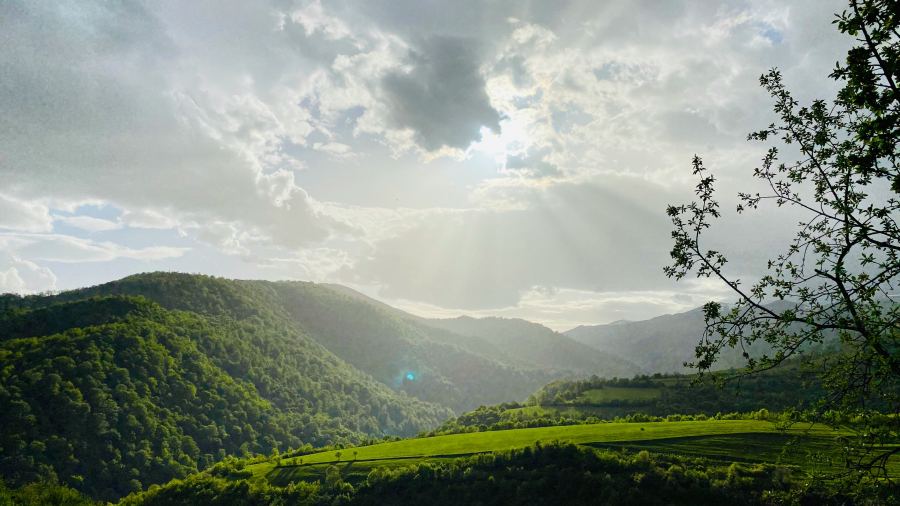
Also known as the „Armenian Switzerland„, this nature reserve welcomes visitors with rich forests, crystal-clear lakes, and historical monasteries.
One of its most popular natural attractions is Lake Parz, a picturesque alpine lake. The park is covered with oak, beech, pine, and maple forests that are home to more than 1,000 plant species. It also boasts a rich fauna, with rare species such as the Armenian mouflon and brown bear.
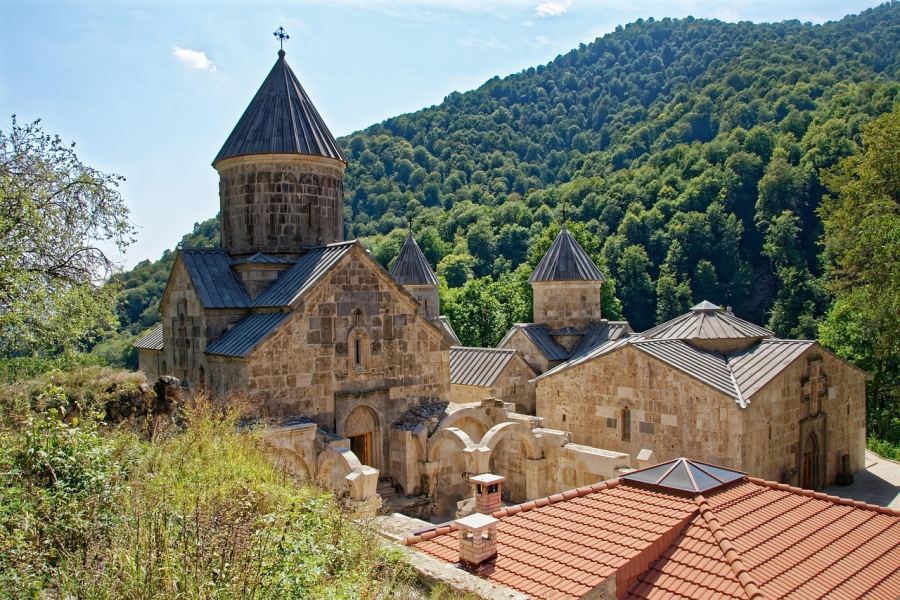
Haghartsin Monastery
Located in Dilijan National Park, this monastery is one of the most popular pilgrimage sites in Armenia.
Its foundation dates back to the 10th century, but it flourished in the 12th-13th centuries when it was an important religious and cultural center of the Armenian Bagratid kingdom. Its name means „dancing eagles” which, according to legend, refers to eagles flying into the sky as if celebrating when one of the church domes was consecrated.
The complex consists of several churches and auxiliary buildings. The Church of St. Astvatsatsin is the oldest part of the monastery. The Church of St. Gregory is the main church, distinguished by its magnificent dome and cross decorations. The largest and most impressive building is the Church of St. Mary.
Jermuk
One of Armenia’s most famous resorts and spa towns, situated at an altitude of 1,600 meters above sea level.
It has been known for its healing waters since ancient times. The ancient Armenians believed in the healing power of the local springs, and this tradition has continued throughout the centuries. There are more than 40 springs in the area surrounding the town, containing waters rich in various minerals.
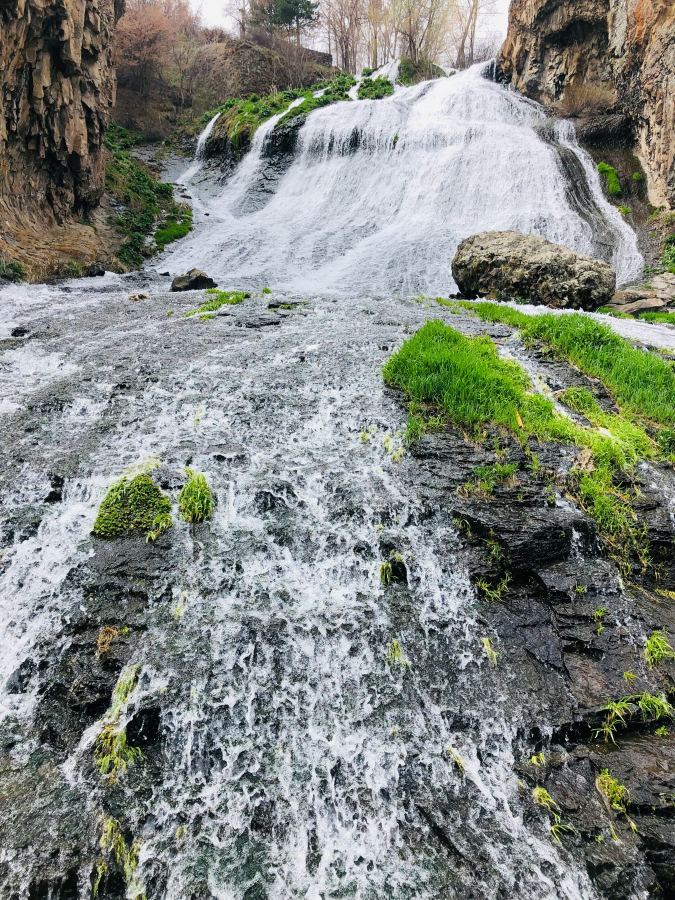
However, it is known not only for its spas but also for its breathtaking natural landscapes, which are popular destinations for hikers, nature lovers, and photographers. One of the most beautiful is the 70-meter Jermuk Waterfall. Its surroundings are lined with promenades, allowing close-up views.
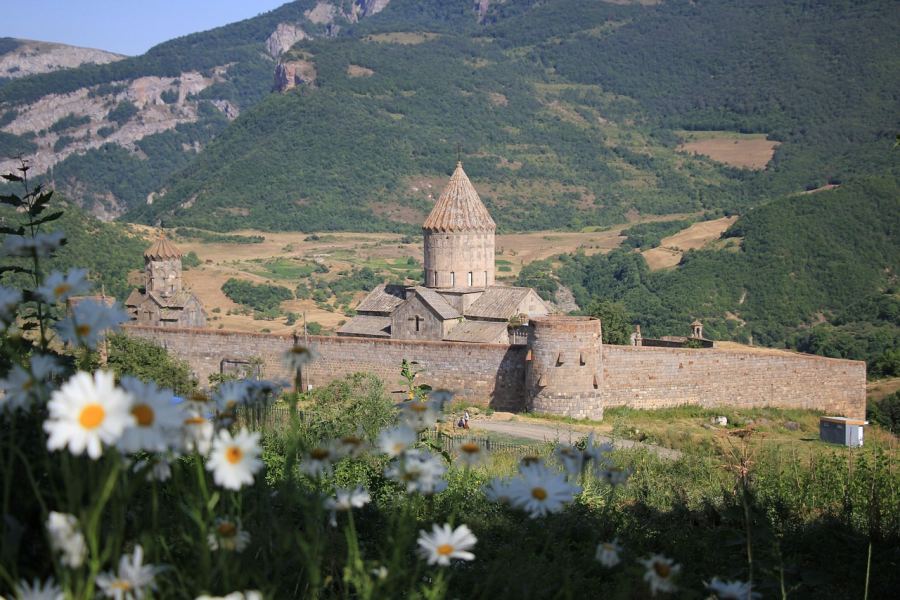
Tatev Monastery
The monastery was one of the outstanding centers of medieval Armenian religious life.
The exact date of its foundation is unknown, but the first significant constructions began in the early 9th century. It flourished under the Armenian Bagratid dynasty and became a significant religious center in the 13th century, known for its scientific and religious work.
Its largest church is the Church of Saints Peter and Paul, built in the 9th century. Its interior is covered with beautifully carved stones and artistic decorations, with images of saints and religious symbols adorning the walls. It was not only a religious center but also a center of scientific and artistic life.
One of the monastery’s special features is that a 5.7 km cable car was built to the monastery in recent times. This is the world’s longest single-span cable car and offers breathtaking panoramic views of the canyon and surrounding mountains.
Karahunj
The site is often referred to as the „Armenian Stonehenge”, an ancient megalithic observatory and sanctuary.
Based on archaeological excavations, the observatory was established approximately 6,000 years ago. Archaeologists believe that the site may have functioned as a sacred center where ancient Armenians conducted astronomical observations and held religious rituals. The area may also have served as astronomical reference points.
The large stone group in the center of Karahunj consists of about 200 stones. The most striking is the series of anthropomorphic, monolithic stones that are 3-4 meters high and take various forms. Some have small holes that were used for timekeeping. The stones and their arrangement were designed to also monitor solstices and lunar phases.
Haghpat-Sanahin Monasteries
The Haghpat and Sanahin monasteries are located in northwestern Armenia along the Debed River.
Haghpat Monastery is one of the most important of the two centers and was built in the 10th century. It was a flourishing religious center during the Bagrationi dynasty. Several significant buildings are located on its grounds, the most famous of which is the Church of St. Mary. Its interior is decorated with artworks, frescoes, and religious motifs.
The Sanahin Monastery is located close to Haghpat, and there was a historical and religious connection between the two sites. Its name means „this is the place where sciences are taught” which well reflects its religious and scientific role.