
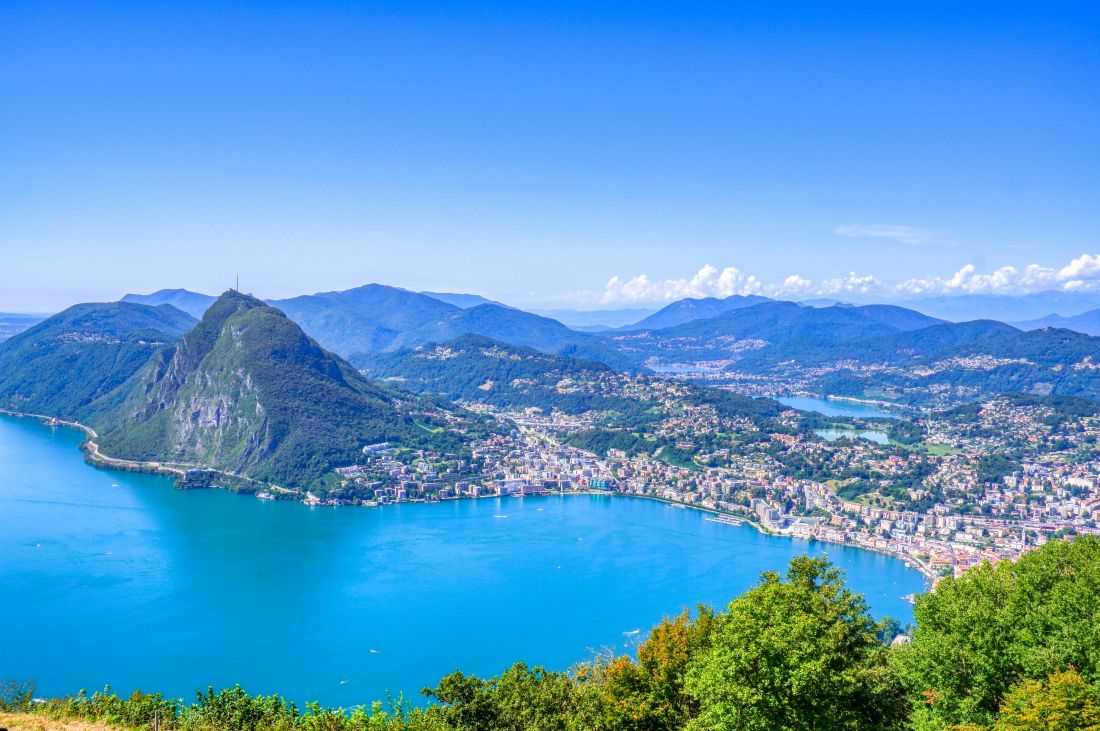
Lugano is one of Switzerland’s most popular tourist destinations, thanks to its wonderful location and outstanding cultural attractions.
The city’s character is defined by the magical combination of Italian architecture, palm-lined promenades, and surrounding mountains. Lugano is the third most important center of the world-famous Swiss banking system (after Zurich and Geneva). Due to its location, it is an important transportation hub from which Como and Milan are easily accessible.
Table of Contents
Lugano attractions
Parco Ciani
The English garden on the shores of Lake Lugano is the city’s most popular public park, covering 63,000 square meters. Founded in 1845, the park is one of the city’s oldest and most beautiful green spaces, originally owned by the wealthy Ciani family before becoming city property in 1912.
The park’s special features include plane trees over 200 years old, exotic plants, and well-maintained flower beds that offer dazzling colors in spring and summer. Sculptures, fountains, and small romantic bridges placed along the pathways create a pleasant atmosphere.
The lakeside location offers wonderful views of the water and surrounding mountains. It is a favorite resting place for locals and tourists alike, where you can picnic, read, or simply stroll. In summer, it also hosts various cultural events and concerts.
Monte San Salvatore
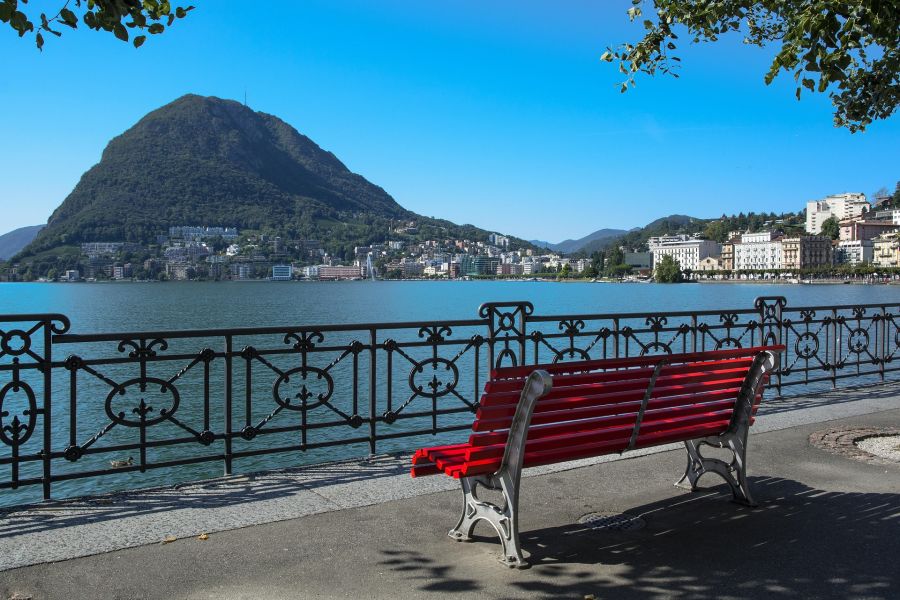
The 912-meter high mountain is one of Lugano’s symbols, offering breathtaking panoramas of the city, the lake, and the surrounding Alps. A funicular has been taking visitors to the summit from the Paradiso district since 1890, making the journey in just 12 minutes.
On clear days, you can see all the way to Mont Blanc, the Apennines, and the Po Plain from the top. The 360-degree view encompasses both arms of Lake Lugano and the imposing mountain ranges. At the summit, there is a small chapel and a museum showcasing the mountain’s geological and natural treasures.
Hiking trails also lead to the summit on foot, at various difficulty levels. The mountain was once Hemingway’s favorite place in Lugano. A restaurant and terrace await visitors, where you can taste local specialties alongside the stunning views.
Via Nassa
The main street of the historic old town is Lugano’s most elegant shopping street, attracting visitors with its arcaded corridors and exclusive shops.
The street is of medieval origin, with its characteristic Lombard-style arcades built in the 15th-16th centuries and forming part of the protected heritage. Along Via Nassa, luxury brands, jewelers, Swiss watch salons, and antique shops line up.
The route starts from Piazza Cioccaro and leads to the Santa Maria degli Angioli church. Besides shops, numerous cafés and restaurants can be found here.
Santa Maria degli Angioli
The Franciscan monastery church was built in 1499 and houses Lugano’s most significant religious monument. The building was originally located outside the city walls but is now an integral part of the center, close to the lakefront.
The church’s real treasure is Bernardino Luini’s Renaissance fresco from 1529, depicting the Passion of Christ. The monumental wall painting covers the entire altar wall of the church and is considered an outstanding work of North Italian Renaissance art. The fresco’s richness of color and detail is stunning, reflecting the influence of Leonardo da Vinci’s school.
The church’s interior is simple, which highlights the significance of the fresco. Additional smaller Luini frescoes can also be viewed beside the altar. The church also hosts cultural programs and concerts, being particularly popular for classical music performances due to its excellent acoustics.
Piazza della Riforma
The heart of Lugano, this central main square is the center of the city’s social and cultural life. The rectangular square was created in its current form in 1830, bordered by neoclassical buildings on all sides. The square takes its name from the cantonal constitutional reform of 1830.
Facing the square is the Palazzo Civico, or City Hall, built in 1844 in neoclassical style. Its façade is adorned with statues of notable Ticino personalities. The ground floors of the buildings surrounding the square house restaurants, cafés, and boutiques.
In summer, it is one of Lugano’s liveliest places, filled with people sitting on terraces. The city’s major events, concerts, fairs, and the Estival Jazz festival in July are held here. In winter, it hosts a Christmas market with an ice rink and festive lighting.
Cattedrale di San Lorenzo
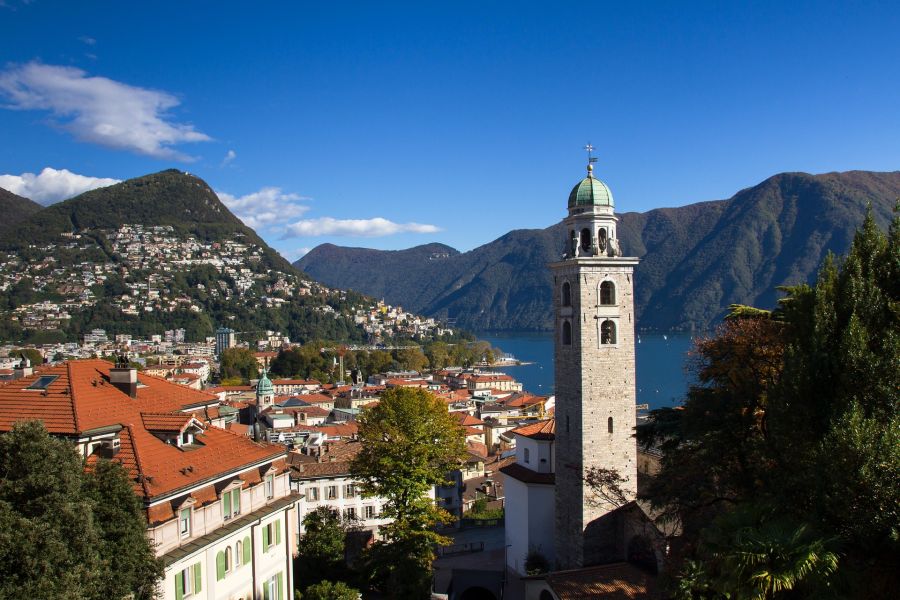
Lugano’s cathedral stands atop a hill in the city’s historic core, offering excellent views of the lake and city. The first church was built on this site in the 9th century, while the current building began to take its present form in the 13th century, then was rebuilt in Renaissance style in the 15th-16th centuries.
The most striking feature of the façade is the three Renaissance portals adorned with rich stone carvings and reliefs. The central portal’s tympanum is particularly valuable, with carvings dating from 1517. The façade is framed by two towers, though only one was fully completed.
The interior is three-naved, beautifully decorated with frescoes and stuccos. The baroque side altars and richly decorated ceiling are impressive. The stairs leading to the cathedral and the surrounding small squares exude a Mediterranean atmosphere. The church hosts regular services and cultural events, with organ concerts frequently held within its walls.
Lugano Lake Boat Tour
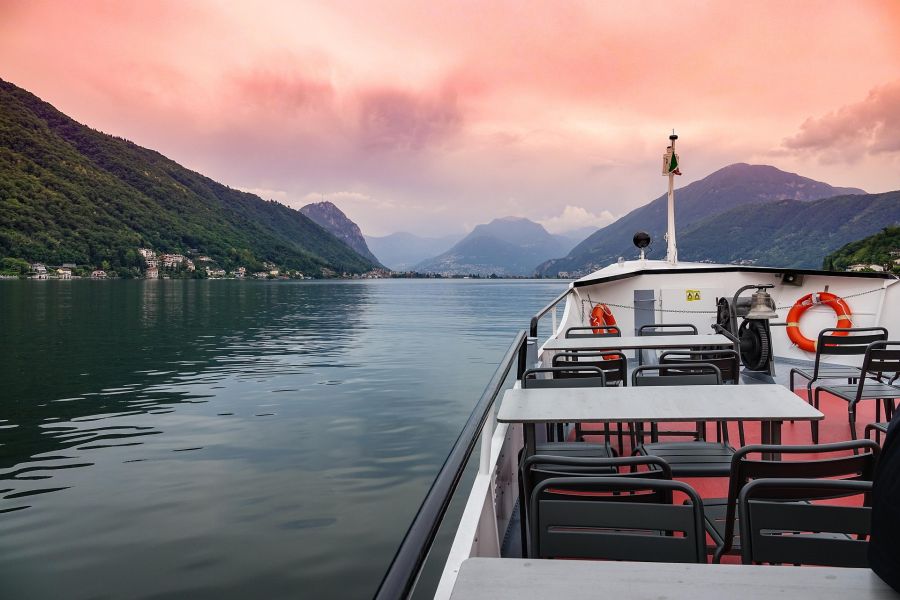
The 48.7 square kilometer lake lies on the border between Switzerland and Italy and is Lugano’s main natural attraction. The lake has a special U-shape with two arms, between which Monte San Salvatore rises. The water surface has a maximum depth of 288 meters, and its crystal-clear water and surrounding mountains offer a stunning sight.
Passenger boats and excursion boats run regular routes connecting lakeside settlements. The shipping company offers various routes, from short one-hour tours to full-day excursions. The routes touch Swiss and Italian lakeside villages, each with its unique character.
From the boats, there are unparalleled views of waterfront villas, the green mountain slopes, and picturesque bays. A boat trip at sunset is particularly popular.
Monte Brè
The 925-meter high mountain rises directly above Lugano and is known as „Switzerland’s sunniest mountain”. The funicular to the summit has been running from the Cassarate district since 1908, itself a historically significant means of transport. From the top, a 360-degree panorama unfolds before visitors.
The view includes Lake Lugano, the city, the surrounding mountains, and on clear days, you can see all the way to the Apennines. At the top of Monte Brè is a charming small village, Brè, which has preserved its traditional Ticino character. The village features narrow streets, stone houses, and small cobblestone squares awaiting strollers.
The Wilhelm Schmid Museum operates in the village, dedicated to the locally-born expressionist painter. Several restaurants and terraces are located at the summit and in the village, where local specialties can be tasted. Hiking trails lead down to the valley and to other mountains, at varying difficulty levels.
Parco San Grato
The 62,000 square meter botanical garden is located near the village of Carona, at 690 meters altitude, on the northern side of Monte San Salvatore. The park was opened in 1956 and has been continuously expanding its plant collection since. The special microclimate allows for the cultivation of both Mediterranean and Alpine plants together.
The garden’s main pride is its collection of azaleas and rhododendrons, which includes more than 1,000 varieties. In late April and early May, the park transforms into a veritable sea of flowers when these plants bloom simultaneously.
Thematic garden sections showcase different plant families: camellias, magnolias, tulip trees, and numerous exotic plants. Along the park’s walking paths are viewpoints offering stunning panoramas of Lake Lugano and the surrounding mountains. A wooden observation tower also stands in the park, from which the landscape can be admired from even higher.
Gandria
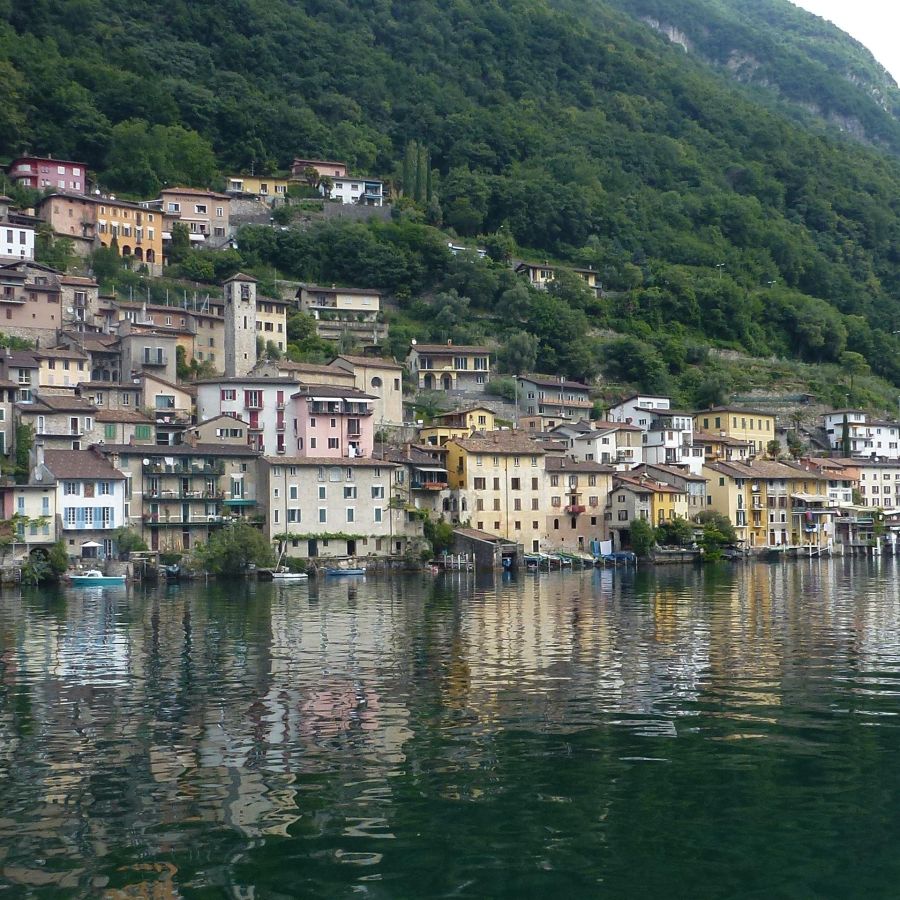
The picturesque fishing village on the eastern shore of Lake Lugano, just 5 kilometers from the city, feels like stepping into another world. The settlement clings to the mountainside, with houses built almost on top of each other following the steep terrain. A network of narrow, winding streets, stairs, and arcades makes up the village.
Gandria is one of the best-preserved medieval settlements in the Ticino region. Cars cannot enter the center, creating a particularly peaceful, authentic atmosphere. The house façades are pastel-colored, with flowers adorning their balconies. Along the waterfront, atmospheric terrace restaurants await visitors.
From Lugano, it can be reached by boat or on foot via the beautiful lakeside walking route. The walking route is especially recommended as it offers wonderful views of the lake. The Swiss Customs Museum operates in the village, providing interesting insights into the history of smuggling and border control due to its proximity to the Italian border.
Best museums in Lugano
LAC Lugano Arte e Cultura
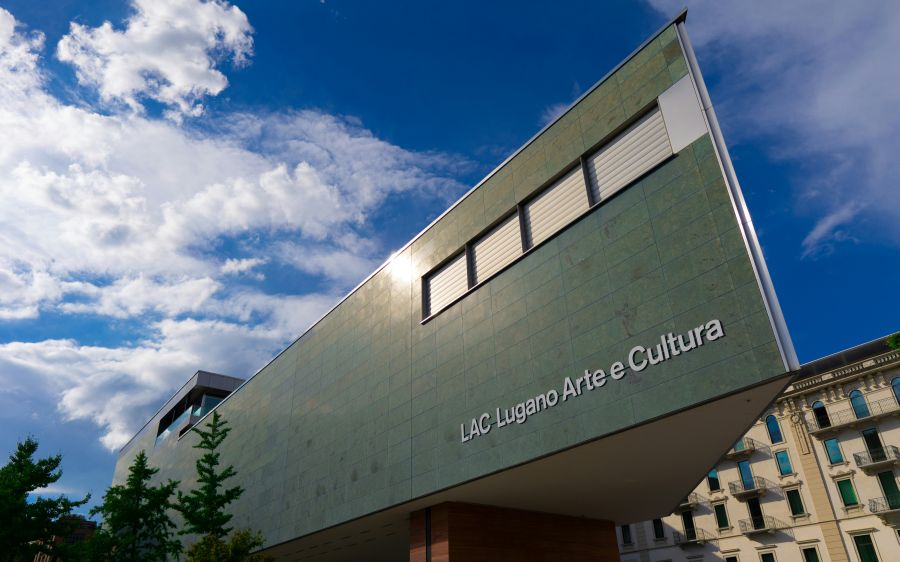
The modern cultural center opened in 2015 on the lakefront, on the site of an old railway station. The building was designed by renowned Italian architect Ivano Gianola, characterized by contemporary design and functionality. The white, geometric-shaped structure is home to both traditional and modern art.
The center combines multiple functions: museum, concert hall, and theater. The museum section presents Swiss and international contemporary art, as well as housing the Cantonal Art Collection, which contains 19th and 20th century works. Exhibitions change regularly, so there is always something new.
The LAC’s 1,000-seat concert hall has excellent acoustics and hosts classical music concerts and opera performances. The 200-seat theater provides a venue for experimental performances and smaller productions. The square in front of the building, Piazza Bernardino Luini, serves as a venue for cultural events, fairs, and outdoor programs. The LAC restaurant’s panoramic terrace offers beautiful views of the lake.
All information can be found here!
MUSEC – Museum of Cultures
The ethnographic museum presents the art and objects of non-European cultures. The institution was founded in 1989, initially as a cantonal ethnographic museum. In 2015, it moved to its current beautifully renovated villa, which is itself an architectural attraction.
The collection consists of material artifacts from African, Asian, Oceanic, and Native American cultures. Masks, sculptures, textiles, jewelry, and ritual objects represent different cultures. In addition to the permanent exhibition, regular temporary exhibitions are held, focusing on a deeper presentation of a particular culture or theme.
The museum’s goal is not only to present material culture but also to promote cultural dialogue and understanding of different worldviews. The park surrounding the villa, decorated with Mediterranean plants and sculptures, provides a pleasant environment for relaxation.
All information can be found here!
Hermann Hesse Museum
The museum of the Nobel Prize-winning German-Swiss writer is located in Montagnola, near Lugano, in the house where Hesse lived between 1919 and 1931. The building called Casa Camuzzi now serves entirely to present the writer’s life and work. The museum was founded in 1997 and has since become a pilgrimage site for Hesse fans.
The exhibition chronologically presents Hesse’s life story, from his birth in Baden-Württemberg to his years in Ticino. Original manuscripts, letters, photographs, and first editions can be viewed. A separate room deals with Hesse’s painting, as he was not only a writer but also a talented watercolorist. The Montagnola landscapes frequently appeared in his watercolors.
The museum’s garden is beautifully maintained and evokes the Mediterranean environment that Hesse loved so much. The building’s atmosphere has been preserved, so visitors can truly get a glimpse into the writer’s daily life.
All information can be found here!
Lugano weather: when is the best time to visit?
Lugano has a Mediterranean-like, mild climate, making it Switzerland’s warmest region. The year is divided into four distinct seasons, but even the winter months are relatively mild compared to the Swiss average. The city’s protected geographical location and proximity to the lake ensure balanced weather throughout the year.
Spring (March-May):
The season begins with gradual warming; March can still be cool, but by April, daytime temperatures are around 15-18°C. The awakening of nature offers a beautiful sight, especially in parks and botanical gardens, where the blooming of rhododendrons and azaleas is stunning. Rain is still frequent, but the number of sunny hours gradually increases.
Summer (June-August):
The warmest period, when temperatures regularly reach 25-30°C. In July and August, pleasant 18-20°C in the evenings is typical. This season is ideal for lakeside bathing, boating, and outdoor programs. Occasionally, heavy summer showers and thunderstorms may occur, but they usually pass quickly. With many hours of sunshine and pleasant evenings, this is the city’s liveliest season.
Autumn (September-November):
September is still summer-like warm, a perfect time for hiking and sightseeing with fewer tourists. By October, it becomes cooler, with temperatures between 12-18°C typical. The autumn colors are particularly beautiful in the surrounding mountains. In November, the approach of winter is noticeable, with more frequent rain.
Winter (December-February):
The winter months are mild; the temperature rarely drops below freezing in the city. The average daytime temperature is around 5-10°C. Snowfall is rare in the city, although it is common in the surrounding mountains. Winter is the wettest season, but the Christmas period creates a special atmosphere with festive lighting and markets.
Best time to travel Lugano:
The ideal travel period is from late April to early October, when the weather is best and all attractions and services are available. May and June are particularly recommended, when nature is blooming, the weather is pleasant (20-25°C), and it is not yet as crowded as in July-August. September and early October are also excellent choices, when the temperature is still pleasant (18-24°C). The summer peak season (July-August) is ideal for those seeking lakeside life, swimming, and lively cultural programs, although higher prices and larger crowds can be expected during this time.