
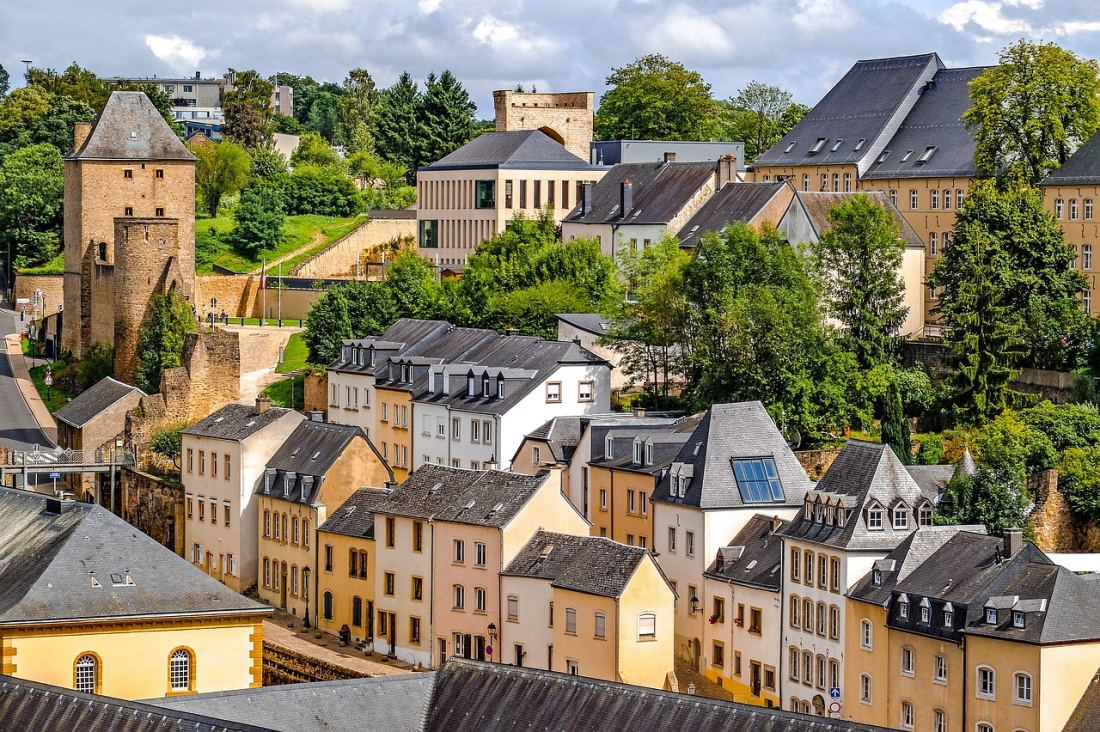
Although Luxembourg is a small country, it boasts numerous architectural, gastronomic, and historical attractions. It should be emphasized that there are many castles and fortresses in the area.
Officially known as the Grand Duchy of Luxembourg, it owes its fame to finance, but tourism also significantly defines its economy. Its neighbors are France, Germany, and Belgium.
Table of Contents
Best places in Luxembourg
Luxembourg City
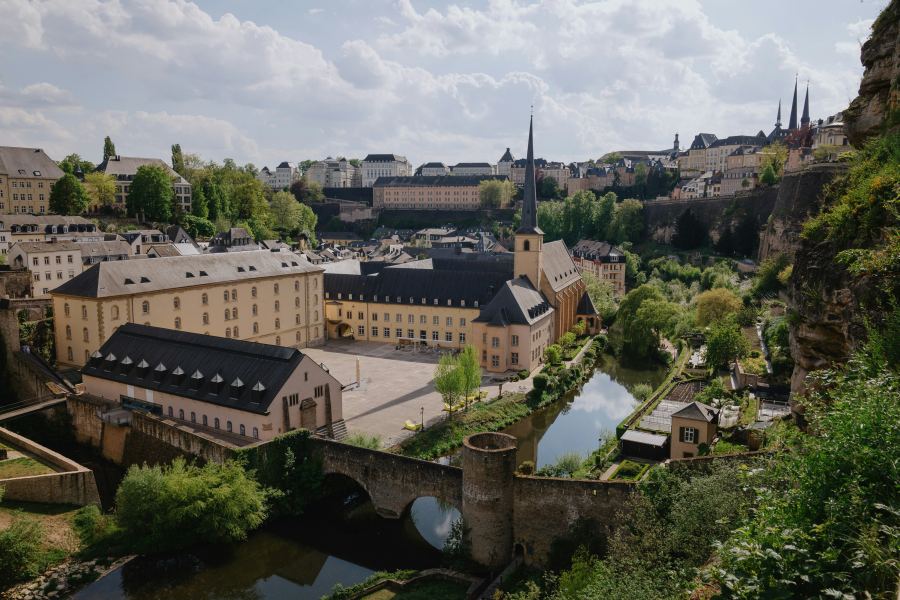
The city is situated on hilly terrain, offering beautiful views and a varied cityscape.
Its history spans more than a thousand years, with its founding dated to 963 when Count Siegfried built a small fortress on the rock. Throughout its rich history, the city has been ruled by many different powers, including the Duchy of Burgundy, the Habsburg Monarchy, the Kingdom of France, and the Kingdom of Prussia.
Its most famous attractions include the Grand Ducal Palace and Notre-Dame Cathedral. It’s also worth exploring the Bock Casemates. These tunnels and underground passages were once part of the city’s defense system and are now a UNESCO World Heritage site.
Vianden
Located in northern Luxembourg, in the Our River valley, close to the German border.
In the Middle Ages, it was an important commercial and military center. The town and its surroundings were owned by the Counts of Vianden, who played a significant role in the region’s history.
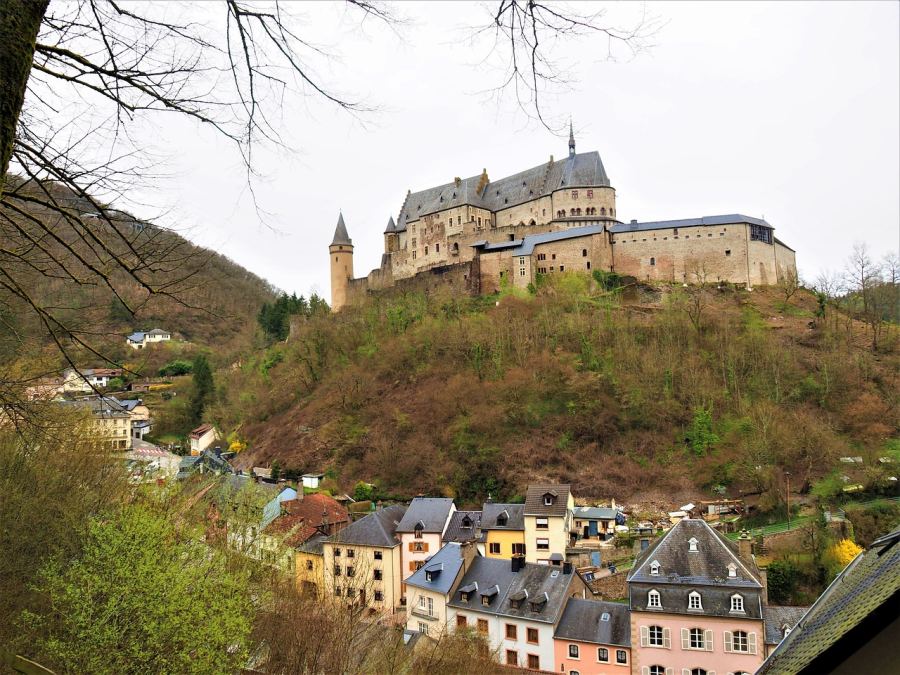
One of the country’s most beautiful castles is located here. Château de Vianden was built between the 11th and 14th centuries and served as the residence of the Counts of Vianden. The building is characterized by Romanesque and Gothic features and includes a magnificent great hall, chapel, and watchtowers. It’s in very good condition, making it a popular destination.
Esch-sur-Alzette
Luxembourg’s second-largest city is located near the French border.
It achieved significant development in the 19th century when iron ore deposits were discovered in the area. During the Industrial Revolution, the city quickly became an industrial center, especially in steel production.
The former steelworks area, Belval, is now a popular modern business, scientific, and cultural center. The city park, which is one of the main tourist attractions, and the Berwart Tower, built in 1621, are notable landmarks.
Bourscheid Castle
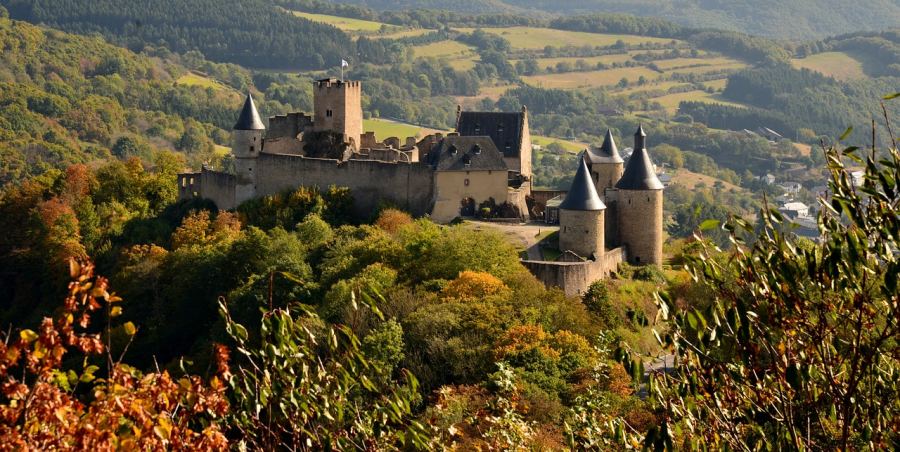
The castle located in northern Luxembourg, near the town of Bourscheid, is one of the most significant and best-preserved structures of its kind in the Ardennes.
It is situated in a strategically important location, atop a high hill, offering a panoramic view of the Sûre River and the surrounding landscape. The castle’s position provided excellent protection throughout the centuries.
The castle was owned by the Bourscheid family, then changed hands several times. By the 18th century, it had become abandoned and slowly fell into ruin, until it was restored in the late 20th and early 21st centuries. It consists of thick stone walls and several round towers, the latter making it particularly distinctive.
Esch-sur-Sûre
This town in the Ardennes is located in the Sauer River valley, on a rocky hilltop that surrounds the settlement.
At its center is an imposing medieval castle built in the 10th century. The castle played a significant defensive role in the Middle Ages, and the historic town center was built around it. Remnants of the fortress and surrounding walls can still be seen today.
Mullerthal
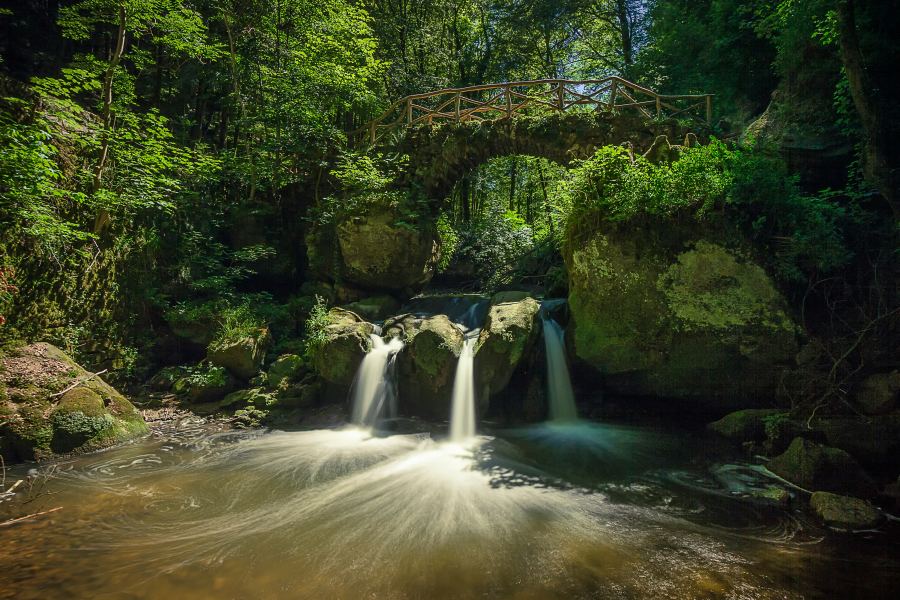
Often called Luxembourg’s Little Switzerland for its natural landscapes, it’s particularly famous for its rocky formations and waterfalls.
The region’s most famous attraction is the Schiessentümpel waterfall. The three-pronged waterfall cascades under a bridge, making it a popular photography spot.
For hikers, the Müllerthal Trail is worth mentioning. It’s a 112 km long hiking trail network divided into three main sections. The route is well-maintained with marked paths and numerous rest areas, making it ideal for both beginner and experienced hikers.
Château de Bourglinster
This wonderful medieval castle is located in Bourglinster, Luxembourg.
Its history dates back to the 12th century when a small fortress was built on the site. The castle was rebuilt and expanded several times over the centuries, especially in the 14th and 16th centuries. In the 18th century, it was renovated in Baroque style, which can still be seen in parts of the building today.
Its architectural style bears the marks of several eras. The medieval origin of the building is reflected in the thick stone walls and defensive structures. Later renovations enriched it with Baroque and Renaissance elements.
Echternach
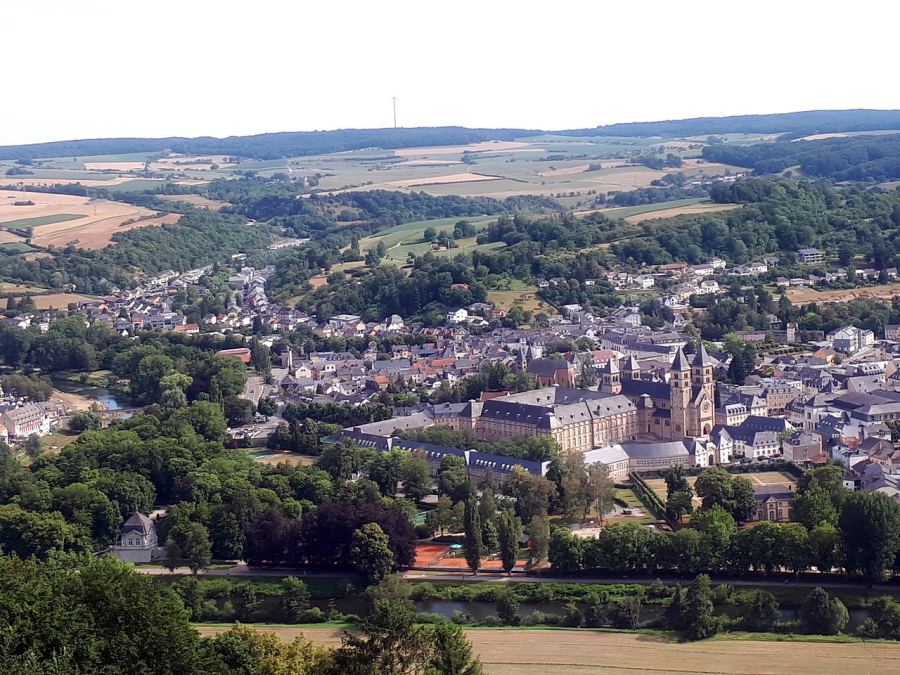
One of the country’s oldest settlements, located on the German border along the Sûre River.
Its history dates back to the 8th century when Saint Willibrord, an English missionary, founded the Echternach Abbey here. In the Middle Ages, it became a significant religious and cultural center. The complex includes the crypt of Saint Willibrord.
The town is famous for the Echternach Dancing Procession. This traditional religious and cultural event takes place every year at Whitsun and is part of UNESCO’s Intangible Cultural Heritage.
Colmar-Berg
The settlement is located about 25 km north of Luxembourg City on the banks of the Alzette River.
Its most significant attraction is Berg Castle (Château de Berg), which is the official residence of the Grand Ducal family of Luxembourg. Built in the 19th century in neo-Gothic style, it has since been renovated and expanded several times. While the castle is not open to visitors, it offers an impressive sight from the outside.
Larochette
The town is located in a beautiful setting: in a valley on the banks of the White Ernz River.
Its most famous attraction is Larochette Castle. Built in the 11th century, the castle sits atop a rocky hill offering breathtaking views of the town and surrounding valley. Although partly in ruins today, it remains a popular tourist destination.
It’s also worth walking through the town center, where you can see medieval buildings along charming streets.
Moselle Valley
The Moselle River, winding along the German border, is a beautiful natural area and famous wine-growing region.
The region’s winemaking traditions date back several centuries. Local wineries are particularly known for their white wines, such as Riesling, Elbling, and Auxerrois. The region’s tourism is largely based on viticulture.
Its most famous town is Schengen. The 1985 Schengen Agreement, which became the basis for a borderless Europe, was signed here. The town is also home to the Schengen Museum, which showcases the history and significance of the agreement.
The town of Remich is called the „Pearl of the Moselle.” It’s particularly famous for its wine cellars and wine tasting events. Another important wine center is Grevenmacher, where visitors can learn about local winemaking techniques.
Ettelbruck
An important transportation hub and economic center on the banks of the Sûre River.
It played a significant role during World War II, especially during the Ardennes Offensive. A memorial to American General George S. Patton is located here, honoring the work of American troops.