

Mexico City has numerous museums due to its rich history and culture! Here I present 14 very important ones!
Table of Contents
Best Museums in Mexico City
National History Museum (Museo Nacional de Historia)
Located in Chapultepec Castle, the museum presents the period from ancient civilizations through the colonial era up to the birth of modern Mexico.
The castle itself played an important role in the country’s history. Built in the 18th century, it was once the residence of Mexico’s emperors, Maximilian and Carlota. We can see the former imperial couple’s quarters. These rooms showcase the luxury and style of imperial life with their original furniture and decorations.
One of its most significant collections contains memorabilia from the Mexican War of Independence and Revolution. Through paintings and historical relics, visitors can learn about famous figures such as Miguel Hidalgo, José María Morelos, Emiliano Zapata, and Pancho Villa.
The museum also features paintings and murals depicting Mexico’s history, including works by José Clemente Orozco and David Alfaro Siqueiros created during the revolution.
All information can be found here!
National Museum of Anthropology (Museo Nacional de Antropología)
One of Mexico City’s most visited museums is among the world’s most important anthropological collections. It has more than 20 exhibition halls and showcases the art, religion, customs, and society of ancient Mexico.
One of the most important exhibits is the Aztec Sun Stone (Piedra del Sol), a circular, massive stone carved with symbols representing Aztec cosmology and calendar.
The museum presents ancient Mexican civilizations in separate halls. For example, the Maya culture exhibition contains ornate jade jewelry, stone carvings, and the famous lid of King Pakal’s sarcophagus.
It not only presents ancient civilizations but also the life and culture of today’s indigenous Mexican groups. Modern ethnographic exhibitions display traditional clothing, art objects, and elements of daily life.
All information can be found here!
Templo Mayor Museum
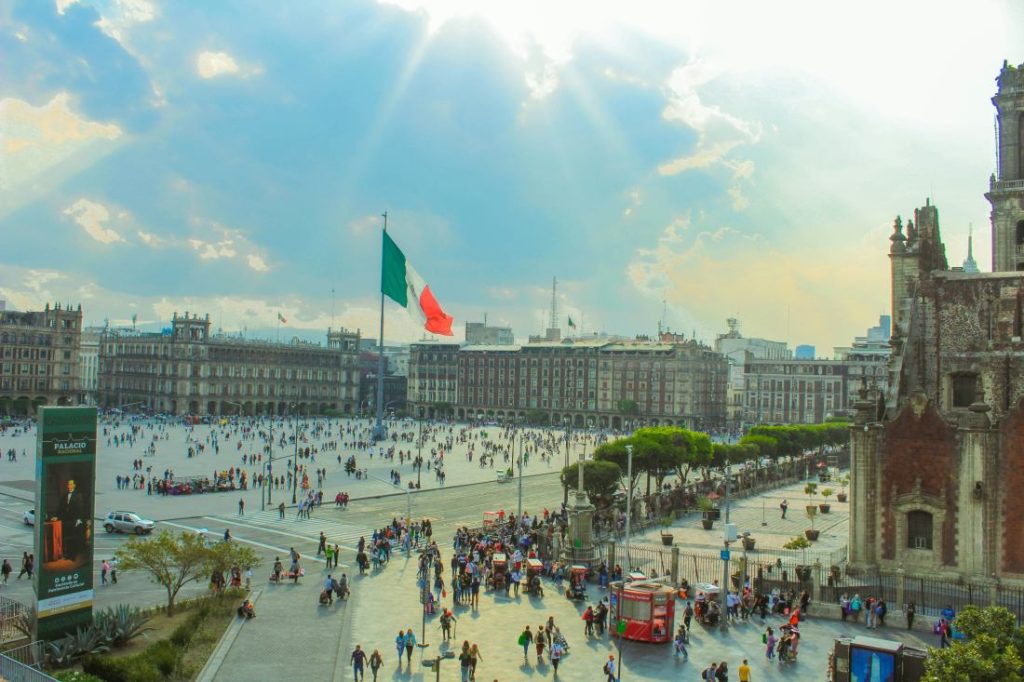
Located next to the ruins of Templo Mayor in Mexico City’s main square, it presents artifacts from the Aztec civilization’s rich cultural, religious, and social life.
Templo Mayor was one of the most important temples of the Aztec empire. It was dedicated to the gods of war and rain, Huitzilopochtli and Tlaloc, and played a central role in Aztec religious life. It was discovered in 1978.
One of the most outstanding finds is the Coyolxauhqui Stone, a relief of an Aztec goddess, Coyolxauhqui, sister of Huitzilopochtli. According to Aztec mythology, Huitzilopochtli threw Coyolxauhqui from the top of the temple, and this depiction shows the myth in exceptional detail.
Numerous sacrificial objects were found during excavations at Templo Mayor, including masks, jewelry, ceramic vessels, and animal bones.
All information can be found here!

Palace of Fine Arts (Palacio de Bellas Artes)
The museum is a symbolic site of Mexican art and culture.
The building itself symbolizes its importance. The famous colored glass mosaic dome on top evokes the colors of the Mexican flag. The exterior features Art Nouveau style, while the interior is decorated with Art Deco elements.
Among the museum’s most important exhibits are frescoes by famous Mexican muralists such as Diego Rivera, David Alfaro Siqueiros, and José Clemente Orozco. Rivera’s fresco „Man at the Crossroads” depicts society’s future.
All information can be found here!

Museum of Modern Art (Museo de Arte Moderno)
Located in Chapultepec Park, the museum houses the most important collections of 20th-century Mexican and international modern art.
Among its outstanding artists’ collections are Frida Kahlo’s famous self-portraits, which present symbolic and often personal themes. Additionally, Diego Rivera’s paintings and drawings depicting Mexican people’s lives and social issues are featured. Kahlo’s iconic work „The Two Fridas” is among the museum’s most famous pieces.
The museum also presents surrealist and avant-garde works, including pieces by Remedios Varo, Leonora Carrington, and other Mexican artists. Varo and Carrington became known for their unique, dreamlike compositions and mythical motifs.
The museum includes an outdoor sculpture garden showcasing works by Mexican and international sculptors. Notable works in the garden include Mathias Goeritz’s abstract sculptures and Alejandro Colunga’s expressive creations.
All information can be found here!
Frida Kahlo Museum
The former home and studio of famous Mexican artist Frida Kahlo now operates as a museum in the Coyoacán district.
Also known as the Blue House (La Casa Azul) due to its color. It belonged to Frida Kahlo’s family, where she spent her childhood and later lived with her husband, famous muralist painter Diego Rivera.
Although the museum doesn’t contain Kahlo’s complete artistic work (many pieces are in various museums and private collections), visitors can see some of her iconic paintings and sketches, including „Viva la Vida” and „Frida and the Cesarean.”
The house contains valuable artifacts and folk art collected by Kahlo and Rivera. These include Mexican and Central American ceramics, folk art sculptures, archaeological finds, and pre-Columbian objects.
All information can be found here!
Tamayo Museum
Located in Chapultepec Park, the museum is famous for its architectural excellence and outstanding contemporary art collection.
It was founded by Rufino Tamayo, the renowned Mexican painter. He donated a significant portion of his own collection and donations to the museum. His paintings combine Mexican culture and traditions with modernist style elements. He is known for rich use of color and expressive forms that simultaneously evoke ancient Mexican cultures and present modern art trends.
Its collection includes works by many international contemporary artists, as one of Tamayo’s dreams was to provide an opportunity to showcase world-class contemporary art in Mexico. Accordingly, it features works by famous artists such as Andy Warhol, Roy Lichtenstein, and Francis Bacon.
All information can be found here!
Chocolate Museum (Mundo Chocolate)
It presents the history and culture of chocolate, as well as the traditions and innovations of the Mexican chocolate industry.
Mexico is considered the birthplace of cocoa and chocolate: the Aztecs and Mayans consumed cocoa thousands of years ago, which was an important element of rituals and celebrations. Visitors can learn how cocoa became currency in Aztec society and how it was consumed as a ritual drink.
The museum impressively shows how chocolate is made from cocoa beans to chocolate bars. It particularly focuses on traditional Mexican chocolate, such as hot chocolate flavored with spices like cinnamon or chili.
All information can be found here!
Soumaya Museum
Created as a donation from Mexican billionaire Carlos Slim. The museum is named after Slim’s late wife, Soumaya Domit.
Founded in 1994, its new building was opened in 2011. The futuristic six-story building’s shape evokes clouds and waves and is covered with more than 16,000 aluminum plates.
The museum boasts over 66,000 artworks, ranging from medieval and Renaissance paintings to 19th-century European masters and outstanding works of Mexican and Latin American art.
It’s famous for its extensive Rodin collection, which is Mexico City’s largest such collection. It contains over 380 sculptures, including several versions of the famous „The Thinker.” This is unique in Latin America and showcases the most important pieces of Rodin’s work, as well as works by his student, Camille Claudel.
All information can be found here!

Anahuacalli Museum
One of Mexico City’s most unique cultural institutions, which owes its existence to the vision of Diego Rivera, the famous Mexican painter.
The museum is located in the Xochimilco district and takes its name from the Aztec word „Anahuac” which means „land between the waters”. The building itself is a work of art that harmoniously combines pre-Hispanic Mexican architectural elements with modern design solutions.
Rivera began construction in 1942 to create a home for his pre-Hispanic art collection. During the museum’s design, he worked with volcanic stone and basalt, following the architectural traditions of Aztec and Mayan temples. The building’s pyramid-shaped, massive structure provides an imposing sight. After Rivera’s death, the institution came under the care of the Diego Rivera Anahuacalli Museum Foundation, which opened its doors to the general public in 1964.
The museum houses more than 60,000 pre-Hispanic artifacts, including works by Aztec, Maya, Olmec, and Zapotec civilizations. The collection includes ceramic vessels, figurines, ritual masks, and jewelry that showcase the rich cultural heritage of Mexico’s ancient civilizations. On the museum’s second floor, visitors can also view personal belongings of Rivera and his wife, Frida Kahlo, as well as original works by Diego Rivera.
All information available here!
National Museum of Art (Museo Nacional de Arte)
MUNAL is located in the heart of Mexico City, in the historic center, and is considered the national treasury of Mexican visual arts. The institution’s purpose is to showcase the development of Mexican art from the 16th century to the present day, with special emphasis on preserving national identity and cultural values.
The building’s historical significance is outstanding: it was completed in 1904 according to the plans of Italian architect Silvio Contri, originally serving as the home of the Federal Communications Palace. The imposing building, built in neoclassical style, is characterized by rich decoration on its facade, while its interior features a breathtaking dome. It was converted into a museum in 1982 and has since served to promote and preserve Mexican art.
MUNAL’s collection comprises more than 3,000 artworks, including paintings, sculptures, engravings, and drawings. The exhibition presents the development of Mexican art in chronological order: from colonial religious painting through 19th-century academic style to modern Mexican art. Particularly valuable are José María Velasco’s landscapes, Saturnino Herrán’s figurative compositions, and significant works from the Mexican muralist movement.
All information available here!
Museum of Memory and Tolerance
A unique cultural institution dedicated to promoting human rights and transmitting the values of tolerance.
The museum opened its doors in 2010 in Mexico City’s historic center, near Plaza Juárez. The modern, four-story building structure was designed by Ricardo Legorreta and the Legorreta + Legorreta architectural firm. The institution’s creation resulted from an initiative by the Memory and Tolerance Foundation, whose goal is to preserve the memory of the Holocaust and other genocides, as well as to spread the values of tolerance and human rights in Mexican society.
The museum is divided into two main sections: Memory and Tolerance. The Memory section presents the most horrific genocides of the 20th century – the Holocaust, the Armenian genocide, the Rwandan genocide, and other crimes against humanity – while the Tolerance section focuses on human rights, diversity, and peaceful coexistence. The collection includes interactive exhibitions, documentary films, survivor testimonies, and original historical documents that provide visitors with a profound experience.
All information available here!
Franz Mayer Museum
One of Mexico City’s most refined cultural institutions, offering an unparalleled experience in the field of decorative arts and design.
The museum specializes in presenting collections of Mexican and European applied arts, with particular emphasis on silverwork, ceramic art, and furniture. The institution’s purpose is to promote decorative arts and preserve artisan traditions.
Its historical past dates back to the 16th century, when the building was part of the San Juan de Dios hospital next to Alameda Central. The building is characterized by colonial baroque style and was opened as a museum in 1986 thanks to the foundation of Franz Mayer, a German-born Mexican collector. Mayer left his collection and fortune to the Mexican people with the goal of preserving and showcasing the values of decorative arts.
The collection contains more than 13,000 artifacts, including 16th-19th century Mexican and European silverwork, Talavera de la Reina ceramics, antique furniture, and textiles. Particularly valuable are the pieces in the museum’s clock collection, dating from the 16th-19th centuries. Its library preserves more than 14,000 rare books and manuscripts, while the photography archive contains 55,000 images documenting Mexico’s history.
All information available here!
Museum of Popular Art
One of Mexico City’s most vibrant and colorful cultural institutions, showcasing the rich heritage of Mexican folk arts.
The museum’s purpose is to preserve and promote traditional artisan works from the country’s various regions, emphasizing their cultural significance and artistic value. The institution provides visitors with an authentic insight into Mexico’s diverse folk culture.
The museum opened its doors in 2006 in the Roma Norte neighborhood, in an art deco style building from the 1920s that previously served as a fire station. The institution’s creation is thanks to a joint initiative by the Folk Arts Development Foundation (FONART) and the Mexican Ministry of Culture.
The museum’s collection comprises more than 3,000 artifacts from Mexico’s 32 federal states. The exhibition is divided into five thematic sections: „Masters of traditional materials”, „The religious world”, „Daily life”, „The fantastic world”, and „The originals”. Particularly outstanding are the Oaxacan black ceramic vessels, Michoacán lacquered objects, Talavera Pueblo ceramics, and the famous alebrijes – colorful fantasy creatures carved from wood and painted in vibrant colors.
All information available here!

Best museums in the world
There are many great museums in the world. Here are some of the best!