
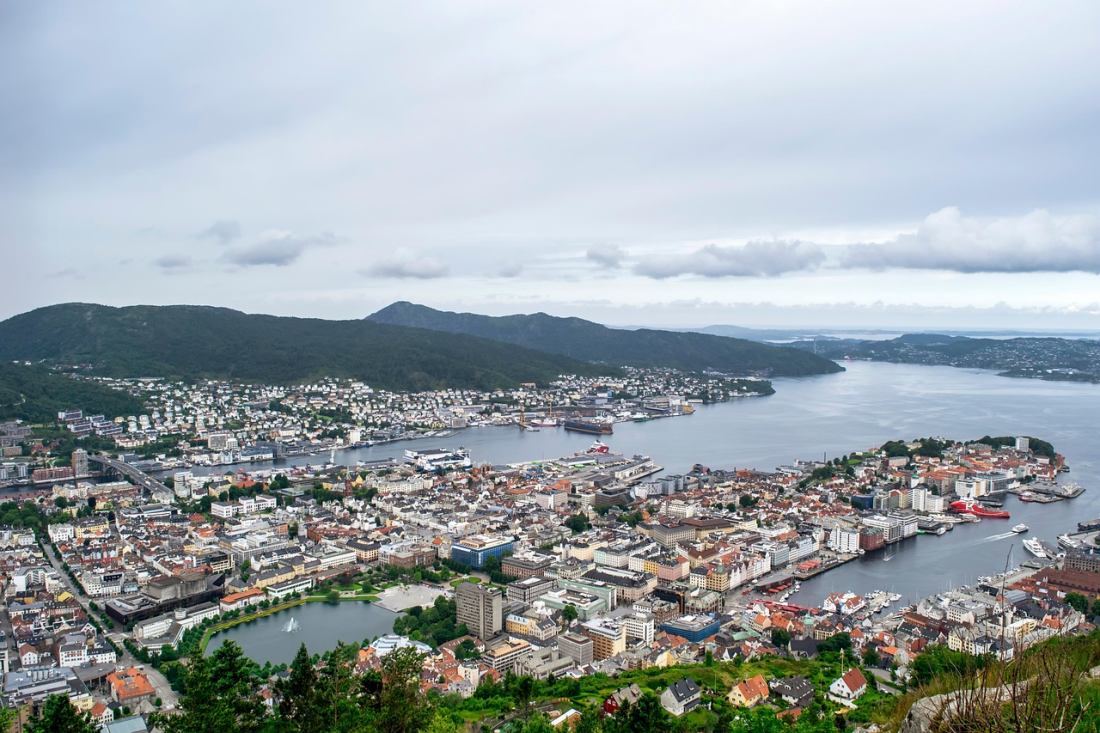
Bergen is a popular city not only for its buildings and location but also as an excellent starting point for exploring the fjords.
Bergen is Norway’s second-largest city, situated on the western coast of the land of fjords, embraced by seven mountains. The settlement is one of the country’s most popular tourist destinations due to its unique natural environment and rich Hanseatic past.
Table of Contents
Bergen attractions
Bryggen
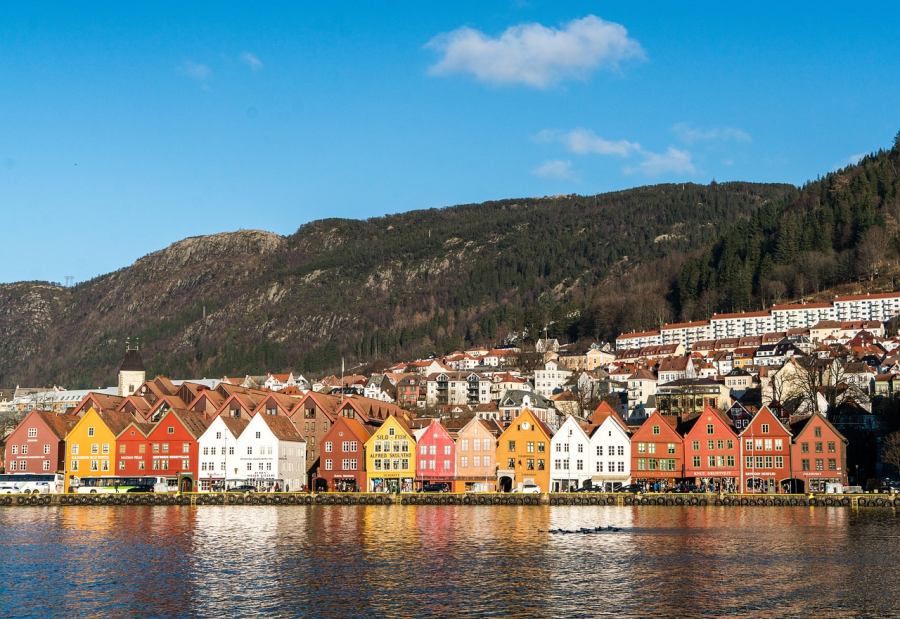
The city’s most famous attraction is the row of colorful wooden wharf buildings lining the eastern shore of the harbor, which served as the Norwegian center of the medieval Hanseatic trade network. The characteristic tightly-packed wooden houses of the quarter, founded in the 14th century, have preserved their original layout to this day, although they have been rebuilt several times after multiple fires.
The building complex has been on the UNESCO World Heritage List since 1979 as one of the most important monuments of the Hanseatic era. The houses along the narrow alleyways now contain galleries, craft shops, museums, and restaurants, and walking among them allows visitors to experience the atmosphere of a medieval trading town.
The uniqueness of Bryggen lies in the fact that each building was a merchant house with its own warehouse, living quarters, and business premises. The vibrant yellow, red, and white colors of the wooden facades reflecting in the fjord waters provide an iconic sight that has become one of Bergen’s most widespread visual symbols worldwide.
Fløyen and the Fløibanen Funicular
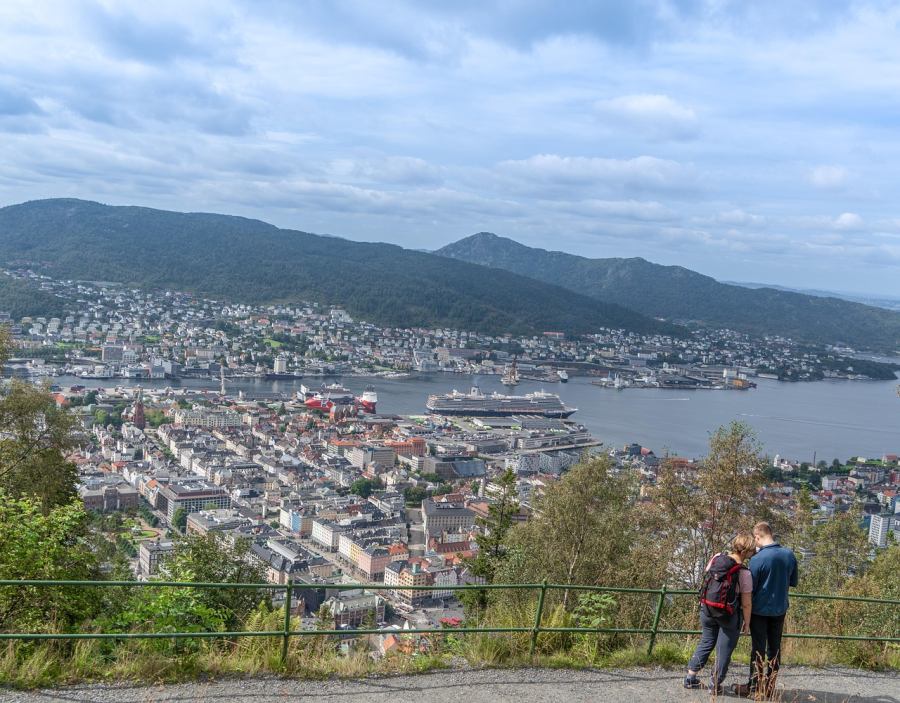
One of the seven mountains surrounding the city, the 320-meter-high Fløyen has become a symbol of the city, which visitors can reach via the Fløibanen funicular. The funicular has been operating since 1918 and covers the approximately 850-meter distance in just 6-8 minutes, offering stunning views of the city and harbor along the way.
From the mountain top, visitors are treated to an unparalleled panorama: Bergen’s city center, Bryggen’s colorful houses, the harbor, and the surrounding mountains and fjords. Next to the viewpoint, there is a small café and gift shop, as well as starting points for several kilometers of hiking trails.
Fløyen is a popular destination not only among tourists but also locals, who often walk up the mountain on the well-maintained trails. In winter, the area offers ski slopes and sledding runs for winter sports enthusiasts, while in summer it’s an excellent spot for picnicking and nature hiking.
Torget
The open-air market next to the harbor has been operating since the 13th century and represents the heart of Bergen’s commercial life. The market is primarily famous for freshly caught seafood and fish, offered by local fishermen and merchants directly from boats or wooden stalls.
The stalls feature almost everything Norwegian waters provide: salmon, trout, shrimp, crabs, shellfish, and the famous Norwegian king crab. Visitors can not only purchase but also consume freshly prepared fish dishes on-site, such as salmon sandwiches or soups made from local catches.
The market today specializes not only in seafood: fruits, local vegetables, handcrafted products, and souvenirs are also available at the stalls. Torget is open year-round, but it’s particularly lively in summer when crowds of tourists visit this traditional Norwegian market experience.
Hanseatisk Museum
The museum is housed in one of Bryggen’s best-preserved original buildings and provides an authentic picture of how Hanseatic merchants lived and worked in the 18th century. The building was constructed in 1704 and has remained nearly in its original state, complete with furnishings and tools.
The exhibition showcases the merchants’ daily life, working conditions, living spaces, and warehouses where dried fish and other goods were stored. Visitors can view the original wooden furnishings, work tools, and personal items that help understand the Hanseatic trading system.
Particularly interesting are the details about the strict living conditions of young apprentices: they lived in unheated rooms in winter, the building operated according to a strict hierarchy, and they had to complete years-long training periods. The museum is an excellent starting point for learning about Bryggen’s history before exploring the rest of the quarter.
Bergenhus Fortress
One of Scandinavia’s oldest and best-preserved fortifications, built in the mid-13th century, has been guarding the entrance to Bergen’s harbor for over 700 years. The fortress was strategically important in the Middle Ages when Bergen was Norway’s most important city and the center of royal power.
The fortress complex’s most significant building is Håkonshallen, completed in 1261 during King Håkon’s reign. This monumental hall was the venue for royal celebrations, banquets, and important state affairs, and still hosts cultural events today.
The fortress’s other outstanding structure is Rosenkrantz Tower, erected in the 16th century on the site of the original medieval defense tower. The tower combines architectural styles from different eras and now functions as a museum where visitors can learn about Bergen’s military history and defense system. The fortress offers beautiful views of the harbor and city.
Ulriken Mountain Viewpoint
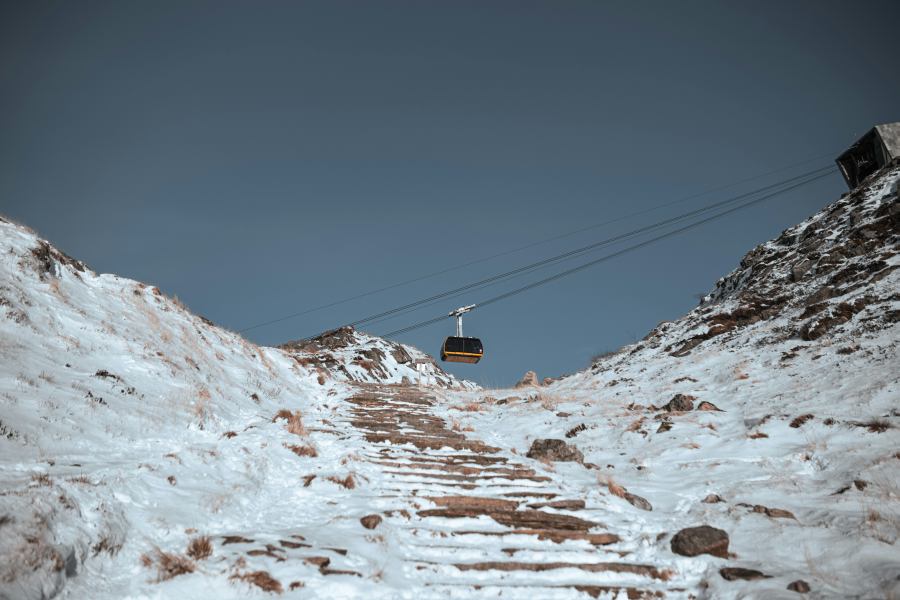
Bergen’s highest mountain stands 643 meters tall and offers a stunning 360-degree panorama of the city, fjords, and surrounding mountain range. Visitors can reach the summit via the Ulriken643 cable car, which covers the journey from the valley to the peak in just 7 minutes.
At the mountain top, there’s a modern viewing building with a restaurant where visitors can enjoy Norwegian specialties while taking in the breathtaking views. On clear days, visibility extends up to 90 kilometers, and the view is even more beautiful than from Fløyen.
Ulriken is an excellent starting point for hiking: several marked tourist trails begin from the summit, the most popular being the Vidden trail, which connects Ulriken to Fløyen along an approximately 20-kilometer scenic mountain route. The mountain also offers winter sports opportunities, and in summer, concerts and cultural events are held at the summit.
Mariakirken (St. Mary’s Church)
Bergen’s oldest building and the city’s most important medieval sacred monument, built in the 12th century in Romanesque style. The church was the central religious site for Bergen’s medieval German merchant community and was used by German merchants for their worship services during the Hanseatic period.
The building’s exterior is simple yet monumental, with massive stone walls and two characteristic towers that have become part of Bergen’s skyline. The church interior is particularly rich: decorated with a baroque-style altar, several medieval frescoes, and a magnificent pulpit from the 17th century.
The church bells are of special value: the largest among them dates from 1697 and still rings on special occasions. Thanks to excellent acoustics, organ and choir concerts are particularly popular here.
Damsgård Manor
This 18th-century rococo-style wooden building is Bergen’s only surviving country manor, built around 1770 as a wealthy merchant’s summer residence. The building is located a few kilometers from Bergen’s city center in a quiet area and is considered one of Norway’s most beautiful rococo architectural ensembles.
The manor’s uniqueness lies in its original interior furnishings, which have remained almost unchanged: ornately painted walls, stucco decorations, magnificent chandeliers, and period furniture make it special. Beside the main building are the English garden and orchard, restored according to original plans.
The building complex operates as a museum in summer, and various rooms can be viewed on guided tours, including the reception hall, music room, and living quarters. Damsgård Manor provides insight into the 18th-century Norwegian elite’s lifestyle and nicely complements learning about the city’s medieval trading history around Bryggen.
KODE Art Museums
Bergen’s largest museum complex consists of four separate buildings (KODE 1-4) located at different points in the city, but all in the center, close to each other. This is one of Norway’s largest and most significant art collections.
KODE’s exhibitions include masterpieces from the golden age of Norwegian painting, including several paintings by Edvard Munch, as well as numerous works by other Scandinavian artists from romanticism to modernism. The collection’s strength is 19th and 20th-century Norwegian art, but contemporary art and international works can also be found here.
The KODE 4 building houses the Rasmus Meyer Collection, which is particularly valuable: it preserves several iconic works by Edvard Munch, as well as outstanding pieces of Norwegian national romanticism. KODE 3 houses industrial art and design collections, while KODE 1 and 2 specialize in contemporary art and temporary exhibitions. The museum regularly organizes concerts and cultural programs as well.
Gamle Bergen Museum
This open-air museum evokes the atmosphere of 18th-19th century Bergen with nearly 50 original wooden buildings transported from various locations and assembled into an authentic street and neighborhood. Among the buildings are residential houses, shops, craft workshops, and public buildings.
The museum’s purpose is to show how Bergen’s residents from different social classes lived in the past century: visible are both the wealthy merchant’s magnificent home and the simpler houses of working-class neighborhoods. Each building is furnished with original furniture, work tools, and everyday objects.
In summer, costumed guides bring the past to life, demonstrating period crafts and daily life. The museum grounds also feature a cozy café offering traditional Norwegian pastries. It’s particularly popular with families because it presents history in an interactive and experiential way.
Fantoft Stave Church
A replica of an original medieval stave church from the 12th century, one of Bergen’s most spectacular sacred structures. The original church was transported from Fortun village to Bergen in 1883, where it stood for over a century until it was completely destroyed by arson in 1992.
The church was reconstructed by 1997 based on surviving plans and photographs and is now viewable again in southern Bergen, in a forested area. The dark-colored, multi-level wooden structure is adorned with characteristic Viking ornaments and dragon-head decorations that evoke pre-Christian Scandinavian motifs.
Stave churches are Norway’s unique architectural heritage, and although only a few dozen remain throughout the country, several can be viewed near Bergen. The Fantoft setting is also special: the church situated in the forest exudes a peaceful, meditative atmosphere and is a popular destination for photographers.
Troldhaugen (Grieg Villa and Museum)
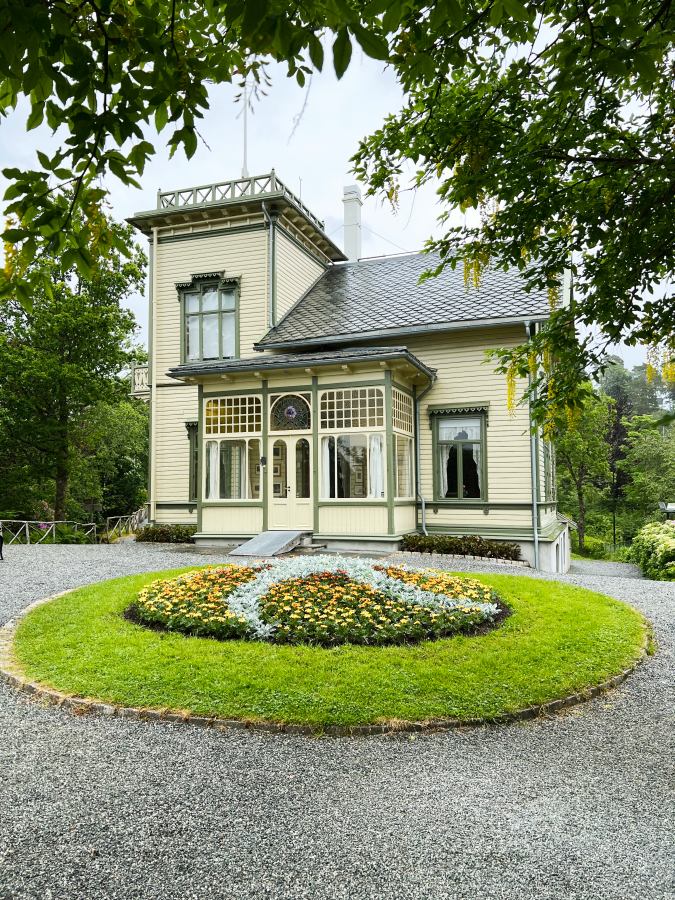
The home and composing location of Edvard Grieg, Norway’s most famous composer, from 1885 until his death in 1907. The villa is located near Bergen in beautiful natural surroundings on the shore of Lake Nordås and now functions as a museum, showcasing the composer’s life and work.
The house is furnished with original furniture, personal items, and Grieg’s piano, allowing visitors insight into the artist’s daily life. In the garden stands Grieg’s separate composing cabin where he wrote his most famous works and from which there’s a stunning view of the lake.
A modern concert hall also operates on the Troldhaugen grounds, seating 200 with excellent acoustics. Concerts are regularly held here in summer, featuring Grieg’s music alongside other classical works. The composer and his wife’s grave is also located here, in a rock cave above the lake.
Aquarium
Opened as Norway’s largest and one of its oldest public aquariums in 1960, it has been continuously expanding and modernizing since. The aquarium presents nine different areas, from tropical marine life to Arctic species.
The exhibition’s main attraction is the presentation of Norwegian fjords and coastal waters’ wildlife: seals, penguins, various fish species, and a huge aquarium where sharks and rays swim can be seen here. The tropical section features coral reefs, exotic fish, and sea turtles.
The feedings are particularly popular, when caretakers provide explanations about the animals’ lifestyles and special characteristics. The aquarium’s outdoor pools allow visitors to observe seals and penguins up close in conditions similar to their natural environment.
Gamlehaugen
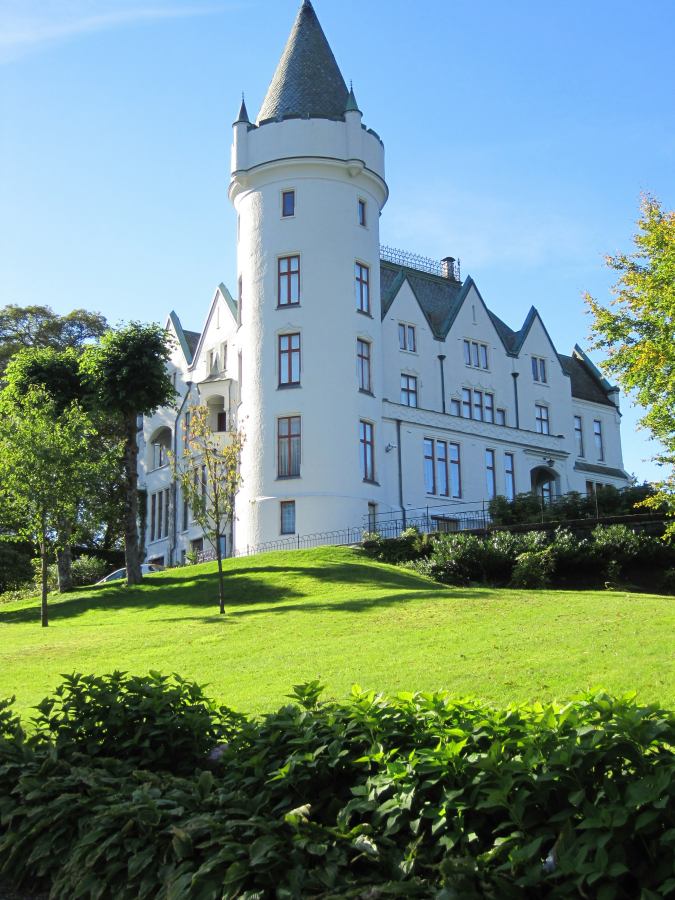
This estate built at the beginning of the 20th century is one of Bergen’s most spectacular buildings, now serving as the Norwegian royal family’s Bergen residence. The castle, built between 1900 and 1902, was originally the home of Christian Michelsen, shipping magnate and later Norwegian Prime Minister.
The building was constructed in Scottish baronial style, with elegant towers, an evergreen garden, and stunning views of the Nordås fjord. In 1927, the Norwegian state purchased it, and since then the royal family has used it when visiting Bergen on official occasions.
Gamlehaugen’s park and surrounding areas are open to the public in summer and are a popular walking area among locals. Although the castle itself can only be visited on special occasions, the building’s exterior and manicured park are worth viewing. Wonderful hiking trails lead from the residence area into the surrounding mountains.
VilVite (Bergen Science Center)
This modern interactive science museum and science center is particularly recommended for families with children, featuring over 75 exhibitions. The center’s goal is to present natural sciences, technology, and human body functions in a playful way.
Among the exhibitions is a giant Archimedes screw, energy production demonstrations, optical illusions, climatology experiments, and a separate section on Norway’s oil and gas industry. Visitors can actively participate in experiments, try out various devices, and understand scientific principles.
VilVite’s uniqueness lies in the variety of permanent and temporary exhibitions: topics are regularly updated and expanded with new interactive elements. The center also features a large-format planetarium where scientific films and presentations are shown. The museum can be interesting not only for children but adults as well, as the spectacular experiments and demonstrations engage everyone.
Bergen weather: when Is the best time to visit?
Bergen is one of the rainiest cities in Europe, with an average of 2250 millimeters of precipitation annually, due to the proximity of the Atlantic Ocean and its geographical location surrounded by mountains. The city’s climate is oceanic, with relatively mild winters and cool summers.
Spring (March–May):
Spring is one of Bergen’s most variable seasons, when temperatures gradually rise to between 5-15 degrees Celsius. By late April and May, the city comes to life, days become longer, and nature begins to bloom. Precipitation remains frequent, but the number of sunny hours increases.
Summer (June–August):
The summer months represent the most pleasant period for Bergen, when temperatures range around 15-20 degrees Celsius, rarely rising above 25 degrees. This season is also relatively the driest, although rain should still be expected. The white nights period is around June, when the sun sets for only a few hours.
Autumn (September–November):
Autumn is a cooler and wetter period, with temperatures gradually dropping below 10 degrees. September can still be pleasant, but October and November typically bring windy, rainy weather. However, the autumn colors and foggy, romantic atmosphere can provide a special experience.
Winter (December–February):
Winter around Bergen is relatively mild, with temperatures rarely dropping below -5 degrees near the coast. Snowfall occurs, but rain or sleet is more frequent. Days are very short, with the sun rising for only a few hours, creating a melancholic atmosphere. However, the surrounding mountains offer excellent winter sports opportunities.
Best time to visit to Bergen:
The most ideal period for visiting Bergen is from late May to late August, when the weather is most pleasant and the most sunny hours can be expected. June and July are particularly popular, when temperatures are around 17-20 degrees and the white nights create a magical atmosphere. This period is perfect for fjord tours, mountain hiking, and city visits alike. September can still be pleasant for travel, with fewer tourists and often surprisingly nice weather, although the number of rainy days increases.