
Hong Kong is a unique city where Eastern and Western cultures blend in a truly remarkable way. The following questions and answers will help you navigate the most important travel essentials, whether it comes to safety, transport, or the best time to visit.
Table of Contents
Basic information
Why is it worth travelling to Hong Kong?
Hong Kong is one of the most spectacular and exciting cities in Asia. Its outstanding appeal lies in its breathtaking skyline, vibrant street life, and unforgettable gastronomy.
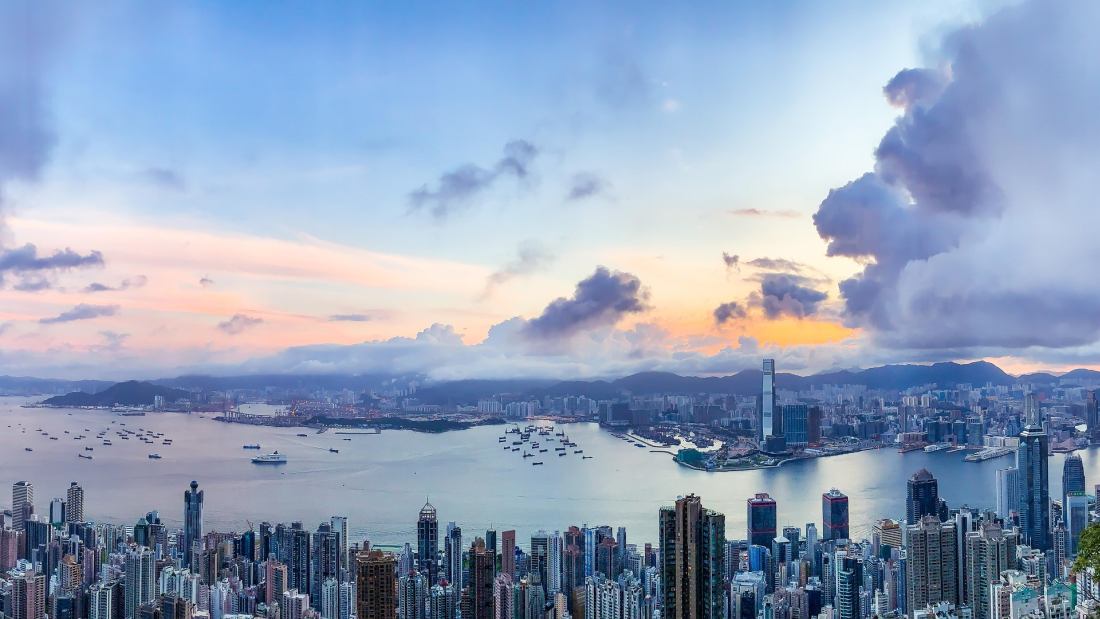
The city is made iconically recognisable by its distinctive skyscrapers: the panorama visible from Victoria Peak is one of the most stunning cityscapes in the world. Hong Kong is also a world-renowned shopping and culinary destination, offering everything from street-side dai pai dong restaurants to Michelin-starred establishments. The city is home to a rich coexistence of British colonial heritage and Chinese tradition.
What time zone is Hong Kong located?
Hong Kong is in the Hong Kong Time zone (HKT, UTC+8) and does not observe daylight saving time.
When is the best time to visit Hong Kong?
The best period to visit Hong Kong is generally between October and December, when the weather is pleasant, cooler, and drier.
Autumn (October–December) is the most favourable season for travel. Temperatures range between 18–25 °C, humidity is low, and rainfall is rare. This is ideal for sightseeing, hiking, and exploring the streets.
Spring (March–May) is also pleasant, though humidity begins to rise. Summer (June–September) is hot and humid, with possible typhoons that may disrupt transport. Winter (January–February) is cool but generally dry and comfortable for most tourists.
How many days should I spend in Hong Kong?
To see the main sights of Hong Kong, at least 3–4 days are recommended, but in 5–6 days you can explore the city really thoroughly.
In 3 days the most important attractions and districts can be covered: Victoria Peak, the Tsim Sha Tsui promenade, the Temple Street Night Market, the Man Mo Temple, and a deeper look into one or two districts.
With 4–5 days you can also explore lesser-known neighbourhoods, such as the scenic Cheung Chau island or visiting the Tian Tan Buddha on Lantau Island, and there is time for gastronomy and shopping too.
What is the official currency in Hong Kong?
The official currency of Hong Kong is the Hong Kong Dollar (HKD).
Credit cards are accepted almost everywhere in the city, especially in hotels, restaurants, and shopping malls. However, at smaller street stalls and local markets it is better to pay in cash. The Octopus Card is also widely used as a means of payment on public transport and in most shops.
Here is a currency converter calculator where you can check the current exchange rate!
Is English spoken in Hong Kong?
Yes, one of Hong Kong’s official languages is English, so communication is generally not a problem for tourists. It is widely used in business, hotels, restaurants, and on public transport.
English is understood and used throughout the city, especially in tourist areas. The local Cantonese pronunciation may sometimes differ from what you are used to, but English signage is present everywhere in written form. Public transport announcements are also made in both English and Cantonese Chinese.
What type of plug is used in Hong Kong?
Hong Kong uses the British-type three-pin plug (Type G). European devices will require a travel adapter.
The mains voltage in Hong Kong is 220 V, 50 Hz, which matches the European standard, so a voltage converter is generally not needed — only the adapter itself. Some hotels already provide various adapter solutions, but it is more practical to bring your own.
How does internet and SIM card usage work in Hong Kong?
Hong Kong generally has an excellent internet connection, and free Wi-Fi is available in most hotels, shopping malls, restaurants, and cafés. If you need continuous mobile internet, it is worth purchasing a local SIM card or eSIM.
Hong Kong is an extremely modern and technologically advanced city, so internet access for tourists is generally simple and fast. Public Wi-Fi networks are stable in many places, especially in tourist-frequented districts, at the airport, and at public transport hubs.
Local SIM cards can be easily obtained at the airport, convenience stores, electronics shops, and mobile carrier outlets. More and more people are choosing to use eSIMs, which can be purchased and activated online before the trip. This is a particularly convenient solution, as mobile internet works immediately upon arrival in Hong Kong without needing to swap a physical SIM card.
Travel and transport
How do I get from the airport to the centre of Hong Kong?
Hong Kong International Airport (HKG) is located on Lantau Island, approximately 35–50 minutes from the city centre. The Airport Express train is the fastest and most convenient transport option.
The Airport Express reaches Hong Kong Station (Hong Kong Island) within 24 minutes, stopping at Tsing Yi and Kowloon stations. The train is modern, equipped with luggage racks and Wi-Fi. Buses and taxis are also available; the latter are more expensive but may be more comfortable with luggage. The airport railway can also be paid for with the Octopus Card.
What is the most convenient way to get around Hong Kong?
Hong Kong has an excellent public transport system. For tourists, the combination of the MTR metro, trams, Star Ferry ferries, and the Octopus Card is the most convenient solution.
The MTR (Mass Transit Railway) metro network is fast, reliable, and air-conditioned. It covers almost every important area of the city. The double-decker trams are one of the cheapest modes of transport on Hong Kong Island and also provide a unique experience. The Star Ferry runs between the Kowloon Peninsula and Hong Kong Island, offering a fantastic view of the harbour.
The Octopus Card is a rechargeable electronic card that can be used on most public transport and in many shops. It can be purchased at metro stations and at the airport.
Accommodation and safety
Is Hong Kong a safe city?
Hong Kong is one of the safest major Asian cities. The crime rate is low and tourists rarely experience serious problems.
Public areas are generally well-lit and police presence is reliable. However, attention should be paid to pickpocketing and theft in crowded places, especially at markets and metro stations popular with tourists. Walking the streets at night is typically safe too.
Which neighbourhood is best to stay in Hong Kong?
The best accommodation districts for tourists are: Tsim Sha Tsui (Kowloon), Causeway Bay, Central and Wan Chai (Hong Kong Island). These are well-located, close to attractions and transport hubs.
Tsim Sha Tsui is the most popular accommodation district among tourists: it is close to shopping streets, the famous Avenue of Stars promenade, and offers a fantastic panorama of Hong Kong Island. Central is more elegant and expensive, but the financial district and main attractions are right nearby. Causeway Bay is lively, full of shops and restaurants.
Health information
Are any mandatory vaccinations required to travel to Hong Kong?
There are generally no mandatory vaccinations required for Hungarian travellers to Hong Kong. However, some vaccinations may be recommended.
Is tap water safe to drink in Hong Kong?
Tap water in Hong Kong technically meets drinking water standards, but most tourists and locals prefer to drink bottled water.
The tap water in the distribution network is of drinkable quality, but may become contaminated passing through old pipework in buildings. Most hotels provide bottled water for guests, and filtered water is generally served in busy restaurants too. Most tourists use tap water for brushing teeth without any issue.
Experiences
What are the must-see sights in Hong Kong?
Among Hong Kong’s most famous attractions are Victoria Peak, the Temple Street Night Market, the Tian Tan Buddha, the Star Ferry, and the Chi Lin Nunnery. These places showcase the city’s unique character well.
The panorama visible from Victoria Peak over Hong Kong’s skyscrapers and harbour is one of the most iconic cityscapes in Asia. The peak can be reached by the funicular railway (Peak Tram).
The Temple Street Night Market in Kowloon operates every evening as a lively bazaar: street food, knick-knacks, fortune tellers, and street musicians make for a special atmosphere.
The Tian Tan Buddha statue standing on Lantau Island is one of the largest bronze Buddha statues in the world, and the nearby Po Lin Monastery is also open to visitors.
The Star Ferry is the iconic green-and-white ferry running between the Kowloon Peninsula and Hong Kong Island, serving as both a practical mode of transport and a tourist experience.
The Chi Lin Nunnery, located in the Diamond Hill district, is a Buddhist temple complex built in the style of the Tang Dynasty, with stunning gardens.
What are the most popular foods and drinks in Hong Kong?
Hong Kong’s gastronomy revolves around Cantonese cuisine but combines many influences. The best-known local dishes are dim sum, roast goose, wonton soup, and curry fish balls, while milk tea and lemon tea stand out among drinks.
Dim sum is one of the most distinctive Hong Kong gastronomic experiences: steamed and baked morsels are served in bamboo baskets, typically as breakfast or lunch accompanied by jasmine tea.
Char siu (Chinese BBQ pork) and roast goose are among the most popular street and restaurant dishes.
Curry fish balls are one of the most widespread street snacks.
Hong Kong milk tea is the local black tea blended with strong condensed milk, which you can find in virtually every tea house (cha chaan teng). Lemon tea is also very popular.
What are the major holidays and festivals in Hong Kong?
Throughout the year, Hong Kong hosts numerous special holidays and festivals. Among the most well-known are Chinese New Year, the Dragon Boat Festival, and the Mid-Autumn Festival.
The Chinese New Year (January–February) is the most important holiday, celebrated with fireworks, parades, and traditional flower markets. The harbour lights create a spectacular sight at this time.
The Dragon Boat Festival (Tuen Ng) takes place in June, with different teams racing on the water in traditional long boats while drummers keep the rhythm.
The Moon Festival (Cheung Yeung and Mid-Autumn Festival) takes place in September–October: mooncake vendors appear all over the city, and terraces and parks are filled with lanterns.