
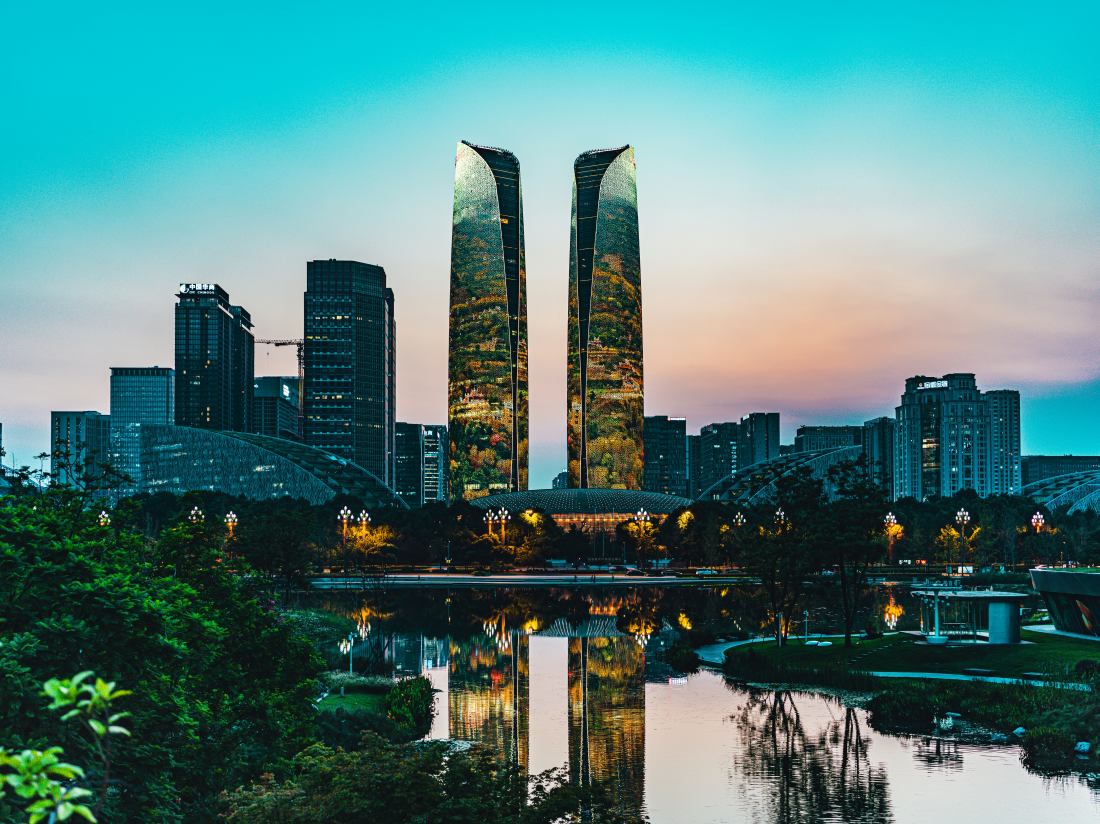
Chengdu, the capital of Sichuan Province in China and one of the most significant cities in western China, is best known for its giant pandas.
With a history spanning more than 3,200 years, the city offers memorable experiences for virtually every type of visitor. This metropolis of nearly 21 million people has a unique dual character: while its modern skyscrapers and technology industry make it one of China’s most dynamically developing cities, centuries-old traditions are equally present. It is no coincidence that the city is often called the Land of Abundance.
Table of Contents
Chengdu attractions
Chengdu Research Base of Giant Panda Breeding
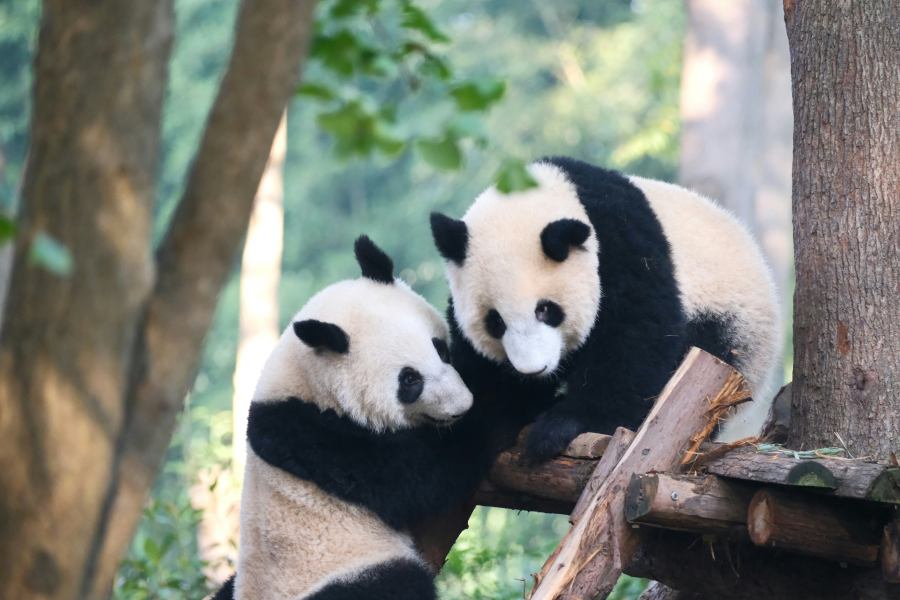
Regarded as the city’s top attraction, this research centre opened to the public in 1988, just 10 km north of downtown Chengdu.
Since the 2022 expansion, the complex spans nearly 238 hectares and is the only institution in China dedicated exclusively to the conservation and breeding of the critically endangered giant panda.
Visitors can admire both adult pandas and tiny cubs as they munch on bamboo, climb trees, or laze about in their open enclosures. Newborn panda cubs can also be observed through the glass-walled nursery. Red pandas also live on the grounds, and an indoor museum explains the species’ biology, endangered status, and conservation programmes.
Pandas are most active in the early morning, so it is worth arriving before opening and entering as early as possible. Early arrival is recommended, as there are fewer crowds and the animals are more lively.
Kuan Zhai Xiang Zi (Wide and Narrow Alleys)
Located in central Chengdu, these three parallel historic streets – Kuan Xiang Zi (Wide Alley), Zhai Xiang Zi (Narrow Alley), and Jing Xiang Zi (Well Alley) – are a preserved and partially reconstructed remnant of a neighbourhood dating back to the Qing Dynasty (1644–1911).
Originally founded as a military camp, the quarter is now filled with restaurants, teahouses, boutique hotels, and artisan shops that retain the atmosphere of ancient Chinese courtyard architecture. The complex is one of Chengdu’s three officially protected historic districts.
Wide Alley has the most traditional atmosphere, with carefully restored Qing-era courtyard houses standing side by side. Narrow Alley is livelier, with street food vendors, bars, and Sichuan opera performances. Well Alley is the most modern of the three, with trendy cafes and contemporary galleries showcasing the neighbourhood’s creative side.
Anshun Bridge
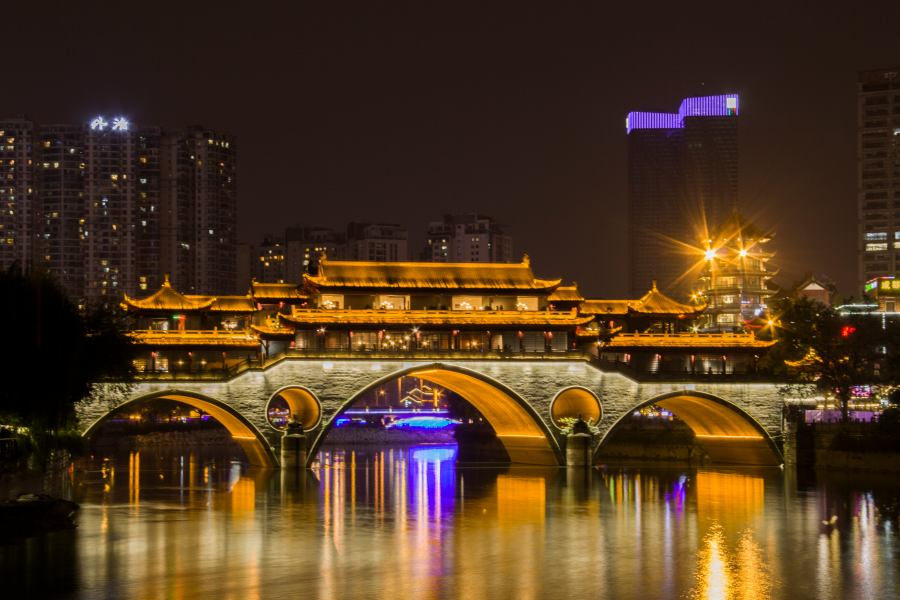
Spanning the Jin River, this bridge is one of Chengdu’s most iconic and photogenic structures, with origins tracing back to the Ming Dynasty (1368–1644).
The current structure, inaugurated in 2004, was reconstructed as a covered two-storey bridge: the lower level serves as a pedestrian crossing, while the upper level houses a restaurant and teahouse offering stunning views of the river and the surrounding cityscape.
Its special feature is that in the evenings, red lanterns and decorative lighting transform the surroundings into a magical setting, making the bridge a favourite destination for evening strollers and photographers.
Wuhou Shrine and Jinli Ancient Street
Wuhou Ci (Wuhou Shrine) is China’s only memorial temple complex where the memory of both a military strategist – Zhuge Liang, the legendary prime minister of the Shu Kingdom (221–263 AD) – and an emperor, Liu Bei, are jointly honoured. The original building was erected by Li Xiong, founder of the Western Jin Dynasty, around 223 AD; the current structures are largely the result of Qing-era renovations.
The complex contains 47 historical statues, more than 40 stone and bronze inscriptions, dozens of ornate tablets, and a variety of ritual objects. The Hall of Liu Bei and the Hall of Zhuge Liang face each other – an arrangement that symbolises their political symbiosis. Ginkgo and cypress trees provide shade along the garden paths.
Directly adjacent to the shrine is Jinli Ancient Street, rebuilt in the style of a Ming and Qing Dynasty merchant town. Red lanterns, craft shops, local street food, and Sichuan opera performances make for an unforgettable evening stroll.
Du Fu Thatched Cottage
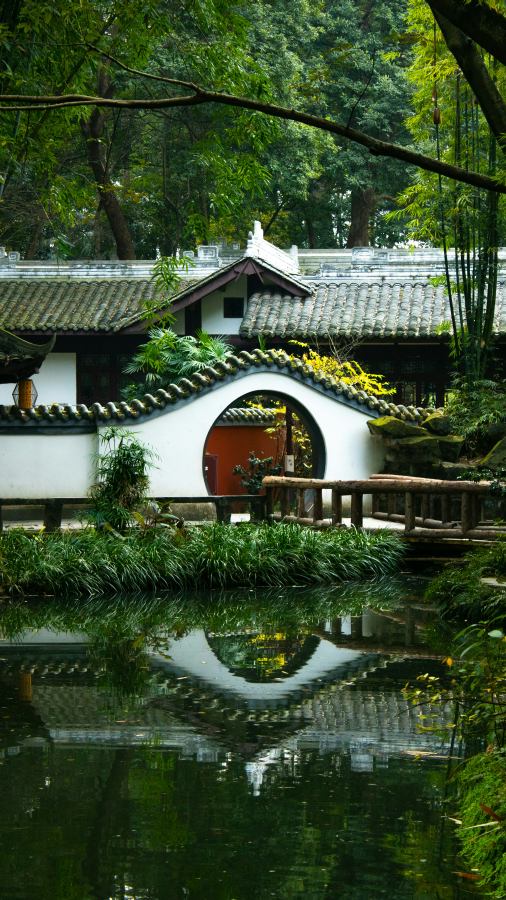
This memorial museum park, dedicated to Du Fu (712–770), one of the greatest poets of the Tang Dynasty (618–907), stretches across nearly 20 hectares on the western edge of the city centre, along the banks of the Huanhua River. The poet spent four years here in exile (759–763), during which he composed approximately 240 poems, including many timeless masterpieces of Chinese literature.
Around the reconstructed building that now stands on the site of the original cottage, bamboo groves, flowering gardens, and softly babbling waterways create a meditative atmosphere. The park, declared a national heritage site in 1961, today also houses museum exhibitions, calligraphy halls, and a research library.
The special quality of this site is that it is less crowded than the city’s other main attractions, preserving its quiet, almost pilgrimage-like atmosphere even on weekdays.
Tianfu Square
Chengdu’s largest urban square, whose design concept and civic role are comparable to Beijing’s Tiananmen Square. The 30-metre-tall statue of Mao Zedong on the north side of the square is a defining monument of the People’s Republic era, eagerly photographed by both local and foreign tourists.
Beneath the square lies a metro hub and a shopping centre; the surrounding buildings house the Chengdu Museum, the Sichuan Science and Technology Museum, and one of the largest local shopping malls. Tianfu Square is primarily important as a logistical and symbolic hub: most attractions can be reached by metro from here, and the square makes an excellent orientation point for navigating the city.
People’s Park (Renmin Gongyuan)
Chengdu’s first public park opened in 1911 under the name Shaocheng Park – the green oasis now known as Renmin Gongyuan (People’s Park). Located in the heart of the city centre near Tianfu Square, this roughly 11-hectare park offers a genuine window into the everyday life of Chengdu’s residents.
The park’s most famous spot is the century-old Heming Teahouse, where visitors are welcomed by Sichuan tea culture served in porcelain cups with long-spouted teapots. Tea drinking here is not merely a pastime but a kind of life philosophy, with roots stretching back to Chengdu’s terraced hillsides.
The park also contains the Monument to the Railway Protection Movement, commemorating the civic resistance that preceded the 1911 revolution.
Wenshu Monastery (Wenshu Yuan)
Chengdu’s best-preserved Buddhist monastery complex, Wenshu Monastery, was founded during the Tang Dynasty (618–907) and is considered in China to be a treasure house of Buddhist texts and wisdom. The monastery is home to 80 monks, encompasses five prayer halls, and preserves more than 300 Buddha statues within its walls.
The teahouse belonging to the monastery is one of the most famous and atmospheric in Chengdu: visitors can sip freshly brewed Sichuan tea amid the scent of bamboo and cinnamon, seated beside a pond. In the mornings, the garden takes on an intimate quality as worshippers practise tai chi and monks meditate.
The monastery is directly connected to Wenshu Promenade, which has survived as one of Chengdu’s oldest commercial streets, with its traditionally façaded buildings.
Green Ram Temple (Qingyang Gong)
Located in the Cultural Park in central Chengdu, the Green Ram Temple is one of China’s oldest and most significant Taoist temples. Its origins trace back to the Zhou Dynasty (1046–256 BC), while the majority of the current buildings were constructed during the Qing Dynasty (1644–1911). Its name derives from two bronze goat statues in the main shrine – one of which bears a single horn, carrying a unique and enigmatic symbolism. A remarkable feature is that it is separated from the bustle of the city centre by only a single wall.
The temple complex is especially noteworthy for housing the Dao Zang Ji Yao, the most complete collection of Taoist literature in China. Beyond the main gate, six halls follow one after another, including the Hall of the Three Purities (Sanqing Dian), where incense burns before the statues of Taoism’s three supreme deities.
Chengdu Radio and TV Tower
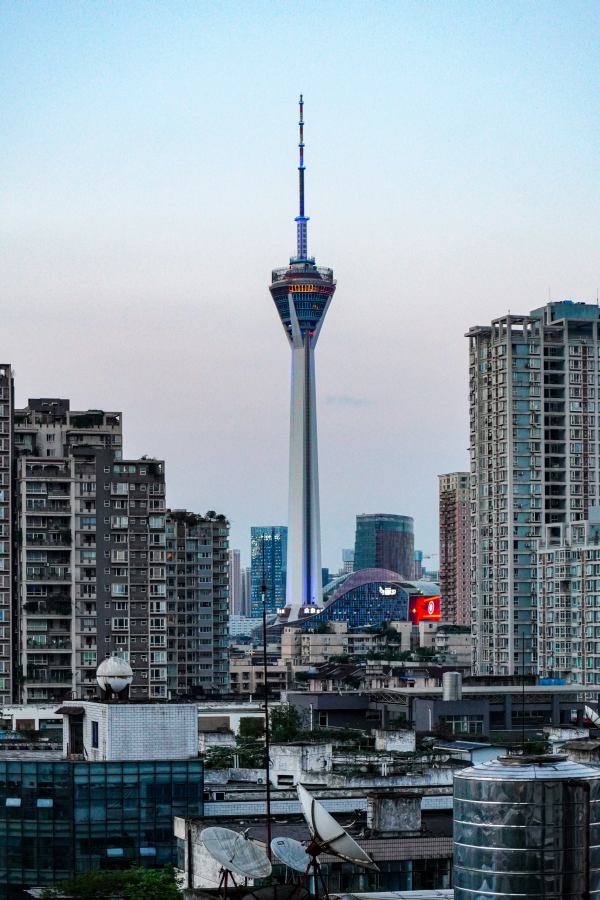
Also known among Chengdu residents as the Panda Tower, this 339-metre-tall structure was built in the early 1990s and was for a long time the tallest broadcasting tower in southwest China.
The tower’s needle-like steel-and-concrete structure is clearly visible from the eastern parts of the city and is a distinctive feature of the urban panorama. In addition to its functional role, it also offers an observation platform from which, on clear days, both the Chengdu Basin and the snow-capped peaks rising at the foot of the Tibetan Plateau can be seen in the distance.
Sichuan Opera Performance
Sichuan opera is one of the most vibrant and entertaining of China’s operatic forms, and its signature element – Bian Lian (face-changing) – offers a truly spectacular sight: masters swap their brightly coloured, traditionally patterned masks in lightning speed, sometimes in the blink of an eye. Chengdu is the birthplace of Bian Lian, and the most authentic venue for performances here is the Shu Feng Ya Yun Theatre on Qin Tai Road.
Throughout the evening, the programme also includes fire-breathing, shadow puppetry, painted singers, and hand-beaten drum rhythms. Audiences typically enjoy tea and pastries during the performance, and the atmosphere in the auditorium is intimate and communal. Performances are attended almost exclusively by Chinese devotees – a rare moment when the tourist can truly feel like an insider.
Tickets can be booked in advance online; performances typically begin at 8 pm and last approximately 90 minutes. In addition to the Shu Feng Ya Yun Theatre, shorter, more controlled performances can also be seen on the small teahouse stages around Jinli Street.
Best museums in Chengdu
Jinsha Site Museum
In 2001, during a residential construction project, archaeologists discovered a roughly 3,000-year-old site in the western part of Chengdu that proved to be the capital of the ancient Shu Kingdom (c. 1200–500 BC). The institution now operating as the Jinsha Site Museum (Jinsha Yizhi Bowuguan) was built directly over the excavation area, so visitors can view the site inside a hall constructed above the actual excavation pit.
The museum houses more than 5,000 precious artefacts: gold, jade, bronze, and ivory finds. Its most famous piece is the Gold Sun Bird (Jinsha Taiyang Shenniao), a paper-thin gold disc on which four mythological birds circle the sun – since 2005 this has been the official symbol of Chengdu. The sight of the museum’s outdoor ivory pit – where more than 100 massive tusks rest in excavation layers – is hauntingly impressive.
The Jinsha civilisation was closely connected to the nearby Sanxingdui culture, and the finds prove that the Shu Kingdom flourished as an advanced, independent centre of civilisation parallel to the Yellow River basin. The museum also features a 4D cinema where visitors can experience a virtual ritual enhanced with sound effects and misted water.
Chengdu Museum
The 5-storey modern building was opened in 2016 to the west of Tianfu Square; its design principles follow the best traditions of contemporary Chinese museum architecture.
Its collection encompasses nearly 300,000 cultural objects spanning from the Neolithic period to the early 20th century: Bronze Age weapons, Tang Dynasty ceramics, medieval puppet theatre relics, and installations presenting the complete urban history of Chengdu.
The visitor experience is built around three permanent exhibitions: “Chengdu’s Flourishing” (on the city’s history), “Chinese Shadow Play and Puppet Theatre” (traditional performing arts), and a natural science donation collection.
Sichuan Museum
The most significant cultural collection of Chengdu and Sichuan Province was founded in 1941, and in 2009 it moved its 300,000 objects to the current building on the banks of the Huanhua River.
Fourteen permanent exhibition rooms and nearly 13,000 square metres of gallery space welcome visitors. The special highlight of the collection is several hundred works by Zhang Daqian (1899–1983), one of the most celebrated Chinese painting geniuses, who appeared alongside Picasso in the West in 1956. Excavated bronzes, Tang Dynasty Buddhist statues, and silver jewellery of Sichuan’s ethnic minorities are equally outstanding pieces.
Chengdu Tianfu Art Museum
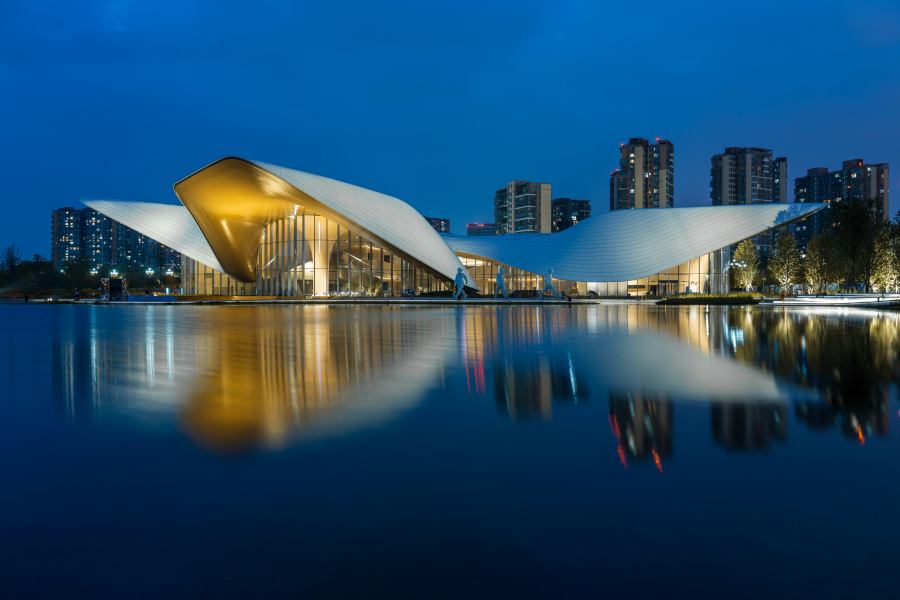
The Tianfu Art Museum (Tianfu Meishuguan), opened in 2021, is one of Chengdu’s youngest and most impressive cultural institutions, built in the heart of the Tianfu New District, near the new city centre.
The building, designed by Japanese architect Kengo Kuma, with its undulating white stone facade and glass roof elements open to the sky, is itself a work of art. Its special feature is the exhibition space system organised around natural light.
The core of the museum’s collection consists of contemporary Chinese painting, sculpture, and installation art, with particular emphasis on local artists from the Sichuan region. It also regularly presents international contemporary works, primarily from Asian and European artists.
Chengdu weather: when is the best time to visit?
Chengdu has a subtropical monsoon climate characterised by four distinct seasons. The annual average temperature is around 16°C, with annual precipitation of approximately 850–1,000 mm, the majority of which falls between June and September. The city is notably overcast and humid – as the local saying goes, Chengdu dogs bark at the sun because it so rarely shines. Humidity exceeds 70% throughout the year, which makes both summer heat and winter cold more bearable yet also more taxing.
Spring (March–May):
One of the most pleasant seasons: temperatures range between 10–23°C, and blooming cherry, peach, and ginkgo tree-lined avenues bring parks and temple gardens to life. In March, a peach blossom festival is held on Longquan Mountain, and pandas are active and ready to mate. Spring rains are frequent – a light jacket and umbrella are advisable.
Summer (June–August):
Hot, humid, and rainy: daytime temperatures can reach 35°C, and precipitation hits its maximum (up to 210 mm in July). Pandas are most active in mother-and-cub interactions, but due to the intense heat and crowds, it is better to head to the nearby mountains (Qingcheng Mountain, Emei Mountain) for excursions.
Autumn (September–November):
The other best season. Pleasant temperatures around 14–22°C, decreasing rainfall, and golden ginkgo foliage are the hallmarks. October is particularly picturesque in Renmin Park, Wenshu Monastery, and Qingyang Temple. The autumn scenery of Jiuzhaigou and Huanglong valleys is also at its peak at this time.
Winter (December–February):
Cold but without extremes: temperatures hover around 3–10°C, and snow is rare. In the misty, humid winter, Wenshu Monastery and Jinli Ancient Street are particularly picturesque. In January and February, plum blossoms can be seen in Tazishan Park, while winter festivals await visitors in the Shuangliu district.
Best time to visit to Chengdu:
The best months to visit Chengdu are March–May and September–November. During these two periods, daytime temperatures range around 12–26°C, precipitation is moderate, and cultural attractions, mountain excursions, and panda viewing can all be enjoyed under optimal conditions.
Early May and the first week of October (the Chinese National Holiday) are the most visited periods – if these seasonal peaks can be avoided, the visit will be considerably more enjoyable.