Norway, the land of fjords, is definitely worth a visit for this reason alone. Here are 19 attractions you must see!
Located in Northern Europe, on the western part of the Scandinavian Peninsula. It shares a border with Sweden for several thousand kilometers to the east, and is adjacent to Finland in the northern part.
The majority of the country is covered by the Scandinavian Mountains. Its heavily indented coastline, with thousands of fjords and islands, is more than 25,000 km long.
Table of Contents
Best places in Norway
Preikestolen
One of Norway’s most famous sights, located about 25 km from Stavanger.
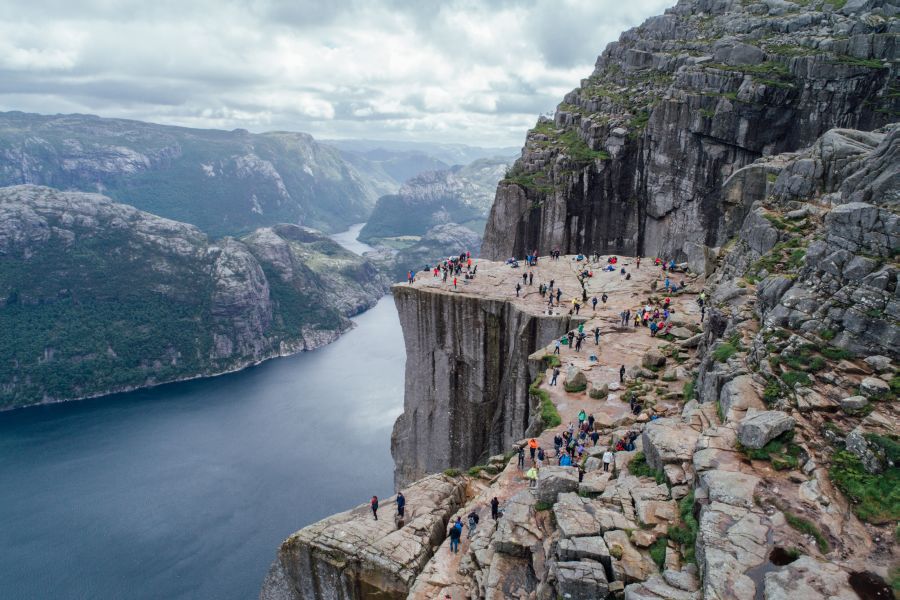
The „Pulpit Rock” is a steep cliff rising 604 meters above the Lysefjorden. The cliff top is a flat surface of about 25 x 25 meters. It is situated on the north side of the fjord, with the Kjerag plateau, also known for the Kjeragbolten – a 5 cubic meter rock wedged between two boulders – located deeper on the south side.
Reaching the top requires some effort. The trail to the top can be quite steep in places. The hike starts from Preikestolhytta, climbing from about 270 meters to 604 meters.
Tromsø
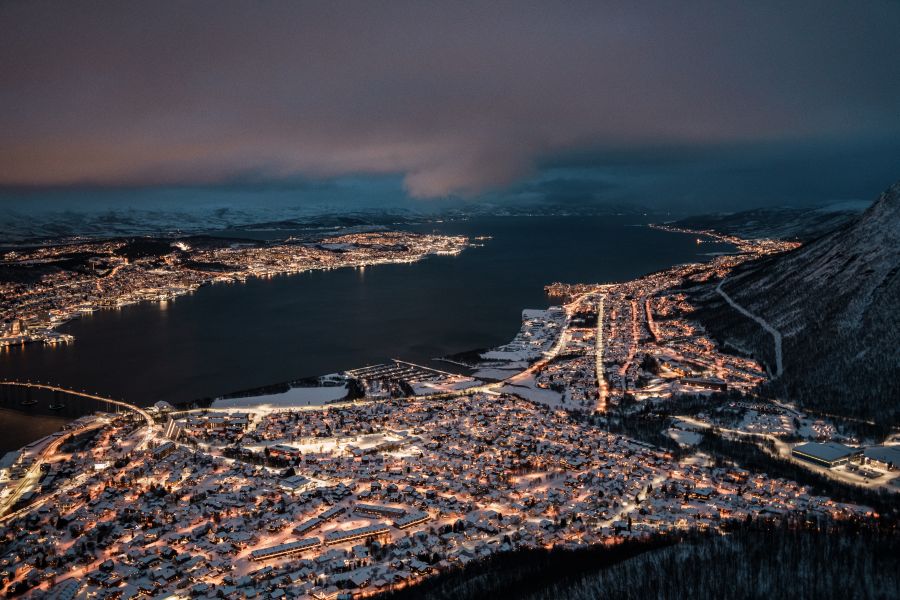
Perhaps the most famous town beyond the Arctic Circle. Perfect for experiencing the winter darkness lasting several weeks. 😊
Here, you’ll find the world’s northernmost brewery, botanical garden, and planetarium. It’s also the seat of the world’s northernmost Catholic bishopric.
Tromsø is an ideal starting point for trips to the Lofoten Islands or Nordkapp, and a popular destination for active travelers.
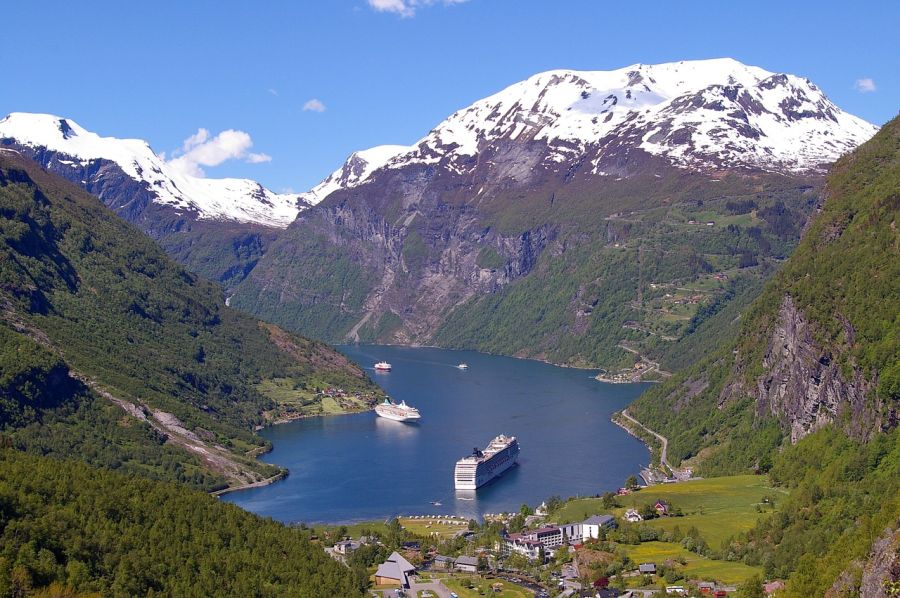
Geirangerfjord
Located between Bergen and Trondheim, this is one of Norway’s most beautiful fjords. It is a long branch of a fjord where even cruise ships make their way.
If arriving by car, there are must-see viewpoints from both the north and south (Ørnesvingen and Flydalsjuvet). Along the fjord, there are several stunning waterfalls, with the most famous being Dei sju systre („The Seven Sisters”).
Interestingly, the fjord is threatened by the Åkerneset mountain, which could collapse into the water at any time, causing a tsunami.
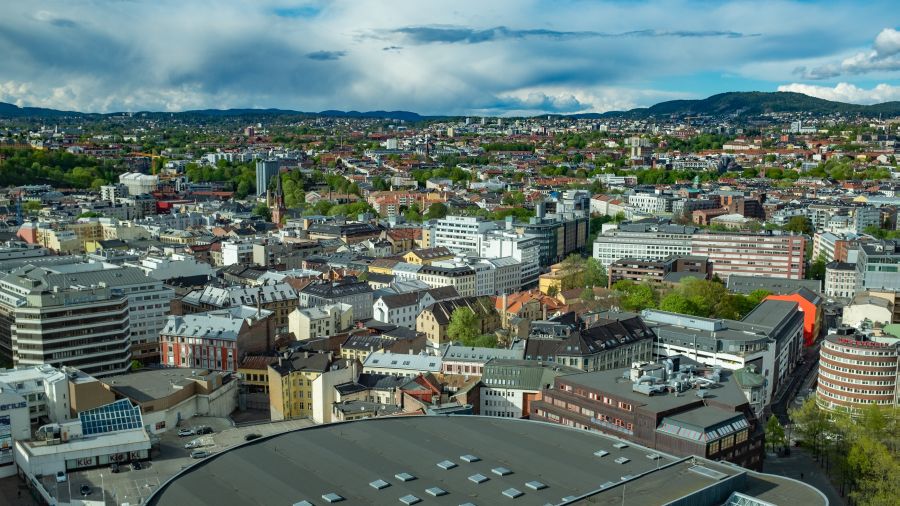
Oslo
Norway’s capital is situated along the Oslo Fjord, with 40 islands and nearly 350 lakes within its territory.
As a relatively small capital, its attractions are quickly accessible. The number of museums is impressive: visits to the Historical and Ethnological Museum, the National Gallery, and the Viking Ship Museum are highly recommended.
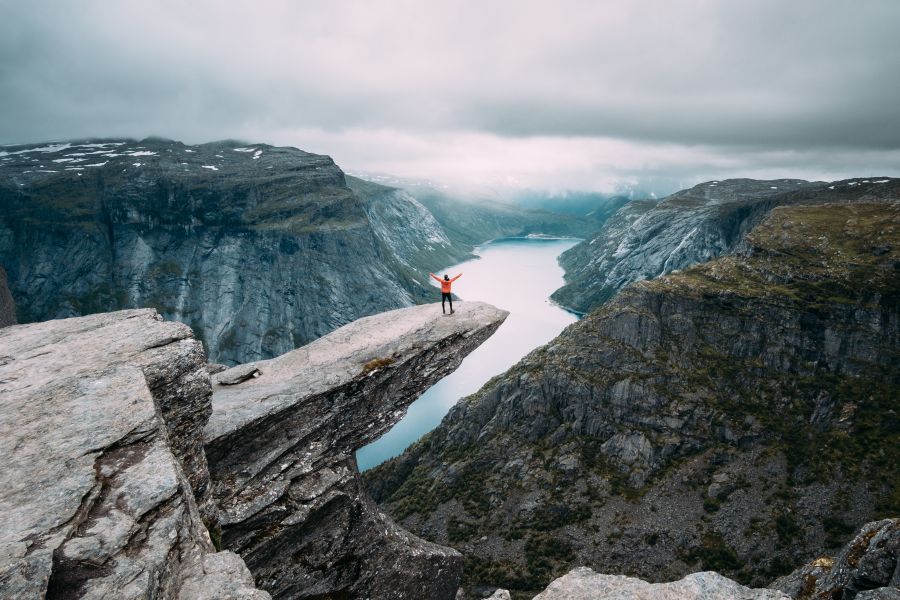
Trolltunga
Another iconic natural attraction in Norway alongside Preikestolen. You’ve likely seen it in many internet photos.
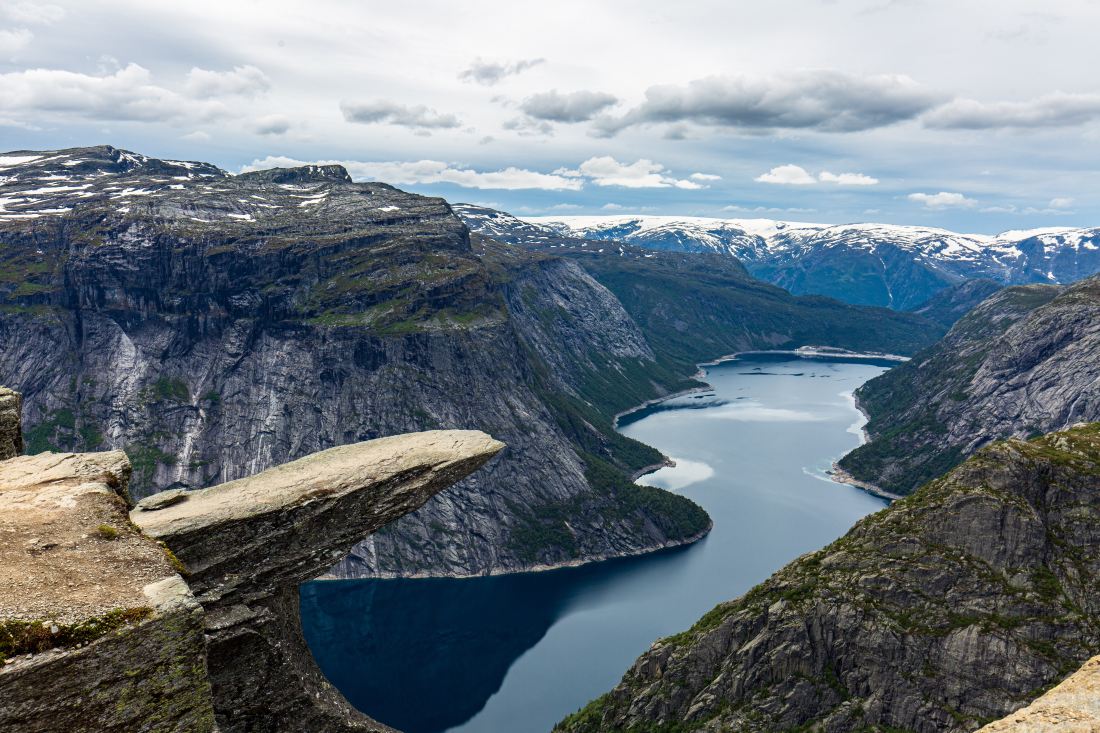
The „Troll’s Tongue” is an overhanging rock 700 meters above the Ringedalsvatnet lake and 1100 meters above sea level. The hike to the top is moderately challenging (about 25 km round trip), yet many undertake it during the summer.
The view is stunning, but I admit, I wouldn’t dare sit on the edge of the rock just for a photo. :/
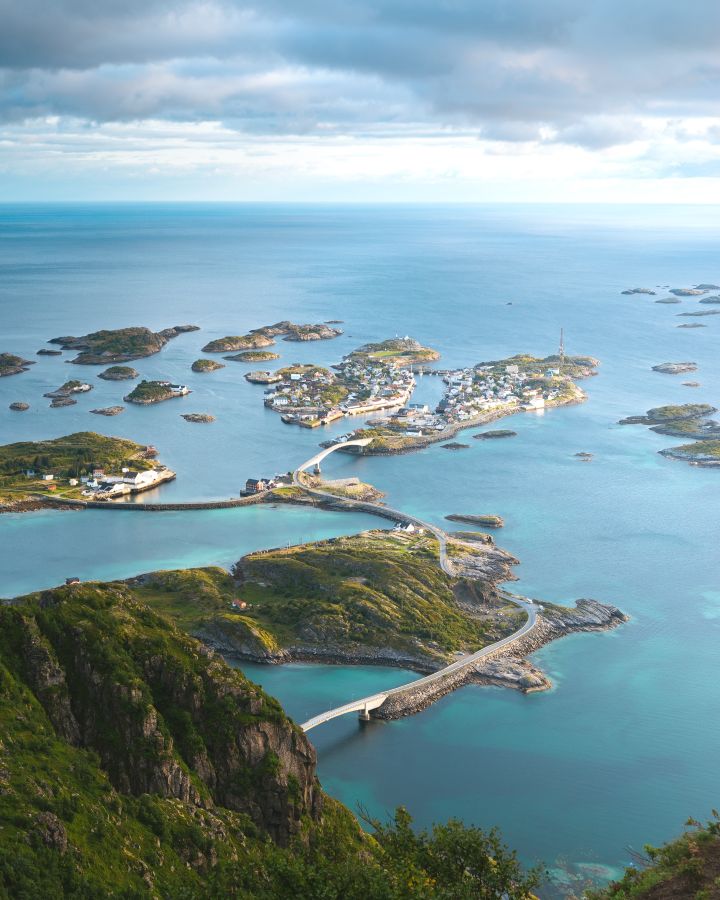
Lofoten
Norway’s most visited archipelago, renowned for its natural beauty and diverse wildlife, is part of UNESCO’s World Heritage Sites.
The archipelago is characterized by mountain peaks, cliffs, and sheltered bays. It’s home to the world’s largest deep-sea coral reef, the 40-kilometer-long Røst.
Though the highest peak is under 1200 meters, the alpine-style terrain is popular for mountain and rock climbing.
Located beyond the Arctic Circle, the sun doesn’t set here from late May to mid-July.
Bergen
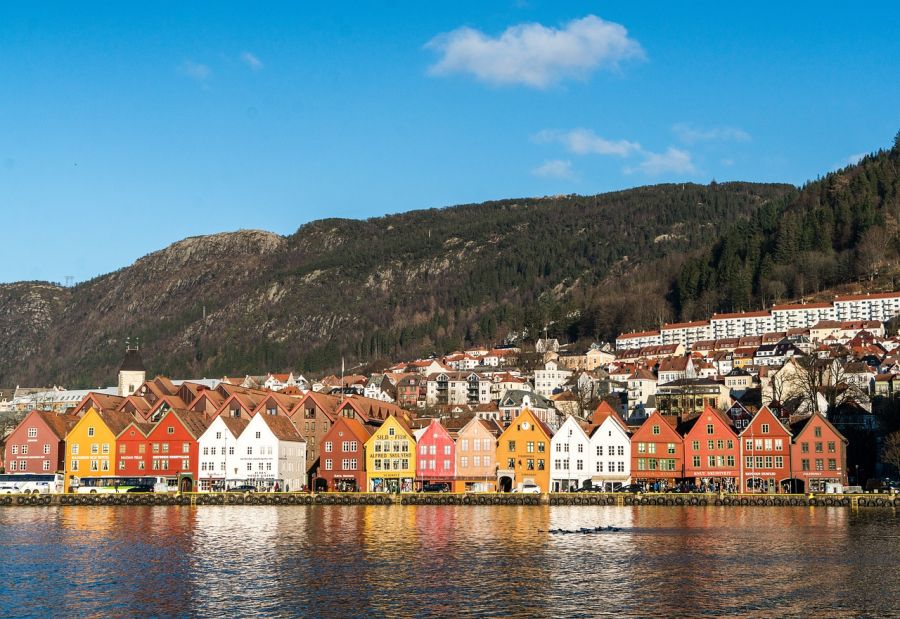
Norway’s second-largest city on the western coast is known as the gateway to the country’s famous fjords.
Bergen played a significant role in northern history, hosting Scandinavia’s first coronation in 1163. The medieval German influence is still evident, especially in the Hanseatic quarter, with its UNESCO-listed houses often featured in photos.
It’s a charming northern city to visit, particularly for its fjords, and a great starting point for exploring the fjord region.
Justedalsbreen
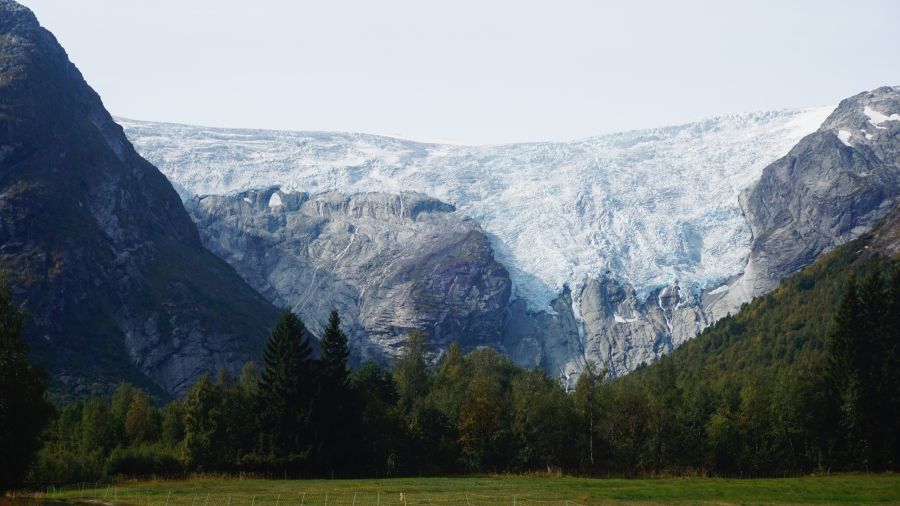
This is continental Europe’s largest glacier, stretching about 60 km.
The glacier has about 50 branches and covers nearly 500 square kilometers, even at its narrowest point, it’s around 600 meters wide.
Part of a national park, a popular spot is the southern section along Highway 5, near the Bøyabreen glacier viewpoint.
Nordkapp
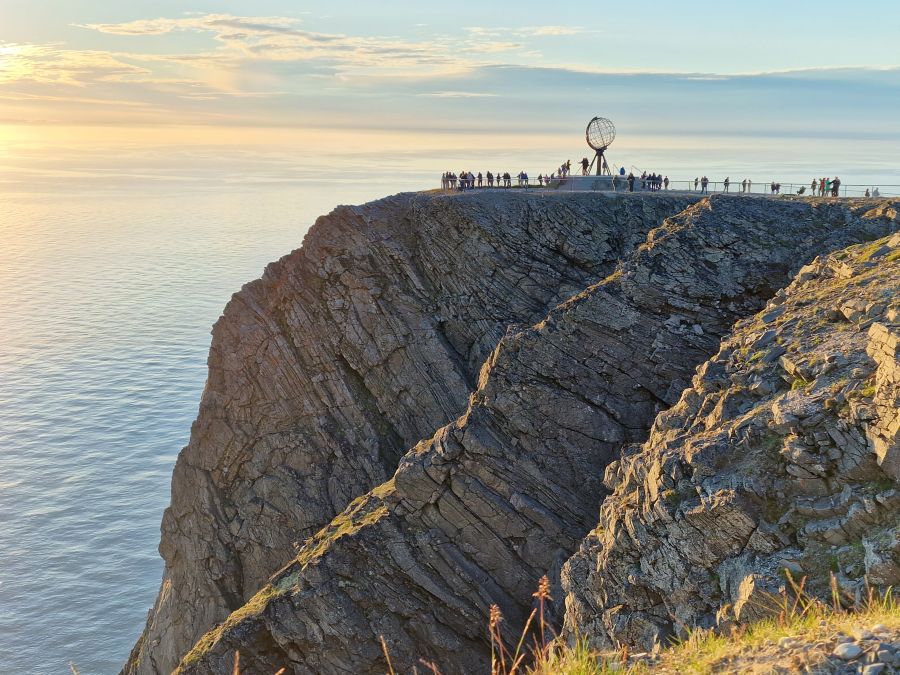
Norway’s and continental Europe’s northernmost point, located on Magerøya island.
Accessible by car, a 6.9 km long tunnel leads to the island. The northern point is marked by a globe, offering stunning views of the Arctic Ocean from the cliff.
Nærøy-fjord
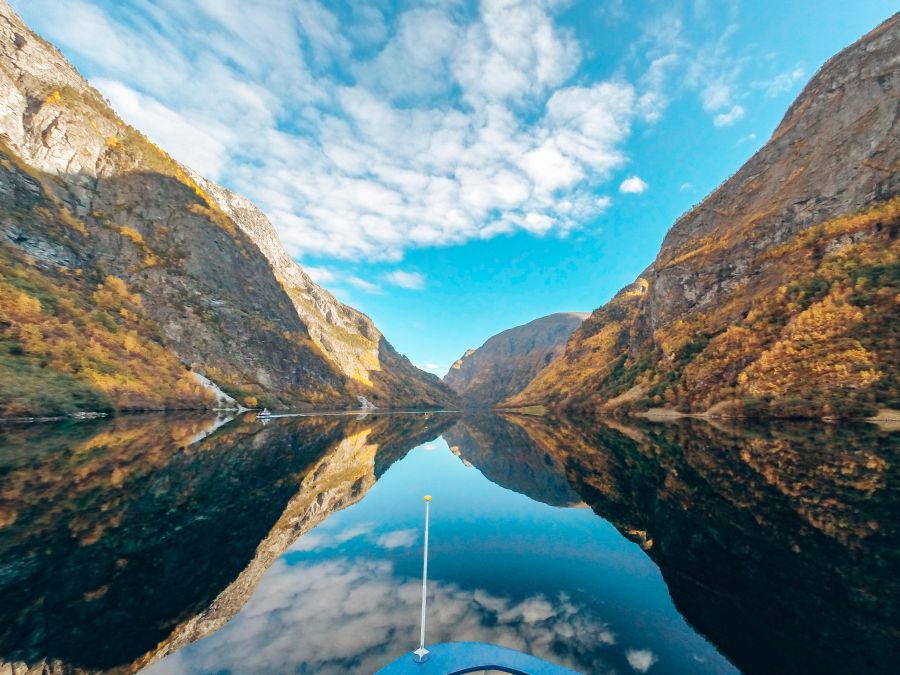
Another popular fjord, a 17 km long branch of the Sogne-fjord.
At its narrowest, the fjord is only 250 meters wide, flanked by cliffs over 1400 meters high. There are several stunning waterfalls cascading down the mountainsides.
On the fjord’s western side, an asphalt road runs along the waterfront for a good distance, accessible by car or bike.
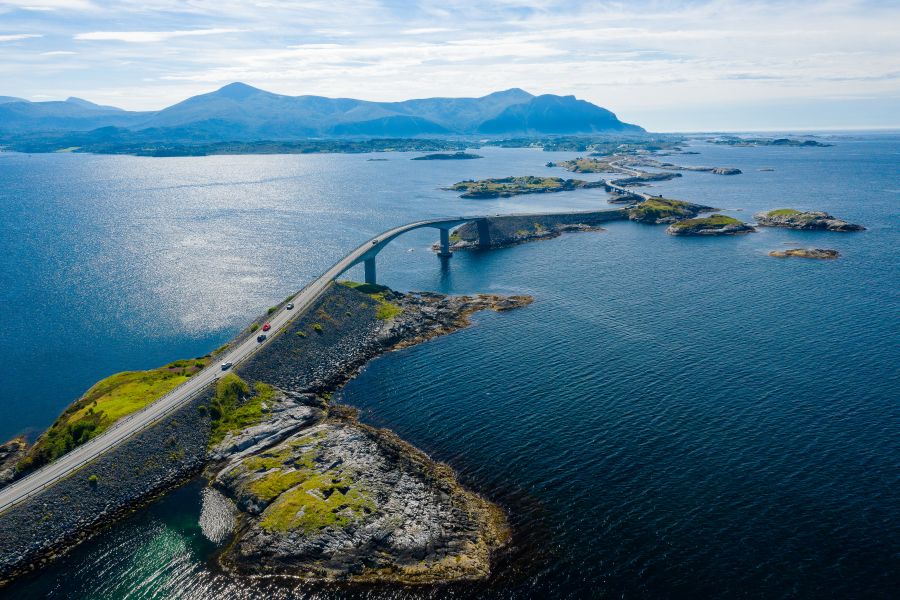
Atlanterhavsvegen (Atlantic Ocean Road)
One of the world’s most beautiful drives!
This 8274-meter section of Highway 64 connects Averøy Island to Eide on the mainland. The road features several viaducts and eight bridges.
Stryn
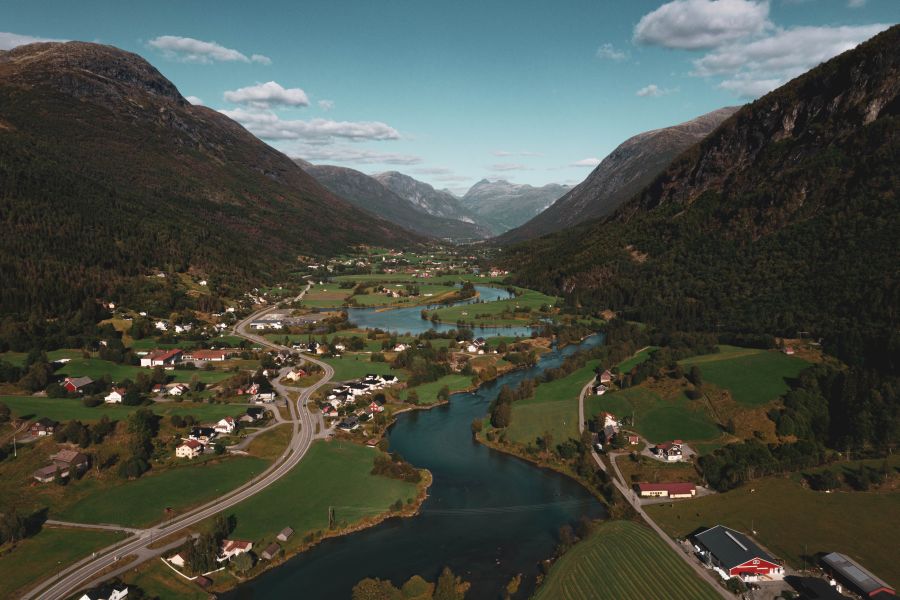
Known for its stunning mountains, valleys, glaciers, and emerald green lakes, Stryn is a perfect destination for tourists.
The Stryn river and valley aren’t just visually appealing but also offer adventure. Near Loen, a cable car ascends a peak, offering views of the fjord and valley. For the more adventurous, there’s a zip line nearby for an exhilarating experience.
Vøringsfossen
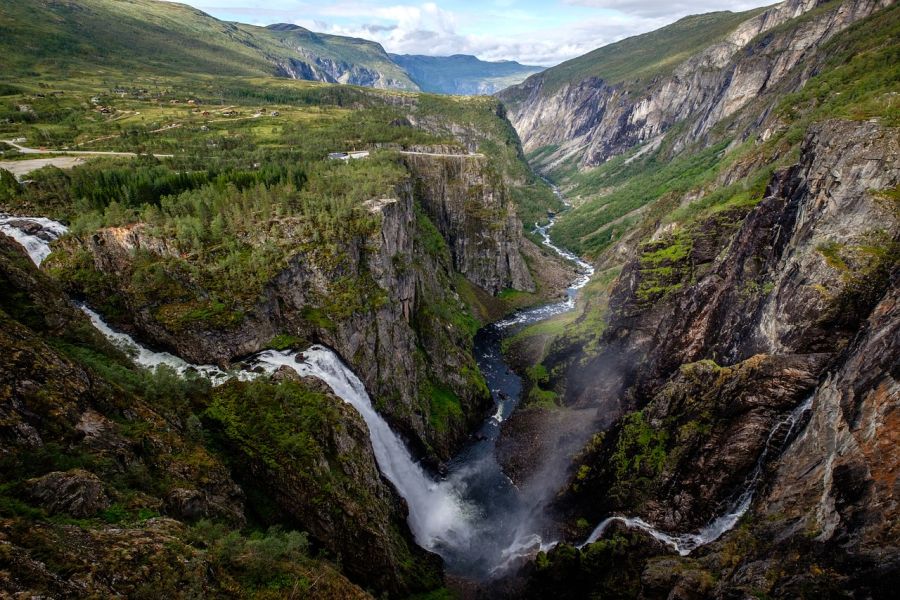
The waterfall near the Hardangervidda National Park is one of Norway’s most famous.
It plunges in two stages, approximately 180 meters down into the Måbødalen valley. Several viewpoints have been developed, and a suspension bridge was recently constructed to offer even better views of the waterfall.
Downstream, the river meanders through a beautiful canyon, making the area excellent for hiking opportunities.
Rondane National Park
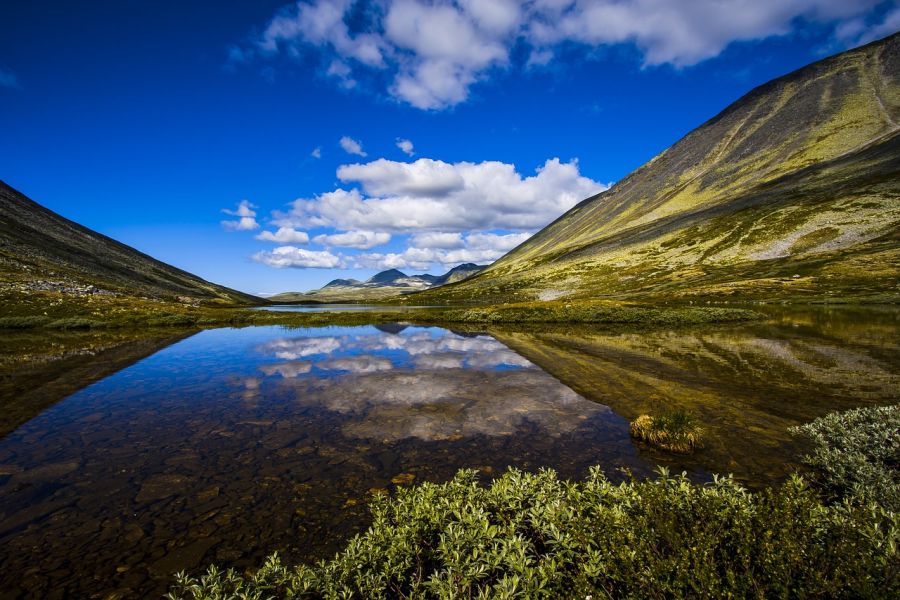
This was the first area in Norway to be declared a national park. The park is located in the southern part of the Dovre Mountains and covers an area of approximately 963 square kilometers.
Its distinctive landscape is formed by mountainous terrains, tundra, deep valleys, and crystal-clear mountain streams. The park contains ten peaks that exceed 2000 meters in height: the highest is Rondslottet, which reaches 2178 meters.
The diverse landscape is an ideal home for numerous species of flora and fauna, including the rarely seen wild reindeer, which form one of the largest wild reindeer populations in Europe in this area.
Træna
Located in the Norwegian Sea, this archipelago consists of more than 1000 small islands and rocks, although only a few are inhabited.
Træna is known for its unique geological formations and natural beauty. The caves on the islands, including the Kirkehelleren cave, are known for their excellent acoustics, making them popular venues for musical performances and concerts.
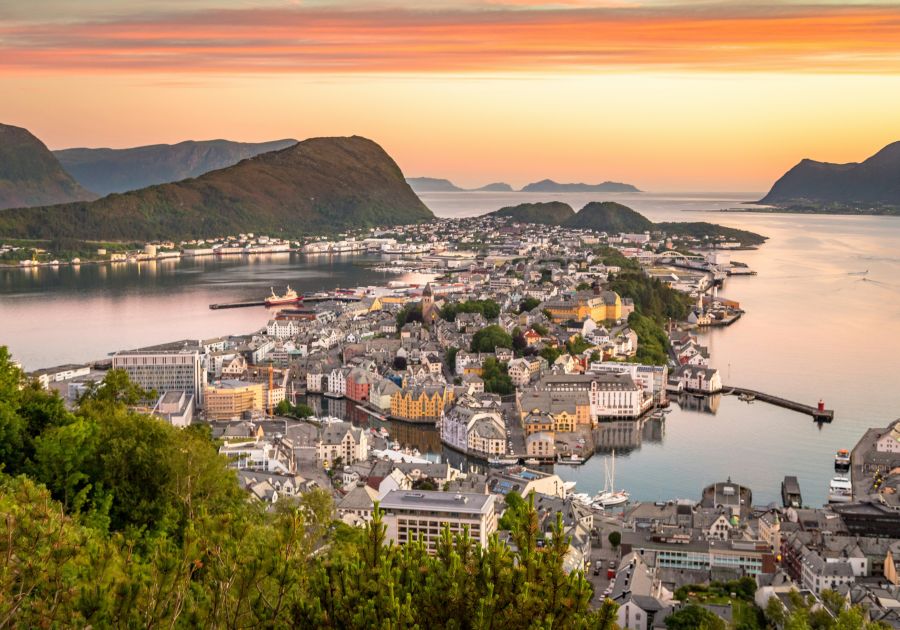
Ålesund
The city is primarily known for its Art Nouveau city center. In 2007, it was chosen by Norwegians, and in 2009 by The Times, as Norway’s most beautiful city.
The downtown area was almost completely destroyed by fire in 1904. It was largely rebuilt in a few years, influenced by national romanticism and contemporary European architecture, most notably Art Nouveau. The new buildings feature richly decorated facades, clock towers, spires, and other ornamental elements.
The Aksla hill, accessible by climbing 418 steps, offers a beautiful view of the surrounding mountains and fjords.
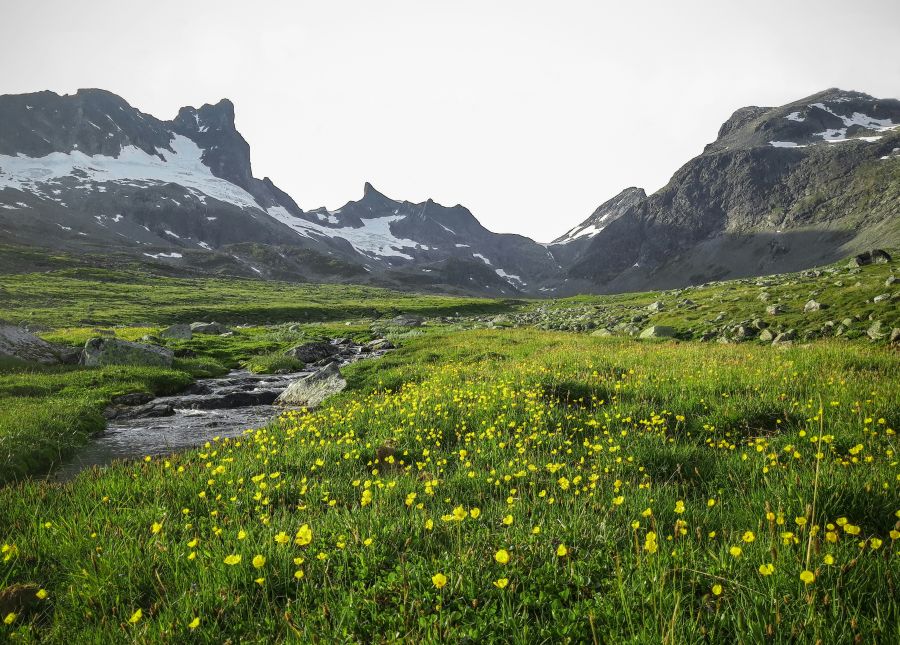
Jotunheimen National Park
This area, covering approximately 3500 square kilometers, is known from Scandinavian mythology as the home of the giants, with Jotunheimen meaning „the giants’ home”.
The park contains Norway’s highest peak, Galdhøpiggen, which is 2469 meters tall.
There are numerous marked hiking trails, among which the Besseggen ridge hike is the most famous. From here, the view of the Bessvatnet and Gjende lakes is wonderful.
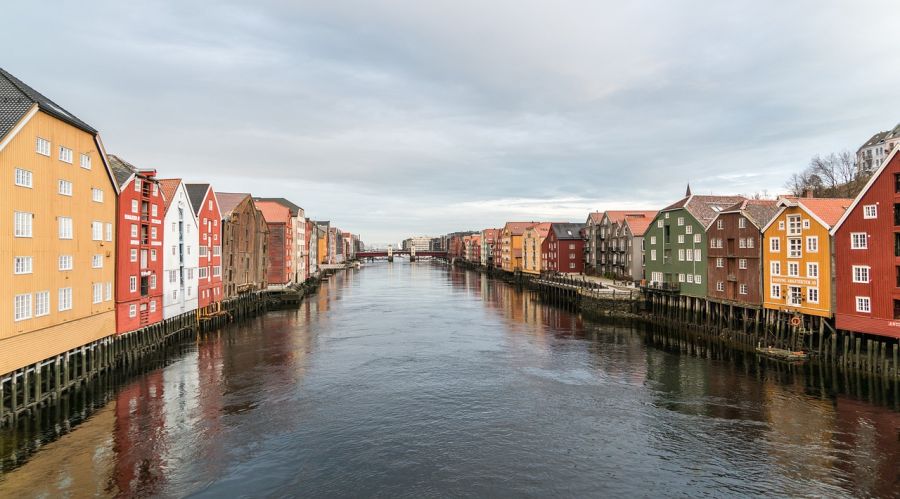
Trondheim
Norway’s third-largest city was once the country’s capital.
Its two most important tourist attractions are the Nidaros Cathedral (Nidarosdom) and the Archbishop’s Palace (Kongsgaarden), which are located next to each other in the middle of the old town. The huge cathedral, started in 1070, is Norway’s most significant Gothic building and was Northern Europe’s most important pilgrimage site in the Middle Ages.
Across from the city, in the Trondheim fjord, the small Munkholmen island is a pleasant excursion site. It houses the ruins of an ancient Benedictine monastery, a medieval fortress, and a prison.
Skjervøy
This archipelago is located at the Arctic Circle, in the Norwegian Sea, where fishing remains the main occupation.
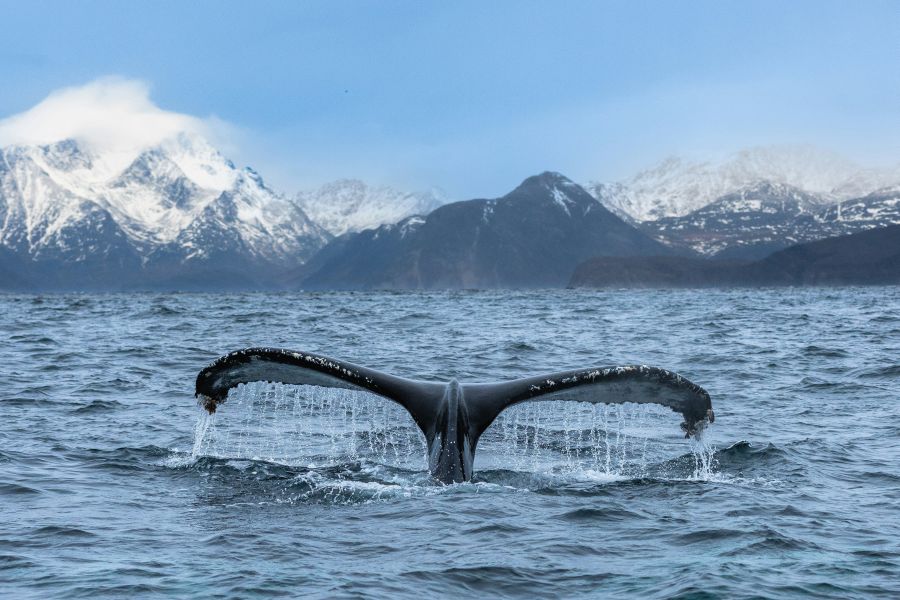
The surrounding mountains, fjords, and wildlife, including whales, dolphins, and numerous bird species, offer numerous observation opportunities. Whale and dolphin watching tours are particularly popular among visitors.
The Skjervøy Museum allows visitors to learn about the area’s rich history and its connection to marine life.