

Uzbekistan is one of the most interesting and beautiful countries in Central Asia, full of cultural, architectural, and natural attractions.
Uzbekistan has the most historical heritage in Central Asia. For a long time, it was quite difficult to enter this former Soviet republic, but recently it has started to open up to tourists. It is bordered by Kyrgyzstan, Kazakhstan, Turkmenistan, Tajikistan, and Afghanistan.
Table of Contents
Best places in Uzbekistan
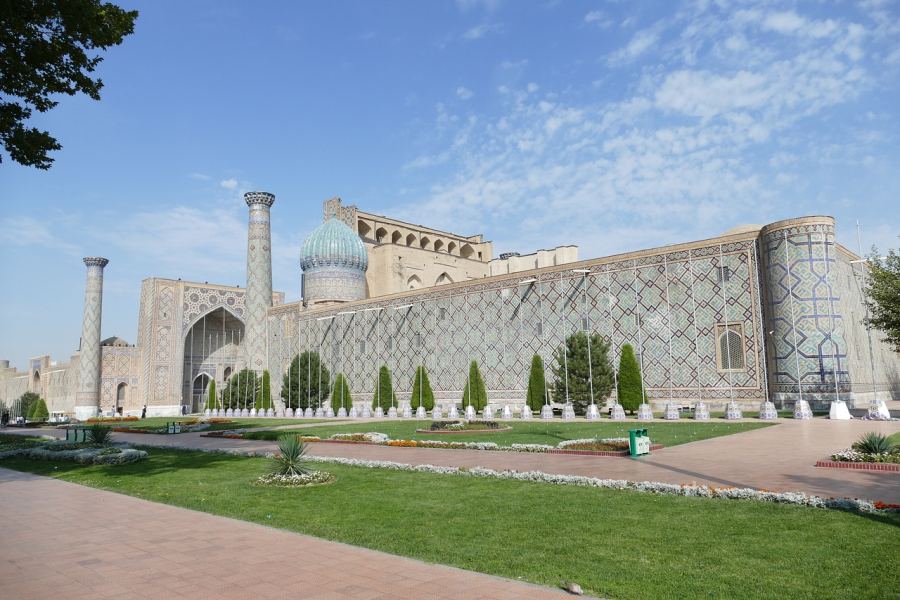
Samarkand
One of the most important cities of Inner Asia and the ancient East, which owed its defining importance to its central role on the Silk Road.
It has a history of more than 2700 years, and numerous civilizations have left their mark here, including the Persians, Greeks, and Arabs. The city is a model of Islamic architecture, and UNESCO has declared it a World Heritage site.
The city’s most significant attraction is Registan Square, where we can see three monumental madrasas. The Ulugbek Madrasa is the oldest building, with its facade decorated with intricate mosaics and geometric patterns. The facade of the Sher-Dor Madrasa is decorated with mosaics depicting tigers and the sun, which is rare in Islamic art. The interior walls of the Tilla-Kari Madrasa are richly adorned with gilded decorations.
Another famous building is the Bibi-Khanum Mosque, an Islamic religious center next to the great bazaar. The majestic building, even in its ruins, can be entered through the gigantic gate on the eastern side of the courtyard.
Samarkand attractions, weather
Tashkent
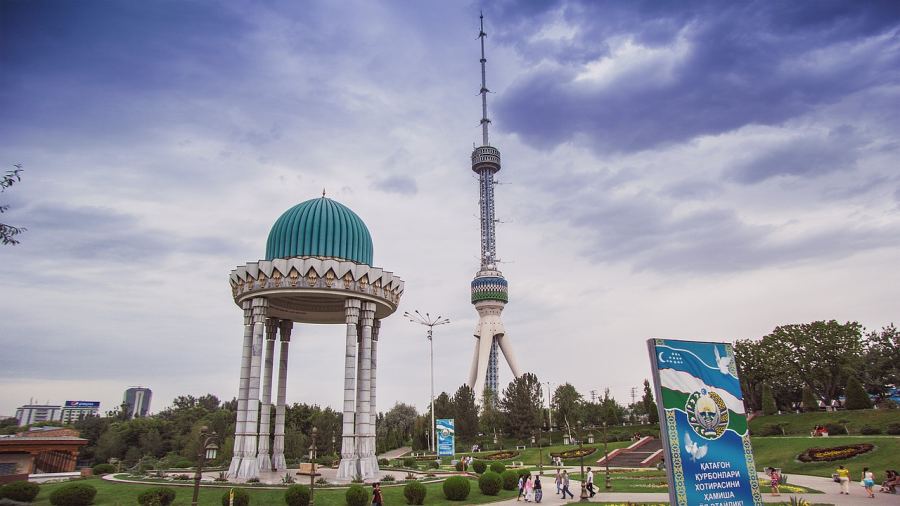
Uzbekistan’s capital and largest city has a rich historical past. It was an important trading hub during the ancient Silk Road era.
Its current appearance is determined by the devastating earthquake of 1966. The Soviet government transformed it into a modern socialist city, resulting in Tashkent today being a unique mix of old world architecture and modern Soviet-style buildings.
Interestingly, its most spectacular attraction is not a building, but the metro stations. Their decorations could pass for works of art: among the marble, mosaics, and reliefs, one can find historical events, national heroes, and motifs of local culture.
Fergana Valley
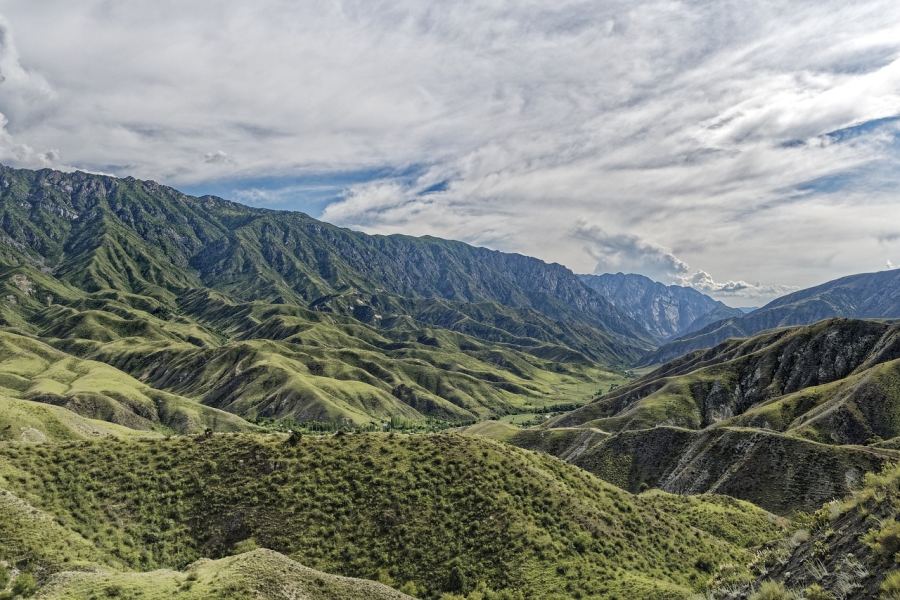
Located in the eastern part of Uzbekistan, it is one of the most fertile regions in Central Asia.
The valley is surrounded by the Tian Shan and Alay Mountains, providing a special microclimate and rich agricultural area. The valley is famous for its orchards, especially the cultivation of apricots, grapes, and pomegranates, which form the basis of the local economy.
The center of the valley is Fergana city, which has long been a center of craft traditions, especially in silk weaving, pottery, and copperwork. These can still be seen in local bazaars today.
Unfortunately, the region is often the site of ethnic conflicts, making it high-risk for tourists.
Khiva
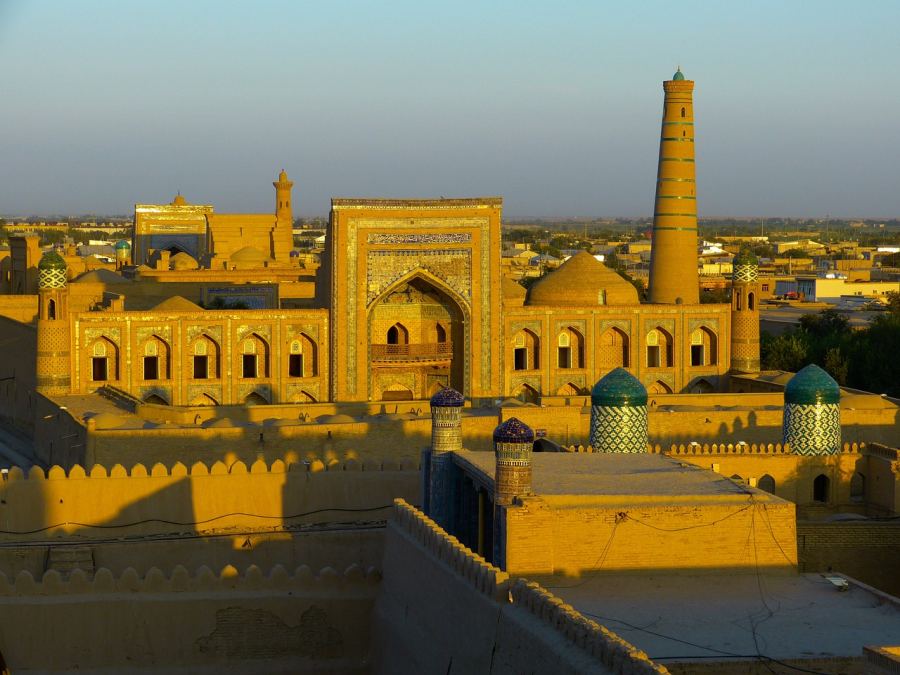
The city in the Amu Darya river valley has a history spanning more than 2500 years. It was once an important stop on the Silk Road, where caravans rested and traded.
The most famous part of the city is Itchan Kala, a walled inner city that is a UNESCO World Heritage site. It is a unique example of medieval Islamic urban planning, where impressive palaces, mosques, minarets, and caravanserais can be found, all in perfectly preserved condition.
In addition, the Kunya Ark, the former residence of the khans, and the mausoleum of Pahlavon Mahmud are also wonderful sights.
Shahrisabz
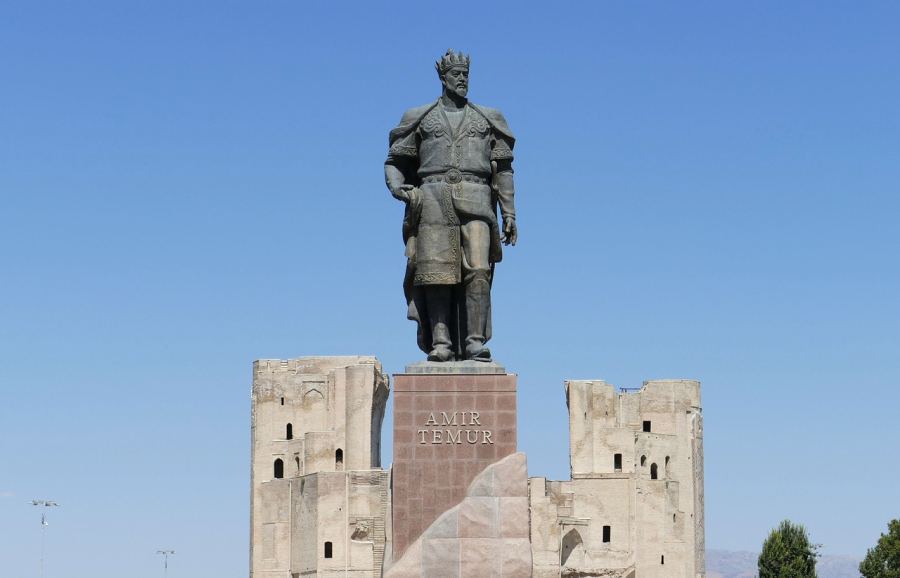
The city south of Samarkand is primarily known as the birthplace of Timur. It is a UNESCO World Heritage site due to its archaeological and architectural heritage.
The settlement had its heyday in the 14th century, during the reign of Timur, when numerous grandiose buildings were erected here. The most significant attraction is the Ak-Saray Palace, which was Timur’s summer residence. Although only the monumental gate of the palace remains today, its size and decoration are still impressive.
Another famous monument is the Kok Gumbaz Mosque, built by Timur’s grandson, Ulugbek. As its name meaning „blue dome” suggests, the mosque is distinguished by its special blue tiles and spacious interiors.
Chimgan Mountains
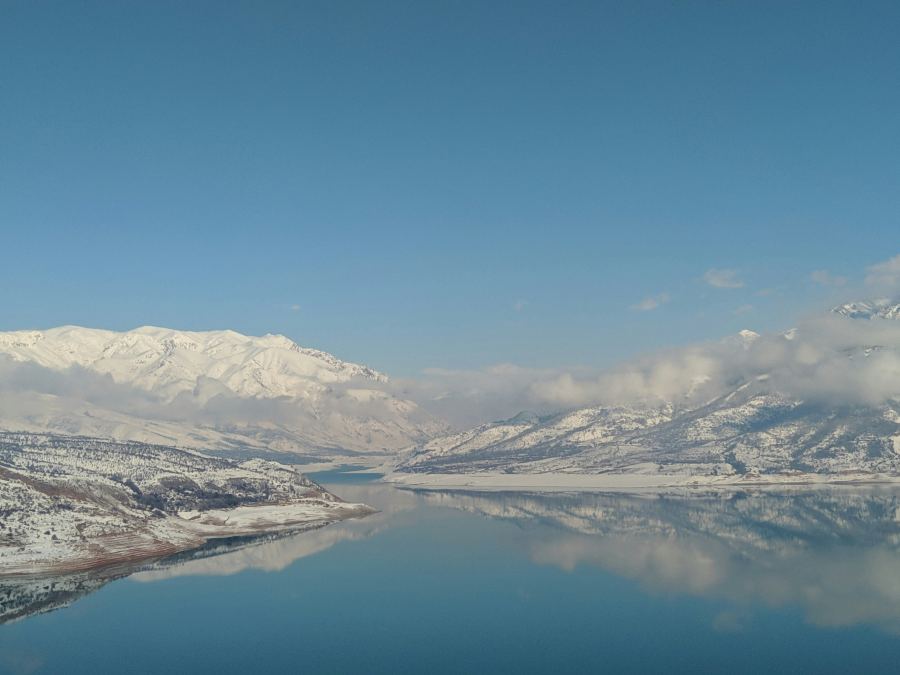
The western extension of the Tian Shan mountain system is located about 80 km from Tashkent.
It’s a popular resort, especially among winter sports enthusiasts. Uzbekistan’s largest ski resort is located here, welcoming visitors from December to March. In summer, the mountains offer excellent terrain for hiking and mountain climbing.
At the foot of the mountains is Lake Charvak, which is also a popular resting place.
Nukus
The city is located on the edge of the Kyzylkum Desert, on the banks of the Amu Darya River.
Its most famous attraction is the Igor Savitsky State Art Museum, which boasts the world’s second-largest collection of Russian avant-garde art. It houses more than 90,000 artifacts, also showcasing significant Karakalpak folk art and archaeological objects.
Around Nukus are the ruins of the ancient Khorezm civilization. The most significant are Toprak-kala, Ayaz-kala, and Koy-Kirilgan-kala. Among the ruins are remains of fortified cities, palace complexes, and religious buildings.
Zaamin National Park
One of Uzbekistan’s most beautiful natural areas is located near the Tajik border.
It covers an area of about 24,000 hectares and is located in the western part of the Turkestan Range, at an altitude of 1200-4000 meters above sea level. The park’s most characteristic plants include juniper forests.
The park is home to many rare and endangered animals, including snow leopards, brown bears, ibex, and golden eagles. It’s a popular destination for hikers and nature lovers, with numerous marked trails leading through scenic landscapes.
Nurata
The city was founded by Alexander the Great in 327 BC under the name Nur, which means light in Uzbek.
Its main attraction is the Chashma complex, built around a holy spring. It is believed to have miraculous healing powers. The main elements of the complex are a mosque, a madrasa, and the holy spring itself. It has been an important pilgrimage site for centuries, where people come for healing and blessings.
It’s famous for its craft traditions, especially suzani embroidery, which is a distinctive Uzbek textile art. These are usually large textiles embroidered on cotton or silk base materials, used as wall hangings or bedspreads. The embroidery is usually done by several women together, which is considered an important community activity.
Bukhara
It was also an important station on the Silk Road, and its old town has been a UNESCO World Heritage site since 1993.
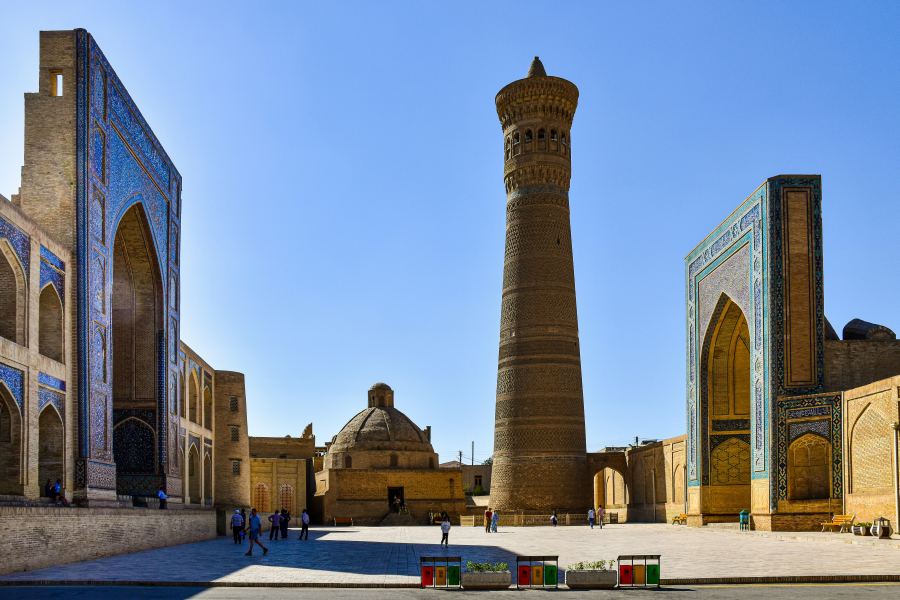
A prominent attraction is the Po-i-Kalyan complex, which includes the 12th-century Kalyan minaret, often called the „Tower of Death”. Another important monument in Bukhara is the Ark Fortress, which was the residence of the emirs for centuries.
Among the many madrasas in the city, Chor-Minor stands out with its distinctive four minarets. Bukhara’s famous bazaars, such as the Taki-Zargaron (Jewelers’ Dome), still preserve the atmosphere of the medieval trading city.
Termez
The city is located on the banks of the Amu Darya River and is one of the oldest settlements in Central Asia.
It is located in a strategically important place, which made it an important commercial and cultural center on the Silk Road for centuries. Throughout its history, the city has been under the rule of several civilizations, including the Greco-Bactrian, Kushan, and Islamic empires.
Its most significant attractions include the ruins of the Fayaz-Tepe Buddhist monastery, which dates from the 1st-3rd centuries AD, and the Kara-Tepe Buddhist cave complex. An important pilgrimage site is the Al-Hakim at-Termizi mausoleum, which commemorates the famous 9th-century Islamic scholar.