
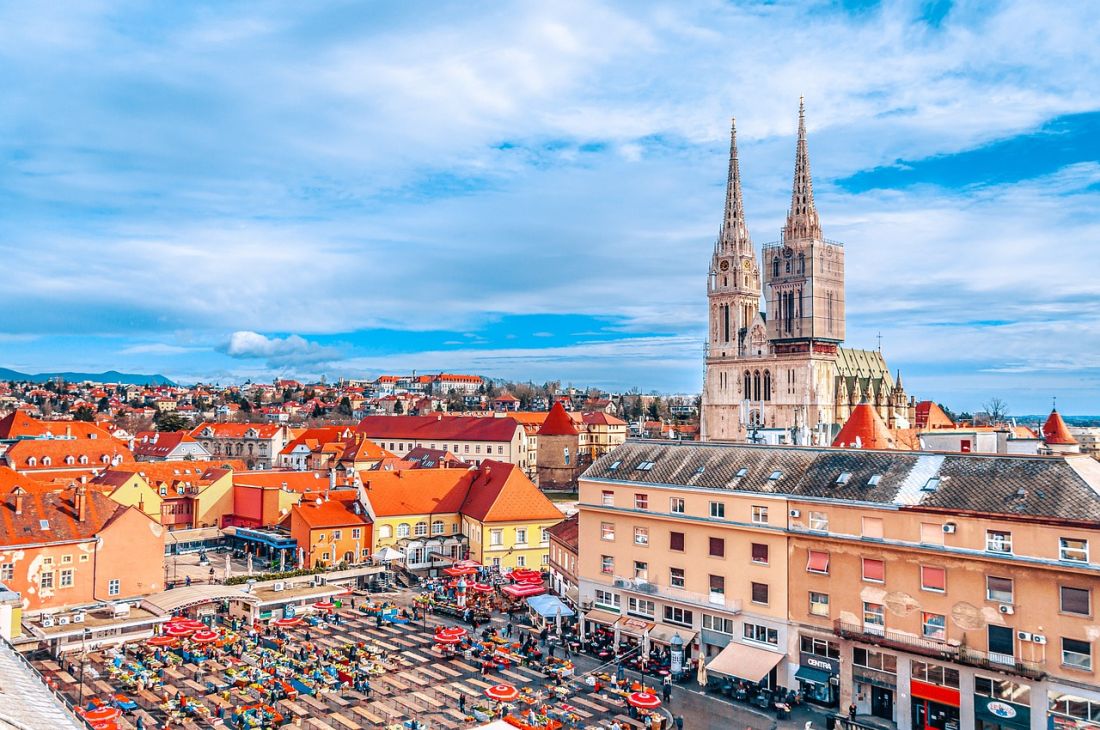
Zagreb is a popular destination among tourists before Christmas. If we visit the fair, it’s worth exploring the city too!
Located in the northwest of Croatia, along the Sava River, on the southern slopes of the Medvednica mountain, it is not only the country’s, but also a transportation hub for Central and Southeastern Europe thanks to its good location.
Its most popular event is the Christmas fair, which won the title of „Best Christmas Market in Europe” in 2016, 2017, and 2018, and was chosen as the „3rd Best Christmas Market in the World” in 2019. So it’s worth timing your visit for the end of the year!
Table of Contents
Zagreb attractions
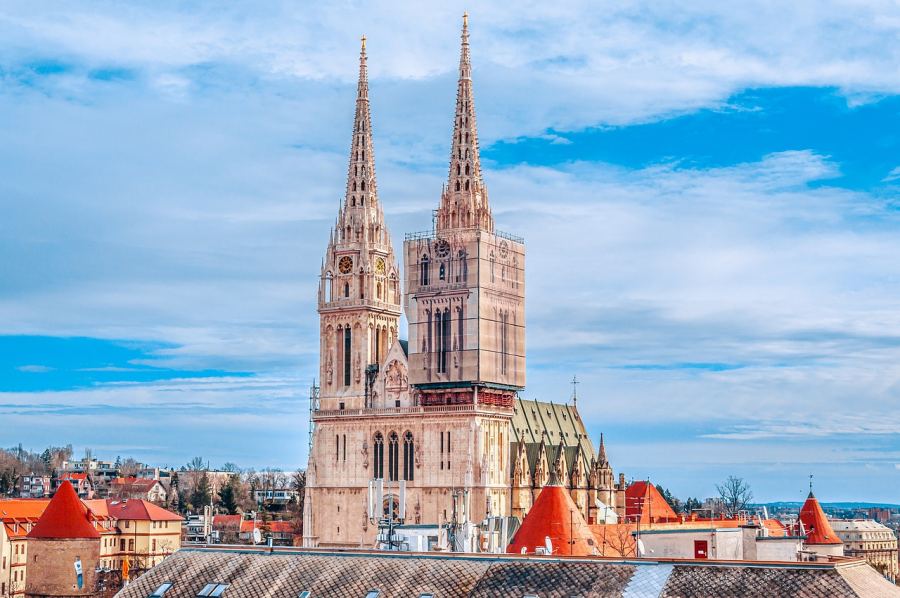
Zagreb Cathedral
One of the symbols of Zagreb, officially named the Cathedral of the Assumption of the Blessed Virgin Mary, St. Stephen and St. Ladislaus. It is located in Kaptol, one of Zagreb’s historical centers.
It is the largest Croatian sacral building and one of the most valuable monuments of Croatian cultural heritage, also the first and most important Gothic building in Croatia. The cathedral was built in the 11th century, originally in Romanesque style, then subsequently rebuilt and expanded several times.
The cathedral’s most distinctive features are its high, over 100-meter-tall neo-Gothic towers, which are visible from afar in the city. Above the main entrance is a group of sculptures depicting Saint Stephen.
The interior is enriched with frescoes, stained glass windows, and other art works that represent elements of Christian faith and local history. Famous for its huge organ, it is considered one of the top ten organs in the world and is a protected cultural heritage.
Several celebrities are buried in the cathedral, such as Croatian Ban Franjo Frankopan, Count Tamás Erdődy, and Zagreb Canon Baltazar Adam Krčelić.
St. Mark’s Church
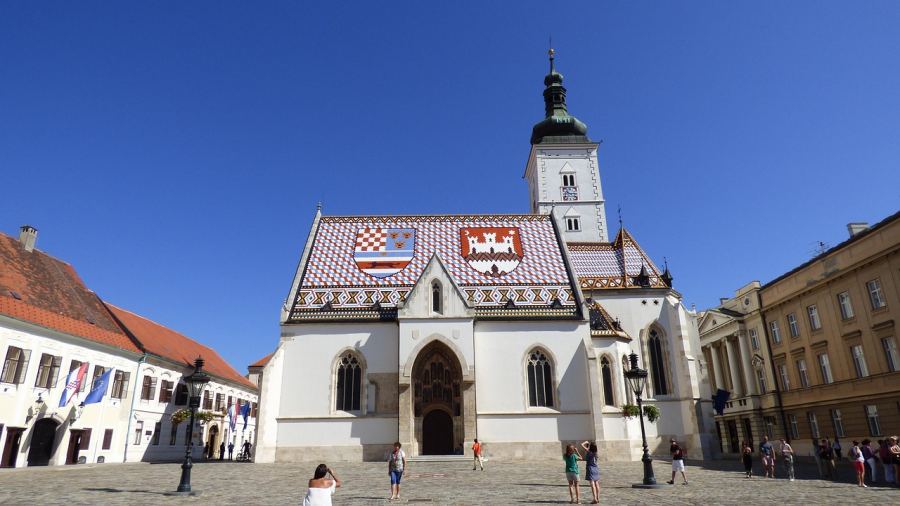
One of the oldest monuments in Zagreb, located on St. Mark’s Square, similarly to the parliament building.
Built in Romanesque style in the 13th century, but rebuilt in Gothic style in the 14th century. The church was renovated in the 19th century by Viennese architect Friedrich Schmidt in neo-Gothic style, giving the church its present, distinctive appearance.
The church is most famous for its unique, colorful tiled roof, which displays the coats of arms of Croatia, Dalmatia, Slavonia, and the city of Zagreb.
It is renowned for its valuable art works, including medieval frescoes and 19th-century paintings. Particularly notable is Ivan Meštrović’s famous sculpture of Jesus.
Ban Jelačić Square
Zagreb’s main square, named after Croatian Ban Josip Jelačić. Today, it is the most popular meeting place in the city.
The square has existed since the 17th century, with buildings in classical, Art Nouveau, and modern styles.
The central element of the square is the Jelačić equestrian statue, located in the southern part of the square and has become an important symbol of Croatian independence struggles. On the northern side is the famous Zagreb Clock Tower, another distinctive city symbol.
The square is surrounded by several cafes, restaurants, and shops, and is also an important hub for tram transportation.
Tkalčićeva
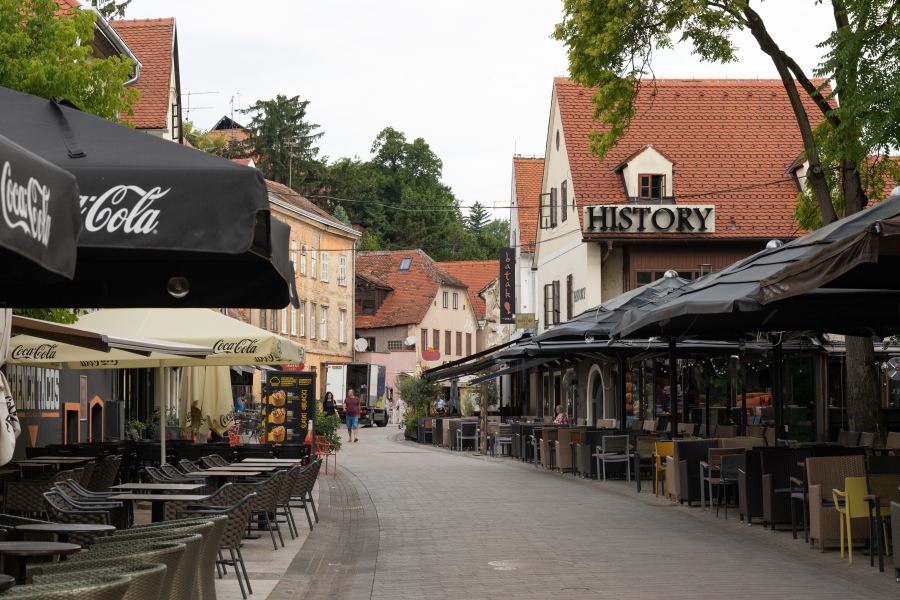
One of the most important streets in Zagreb, located at the border between the upper and lower towns in the city’s historical center.
Originally a stream bed, which was filled in and quickly built over. Named after a famous Zagreb historian, Ivan Krstitelj Tkalčić, known for his work in Croatian history and research on the city of Zagreb.
Today, it is one of the city’s most popular pedestrian streets, filled with cafes, restaurants, bars, and shops.
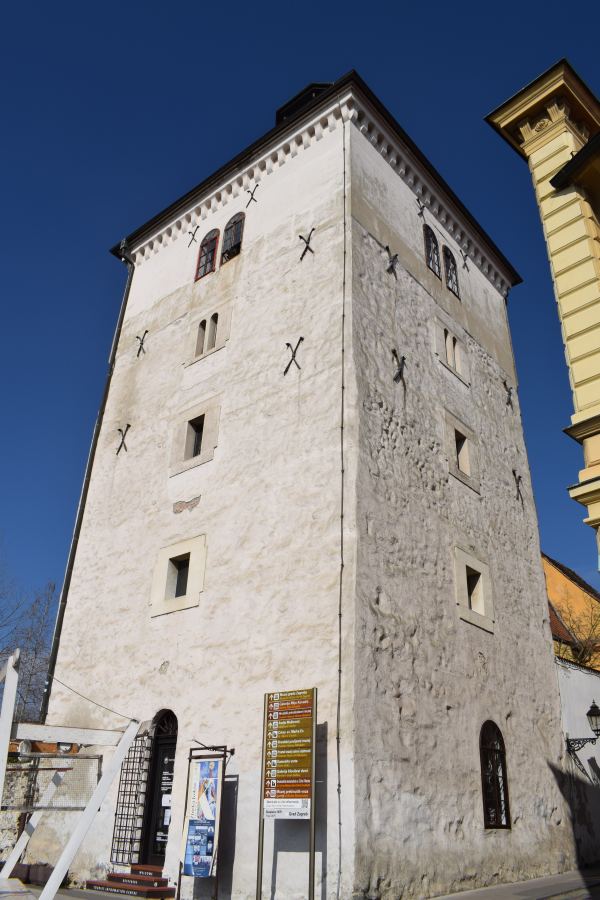
Lotrščak Tower
A significant historical building and one of the city’s symbols, located in the upper town area, on the slope of Gric Hill.
Built in the 13th century, originally as part of the city’s southern defenses. The tower’s name comes from an old legend about a bell („lotrščak”) used to warn merchants of the evening gate closure. Over time, the tower has served various functions, including as a watchtower, storage space, and residential building.
Its massive walls and square structure are characteristic elements of medieval architecture. The tower features an observation deck at the top, offering magnificent views of the city.
A cannon is fired every day at noon, a long-standing tradition. It’s worth timing your visit to the tower for this event.
Information on the observation deck’s ticket prices and opening hours can be found here!
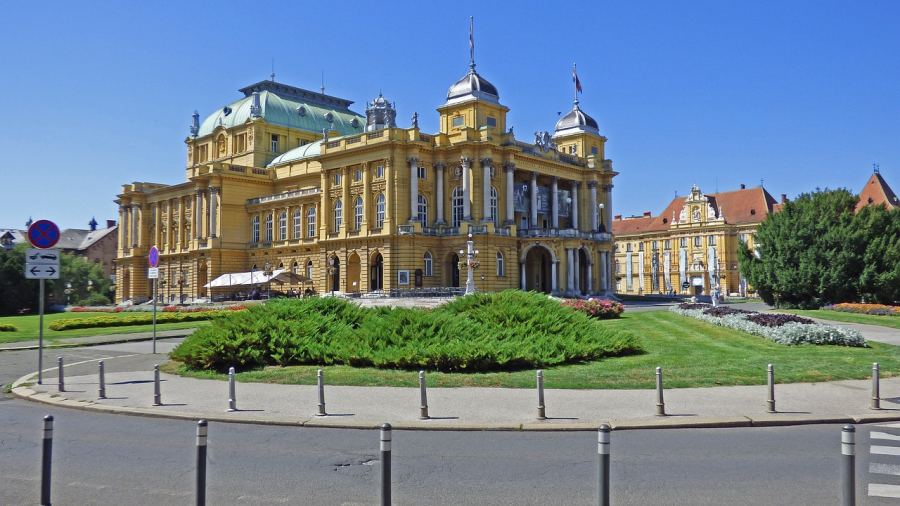
Croatian National Theatre
The most important Croatian theatrical institution, which not only presents classical pieces but also supports contemporary art.
It opened its doors in 1895, designed by the famous Viennese architect duo, Ferdinand Fellner and Hermann Helmer. The building’s exterior is impressive: the richly decorated facade and monumental dome are the main features. The facade is adorned with sculptures and decorative elements representing the arts.
The interior is also splendid: the lobby and main staircase are characterized by decorations, frescoes, and sculptures. The main auditorium is equipped with gilded decorations, velvet seats, and crystal chandeliers, befitting classic European theaters.
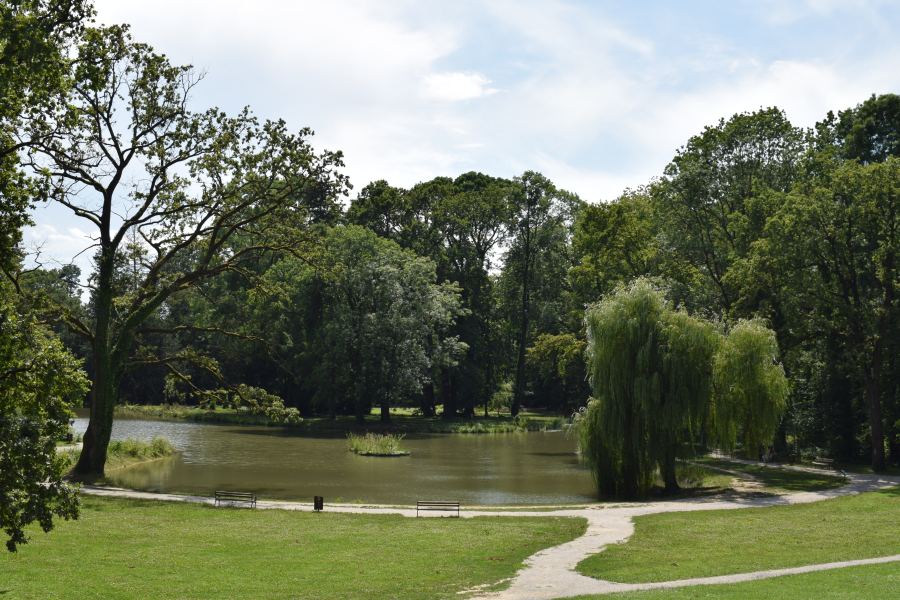
Zrinjevac Park
Zagreb’s first public park, named after Croatian Ban and national hero Nikola Šubić Zrinski.
The park features several statues and monuments. Additionally, a music pavilion and the building of the Croatian Academy of Sciences and Arts are located here.
The park is not just a place of relaxation for Zagreb’s residents but also an integral part of city life. Throughout the year, it hosts numerous events and activities, including the Christmas market, summer festivals, and various cultural events.
Maksimir Park
The city’s largest park, which also houses the zoo. It was named after Bishop Maksimilijan Vrhovac, who was the visionary and creator of the park.
Covering over 300 hectares, the park boasts diverse vegetation, lake systems, walkways, and meadows, resulting in a rich wildlife habitat.
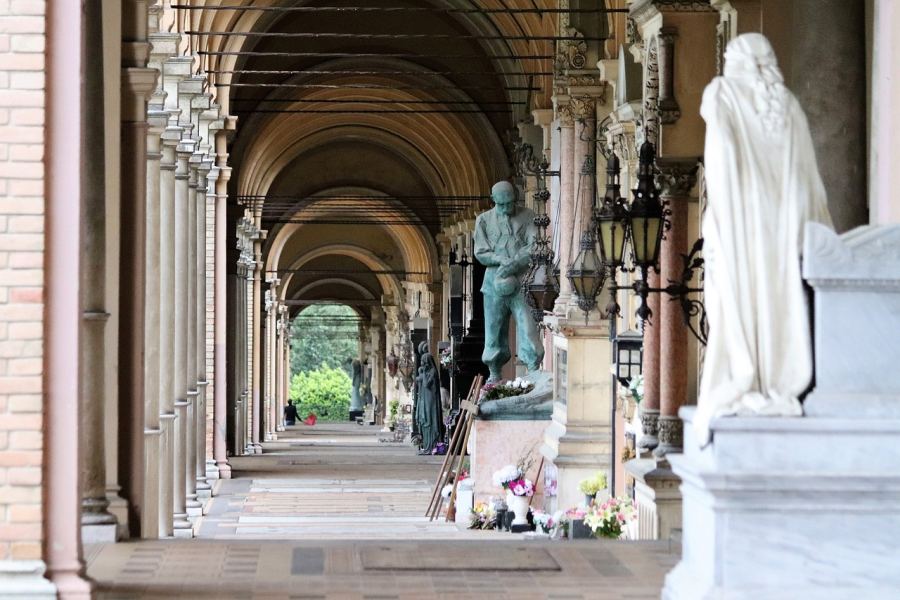
Mirogoj Cemetery
Considered one of the most beautiful cemeteries in Europe, it also serves as a magnificent park and an open-air art gallery.
Founded in 1876, it was designed by Viennese architect Hermann Bollé. Bollé envisioned the cemetery as a grand, landscaped area where nature and art coexist.
The largest building is the Christ the King Chapel, dominating the cemetery’s landscape with its green dome. The arcades and cemetery chapels are adorned with artistic works, frescoes, and sculptures, almost transforming the cemetery into a gallery.
It is the final resting place of many famous Croatian historical figures, scientists, artists, political leaders, and literary figures. Among them are Franjo Tuđman, the former Croatian president, poet Petar Preradović, and the world-famous Croatian composer, Ivan Zajc.
Top museums in Zagreb
Croatian History Museum
The museum’s goal is to present and preserve the tangible relics and documents of Croatia’s history. It is located in one of the most beautiful Baroque-style buildings, the Vojković Palace.
Its collection is extremely extensive, containing several thousand items, including artworks, weapons, coins, documents, and other historical memorabilia. The collection spans various periods of Croatian history, from the Middle Ages to modern times, with particular attention to Croatia’s national history and the country’s political, social, and cultural development.
All information can be found here (ticket prices, opening hours, etc.)!
Nikola Tesla Technical Museum
One of the most significant scientific institutions, named after Nikola Tesla, the world-famous Serbian-origin American inventor and engineer.
The museum’s collection is comprehensive, including early industrial machines, transportation vehicles like old cars and airplanes, as well as various electrotechnical devices and equipment.
A highlight of the collection is the items and documents related to Nikola Tesla’s work, showcasing his life and achievements.
All information can be found here (ticket prices, opening hours, etc.)!
Mimara Museum
One of the most important cultural institutions, which boasts a vast art collection.
Named after Ante Topić Mimara, the famous Croatian art collector, whose donations form a significant part of the museum’s collection. The museum building was originally a gymnasium, which was converted.
Its collection is extremely varied, containing more than 3,750 artworks spanning from classical antiquity to the early 20th century. The collection includes European paintings, sculptures, glass, porcelain, and ceramics, as well as pieces of Far Eastern art.
Outstanding works include those by renowned artists such as Rembrandt, Goya, Rubens, and Renoir.
All information can be found here (ticket prices, opening hours, etc.)!